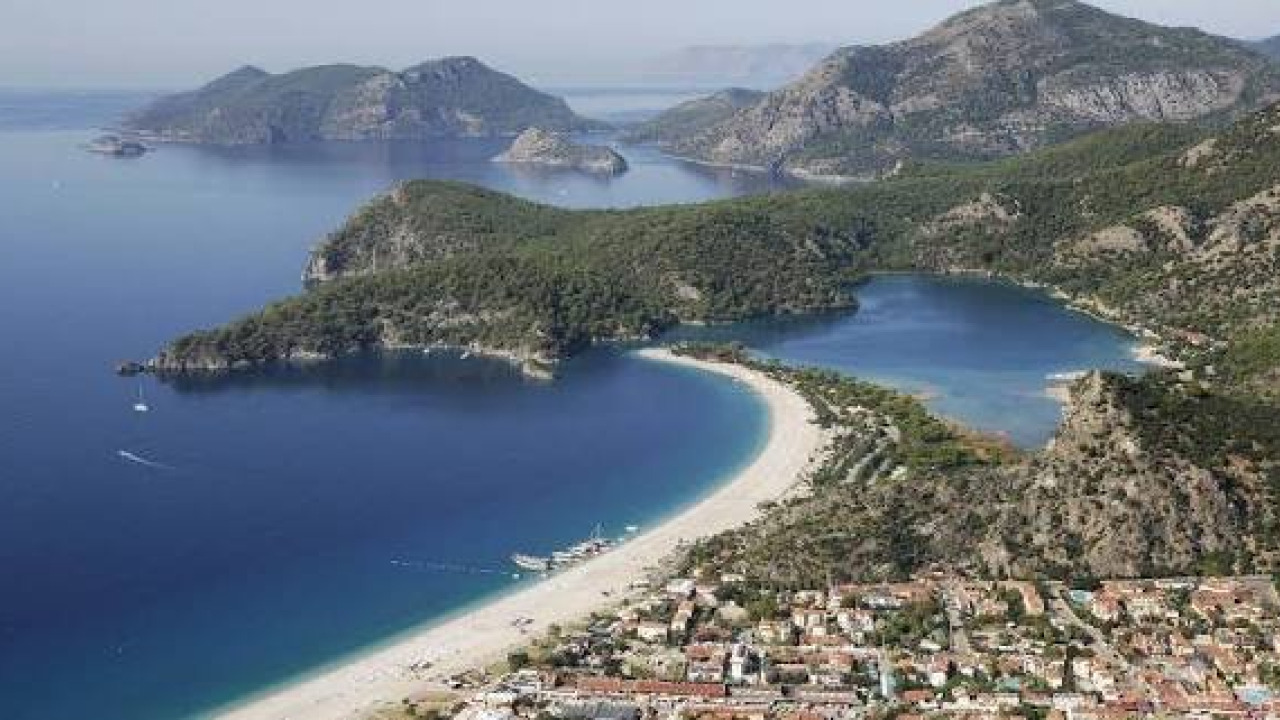
For any traveler packing their bags for Ölüdeniz, the first decision isn't just when to go, but which beach to grace. Within the same bay, just hundreds of meters apart, lie two distinct shores: the tranquil lagoon and Kumburnu sand spit within the nature park, and the bustling Belcekız strip fronting the main settlement. Sea temperatures are perfect for swimming from June to September, with July and August marking the peak of the crowds. May and the first half of October offer slightly cooler waters, but in return, you'll find it easier to snag a sunbed, secure parking, and capture those perfect photos. This guide compares these two captivating coastlines across key aspects like terrain, sea conditions, fees, shade, hours, and visitor profiles, helping you pinpoint your ideal spot.
Please note that this guide does not list specific prices. Nature park fees, sunbed rentals, cable car tickets, boat tour prices, and paragliding costs are updated at the start of each year and often adjusted during the season. Listing exact figures here would risk providing outdated information for future visitors. Instead, you'll discover which shores are paid and which are free, what factors influence the costs, the general pricing hierarchy, and where to confirm the most current rates.
Quick Facts
| Topic | Information |
|---|---|
| Location | Fethiye district, Muğla province; approximately 14 km south of the town center |
| Shores compared | Ölüdeniz Lagoon and Kumburnu (nature park), Belcekız public beach, Kıdrak |
| Entry status | Nature park entrances are subject to a per-person fee; Belcekız public beach has no entry fee |
| What determines the fee | Whether you enter on foot or by vehicle, vehicle type, which gate you use, and the season; the current list is displayed at the ticket booth |
| Müzekart (Museum Pass) | Not accepted at nature park entrances; subject to a separate fee system |
| Terrain | Kumburnu side is mostly fine sand; the central part of Belcekız is pebbly; Kıdrak is stony |
| Sea | The Lagoon is shallow and calm; Belcekız experiences afternoon waves; Kıdrak's water deepens quickly |
| Visiting hours | Nature park is open approximately 08:00-19:00 during summer; closing times are earlier in spring and autumn |
| Sunbeds and umbrellas | Available for rent; prices vary by operator, location on the shore, and season. Staying in a free area with your own equipment is free |
| Sunset | Around 20:25 on July 1 · 20:10 on July 31 · 19:35 on August 31 · 18:50 on September 30 · 18:10 on October 31; twilight lasts for about half an hour after sunset |
| When the bay is full | Kıdrak on the same day; for those extending their day, Kabak Koyu to the south, Katrancı and Kuleli koyları to the north |
| Recommended period | June-September for swimming; May and the first half of October for tranquility and photography |
| Transportation | Dalaman Airport is approximately 65 km away; 25-30 minutes by dolmuş from Fethiye bus station |
| Who it suits | Lagoon: families with small children · Belcekız: activity, water sports, views · Kıdrak: shade and coolness |
| Important | The Lagoon is a protected area; motorized sea vehicles are not permitted |
How Many Beaches Are There in Ölüdeniz? Let's Clear Up the Confusion
Many first-time visitors to the area alight from the dolmuş on the Belcekız route, walk to the sand, and assume they've seen the lagoon. However, what is colloquially referred to as "Ölüdeniz Beach" is actually the sand spit and the calm pool behind it, which begins after you've paid the nature park entrance fee. The long strip stretching in front of the settlement, with no ticket booth at its entrance, is known as Belcekız Beach. You might also encounter spellings like Kumburnu, Belceğiz, or Ölüdeniz Public Beach on maps and signs. Understanding this distinction from the outset will help you plan your budget and your day effectively, as the four shores differ in terms of fees, terrain, and sea conditions.
Ölüdeniz Lagoon: The Nature Park's Tranquil Pool
The Lagoon is a shallow pool nestled behind the sand spit, protected from the open sea. Its name, "Dead Sea," comes from its calm waters even when the open sea is rough in winter; its protected status is one of the reasons this tranquility is maintained. Since motorized sea vehicles are not allowed in the lagoon section, noise and waves are virtually non-existent here. The water remains shallow for a considerable distance, making this shore ideal for those learning to swim, children, and anyone who enjoys standing in the water for extended periods.
Practical details: Entry is per person and requires passing through the nature park ticket booth. During summer, the park typically opens around 08:00 and closes in the late afternoon; closing times are earlier in spring and autumn, and the ticket booth may stop selling tickets a while before closing. Therefore, visitors arriving in the late afternoon should inquire about the day's closing time at the gate. The most relaxed time to visit is the first two hours of the morning: the shaded tree line is still empty, the water is glassy calm, and there's no queue at the ticket booth. Those arriving in the afternoon often have to rent an umbrella, as the natural shaded strip is narrow.
For those arriving by car, here's a useful calculation: the car park inside the park fills up before noon during the season, meaning drivers arriving around midday will likely wait at the gate and pay the vehicle fee. Leaving your car in an external paid car park and entering on foot means paying the per-person pedestrian fee instead of the vehicle fee at the same gate, and even for a couple, the pedestrian option often works out cheaper. For larger groups, it's worth asking at the gate how vehicle and pedestrian fees are combined to calculate the total.
Kumburnu: The Sand Spit Dividing Two Seas
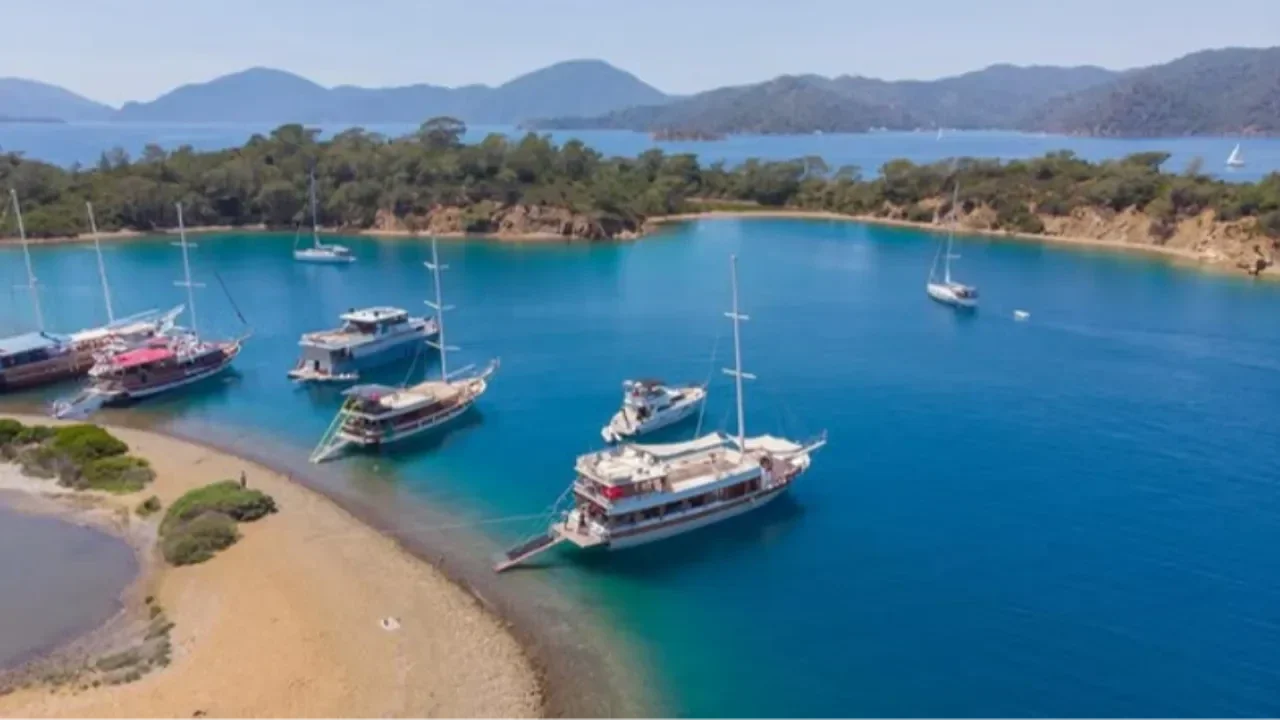
Kumburnu is the narrow sand spit that separates the lagoon from the open sea, starting immediately after the ticket booth. It's often mistaken for a separate beach because it's listed as "Kumburnu Beach" on maps and signs; however, this is precisely the shore travelers are looking for when they search for "Ölüdeniz Beach." On either side of the sand spit, you'll find two distinct bodies of water: the glassy, shallow lagoon on one side, and the gently wavy open sea on the other. The terrain here is predominantly fine sand, making entry and exit from the water the easiest among the four shores; Belcekız's pebbly central section and Kıdrak's stony shore fall short in this regard.
The tip of the sand spit is one of the region's famous photo spots, offering a single frame that captures both the calm lagoon and the open sea. Those seeking deeper water for swimming also use this side: since the lagoon remains shallow, swimmers looking for longer distances head to the open sea side of the sand spit. Practical tip: As the sand spit widens rapidly after the ticket booth and the ground is soft, it's more comfortable to use a backpack rather than wheeled luggage. For timing, early morning and late afternoon are preferred; the midday light tends to flatten the turquoise tones of the water, making the color transitions more pronounced during these two periods.
Belcekız Beach: Ölüdeniz's Free Public Beach
Belcekız is a strip of coarse sand and pebbles, approximately 2 kilometers long, stretching directly in front of the settlement. It's open to the public, and there's no entry fee. Locally, it's also known as Ölüdeniz Public Beach. Payment begins with the amenities on the sand: sunbeds and umbrellas are for rent, and their cost varies by operator, location on the shore, service level, and season. Renting sunbeds individually or as a set is priced differently, and prices drop outside the peak season. It's also possible to stay in the free area with your own towel, but in July and August mornings, the shaded parts of the free strip fill up before noon.
A distinguishing feature of this beach is that most paragliders launching from Babadağ land here. You can watch dozens of landings from your sunbed without even getting into the water; the intensity begins with the first flights in the morning and increases in the two hours before sunset. Since the terrain becomes pebbly in the central section, water shoes will make your experience more comfortable. The wind generally picks up towards the afternoon, so those seeking calm water prefer the morning, while those desiring coolness and activity opt for the afternoon. As there's no time limit for entering Belcekız, the last light of the evening is also best enjoyed from this side.
Kıdrak: The Second Entrance in Pine Shade
Kıdrak, located approximately 3 kilometers east of the settlement, is where the pine forest meets the sea and is the go-to spot when Belcekız gets crowded. A common misconception here is to consider Kıdrak a separate nature park: the protected area is registered as Ölüdeniz-Kıdrak Nature Park, and Kıdrak is simply the second entrance to the same area. However, caution is needed regarding fees. Different price lists circulate in the area, and which list is valid at which gate can change during the season; therefore, it's healthier to choose your entry gate beforehand and read the sign there, rather than relying on hearsay.
Shade at Kıdrak lasts all day, but the water deepens quickly; for non-swimmers, the lagoon side is more suitable. The journey from Ölüdeniz center by dolmuş takes about 10 minutes. Parking capacity is limited and fills up before noon on weekends, so an early start is essential. The bay offers showers, toilets, changing cabins, and a picnic area; barbecues and open fires are subject to protected area rules, so it's important to read the warning sign at the entrance. You can bring your own food, but sunbed and food/drink services are also provided by private businesses here. For those looking to snorkel and see the seabed, the rocky edges offer good visibility, but the stony ground can be tough on the feet when entering and exiting the water.

Which Beach Suits Whom? A Profile-by-Profile Comparison
Three variables determine your choice: water depth, continuous shade, and the amount you're willing to spend. Here's a table matching the four shores to different visitor profiles:
| Visitor Profile | Recommended Shore | Rationale | Suggested Time |
|---|---|---|---|
| Families with small children | Lagoon and Kumburnu | Shallow, calm, no motorized vehicles | 08:30-12:00 |
| Focused on swimming & snorkeling | Kıdrak or Kumburnu open water side | Water deepens quickly, good visibility near rocky edges | 09:00-11:00 |
| Budget-conscious travelers | Belcekız free strip | No entry fee, no obligation to rent equipment | 08:00-10:00 |
| Water sports & paragliding spectators | Belcekız central section | Landing strip and motorized activities are here | 16:00-18:30 |
| Seeking shade & picnic | Kıdrak | Pine trees provide shade all day, picnic area in the bay | 11:00-16:00 |
| Photography & sunset | Kumburnu morning, Belcekız evening | Two seas in one frame from the sand spit; evening light on the free shore | 08:00-10:00 and the last hour before sunset |
| Avoiding crowds | Kıdrak or off-season lagoon | Visitor density decreases on weekdays and off-season | Weekday mornings |
| Not wanting long walks | Belcekız | Close to road and parking, flat terrain | Any time |
Families with Small Children
The Lagoon side stands out for this group: the water remains shallow for a long distance, there are no waves or currents, and no motorized sea vehicles. Shade is limited, so it's essential to bring sun-protective clothing and hats for children; between 12:00 and 15:00, there are few places to cool down outside of umbrellas or the tree line. Toilet and shower facilities are usually found around the park entrance, but queues can form during peak season.
The suggested timing is this: three and a half hours spent in the lagoon between 08:30 and 12:00 is more productive than waiting out the midday heat on the beach with children. Taking a lunch break in a shaded spot in the settlement, then moving to the Belcekız side in the cooler afternoon, splits the day and reduces fatigue. For those with strollers, the terrain is a critical detail: on the Belcekız side, the road and car parks are close to the shore, but on the sand spit, the soft ground makes wheeled movement difficult.
Swimming, Snorkeling, and Water Sports
For those wanting to swim long distances, the shallowness of the lagoon is a limitation, not an advantage: to reach swimming depth, you need to move to the open sea side of the sand spit or to Kıdrak. The open sea side of Belcekız is calm in the mornings and active with the breeze in the afternoon; entering the water with children becomes more challenging at this time. Adhering to flag colors in areas with lifeguards makes the decision to enter the water easier on windy days.
Motorized water sports operate outside the protected area, along the Belcekız strip. Paragliding towing, banana boat rides, and similar activities are sold here; it's necessary to get information from the operator regarding life jackets, insurance coverage, and age limits. Canoe and snorkel rentals are also available on the lagoon side; they are rented hourly, and the cost varies by equipment type (e.g., single or double canoe, or mask-fin set) and duration. This item is a small expense compared to a daily sunbed set.
Photography, Sunset, and Tranquility
From a lighting perspective, there are two productive periods: the first two hours after the ticket booth opens, and the last hour before sunset. Midday light tends to flatten the turquoise tones of the water, while morning and afternoon light accentuate the color transitions. For those who prefer fewer crowds in their photos, weekday mornings are more relaxed than weekends.
The timing of the second period shifts with the month, and one common mistake in planning is not accounting for this. In Fethiye, sunset occurs around 20:25 on July 1; it moves to 20:10 on July 31, 19:35 on August 31, 18:50 on September 30, and 18:10 on October 31. This means the evening window shifts forward by more than two hours between July and October, so a program that works in June will be off in October. Approximately half an hour of twilight remains after sunset, and the softest light for photography largely falls within this tail end. Since the nature park ticket booth closes in the late afternoon, the last light of the day in summer often falls after the park has closed; in this case, you'll need to watch the sunset from the free-entry Belcekız side or from roadside viewpoints. In October, sunset shifts earlier, but as closing times also move forward towards the off-season, if you plan to watch the sunset from the sand spit, confirm the day's closing time at the ticket booth.
Ölüdeniz's Neighboring Gems: Valley, Village, and Summit
For those looking to extend their beach day into a half-day excursion, three destinations beyond the bay stand out. All three can fit into the same day, but their modes of transport differ: one is reached by boat, another by dolmuş, and the third by cable car or car.
Butterfly Valley: Approximately 30 Minutes by Boat
Boats departing from the Belcekız strip reach Butterfly Valley beach in about 30 minutes; since the bay cannot be accessed by car from land, sea transport is the primary mode of access. The Valley is a canyon on the slopes of Babadağ, enclosed by steep cliffs on two sides, and is a protected area. As the canyon walls rise approximately 350 meters on either side of the beach, the valley floor gets shaded early in the day, meaning boats arriving in the afternoon will find the beach in shade. It gets its name from the dense populations of moths, particularly the species known as the Jersey tiger moth, that gather here in summer; June to September is noted for observation. Walking inland from the beach reveals a small waterfall and a camping area, with the walk taking about half an hour.
By car from land, you can only reach the viewpoint above the valley; descent to the beach is either via a steep, roped path from the Faralya side or by boat. Therefore, it's not advisable to attempt the descent in beach sandals; closed-toe shoes are better, as the final section of the waterfall path is also slippery and stony. Practical tip regarding the return: find out the departure time of the last boat upon arrival, as there are no evening return options from the valley other than staying overnight. The second detail determining your schedule is the break duration: daily tour boats usually give 1 to 2 hours for swimming and walking in the valley, so the waterfall walk fits most itineraries; those wanting to set their own pace opt for a direct water taxi from Ölüdeniz. Morning boats are cooler and less crowded, while afternoon departures find the beach at its busiest. Camping and bungalow options are available within the valley, but open fires are prohibited.
Kayaköy: The Stone Streets of Abandoned Levissi
Kayaköy, formerly known as Levissi, located approximately 8 kilometers from Fethiye center, is a settlement that was emptied after the 1923 population exchange and never re-inhabited. It takes 20 to 25 minutes by dolmuş from the center. Hundreds of stone houses spread across the hillside and the ruins of two large churches remain; paths winding between roofless walls, pebble mosaics on church floors, and views of the Fethiye plain from the hilltop form the backbone of the visit. Louis de Bernières' novel "Birds Without Wings" was inspired by the story of this village; the closing scenes of Russell Crowe's 2014 film "The Water Diviner" were also shot here.
The area is paid entry and unshaded, so a hat and water are essential; regarding the Müzekart, a different system operates here compared to nature park entrances, so it's necessary to inquire about its validity at the ticket booth. A natural way to combine this with a beach day is walking: the historic path descending from the village through the forest to Ölüdeniz takes about two hours. The common solution is to walk down and plan the return by dolmuş, so if you take this route, factor in the return journey from the start. In terms of timing, around 09:00 in the morning or the last hours before closing are both cool and less crowded; there is no shade on the stone streets during midday. Those wishing to read the detailed history of the village can refer to the Kayaköy travel guide article.
Babadağ Cable Car and Faralya Road: Seeing the Bay from Above
For those wanting to see the bay from above, there are two main options. Babadağ's summit is over 1,960 meters; the lower station is on the Ovacık side, and the upper stations are roughly at 1,700 and 1,800 meters. The ascent via transfer takes 15 to 20 minutes. Even non-fliers can go up for the viewing terraces and food/drink establishments: the lagoon, sand spit, and Belcekız strip are all visible in one frame from these stations, making this the ideal spot for those seeking a panorama without hiking. Temperatures at the summit drop significantly compared to the beach, and the wind can be strong; even in mid-summer, a light windbreaker comes in handy. Since strong winds can halt operations, it's advisable to check the operator's announcements before heading up.
The second option is the mountain road between Ölüdeniz and Faralya. Several viewpoints, including the one above Butterfly Valley, are directly roadside; they are accessible by car or dolmuş, require no walking, and are free. These spots offer a different perspective than the cable car, showcasing the bay alongside the valley's steep cliffs. Watching the sunset from above and having dinner in the settlement is one of the relaxed ways to end a beach day; the return road is winding and dimly lit, so it's important not to rush in the dark.
When the Bay is Full: Kabak, Katrancı, and Kuleli
On July and August weekends, there are times when all four shores are simultaneously crowded. At that point, the question shifts from "which beach is empty" to "how far am I willing to travel." The three bays below share common traits of pine shade and lower density; they differ in distance and access method.
Kabak Bay: The Steep Descent to the South
Kabak, located south of Faralya (officially Uzunyurt), is approximately 17 to 20 kilometers from Ölüdeniz; the winding, ascending road takes about 45 minutes to drive. It's a bay with a pine forest at its back and a mix of pebbles and sand at its front. The final section descending to the bay is steep and narrow, so most vehicles are left in the car park on the hillside; the descent is either on foot or by shuttle services provided by local businesses. The walk from the car park to the bay takes about 20 to 30 minutes, and you'll need to climb the same incline on the way back.
The pricing logic here differs from Ölüdeniz: there's no ticket booth for the bay itself; payment comes into play via parking and the descent shuttle service. The cost is determined by the hillside operator's policy and how long your vehicle stays; inquire about the current policy at the car park entrance. The answer to "who is it suitable for" is clear: visitors willing to travel for a shaded and secluded bay, those wanting to include the Faralya-Kabak section of the Lycian Way in their itinerary, or those planning to stay overnight on a hillside with low light pollution. Strollers, wheeled luggage, or half-day plans are not well-suited for this bay. In terms of timing, descending in the morning and leaving in the afternoon avoids both climbing in the heat and driving on narrow roads in the dark.
Katrancı Bay: A Forested Day-Use Area on the Göcek Road
Katrancı is in the opposite direction from Ölüdeniz; it's located on the highway between Fethiye and Göcek, northwest of the center, and operates as a forested day-use area. Pine trees extend right to the shore, so shade is more abundant here than on the Çalış strip, and crowds are generally smaller. This same bay is also a popular stop for 12 Islands boat tours departing from Göcek, meaning it can be reached both by land and sea.
Whether an entry fee is charged and vehicle entry rules change periodically, so the current policy is displayed on the sign at the entrance; vehicle entry becomes noticeably busier on weekends. Choosing this over Ölüdeniz means shifting your beach day from south to north: shade, picnic setups, and tranquility come to the fore, while the lagoon view, paragliding landings, and water sports drop from the picture. This is the second address after Kıdrak for visitors seeking shade and a picnic. Bringing your own food is sensible, as the number of businesses in the area is limited compared to the main coastline.
Kuleli Bay: The Small Bays of the Fethiye Peninsula
Kuleli is part of a series of bays where pine forest and sea intertwine, located on the peninsula west of Fethiye harbor; it lines up with Aksazlar, Samanlık, and Boncuklu bays. It's also on the route of daily boat tours departing from Fethiye bay, so visitors who don't want to deal with driving can reach the bay by sea.
The difference of this strip compared to Ölüdeniz is scale: the bays are small, the sand strip is narrow, and the number of businesses is few. It's suitable for visitors looking to escape crowds and fit a few small bays into the same day; it's not for those expecting long sandy beaches, rows of sunbeds, beach service, and motorized water sports. A half-day sea plan for those staying in Fethiye center, without descending to the lagoon, also fits this strip. Practical note regarding choosing your access method beforehand: if going by land, inquire about the current policy at the bay entrance; if going by boat, ask before booking if the itinerary includes a stop at Kuleli, as routes vary from bay to bay within the same gulf.
Getting to Ölüdeniz Beach and Your Step-by-Step Beach Day
From the Airport to the Region
The closest airport to the region is Dalaman Airport, approximately 65 kilometers away, taking between 1 and 1.5 hours depending on traffic. Airport shuttles and buses run from Dalaman Airport to Fethiye center; to continue to Ölüdeniz, you'll transfer to a dolmuş from the center. Those wanting a door-to-door journey opt for private transfers, which save time, especially with luggage or children. Milas-Bodrum Airport is a more distant alternative, with the road journey taking about 3-3.5 hours; it's only worthwhile if the ticket price difference offsets the transfer cost and the extra three hours on the road.
From Fethiye: Dolmuş, Car, and Parking
Dolmuşes departing from Fethiye bus station pass through Ovacık and Hisarönü, reaching Ölüdeniz in 25-30 minutes; services are frequent during the summer season but become less so in the evenings. Tickets are based on Muğla Metropolitan Municipality's Fethiye public transport tariff and are paid inside the vehicle; carrying small cash speeds things up, as payment methods can vary by vehicle. Those arriving by their own car have two parking options: the area inside the nature park (with a vehicle fee) and paid car parks around Belcekız. The descent road is winding and steep, becoming crowded on summer mornings; since dolmuşes stop at various points along this incline, those staying in Ovacık or Hisarönü can also walk down to the shore without taking the vehicle all the way.
For those wanting to plan their day step-by-step, here's an effective flow:
- Catch a dolmuş from Fethiye or set off by car between 08:00-08:30; the journey takes about 30 minutes.
- Around 09:00, buy your ticket at the nature park booth, ask about the day's closing time, and secure a spot near the tree line; the shaded strip is usually empty in the morning.
- Spend 09:30-11:30 swimming, kayaking, or snorkeling in the lagoon; the water is at its calmest during this part of the day.
- Take a lunch break between 12:00-13:30; shaded spots in the settlement or kiosks around the park will serve your needs.
- After 15:00, move to Kıdrak for shade or to the central section of Belcekız to watch paragliding landings.
- Head towards the park exit a while before closing and end your evening on the free Belcekız strip or at a roadside viewpoint. Make sure you've learned the last dolmuş departure time during the day; the gap between services significantly lengthens in the evening.
Entry Fees, Sunbeds, and Daily Budget: What Determines the Cost
The short answer to the frequent question "is it paid?" is: it depends on which shore you visit. Entry to the lagoon, Kumburnu, and Kıdrak within the nature park boundaries is subject to a per-person fee; there's no charge to enter Belcekız public beach, where fees begin with equipment and services. Knowing what you're paying for item by item, and what influences the cost, provides a more enduring plan than memorizing numbers, as tariffs are updated at the start of each year and during the season.
| Item | Payment Status | What Determines the Cost |
|---|---|---|
| Ölüdeniz gate, pedestrian entry | Per-person fee | Season and current list announced at the gate |
| Ölüdeniz gate, vehicle entry | Fee-based, significantly higher than pedestrian entry | Vehicle type tiered: motorcycle, car, minibus, and caravan listed separately; according to the description, the vehicle tariff includes parking service |
| Kıdrak gate | Per-person and vehicle fee | Second entrance to the same protected area; which tariff list is valid at which gate can vary, read the sign |
| Belcekız public beach entry | No fee charged | Payment only begins with sunbeds, umbrellas, and service |
| Sunbeds and umbrellas | Daily rental | Operator, location on the shore, service level, and season; renting individually or as a set is priced separately |
| Otopark | In-park area included in vehicle tariff, external car parks are separately charged | Location and operator: external car park tariffs vary by distance to the gate, in-park area is tied to vehicle entry |
| Canoe, snorkel, and water sports | Hourly fee | Equipment type and duration; a small item compared to a daily sunbed set |
| Daily boat tour and tandem flight | Fee-based, varies by operator | Itemized in the sub-section below |
Two rows in the table primarily determine your daily budget. Vehicle cost is first: entering through the gate by car is significantly more expensive than pedestrian entry at the same gate, so arriving by dolmuş or leaving your car outside impacts the largest budget item. Sunbed sets are second: equipment rental often exceeds the combined entry fee for two people. For a couple bringing their own umbrella, this item is entirely zeroed out. In essence, the bulk of the cost isn't entering the beach, but how you get there and what you rent on the sand.
What Determines the Price for Boat Tours and Tandem Flights
There's no fixed tariff for daily boat tours and tandem paragliding; both items vary by operator and change during the season. Since very different packages are sold under the same tour name, knowing the variables that determine the price is more useful than memorizing figures:
- For boat tours: whether lunch is included, if the boat is a shared gulet or a private boat, the number of stops, the departure pier, and whether the tour is half-day or full-day. Those wanting to see current prices and scope differences side-by-side can check the programs in the Fethiye boat tours list; prices are live there.
- For tandem flights: from which platform on Babadağ the takeoff occurs, the duration of the flight, whether video and photo packages are sold separately, and if hotel transfer is included. Flights typically last between 20 and 40 minutes; operators often prefer the late afternoon window as winds tend to drop then. To compare takeoff altitudes, durations, and video packages, the Fethiye air adventure tours list is a good starting point.
- For both: the day of the week, morning or afternoon session, group size, and whether the reservation is paid in advance or at the door.
In terms of hierarchy, it's safe to say: a tandem flight is significantly more expensive than a daily boat tour, and a daily boat tour exceeds the combined cost of a two-person park entry and a day's sunbed set. This hierarchy remains consistent over the years, though the actual figures change each season. Always confirm the exact price and what's included where you see it in writing.
How to Plan a Free Beach Day
The way to keep your budget down is through the Belcekız free strip. If you come with your own towel, foldable umbrella, and water, the two biggest daily expenses – entry ticket and equipment rental – are eliminated. Buying your provisions from local markets and bakeries in the settlement will significantly reduce what you'd pay at beachfront establishments. Early arrival is essential, as shaded areas fill up before noon; since sun protection will depend on your own equipment, choose your umbrella size accordingly. Roadside viewpoints are also free, making it possible to enjoy views of the lagoon from above without ever entering a paid gate.
Müzekart, Discounts, and Payment Methods
A common misconception is that the Müzekart (Museum Pass) covers these entrances. The Müzekart is valid for museums and archaeological sites under cultural heritage protection; nature park entrances are subject to a different tariff system, and the card is not accepted here. Since the two areas are managed by different institutions, their tariff lists also operate separately. Student discounts may be applicable at nature park ticket booths; bring your student ID and inquire at the gate. Whether separate tariffs apply for local and foreign visitors will also be displayed on the ticket booth sign; reading it before payment will prevent surprises. Regarding payment, card and cash acceptance can vary by booth; carrying both options can shorten your wait in line.
Season and Time Selection: Which Month, Which Slot
The calendar decision changes the experience as much as the beach choice. Here's a summary of sea conditions, crowds, and practical notes by period:
| Period | Sea and Weather | Crowds | Note |
|---|---|---|---|
| May - early June | Water warming up: approx. 18-21°C in May, 23-25°C in June | Low to moderate | Easy to find sunbeds and parking |
| Late June - August | Water approx. 26-28°C, high midday heat | High | Shaded parts of the free strip fill up before noon |
| September | Water approx. 25-27°C, weather softens | Moderate | Considered the balanced period of the season; dolmuş services still frequent |
| October | Water approx. 22-24°C; swimming continues in the first half of the month | Low | Air Games Festival in the second half of the month; accommodation fills up early |
| November - April | Water approx. 16-19°C, outside swimming season | Very low | Lagoon remains calm in winter, suitable for coastal walks |
The distribution throughout the day follows a similar logic. In the mornings, the sea is calm and shaded spots are empty; towards midday, both heat and crowds increase; in the afternoon, waves rise on the Belcekız side with the sea breeze. The answer to the "can you swim?" question therefore depends on the time: the lagoon remains calm all day, while swimming in the open sea side is more comfortable in the morning.
The second half of October requires a separate plan. The International Fethiye Ölüdeniz Air Games Festival is held during these weeks; the program focuses on paragliding acrobatics, paramotoring, model aircraft, and display flights over Belcekız. The exact dates are announced annually and can shift due to weather conditions, so it's essential to confirm the festival calendar before your trip. During those days, the crowds are more focused on watching the sky than swimming on the beach, and accommodation fills up early.
Dining and Accommodation Areas Around the Beach
Belcekız Beachfront and Ölüdeniz Bazaar
Restaurants along the Belcekız beachfront offer menus primarily featuring grilled fish, mezes, and salads. What determines the price here is the view and service level: the same dish at sea-view tables will be more expensive than at local eateries in the bazaar's inner streets. The second variable is whether the fish is fresh daily and the portion size; clarifying this before ordering is a common practice along the coastline. Eateries and kiosks within the Ölüdeniz bazaar are more affordable, offering gözleme and daily home-cooked meals. Among regional dishes, Muğla cuisine's çökertme kebab, olive oil-based wild greens like şevketibostan and radika, stuffed zucchini flowers, and local honey, almond, and fig products stand out. Olive oil herb dishes are found fresh in spring and may be removed from menus by late summer.
Fethiye Fish Market and Kayaköy Eateries
For those venturing into Fethiye center, the Fish Market offers a unique experience: the tradition of choosing your fish from a stall in the Paspatur bazaar and having it cooked at surrounding restaurants continues here, with the cooking fee calculated separately from the fish price. Midday hours are calm, becoming busier towards evening. Garden restaurants in the direction of Kayaköy, on the other hand, specialize in tandoor and barbecue dishes; Cin Bal, known for its self-cooking meat concept, is frequently mentioned among these addresses. This side is more suitable for dinner, as the village is unshaded during the day and lunch breaks tend to be short.
A practical setup for a beach day is this: having a light lunch in the bazaar and a longer dinner in Kayaköy or Fethiye in the evening helps avoid both the midday heat and the busy hours on the coastline. If you plan to go to Kayaköy in the evening, you'll need to find out the last dolmuş departure time, as evening services on this route become less frequent.
Which Area to Stay in for Beach Proximity
The accommodation decision hinges on two questions: how many minutes does it take to get to the beach, and where do you want to spend your evenings? The areas are divided along these two axes as follows:
| Area | Beach Access | Who it Suits | Practical Note |
|---|---|---|---|
| Belcekız and Ölüdeniz beachfront | 2-10 minutes walk | Those without a car, spending evenings on the beach | Prices peak in July-August; nightlife is lively until late |
| Ovacık | 10-15 minutes by dolmuş | Budget-conscious, seeking cool evenings | Higher elevation means noticeably cooler evenings, family-oriented |
| Hisarönü | 10-15 minutes by dolmuş | Those seeking bars and entertainment | High night noise; not suitable for those seeking quiet |
| Kıdrak direction forest facilities | Approx. 10 minutes by dolmuş | Seeking shade and quiet | Limited dinner options, plan to dine at the facility |
| Kayaköy | 20-25 minutes by dolmuş | Stone house guesthouses and quiet evenings | Infrequent transport; a car helps if you plan to visit the beach daily |
| Fethiye center and Karagözler | 25-30 minutes by dolmuş | Seeking city amenities, Fish Market, marina | Beach means a 14 km journey each way daily |
| Çalış | Approx. 20 km via Fethiye | Seeking long beach walks and sunset | Ölüdeniz is a day trip, not a base for beach days |
| Faralya and Kabak | Faralya approx. 9 km, Kabak 17-20 km; car recommended | Bungalows, boutique hotels, Lycian Way hiking | Dolmuş infrequent, road narrow and winding; difficult to return at night |
If walking distance to the beach is the primary criterion, any option outside Belcekız and the Ölüdeniz beachfront means a twice-daily journey; on the other hand, that same strip is at the peak of the region for crowds and prices. The Ovacık and Hisarönü duo therefore represent the classic balance: dolmuşes run frequently in the morning, accommodation variety is wide, and night temperatures are lower than the beachfront. The difference between them is in character, not distance; Hisarönü is for bars and entertainment, Ovacık is calmer and more family-oriented. Forest facilities in the Kıdrak direction bring shade to your accommodation, but you become dependent on the facility for dinner. The Kayaköy side emphasizes quietness and stone house charm, but in return, offers infrequent transport.
Practical Tips Before You Go
- Bring water shoes: The central part of Belcekız is pebbly, Kıdrak's shore is stony, while the Kumburnu side is mostly sand. The lagoon shore also has pebbly sections.
- Plan your shade in advance: Spots near the tree line on the sand spit fill up early in the morning; after that, your options are to rent an umbrella or head to Kıdrak's pine shade.
- Park your car wisely: The in-park car park fills up before noon; for those arriving around midday, leaving your car outside and entering on foot bypasses both the queue at the gate and the vehicle tariff.
- Carry both card and cash: Payment methods can vary at ticket booths, dolmuşes, and small kiosks.
- Confirm current tariffs at the gate: Nature park price lists and sunbed fees can be updated during the season; the valid list will be displayed on the ticket booth sign.
- Adhere to protected area rules: No motorized sea vehicles, fires, or camping in the lagoon section; barbecues and open fires at Kıdrak are subject to rules, and take your trash with you when you leave.
- Observe flag and lifeguard warnings: On windy days, if a red flag is raised, do not enter the open sea side.
- Stay clear of the paragliding landing strip: Standing in the central section of the beach during a landing compromises the safety of both you and the pilot.
- Drone flights require permission: Inquire about permission from the park administration before flying over the protected area and landing strip.
- Plan for midday heat: Retreating to shade between 12:00-15:00 can save the day, especially for families with children.
- Pre-plan your return: Evening dolmuş services become less frequent; the gap between services might leave you reliant on a taxi.
Quick Summary: How to Make Your Decision
In practice, three questions simplify your choice: how are you arriving, what will you rent, and what are you looking for in the water? For transportation, arriving by dolmuş completely removes the vehicle cost from your budget; entering through the Ölüdeniz gate is still necessary for those wanting to see the lagoon and sand spit. For equipment, if you bring your own umbrella, Belcekız remains both free and flexible; if you plan to rent, the daily set cost often exceeds the entry fee. For water, the distinction is clear: shallow and calm water is in the lagoon, swimming depth is on the open sea side of the sand spit and at Kıdrak, and all-day shade is also at Kıdrak.
Regarding timing, two notes are useful. Sunset shifts forward by more than two hours from July to October, so your evening plans will change depending on the month you visit; in summer, the last light often falls after the park closes, so evening activities are planned on the free-entry shore. In the second half of October, the beach empties, but the sky gets crowded, as the air games festival coincides with those weeks. It's also possible to fit two shores into the same day: a program spending the morning in the lagoon and the afternoon in Belcekız works for most visitors. If all four shores become crowded, Kabak to the south and Katrancı and Kuleli bays to the north can save your day. This guide's purpose is to lay out the shores side-by-side to simplify your decision; the bay's evening program, boat routes, and flight details are subjects for separate discussions.
If you wish to extend your beach day with canyons, plateaus, and hiking trails, the Fethiye nature and adventure tours options delve deeper into that side. To plan Ölüdeniz alongside nearby attractions like Saklıkent, Kayaköy, and Çalış, our Fethiye places to visit guide brings the entire district under one roof.
Frequently Asked Questions 7
Is Ölüdeniz Beach paid entry?
It depends on which shore you visit. Entry to the lagoon, Kumburnu, and Kıdrak within the nature park boundaries is subject to a per-person fee; there's no entry fee for Belcekız public beach, where payment begins with sunbeds and services. As prices are updated during the season, the current list is displayed on the ticket booth sign, and the Müzekart (Museum Pass) is not accepted for these entries. There's a separate note regarding free entry: in Turkey's nature parks, children under a certain age, citizens over 65, veterans and martyrs' relatives, and disabled visitors with their companions are generally exempt from fees. Identification or relevant documents are required for exemption; as the list is re-determined each year, it's necessary to confirm at the gate.
Which beach should I go to in Ölüdeniz?
It depends on your profile: families with small children and those seeking shallow water prefer the lagoon and Kumburnu side, those not wanting to pay an entry fee choose Belcekız, and those looking for shade and a picnic opt for Kıdrak. The second factor simplifying the decision is the time you have: if you have half a day, the lagoon and Kumburnu are more efficient as the walk from the gate to the sand spit is short; if you have a full day, the combination of morning in the lagoon and afternoon in Belcekız fits two different sea characteristics into the same day.
Where is Ölüdeniz Beach located?
It is located in the Ölüdeniz settlement, part of Fethiye district in Muğla, approximately 14 kilometers south of Fethiye center and at the northwestern foot of Babadağ. When Muğla gained metropolitan municipality status, surrounding towns and villages were converted into neighborhoods, so Ölüdeniz does not have its own municipality and is registered as a neighborhood of Fethiye. Officially, the protected section of the coast is within the boundaries of Ölüdeniz-Kıdrak Nature Park; the Belcekız strip in front of the settlement is a public beach with no ticket booth.
Can you swim in Fethiye Ölüdeniz?
Yes, it is a coastline open for swimming. The lagoon section is shallow and calm, remaining tranquil all day, and no motorized sea vehicles enter; on the open sea side of Belcekız, waves rise with the afternoon breeze, so morning hours are more comfortable. Sea water is suitable for swimming between June and September, around 26-28 degrees Celsius in July and August. The shallow sections warm up faster during the day, while the open sea side remains cooler at the same time; temperature-sensitive visitors can utilize this difference.
What are the opening hours for Ölüdeniz Beach?
The nature park opens around 08:00 during the summer season and closes in the late afternoon; closing times are earlier in spring and autumn, and the ticket booth may stop selling tickets a while before closing. Therefore, if you plan to arrive towards evening, it's necessary to inquire about the day's closing time at the gate. There is no ticket booth at Belcekız public beach, so there's no time limit for beach entry; in the evening, businesses finish their service and collect sunbeds, but the free strip remains open.
Is Ölüdeniz Beach sandy or stony?
The terrain varies by shore. The Kumburnu side is predominantly sandy, Belcekız is a mix of coarse sand and pebbles with an increasing pebble ratio in its central section, and Kıdrak's shore is stony; pebbly sections are also found along the lagoon shore. Water shoes are therefore useful. A second practical detail concerns equipment: securing an umbrella stand on pebbly ground is not as easy as on sand, so weights or screw-in bases may be needed.
How far is Ölüdeniz Beach?
The distance question usually refers to its distance from Fethiye: approximately 14 kilometers from the center, taking 25-30 minutes by dolmuş. The Kıdrak entrance is about 3 kilometers east of the settlement; for Butterfly Valley, distance is measured by boat time rather than kilometers, with departures from the Belcekız strip taking about 30 minutes. From the airport side, Dalaman is approximately 65 kilometers, and Milas-Bodrum is 3-3.5 hours by road. For those continuing south, Faralya (officially Uzunyurt) is about 9 km, and Kabak Bay is 17 to 20 kilometers away. The implication of these distances for planning is: Kıdrak fits into a half-day, Butterfly Valley into a full day, and Kabak requires its own dedicated day; trying to fit all three into the same day would make the travel time longer than the visit itself.