Rising 2,150 meters high in the eastern reaches of the Taurus Mountains, Mount Nemrut is home to some of the ancient world's most enigmatic monumental tombs. For history buffs eager to explore this sacred peak overlooking the Euphrates River basin, Mount Nemrut Guided Tours by Travel Tour Shop offer an in-depth, meticulously planned itinerary with expert guides. As the first rays of dawn paint the colossal statues in hues of crimson, they echo the immortal ambitions of Commagene King Antiochus I, bringing his legacy to life.
This UNESCO World Heritage site is adorned with sculptural masterpieces that blend the religious beliefs of Eastern and Western civilizations. The journey up the mountain, often starting in the dead of night, and the climb to the summit, ignite an unforgettable sense of discovery for visitors. Despite the biting mountain winds at the peak, the first blush of dawn breaking on the horizon washes away all weariness, making the effort truly worthwhile.
Quick Facts About Mount Nemrut Sunrise
Knowing the weather conditions, hiking distance, and logistical steps before your ascent to the summit directly impacts your comfort. The summary table below provides essential on-site information needed before your visit.
| Key Criterion | Site Information & Conditions |
|---|---|
| Region & Administrative Location | Adıyaman Province, Kahta District Borders |
| Summit Altitude & Monument | 2,150 Meters, Crushed Stone Tumulus Structure |
| Main Viewing Terraces | East Terrace (Sunrise), West Terrace (Sunset) |
| Historical Period | 1st Century BC Commagene Kingdom (Antiochus I) |
| Ideal Visiting Season | May to October |
| Distance from Kahta Center | Approx. 45 Kilometers via Asphalt Mountain Road |
Even in summer, temperatures at the summit can drop close to freezing in the early morning. Therefore, it's crucial for visitors to dress in warm, layered clothing.
Dawn Among the Gods of Commagene
The moment of sunrise on Mount Nemrut transcends a mere scenic view; it's a historical ritual. As you settle onto the stone steps of the East Terrace in the pre-dawn twilight, you'll witness a mystical layer of fog rising over the Mesopotamian plains. As the sun ascends from the horizon, the light hitting the faces of the colossal statues transforms within minutes from soft yellow to brilliant crimson.
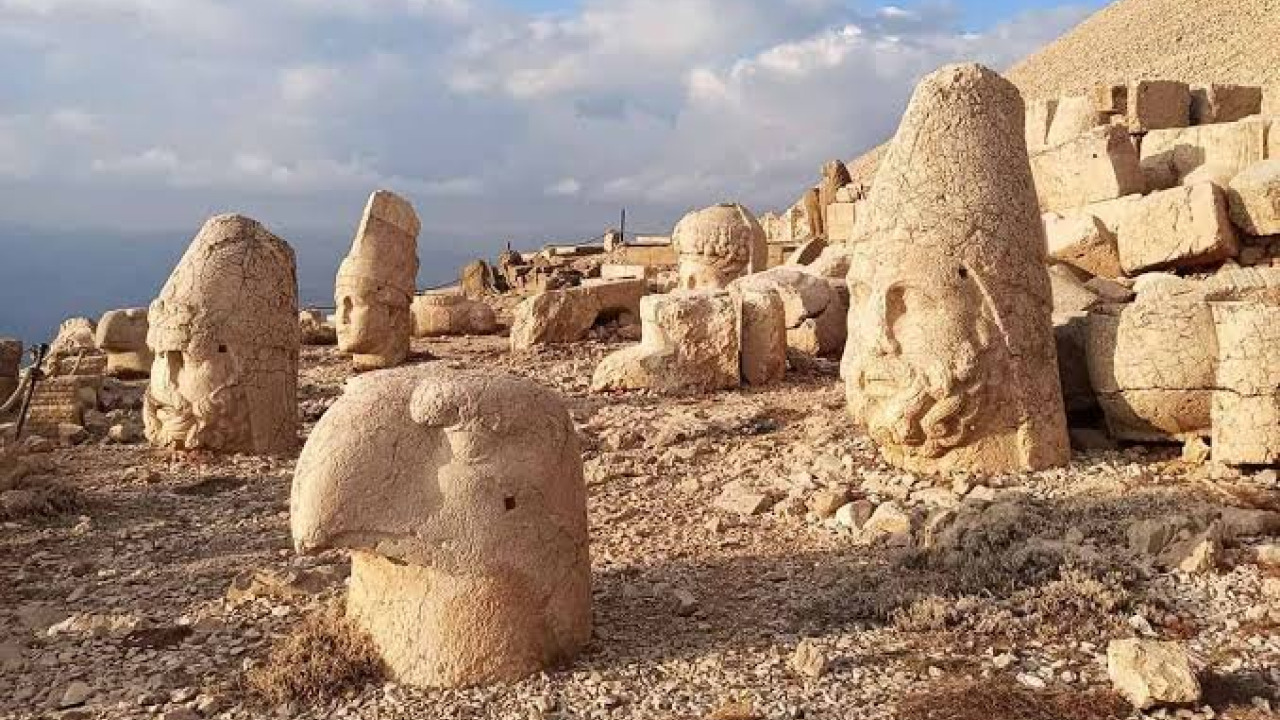
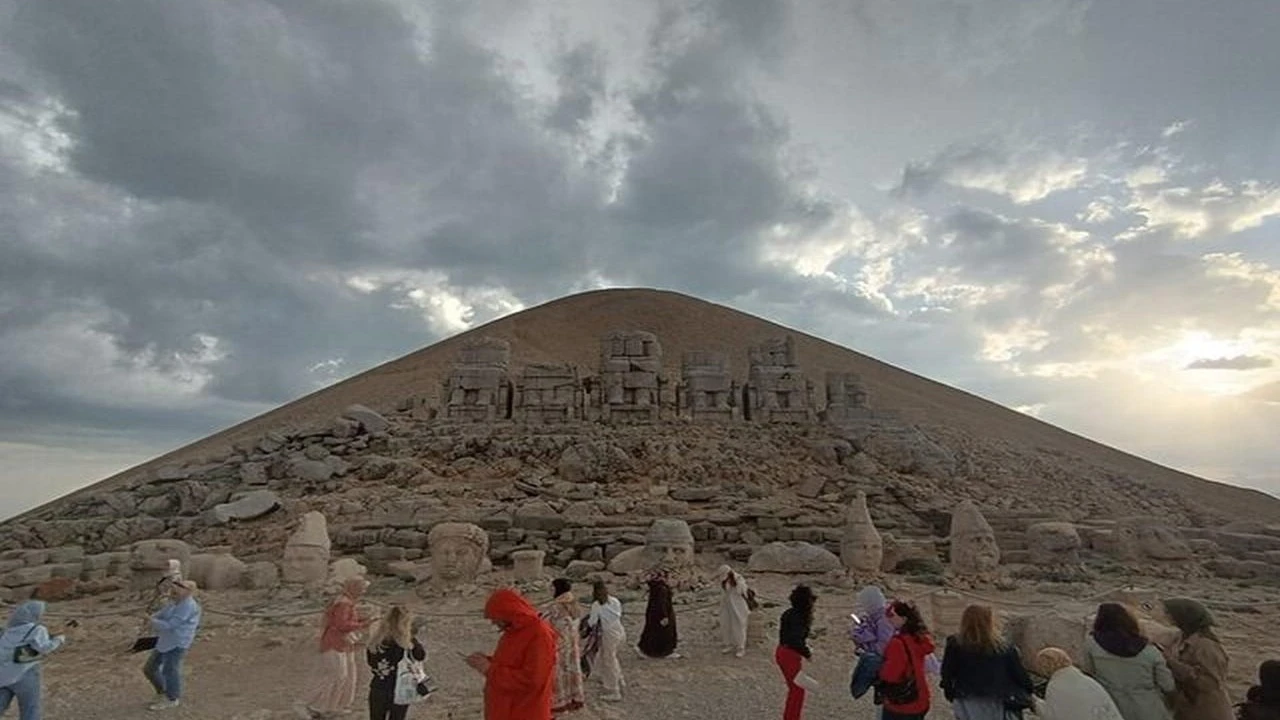
When commissioning his monumental tomb, Antiochus I blended the Greek and Persian pantheons, placing Apollo, Zeus, Heracles, and the Commagene goddess of fertility side-by-side. The colossal two-meter heads, detached from their bodies and placed on the terrace ground, have greeted the sun with their majestic gaze for thousands of years. Being in this sacred space leaves a profound impression, making you forget the very concept of time.
Once the sun has fully risen, you can follow the crushed stone path stretching from the East Terrace to the West Terrace. The famous Lion Horoscope relief on the West Terrace is considered one of the oldest astrological calendars known in the ancient world. Reliefs of the royal family and scenes of handshakes reflect the kingdom's diplomatic power etched in stone.
Your 5-Step Mount Nemrut Sunrise Itinerary
To ascend to the summit in the dark of night and fully explore its entire historical legacy, follow this planned 5-step itinerary:
- Night Departure from Kahta & Vehicle Transfer: Depart from Kahta around 03:00 AM, traversing winding mountain roads to reach the Mount Nemrut National Park car park.
- Summit Trail Ascent: From the service point at the car park, begin the ascent on the crushed stone, stepped walking path; a brisk 20-minute walk leads to the East Terrace.
- Sunrise Vigil on the East Terrace: Capture the moment of sunrise and the statues illuminated by the first light; examine the inscriptions and sculptures with your guide.
- Circumnavigating the Tumulus & West Terrace Transition: Circle the 50-meter-high tumulus of crushed stones to cross over to the West Terrace and view the Lion Horoscope relief.
- Descent to the Valley & Surrounding Historical Tour: After descending the mountain, complete your cultural tour by visiting the Arsemia archaeological site, the historic Cendere Bridge, and the Karakuş Tumulus.
This phased itinerary ensures you catch the breathtaking summit dawn and explore other remnants of the Commagene Kingdom in detail during daylight. Proper timing also helps you avoid the midday heat on your return journey.
Historical Sites at the Foot of Mount Nemrut
A trip to Mount Nemrut isn't limited to just the summit; it offers an immense archaeological trail stretching along the Kahta Stream valley. The structures dotted along the route bear witness to Commagene's military and religious genius.
Mount Nemrut Tumulus and Terraces
The 50-meter-high mound of crushed stones at the summit is an artificial hill covering King Antiochus's burial chamber. The East, West, and North terraces surrounding the tumulus were areas where religious ceremonies were performed. Guardian statues of eagles and lions, carved from limestone blocks, symbolize the kingdom's celestial and earthly power.
Karakuş Tumulus (Monumental Tomb of Women)
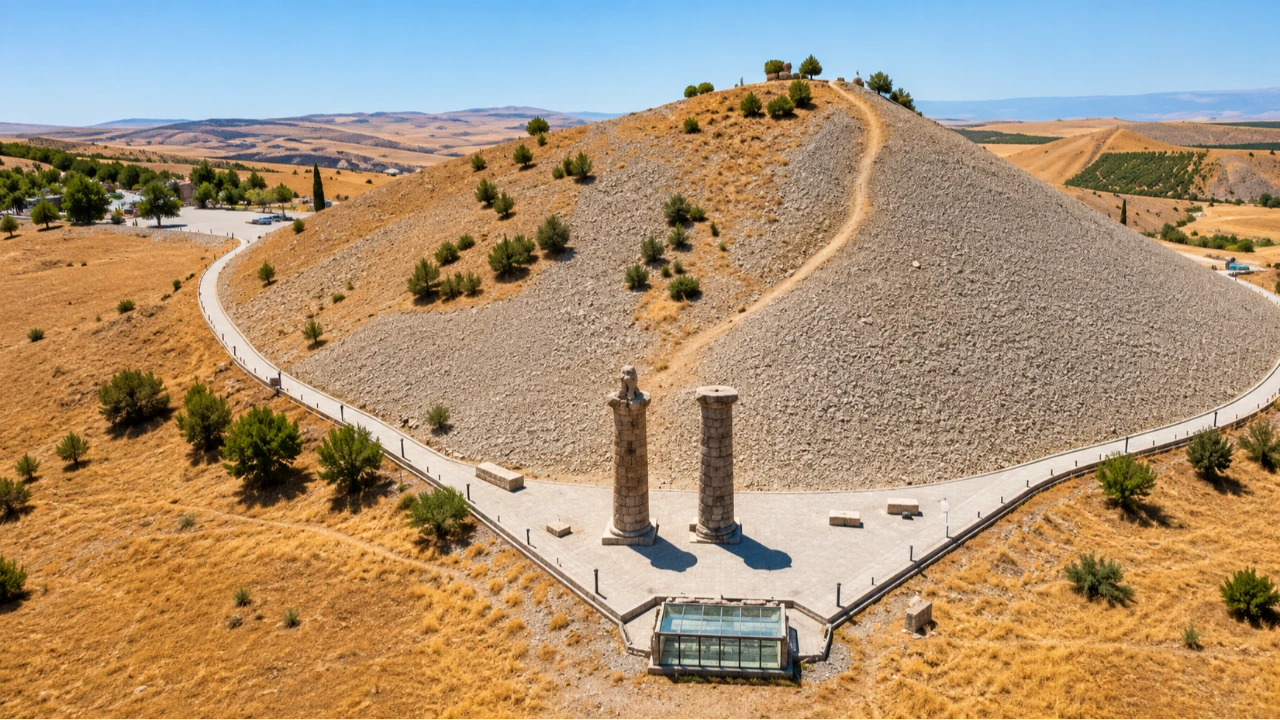
Built for the women of the Commagene royal family, this monumental tomb stands out with its famous columns topped by eagle statues. The columns rising around the gravel mound reflect the burial traditions of the era. Inscriptions on the columns provide valuable information about the royal lineage.
Historic Cendere Bridge
Built in the 2nd century in the name of Roman Emperor Septimius Severus, this bridge rises over the Cendere Stream with a monumental, colossal arch. Constructed using interlocking keystone blocks without mortar, it is one of the world's oldest surviving bridges. The architectural elegance of the bridge, connecting the two sides of the canyon, makes it an indispensable stop for photographers.
Ancient City of Arsemia (Old Kahta)
Arsemia, the summer capital of the Commagene Kingdom, houses the remains of a palace and sacred areas built on a steep hill. The relief depicting Heracles and Antiochus shaking hands here is a prime example of ancient art. The longest known Greek inscription in Anatolia is also carved into the rocks at this archaeological site.
Yeni Kale (New Castle) and Kahta Canyon
Rising on a rocky hill opposite Arsemia, Yeni Kale (New Castle) dominates the valley with its robust ramparts, renovated during the Mamluk period. Inside the castle, you'll find remains of water cisterns, a mosque, and a dovecote. Travelers eager to explore other historical gems of Southeast Anatolia can add historical discovery tours in the Adıyaman region and cultural routes departing from Kahta to their itineraries.
Comparing Mount Nemrut Sunrise vs. Sunset Experiences
Both sunrise and sunset at Mount Nemrut's summit offer distinct visual atmospheres. The choice of which time to visit depends on travelers' expectations and itinerary.
| Evaluation Criterion | East Terrace Sunrise | West Terrace Sunset |
|---|---|---|
| Dominant Light Angle | Direct Crimson Glow Rising Over the Euphrates Basin | Soft Golden Light Setting Behind the Statues |
| Temperature & Wind | Quite Cold and Harsh Mountain Air (Jacket Required) | Cool Mountain Air, Breaking the Daytime Heat |
| Visitor Density | High Focus, Quiet and Serene Atmosphere | Afternoon Crowds, Lively Photo Activity |
| Logistical Timing | Sleepless Journey with 03:00 AM Departure | Relaxed Afternoon Departure |
| Terrace Illumination | Statue Faces Receive Direct Sunlight | Statues Appear Majestic as Silhouettes |
| Photography Suitability | Sky Color Transitions and Face Details | Dramatic Shadows and Sunset Horizon |
Most travel writers and photographers recommend sunrise due to the clear illumination of the statues' facial features. However, sunset also offers an appealing alternative with milder weather conditions.
Essentials for Your Summit Ascent
To stay comfortable amidst the harsh climatic conditions at Mount Nemrut's summit, here are the practical items you should pack:
- Windproof, Thick Jacket and Beanie: Even in summer, the pre-dawn wind can be biting; a thick fleece or windbreaker is a lifesaver.
- Headlamp or Powerful Flashlight: The ascent from the car park to the terrace happens in pitch darkness, so a light source to illuminate your path is essential.
- Trekking Shoes: To prevent slipping and ankle sprains on the steep, crushed stone path, opt for shoes with good grip.
- Thermos with Hot Beverage: A warm tea or coffee to sip while awaiting the sunrise will keep you invigorated in the mountain chill.
- Portable Charger (Power Bank): Cold weather can rapidly drain phone and camera batteries; therefore, carrying a backup power source is a must.
Accommodation facilities in Kahta district offer convenient proximity for early morning departures. Adhering to tour vehicle departure times is crucial to ensure you don't miss the sunrise at the summit.
Frequently Asked Questions 5
When should one watch the sunrise on Mount Nemrut?
While sunrise times vary by season, in summer, it typically occurs between 04:30 AM and 05:15 AM. Considering the ascent to the summit and time to find a spot, it's advisable to arrive at the car park by 04:00 AM at the latest.
What is the best season to ascend Mount Nemrut's summit?
The most suitable period for Mount Nemrut National Park is from early May to the end of October. In winter, the summit is covered in heavy snow, and roads may become inaccessible.
Is sunrise or sunset more impressive on Mount Nemrut?
Both times are captivating, but since the statues' faces look eastward, their expressions are illuminated much more clearly and brightly by the morning sun. For this reason, sunrise tours tend to attract more cultural interest.
What is the altitude of Mount Nemrut's summit, and how cold does it get?
Mount Nemrut stands at an altitude of 2,150 meters above sea level. Even on the hottest summer days, temperatures at the summit can drop to between 4 and 8 degrees Celsius in the early morning.
How is transportation to Mount Nemrut provided from Kahta or Adıyaman city center?
From Kahta town center, the national park can be reached in about 1 hour by following approximately 45 kilometers of asphalt mountain road. Organized cultural tours departing from Adıyaman airport and the city center eliminate any transfer concerns.