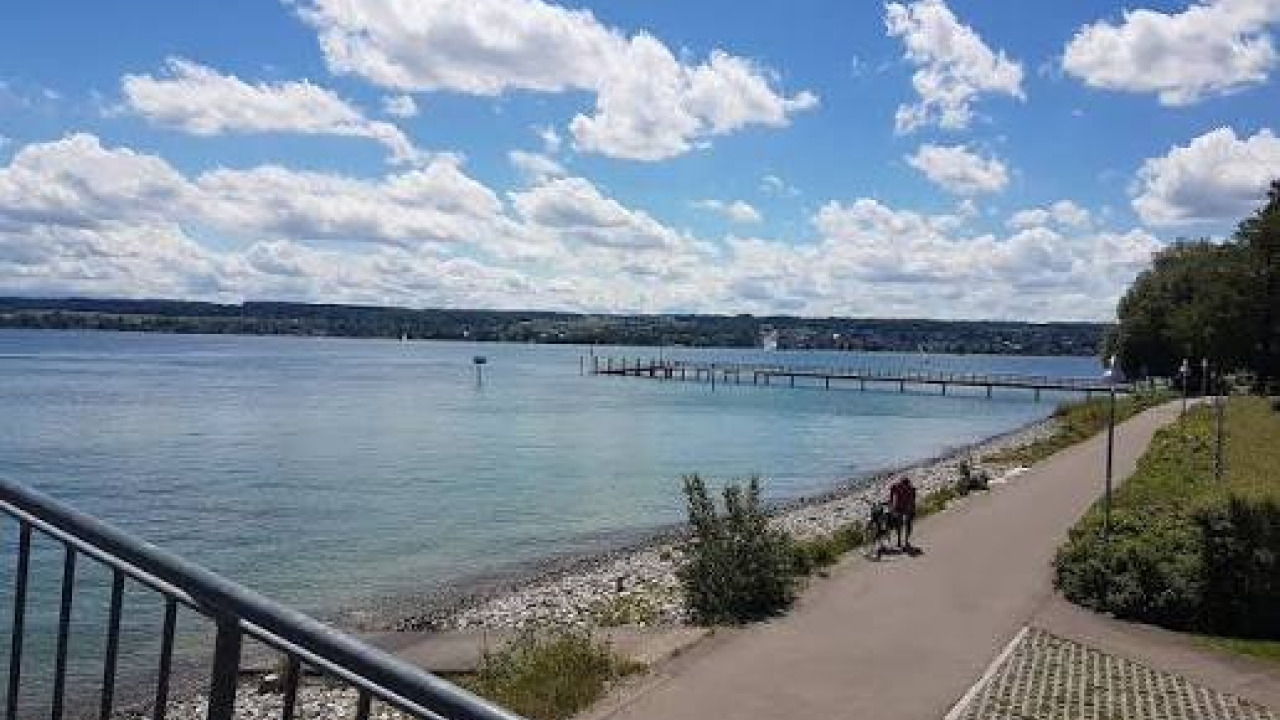
Walk a few hundred meters south from Konstanz's old town, and you'll find yourself in Switzerland without a single barrier; one side of the street is Germany, the other is Kreuzlingen. This detail perfectly encapsulates the spirit of Lake Constance (Bodensee). The lake shares its shores with Germany, Austria, and Switzerland, with towns seamlessly connected by train, ferry, and scenic bike paths. What's more, the precise sovereignty over the lake's vast basin has never been formally defined by treaty. At its heart lies three nations, a shared expanse of water, and a magnificent 260-kilometer cycling route tracing its shores. This guide will take you country by country, detailing the best times to visit, what to see at each stop, and how to utilize the lake's convenient ferry crossings.
Quick Facts
| Topic | Information |
|---|---|
| Location | Northern foothills of the Alps; shores in Germany, Austria, and Switzerland |
| Bordering Countries | Germany (Baden-Württemberg, Bavaria), Austria (Vorarlberg), Switzerland (Thurgau, St. Gallen) |
| Surface Area | 536 km² (Obersee 473, Untersee 63) |
| Shoreline Length | 273 km |
| Deepest Point | 251 m; lake elevation 395 m |
| Main Route | Bodensee-Radweg, 260 km, 4-8 stages |
| Route Profile | Total ascent 413 m, mostly flat |
| Cycling Season | April - October; catamaran summer schedule April 1 - October 4 |
| Lake Crossing | Konstanz-Meersburg car ferry 365 days, 24 hours |
| Route Start | Konstanz or Bregenz |
What Makes Lake Constance (Bodensee) Unique: A Lake Without Borders
The unique aspect of Lake Constance (Bodensee) is that the division between the three countries remains legally undefined. According to the International Commission for the Protection of Lake Constance (IGKB), the border in the Untersee and Seerhein sections was established by an 1854 agreement, running through the middle of the Rhine. However, in the Obersee, between the Meersburg-Konstanz line and Bregenz, sovereignty relations are unregulated; theories of condominium, 'Halde,' and real division coexist. In practice, regional commissions manage affairs, and visitors rarely notice the complexities.
To put its scale into perspective: the lake boasts a surface area of 536 km², a shoreline length of 273 km, a deepest point of 251 meters, and an elevation of 395 meters above sea level. The cycling route, at 260 kilometers, is shorter than the full shoreline because it cleverly cuts across bays. Germany holds the longest stretch of coastline, while Austria has the shortest: the northern and northwestern shores belong to Germany, the eastern tip to Austria, and the southern shore to Switzerland. Regional sources often refer to Lake Constance as Central Europe's third-largest lake.
Season Matrix: What Each Month Offers
| Period | Route Conditions | Things to Note |
|---|---|---|
| April | Catamaran summer schedule begins, spring blossoms at Mainau | Weather variable, dress in layers |
| May - June | Long days, mild water, rose gardens | Accommodation starts to fill up |
| July - August | Bregenzer Festspiele on the lake stage | Peak crowds, Bregenz gets fully booked |
| September - Oct 4 | Grape harvest, warm afternoons | Days shorten, shorten evening rides |
| Mid-October - March | Mainau open, ferry and catamaran operating | Catamaran switches to winter schedule, ground may be wet |
Two main factors determine the season: the schedule of lake crossings and the crowd levels. After October 4th, the catamaran switches to its winter schedule, reducing service frequency; however, the car ferry operates consistently year-round.
The German Shore: From Konstanz to Lindau
The northern shore of Lake Constance lies in Germany, offering the route's most concentrated cultural experiences.
Konstanz: Council City and the Route's Starting Point
Konstanz played host to one of the great ecclesiastical assemblies of the Middle Ages, the Council of Konstanz, held between 1414 and 1418. The city's Minster of Our Lady (Münster Unserer Lieben Frau) is a Romanesque pillared basilica consecrated in 1089, its silhouette completed by a neo-Gothic spire added in 1853. Some of the Council's decisions were made here, and on July 6, 1415, the Bohemian reformer Jan Hus was condemned in this very place. The Konzil building by the harbor is where the papal election north of the Alps took place, and the nearby Imperia statue offers a contemporary interpretation of this significant event.
The city serves as a natural starting and ending point for the route, offering convenient bike rentals, train connections, and lake excursions.
Mainau: The Flower Island, Open 365 Days a Year
Mainau, often called the 'Flower Island,' is a garden paradise nestled within the lake, officially open to visitors 365 days a year. The island is designed as an open-air collection, featuring a Baroque palace, a palm house, an Italian rose garden, a butterfly house, and an arboretum. During summer, an approximately one-hectare corn maze provides an extra attraction for families with children. In summer, the island is open from 9:00 AM to 7:00 PM, with the butterfly house open from 10:00 AM to 6:00 PM; hours vary seasonally.
Mainau is directly on the Lake Constance Cycle Path (Bodensee-Radweg), but bicycles are not permitted on the island itself. Parking, lockers, and e-bike charging stations are available at the land entrance. Access is possible by land via the 4/13 ring bus line or by boat from Konstanz, Überlingen, and Meersburg. Admission fees vary by season and ticket type.
Meersburg: Vine Terraces and Two Castles
Meersburg is perched on vine-covered terraces overlooking the lake. The historic Altes Schloss (Old Castle) at the top can be visited without an appointment and is open daily from 10:00 AM to 6:30 PM; closing time shifts to 6:00 PM in winter. Adjacent to it, the Neues Schloss (New Castle) served as the residence for the Prince-Bishops of Konstanz, notable for its staircase designed by Balthasar Neumann and its panoramic lake views. Viticulture has been recorded in the region since the 13th century, supported by the prince-bishops; the state vineyard operation is located next to the Neues Schloss.
Practical Tip: The car ferry between Konstanz and Meersburg operates 24/7, 365 days a year, allowing you to plan your route from either shore. The town's hills are steep; leaving your bike below can save time and effort.
Friedrichshafen: The Birthplace of the Zeppelin
Friedrichshafen's identity is intrinsically linked to its airship history. The Zeppelin Museum is housed in the former harbor station building, constructed in the Bauhaus style, located at Seestraße 22 by the harbor. At the heart of the museum is a full-scale partial reconstruction of the passenger sections of the LZ 129 Hindenburg, allowing visitors to walk through these areas from a gangway. The collection encompasses over 1,500 original objects, historical audio and film recordings, and works by classical modern artists such as Otto Dix. The shoreline continues eastward through orchards, and the German section concludes with the island old town of Lindau, part of Bavaria.
For those curious about German traveler habits from a Turkish perspective, our article on the German tourist profile offers complementary reading.
The Austrian Shore: Lake Stage, Delta Birds
The eastern tip of Lake Constance is located in Austria's Vorarlberg state, forming the shortest section of the shoreline.
Bregenz and the Pfänder Panorama
Bregenz, the capital of Vorarlberg, is renowned for its iconic floating stage on Lake Constance. The 2026 season of the Bregenzer Festspiele runs from July 22nd to August 23rd, featuring Verdi's La traviata on the lake stage. As the program changes annually, always confirm the schedule for your intended season on the festival's official website.
The Pfänder cable car, located behind the city, ascends to 1,064 meters in just six minutes. From the summit, you'll enjoy breathtaking views of the entire lake and 240 Alpine peaks spanning Austria, Germany, and Switzerland. On the slopes, the Alpenwildpark offers opportunities to observe ibex, deer, mouflon, and marmots.
Rheindelta: Where the Rhine Meets the Lake
South of Bregenz, the route passes through the Rheindelta protected area, where the Rhine River flows into Lake Constance. This area is an internationally important wetland under the Ramsar Convention and holds Natura 2000 status according to EU Bird and Habitat directives, considered Vorarlberg's richest conservation area in terms of species diversity. Popular birdwatching spots include the vicinity of Glashaus, the inner Fussach Bay, and the area between the sand delta and the lagoon. The Rheindeltahaus visitor center is open weekends from 11:00 AM to 5:00 PM between April and October.
The Swiss Shore: Tranquil Waters and a UNESCO Library
The southern shore of Lake Constance lies in the Swiss cantons of Thurgau and St. Gallen; this section is more rural and runs parallel to the train line.
Romanshorn and Kreuzlingen
Kreuzlingen is the town adjacent to Konstanz; the transition between the two cities feels like a seamless urban street. Romanshorn, on the Swiss side, is a port town and a key train hub. Tired travelers can shorten their route here by taking their bike on a train or boat.
St. Gallen Abbey District
A short train ride inland from the lake shore brings you to the St. Gallen Abbey District, inscribed on the UNESCO World Heritage List in 1983 under criteria (ii) and (iv). According to UNESCO, the complex functioned as one of Europe's leading Carolingian monasteries from the 8th century until its secularization in 1805. The Abbey Library is celebrated as one of the world's oldest and richest collections, preserving the earliest known architectural plan drawn on parchment. The written heritage within the library and archives was added to the UNESCO Memory of the World program in 2017.
For those seeking similar cultural themes in Turkey, our cultural tours in Turkey category, featuring ancient cities, monasteries, and museum programs, offers comparable reading.
Breaking Down the Ride: A Week-Long Itinerary, Stage by Stage
The official route description divides the 260-kilometer loop into 4-8 stages. In the seven-day breakdown below, daily distances range from 20-45 kilometers; the final 70-kilometer section can be split into two days.
| Day | Section | Distance | Highlight Stop |
|---|---|---|---|
| 1 | Konstanz - Mainau - Meersburg (ferry crossing) | 25 km | Mainau gardens |
| 2 | Meersburg - Friedrichshafen | 20 km | Zeppelin Museum |
| 3 | Friedrichshafen - Lindau | 25 km | Lindau island old town |
| 4 | Lindau - Bregenz - Rheindelta | 35 km | Pfänder cable car |
| 5 | Rheindelta - Romanshorn | 45 km | St. Gallen train detour |
| 6 | Romanshorn - Kreuzlingen and Konstanz | 40 km | Kreuzlingen border street |
| 7 | Untersee arm and western end of the lake | 70 km | Narrow canal section |
| Total | Full loop | 260 km | Three countries |
When planning your trip, follow these steps:
- Decide which end of the loop to start from; Konstanz offers strong train connections, while Bregenz is advantageous for festival-goers.
- Incorporate lake crossings from the outset: the car ferry runs year-round, and the catamaran operates on its summer schedule from April 1st to October 4th.
- Book accommodation according to your stage endings; cyclist-friendly lodging fills up quickly on weekends.
- Avoid placing two long stages back-to-back; intersperse them with a shorter day.
- Shorten the day's distance if you plan stops with limited opening hours.
- Allow for a buffer day: wind and rain can slow your pace.
The route largely follows the shoreline, with a brief section at the western end ascending to a ridge. All three countries use a common signpost logo, but visibility varies: signs are prominent on the Swiss side, while they can be less noticeable in the German and Austrian sections.
Getting There from Turkey and Lake Crossings
Flights and Land Connections
Instead of searching for direct flights to the region, a common approach is to fly into major surrounding hubs and continue by land. Large airports near Lake Constance include Zurich, Munich, and Stuttgart; the Friedrichshafen airport on the shore is smaller-scale. From these, train connections to the lake shore typically involve transfers; check official timetables from Deutsche Bahn and Swiss Federal Railways for schedule and duration information. Visa requirements vary by nationality; confirm with the official consular sources of the relevant countries before travel. For those considering connecting the route to the south of the Alps, our Italy travel guide offers regional itineraries.
Ferry, Catamaran, and Train
Lake crossings are key to the route's flexibility, allowing you to cross to the opposite shore or skip a stage in case of bad weather.
| Crossing | Duration | Season | Note |
|---|---|---|---|
| Konstanz - Meersburg car ferry | Short crossing | 365 days, 24 hours | Practical connection to the northern shore |
| Konstanz - Friedrichshafen catamaran | 52 minutes | Year-round; summer schedule April 1 - Oct 4 | Separate arrangements for bicycles |
| Regional train along the shore | Between towns | Year-round | Stage shortening and bad weather escape |
| Boat services to Mainau | Short crossing | Seasonal | From Konstanz, Überlingen, Meersburg |
Bike Setup, Accommodation Areas, and Local Cuisine
Equipment and Bike Choice
- A touring bike with medium-width tires is suitable; while the route is mostly asphalt, there are cobblestone and gravel sections.
- E-bikes are common, with charging stations available in lakeside towns and at Mainau's land entrance.
- A helmet, rain gear, sunscreen, and a small first-aid kit are essential; the lake weather can change rapidly.
- Carry an offline or printed map, as phone battery can run out.
Accommodation Areas
Choosing a region rather than a specific hotel brand can be more practical. The Konstanz and Kreuzlingen area, being the start and end of the route, offers the strongest train connections. The Meersburg and Friedrichshafen stretch allows for route planning from either shore, thanks to ferry and catamaran access. Bregenz tends to book up early during festival periods. The area around Romanshorn is quieter and conveniently located along the train line.
For cyclist-friendly accommodation, the ADFC's Bett+Bike certification is a mark of quality: certified establishments welcome guests for a single night, provide lockable bike storage, and offer a repair kit.
From Lake to Table
The regional cuisine beautifully blends the culinary traditions of all three countries along its shores. Whitefish, locally known as Felchen, caught fresh from the lake, is a common delicacy in lakeside restaurants, served grilled or smoked. On the German side, pretzels and grilled sausages are popular; on the Swiss side, fondue and raclette take center stage; and on the Austrian side, pastries are a highlight. The 13th-century history of Meersburg's vineyards transforms white wine into an essential evening ritual.
A unique budgeting point for this route is that the loop passes through two different currency zones, so planning your payment arrangements for the Swiss section in advance is advisable. Key cost components include accommodation, bike rental, lake crossings, and museum admissions. For those seeking a similar outdoor adventure experience in Turkey, our nature and adventure tours in Turkey category, featuring canyon and highland programs, offers a point of comparison.
Frequently Asked Questions 6
How many days does it take to complete the Lake Constance bike route?
The route is 260 kilometers long, and its official description divides the loop into 4-8 stages. At a pace of 20-45 kilometers per day, allowing time for stops, it can be completed in approximately one week. Shortening stages with a ferry or regional train can reduce the duration to five days.
How do you get to Lake Constance and is a visa required?
The common method is to fly into Zurich, Munich, or Stuttgart airports and then take a train to the lake shore; the Friedrichshafen airport on the shore is smaller. Visa requirements vary by nationality and are updated periodically; confirm with the official consular sources of the relevant countries before travel.
Which months are suitable for a trip to Lake Constance?
The period between April and early October is the main window; the catamaran's summer schedule runs from April 1st to October 4th. July and August are peak crowd months, while May, June, and September offer a more balanced experience.
Can you cross the lake by bike to the opposite shore?
Yes, you can. The car ferry between Konstanz and Meersburg operates 24/7, 365 days a year. The Konstanz-Friedrichshafen catamaran reaches the opposite shore in 52 minutes and has separate arrangements for cyclists; this route operates year-round, with its summer schedule from April 1st to October 4th.
Is the Lake Constance route suitable for families with children?
Most of the route is flat, and the total ascent for the loop is only 413 meters, making this profile suitable for a family pace. Keeping daily distances short and splitting longer stages with a ferry or train will make planning easier.
What are the main budget components for a Lake Constance tour?
The main components are accommodation, bike rental, lake crossings, train tickets, and museum admissions. Since the loop passes through two different currency zones, it's advisable to plan your payment arrangements for the Swiss section in advance. Confirm current prices on the official websites of the respective establishments.