Step into a world where history sails on! The Istanbul Naval Museum, nestled right next to Beşiktaş Pier Square, invites you to explore Turkey's rich maritime heritage. Here, magnificent original sultan's caïques, ranging from 3 to 40 meters in length, are displayed alongside the awe-inspiring 17th-century Historical Galley, a formidable oared warship. Rising majestically on the same axis as the tomb and monument of the legendary Barbaros Hayreddin Paşa, the Istanbul Naval Museum chronicles a captivating story – from the Ottoman sultans' grand voyages on the Bosphorus to the modern Republic's navy. Discover a fascinating universe of navigation instruments, portolan charts, ship models, and the tales of grand admirals, all just a stone's throw from the bustling pier.
Operating under the Turkish Naval Forces Command, this institution proudly stands as Turkey's largest naval museum, housing an impressive collection of approximately 20,000 artifacts. Established in 1897, it also holds the distinction of being the first military museum ever opened in Turkey. Below, we've compiled all the essential information you'll need to plan your visit, from ticket prices and transportation options to highlights of the collection and practical tips.
Quick Facts
| Information | Detail |
|---|---|
| Location | Sinanpaşa Mahallesi, Beşiktaş Caddesi No: 6, Beşiktaş / İstanbul |
| Affiliation | Turkish Naval Forces Command |
| Year Established | 1897 (Tersane-i Amire, Kasımpaşa) |
| Moved to Current Location | 1961 |
| Renovated Caïques Gallery Opening | October 4, 2013 |
| Collection Size | Approx. 20,000 artifacts |
| Closed Day | Monday |
| Visiting Hours | Weekdays 09:00 - 17:00, Weekends 10:00 - 18:00 |
| Full Ticket | 90 TL (as of Summer 2026) |
| Student Ticket | 30 TL |
| Müzekart | Not valid |
| Recommended Visit Duration | 1.5 to 3 hours |
| Phone | (0212) 327 43 45 |
Where is the Istanbul Naval Museum and How to Get There?
The museum is centrally located in the Beşiktaş district, right along the coastline. Its proximity to one of Istanbul's busiest public transport hubs makes it easily accessible for both locals and newcomers to the city. Given its position in a bustling square with heavy pedestrian and vehicle traffic, public transportation is usually the most practical way to arrive.
By Ferry to Beşiktaş Pier
If you're coming from the Asian side, you can take the Üsküdar or Kadıköy ferry lines directly to Beşiktaş Pier. The museum is conveniently located right next to the pier square, so a short walk of just a few minutes is all it takes. Crossing the Bosphorus by ferry offers a delightful start to your visit, almost as enjoyable as the museum itself!
By Metrobus, Metro, and Bus
For those arriving from the European side, Zincirlikuyu is the most popular transfer point. From there, you can catch a bus or dolmuş (shared taxi) heading towards Beşiktaş Square. It's worth noting that during peak traffic hours, this leg of your journey might take a bit longer.
By Tram and Coastal Walk
You can also take the T1 tram line to Karaköy or Eminönü and then transfer to a bus heading towards Beşiktaş. On pleasant days, a scenic walk along Dolmabahçe Caddesi from Kabataş is another option. This route allows you to enjoy the Bosphorus shoreline before reaching the museum.
Summary of Transportation Options:
| Transport Option | Departure Point | Arrival at Museum |
|---|---|---|
| Ferry | Üsküdar or Kadıköy pier | A few minutes' walk from Beşiktaş Pier |
| Metrobus transfer | Zincirlikuyu | Bus or dolmuş heading towards Beşiktaş |
| Tram (T1) transfer | Karaköy or Eminönü | Buses heading towards Beşiktaş |
| Walk | Kabataş / Dolmabahçe | Walk along the coast and avenue |
For visitors coming from the Asian side, here's a step-by-step route:
- Board a Beşiktaş ferry from Kadıköy or Üsküdar pier and enjoy the Bosphorus crossing.
- Disembark at Beşiktaş Pier and head to the square; the Barbaros Hayreddin Paşa Monument is a prominent landmark that will help you find your way.
- Proceed in the direction of the monument and tomb; the museum building is on the same axis, along Beşiktaş Caddesi.
- Purchase your ticket at the entrance and begin your visit in the main exhibition building.
If you prefer a pre-planned itinerary rather than navigating ferry and bus transfers yourself, Beşiktaş cultural tours offered by Travel Tour Shop combine the district's highlights into convenient programs.
From 1897 to Today: A History of the Museum
The museum's story doesn't begin in Beşiktaş, but rather on the shores of the Golden Horn. Since its establishment, the institution has relocated several times, with each move coinciding with the growth of its impressive collection.
The First Military Museum Founded at Tersane-i Amire
The museum was founded in 1897, with the permission of Sultan Abdülhamid II and under the orders of the then-Minister of Marine, Hasan Hüsnü Pasha of Bozcaada. It was initially named "Museum and Library Administration" and housed in a small building at Tersane-i Amire in Kasımpaşa. The efforts of Colonel Hikmet Bey and Captain Süleyman Nutku were instrumental in its establishment. In its early years, it functioned more as an unorganized storage exhibition.
A comprehensive renovation took place in 1914 during the tenure of Cemal Pasha, who was then the Minister of Marine. Naval Captain and painter Ali Sami Boyar, appointed as director, laid the groundwork for the collection's scientific organization by establishing workshops for ship models, molds, and mannequins.
War Years and Relocation to Beşiktaş
With the outbreak of World War II, the artifacts were moved to Anatolia for safekeeping. In 1946, it was decided to return the collection to Istanbul, and the museum relocated to the Dolmabahçe Mosque Complex, reopening to visitors on September 27, 1948, after two years of work. In 1961, it finally settled into its current location in Beşiktaş, next to the monument and tomb of Barbaros Hayreddin Paşa at Beşiktaş Pier Square. In 1971, the former storage building in the museum garden was transformed into the "Historical Caïques Gallery," dedicated to exhibiting the galley and sultan's caïques.
Architectural Competition and 2013 Renovation
Due to the Caïques Gallery not being originally built as a museum and its insufficient size, a national architectural project competition was launched in 2005. Teğet Mimarlık's project won first prize. In 2008, the tender for the new building was finalized, and construction began on a complex comprising the main exhibition building, the Historical Caïques Gallery, a cultural center, and open-air exhibition areas. The historical caïques were moved to temporary storage in 2009, restoration work was completed in 2013, and the Historical Caïques Gallery reopened to visitors on October 4, 2013. Today, the complex boasts a total construction area of 17,600 square meters, with approximately 9,000 square meters dedicated to exhibition and circulation space.
| Year | Milestone |
|---|---|
| 1897 | Established as "Museum and Library Administration" at Tersane-i Amire |
| 1914 | Reorganization and establishment of workshops during Cemal Pasha's era |
| 1946 - 1948 | Relocation to Dolmabahçe Mosque Complex and reopening |
| 1961 | Settled into its current location in Beşiktaş |
| 1971 | Creation of the Historical Caïques Gallery |
| 2005 | National architectural project competition, Teğet Mimarlık wins first prize |
| 2013 | Restoration completed and reopening on October 4 |
The Sultan's Caïques Collection and the Historical Galley
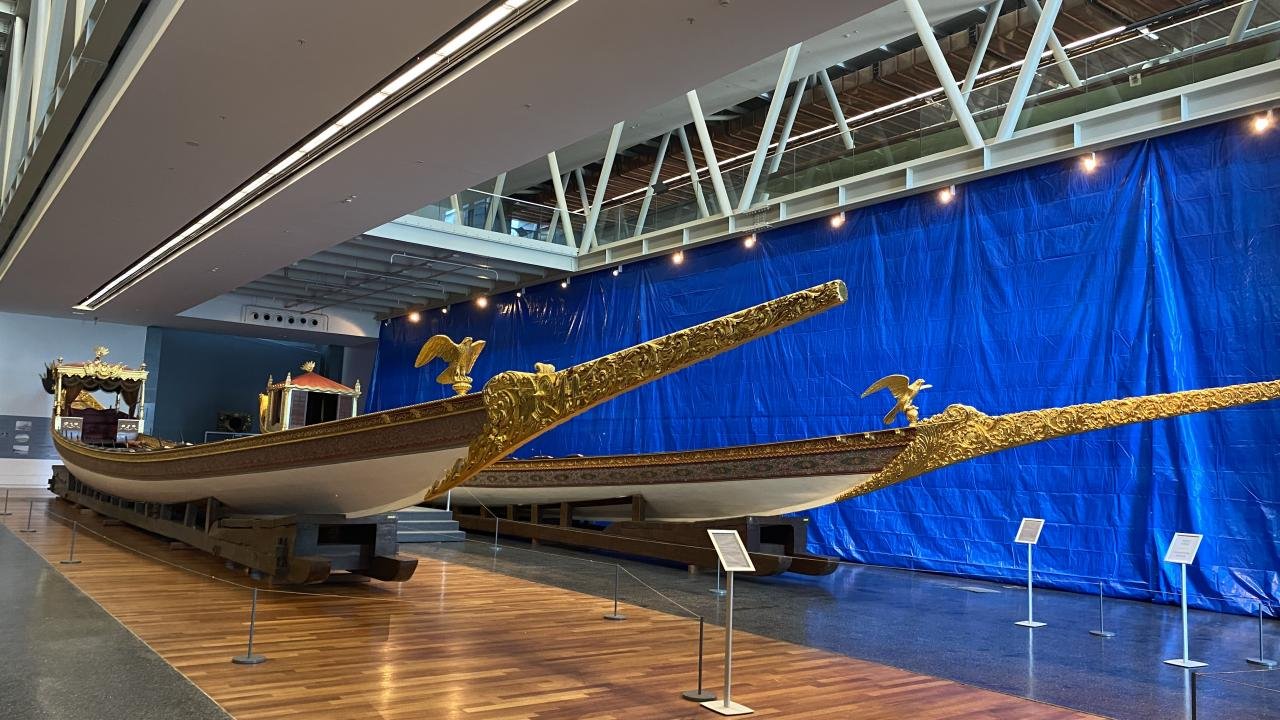
What truly sets this museum apart from other maritime museums is the Historical Caïques Gallery, home to one of the world's most extensive collections of original sultan's caïques. These magnificent vessels, ranging from 3 to 40 meters in length, are far more than just the boats sultans used for their Bosphorus journeys; they are exquisite examples of Ottoman craftsmanship and artistry.
Among the standout pieces in the gallery, you'll find:
- The Historical Galley: Dating back to the 17th century, this rare oared warship is undoubtedly the gallery's most striking exhibit.
- Sultan's Caïques: Ornate caïques used by sultans such as Mahmud II, Abdülmecid, and Abdülaziz showcase 19th-century craftsmanship with their intricate gold leaf and carved details.
- Sense of Scale: The high-ceilinged gallery, where the caïques are displayed together, makes it easy to grasp the true impressive size of these historical vessels.
Taking your time to explore this section is arguably the most rewarding part of your visit, offering profound insights into the ceremonial maritime culture of the Ottoman Empire.
From Ottoman Fleet to Model Ships: Other Collections
In the main exhibition building, artifacts are presented in a chronological and thematic order. As visitors progress through the eras, they can trace the evolution of naval technology and its visual language.
Navigation Instruments, Maps, and Banners
The museum showcases manuscripts, maps, portolan charts, imperial monograms (tughras) and coats of arms, banners, and navigation instruments. This section vividly demonstrates how seafarers' navigation practices evolved over centuries through tangible objects. For those interested in cartography, the exhibited documents offer fascinating insights into the geographical knowledge of the era.
Ship Models, Naval Uniforms, and Figureheads
Full and half ship models, figureheads, weapons, and naval uniforms constitute other significant parts of the collection. The models visually explain how a warship was constructed and how its interior was designed. In the open-air and garden areas, you'll find large-scale objects such as cannons and anchor collections.
Atatürk, the Republican Navy, and the Cyprus Peace Operation Section
The museum doesn't solely focus on the Ottoman era. A dedicated section honors Mustafa Kemal Atatürk, who famously declared, "We must consider seafaring as the great national ideal of the Turk and achieve it in a short time." Here, visitors can see the skiffs he used and his personal maritime belongings. Materials highlighting the importance given to naval education during the Republican period are also featured in this section.
Further along the chronological narrative, there's a section dedicated to the Republican Navy and the Cyprus Peace Operation. This allows visitors to follow the continuous line of naval history from the galley era to the modern fleet all in one visit. This historical thread, stretching from the age of galleys to the Republican navy, can also be traced at other stops around the city; Istanbul cultural tour options from Travel Tour Shop offer routes that connect structures across different districts, showcasing the same historical flow.
Ticket Prices, Visiting Hours, and Müzekart Status
When planning your visit, ticket and hour information are often the most sought-after details. The values below are current as of Summer 2026; however, as the institution updates these periodically, it's always advisable to confirm with an official source before your visit.
Naval Museum Entrance Fee and Who Gets Free Admission?
| Ticket Type | Fee |
|---|---|
| Full Ticket | 90 TL |
| Student (18 - 25 years old) | 30 TL |
| 0 - 18 years old | Free |
| Over 65 years old | Free |
| Disabled visitors | Free |
| Martyrs' relatives and veteran card holders | Free |
| Turkish Armed Forces personnel and their families | Free |
Visitors eligible for free admission are required to show their ID or relevant card at the ticket counter. If you're visiting as a family, the free entry for children significantly lightens the budget for your trip.
Is Müzekart Valid at the Naval Museum?
No, Müzekart is not valid here. As the museum operates under the Turkish Naval Forces Command, not the Ministry of Culture and Tourism, visitors accustomed to using their Müzekart at ministry-affiliated museums should plan to pay with cash or card at the ticket counter.
Visiting Hours and Closed Days
| Day | Visiting Hours | Ticket Counter |
|---|---|---|
| Monday | Closed | Closed |
| Tuesday - Friday | 09:00 - 17:00 | Closes approximately one hour before closing time |
| Saturday - Sunday | 10:00 - 18:00 | Closes approximately one hour before closing time |
| New Year's Day and the first day of religious holidays | Closed | Closed |
Bearing in mind that the ticket counter closes an hour before the museum's official closing time is a crucial detail, especially for visitors traveling from afar. If you're planning to fit other city museums into the same trip, Istanbul museum ticket tours from Travel Tour Shop can simplify your entry planning from the outset.
Children, School Groups, and Visitor Tips
The museum's entrance features an educational play area for younger age groups and a gift shop. Ship models and life-sized vessels provide a tangible learning environment for children encountering maritime terminology for the first time. For school groups, it's advisable to call the museum in advance to inquire about group arrangements.
Here are a few practical tips to make your visit more efficient:
- Allocate your time wisely: Visitors typically spend between 45 minutes and 4 hours at the museum; dedicating 2 to 3 hours allows for a comprehensive exploration of the collection.
- Photography: Flash-free photography for personal use is generally permitted; however, professional shoots and tripod use require prior authorization.
- Plan your route: Starting in the main exhibition building and concluding with the Historical Caïques Gallery leaves the powerful impact of their scale for the grand finale of your visit.
- Avoid crowds: Weekday mornings offer a much calmer visiting experience compared to weekends.
- Accessibility needs: For wheelchair access or companion arrangements, the best approach is to call the museum beforehand to inquire about their current facilities.
- Don't skip the garden: The cannons and anchor collections in the open-air exhibition area also provide a refreshing break after exploring the indoor displays.
Beşiktaş After the Museum: A Short Walking Route
After your museum visit, the vibrant streets of Beşiktaş offer a natural continuation of your exploration. The square, pier, and bazaar are all within easy walking distance, so no additional transportation planning is required.
- Upon exiting the museum, visit the Tomb and Monument of Barbaros Hayreddin Paşa; the story of this legendary grand admiral perfectly complements what you've seen inside.
- Head down to the pier square and take a short break, watching the ferries glide across the Bosphorus.
- Cross into Beşiktaş Çarşısı (Bazaar) to sample some of the region's famous delicacies and wander through its historic arcades.
- If you still have energy, head uphill to conclude your day with Yıldız Palace and its surrounding wooded parkland.
For those who prefer a guided program over planning this walk independently, Beşiktaş day cultural tours from Travel Tour Shop conveniently combine the square, bazaar, and nearby historical sites into a single day's itinerary. While the Istanbul Naval Museum may not be as widely known as Topkapı Palace or Hagia Sophia, it certainly deserves its place on cultural itineraries as one of the most tangible narrators of the city's profound relationship with the sea.
Frequently Asked Questions 7
What are the opening days and visiting hours of the Istanbul Naval Museum?
The museum is closed on Mondays. On other weekdays, it can be visited from 09:00 to 17:00, and on weekends from 10:00 to 18:00. It is also closed on New Year's Day and the first day of religious holidays. The ticket counter closes approximately one hour before the general closing time, so it is safer to plan your visit for earlier in the day.
How much is the entrance fee for the Istanbul Naval Museum?
As of Summer 2026, a full ticket is 90 TL, and a discounted ticket for students aged 18-25 is 30 TL. Since fees are updated periodically, it is recommended to confirm with an official source before your visit.
Who gets free admission to the Naval Museum?
Visitors aged 0-18, visitors over 65, disabled visitors, relatives of martyrs and veteran card holders, and Turkish Armed Forces personnel and their families can enter the museum for free. The relevant ID or card must be shown at the ticket counter.
Is Müzekart valid at the Naval Museum?
No. As the museum is affiliated with the Turkish Naval Forces Command, Müzekart is not valid at this museum. Entrance tickets must be purchased separately at the counter.
Where is the Istanbul Naval Museum and how can I get there?
The museum is located at Sinanpaşa Mahallesi Beşiktaş Caddesi No: 6, next to Beşiktaş Pier Square. The most practical way to get there is by taking a Beşiktaş ferry from Üsküdar or Kadıköy; the museum is just a few minutes' walk from the pier. Those coming from the European side can use buses and dolmuşes heading towards Beşiktaş via a Zincirlikuyu transfer.
What is exhibited in the Historical Caïques Gallery at the Naval Museum?
The gallery displays original sultan's caïques, ranging from 3 to 40 meters in length. The 17th-century oared warship, Tarihi Kadırga (Historical Galley), is a prominent exhibit in this section; ornate caïques used by sultans like Mahmud II, Abdülmecid, and Abdülaziz reflect 19th-century craftsmanship with gold leaf and carved details. The renovated gallery opened to visitors on October 4, 2013.
How much time should I allocate for a museum visit?
The time visitors spend at the museum varies between approximately 45 minutes and 4 hours. A plan of 2 to 3 hours is a balanced choice for those who wish to explore the main exhibition building and the Historical Caïques Gallery in detail.