Halide Edip Adıvar, one of the most powerful voices in Turkish literature, left her mark not only through her novels and political activism but also as a keen observer who profoundly captured the soul of Istanbul. In her works, Istanbul is far more than a mere backdrop; it's a living, breathing entity that shapes plots, determines characters' destinies, and mirrors the evolving social fabric. This literary journey, stretching from the traditional textures of the Historic Peninsula to the modernizing hubs of Şişli and its surroundings, essentially encapsulates Turkey's transition from the Ottoman Tanzimat era to the Republic. In this guide, we'll rediscover the city through the author's eyes, tracing her footsteps through the places she immortalized.
Quick Facts
| Topic | Information |
|---|---|
| Route coverage | Fatih, Zeyrek, Sultanahmet, Harbiye, Osmanbey, Şişli |
| Recommended duration | Full day, approx. 6-7 hours walking and transit |
| Main transport lines | M2 Yenikapı-Hacıosman Metro and T1 Kabataş-Bağcılar Tram |
| Prominent landmarks | Fatih Camii, Zeyrek (Molla Zeyrek) Camii, Sultanahmet Meydanı |
| Historical anchor | May 23, 1919 First Sultanahmet Rally |
| Şişli connection | Halide Edip Adıvar Mahallesi, within Şişli district |
| Reading list | Sinekli Bakkal (The Clown and His Daughter), Ateşten Gömlek (The Shirt of Flame), Mor Salkımlı Ev (House with Wisteria), Türk’ün Ateşle İmtihanı (The Ordeal of the Turk) |
| Admission fees | No entry fee for mosques and squares; museum admissions are separate |
| Best season | Spring and autumn; summer afternoons can be very sunny |
Who Was Halide Edip Adıvar? Her Deep Connection with Istanbul
Halide Edip Adıvar centered the cultural codes of Istanbul, where she spent her childhood and youth, in her literary works. Her birth year is cited as both 1882 and 1884; she passed away in Istanbul on January 9, 1964, and was laid to rest beside her husband, Adnan Adıvar, in Merkezefendi Cemetery. Beyond her writing, she was a teacher, served as a corporal on various fronts during the Turkish War of Independence, and continued her reporting duties until the war's end.
Her influence extended beyond her pen into institutional history. Believing that a struggle without its own news source had little chance of success, she proposed the idea of a news agency to Mustafa Kemal, leading to the establishment of Anadolu Ajansı (Anatolian Agency) on April 6, 1920. She shaped the agency's journalistic language and actively participated in transmitting its first news report, thus becoming the first Turkish woman to play a role in founding a news agency.
The House with Wisteria in Beşiktaş
Mor Salkımlı Ev (House with Wisteria), the first of her two memoirs, recounts her childhood years through the late Ottoman period, while the second focuses on the War of Independence. Halide Edip states that the house giving the book its name was where she was born in Beşiktaş, overlooking Yıldız Palace; texts indicate the house was in the vicinity of Serencebey. Thus, while our route begins in Fatih, the author's Istanbul truly originates from a childhood home on the Bosphorus.
Years of Exile and Return Home
After the Republic was founded, she didn't shy away from vocalizing her disagreements with Atatürk on certain matters. In the latter half of the 1920s, she left the country with her husband, Adnan Adıvar, spending approximately four years in England and ten in France. During this period, she attended conferences and lectured at universities in America. Following Atatürk's death, she returned home in 1939 and was tasked with establishing the English Language and Literature department at Istanbul University's Faculty of Letters in 1940.
The Historic Peninsula: The Pulse of Traditional Istanbul
For Halide Edip, the Historic Peninsula is the bedrock of memory and identity. The Fatih district, particularly as symbolized in her novel Sinekli Bakkal, represents the pure essence of neighborhood culture, religious rituals, traditional arts, and community solidarity. The narrow streets, leaning wooden houses, madrasahs, and mosques of the Peninsula are prominent elements of the Istanbul of her childhood.
A Literary Walk Around Fatih Camii and Its Surroundings
Even today, the Fatih district partially preserves this historic fabric, but in Halide Edip's time, it was the main artery of a civilization. Readers virtually experience the silence of the mosque courtyard, the dim light of the madrasahs, and the unique conversations in neighborhood coffeehouses through the author's works.
The Fatih Camii you see today is not the original structure commissioned by Fatih Sultan Mehmed to architect Atik Sinan between 1463-1470. The great dome collapsed in the 1766 earthquake, and the walls were irreparably damaged. Under Sultan III. Mustafa, reconstruction began in 1767 according to a new plan, and the mosque was opened for worship in 1771. Only the mihrab and minaret bases from the original structure could be preserved. This layered history allows you to read the author's emphasis on a "changing city" etched in stone. Those wishing to explore the district with a guide can check the programs on the Fatih cultural tours page.
Architectural Texture and Characters in Zeyrek
Halide Edip Adıvar uses architecture as an atmospheric tool in her spatial descriptions. The old Istanbul houses around Zeyrek are symbols reflecting the social status and psychological states of her characters. Wooden bay-windowed houses, lives spilling out from windows, and narrow-paved streets act like characters themselves in her works.
The Molla Zeyrek Camii, which gives the district its name, was originally the church of the Pantokrator Monastery, founded by Emperor Ioannes Komnenos and his wife Eirene in the 12th century. After the conquest, Molla Zeyrek Mehmed Efendi, a scholar of the era, was appointed, and the monastery cells were converted into a madrasah, serving as the city's first Ottoman educational institution. The structure was inscribed on the UNESCO World Heritage List in 1985 as part of the Historic Areas of Istanbul. For walks tracing these historical layers on the Zeyrek slope, Fatih historical city tours offer an excellent starting point.
Neighborhood Crafts and Traditional Handicrafts
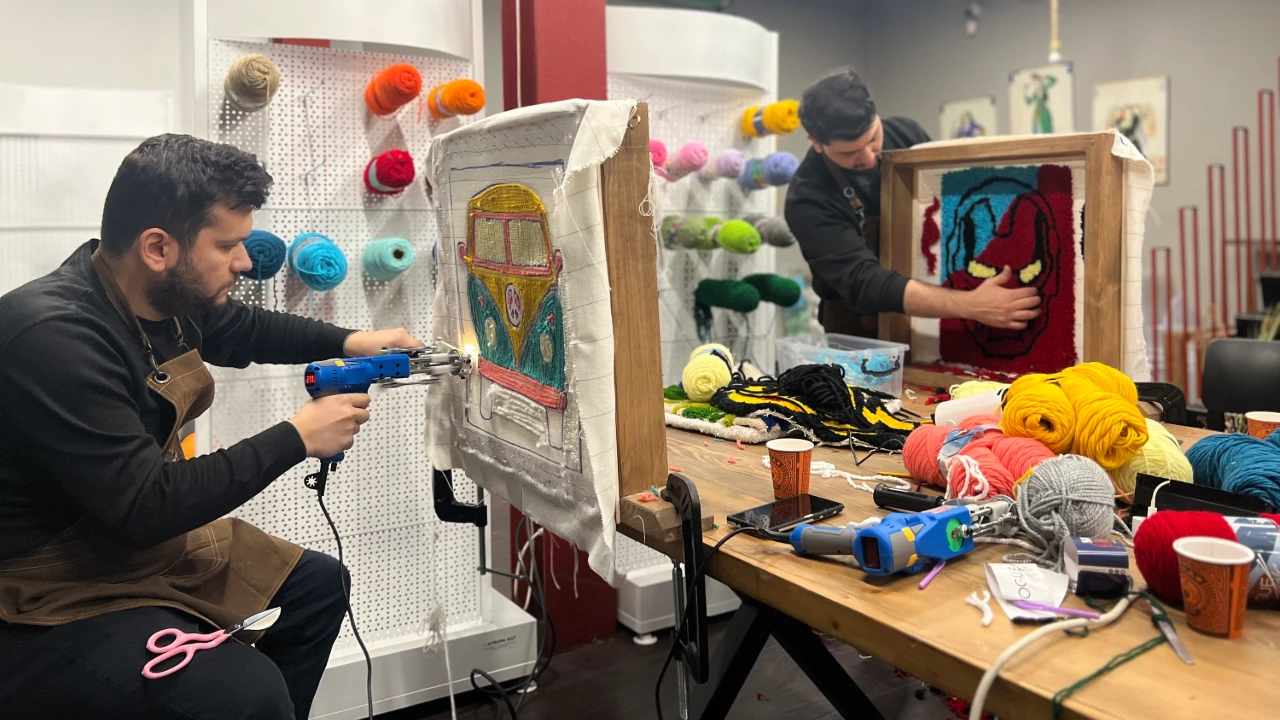
In the author's descriptions of Fatih, craftsmanship is the invisible backbone of neighborhood life: coppersmith, bookbinder, weaver, and carpenter workshops are both sources of livelihood and community networks. Today, workshops continuing this tradition in the Historic Peninsula are open to visitors. A short break at a weaving loom transforms the neighborhood economy from the novels into a tangible experience. Those who want to see the weaving culture firsthand can explore Istanbul carpet weaving workshop tours programs.
Sultanahmet Square: Where the Voice of 1919 Rose
Halide Edip's Istanbul isn't limited to literature; the city's squares resonate with her voice. Following the occupation of Izmir on May 15, 1919, a series of protests were organized in Istanbul. The initial rallies took place in Fatih, Üsküdar-Doğancılar, and Kadıköy; speeches at Fatih Square on May 19, 1919, and Kadıköy Square on May 22, 1919, were the first links in this chain. Subsequently, four major rallies were held in Sultanahmet Square, spearheaded by Türk Ocağı and Karakol Cemiyeti.
When Were the Sultanahmet Rallies Held?
| Rally | Date | Key Note |
|---|---|---|
| First Sultanahmet Rally | May 23, 1919 | Held after Friday prayers; the largest in terms of participation |
| Second Sultanahmet Rally | May 30, 1919 | A gathering permitted by the Police Department under the name "day of prayer" |
| Third Sultanahmet Rally | October 10, 1919 | The autumn link in the chain of protests against the occupation |
| Fourth Sultanahmet Rally | January 13, 1920 | The final rally in the series |
It is reported that approximately 150-200 thousand people participated in the rallies. The decisions made were put in writing and conveyed to the Allied Powers' representatives and the palace, and telegrams were sent abroad.
May 23, 1919: The Square of the Oath
For the first rally, Istanbulites had been invited a week in advance with invitations. A podium was set up next to the mosque wall for the speakers. On that day, poet Mehmet Emin Bey, Halide Edip Hanım, Fahrettin Hayri Bey, Dr. Sabit Bey, and Selim Sırrı Bey spoke. Halide Edip's words, "Governments are our enemies, nations are our friends, and the righteous rebellion in our hearts is our strength," were among the most echoed sentences of the day. At the end of her speech, she made the audience swear an oath to adhere to the principles of humanity and justice.
During the second rally, permission was not granted to place the podium in front of the mosque, so it was positioned in front of the Sultanahmet Tomb. As you walk through the square today, seeking these two different podium locations allows you to read the space as a stage.
Şişli: The Address of New Life and Modernization
After the traditional world of the Historic Peninsula, Şişli holds a special place in the author's life. Şişli is the setting for the periods when she established herself as a modern and independent woman figure. In the early years of the Republic, this district was considered the modern face of Istanbul; with its wide avenues, apartment living, and cosmopolitan structure, it represented a break from traditional neighborhood culture.
Changing Social Structure in Şişli
When describing Şişli, Halide Edip doesn't merely provide a spatial description; she also portrays the environment in which the intellectual circles of the newly established Republic lived. Şişli was the residence of the new Turkish people, striving to shed the old Ottoman lifestyle, listening to Western music, following European fashion, and embracing a more secular life. This transformation appears in her works sometimes as a struggle, sometimes as a story of liberation.
The district's connection with the author is also officially recorded: within the Şişli district, there is a neighborhood named after Halide Edip Adıvar. Halide Edip Adıvar Mahallesi is located between central Şişli and Piyalepaşa Boulevard, bordering the Merkez, Kaptanpaşa, and Halil Rıfat Paşa neighborhoods.
A Walk from Harbiye to Osmanbey
Although Şişli is a modern commercial and residential center today, a careful eye can still catch the details that inspired the author's pen. The stretch from Harbiye to Osmanbey encompasses the area where she spent time, met friends, and engaged in political discussions during her Istanbul days. The early Republican-era apartment buildings along the avenue, with their facade decorations and entrance halls, still tell the story of the living standards of that period.
The Relationship Between Literature and Place: Why Two Districts Face Each Other?
Halide Edip's Istanbul is built upon a duality: tradition and modernity. While the Historic Peninsula represents the past, moral values, and roots, Şişli and its surroundings represent the future, change, and the pursuit of individual freedom. The author's own life also oscillated between these two poles. Born and raised in a conservative environment, yet gaining a Western perspective through her education and ideas, Adıvar experienced this transition firsthand.
The Art of Place Description in Her Works
The author adopts a realist approach in her spatial descriptions. The scent, sound, light, and texture of Istanbul come alive under her pen. Every detail, from the greengrocer at the end of a street to the bay window of a well-known mansion in the district, enhances the literary depth. Readers, while following a story, also embark on a walk through the Istanbul of that era.
Adıvar Readings to Understand Istanbul
| Work | Prominent Setting and Period |
|---|---|
| Sinekli Bakkal (The Clown and His Daughter) | Istanbul during the reign of Abdülhamid II; neighborhood culture around Fatih |
| Mor Salkımlı Ev (House with Wisteria) | Childhood home in Beşiktaş and the view overlooking Yıldız Palace |
| Türk’ün Ateşle İmtihanı (The Ordeal of the Turk) | Years of the War of Independence and occupied Istanbul |
| Ateşten Gömlek (The Shirt of Flame) | The atmosphere of rally days and the home front |
| Zeyno’nun Oğlu, Kalp Ağrısı | Modern urban life in the early years of the Republic |
For readers wishing to grasp the soul of the city, Sinekli Bakkal offers a shortcut to understanding the Historic Peninsula's texture. Her memoirs, on the other hand, convey the atmosphere of the occupation years and the subsequent social transformation firsthand.
How to Get There? Route and Transportation
The route is designed to start with the T1 tram line and then move north with the M2 metro line. This minimizes transfers and allows you to experience two different Istanbuls on the same line within a day.
- In the morning, alight at the Sultanahmet stop of the T1 Kabataş-Bağcılar tram and spend about an hour in the square.
- Walk from the square via Divanyolu towards Beyazıt, then follow the Şehzadebaşı line down to the Zeyrek slope.
- In Zeyrek, explore Molla Zeyrek Camii and the surrounding wooden mansion streets; take your lunch break in this area.
- Walk towards Fevzi Paşa Caddesi to visit Fatih Camii and its complex; plan a short rest in the courtyard.
- Take the M2 metro from the Vezneciler-İstanbul Ü. stop and travel directly to the Osmanbey stop.
- Walk from Osmanbey towards Harbiye, observing the early Republican-era apartment buildings, and conclude your day in central Şişli.
Historic Peninsula Leg
| Stop or Point | Line | Approx. Walk |
|---|---|---|
| Sultanahmet | T1 Kabataş-Bağcılar tram | 2-3 minutes to the square |
| Vezneciler-İstanbul Ü. | M2 Yenikapı-Hacıosman metro | 15 minutes to Zeyrek |
| Haliç | M2 Yenikapı-Hacıosman metro | 12 minutes to Zeyrek slope |
Şişli Leg
| Stop or Point | Line | Approx. Walk |
|---|---|---|
| Osmanbey | M2 Yenikapı-Hacıosman metro | 10 minutes to Harbiye |
| Şişli-Mecidiyeköy | M2 Yenikapı-Hacıosman metro | 5 minutes to central Şişli |
For readers who wish to follow this route from Fatih to Şişli with a guided narrative, Istanbul cultural tours offer a suitable framework; those planning to complete the day without splitting it can choose a route that matches their pace from Istanbul day cultural tours.
Travel Tips and Visitor Notes
- Mosques are active places of worship; plan your visits outside prayer times and maintain silence inside.
- Headscarves for female visitors and clothing covering shoulders and knees for all visitors are appropriate; shoes are removed at the entrance.
- The Zeyrek slope is steep and cobbled; non-slip shoes will make walking more comfortable.
- Sultanahmet Meydanı is quieter in the early morning; the first two hours are advantageous for photography.
- The square offers little shade in summer; carry water and a hat, and dedicate midday hours to indoor attractions.
- Combine the route with the reading list; reading the first chapters of Sinekli Bakkal before your visit will allow you to see the streets of Fatih differently.
- Visiting hours and potential restoration closures may vary seasonally; check the current status before setting out.
Today, Istanbul has grown into a much larger and more complex city than in the author's time. Nevertheless, when you step into the backstreets of Fatih or walk among the old apartment buildings of Şişli, it's still possible to find traces of the city Halide Edip described. This journey is more than a literary tour; it's a time travel witnessing Istanbul's transformation.
Frequently Asked Questions 7
What did Halide Edip Adıvar do?
Halide Edip Adıvar is known for her roles as a novelist, teacher, and politician. During the Turkish War of Independence, she delivered speeches in public squares, served as a corporal on the front lines, and continued her reporting duties until the war's end. She proposed the idea of a news agency to Mustafa Kemal, playing a role in the establishment of Anadolu Ajansı on April 6, 1920, and shaping its journalistic language. Her works, such as "Sinekli Bakkal", "Ateşten Gömlek", and "Mor Salkımlı Ev", place her among the leading figures of Turkish literature.
When was Halide Edip Adıvar's Sultanahmet rally held?
The rallies in Sultanahmet Square were held four times: on May 23, 1919, May 30, 1919, October 10, 1919, and January 13, 1920. The first rally, notable for Halide Edip's oath-inducing speech, took place on May 23, 1919, after Friday prayers, and was the largest in terms of participation among the four.
Why did Atatürk and Halide Edip Adıvar have a falling out?
After the Republic was established, disagreements arose between them on certain issues, and Halide Edip did not hesitate to voice her opinions. The political debates and party closures of the era deepened this rift. The author left the country with her husband, Adnan Adıvar, in the latter half of the 1920s and returned to Turkey in 1939 after Atatürk's death.
Was Halide Edip Adıvar exiled?
Her departure from the country was not based on a court order but rather a personal decision made under the pressure of the political climate; however, these years are referred to as voluntary exile in many sources. The author spent approximately four years in England and ten years in France, returning to Turkey in 1939.
Which regions of Istanbul are prominent in Halide Edip Adıvar's novels?
In her novels, the traditional structure of the Historic Peninsula, specifically the areas around Fatih, Sultanahmet, and Beyazıt, stands out. Şişli and the Beyoğlu line become prominent as symbols of the Republican era's modernization. Her memoirs also feature her childhood home in Beşiktaş as an important setting.
What Istanbul atmosphere does the novel "Sinekli Bakkal" reflect?
"Sinekli Bakkal" vividly reflects the Istanbul of the Abdülhamid II era; particularly the neighborhood culture around Fatih, traditional lifestyles, and the social conflicts of the period. The novel intertwines neighborhood-level relationships and craft life with the social tensions of its time.
What route should someone follow to trace Halide Edip Adıvar's footsteps in Istanbul?
It is advisable to start in Sultanahmet Square and then explore the historic neighborhood fabric around Zeyrek and Fatih. Afterward, one can take the M2 metro from Vezneciler station to Osmanbey and observe the early Republican-era buildings along the Harbiye and Şişli line. Allocating approximately 6-7 hours for a full day allows for a comfortable pace.