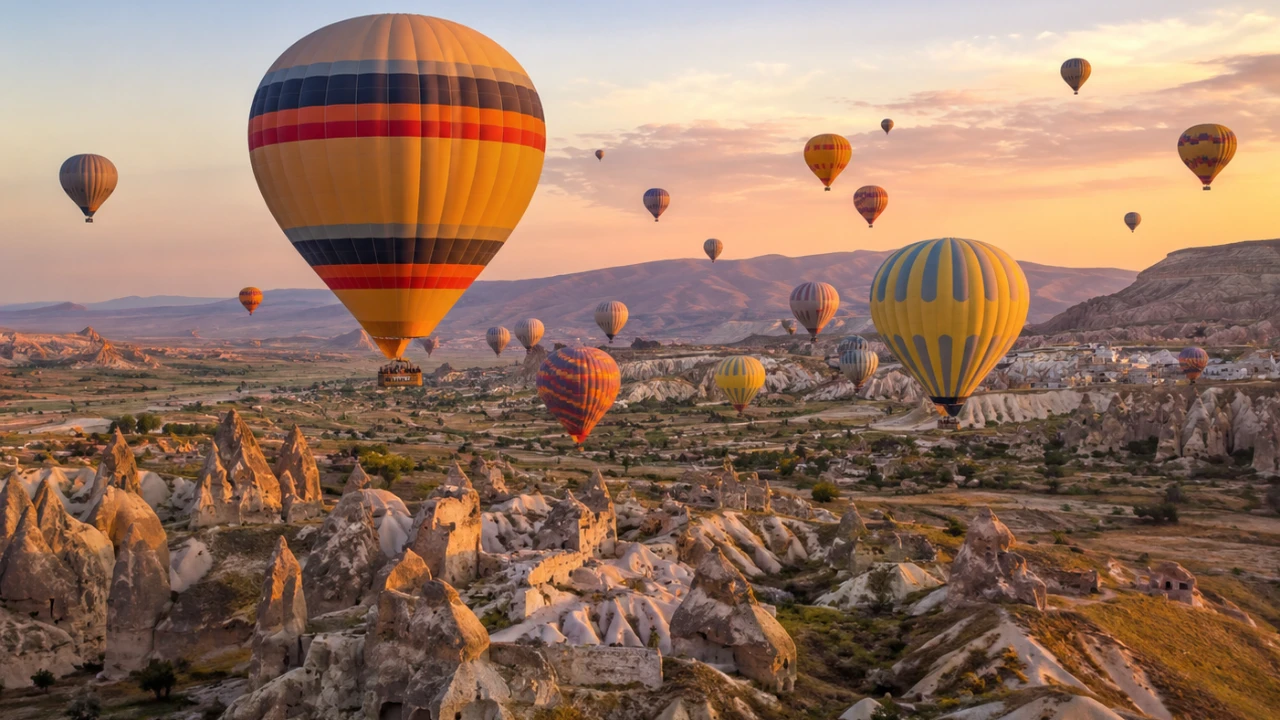
Witnessing the sunrise from the sky and gazing down at breathtaking geological formations from hundreds of meters above is one of the world's most prestigious travel experiences. To watch a massive canopy inflate with dancing flames in the first light of dawn and drift along a path guided by the wind, hot air balloon tours and sky routes offer an unforgettable journey backed by a robust aviation infrastructure. Behind this enchanting experience lies strict international aviation standards and uncompromising operational discipline.
Every second spent in the air depends on meticulous coordination, from the licensed expertise of the pilots to the ground crews' precise wind measurements. For travelers, understanding flight procedures, cancellation policies, and basket etiquette before stepping inside is the key to a seamless and comfortable flight.
Quick Facts: Balloon Flights and Aviation Standards
| Feature | Practical Summary for Travelers |
|---|---|
| Regulatory Authority | Directorate General of Civil Aviation (SHGM) |
| Weather Flag System | Green (Go), Yellow (Wait), Red (Official Cancellation) |
| Maximum Wind Limit | Flights are grounded if surface winds exceed 10 knots (~18 km/h) |
| Age & Height Limits | Minimum age 5; minimum height 110 cm to see over the basket edge |
| Health Restrictions | No pregnant women, recent surgery patients, or those unable to stand for 1 hour |
| Average Flight Altitude | 300 to 1,000 meters (varies by valley and wind conditions) |
| Mandatory Landing Position | Back against the wall, knees slightly bent, handles gripped with both hands |
Planning Your Flight in Turkey's Most Iconic Regions
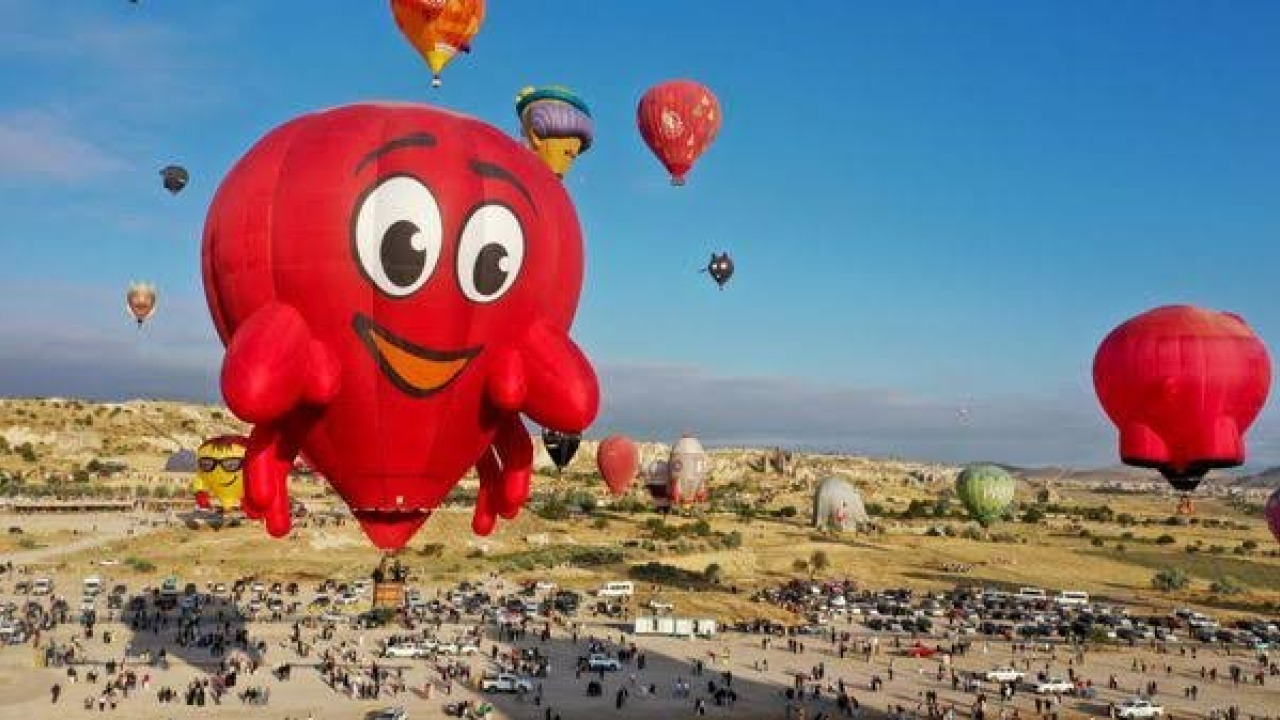
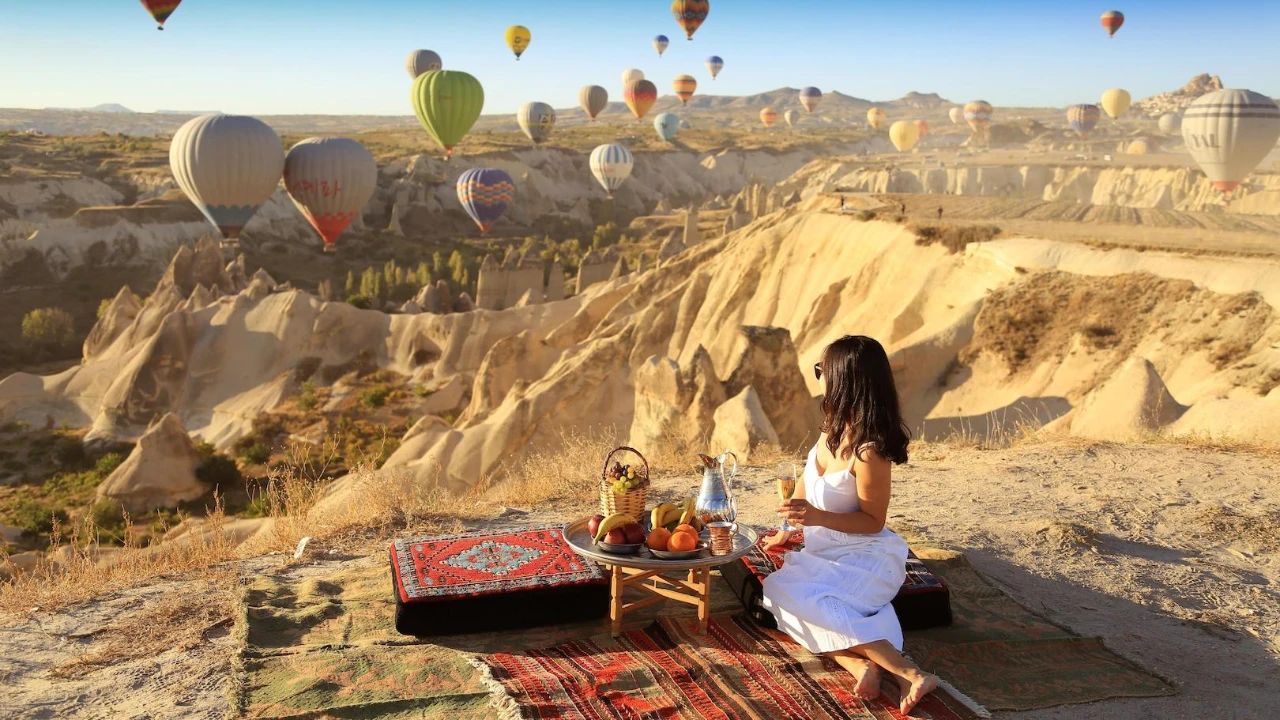
When people think of ballooning in Turkey, the first image that comes to mind is the fairytale landscape of fairy chimneys and volcanic tuff valleys. The Cappadocia balloon tours and flight schedules represent one of the world's busiest and most popular aerial corridors, with dozens of colorful balloons rising simultaneously every morning. To glide over ancient rock churches and canyon walls, balloon tours in the Nevşehir skies remain the top choice for international travelers.
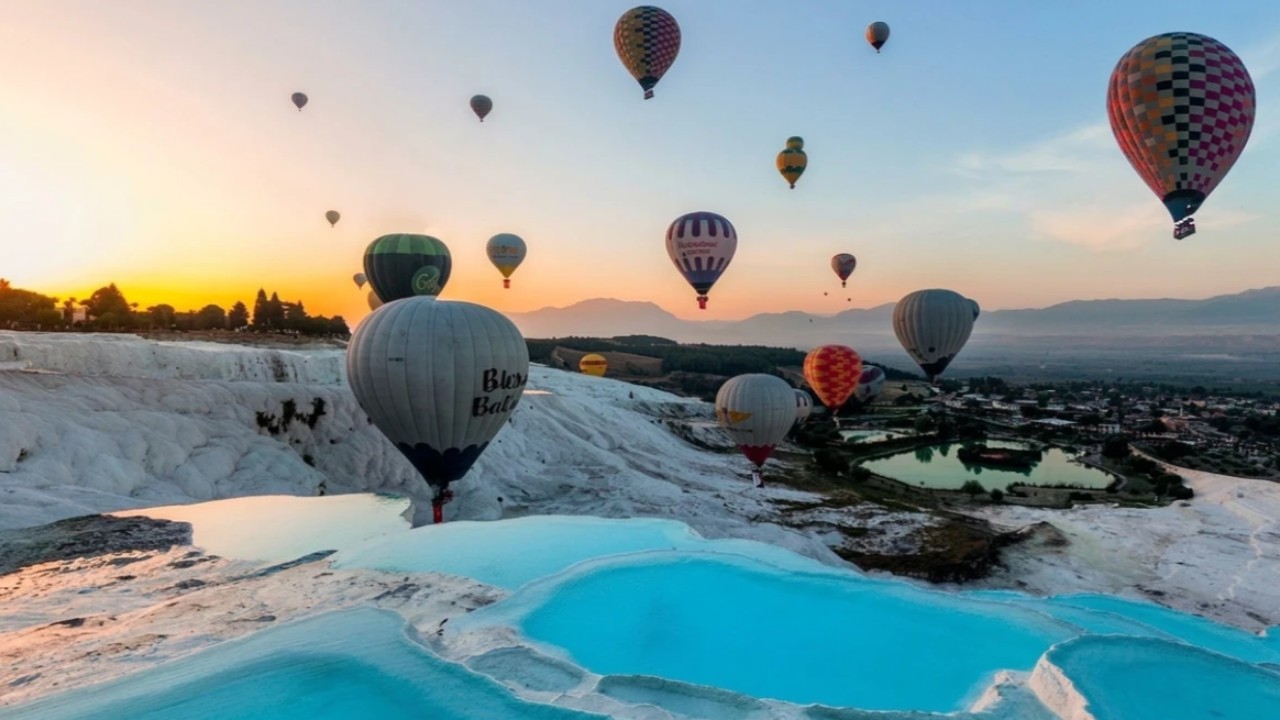
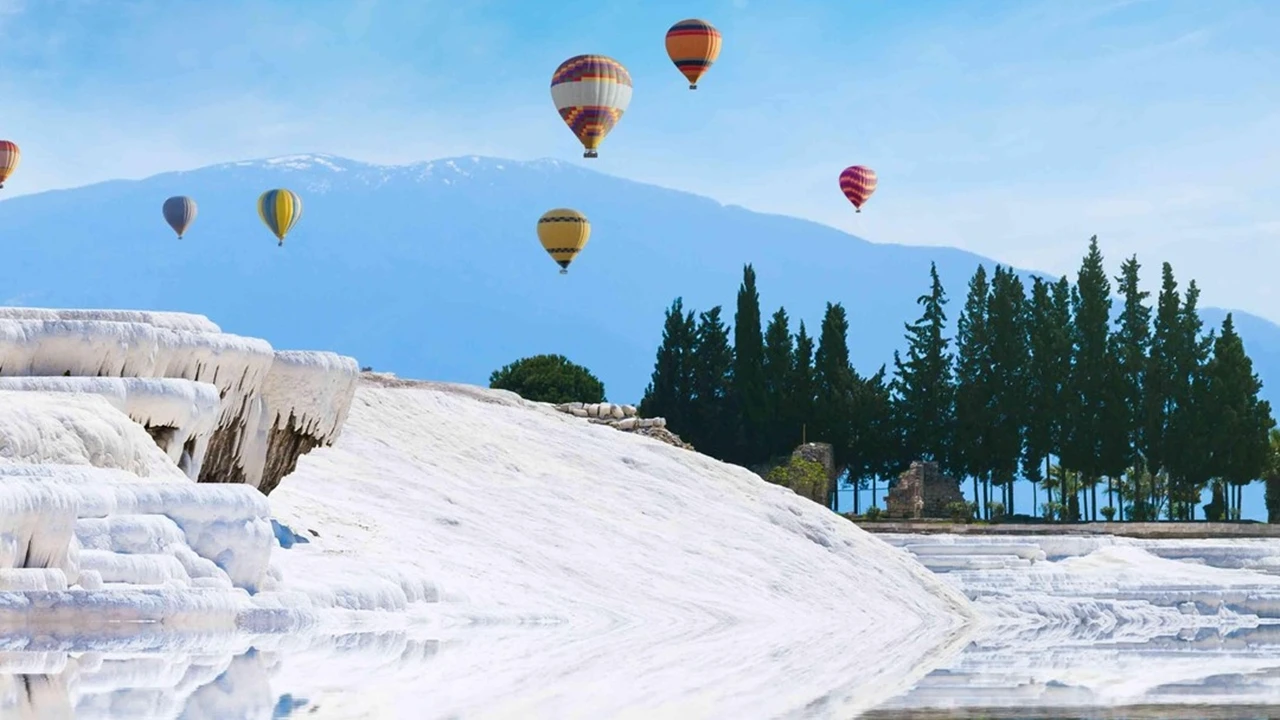
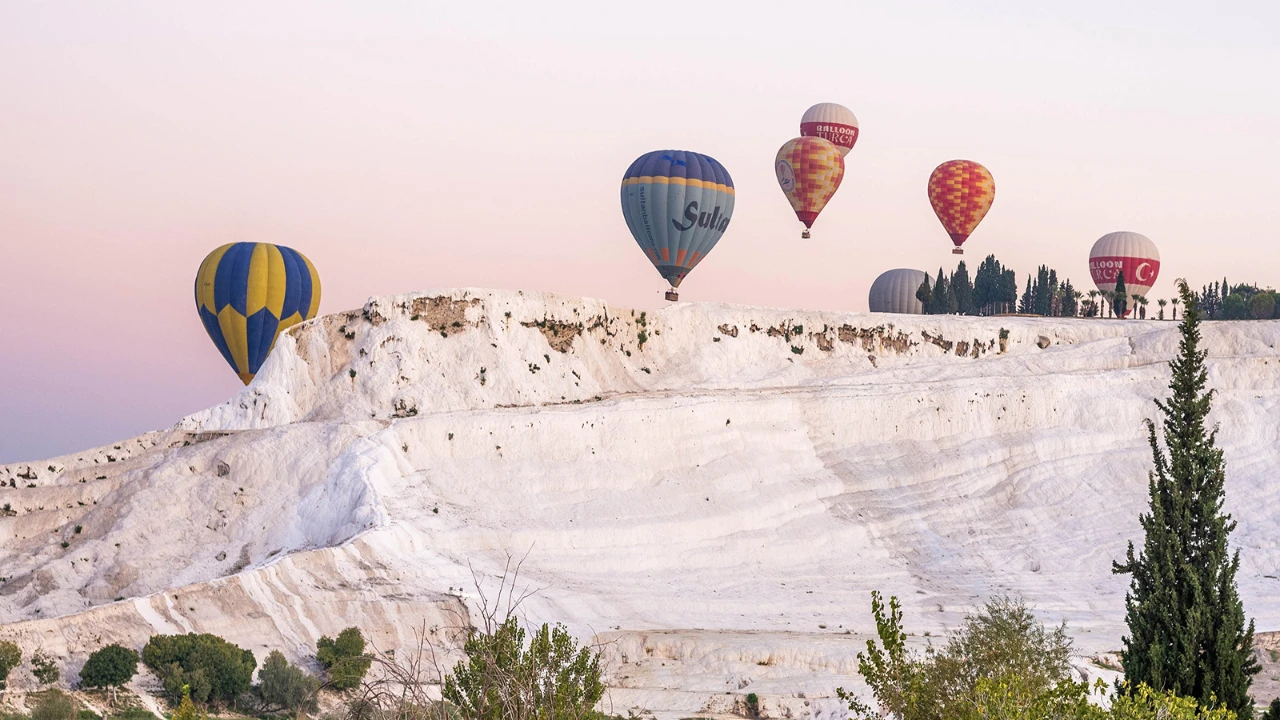
For those seeking alternative routes, balloon flights over Pamukkale travertines offer views of white calcium terraces and the ancient city of Hierapolis from above. Those wishing to photograph the thermal beauties of the Aegean region can enjoy serene morning tours through balloon experiences in the Denizli region.
The Civil Aviation Flag System and Cancellation Criteria
Because hot air balloons are aerostatic vehicles steered by wind currents, they do not have the active route-correction capabilities of motorized aircraft. A pilot can only control altitude by using the burner to heat the air or by opening the parachute valve at the top of the canopy to release air. Consequently, horizontal movement is entirely dependent on wind speed and direction.
SHGM Slot System and Real-Time Meteorological Tracking
To ensure flight safety, the Directorate General of Civil Aviation (SHGM) operates specialized slot centers in the Cappadocia and Pamukkale regions. SHGM meteorology experts monitor air layers at different altitudes, wind gusts, and cloud bases in real-time in the hours leading up to takeoff.
Flight conditions are announced via a color-coded flag system: * Green Flag: All meteorological data is within flight limits, and takeoff preparations can begin. * Yellow Flag: Weather is at borderline values; takeoff is postponed, and the situation will be reassessed in 15 to 30 minutes. * Red Flag: Wind or fog has reached dangerous levels, and all flights for that morning are officially cancelled.
Refund Guarantees and Safety Protocols
When a Red Flag is raised, no commercial agency or pilot is permitted to take off, regardless of personal discretion. If a flight is cancelled due to adverse weather, agencies are required to provide a full refund or transfer your booking to the next available flight date.
Basket Types, Passenger Capacities, and Comfort Classes
Hot air balloon baskets are crafted from specialized woven natural wicker and rattan, designed to be flexible and shock-absorbent. The primary reason for using wicker instead of rigid metal is to absorb the impact from the ground during landing. The interior is compartmentalized to ensure passenger balance and provide the pilot with a dedicated control area.
The following table compares the different basket sizes and technical standards used in commercial flights:
| Basket Class & Type | Total Capacity | Compartment Structure | Envelope Volume (m³) | Ideal For... |
|---|---|---|---|---|
| Private & Boutique | 2 - 4 People (Excl. Pilot) | 2 Independent Sections | 3,000 - 4,500 m³ | Proposals, honeymoons, and VIP experiences |
| Standard Small | 12 - 16 People | 4 Sections (3-4 per section) | 6,000 - 8,500 m³ | Quiet cruising, more movement, and better photo angles |
| Large Group | 20 - 24 People | 4 or 5 Sections | 9,000 - 12,000 m³ | Tour groups and classic sightseeing tours |
| Mass Commercial | 28 - 32 People | T or Double T Shape | 13,000 - 16,000 m³ | High-season economic travel planning |
Basket compartments are designed to distribute the center of gravity evenly. Before takeoff, the pilot calculates the weight of all passengers to ensure an even load. Moving between compartments during flight is strictly prohibited as it can compromise the basket's stability.
The 5-Step Preparation and Landing Protocol for a Safe Flight
From the moment you arrive at the launch site to the moment the basket touches the ground, passenger safety relies on adhering to five fundamental rules. These are standard safety codes used by balloon federations worldwide.
- Listen to the Pilot's Briefing: Pay full attention to the landing commands and basket safety rules provided by your pilot.
- Boarding and Seating: When entering the basket, step carefully on the wicker steps and move to your assigned compartment as directed.
- Safe Posture During Flight: Never lean out of the basket. If you are taking photos, ensure your camera strap is securely fastened to your wrist.
- Assuming the Landing Position: Upon the pilot's command, turn your face away from the direction of flight and lean your back against the basket wall.
- The "Bend and Grip" Technique: Slightly bend your knees to absorb impact and grip the internal leather handles firmly with both hands.
It is perfectly natural for the basket to bounce once or twice upon contact with the ground. Keeping your hands on the handles and avoiding the basket edge during this moment prevents finger injuries. Never step out of the basket until the balloon has come to a complete stop and the pilot gives the "all clear."
Altitude, Wind Currents, and Piloting Dynamics
Hot air balloons navigate by utilizing different wind layers at various altitudes. An experienced pilot can rise to catch a westward current or descend to find an eastward breeze in the valley floor. Depending on temperature and terrain, flight altitudes typically range between 300 and 1,000 meters.
Valley Micro-Climates and Vertical Maneuvers
In the valleys of Cappadocia, pilots often descend close to fairy chimneys and fruit trees to provide spectacular close-up views. They then fire the burners to heat the air in the canopy to 100°C, climbing hundreds of meters in seconds. These vertical maneuvers allow passengers to experience both the micro-climate of the valley and the panoramic horizon simultaneously.
Why We Fly at Dawn
The primary reason for early morning flights is the stability of the air. As the sun warms the earth, it creates vertical convection currents (thermals). By midday, these currents cause turbulence that makes balloon control nearly impossible. The cool, stable air at sunrise provides the perfect conditions for a smooth and safe flight.
Health Criteria and Age Restrictions
While rising into the sky is exhilarating, certain health conditions may prevent you from flying. Passengers must be able to stand for approximately one hour during the flight. Those with severe spinal issues, advanced joint problems, or leg injuries may find the vibrations of landing difficult to tolerate.
Pregnancy and Orthopedic Restrictions
Due to the risk of "bump landings" and sudden ground contact, pregnant women are legally prohibited from flying in hot air balloons under international aviation guidelines. This restriction applies to all stages of pregnancy.
Individuals who have recently undergone surgery or have heart conditions should seek medical clearance before booking. We highly recommend ensuring your travel insurance covers aviation-specific activities.
Age and Height Requirements for Children
The minimum age for children is generally five years old. Children under five may struggle to see over the basket edge, and the loud roar of the burner can be frightening. Additionally, children under 110 cm in height are not permitted, as they cannot safely reach the handles to assume the mandatory landing position.
What to Pack for Your Morning Flight
To stay comfortable and safe during your early morning adventure, we recommend bringing: * Layered Clothing: To protect against the morning chill in the valleys and wind at higher altitudes. * Wrist Straps for Phones: A safety lanyard to prevent dropping your device while taking photos. * Flat, Sturdy Shoes: Comfortable sneakers with good grip to handle the landing impact.
Frequently Asked Questions 5
Under what weather conditions are hot air balloon tours cancelled?
Per SHGM regulations, flights are immediately cancelled if surface winds exceed 10 knots, or in cases of heavy fog or precipitation. Wind gusts and adverse forecasts are officially announced via the Red Flag system.
What are the age and height limits for a balloon tour?
Because the basket walls are 110 cm high, children under 5 years old and those under 110 cm in height are generally not permitted. This ensures they can both see the view and safely grip the handles during landing.
Can pregnant women fly in a hot air balloon?
No. Due to the risk of sudden impact or "bump landings," it is legally prohibited for pregnant passengers to fly. Aviation guidelines do not allow flight at any stage of pregnancy.
What time do the balloons take off in Cappadocia?
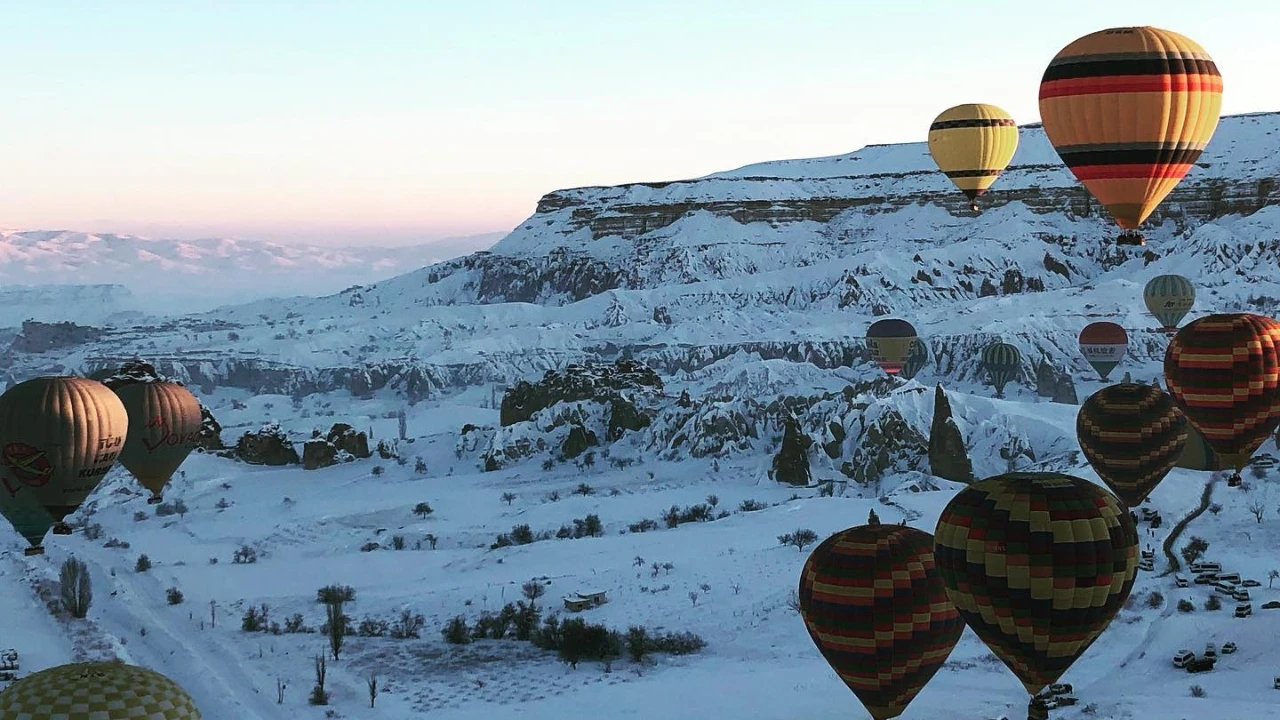
Takeoffs occur just before sunrise when winds are calmest; typically between 05:00–05:30 in summer and 06:30–07:00 in winter. Most guests are picked up from their hotels about an hour before departure.
How many people fly in a basket and how is it organized?
Commercial baskets typically hold between 16 and 28 people and are divided into 4 or 5 independent compartments to maintain weight balance and prevent tipping.