
For travelers seeking a Hamburg travel guide, the first question is often: what to see with limited time? The answer is written in the city's very geography. Hamburg was built by its port, held together by its waterways; naturally, your itinerary should follow the water. The UNESCO World Heritage-listed Speicherstadt warehouse district, the Elbphilharmonie concert hall perched atop an old cocoa warehouse, the HafenCity quays, Landungsbrücken piers, and the historic tunnel beneath the Elbe are all within walking distance of each other. This guide lays out that route step-by-step: what to see at each stop, how the seasons change the experience, how to get from the airport to the city center, which neighborhoods to stay in, and how to craft a perfect one-day itinerary. Germany is part of the Schengen Area; visa requirements vary by nationality and are updated periodically. Please confirm the latest conditions on the German Federal Foreign Office's consular page before your trip.
Quick Facts
| Topic | Information |
|---|---|
| Location | Northern Germany, along the Elbe River |
| Core Route | HafenCity, Speicherstadt, Elbphilharmonie, Landungsbrücken, Alter Elbtunnel |
| UNESCO Status | Speicherstadt, Kontorhausviertel, and Chilehaus inscribed in 2015 |
| Port Scale | Germany's largest, Europe's third-largest port |
| Recommended Duration | 1 day for the waterfront route, 2 days if adding museums |
| Airport Connection | S1 line, 25 minutes to Hauptbahnhof, every 10 minutes |
| City Transport | HVV network: U-Bahn, S-Bahn, bus, and ferry on one ticket |
| Best Time to Visit | May to September, December for Christmas markets |
| Walking Terrain | Flat ground on quays, frequent bridges and stairs |
What to See Along the Waterfront Route
The route progresses from east to west: from the new district to the historic warehouses, and then to the piers. Following this order means no backtracking.
HafenCity: A New District Born from the Port
HafenCity is a 157-hectare district built on former port land, officially touted as Europe's largest inner-city urban development project. The first pile was driven on April 9, 2001; once completed, Hamburg's city center will have expanded by approximately 40 percent. About 28 hectares of the area are public squares and promenades, with a coastline stretching 10.5 kilometers.
This isn't a museum, but a living, breathing neighborhood: residential blocks on one side, working waterways on the other. Starting from the U-Bahn's HafenCity stops will lead your walk towards the port; a half-hour introduction is usually sufficient.
Speicherstadt: The Warehouse District on Wooden Piles
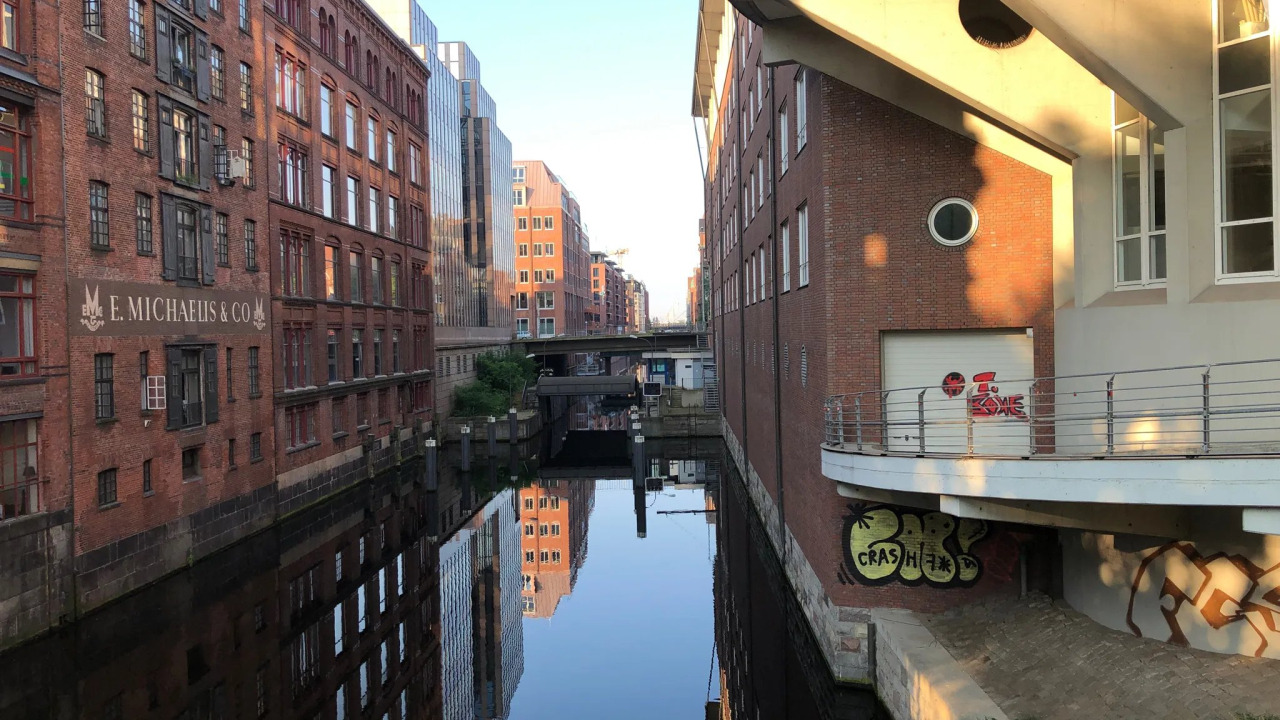
Speicherstadt, stretching approximately 1.1 kilometers along a series of narrow islands on the Elbe, consists of 15 large warehouse blocks built between 1885 and 1927. These blocks rest on wooden pile foundations and are considered one of the world's largest integrated port warehouse complexes. Its red-brick facades, pointed turrets, and canal-side crane arms give the district a distinctive silhouette.
UNESCO inscribed Speicherstadt, along with its neighbors Kontorhausviertel and Chilehaus, on the World Heritage List in 2015. The justification for its inclusion wasn't merely architectural beauty but its functional integrity: the warehouse district and the office district together illustrate how the rapid growth of trade in the late 19th century shaped urban space. Historically, coffee, spices, tea, and carpets were stored here; today, the remaining blocks house museums and cafes.
Early mornings are advantageous for photography: the water is calm, and the tour groups haven't arrived yet. In the evenings, the facades are beautifully illuminated. A leisurely stroll through the area takes approximately one hour.
Museums Within Speicherstadt
For those who wish to delve deeper than just admiring the warehouse blocks from the outside, the district offers three distinct stops.
The Speicherstadtmuseum, located at Sandtorkai 36, is housed in an authentic 1888 warehouse block and operates as an external unit of the Museum der Arbeit, under the Stiftung Historische Museen Hamburg. The narrative centers on warehouse work: how imported goods were stored, weighed, and processed is demonstrated with original equipment. Opening hours are weekdays from 10:00 to 17:00, weekends and holidays from 10:00 to 18:00; between November and February, it's open daily from 10:00 to 17:00.
Miniatur Wunderland, located at Kehrwieder 2, is, according to its operators, the world's largest model railway exhibition: featuring over 15,700 meters of track, approximately 300,000 miniature figures, and attracting over 1.2 million visitors annually. It opens daily at 09:30 at the earliest. This is one of the busiest attractions; if you purchase a timed-entry ticket, you won't have to wait in line. Plan for at least two hours inside.
The third stop is Spicy's Gewürzmuseum, a spice museum; as it's a smaller venue, confirm its opening days and hours in advance. For those who enjoy exploring thematic museums, and are looking for similar experiences in Turkey, you might want to check out our cultural tours in Turkey category.
Elbphilharmonie and the Plaza at 37 Meters
The Elbphilharmonie is a glass superstructure built atop the Kaispeicher A brick warehouse. The lower structure stored cocoa and coffee sacks for decades, remaining empty after the 1990s. In 2003, Herzog & de Meuron were commissioned to design a concert hall on top of this warehouse; construction began in April 2007, and the building opened on January 11-12, 2017. With its wave-like glass upper structure, the total height is 110 meters.
The main section of interest to visitors is the Plaza viewing deck, located at the junction of the brick and glass structures. This terrace, 37 meters above ground, offers simultaneous views of the port, the Elbe, and the city skyline; it's open daily from 10:00 to 24:00. Entry is free, but due to limited capacity, it's managed with a Plaza ticket. Those who wish to avoid waiting in line can obtain a ticket online in advance; a small service fee applies for this option. Evening hours are ideal for capturing the port lights, while before noon offers clear conditions for photography.
Landungsbrücken: The Pulse of the Port
Landungsbrücken is the historic port terminal building and the series of piers in front of it, which for many years welcomed passengers arriving by sea. Today, it's a bustling hub for both sightseeing boats and public transport ferries, lively at all hours of the day. At the pier kiosks, you'll find Fischbrötchen, the local equivalent of a fish sandwich.
The waterfront promenade is a natural starting point for those who love exploring urban landscapes on foot; if you're looking for a similar pace in Turkey, you might want to check out our historic city tours in Turkey category. Arriving in the afternoon allows you to combine a ferry connection with the tunnel crossing in the same block of time.
Alter Elbtunnel: 426 Meters Beneath the River
The St. Pauli Elbtunnel, commonly known as the Alter Elbtunnel (Old Elbe Tunnel), was built between 1907 and 1911, connecting St. Pauli with Steinwerder for 426.5 meters beneath the Elbe. After a 15-year restoration, the structure reopened with both tubes in service; its historic character was preserved while modern safety equipment was added.
The tunnel is open to pedestrians and cyclists 24/7 free of charge; it has been closed to motor vehicles since 2019, making the crossing remarkably quiet. Stairs and glass elevators operate continuously, while large freight elevators are available weekdays from 05:30 to 20:00, and weekends and holidays from 10:00 to 18:00. On the opposite bank, Hamburg's skyline, complete with port cranes, comes into view; a round trip takes approximately half an hour.
Boat Trips on the Canals: Fleet Tour or Harbor Cruise?
Travelers wishing to experience Hamburg from the water will encounter three options, and these are not interchangeable. The difference stems from the size of the boat and the water level.
The canals of Speicherstadt, locally known as "Fleets," fill and empty with the tides. Due to their narrow passages and low bridges, only small boats called "barkassen" can navigate these canals; larger harbor tour vessels cannot access the inner district. Therefore, a "harbor cruise" and a "canal tour" are not the same thing – be sure to distinguish them when purchasing tickets. The density of the canal network is no accident: according to Hamburg Tourism data, the city boasts over 2,500 bridges, a number that surpasses the combined total of Venice and Amsterdam. For those considering adding Italy's water cities to their itinerary, our Italy travel guide article might be helpful.
| On-water option | Departure Point | What you'll see | Important Note |
|---|---|---|---|
| Fleet (canal) tour | Small piers around Speicherstadt | Warehouse facades, low bridges, canal perspective | Tide-dependent, only with barkassen |
| Large harbor cruise | Landungsbrücken piers | Container terminals, shipyards, cargo ships | Cannot enter narrow canal sections |
| HVV ferry, line 62 | Landungsbrücken, pier 3 | Elbe riverside, Övelgönne, Finkenwerder | Public transport ticket valid, no commentary |
For those looking to save money, line 62 is a practical solution: as it's part of the HVV network, you can board with a regular public transport ticket. If you prefer a guided commentary, opt for a barkassen tour; the price is determined by the tour duration and route, so check the operator's website for current rates.
Arriving from Turkey and City Transport
Getting from the Airport to the City Center
Hamburg Airport has year-round connections with Istanbul; according to the airport's own information, Turkish Airlines operates flights year-round from both Istanbul Airport and Sabiha Gökçen, with Ankara and Antalya added during the summer schedule. The most practical way to reach the city center is via the S-Bahn's S1 line: the journey between the airport and Hauptbahnhof takes 25 minutes, with trains departing every 10 minutes. The station is accessible by foot beneath the terminal.
The HVV Network and Port Ferries
City transport is consolidated within the regional HVV network. U-Bahn, S-Bahn, buses, and port ferries are all included on the same ticket; this means the ferries aren't a separate sightseeing expense. Pricing varies by the number of zones; if you're staying in the city center, a single-zone ticket will suffice.
When Does the Hamburg CARD Pay Off?
The Hamburg CARD is the city's official tourism pass, available in two variants: with or without public transport included. According to Hamburg Tourism's promotion, the card offers up to 50% discounts on over 150 tourist attractions and reduced entry to more than 30 museums. The decision is simple: if you plan to visit more than two paid attractions daily and use public transport frequently, the card will be cost-effective. If you primarily plan to walk, individual tickets will suffice.
When to Visit Hamburg
Hamburg's weather is variable, and this variability can influence your itinerary. According to climate data compiled by the city's tourism board, an average of nine hours of sunshine per day is observed between May and August, with average temperatures in July and August rising slightly above 20 degrees Celsius. Winters are mild, snow is rare, and average temperatures hover just above zero.
| Period | Weather & Daylight | Highlights | Note |
|---|---|---|---|
| May - June | Long days, mild weather | Canal tours, waterfront walks | Weekends get busy |
| July - August | Average slightly above 20°C | Outdoor cafes, ferry rides | Accommodation demand peaks |
| September - October | Cooler weather, clear light | Photography, museum visits | Rain jacket recommended |
| November - April | Short days, mild winter | December for Christmas markets, museums | Wind can make it feel colder |
For those curious about the travel habits of the German market, our German tourist profile article offers a complementary perspective.
From Port to Plate: Hamburg Cuisine
The Savory Side: Fischbrötchen and Labskaus
The most tangible reflection of being a port city is found on the dinner table. Fischbrötchen consists of pickled or fried fish served in a bun and is a classic at pier kiosks. Labskaus, on the other hand, is a legacy of sailor's cuisine: prepared by mashing potatoes, corned beef, and onions together, it's typically served with pickles and a fried egg. Common German dishes like Schnitzel and Currywurst can also be found in every neighborhood.
The Sweet Side: Franzbrötchen
Franzbrötchen is a cinnamon and sugar pastry, unique to Hamburg. Freshly baked in the city's bakeries each morning, it makes for a delightful breakfast alongside coffee. Grabbing a Franzbrötchen from a bakery before your waterfront stroll is a practical and delicious choice.
Where to Stay: Neighborhood by Neighborhood
The defining factor for accommodation is the neighborhood's character; distances are short, and public transport is extensive.
| Neighborhood | Character | Best for | Location on Route |
|---|---|---|---|
| HafenCity | Modern architecture, quiet evenings, wide promenades | Those who want to walk the route | Eastern end of the route |
| Neustadt & City Center | Shopping streets, City Hall area | First-time visitors | Walking distance to Speicherstadt |
| St. Pauli | Lively nightlife, entertainment district | Those seeking evening activities | Close to Landungsbrücken |
| Altona | Local vibe, charming cafes, Elbe riverside | Those who prefer to avoid crowds | Western end of the route |
| St. Georg | Adjacent to main station, mixed character | Those planning a short stay | Close to airport transfers |
When deciding, consider where you'd like to start your morning: the eastern end leads your walk towards the port, while the western end allows you to kick off your day with a ferry ride.
Morning in the Warehouses, Evening on the Other Side: A One-Day Waterfront Itinerary
The following sequence connects the stops without backtracking and distributes the walking load throughout the day.
- Start your day in HafenCity: a half-hour introductory stroll along the quays will give you a sense of the district's scale.
- Enter Speicherstadt heading west, utilizing the early hours for photos from the canal bridges.
- Choose one of the museums within the warehouse blocks; pre-book tickets for Miniatur Wunderland, while the Speicherstadtmuseum is a shorter visit.
- Take a lunch break at one of the canal-side cafes; the afternoon will be spent outdoors.
- Head to the Elbphilharmonie and ascend to the Plaza level, then descend to the quay and walk towards Landungsbrücken.
- At Landungsbrücken, explore the pier area and take a Fischbrötchen break; canal tour ticket offices are located here.
- Descend into the Alter Elbtunnel, cross to the other side, admire the skyline, and return.
- Conclude your day with the line 62 ferry: head towards Övelgönne to watch the sunset.
Notes Before Your Visit
- Even in summer, carry a rain jacket; the perceived temperature on the quays can feel lower than what's measured.
- If planning a canal tour, inquire about the tide situation; when the water is low, even small boats may not be able to enter the inner sections.
- At popular attractions, purchase tickets in advance: Miniatur Wunderland operates with timed entry, and the Plaza has limited capacity.
- Admission fees are determined by ticket type, number of days, and age group; confirm current rates on the operator's website.
- Most retail stores in Germany are closed on Sundays, so plan your shopping for Saturday.
- If you don't want to pay extra for a boat trip, use the HVV ferry.
Frequently Asked Questions 6
How many days should I allocate to visit Hamburg?
The waterfront route, encompassing Speicherstadt, Elbphilharmonie, Landungsbrücken, and the Alter Elbtunnel, can be covered in one day. If you add the museums within the warehouse blocks, especially Miniatur Wunderland, a second day is needed. For those wishing to explore neighborhood by neighborhood, three days offer a comfortable pace.
Is there an entrance fee to visit Speicherstadt?
The streets, bridges, and canal banks of the warehouse district are freely accessible, with no entrance fee for the open areas. Fees only apply for museums within the blocks and for boat tours. Speicherstadt, along with Kontorhausviertel and Chilehaus, has been on the UNESCO list since 2015.
Do I need a ticket to go up to the Elbphilharmonie Plaza?
Entry to the Plaza viewing deck, 37 meters above ground, is free, but due to limited capacity, it's managed with a Plaza ticket. Tickets can be obtained on-site; those who wish to avoid waiting in line can purchase them online in advance, which incurs a small service fee. The terrace is open daily from 10:00 to 24:00.
What is the best season to visit Hamburg?
May to September is favorable for outdoor activities; between May and August, an average of nine hours of sunshine per day is observed, with average temperatures in July and August rising slightly above 20 degrees Celsius. December is preferred for its Christmas markets.
How do I get from the airport to the city center?
The S-Bahn's S1 line departs from the station beneath the airport terminals and reaches Hauptbahnhof in 25 minutes, with trains running every 10 minutes. The ticket is valid across the HVV network; with the same ticket, you can transfer to U-Bahn, buses, and port ferries.
Is it possible to take a boat trip without joining a harbor tour?
Yes, it is. The line 62 port ferry, part of the HVV network, departs from pier 3 at Landungsbrücken, stops at the Övelgönne museum harbor, and continues to Finkenwerder. It can be used with a regular public transport ticket, though it does not offer guided commentary.