
Germany often gets a reputation for being an expensive country, but this perception often clashes with the reality many travelers encounter on their first evening in a Berlin park: people sitting on benches, enjoying a sandwich bought from a supermarket, their bikes propped beside them. This isn't a coincidence; it's a snapshot of how the country's everyday economy operates. In Germany, prices aren't static; they vary in layers, governed by rules like subscriptions, quotas, closing times, and trade fair schedules. This guide will introduce you to these layers and break down, item by item, the decisions that shape a budget-friendly trip to Germany. Visa requirements vary by nationality and are updated periodically; always confirm the latest information on the official website of the German Federal Foreign Office before your trip.
Quick Facts
| Topic | Information |
|---|---|
| Scope | Budget for accommodation, food & drink, local & intercity transport |
| Main budget drivers | Accommodation type, ticket timing, dining habits, city pass decision |
| Ideal period | April to early May, September to mid-October |
| Peak period | July, August, Christmas market weeks in December, major trade fair dates |
| Local transport subscription | Deutschland-Ticket: bus, tram, U-Bahn, S-Bahn, regional train |
| Not covered | ICE, IC, and EC long-distance services |
| Shopping restrictions | Retail closed on Sundays and public holidays; rule depends on state law |
| Confirmation sources | bahn.de, jugendherberge.de, auma.de, city's official tourism website |
| Flight from Turkey | Direct flights from Istanbul Airport to Frankfurt typically 3 hours 5 minutes to 3 hours 20 minutes |
The Rules That Shape Your Germany Budget
What truly sets Germany apart budget-wise isn't whether it's cheap or expensive, but rather how prices are governed by specific rules. A train ticket isn't cheaper just because you bought it early; it's cheaper because the discounted quota allocated for that specific service hasn't run out. Supermarkets are closed on Sundays, and this closure can turn a decision not made on Saturday into a Sunday evening restaurant bill.
| Budget Item | What Determines It | Where to Confirm |
|---|---|---|
| Intercity train | Discount quota, service-specific condition | bahn.de ticket search screen |
| Local transport | Length of stay, monthly subscription threshold | bahn.de, city's transport authority |
| Accommodation | Trade fair calendar, property type, distance from center | auma.de, property's own website |
| Hostel accommodation | International youth hostel membership | jugendherberge.de |
| Museum & attraction | Daily visit count, card coverage | city's official tourism website |
| Beverage packaging | Deposit (Pfand) refund | supermarket's return machine |
Understanding Quotas and Timing
Deutsche Bahn's long-distance tickets fall into three categories. Sparpreis and Super Sparpreis are discounted and come with a service-specific commitment (Zugbindung): you must travel on the specific ICE, IC, or EC service printed on your ticket. Cancellation conditions also differ: Super Sparpreis is non-changeable and non-refundable except for a brief digital cancellation window immediately after purchase; Sparpreis allows paid cancellation before the first day of validity; Flexpreis permits free changes up to one day before travel. Tickets become available up to twelve months in advance of travel.
The Sunday Rule
Store opening hours are regulated at the state level, not federally; each state has its own shop opening law (Ladenöffnungsgesetz), and retail stores are generally closed on Sundays and public holidays. Exceptions are limited: petrol stations and pharmacies may remain open, shops at train stations serve travel needs to a certain extent, and newsstands open for a restricted period. The annual number of Sundays when shops are allowed to open varies from state to state; confirm this on the official website of your destination city.
Why the Trade Fair Calendar Matters
AUMA, the umbrella organization for the German trade fair industry, publishes the calendars for thousands of fairs both within Germany and internationally. According to their bulletins, March is the busiest trade fair month in Germany. Coinciding with a major trade fair week can significantly reduce room availability. Checking the auma.de calendar before booking and shifting your dates by a week can make a noticeable difference.
How Different Seasons Impact Your Budget
| Period | Budget Impact | Notes |
|---|---|---|
| April, early May | Moderate demand | Parks open, days lengthen, outdoor activities begin |
| June | Demand rises | Weekdays before school holidays are relaxed |
| July, August | Prices peak | Campsites fill up, early booking is crucial |
| September, mid-October | Demand recedes | Weather is pleasant for sightseeing, cultural season begins |
| December | Jumps in Christmas market cities | Levels may not change in cities without markets |
| January to March | Quiet, except for trade fair weeks | March is the busiest month for trade fairs |
Navigating Accommodation Options
Accommodation is typically the heaviest expense in a German travel budget. Options beyond chain hotels are widespread across the country, each with its own specific conditions for acceptance. During the summer months, well-equipped campsites also become a viable option.
Jugendherberge (Youth Hostels) and Membership Requirements
Germany's youth hostel network is operated by Deutsches Jugendherbergswerk (DJH) and is open to all travelers, regardless of age. The key condition to be aware of is this: to stay at a DJH hostel, you need either a DJH membership or a membership with an association affiliated with the International Youth Hostel Federation, and this membership must be documented before a room is assigned. For travelers whose home country doesn't have such an association, an international guest card and a stamp system (purchased per night) are implemented. Rooms are typically gender-separated dormitories; family rooms are subject to availability, and it should be specified during booking that you are traveling as a family.
Pension and Gasthof (Guesthouses)
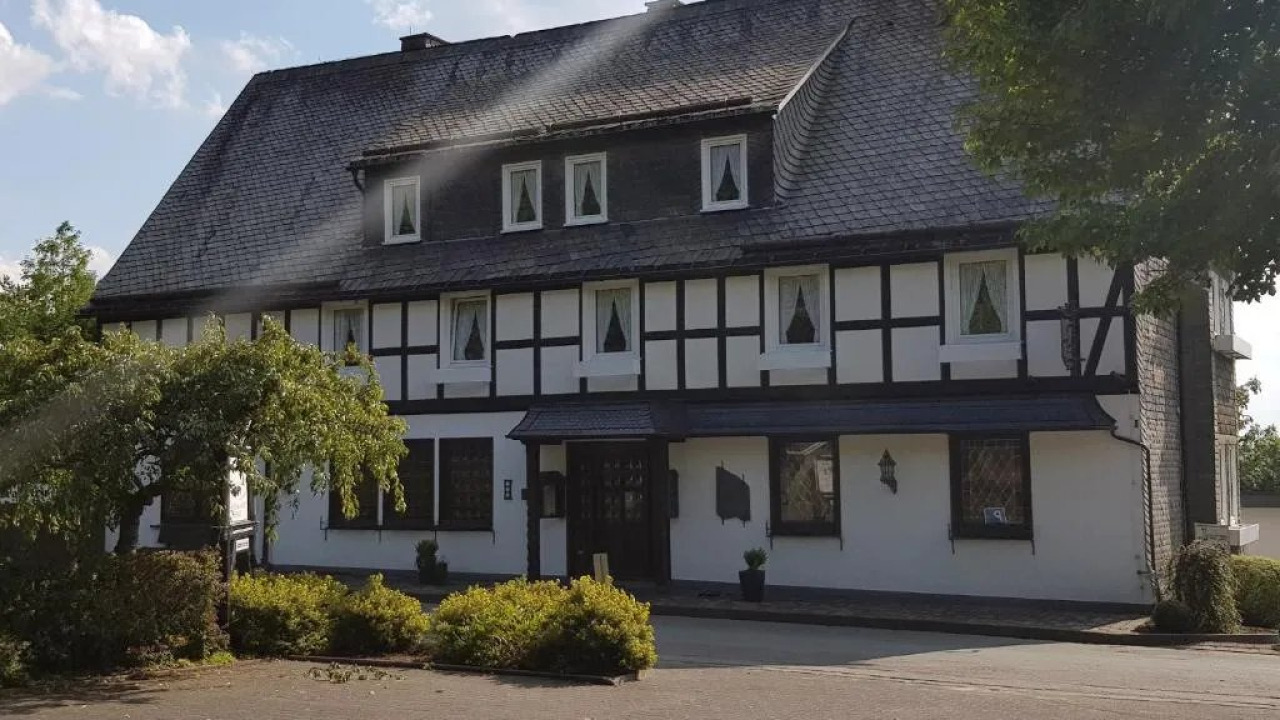
Family-run Pension and Gasthof-style establishments are common in small towns and rural areas. They typically have a limited number of rooms, breakfast is often included in the price, and the establishment usually has its own restaurant downstairs. This setup can reduce the need to go elsewhere for dinner, effectively combining two budget items.
City Outskirts and Tariff Zones
In cities like Berlin, Munich, and Hamburg, choosing outer districts along U-Bahn or S-Bahn lines instead of the city center can make a significant difference to your budget. The critical detail is the tariff zone. In Berlin, airport connections require an ABC tariff zone ticket; an AB zone ticket won't suffice for airport travel. Before selecting a room, check the city's tariff map to avoid a seemingly cheap accommodation becoming expensive due to daily transport costs.
Dining Habits That Cut Costs
What determines the cost of a meal isn't the class of the establishment, but rather the time of day and where you choose to eat.
Mittagstisch: The Lunch Menu Difference
Many restaurants offer a daily menu called Mittagstisch during weekday lunch hours. These sets, typically consisting of soup or salad, a main course, and a drink, are priced differently from the same dishes on the evening menu. Shifting your main meal to lunchtime can allow you to finish the evening with a lighter snack. The menu board is usually displayed outside the entrance.
Supermarkets and Pfand (Deposit) Refunds
When grocery shopping, there's an often-overlooked refund mechanism: a deposit (Pfand) is charged on bottled and canned beverages. When you return the empty packaging to a supermarket's automated machine, the deposit is refunded. The deposit for single-use packaging differs from that of reusable bottles. Retailers are obligated to accept packaging of the type and material they sell free of charge; in smaller shops, this obligation might be limited to the brands they carry.
Tap Water and Beverage Costs
Tap water in Germany is safe to drink. According to reports from the Umweltbundesamt (Federal Environment Agency), based on measurements under the Trinkwasserverordnung (Drinking Water Ordinance), limit values for over 99% of microbiological and chemical quality parameters are not exceeded. Carrying a reusable water bottle can eliminate the need for repeated bottled water purchases throughout the day.
Booking in the Right Order
What truly determines your budget isn't cutting individual expenses, but rather locking in your decisions in the correct sequence. The following order prevents one decision from making another more expensive.
- After roughly determining your dates, check the auma.de calendar for trade fair activity in your target cities during that week; if there's a conflict, shift your dates.
- Clarify your entry point; plan your arrival time, keeping in mind that a direct flight from Istanbul to Frankfurt typically exceeds three hours.
- Outline your city sequence and how many nights you'll stay in each city; this serves as input for both your ticket and accommodation decisions.
- Review intercity tickets on bahn.de and decide whether you're willing to accept the service-specific commitment (Zugbindung) for discounted quotas.
- If your length of stay meets the monthly subscription threshold, compare the Deutschland-Ticket with the total cost of individual tickets.
- Search for accommodation along your chosen transport line and verify the tariff zone before finalizing your room choice.
- If considering a youth hostel, complete your membership or international guest card process before you depart.
- Map out your museum program and compare city passes with individual entry fees based on your daily visit count.
Choosing the Right Ticket Type for Transport
Given the dense rail network, the main question here isn't "which mode of transport," but rather "which ticket."
| Ticket Type | Coverage | Flexibility | Best For |
|---|---|---|---|
| Deutschland-Ticket | Local and regional network, second class | Monthly subscription, cancellation by the 10th of the month | Travelers making many local journeys within a month |
| Super Sparpreis | ICE, IC, EC services | Service-specific, no changes or refunds | Travelers with a fixed itinerary |
| Sparpreis | ICE, IC, EC services | Service-specific, paid cancellation before first day | Early planners seeking limited flexibility |
| Flexpreis | ICE, IC, EC services | Flexible service, intermediate stops, extendable to next day | Travelers with transfer risks or those deciding late |
| Long-distance bus | Intercity bus routes | Subject to company conditions | Travelers prioritizing budget over speed |
What the Deutschland-Ticket Covers
The Deutschland-Ticket is a monthly subscription covering local and regional public transport nationwide. It's valid for second-class travel on buses, trams, U-Bahn, S-Bahn, regional trains, and Regionalexpress services. The critical limitation is this: it is not valid on long-distance services like ICE, IC, and EC trains. Cancellation notices given by the tenth day of the month are processed at the end of the current month; later notices are processed at the end of the following month.
Sparpreis, Zugbindung, and Child Fares
If you miss the specific service for which you bought a Sparpreis ticket, it cannot be directly transferred to another service; therefore, it's wise to allow ample transfer times. Conversely, with all three ticket types, children up to 14 years old, when accompanied by a passenger aged 15 or over, travel free of charge provided they are registered on the accompanying passenger's ticket at the time of purchase. Bus routes take longer than trains but offer a separate budget option; baggage conditions vary by company, so they should be read before purchasing a ticket. For those curious about the differences in travel habits between Germany and Turkey, you can check out our article examining the German tourist profile.
Museums, Parks, and City Passes
Your cultural itinerary is the most flexible item in your budget, as paid and free options often stand side-by-side in the same city.
How to Decide on a City Pass
City passes are structured with two different philosophies. In Munich, for example, the München Card offers discounts on entry fees, while the München City Pass directly includes entry to its covered attractions. Both cards are sold with a transport-inclusive version; for this version, you choose either the M zone for the MVV network or the M-6, which covers the entire network. In Berlin, the official card is the Berlin WelcomeCard; it's sold with an AB or ABC tariff zone option, and ABC is required for airport connections. The decision rule is simple: list your daily visit count and tariff zone, then compare with the total cost of individual entries.
Free Attractions and the Trap of Outdated Information
Large city parks offer a free layer to your itinerary. Munich's Englischer Garten, managed by Bayerische Schlösserverwaltung, spans 376 hectares; watching surfers on the Eisbach wave at its southern tip is a unique stop. The surfing rules for the wave have changed several times in recent years; confirm the current status on the city's official website. Conversely, be wary of information carried over from old guidebooks: Berlin's free museum Sunday initiative, Museumssonntag, was held for the last time on December 1, 2024, according to official announcements, and no new dates are currently planned. For travelers seeking a culture-rich program in Turkey, our cultural tours in Turkey category offers a similar density of museums and ancient sites.
Practical Information and Checklist
| Topic | Information |
|---|---|
| Currency | Euro (EUR) |
| Official language | German; English is common in tourist centers |
| Time difference | One hour behind Turkey during summer, two hours during winter |
| Time adjustment | Daylight Saving Time begins on the last Sunday of March, ends on the last Sunday of October |
| Electricity | 230 volts; Type C and Type F (Schuko) sockets |
| Emergency numbers | 112 European emergency line, 110 police, 116117 medical advice |
- Stock up on essential groceries for Sunday by Saturday evening.
- Carry a reusable water bottle and use tap water; beverage costs can significantly impact your daily budget.
- Collect beverage packaging and return it to the supermarket, using the deposit receipt at the checkout.
- Before buying a city pass, compare your daily museum count and tariff zone in writing.
- If staying in a youth hostel, keep your membership document with you.
- Check the trade fair calendar; a major trade fair week can restrict accommodation availability.
Budget management isn't about cutting individual items, but about making decisions in the correct sequence: the trade fair calendar determines your dates, dates influence ticket quotas, quotas affect your accommodation area, and the area, in turn, dictates your daily transport card. For those looking to apply a similar approach to another European country, our Italy travel guide offers a comparison point; travelers who want to place local cuisine at the heart of their itinerary can find a similar theme in Turkey within our gastronomy and event tours category.
Frequently Asked Questions 6
What is the most budget-friendly transport method in Germany?
It depends on your length of stay. If you plan many local and regional journeys within a month, the Deutschland-Ticket subscription covers buses, trams, U-Bahn, S-Bahn, and regional trains. For long-distance intercity travel, compare discounted Sparpreis quotas with bus routes.
Is the Deutschland-Ticket valid on all trains?
No, it is not. The ticket covers local and regional transport; it is not valid on long-distance services like ICE, IC, and EC trains. It is a monthly subscription, and cancellation notices given by the tenth day of the month are processed at the end of that month.
Are supermarkets in Germany open on Sundays?
Retail stores are generally closed on Sundays and public holidays; this is regulated by state law, not federal. Petrol stations and pharmacies may remain open, and station shops serve travel needs to a certain extent. The number of Sundays when shops are allowed to open varies by state; confirm this on the official website of your destination city.
Is tap water safe to drink in Germany?
Yes, tap water is safe to drink. According to reports from the Umweltbundesamt (Federal Environment Agency), based on measurements under the Trinkwasserverordnung (Drinking Water Ordinance), limit values for over 99% of microbiological and chemical quality parameters are not exceeded. Carrying a reusable water bottle can reduce your daily beverage expenses.
Does Berlin still offer a free museum Sunday?
Berlin's Museumssonntag initiative was held for the last time on December 1, 2024, according to official announcements, and no new dates are currently planned. Instead of relying on 'first Sunday free' information from old guidebooks, confirm the current policy on the city's official tourism website.
Is membership required to stay in a youth hostel?
To stay in DJH hostels, you need either a DJH membership or a membership with an association affiliated with the International Youth Hostel Federation; this membership must be documented before a room is assigned. For travelers from countries without such an association, an international guest card and a stamp system (purchased per night) are applied.