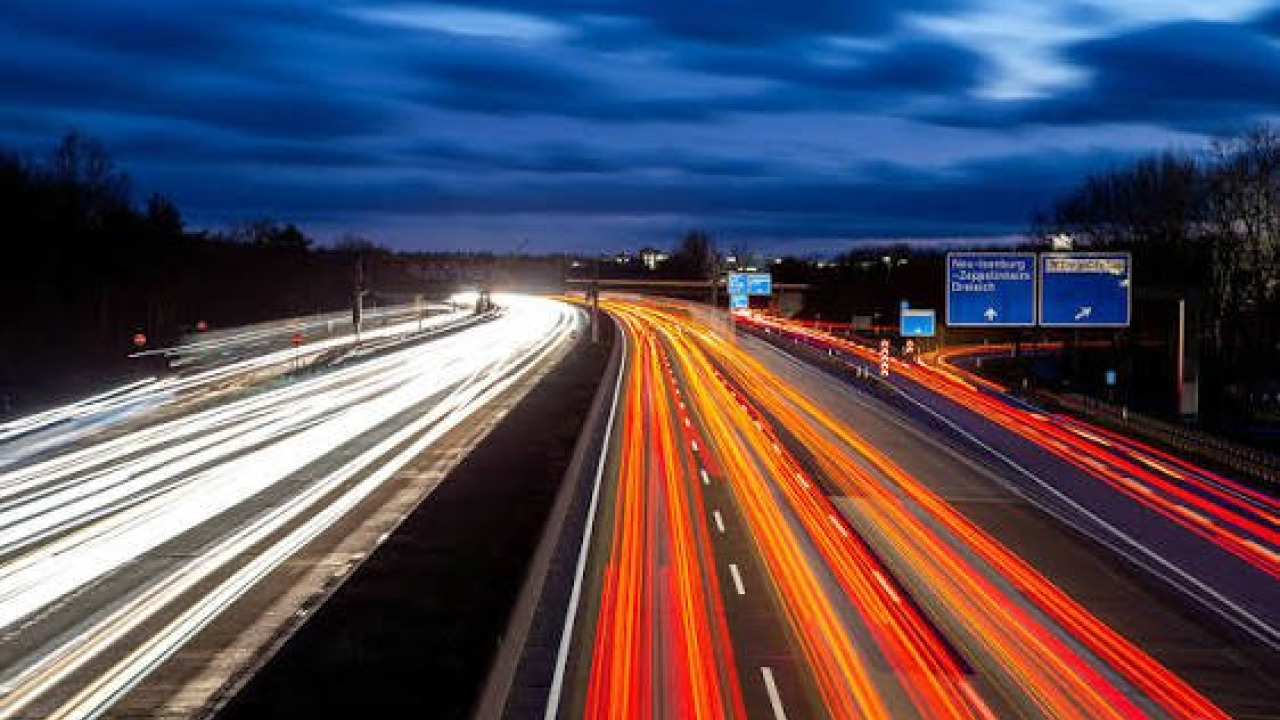

Before you hit the road in Germany, understanding the Autobahn rules is paramount. It's not just about speed; it's about precision and discipline. This guide is perfect for the independent explorer – someone who loves crafting their own itinerary, is comfortable covering 200 to 400 kilometers daily, and enjoys detouring to charming small towns, serene lake districts, and breathtaking nature parks. However, if your trip focuses solely on bustling city centers, if you'd rather avoid the intricacies of urban parking and environmental zone regulations, or if the thought of cars with vastly different speeds sharing the same stretch of road makes you anxious, then navigating Germany by car might present a few challenges. Let's break down the essential rules, step by step.
Quick Facts
| Topic | Information |
|---|---|
| Scope | Driving passenger vehicles on Germany's federal motorway network (Autobahn) |
| Network Size | Approximately 13,200 kilometers; operated by Die Autobahn GmbH des Bundes since January 1, 2021 |
| Infrastructure | Approximately 28,000 bridge structures and 550 tunnel facilities |
| Speed Regime | No general speed limit on a significant portion of the network; recommended speed 130 km/h |
| Tolls for Passenger Vehicles | No motorway tolls; toll obligation for heavy goods vehicles |
| City Entry | Green Umweltplakette required in environmental zones |
| Winter Tires | Rule based on road conditions, not calendar date |
| Mandatory Equipment | Warning triangle, reflective vest, first-aid kit |
| Alcohol Limit | 0.5 per mille in blood, 0.25 mg/l in breath |
| Emergency Call | 112; emergency call pillars along the Autobahn |
Car vs. Train: Deciding Based on Your Itinerary
Given Germany's extensive railway network, driving isn't always the most advantageous option for every route. Your decision should hinge on how reliant your stops are on public transport. For insights into German travelers' planning habits, you can check out our article on German tourist profiles.
| Route Type | Car Suitability | Train Suitability | Deciding Factor |
|---|---|---|---|
| Inter-city connections (major cities) | Medium | High | Urban parking and environmental zone burden |
| Rural cultural routes and wine regions | High | Low | Infrequent public transport between stops |
| Nature parks and lake districts | High | Low | Flexibility for early morning arrival |
| Staying in one city for day trips to surroundings | Low | High | Daily parking costs |
| Mountainous regions in winter | Medium | Medium | Tire conditions, chains, potentially closed passes |
How the Autobahn Speed Regime Really Works
While the idea of unrestricted driving across the entire network is widespread, the reality is a bit different. A 2015 network analysis by the Federal Highway Research Institute (BASt) reported that approximately 70% of the network has no permanent general speed limit, with fixed or variable limits applied to the remaining sections.
What "Richtgeschwindigkeit 130" Means for You
On sections without a general speed limit, the recommended speed (Richtgeschwindigkeit) is 130 kilometers per hour, as per the 1978 Autobahn-Richtgeschwindigkeits-Verordnung. This is a recommendation, not a legal limit; exceeding it does not result in fines or penalty points. However, in the event of an accident, the legal assessment can change: a driver exceeding the recommended speed might face a higher share of responsibility and different insurance evaluations. This regulation applies to cars, motorcycles, and un-trailed vehicles with a maximum permissible weight not exceeding 3.5 tons.
Pro Tip: If you're new to driving on this network, spend your first day sticking to the 130 km/h range. It's the perfect way to get a feel for braking distances and lane-change reflexes at speed.
Variable Signage and Dynamic Speed Limits
A significant portion of the network features digital signs, where the displayed speed can change based on traffic density, roadworks, precipitation, or visibility. The moment 120, 100, or 80 appears on the screen, that value becomes legally binding. Lane widths decrease in construction zones; separate markings are provided for wider vehicles.
Fixed Limits Based on Vehicle Class
Section 18 of the Road Traffic Regulations (StVO) further restricts Autobahn usage. Only vehicles with a design-based maximum speed exceeding 60 km/h are permitted on the Autobahn; the same condition applies to trailers. Trucks with a maximum permissible weight exceeding 3.5 tons and cars towing trailers are limited to 80 km/h. Vehicle height cannot exceed 4 meters, and width cannot exceed 2.55 meters. The same section prohibits reversing and making U-turns; stopping, including on the hard shoulder, is also forbidden, except in cases of breakdown or emergency.
Lane Discipline, Overtaking, and the "Rettungsgasse"
On the Autobahn, safety isn't primarily about speed; it's about how you use the lanes.
The Right Lane is Your Default Position
Section 2 of the StVO mandates that drivers keep as far right as possible. Autobahn GmbH also reminds drivers that the middle lane is primarily for overtaking, and once an overtake is complete, you should safely return to the right lane. Unnecessary occupation of the middle lane forces drivers behind you to make long lane changes from the far right to the far left, significantly increasing the risk of accidents. Violations can result in administrative fines and penalty points on your driving record.
Overtaking on the Right: Forbidden with Narrow Exceptions
Overtaking is done from the left lane. The exception allowing overtaking on the right is very narrow: if a queue has formed in the left lane and traffic has slowed, Section 7 of the StVO permits passing on the right at a slightly higher speed and with maximum caution. Otherwise, overtaking on the right is considered a violation. Underestimating the speed of a vehicle approaching from the left lane is a common mistake on this network; therefore, blind spot checks are a crucial step.
Where to Form the "Rettungsgasse" (Emergency Lane)
Section 11 of the StVO requires an emergency lane (Rettungsgasse) to be formed the moment traffic slows to walking pace or comes to a complete stop. Contrary to popular belief, this lane is not in the middle of the road: it opens between the far-left lane and the lane immediately to its right. On a three-lane road, this means the gap between the first and second lanes from the left.
- Form the emergency lane as soon as traffic slows to a crawl, not just when emergency vehicles are visible.
- Vehicles in the far-left lane move as far left as possible.
- Vehicles in other lanes move as far right as possible, using the hard shoulder if necessary.
- Keep the lane open even after the first emergency vehicle passes; a second team might be following.
The Umweltplakette and Germany's Environmental Zones
Just as driving on the Autobahn has its rules, so does entering German cities. According to data from the Federal Environment Agency, Germany has 35 environmental zones (Umweltzone), all of which require a green sticker (Umweltplakette). The legal basis is the 35th BImSchV, which came into force in 2007, regulating the marking of low-emission vehicles; this rule applies regardless of the vehicle's country of registration.
How to Get Your Sticker and Where to Affix It
The sticker class is determined by the emission key number in your vehicle registration document. It can be obtained from technical inspection organizations, is affixed to the inside of the windshield, and must be legible from the outside. When ordering from abroad, postal delivery can take several days.
Who is Responsible for the Sticker in a Rental Car?
Most rental cars in Germany are delivered with the sticker already affixed; however, always check the sticker on the windshield when picking up the vehicle. Entering an environmental zone without a valid sticker will result in an administrative penalty, and the fine will be passed on to you via the rental company. In some cities, additional access restrictions for specific engine types may apply beyond the environmental zone rules; always confirm the current regulations for cities on your route via the Federal Environment Agency's environmental zones portal.
Winter Conditions, Tire Regulations, and Road Maintenance
Driving in Germany during winter requires understanding both the legal regulations and the practical realities of road conditions.
The Situational Winter Tire Rule
Section 2, Paragraph 3a of the StVO mandates winter tires in conditions such as black ice, snow-covered roads, slush, ice, and frost. This is not a calendar-based rule; the obligation arises when these conditions occur. The quality of the tire is defined in Section 36, Paragraph 4 of the StVZO, which requires the Alpine symbol – a mountain pictogram with a snowflake. The transitional period for older M+S marked tires ended in autumn 2024.
Sharing the Road with Snow Plows and Maintenance Vehicles
Autobahn GmbH operates its winter service between November 1st and April, with a team of approximately 6,300 personnel working around the clock when needed. A common method is the application of moist salt: a mixture of 70% dry salt and 30% brine is effective down to minus 21 degrees Celsius. The agency states that roads will not be completely clear of snow in all weather conditions; as a maintenance round takes about three hours, newly cleared sections can be re-covered during heavy snowfall. Do not overtake maintenance vehicles and keep the emergency lane clear in traffic jams.
Driving Windows by Season
| Period | Road Conditions | Key Driving Factor |
|---|---|---|
| December-February | Snow, ice, early darkness | Tire conditions often apply; shorten daily driving distance |
| March-May | Variable weather, start of roadworks | Construction zone bottlenecks and dynamic speed limits increase |
| June-August | Hot weather, school holiday traffic | Traffic jams on long weekends; aim for early morning departure |
| September-November | Rain, fog, early dusk | Adjust speed to visibility; use fog lights in low visibility |
Fuel, Rest Stops, and Toll Regulations
For travelers in passenger vehicles, the cost of tolls is negligible. According to the Federal Office for Logistics and Mobility (BALM), as of July 1, 2024, toll obligations apply only to vehicles designed for freight transport and with a technically permissible maximum laden mass exceeding 3.5 tons. Vehicles not designed for freight transport are exempt, meaning passenger cars do not incur toll charges. The bulk of your budget will shift towards fuel, parking, and accommodation.
On-Autobahn Services vs. Off-Ramp Stations
Service stations directly on the Autobahn offer convenience but typically come with higher fuel prices. Taking an exit and using a station at the entrance to a town can significantly reduce the cost. Filling up your tank before it drops below half ensures you're not forced into a specific station choice.
Understanding Raststätte, Autohof, and Parkplatz
- Raststätte: A fully equipped service area accessible directly from the Autobahn, offering fuel, restaurants, and restrooms.
- Autohof: A facility located near an exit, just off the Autobahn, usually offering more competitively priced fuel.
- Parkplatz: A basic area with only parking, and sometimes restrooms; intended for short breaks.
- Always take longer breaks at designated service areas; stopping on the hard shoulder is prohibited.
Rental Cars, Driving Licenses, and Mandatory Equipment
Your rental agreement is just as crucial as the driving rules themselves. Ensure that cross-border usage permission, insurance coverage, and whether the vehicle is supplied with winter equipment are all clearly stated in the contract. Visa requirements vary by nationality and are updated periodically; always confirm these with official German diplomatic missions before your trip.
Driving License and Translation Requirements
According to the Federal Ministry of Transport, visitors without a permanent residence in Germany can drive with a valid national or international driving license; the license is expected to comply with the standards of the 1968 Vienna Convention on Road Traffic. For national licenses issued outside the European Union and European Economic Area, if no exemption is granted, a German translation is required. This translation can be prepared by automobile clubs, official authorities of the issuing country, or sworn translators. Drivers carrying an International Driving Permit are not typically required to carry an additional translation.
Mandatory In-Vehicle Equipment
The limit for driving under the influence is defined as 0.5 per mille in blood and 0.25 mg/l in breath; driving at or above these values is subject to administrative penalties. The required equipment items are:
| Equipment | Legal Basis | Note |
|---|---|---|
| Warning triangle | StVZO 53a | Must be carried in passenger vehicles |
| Reflective vest | StVZO 53a | Must comply with EN ISO 20471 standard |
| First-aid kit | StVZO 35h | Must meet DIN 13164 contents |
| Winter tires | StVO 2/3a and StVZO 36/4 | Must have the Alpine symbol |
What to Do in Case of Breakdown, Tunnel Incident, or Emergency
The sequence of actions during an emergency is as critical as the problem itself. The following two scenarios are based on operator guidelines.
Steps to Take During a Breakdown on the Lane
- Turn on your hazard lights and move your vehicle to the hard shoulder or a designated lay-by.
- Put on your reflective vest before exiting the vehicle.
- Have passengers exit on the right side and move behind the safety barrier.
- Place the warning triangle at an adequate distance behind your vehicle.
- Request assistance using an emergency call pillar or by dialing 112; the pillar system is operated by Autobahn GmbH and directly transmits your location.
- Do not attempt to tow the vehicle yourself; reversing and making U-turns are prohibited.
Breakdown or Fire in a Tunnel
When entering a tunnel, switch on your low beam headlights and keep your traffic radio function active. For safe following distance, a rule of thumb is half your speed in meters (e.g., 80 km/h means 40 meters distance). In case of a breakdown, move your vehicle to an emergency bay or the right edge, switch off the engine, leave the key in the ignition, put on your vest, and report your location from an emergency call station inside the tunnel instead of using your mobile phone. If a fire breaks out, turn on your hazard lights, abandon the vehicle, activate the alarm at the nearest emergency call point, and head towards the marked emergency exit. Reversing and making U-turns are prohibited in tunnels; in a traffic jam, close your windows and switch the ventilation to internal circulation.
Pre-Trip Checklist
- Confirm that the environmental zone sticker (Umweltplakette) is affixed to your windshield.
- For winter routes, check that your tires bear the Alpine symbol.
- Ensure you have a warning triangle, reflective vest, and first-aid kit readily available.
- Carry your International Driving Permit or a German translation alongside your national driving license.
- Review your rental agreement for cross-border permission and insurance coverage.
- Download offline maps and sort out your phone charging setup for the car.
- Plan your daily driving distance and break intervals in advance.
In summary: understand the speed regime through the recommended speed, prioritize lane discipline, master the emergency lane reflex, obtain your environmental sticker in advance, and memorize breakdown procedures. For those extending their route from the Alpine foothills southwards, our Italy travel guide clarifies regional itineraries. Travelers seeking similar experiences in Turkey can start with our museum-focused Turkey cultural tours and canyon and plateau programs in our Turkey nature and adventure tours categories.
Frequently Asked Questions 6
Is there a speed limit on German Autobahns?
A portion of the network has no general speed limit; a 2015 analysis by BASt reported this to be approximately 70%. On sections without a limit, the recommended speed according to the 1978 regulation is 130 kilometers per hour. Values displayed on signs and digital screens are legally binding.
Does exceeding the recommended speed result in a fine?
The recommended speed is not a legal prohibition, so exceeding it does not incur fines or penalty points. However, in the event of an accident, the legal sharing of responsibility and insurance assessment may differ due to driving above this recommended speed.
How is the "Rettungsgasse" (emergency lane) formed?
When vehicles slow to a walking pace or come to a stop, the emergency lane is formed between the far-left lane and the lane immediately to its right. Vehicles in the far-left lane move to the left, and those in other lanes move to the right. The lane is not in the middle of the road and is expected to be formed as soon as traffic slows.
Are there tolls for driving on the Autobahn in Germany?
No motorway tolls are charged for passenger vehicles. As of July 1, 2024, toll obligations apply to vehicles designed for freight transport with a technically permissible maximum laden mass exceeding 3.5 tons; vehicles not falling under this definition are exempt.
Can I enter city centers without an "Umweltplakette"?
A green sticker (Umweltplakette) is required in designated environmental zones, and this rule also applies to foreign-registered vehicles. The sticker is obtained from technical inspection organizations based on the emission key number in your vehicle registration; entering without a sticker is subject to administrative penalties.
When are winter tires mandatory in Germany?
The obligation is based on road conditions, not the calendar: it arises in situations of black ice, snow-covered roads, slush, ice, and frost. Tires are expected to bear the Alpine symbol (mountain pictogram with a snowflake); the transitional period for older M+S marked tires ended in autumn 2024.