
Nestled on Antalya's western coast, Demre offers a multi-layered journey, with its captivating sights often just a half-hour apart. From the hallowed grounds of Saint Nicholas Church to the ancient rock-cut tombs of Myra, the historic granary of Andriake, the vibrant Demre Bird Paradise, and the submerged wonders of Kekova, this region is a treasure trove waiting to be explored. The attractions naturally cluster into three areas: the cultural triangle in the center, the wetlands around Çayağzı to the west, and the Beymelek coast to the east. The four main stops in the central and western clusters form a compact loop of less than 15 kilometers, making them easily manageable in a single day. However, Beymelek to the east and the sea-bound Kekova require separate excursions, and that's where your planning decisions truly come into play. While Kekova's full story deserves its own dedicated guide, here we'll focus on the practicalities: which pier to depart from, how to fit a boat trip into your schedule, and the best times to visit each site for maximum enjoyment.
When is the Best Time to Visit Demre?
Demre is nestled on a plain between the Taurus Mountains and the Mediterranean Sea. This geography results in two distinct outcomes: winters are mild and rainy, while summers within the plain can be humid and stifling. Most archaeological sites are open-air with limited shade, so your choice of season directly impacts the comfort of your trip.
Spring (late April, May) and autumn (September, October) offer ideal conditions for exploring the region on foot. Daytime temperatures typically range from 22-28°C (72-82°F), the sea remains warm well into September, and Kekova boat trips operate on a full schedule. In July and August, temperatures can soar above 30°C (86°F); during these months, plan your visits to open-air sites like Myra and Andriake for before 10:00 AM or in the late afternoon.
The period from November to March sees significantly fewer crowds, and the region's wetlands truly come alive. As Demre Bird Paradise, located west of the town, lies on a major migratory bird route, these months are fantastic for birdwatching. Conversely, boat tours become less frequent and may be canceled due to weather conditions. For a winter trip, prioritize the cultural route and wetlands, keeping a boat trip as a flexible option to decide on based on the morning's weather.
Quick Facts
| Topic | Information |
|---|---|
| Location | Coastal town west of Antalya, between Finike and Kaş (ancient name Myra, also known as Kale in the past) |
| Key Attractions | Saint Nicholas (Santa Claus) Church, Myra Ancient City, Andriake and Lycian Civilizations Museum, Demre Bird Paradise, Beymelek Lagoon, Kekova |
| Distance from Antalya | Approx. 140-150 km by road, 2.5-3 hours via D400 |
| Distance from Kaş | Approx. 45 km, average 45 minutes |
| Distance from Finike | Approx. 25-30 km to the east |
| Gateway to Kekova | Çayağzı (Andriake) port and Kaleüçağız (Üçağız) village pier |
| Demre Bird Paradise | 1,000-hectare wetland west of the town center, stretching between Çayağzı Port and Andriake Ancient City; 2 km from the center |
| Visiting Hours | Ministry archaeological sites open until evening in summer, close after afternoon in winter (ticket sales stop before closing); Bird Paradise officially open until dusk |
| Tickets | Church, Myra, and Lycian Civilizations Museum are ticketed (Ministry tariff), Museum Pass valid, separate tariff for foreign visitors; Bird Paradise visited via visitor center, no ticket booth at beach or quarry |
| Ideal Period | Late April-May and September-October; for birdwatching, migratory periods and November-March |
| Recommended Duration | 1 day for cultural route and wetlands, 2 days if Kekova boat trip is added |
How to Get to Demre and Plan Your Day
Getting There by Road from Antalya
From Antalya city center, take the D400 coastal road, passing through Konyaaltı, Kemer, Kumluca, and Finike. After approximately 140-150 kilometers, you'll descend into the Demre plain. Due to the winding nature of the coastal road, the drive typically takes 2.5 to 3 hours; caravan and bus traffic in summer can extend this slightly. For those preferring the bus, routes departing from Antalya bus terminal towards Kaş and Fethiye stop in Demre. As the drop-off point is in the town center, you'll be within walking distance of Saint Nicholas Church.
Visitors with their own vehicles can use parking areas in the center; there are also car parks at the entrance to the archaeological sites. Distances within the region are short: Myra is 2 kilometers north of the center, while Andriake and Çayağzı are about 5 kilometers west of the center. These four stops form a loop of less than 15 kilometers in total, meaning they can easily be covered by car in half a day.
Getting There from Kaş, Fethiye, and Airports
The distance from Kaş to Demre is 45 kilometers, a drive of around 45 minutes. This proximity makes a day trip from Kaş to Demre a popular choice. For those coming from Finike, the distance is even shorter, approximately 25-30 kilometers. Travelers from Fethiye cover about 150 kilometers via Kalkan and Kaş; the route is very winding, so start early in the morning.
Those arriving by plane have two options: Antalya Airport (2.5-3 hours drive) and Dalaman Airport (around 3 hours). From both airports, you can arrange car rental or a bus combination with a transfer in Kaş. Public transport services in the region become less frequent in the evenings; purchase your return ticket before starting your trip.
Day One: Center, Archaeological Sites, and Wetlands
The following order prioritizes the logic of the day rather than specific times: completing open-air sites in the cool, spending the midday heat indoors, and dedicating the softer light of late afternoon to the wetlands and coast. Since opening and closing times for archaeological sites vary by season, use this sequence instead of a fixed timetable, and inquire about specific hours at the ticket office on the day of your visit.
- Breakfast in the center, then your first stop of the day: Saint Nicholas (Santa Claus) Church. The first hours after opening are cooler and less crowded before tour buses arrive. Since the church is in the bazaar, you can leave your car in the center and start your day on foot.
- Myra Ancient City, 2 kilometers north of the center. Shade is almost non-existent, so finish this stop before the midday heat sets in. The rock tombs and Roman theater are adjacent within the same archaeological site, meaning no extra travel between them.
- Head west from the center to Andriake. The Lycian Civilizations Museum in the Granarium is indoors and air-conditioned, making it the perfect place to spend the hottest part of the day.
- Demre Bird Paradise at the same location. Enjoy views of the wetlands from observation towers and take a short stroll on the wooden boardwalks. No separate drive is needed, as the museum exit and wetlands are on the same walking path.
- A sea break at Çayağzı Beach or a late lunch at one of the establishments around the pier.
- For dinner, choose from local eateries in Demre bazaar or the fish restaurants along the Kaleüçağız pier. Since the village is west of the center, factor in the return journey.
Those wishing to see the Beymelek coast can turn east for their return journey instead of steps 4 and 5. Choosing one wetland over trying to squeeze both into the same day allows for a more relaxed pace; as they are in opposite directions, the round-trip travel time doubles.
Day Two: Kekova Boat Trip
Trying to fit Kekova into the same day as the cultural stops is practically unfeasible. For day-trip programs, pier meeting times are usually around 09:30 AM, departure between 09:45 AM and 10:30 AM, and return between 5:00 PM and 6:00 PM; essentially, the boat trip takes up most of the day. Duration also varies by departure point: programs from Çayağzı (Andriake) last approximately 4-6 hours, while shorter tours from Kaleüçağız take about 2-3 hours. A plan attempting to add four archaeological sites to the same day would rush through the stops and risk missing the departure time.
- Choose your pier the day before: Çayağzı if staying in the center, Kaleüçağız if you want a Kekova-focused day.
- Get written confirmation of departure time, return time, number of stops, and whether lunch is included when booking.
- Check the weather and wind conditions before setting sail in the morning; on windy days, captains may alter the route, departure, and arrival times.
- Upon return, allocate any remaining time to stops you skipped on day one; the ancient stone quarry or Beymelek coast fit well here as a short break.
Demre Attractions: A Comparison
The attractions are close to each other but vary in character: the church and museum offer indoor comfort, while the rock tombs, stone quarry, wetlands, and beaches are entirely open-air. If you have half a day, prioritize the church and Myra; a full day allows you to add Andriake and the Bird Paradise to your list.
| Attraction | Focus | Time Needed | Timing Note |
|---|---|---|---|
| Saint Nicholas (Santa Claus) Church | Byzantine architecture, frescoes, saint's tomb | 45-60 min | Near opening or closing time; tour buses get busy towards midday |
| Myra Ancient City and Rock Tombs | Lycian tomb facades, Roman theater | 45-60 min | Limited shade, early morning or late afternoon |
| Andriake and Lycian Civilizations Museum | Ancient port, granary, artifacts | 60-90 min | Indoor, suitable for hot hours |
| Demre Bird Paradise | 1,000-hectare wetland, observation towers, migratory route | 45-60 min | Open until dusk; first light and sunset are productive |
| Demre River and Çayağzı Estuary | Delta forming the plain, where fresh and sea water mix | 15-30 min | Combines with a beach or pier break |
| Ancient Stone Quarry | Semi-cut blocks, chisel marks | 15-20 min | Unshaded and undeveloped area; planned as a short stop |
| Beymelek Lagoon | Lagoon fishing, calm coast, fish restaurants | 30-60 min | Cooler in the late afternoon; requires a separate detour to the east |
| Çayağzı and Çağıllı Beaches | Sea break, boat pier | 1-3 hours | Waves can form on windy days |
Saint Nicholas Church (Santa Claus Church)
The church bears the name of Nikolaos, who was the Bishop of Myra in the 4th century; it's also known as the Santa Claus Church on signs and in popular speech, as this bishop evolved into the Santa Claus narrative across different cultures over centuries. The structure standing today dates back to the Byzantine period; it has been repaired and expanded over centuries after being damaged by earthquakes and the alluvial deposits of the Myros River, undergoing a comprehensive restoration in the 19th century. One widely agreed-upon historical fact is that the saint's remains were taken to Bari by Italian merchants in 1087. The structure is on Turkey's UNESCO World Heritage Tentative List.
What you see inside is as much about the surfaces as the architecture: fresco fragments on the dome and vaults, colorful stone inlay (opus sectile) flooring, and the sarcophagus in the side nave, believed to be the saint's tomb. Excavation and conservation work continues in the area, so some sections may be temporarily closed. The structure is covered by a protective roof, making it comfortable to visit even on rainy days.
The church is in the town center, within walking distance of the bazaar and bus stop, making it the easiest attraction to reach for those without a car. Entry is ticketed according to the Ministry of Culture and Tourism tariff, the Museum Pass is valid, and a separate tariff applies to foreign visitors. Since both closing times and current fees change seasonally, inquire about these at the ticket office or through the Ministry's official ticketing channel, as old figures circulating on third-party sources can be misleading. If planning an afternoon visit, factor in that the ticket office stops selling tickets some time before closing. As it is a place of worship, it is advisable to wear clothing that covers shoulders and knees. For those wishing to combine the churches, museums, and ancient cities in the region into a guided program, cultural tours in Demre offer an option that also handles transportation to these sites.
Myra Ancient City and Rock Tombs
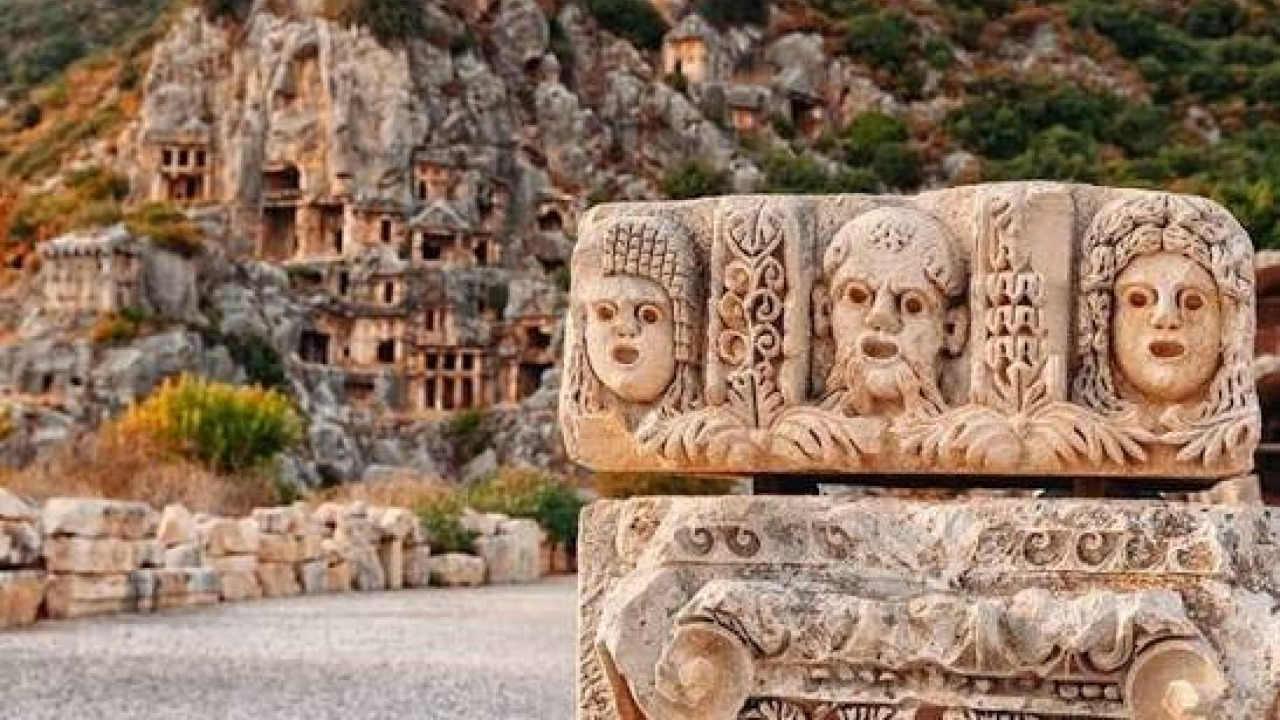
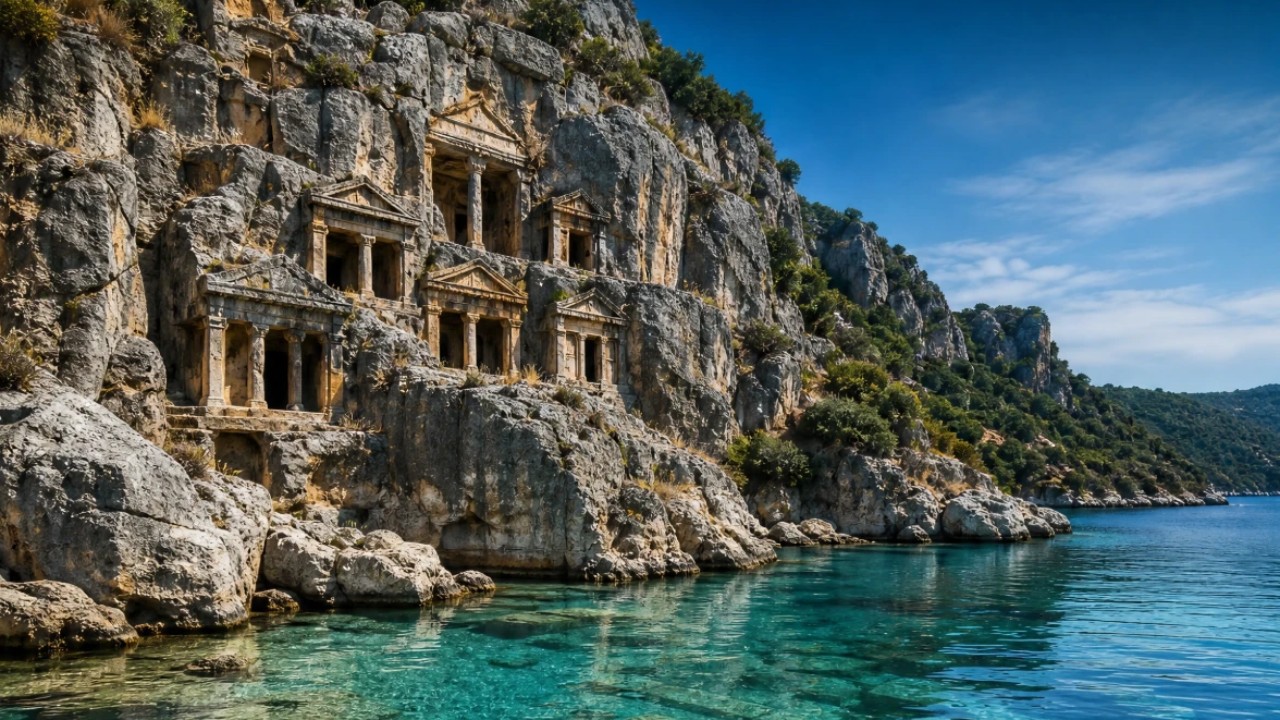
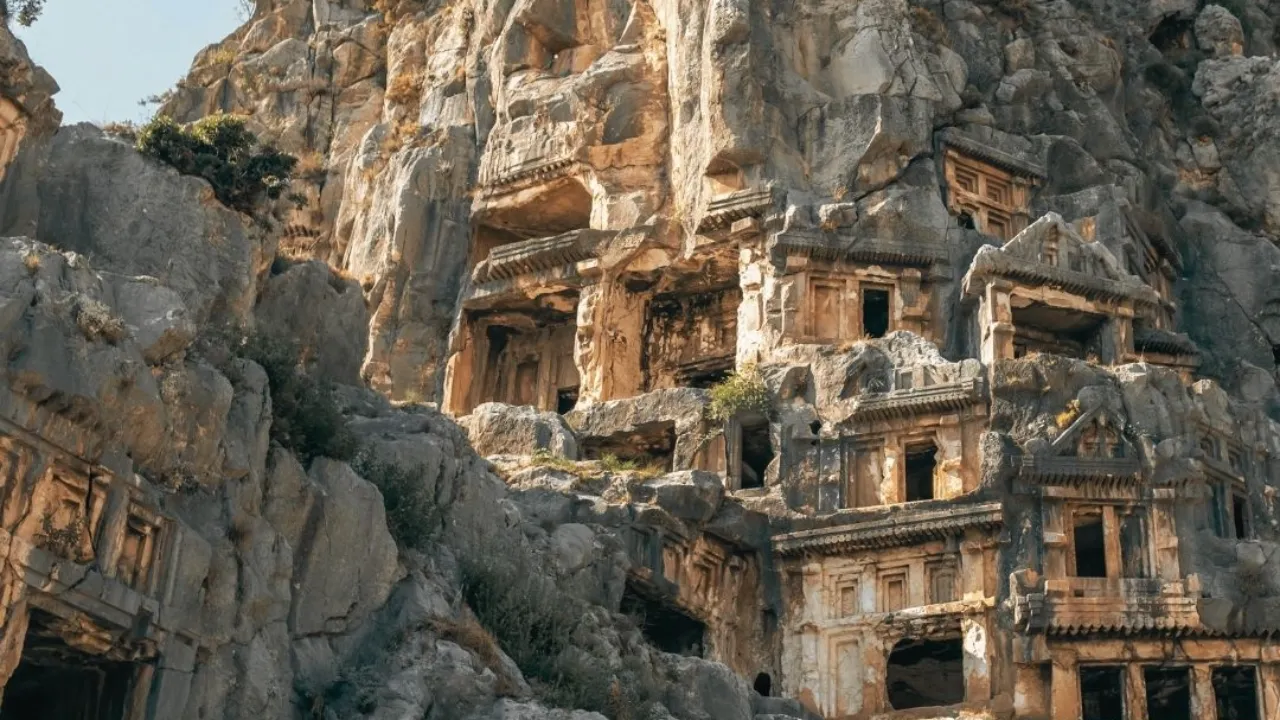
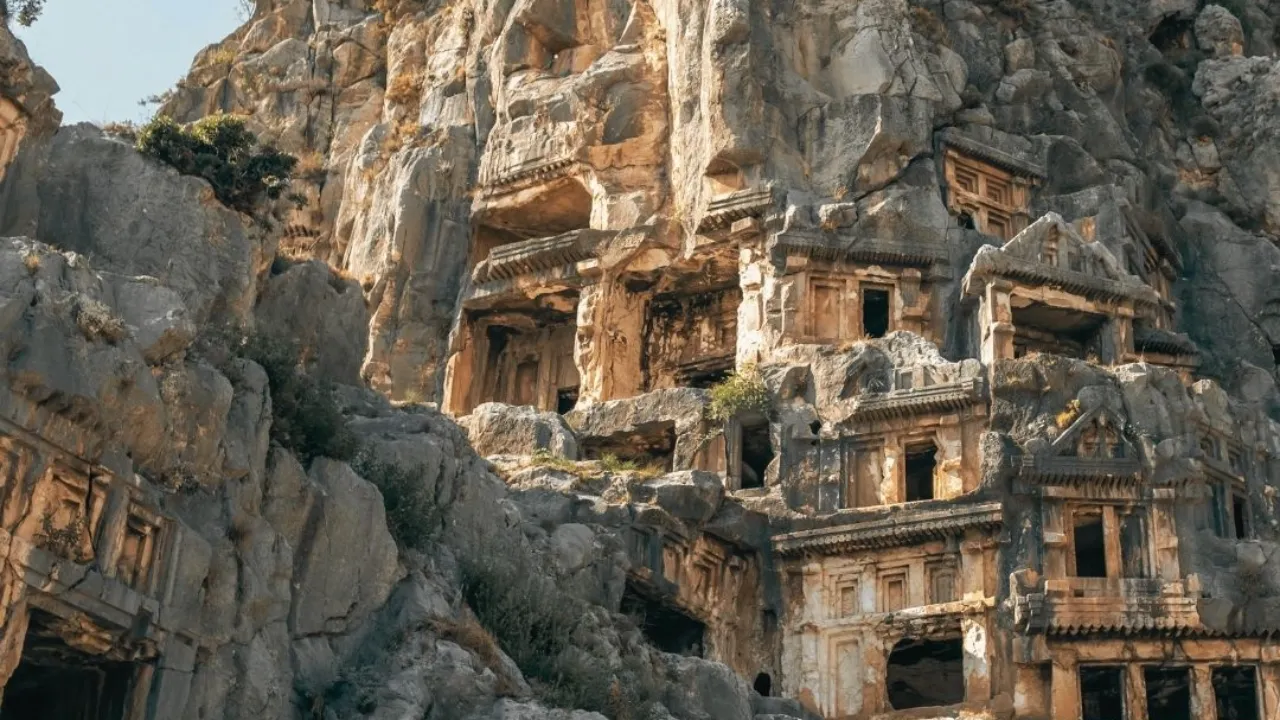
Approximately 2 kilometers north of the center, the rock-cut tomb facades carved into the cliff face stand side-by-side with a Roman-era theater. Myra was one of the leading cities in the Lycian League, holding three votes. The reason much of the city is now buried under alluvium is precisely this plain: the Myros River, over centuries, deposited soil that covered the ancient urban fabric meters deep.
The rock tombs are renowned for their facades that mimic wooden house architecture, a Lycian tradition; the stone translations of wooden beams can be seen in the pediments and doorjamb details. In the ruins of the theater's stage building, fragments of theater masks and mythological reliefs are displayed. Although some of the seating rows have shifted due to earthquakes, the overall plan is still discernible. The vaulted galleries leading to the seating tiers served both as structural support and to distribute the crowds, but the steps are uneven and lack railings.
The ground is stony and sloped, with almost no shade; a hat, water, and non-slip footwear are recommended. For photographing the rock tombs, the morning light illuminates the facades from the side, while the late afternoon sun bathes the cliff in warm tones. For programs combining such ancient city stops in multiple districts, routes on the historical city tours page can be compared.
Andriake Ancient Port and Lycian Civilizations Museum
Andriake was Myra's port settlement, located about 5 kilometers from the center, in Çayağzı. The prominent structure in the area is the granary (Granarium), dating back to the 2nd century AD, during the Hadrianic period. This long, compartmentalized warehouse is now home to the Lycian Civilizations Museum, exhibiting inscriptions, sculpture fragments, coins, and artifacts related to port trade from Lycian cities.
In the open-air section, you can explore the agora, cisterns, church ruins, and remains of a structure identified as a synagogue. Thanks to wooden boardwalks crossing the wetlands, visitors can observe both the ancient ruins and bird activity on the same tour; this is because Demre Bird Paradise stretches between Çayağzı Port and Andriake Ancient City. The indoor section of the museum is air-conditioned, serving as a welcome break during the hottest part of the day.
Allowing 60-90 minutes is usually sufficient. The area is ticketed, and the museum and archaeological site are visited together. One advantage of Andriake is its proximity to the pier where Kekova boats depart: you can finish your museum visit and board a boat from the same spot. On hot days, a practical sequence is: first, the open-air agora, cisterns, and church ruins, then the air-conditioned museum section, followed by the wetlands and the pier.
Demre Bird Paradise: Wetlands and Observation Towers
It's crucial to clarify from the outset, as it's often confused: Demre Bird Paradise is not to the east of the town, but to the west. It stretches between Çayağzı Port and Andriake Ancient City, in the area descending towards the sea after the Antalya-Muğla highway exit. Officially defined as 1,000 hectares, it's just 2 kilometers from the town center, meaning you're already within the wetlands when you finish your Andriake visit. The Beymelek Lagoon to the east is a separate area, in a different direction.
The area lies on a major migratory bird route, with official data indicating approximately 50,000 birds visit annually. 149 bird species are recorded, with flamingos, herons, cormorants, and various duck species being among the most frequently observed groups. Species density varies by migratory periods and season, so the landscape can differ even within the same month.
Visiting conditions are surprisingly well-equipped: the area features a visitor center, bird observation towers, binoculars, and touring bicycles. Official information states that the area can be visited at any time of day until dusk, making it an attraction that isn't bound by archaeological site closing times. The walking path connecting the Bird Paradise and the Lycian Civilizations Museum, as shared by travelers, is approximately 4.6 kilometers and almost entirely flat, with an elevation gain of around eight meters, making it an easy trail even for families with children.
From a timing perspective, first light and sunset are the two most productive periods: birds are feeding at these times, and the side lighting makes photography from the observation tower easier. The basic rule is not to enter the reeds and avoid startling the birds. For those who enjoy wetland walks and similar outdoor programs, options in the nature adventure tour category include this stop in their itineraries.
Beymelek Lagoon and Dalyan Fishery
Beymelek is a coastal settlement east of the town center, in the direction of Finike. Its lagoon, connected to the sea, is known for traditional dalyan (lagoon) fishing and aquaculture; sea bream and sea bass come from these pools and define the menus of nearby restaurants. The shallow waters and reeds also create a feeding ground for birds here, but unlike the Bird Paradise to the west, there's no visitor center, observation tower, or marked walking trail; observations are made from the shore and dirt roads.
This difference simplifies your decision: if you want equipped observation and a flat walk, choose the Bird Paradise to the west. If you prefer a cool coastal break in the late afternoon with dalyan fish, opt for Beymelek. Walking and cycling are possible on the dirt roads around the lagoon; shoe choice is important as these roads can become muddy after rain.
Demre River and Çayağzı: The Delta that Shaped the Plain
The Demre River is the element that shaped Demre's current geography. Known as Myros in ancient times, this river nourished the plain with alluvium brought down from the mountains and was one of the factors that enriched Myra; the same soil, over centuries, buried much of the ancient city meters deep. The ruins you see in Myra today are only a small part of the city that has resurfaced.
The river meets the sea west of the town, and the place name directly reflects this: Çayağzı (meaning "river mouth"). The shallow area formed around the mouth, where fresh and seawater mix, is the very system that feeds the wetlands of the Bird Paradise and the marshy coast of Andriake. This delta is also behind the ancient port's silting up and loss of function over time.
For visitors, there are three practical consequences. First, the water at Çayağzı Beach can be cooler than the open sea due to the freshwater mix. Second, the plain's fertility sustains greenhouse tomato production; the sea of greenhouses you see along the road is a result of this. Third, because the wetlands and archaeological site are intertwined, you can enjoy both ancient ruins and birdwatching on a single walk, a feature that distinguishes Demre from similar-sized towns.
Ancient Stone Quarry Near Andriake
These quarry areas near the coast are among the places where stone used in the structures around Andriake was extracted. In the roadside area, semi-cut blocks, chisel and wedge marks, and the sequence of blocks being detached from the rock are clearly visible. It's a complementary stop after visiting temples and theaters, as it showcases the production phase of ancient construction.
The area is not a developed archaeological site; there are no facilities like signs, shade, or toilets. Plan this as a short 15-20 minute stop and wear closed-toe shoes. Stone surfaces can become slippery after rain, so proceed carefully on wet days.
Çayağzı and Çağıllı Beaches
Çayağzı Beach is right next to the ancient port of Andriake, about 5 kilometers from the center. Its long coastline offers a mixed sand and pebble surface. With a cafeteria and pier directly behind it, it also serves as a convenient waiting spot before a boat tour. As it's where the Demre River meets the sea, the water can be cooler than the open sea, and waves can pick up on windy days.
Çağıllı Beach, as its name suggests (çağıl means pebble), is a shingle beach and a calmer cove. Shade and amenities are limited; bring your own water, umbrella, and sea shoes. The pebble ground might be challenging for families with small children, in which case the sandy section of Çayağzı would be more suitable.
A common feature of both beaches is that they are less crowded than the coasts of Kaş and Kalkan. However, lifeguard and equipment rental services are not consistently available every day; assess the conditions on-site before swimming.
Demre Season by Season: A Matrix
| Period | Weather & Sea | Crowd Level | Note |
|---|---|---|---|
| April-May | Approx. 20-27 °C (68-81 °F), sea cool | Medium | Archaeological walks are comfortable, countryside is green, spring migration enlivens wetlands |
| June-August | Above 30 °C (86 °F), sea warm | High | Visit open-air sites before 10:00 AM or after 5:00 PM |
| September-October | Approx. 24-30 °C (75-86 °F), sea still warm | Medium | Boat trips and cultural route combine well, autumn migration begins |
| November-March | Approx. 12-18 °C (54-64 °F), rainfall increases | Low | Wetlands come alive, boat trips become less frequent |
Temperature ranges are based on multi-year averages, and deviations within the year are normal. Those planning a winter trip should add an indoor backup stop (like the Lycian Civilizations Museum) to their list to avoid wasting a rainy day. Since the Bird Paradise is open until dusk, it can be included in the plan as an afternoon break even on shorter winter days.
Gateway to Kekova: Which Pier to Depart From?
Çayağzı and Kaleüçağız: Two Departure Points
There are two points within Demre's borders from which to depart for Kekova: the Çayağzı (Andriake) pier, 5 kilometers from the center, and the pier of Kaleüçağız village, located west of the center, towards Kaş. The village is also briefly referred to as Üçağız on signs and in tour programs; they are the same place. Çayağzı is the pier that those staying in the center reach with a short drive, and programs departing from here last approximately 4-6 hours. Kaleüçağız, being closer to Kekova Island, reaches the line of ruins in a shorter time; short tours departing from here are completed in about 2-3 hours, with a larger portion of that time spent among the islands and coves.
When deciding, consider the route itself in addition to the duration. Beyond the Sunken City line, Kaleköy, Tersane Bay (known for its old shipyard and church ruins), Gökkaya Bay (a frequent swimming stop), and the Pirate Cave on the edge of the bay are well-known attractions in the region. Which program visits which depends on the boat type and the day's wind. Short tours mostly stick to the line of ruins and one cove, while longer programs add a second cove and a Kaleköy stop to the list.
| Departure Point | Suitable For | How Time is Used | Note |
|---|---|---|---|
| Çayağzı (Andriake) | Those staying in Demre center, visiting the museum and wetlands on the same day | Longer travel time to reach the line of ruins | Museum, wetlands, beach, and pier are all at the same spot; comfortable waiting before the tour |
| Kaleüçağız (Üçağız) | Those planning a Kekova-focused day, wanting to catch the first boat of the morning | Close to the line of ruins, more time for coves | Village is reached by car, restaurants line the pier |
Most boats have a glass-bottom section, and the route passes over the submerged ruins. Programs include one or two swimming stops in coves; packages with lunch included and those without are priced separately. When booking, get written confirmation of the duration, number of stops, and whether lunch is included: most disagreements later arise from these items.
Kekova Island and the Sunken City
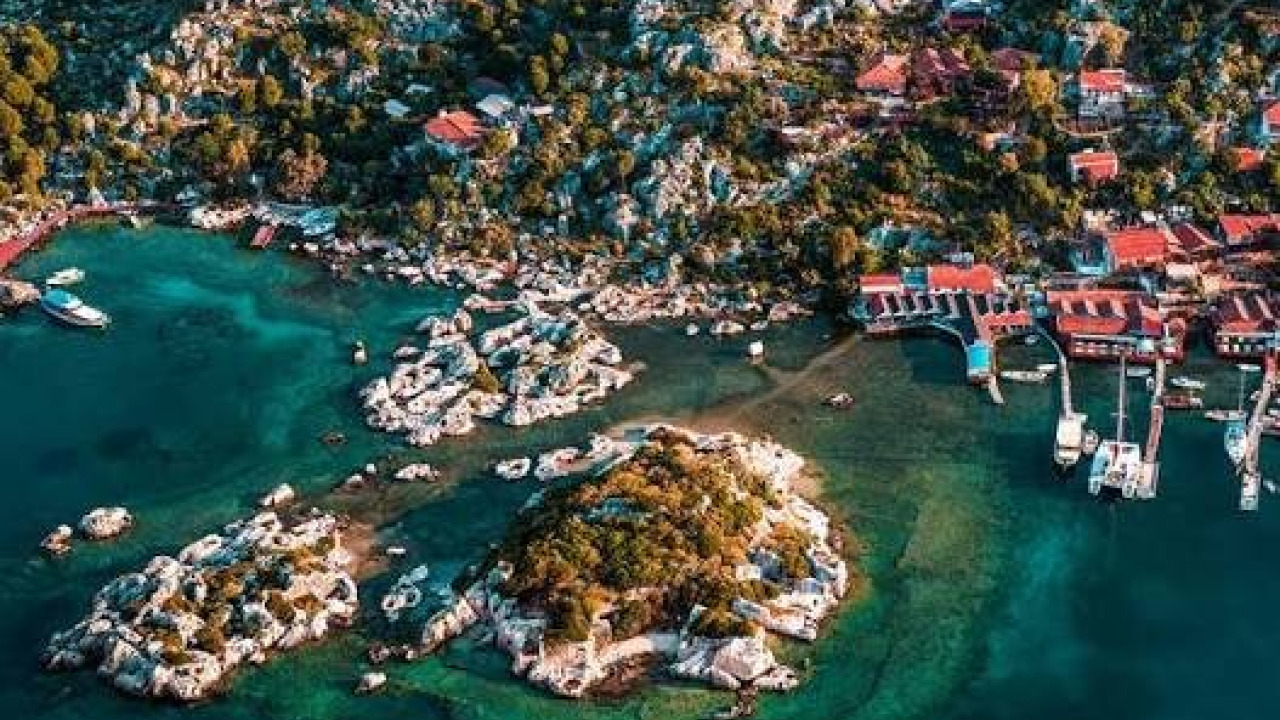
The Sunken City on the northern coast of Kekova Island consists of the remains of the ancient settlement of Dolikhiste, submerged by earthquakes in the 2nd century AD. Staircases, wall foundations, and harbor lines can be discerned in the shallow water. As the region holds special environmental protection status, swimming and diving are prohibited over the sunken area; boats pass slowly along a designated route.
The story of the sunken city's formation, other stops seen on the tour, details of conservation rules, and photo spots are compiled in a separate article: Kekova sunken city guide. In Demre, the decision you need to make is narrower: which pier to depart from and which day to schedule the boat trip.
This decision has a concrete implication for the line of ruins. Water surface reflections increase around midday, so a program that arrives at the line early offers clearer underwater views. Boats departing from Kaleüçağız naturally have this advantage as they reach the line quickly, while programs from Çayağzı arrive closer to the middle of the day. Therefore, the question to ask before booking is not "how long does the boat trip last," but "how long does it stay at the line of ruins."
Kaleköy and Simena Castle
Kaleköy on the opposite shore is the settlement where ancient Simena was located. The castle on its hill and the Lycian sarcophagi in the shallow waters near the coast form the iconic image of the tour. Since there's no road connection to the village, access is by boat or via a coastal path starting from Kaleüçağız; the path is about 2-3 kilometers and takes 30-45 minutes, with visitors often leaving their cars in Üçağız.
The ascent to the castle is a short climb with stone steps, but non-slip footwear makes it easier as the steps are uneven. Pier stops on programs visiting Kaleköy usually last around an hour; those planning to climb the castle should ask about the duration of this stop when booking, as the time might not be enough if you also plan to sit at a restaurant on the pier. Another often-overlooked budget detail is that there's a separate ticket for castle entry, and this is not included in the boat ticket, so have a payment method ready if you plan to go ashore.
Ready-Made Programs from Antalya, Kaş, or Demre
It's possible to visit Kekova with your own vehicle and buy boat tickets at the pier. Alternatively, ready-made programs departing from Antalya, Kemer, Kaş, and Demre combine transportation, boat trip, and guide in one package; this option is especially functional for travelers without a car and day-trippers with limited time. Those wishing to compare sea-focused programs can look at the duration and departure point differences in the Demre sea adventure tours list; current per-person fees are also live on this list.
When deciding between two programs, clarify these points: does the departure time fit your schedule, which coves does the boat stop at, does the per-person fee include food and guiding, how many people will be on the boat, and what happens in case of cancellation or bad weather. The price difference between two tours operating on the same route is often hidden in these details.
Budget Planning: Which Stops are Ticketed, What Determines the Cost?
Demre's budget operates on two different logics. Archaeological site entry fees are subject to the Ministry of Culture and Tourism tariff and are updated periodically; for boat trips, meals, and accommodation, the price is set by the operator and changes seasonally. In practice, this means building your budget not with a fixed price list, but by understanding which items are ticketed and what factors influence their cost. The table below is organized according to these two questions; inquire about current prices at the ticket office, the Ministry's official ticketing channel, or the tour operator.
| Item | Fee Status | Factors Determining Cost |
|---|---|---|
| Saint Nicholas (Santa Claus) Church entry | Ticketed archaeological site, Ministry tariff; Museum Pass valid | Separate tariff for domestic and foreign visitors, visitor groups eligible for discounts |
| Myra Ancient City entry | Ticketed archaeological site; tariff updated periodically | Season, card coverage, foreign visitor tariff |
| Andriake and Lycian Civilizations Museum | Ticketed; museum is in the Granarium within the archaeological site, both visited together | Combined or area ticket application, card coverage |
| Demre Bird Paradise | Visit conducted via the visitor center in the area, not an archaeological site ticket office; inquire about current practices at the center | Whether you use binoculars and touring bicycles from the site or your own |
| Beymelek coast, stone quarry, and beaches | No ticket booth, free entry to areas | Parking, sunbed, or use of facilities, if applicable |
| Simena Castle (Kaleköy) entry | Ticketed; not included in boat ticket, paid separately by those going ashore | Whether you choose to go ashore and climb the castle; viewing from the sea is free |
| Short Kekova boat trip (approx. 2-3 hours) | Priced per person; significantly less than a full-day ticket | Number of stops, whether swimming breaks are included, departure pier |
| Shared full-day Kekova tour | Price set by operator, no fixed tariff; priced per person | Duration, whether lunch is included, departure pier, group size, season intensity |
| Private boat rental | Priced per boat, significantly higher than a shared tour | Boat type and capacity, number of hours, season intensity |
| Meals and incidental expenses | Local eateries are lower-end, fish-heavy menus are higher-end | Menu choice, type of seafood, parking |
The order doesn't get old, but the numbers do: a short tour is less than a full-day program, a full-day shared program is significantly less than a private rental. The difference between two shared tours departing from the same pier usually comes down to food and the number of stops. For current per-person fees for Kekova programs, you can check our Demre sea adventure tours list linked above; the tariff is updated live there.
Moves that lower the budget: combining three ticketed areas into one day and entering with an annual pass (the pass has an annual fee, but pays for itself at several archaeological sites), excluding lunch from the tour package and eating at local eateries in Çayağzı or the center, taking the boat trip on a weekday, choosing a shared program with a large group. Items that increase the budget include private boat rental, peak season (July-August), and small groups with fewer participants.
Practical Tips, Dining, and Accommodation
Useful Items to Pack
- Wide-brimmed hat and sunscreen: Shade is almost non-existent at Myra and the stone quarry.
- Closed-toe, non-slip shoes: The area around the rock tombs, the quarry ground, and the steps of Simena Castle are stony and sloped.
- Binoculars: Official information for Demre Bird Paradise mentions binoculars and observation towers are available on-site, so you can observe without your own; however, bringing your own binoculars is useful for undeveloped spots like the Beymelek coast.
- Swimsuit, towel, and light windbreaker: There's a swimming break on the boat trip, and the coastal wind can be chilly on the way back.
- Cash: Card readers don't always work at small businesses and pier kiosks.
- Refillable water bottle: Fountains are limited at archaeological sites, and consumption increases in hot weather.
What and Where to Eat in Demre?
Demre is a plain known for its greenhouse tomato production; Demre tomatoes are known even outside the region. In local restaurants, this translates to tomato-heavy appetizers, shepherd's salad, and various stews. As the district is in the citrus belt, freshly squeezed orange juice is also available on winter menus.
For fish, areas are separated by function. Restaurants around Beymelek Lagoon focus on sea bream and sea bass from the dalyan fishery; the lagoon shore cools down in the late afternoon, making it a perfect spot for a sunset meal. Establishments around Çayağzı (Andriake) port are practical for the catch of the day and breakfast, as the pier, museum, and wetlands are all in the same spot. In the restaurants along the Kaleüçağız village pier, octopus, seafood appetizers, and grilled fish are prominent; the table view overlooks the cove and sarcophagi by the water.
For home-style cooking and more economical meals, the bazaar in the town center, along the streets around the church, is lined with local eateries offering menus heavy on tandoor dishes, stews, soups, and desserts. You'll often find the opportunity to try tahini piyaz, a specialty of Antalya cuisine, here. Having breakfast in the center and saving lunch for around the pier keeps both walking distance and tour times in the same plan. Two factors determine meal cost: the type of fish and whether portions are calculated by weight or plate, and whether appetizers are priced separately. A fish-heavy menu will be significantly more expensive than a meal at a local eatery in the bazaar; distributing one for lunch and one for dinner provides a balanced outcome. If your boat tour package includes lunch, don't plan a second fish meal for the same day.
Where to Stay for Accommodation?
The town center, with its guesthouses and apartment options within walking distance of the church and bazaar, is practical for those planning a day-long cultural route; evening activity, however, is limited. Small establishments towards Çayağzı are close to the beach, wetlands, and boat pier; this area is generally preferred by those planning sea-focused programs.
If you're planning a Kekova-focused trip, the boutique guesthouses in Kaleüçağız village are within walking distance of the pier, making it easy to catch the first boat of the morning. Those wishing to stay in Kaleköy should account for the lack of road access: luggage becomes a matter for the boat or the path, in return for a tranquil cove view. Due to limited room availability in the region during July and August, early booking is essential. For wider accommodation options and evening activity, many use Kaş, 45 kilometers away, as a base; for attractions and itinerary planning in that area, the Kaş travel guide offers a separate starting point.
Summary: Planning Your Demre Trip
Your Demre itinerary naturally organizes itself geographically: the cultural duo in the center (Saint Nicholas Church and Myra), the intertwined trio around Çayağzı to the west (Andriake, Lycian Civilizations Museum, and Demre Bird Paradise), the Beymelek coast to the east, and Kekova via Kaleüçağız by sea. All land-based attractions can be covered in one day; the boat trip takes up most of the day, so it's best left for a second day. Day one focuses on the center, archaeological sites, and wetlands; day two is for Kekova.
Seasonally, late April-May and September-October are balanced periods for open-air excursions and sea activities; November-March is ideal for birdwatching and those seeking a quieter visit. As hours and tariffs change seasonally, confirm the current status at the ticket office or from official sources before you set off. If considering a guided program, compare departure points, durations, and included items side-by-side; the differences between two programs will become clear in these three lines.
Frequently Asked Questions 11
How many attractions can be visited in Demre in one day?
In a center-focused day, four attractions can be comfortably completed: Saint Nicholas Church, Myra Ancient City, Andriake with the Lycian Civilizations Museum, and Demre Bird Paradise at the same location. A Kekova boat trip takes up most of the day, so it's not recommended to add it to the same day; dedicating land attractions to day one and the boat trip to day two allows for a more relaxed pace. Those without a car should factor in additional travel time: there's a short taxi ride or about a half-hour walk from the town bus station to the Myra archaeological site.
Where to go in Demre?
Attractions cluster in three directions. In the center and north are Saint Nicholas Church and Myra Ancient City; to the west, around Çayağzı, are Andriake ancient port, the Lycian Civilizations Museum, Demre Bird Paradise, an ancient stone quarry, and Çayağzı and Çağıllı beaches; to the east are Beymelek Lagoon and its fishery coast. The Kekova line is offshore, and this route also includes ruins accessible only by boat: among them are the Byzantine church ruins in Tersane Bay and the partially submerged ancient city of Aperlai.
What to do in Demre, what activities are available?
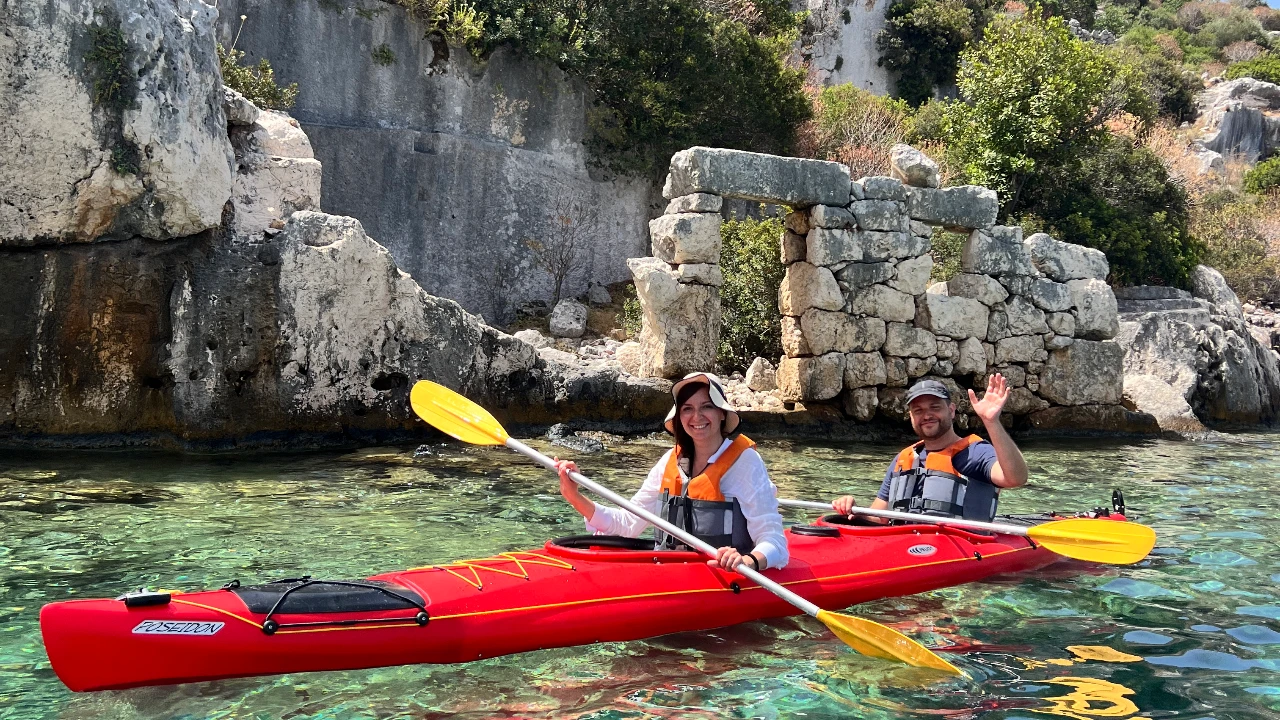
Four distinct areas of interest converge in the same district: culture at Saint Nicholas Church, Myra rock tombs, and the Andriake port museum; nature with birdwatching from observation towers and wetland tours by touring bicycle at Demre Bird Paradise; sea activities with Kekova boat trips and Çayağzı and Çağıllı beaches; and cuisine with dalyan fish and local eateries in the bazaar. Paddle-focused programs like sea kayaking are also organized from Demre and Üçağız. For a half-day visit, focus on cultural stops; for a full day, add wetlands or sea activities.
What is Demre famous for?
The first highlight introducing the district is its connection to Santa Claus: Nikolaos, who was the Bishop of Myra in the 4th century, and the church named after him. Myra transformed into the religious and administrative center of the Lycian region during the Byzantine period, and the city's importance at that time largely stemmed from this pilgrimage traffic. Second in line are Myra's rock-cut Lycian tombs and its Roman theater. In agriculture, it's known for greenhouse tomato production; furthermore, it's the gateway to Kekova via the Çayağzı and Kaleüçağız piers.
What to eat in Demre?
The plain's greenhouse tomato production is reflected in the cuisine as tomato-heavy appetizers, salads, and stews. For seafood, sea bream and sea bass from Beymelek's dalyan fishery, and octopus and seafood appetizers at the Kaleüçağız pier stand out. In the central bazaar, there are local eateries serving tandoor dishes, stews, and soups; tahini piyaz, a specialty of Antalya cuisine, is also generally found here. When planning your season, consider one detail: between November and March, some businesses in coastal villages close for the season, and the number of places serving hot meals decreases, so it's safer to plan your main meal in the town center during this period.
Where is Demre Bird Paradise, and when is the best time to visit?
The area is located west of the town center, after the Antalya-Muğla highway exit towards the sea, stretching between Çayağzı Port and Andriake Ancient City; officially defined as lying between 36°14' and 36°13' north and 29°58' and 29°56' east coordinates. It is 2 kilometers from the center, 30 kilometers from Finike to the east, and 140 kilometers from Antalya. It is often confused with Beymelek Lagoon to the east, but they are two separate areas in different directions. In terms of timing, migratory periods and winter months are productive for species diversity; within the day, first light and sunset hours are recommended.
What can be found in the Bird Paradise?
The area features a visitor center, bird observation towers, binoculars, and touring bicycles. The region is on a major migratory bird route, and official data indicates approximately 50,000 birds visit annually; 149 bird species are recorded. The wetland also holds archaeological site status, meaning nature and ancient ruins are protected within the same boundaries. Official information states that the area can be visited at any time of day until dusk. When planning, note this distinction: the area itself is not subject to archaeological site ticket office closing times, but if you want to use binoculars or touring bicycles, these are provided by the visitor center, so you need to go during its operating hours.
Is Museum Pass valid at Saint Nicholas Church, and how do visiting hours work?
The church is among the visitor areas managed by the Ministry of Culture and Tourism: entry is ticketed, the Museum Pass is valid, and a separate tariff applies to foreign visitors. Hours vary by season; it remains open until evening in summer, closes after afternoon in winter, and the ticket office stops selling tickets some time before closing. When planning, consider one detail: the church and Myra archaeological site are visited through separate entry points; they are not a single area entered through one gate. Inquire about current hours and tariffs at the ticket office or through the Ministry's official ticketing channel.
Is Demre close to the sea, and does it have a beach?
The town center is located 5 kilometers inland from the coast, in the middle of a greenhouse and agricultural plain; therefore, the center does not have the appearance of a coastal town. For swimming, Çayağzı Beach next to Andriake and the calmer, pebble-stone Çağıllı Beach are used. This detour west from the center towards Çayağzı adds about an hour to a travel program, so factor in this time if you include the beach in your list. At Çayağzı, because the Demre River meets the sea, the water can be cooler than the open sea, and waves can pick up on windy days.
What determines the price of a Demre or Kekova boat trip?
There is no fixed tariff for boat trips; the price is determined by the operator. Key factors include: tour duration, the departure pier's distance to the line of ruins, whether lunch is included, whether the boat is shared or private, group size, and seasonal intensity. The ranking provides more lasting information than the numbers: short tours are less than full-day programs, sunset programs and equipment-based programs like sea kayaking are more than full-day boat trips, and private rentals are significantly higher as they are priced per boat. The current per-person fee is live on our Demre sea adventure tours list; as tariffs change seasonally, that's where you'll find the most accurate figure.
Can you go to Cleopatra Island by boat from Demre?
No, you cannot. Cleopatra (Sedir) Island is not in Demre but in Gökova Bay in Muğla; the known departure points for boats are around Çamlı, Akyaka, and Marmaris. As the island is an archaeological visitor area, island entry is subject to the Ministry's tariff and is paid separately from the transportation fee set by the boat operator. Demre's sea equivalent is the Kekova line: boat tours departing from the Çayağzı and Kaleüçağız piers.