
Caravan solar panel systems provide an independent power supply, allowing you to run your fridge, lighting, water pump, and electronic devices without needing to plug into shore power. Every day spent off-grid hinges on balancing the energy produced with the energy consumed; when set up correctly, your caravan can be self-sufficient for days. In this comprehensive guide, we'll walk you through the differences in panel types, calculating your energy needs, choosing the right charge controller and battery, sizing cables and fuses, understanding seasonal efficiency changes, and essential pre-trip checks. Our goal isn't just to give you an equipment list, but to clearly show you how to properly size your system.
How Do Caravan Solar Panel Systems Work?
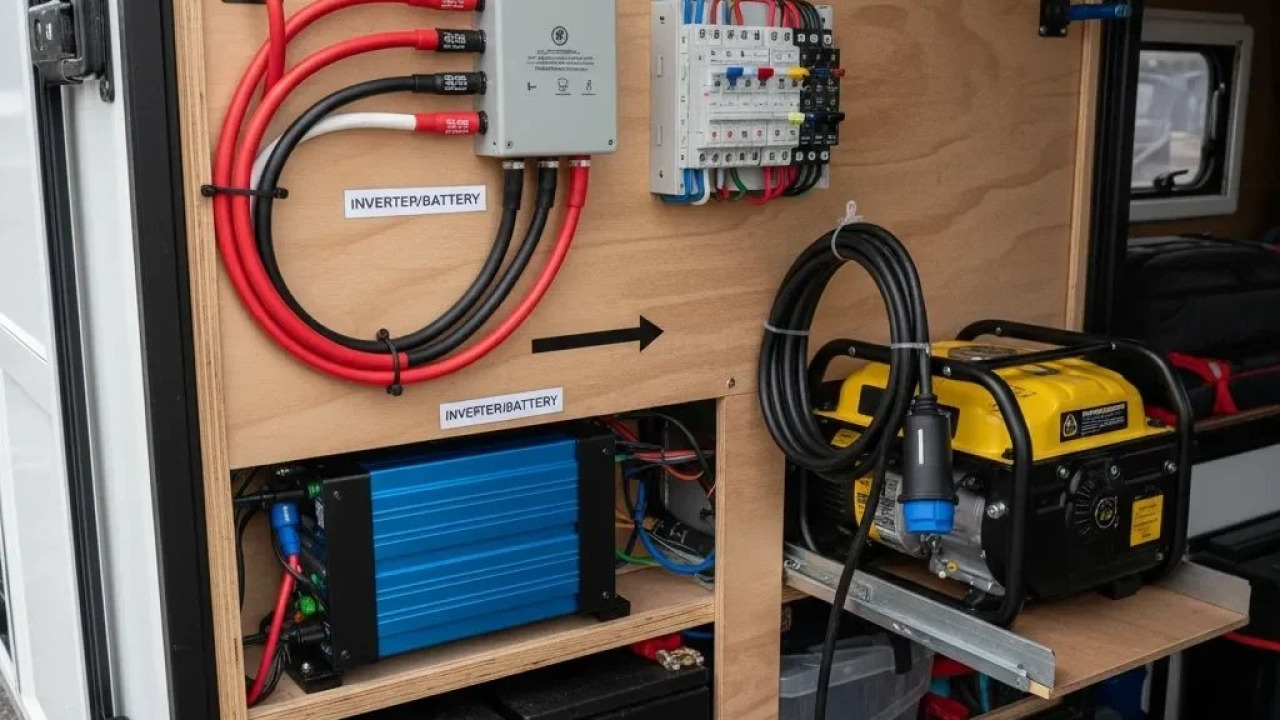
The logic behind the setup is simple: solar panels convert sunlight into direct current (DC), the charge controller regulates this current to the voltage and amperage suitable for your battery, the leisure battery stores the energy, and an inverter then converts the stored 12-volt DC into the 220-volt alternating current (AC) that household appliances expect. Devices that run on 12 volts, such as lighting, water pumps, ventilation fans, and compressor fridges, draw power directly from the battery without passing through the inverter, which minimizes conversion losses.
The system is installed separately from the starter battery that powers your vehicle's engine. The most crucial benefit of this separation is that your vehicle will still start even if your leisure battery is depleted. The two circuits are connected via a battery isolator relay or a DC-DC charger that draws power from the alternator.
Four Main Components of the System
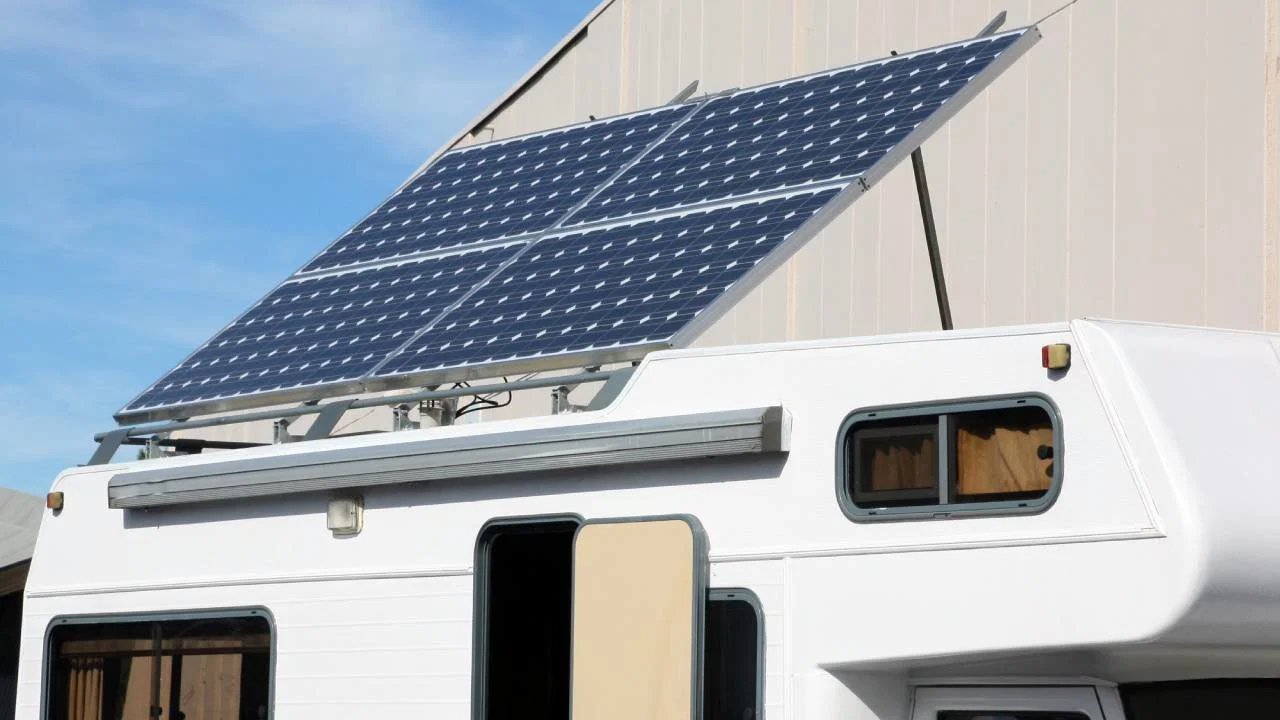
- Solar panel: The power generation unit, either fixed to the roof or deployed externally while camping.
- Charge controller: The "brain" that regulates the variable voltage from the panel to suit the battery.
- Leisure battery: The storage unit that holds excess energy generated during the day for use at night.
- Inverter: The unit that converts 12V DC to 220V AC for small household appliances.
Quick Facts
| Topic | Information |
|---|---|
| System type | 12-volt DC-based off-grid power system |
| Main components | Panel, charge controller, leisure battery, inverter |
| Common panel wattage | Around 200 W for light use, 400 W and above for extended living |
| Battery technology | LiFePO4 (lithium iron phosphate) or AGM lead-acid |
| Charge management | MPPT or PWM charge controller |
| Auxiliary power source | DC-DC charger fed by the alternator |
| Periods of reduced efficiency | Winter months, shaded parking spots, dusty panel surfaces |
Panel Types and Selection Criteria
A caravan roof is a limited space, so power output per unit area is a critical factor in panel selection. Monocrystalline panels typically offer higher power output from the same surface area, making them ideal for smaller roofs. Polycrystalline panels require a larger surface but remain a viable option if you have ample space. Flexible panels are lightweight and can be adhered to curved surfaces, but their efficiency can drop due to overheating as there's no air gap behind them, and their lifespan tends to be shorter than glass-fronted panels.
Monocrystalline, Polycrystalline, and Flexible Panel Differences
The wattage rating on a panel's label is measured under laboratory conditions. In real-world use, you'll get less power due to temperature, tilt, dust, and shade. Therefore, when planning, it's safer to rely on a fraction of the labeled power rather than the full amount. Partial shading, especially in series-connected systems, can significantly reduce the output of the entire array; those who frequently park under trees should consider parallel wiring for their panels to mitigate this effect.
Fixed Mount or Portable Panel?
Roof-mounted panels generate power while you're driving and require no setup hassle. Portable folding panels offer the flexibility to park your vehicle in the shade and move the panel into the sun, which is a practical solution for those who want to keep their caravan cool in summer. Many users combine both: fixed panels for baseline generation and portable ones for a boost while camping.
| Panel type | Strengths | Points to consider |
|---|---|---|
| Monocrystalline (glass) | High output from small area, long lifespan | Weight and need for fixed mounting |
| Polycrystalline | Cost-effective production technology | Requires more roof space for the same power |
| Flexible panel | Lightweight, suitable for curved surfaces | Efficiency loss due to heat, shorter lifespan |
| Portable folding | Allows parking vehicle in shade | Setup and pack-down time at each stop |
How Many Watts of Panels and Amps of Battery Do You Need?
The right question isn't "how many watts of panels should I buy," but "how many watt-hours do I consume per day?" First, calculate your consumption, then size your generation and storage to meet that demand. The calculation is done by multiplying each device's power by its daily operating time and summing the results.
Calculating Daily Consumption in Watt-Hours
The values below are indicative; you should re-populate the table using the label values of your own devices. Devices like compressor fridges operate with a thermostat, so they don't draw continuous current all day; their run time increases with external temperature.
| Device | Typical power | Daily operation | Approx. daily consumption |
|---|---|---|---|
| Compressor fridge | 40-60 W | 8-12 hours (intermittent) | 350-600 Wh |
| LED lighting | 5-10 W | 4-6 hours | 30-60 Wh |
| Water pump | 50-70 W | 15-30 minutes | 15-35 Wh |
| Ventilation fan | 10-25 W | 4-8 hours | 60-180 Wh |
| Laptop and phone charging | 45-65 W | 2-4 hours | 100-250 Wh |
Matching Panel Power and Battery Capacity
Once your total consumption is determined, two calculations are made. On the storage side, the battery's watt-hour equivalent is found by multiplying its amp-hour value by its voltage; for example, a 100 Ah 12.8-volt LiFePO4 battery stores roughly 1280 Wh of energy. On the generation side, the panel's daily harvest depends on the effective sunshine duration. According to data from the Turkish Ministry of Energy and Natural Resources' Solar Energy Potential Atlas (GEPA), the annual average total irradiation across Turkey is 1,527 kWh/m², with an annual sunshine duration of 2,741 hours; this corresponds to an average irradiation of approximately 4.2 kWh/m² per day nationwide. Since panels on a caravan roof are not optimally tilted, their surface heats up, and they are often partially shaded in most parking spots, not all of this potential can be harvested. Therefore, it's a cautious and practical approach to base your planning on a lower estimate than the national average, assuming 4 to 5 effective sun hours per day for summer and 1.5 to 2.5 for winter. Leaving a certain margin for system losses will save you on cloudy days when production falls short of expectations. A battery capacity that can cover two days of consumption provides a comfortable buffer when the weather turns.
Battery Technology and Charge Controller Compatibility
Two technologies stand out for storage. LiFePO4 batteries have become widespread in caravans because they allow for a large portion of their capacity to be used and are lighter for the same usable energy; however, they have charging limitations at low temperatures, and the battery management system (BMS) is expected to provide this protection. AGM lead-acid batteries are more accessible for initial investment, but to preserve their lifespan, only about half of their capacity is considered usable; this means carrying more kilograms for the same amount of energy.
The charge controller and inverter are adjusted according to this choice. The device must support the appropriate charging curve for the chosen battery chemistry, and the inverter must be powerful enough to handle the highest instantaneous load, including surge currents. Motorized devices like fridge compressors and water pumps draw more current than their label value during startup. Pure sine wave inverters work more harmoniously with sensitive electronic devices.
Step-by-Step Installation Process
Installation, like all electrical work, requires following a sequence. The flow below can be followed both when setting up a new system and expanding an existing one.
- Create a written list of your devices and daily consumption, then determine panel and battery capacity based on this table.
- Measure your roof area and draw a layout plan ensuring existing equipment like ventilation fans and antennas won't cast shadows.
- Secure the panels to the roof using aluminum profiles and adhesive, applying sealant at any drilled points to prevent leaks.
- Route cables through a waterproof cable entry box mounted on the roof, protecting the cable from sharp metal edges.
- Mount the charge controller near the battery, ensuring its ventilation is not obstructed.
- Establish connections in the correct order: first the battery, then the charge controller, and finally the panel. The device needs to read the voltage from the battery.
- Install appropriately rated fuses between the battery and the inverter, and between the battery and the charge controller.
- After commissioning the system, monitor production and consumption values on the first day to compare real performance with your calculations.
Cable Cross-Section and Voltage Drop
In 12-volt systems, much higher current flows to carry the same power compared to 220 volts, making cable cross-section critical. Cable sizing depends on both the current and the length of the line; thin cables in long runs will heat up, and a portion of the energy will be lost in the cable itself due to voltage drop. Aiming for a voltage drop of around three percent in the design is a common guideline. The inverter connection, being the highest current-drawing line in the system, requires the thickest cable.
Fuse and Connection Safety
A fuse is placed at the output of every power source, positioned as close as possible to the cable it protects. Battery terminals, inverter, and charge controller terminals should be checked periodically for tightness; loose connections are the most common cause of overheating. Using appropriate lugs and crimping tools instead of soldering cable ends provides a more durable result in a vibrating vehicle.
Ready-Made Kit or Piece-by-Piece Assembly?
There are two common purchasing approaches. Ready-made solar panel kits offer panels, charge controllers, mounting profiles, and cable sets in a compatible package, reducing the risk of component incompatibility for first-time installers. Assembling piece-by-piece allows you to select each component according to your specific needs, often leading to more precise results, especially for the battery and inverter. The determining factor when deciding isn't the total budget, but where the budget is allocated: battery capacity and charge management largely dictate the system's lifespan and comfort, with panel brand being secondary.
- Strength of a ready-made kit: Components come pre-matched, no missing cables or connectors.
- Limitation of a ready-made kit: Cable cross-sections are often provided assuming short runs and may be insufficient for longer lines.
- Strength of piece-by-piece assembly: You can individually choose battery chemistry, inverter power, and charger type.
- Budget priority: First battery capacity and charge management, then panel power, finally inverter comfort.
- Expansion potential: If you plan to add more panels later, choosing a charge controller with a higher capacity from the start prevents re-investment.
Second-Hand Panel and Equipment Inspection Order
Second-hand listings can reduce costs, but aging in solar panels isn't visible to the naked eye. Following this sequence before purchase significantly reduces risk.
- Note the manufacturing year and the open-circuit voltage (Voc) and short-circuit current (Isc) values from the panel's rear label.
- Measure the open-circuit voltage with a multimeter on a sunny day; if it's significantly below the label value, avoid it.
- Examine the glass surface for cracks, cells for discoloration, and the backsheet for bubbling in daylight.
- Check if the connectors in the junction box are oxidized and if the cable has been cut and spliced.
- Since past usage data cannot be verified for used batteries and charge controllers, it's preferable to buy these two items new if possible.
Seasonal Yield and Energy Planning
Solar panels don't produce the same amount of energy throughout the year. In summer, days are long, but panel efficiency drops slightly as the surface heats up; in winter, the air is cooler, so panel efficiency is relatively better, but days are shorter, and the sun's angle is lower. For winter planning, increasing the panel's tilt or positioning a portable panel towards the sun makes a significant difference.
| Period | Production expectation | Note |
|---|---|---|
| Spring | High and stable | Efficient period for long routes, mild weather |
| Summer | Long days, efficiency loss due to heating | Parking the caravan in the shade and keeping a portable panel in the sun works well |
| Autumn | Medium level | Days start to shorten, review consumption |
| Winter | Low and variable | DC-DC charging and en-route charging plans become crucial |
Regional Production Differences in Turkey
The same panel will produce significantly different amounts of energy depending on which region of Turkey your route takes you. According to GEPA data, the Southeastern Anatolia region approaches 3,000 hours of annual sunshine duration, while the Black Sea coast remains in the 1,500 to 2,000-hour range. This difference is the primary reason why the same setup might work comfortably on the Antalya coast but be insufficient in the Rize highlands. Travelers planning summer routes to the Black Sea highlands and winter routes to the south should size their panel power based on the northern leg for greater reliability. Those wishing to plan region by region can read the route logic in our Turkey tour routes article in conjunction with their energy plan.
| Region | Sunshine tendency (GEPA) | Annual production range for a 1 kW system | Implications for caravan planning |
|---|---|---|---|
| Southeastern Anatolia | Highest in the country, close to 3,000 hours | Region with highest expected yield | Shade and panel overheating are the main limitations in summer |
| Mediterranean | High | 1,600-1,800 kWh | Reasonable production even in winter, long season potential |
| Central Anatolia | Medium-high | 1,500-1,700 kWh | Cold winter nights, lithium battery temperature protection becomes important |
| Black Sea | Low, 1,500-2,000 hour range | 1,200-1,400 kWh | High frequency of cloudy days, DC-DC charging plan is essential |
Auxiliary Sources to Cover Winter Deficits
In winter months, the energy produced by solar panels may not fully cover the demands of heating and longer dark hours. During this period, DC-DC chargers that power the leisure battery from the vehicle's alternator come into play; driving between two stops becomes an opportunity to charge the battery. Using a shore power charger at campsites with electrical hookups is a second option. For heating, diesel air heaters draw much less current than electric heaters, preserving battery life.
Safety, Maintenance, and Legal Framework
A caravan is a mobile installation that constantly operates under vibration and temperature changes. Therefore, safety checks should be performed more frequently than for stationary structures.
Caravan Classes in Turkey and the Distinction Between Parking and Camping
The framework for road use in Turkey is defined by Highway Traffic Law No. 2918 and related regulations. Towable caravans are categorized into different trailer classes: those with a maximum laden weight under 750 kg (O1) and those above this value (O2); O2 class requires registration and a license plate. Motorhomes, on the other hand, are not registered as private cars but as M1 category special purpose vehicles; the vehicle's registration certificate type field will state "Special Purpose (Motorhome)," and this class difference also affects the periodic inspection interval. Since registration, inspection, and driving license class obligations can be updated with legislative changes, it's advisable to confirm with the current regulations and traffic registration units before proceeding.
A commonly confused issue in practice is the distinction between parking and camping. Parking your vehicle in a public area and spending time inside is considered parking; however, extending an awning, setting up tables and chairs outside, or lighting a barbecue is considered a camping activity and may incur administrative penalties in areas where camping is prohibited. As local government practices vary from region to region, planning your overnight stays at official campsites is a practical way to ensure a trouble-free night.
Maintenance Schedule and Fire Safety
Dust, salt, and bird droppings on the panel surface significantly reduce production; regular cleaning of the surface with a soft cloth and plenty of water is sufficient. The battery compartment should have ventilation, and for lithium batteries, a battery management system (BMS) with low-temperature charging protection should be preferred. Keeping smoke and carbon monoxide detectors in the caravan and carrying an appropriately rated fire extinguisher near the door are essential safety habits.
Pre-Trip Checklist
- Clean the panel surface and manually check the stability of the mounting profiles.
- Inspect the battery charge level, terminal tightness, and any signs of overheating at connection points.
- Verify the production value on the charge controller's display during a sunny hour.
- Confirm the fuse ratings and that spare fuses are carried in the vehicle.
- Replace the batteries in your smoke and carbon monoxide detectors, and check the pressure of your fire extinguisher.
- Pre-list campsites with electrical hookups and wastewater disposal points along your route.
Summary Roadmap for Sizing Your System
A properly installed caravan solar panel system begins with a consumption list and matures with real-world usage data. First, calculate your daily watt-hour consumption, then determine the battery capacity needed to cover two days of consumption, select panel power considering winter conditions, and size cables and fuses according to the calculated current. After the first season, it's often more sensible to add panels or increase battery capacity based on actual measurements rather than over-investing from the start. For those who want to base their caravan at a single spot and explore the region with guided programs, Travel Tour Shop offers excellent nature and adventure tours for day trips. If you're staying near ancient cities, cultural tours can enrich your itinerary. For those planning a long summer journey, you can match the stages in our Lycian Way guide with your caravan stops, and fill any free days from all our tour options.
Frequently Asked Questions 6
How many watts of solar panels are enough for a caravan solar system?
Sufficient power varies based on your device list. For a light setup consisting of lighting, phone charging, and brief water use, around 200 W of production is often enough. For extended living with a compressor fridge, ventilation fan, and laptop running all day, 400 W or more panel power and a larger battery capacity are required.
Should I choose MPPT or PWM?
A PWM charge controller has a simpler design and is a suitable option when the panel voltage is close to the battery voltage. MPPT devices continuously optimize the panel's operating point, harvesting more energy, especially with higher voltage panels, in cool weather, and under cloudy conditions. The gain from MPPT becomes more significant as panel power increases.
What does a caravan solar panel mounting kit include?
Ready-made kits typically include the panel, a compatible charge controller, mounting profiles or adhesive feet, a waterproof cable entry box, cable set, and connectors. The battery, inverter, and fuse group are usually sold separately in most kits; when buying a kit, it's essential to check if the cable cross-section is appropriate for your line length.
Is it wise to buy a second-hand solar panel?
A second-hand panel can offer a cost advantage, but the panel's age, micro-crack status, and production performance are not visually apparent. Before purchasing, measuring the panel's open-circuit voltage and short-circuit current on a sunny day, and checking the glass surface for cracks and the backsheet for bubbling, reduces risk. This risk is higher for used charge controllers and batteries.
Can solar panels power a caravan in winter?
In winter, production significantly drops as days shorten and the sun's angle lowers. During this period, solar panels typically act as a supplementary source in most setups; to cover the deficit, solutions like DC-DC chargers fed by the vehicle's alternator, campsites with electrical hookups, and low-current diesel heaters are planned together.
How should I decide when choosing a caravan solar panel?
The decision process starts not with equipment brand, but with your usage profile. First, determine your daily watt-hour consumption, then decide which months of the year and which region you'll be traveling in. If you're spending winter in the north, strengthening your battery capacity and DC-DC charging solution is more effective than just increasing panel power. If roof space is limited, a monocrystalline panel is preferred; if you have a curved surface, a flexible panel; and if keeping your vehicle in the shade is a priority, a portable panel stands out.