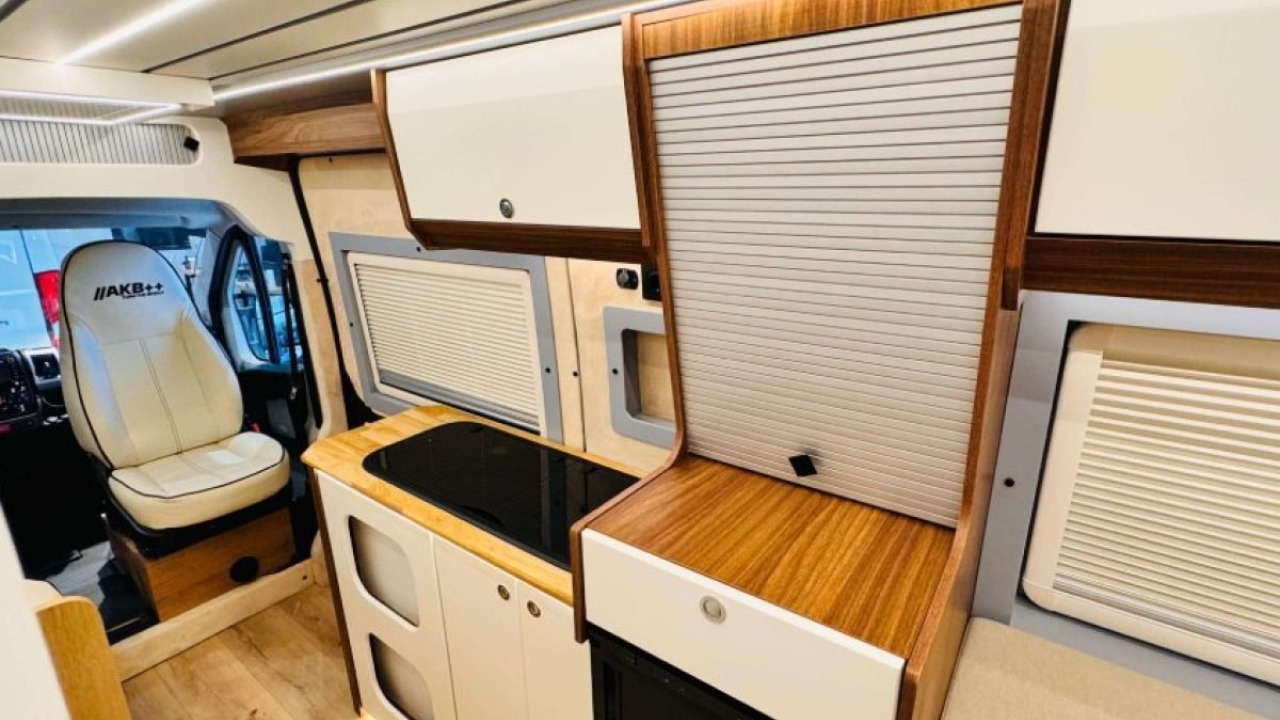
The campervan kitchen might have the smallest footprint, yet it's the heart of your mobile home, constantly in use. What would be separate stove, counter, sink, and storage areas in a traditional house are here squeezed into a few feet of linear space. What's more, this setup rattles on the road, needs to function on uneven ground, and draws its energy from a limited battery and gas cylinder. That's why cooking in a campervan is less about complex recipes and more about smart organization. A well-designed kitchen layout allows you to whip up a hot meal within half an hour of arriving at your campsite; a poorly planned one, however, turns every meal into a chore of emptying cupboards, tripping over cables, and seeking solutions outside.
Tailoring Your Campervan Kitchen for Every Season
The first question that dictates how your kitchen line should be set up is which season and routes you'll be using your vehicle for. In a vehicle touring the Aegean and Mediterranean coasts in summer, the bulk of the load shifts to cooling: the fridge runs all day, interior temperatures rise, and cooking largely needs to move outdoors, under the awning. In winter, exploring the Black Sea highlands or mountain routes, the equation flips; gas consumption increases, moisture released during cooking turns into condensation on windows, and ventilation becomes the priority.
The density of facilities along your route is also a determining factor. If you plan to stay at campsites with electrical hookups and water replenishment, electric cooking equipment can be used comfortably. If you intend to stay off-grid in nature, your entire kitchen setup needs to operate autonomously, relying solely on gas and battery power. These two scenarios call for different equipment lists, and without an initial decision, you might end up carrying redundant equipment.
Quick-Glance Essentials
| Topic | Information |
|---|---|
| Scope | Campervan kitchen setup, equipment selection, safety, and practical recipes |
| Primary Cooking Source | LPG hob; alternatively, induction and portable cartridge stoves |
| Refrigeration | 12V compressor fridge or three-way absorption fridge |
| Gas Safety | Separate gas locker, dated hose, gas & carbon monoxide detectors |
| Water Management | Freshwater tank, foot or electric pump, greywater tank, dump station |
| Ideal Seasons | Four seasons; outdoor cooking in summer, ventilation priority in winter |
Key Components of Your Campervan Kitchen
The Hob & Gas System
Cooking in campervans is predominantly done with LPG, and the installation standard in Europe is EN 1949. This standard has two fundamental requirements: the gas cylinder is stored in its own compartment, separate from the living area, and this compartment has a floor-level vent opening to the outside. The reason is simple: LPG is heavier than air and will sink to the bottom in case of a leak. Approved gas hoses carry a manufacturing date stamp, and it's the hose's own stamp, not the installation date, that's crucial. Replacement intervals vary by source: Aygaz recommends renewing campervan LPG hoses every three years, while Germany's DVGW G 607 standard mandates replacing hoses and regulators every ten years at the latest, alongside periodic gas inspections every two years. So, instead of an average "X years" figure, it's best to follow the hose's stamp and the manufacturer's instructions; a hardened or cracked hose should be replaced even if its lifespan isn't over.
On the hob side, two or three-burner models are common. The key feature to look for, more than the number of burners, is a flame failure device: when the flame extinguishes, a thermocouple automatically cuts off the gas flow, which is a life-saving safety feature when cooking near an open window in windy conditions. Pot holders, keeping the hob lid locked while driving, and closing the main gas valve before stopping are habits as important as the installation itself.
Refrigeration & Maintaining the Cold Chain
Campervan fridges fall into two main families. Compressor fridges run on 12V, are unaffected by tilt, and maintain performance when external temperatures rise; however, they are the most consistent drain on your battery. Absorption, or three-way, fridges can run on gas, 12V, and 230V, are silent, and don't strain the battery when parked as they run on gas; but they require a level surface. This is because their cooling relies on the gravity-driven circulation of an ammonia solution: while recent models tolerate about three degrees of side tilt and six degrees of front-to-back tilt, the most efficient operation is at less than one and a half degrees of tilt. On a serious incline, the solution accumulates in the wrong area, and cooling stops. Efficiency also drops if the rear ventilation grille is in direct sunlight.
Regardless of which fridge you use, maintaining the cold chain's longevity comes down to organizing its contents. Running and cooling the fridge before grocery shopping, loading items when they're cool rather than warm, and opening the door infrequently and with a plan throughout the day significantly reduces consumption. For long drives, an insulated bag can serve as a secondary cooler, reducing the number of times you open the main fridge door.
Sink, Water Management & Dishwashing Hacks
In a small kitchen setup, water is as precious a resource as gas. Foot-pump systems naturally limit consumption by dispensing a measured amount of water with each press; electric pressurized systems offer home-like comfort but can quickly deplete your tank due to their high flow rate. A common dishwashing method is the two-basin system: one for washing, the other for rinsing, without relying on running water.
Wiping greasy plates with a paper towel before washing extends the life of your greywater tank, delays odor buildup, and prevents clogs at dump stations. Dumping dishwater into streams, lakes, soil, or storm drains in nature is unacceptable; greywater must be discharged at official dump points in designated facilities. Opting for biodegradable detergent complements this discipline.
Countertop, Storage & Securing for the Road
Campervan kitchen counter space is typically just wide enough for one person to work. Models where the sink and hob covers can be used as cutting boards double this area. The rule for storage is that everything must stay in place on the road: use push-button locks on drawers, non-slip mats on shelves, and nesting cookware inside cupboards. Choosing steel or sturdy plastic containers instead of glass jars eliminates the risk of shattered glass after a sharp turn.
Weight distribution is also part of the kitchen setup. Heavy items like full water tanks and canned goods should be carried as low as possible and close to the axle; light and bulky items go into higher cupboards. This arrangement both maintains driving balance and prevents damage from a falling jar during sudden braking.
Ventilation & Odor Control
Cooking is the most moisture-producing activity in an enclosed space. Even boiling a pot of water leaves condensation on windows; if this moisture isn't regularly vented, you'll start seeing mold on upholstery and swelling in wood. Using a roof ventilation fan and leaving a window ajar opposite creates cross-airflow and carries steam outside. Moving intense odor and grease-producing methods like frying outdoors, and opting for covered-pot cooking like boiling and stews indoors, reduces both odor and moisture at the source.
Designing Your Campervan Kitchen: Layouts & Modules
A campervan kitchen layout cannot be designed independently of the vehicle's length and bed placement. Campervan kitchen models on the market generally fall into four main layouts, and the choice depends on which walls of the vehicle have windows and a gas locker.
| Layout Type | How it's Set Up | Best For |
|---|---|---|
| Galley Kitchen | Hob, sink, and countertop arranged along one wall | Shorter vehicles & two-person use |
| L-Shaped Corner Kitchen | Galley extended with a perpendicular section next to the door | Longer vehicles seeking more counter space |
| Rear Kitchen | Kitchen positioned at the vehicle's rear door, allowing outdoor cooking when open | Frequent outdoor cooks |
| Pull-Out Outdoor Kitchen | Hob and utensils integrated into a rail-mounted module that slides out from a side door | Small panel vans & mobile kitchen setups |
Ready-made campervan kitchen modules integrate the sink and hob into the same factory-built unit; this shortens installation time and provides a pre-planned route for gas connections. Custom production, on the other hand, allows cupboard heights to be adjusted to the user's height and the vehicle's interior profile, but requires more workshop time and plumbing planning. The choice of campervan kitchen countertop isn't just about aesthetics: compact laminate and stainless steel surfaces withstand road vibrations and moisture, while wooden countertops require regular oil maintenance and edge sealing. Mobile kitchen trailers, or solutions equipped solely for cooking, extend the same logic to event and catering use; the internal layout rules remain the same, but the scale simply expands.
Comparing Cooking Sources for Your Campervan
The choice of cooking source in a campervan varies depending on the route's connectivity. The table below compares four common options.
| Source | Strengths | Considerations |
|---|---|---|
| Fixed LPG Hob | Works off-grid, precise heat control | Requires ventilation, detectors, and hose maintenance |
| Portable Cartridge Stove | Can be used outdoors or under an awning, good backup | Flame unstable in wind, requires cartridge stock |
| Induction or Electric Hot Plate | Low moisture and odor production indoors | High power draw, suitable for sites with hookups |
| Outdoor BBQ or Campfire | Great for groups and longer cooking sessions | Subject to fire regulations and seasonal bans |
Step-by-Step: Setting Up Your Campervan Kitchen
In a kitchen setup from scratch or a renovation, the order of operations determines the need for later disassembly. The following sequence is the workflow that creates the least rework on-site.
- Define your usage scenario and kitchen layout: how many people, how many meals, hookup sites or wild camping? Mark out dimensions with tape inside the vehicle to visualize your daily workflow.
- Plan your gas locker and gas line. The locker must be separate from the living area, have bottom ventilation to the outside, and include an easily accessible shut-off valve on the line.
- Install the water system and sink. Grouping the freshwater tank, pump, faucet, and greywater outlet along the same route simplifies maintenance and leak detection.
- Choose and install your refrigeration solution. If using an absorption fridge, select a position that doesn't obstruct the rear ventilation grilles.
- Calculate your electrical load. The fridge, lighting, and pump are continuous consumers; resistive appliances like water heaters and toasters are short-term but high-draw.
- Set up storage and securing: locking drawers, non-slip mats, pot separators, and a layout that keeps weight low.
- Perform commissioning tests. Check gas connections for leaks with soapy water, press the test buttons on your detectors, and monitor the system overnight.
Pantry Planning, Storage & Water Discipline
In a campervan kitchen, the shopping list comes before the recipe list. Limited shelf space rewards multi-purpose ingredients: a packet of bulgur can become both Kısır and pilaf, a jar of tomato paste can be the base for both soup and sauce. Buying fresh produce from local markets along the way both lightens your load and connects your route to the region's cuisine. For those who want to establish this connection systematically, the programs in the gastronomy and event tours list are a practical starting point for seeing which products are in season in which region. For those who want to plan their route according to a regional flavor map, the Turkey gastronomy guide article provides a comprehensive overview of which culinary traditions are prominent in which region, making it easier to narrow down your shopping list by area.
Dry Goods & Spice Organization
- Long-lasting staples like bulgur, lentils, pasta, rice, and dried beans should be stored in sealed, individually labeled containers.
- Spices are best kept in small, multi-compartment containers; individual sachets tend to scatter in drawers and absorb moisture.
- Liquids like olive oil, tomato paste, and vinegar should be placed on a shelf with locking lids and anti-tip dividers.
- Maintain a two-day reserve of canned and dry goods; market access can be limited at off-grid stops.
- Bread and baked goods absorb moisture; they last longer in a cloth bag on an airy shelf.
Cold Chain & Freshness Rotation
When refrigerated items are placed according to their consumption order, waste is reduced. Fresh meat, milk, and leafy greens are consumed in the first few days; more durable vegetables, cheese, and eggs in subsequent days. Placing hot cooked food directly into the fridge raises the internal temperature, so it's best to cool the container outside first. In summer months, opting for no-cook lunch menus reduces both interior heat and gas consumption.
Practical Campervan Recipes
In a campervan kitchen, a good recipe is one that uses few dishes and cooks quickly. The table below summarizes six common preparations for road trips, along with their cooking method and approximate time.
| Dish | Cooking Method | Approx. Time | Campervan Tip |
|---|---|---|---|
| Menemen (Turkish Scrambled Eggs) | Skillet, medium heat | 15 minutes | Eggs added last, keeps dirty dishes to a minimum |
| Lentil Soup | Pressure cooker | 25 minutes | Pressure cooking reduces gas consumption |
| One-Pot Pasta | Less water, sauce in the same pot | 20 minutes | No draining step, reduces water waste |
| Vegetable & Meat Stir-Fry | Large pan, high heat | 25 minutes | Vegetables and meat added sequentially in the same pan |
| Kısır (Bulgur Salad) | No cooking required | 20 minutes | Perfect for hot days, no hob needed |
| No-Oven Stew | Low heat, covered pot | 45 minutes | Covered pot prevents steam and odors from spreading indoors |
Mornings: Quick & Easy Breakfasts
The morning meal is often the most time-consuming part of days when you plan to leave the campsite early. A breakfast box prepared the night before allows you to set the table while your tea brews. Menemen, boiled eggs, and cheese toast heated in a pan are options achievable with a single burner and pan. For coffee, a stovetop moka pot doesn't drain your battery like electric machines do.
Evenings: One-Pot Wonders
The goal for evening meals is to minimize the number of dishes and control cooking time. A pressure cooker is the campervan's most efficient piece of equipment in this regard; it cooks dried legumes and meat dishes quickly, thereby reducing gas consumption. Stews and saucy dishes cooked in a covered pot spread fewer odors into the interior. After cooking, turning off the hob and leaving the pot covered is a practical method that continues cooking with residual heat.
No-Cook Menus for Hot Days
On hot days and after long drives, no-cook menus are a lifesaver. Kısır, tuna salad, hummus, shepherd's salad, and yogurt-based mezzes form the basis of this group. On routes focused on hiking and nature activities, these menus also double as packable lunch boxes; for those who want to combine a similar pace with a tour program, the day-trip options among the nature and adventure tours can be explored.
Gas, Fire & Carbon Monoxide Safety
The kitchen is the area in a campervan where fire and gas risks are concentrated; therefore, a list of reflexes is just as important as the equipment list. If you smell gas, the first action is to close the gas cylinder valve, then open doors and windows; do not touch electrical switches or lighters. A gas detector on the line is a fundamental requirement, and since LPG sinks, the detector should be positioned close to the floor; common installation advice is no more than thirty centimeters from the floor and no less than four meters from gas appliances.
A carbon monoxide detector is a separate device and works on the opposite principle to a gas detector. Since carbon monoxide mixes with air at almost the same density, it should be installed not near the floor, but near the sleeping area and at the height specified by the manufacturer; leaving about half a meter distance from fuel-burning appliances like hobs or heaters is also recommended. Completely closing ventilation while a heater or hob is running creates conditions for this odorless and colorless gas to accumulate. A fire blanket and an appropriate class fire extinguisher should be kept near the kitchen area; pouring water on a grease fire will make the flames larger, the correct intervention is to cover the container with the blanket to cut off oxygen. Gas cylinder changes should always be done outside the vehicle, with the hob turned off.
Outdoor cooking also has a legal dimension. Leaving your vehicle in a parking lot or by the roadside and sitting inside is considered parking; however, opening an awning, setting up tables and chairs, or lighting a barbecue is considered camping and may be subject to administrative penalties in areas where camping is prohibited. Therefore, outdoor kitchen setups are done in official campsites and permitted areas. During periods of high forest fire risk, open fire bans must also be strictly observed.
Kitchen Conditions at Popular Stops Across Turkey
How your kitchen system will function is primarily determined by the infrastructure of your stopping place and its specific rules. The same vehicle will operate entirely autonomously in a national park with abundant spring water but no electricity; in a nature park where fires are restricted to specific areas, the outdoor kitchen plan changes entirely. The table below compares four popular stops for campervan travelers in terms of kitchen conditions. Since conditions change seasonally and due to administrative decisions, it's essential to check current announcements from the relevant park management or operator before setting off.
| Stop | Key Kitchen Condition | Practical Note |
|---|---|---|
| Yedigöller National Park (Bolu) | Fountains are common, drinking water is not an issue; no electricity, showers, or kitchen services available | Set up your system to run entirely on gas and battery; confirm caravan entry rules with park management beforehand as information sources vary |
| İğneada Floodplain Forests (Kırklareli, Demirköy) | Conditions vary by location: managed areas have electricity, showers, and toilets, while around Mert Lake, none of these are available | Determine your entry point beforehand and plan your water and greywater accordingly |
| Polonezköy Nature Park (İstanbul, Beykoz) | Lighting fires, barbecues, and samovars is prohibited outside designated areas | Plan outdoor cooking for designated BBQ areas; bans may expand during summer due to fire risk |
| İztuzu Beach (Muğla, Ortaca) | During the Caretta caretta nesting season, entry to the beach, vehicles, tents, camping, and fires are prohibited between 8 PM and 8 AM; violations incur high administrative fines | Outdoor kitchens are not set up on the beach; accommodation and cooking are done at nearby campsites, and the beach is visited during daylight hours |
These four stops also summarize the general picture across the country: in national and nature parks, water is often available, electricity rarely; in highly protected coastal areas, outdoor cooking and fires may be entirely prohibited. If you're planning a route through the highlands and forest stops along the Black Sea coast, the Black Sea tourism guide article will help you understand the region's transport and seasonal dynamics for easier route planning.
Pre-Trip Campervan Kitchen Checklist
- Is the main gas valve closed, hose connections tight, and the hose's date stamp current?
- Are the test buttons on your gas and carbon monoxide detectors working?
- Are the fire blanket and extinguisher in an accessible spot, and are they within their expiry dates?
- Is the freshwater tank full, greywater tank empty, and drain valve closed?
- Are drawer locks, cupboard latches, and the hob lid in their travel positions?
- Is the fridge set to travel mode, and are bottles inside secured against tipping?
- Do you have a two-day supply of dry goods and spare gas cartridges in the vehicle?
- Are the cutting board, knives, and liquid containers on a non-slip mat and in a closed compartment?
Seasonal Campervan Kitchen Management
Your kitchen setup doesn't behave the same way in all four seasons; the priority list changes with the period.
| Season | Key Focus | Practical Tip |
|---|---|---|
| Spring | Season Opening Maintenance | Hose & regulator check, fridge cleaning, water system disinfection |
| Summer | Cooling Load & Interior Heat | Move cooking outdoors, opt for cold lunches |
| Autumn | Local Produce & Slow Cooking | More market shopping, stews & pickling preparations become priority |
| Winter | Gas Consumption & Condensation | Gas cylinder performance drops, run fan, monitor window condensation |
Maximizing Your Small Campervan Kitchen: A Summary
A campervan kitchen thrives on a balance of three elements: energy, water, and organization. If your gas system is standard-compliant and well-maintained, cooking continues even at off-grid stops; if water consumption is managed carefully, your tank will last twice as long; and if storage is secured to stay put on the road, every stop won't turn into a cleaning chore. Recipes should also be chosen with this trio in mind: meals that use fewer dishes, cook quickly, and are prepared in covered pots yield more comfortable results in a small space. A common issue for campervan travelers is the difficulty of navigating narrow, historic city centers with a vehicle; leaving your campervan at a nearby campsite and joining a guided tour solves this dilemma. If you wish to include half-day or full-day city programs between your camping stops, the options in the cultural tours list also offer an alternative where you can spend the day without opening your kitchen at all.
Frequently Asked Questions 6
What type of hob is used in a campervan?
The common solution is a two or three-burner fixed LPG hob, powered by a gas cylinder. Models with a flame failure device that automatically cuts off gas flow if the flame extinguishes are preferred. Those staying at sites with mains hookups can add an induction or electric hot plate; a portable cartridge stove serves as a backup for outdoor cooking.
How should a campervan kitchen be organized?
The hob, sink, and countertop are typically arranged along a single line; heavy items are placed in lower cupboards and close to the axle. Drawers should have push-button locks, and shelves should use non-slip mats. Layouts where sink and hob covers double as cutting boards maximize limited counter space.
Can a campervan fridge run without electricity?
Absorption, or three-way, fridges can operate on gas when parked, allowing cooling to continue without battery drain. Compressor fridges, however, run on 12V and require battery power, often supplemented by solar panels. Absorption fridges also require a level surface and unobstructed rear ventilation for optimal performance.
Where should dishwater be disposed of in a campervan?
Dishwater is collected in the greywater tank and must be emptied at official dump stations found in campsites. Disposing of it into streams, lakes, soil, or storm drains is unacceptable. Wiping greasy dishes before washing and using biodegradable detergent extends the tank's life.
How can gas cylinders be used safely in a campervan?
Gas cylinders should be stored in a compartment separate from the living area, with bottom ventilation to the outside. Hoses must be date-stamped and within their lifespan, and connections should be checked for leaks with soapy water. The main valve should be closed before driving, cylinder changes performed outdoors, and a gas detector installed near the floor inside the vehicle.
What practical meals are good for campervan cooking?
Meals that use fewer dishes and cook quickly are ideal: Menemen, pressure cooker soups, one-pot pasta, vegetable & meat stir-fries, and covered stews. On hot days, no-cook options like Kısır, salads, and yogurt-based mezzes help keep the interior cool and reduce gas consumption.