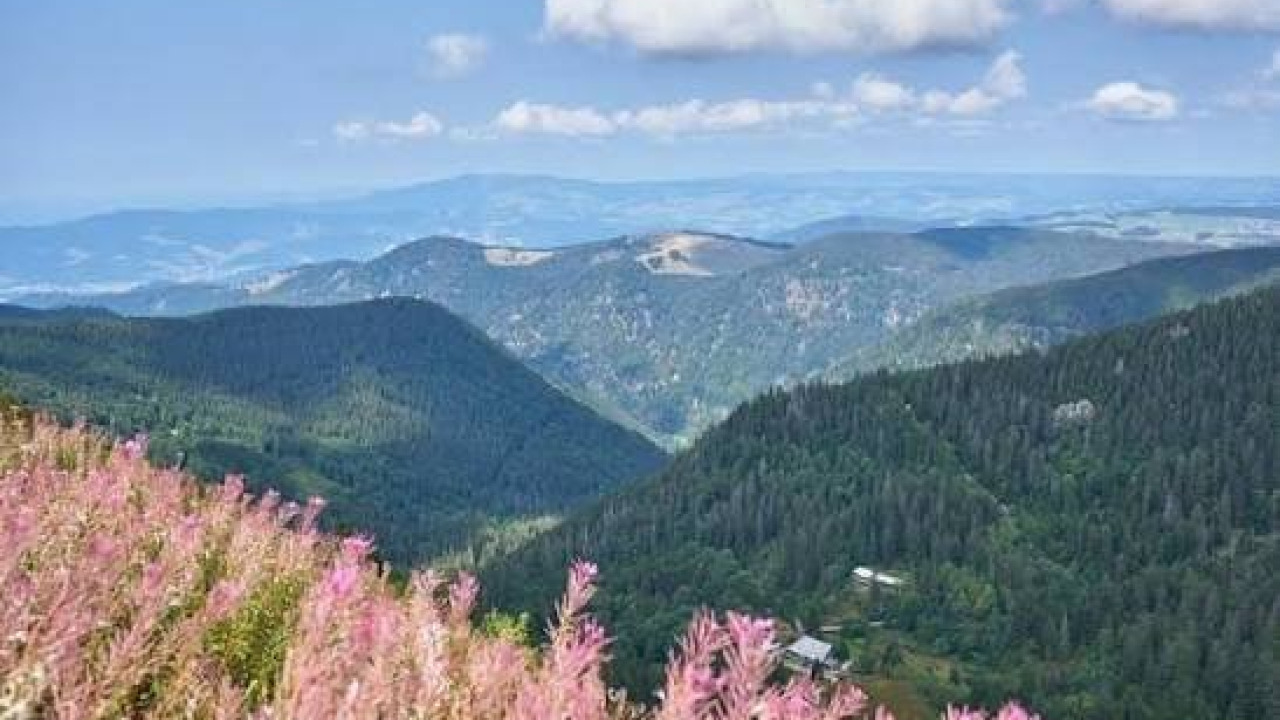

The Black Forest, locally known as Schwarzwald, is a forested highland region stretching across the southwestern German state of Baden-Württemberg. It extends from the Pforzheim and Baden-Baden line in the north to the Swiss border in the south, covering approximately 160 kilometers in length and up to 60 kilometers in width, making it the state's most densely forested area. This guide offers a comprehensive look at the region: we'll cover which sub-region suits which traveler, how to plan your journey from abroad, where to experience the cuckoo clock tradition when the main clock museum is closed, what's open in each season, and how to structure a three-day itinerary. Visa requirements vary by nationality and are updated periodically; please confirm with official German diplomatic missions before your trip.
Quick Facts
| Topic | Information |
|---|---|
| Location | Southwestern Baden-Württemberg state, Germany |
| Extent | From Pforzheim line in the north to the Swiss border in the south, approx. 160 km long and 60 km wide |
| Sub-regions | Nordschwarzwald, Mittlerer Schwarzwald, Südschwarzwald |
| Highest Point | Feldberg, 1,493 meters |
| Key Highlights | Triberger Wasserfälle, Titisee, Feldberg, Baden-Baden, Freilichtmuseum Vogtsbauernhof |
| Main Gateway Cities | Freiburg, Karlsruhe, Basel |
| Hiking Season | May to October; winter sports December to March |
| Local Transport | KONUS Gästekarte (Guest Card) for guests staying in participating towns |
| Recommended Duration | 3 days; 4 days if including extensive hiking |
Where Does the Black Forest Begin and End?
The region is divided into three main parts, and this distinction will directly influence your itinerary. Given the long north-south axis, narrowing your program to one or two sub-regions allows for a more relaxed pace.
Nordschwarzwald (Northern Black Forest)
The northern section centers around Baden-Baden and along the Schwarzwaldhochstraße (Black Forest High Road) that traces the ridge. Spa parks, 19th-century urban architecture, and thermal resorts form the backbone of this area; hiking here follows the ridge line, often through open clearings.
Mittlerer Schwarzwald (Central Black Forest)
The central section is concentrated around the Kinzig valley. Cuckoo clock workshops, traditional farmhouses, an open-air museum, and the Bollenhut tradition are hallmarks of this valley. Europa-Park, located in the town of Rust on the Rhine plain at the western edge of the forest, opened in 1975. Most of its themed areas are inspired by European countries; geographically, it's situated in the plain, not within the forest itself.
Südschwarzwald (Southern Black Forest)
The southern section is concentrated in the triangle formed by Freiburg, Titisee, and Feldberg. Here you'll find glacial lakes, peaks above the tree line, and extensive winter sports infrastructure; it's the focal point for outdoor-oriented itineraries.
| Sub-region | Key Centers | Character | Best For |
|---|---|---|---|
| Nordschwarzwald | Baden-Baden, Schwarzwaldhochstraße | Spa culture, scenic ridge views | Those seeking thermal baths and urban comfort |
| Mittlerer Schwarzwald | Kinzigtal, Triberg, Gutach | Crafts, museums, valley towns | Culture and handicraft enthusiasts |
| Südschwarzwald | Freiburg, Titisee, Feldberg | Lakes, peaks, skiing, and hiking | Nature and outdoor adventure travelers |
Getting There from Abroad and Moving Around the Region
The region doesn't have its own major airport; access is typically via neighboring cities, with the final leg completed by train or rental car.
Air Travel and Gateway Airports
For travelers heading to the region, the primary transfer points are Frankfurt and Stuttgart airports. For those targeting the southern section, Basel airport, located on the French-Swiss border, offers a shorter land connection. When deciding, compare the train journey time from your arrival airport to your accommodation, rather than just the flight duration.
Step-by-Step Directions
- Fly into Frankfurt or Stuttgart; if your itinerary focuses on Titisee and Feldberg, also consider a connection via Basel.
- From the airport station, take a long-distance train towards Karlsruhe, Offenburg, or Freiburg.
- If heading to the central section, transfer at Offenburg to the line following the Kinzig valley; this route continues southeast via Triberg.
- For the southern section, switch to the Höllentalbahn (Hell Valley Railway) line from Freiburg Hauptbahnhof (main station); the journey to Titisee takes approximately 40 minutes.
- Upon check-in at your accommodation, ask for the KONUS Gästekarte and use it for regional transport throughout your stay.
Train Pass and Local Transport
The KONUS Gästekarte is provided to guests staying in participating holiday resorts upon check-in and is valid for second-class travel on buses and regional trains across nine transport associations for the duration of your stay. The card is accepted in approximately 150 towns and also covers local lines within Freiburg and Karlsruhe. High-speed ICE, IC, and EC services, as well as mountain railways, are not included. Before booking, confirm that your chosen town participates in the KONUS program.
Car Rental and Road Trip Tips
While public transport is well-developed, navigating between villages in the higher elevations is more flexible with a car. Valley roads are narrow and winding; in winter, snow chains or winter tires may be mandatory on mountain pass roads. Fill up your tank before heading into the valleys, and download offline maps.
When to Visit? Seasonal Comparison
| Period | Highlights | Note |
|---|---|---|
| Spring (April-May) | Waterfalls are powerful, forest is lush green | Snow remnants may persist in higher elevations |
| Summer (June-August) | Lake activities, long hiking trails open | Titisee lakeside gets crowded midday |
| Autumn (September-November) | Colors change, crowds thin out | Open-air museums approach season end |
| Winter (December-March) | Skiing around Feldberg, Christmas markets | Some trails and museums may be closed |
Places to See and Best Times to Visit
Triberger Wasserfälle (Triberg Waterfalls)
The Gutach river cascades down seven steps just above the town of Triberg, totaling 163 meters, making it one of Germany's highest waterfall groups. The area is accessible year-round; in the evenings, it's illuminated until approximately 10:00 PM, and during winter, only the section from the main ticket office to the lower main waterfall remains open. Three marked trails — the Nature Trail, Culture Trail, and Cascade Trail — wind through the site; friendly squirrels accustomed to visitors often roam along the paths. Admission is charged, with different rates for summer and winter; check the official tourism page of Triberg municipality for current prices. Practical tip: Crowds are smaller in the early morning, and the valley's humidity softens the light for photography.
Cuckoo Clock Tradition and Schwarzwaldmuseum
The cuckoo clock is a craft that became institutionalized in the 18th century, as local farmers turned to woodcarving during the winter months when agricultural work paused. Today, the Schwarzwaldmuseum in Triberg is an ideal stop to explore this tradition: opened as a museum in 1936, the building showcases four centuries of Black Forest clocks, traditional costumes, woodcarving, and a period clockmaker's workshop. The museum is open from October to Easter, 10:00 AM - 5:00 PM (closed Mondays), and daily from Easter to the end of September, 10:00 AM - 6:00 PM.
A correction is needed here: Germany's central clock collection, the Deutsches Uhrenmuseum, is located in Furtwangen, not Triberg. The museum is currently closed for building renovations, with reopening announced for 2027. If your goal is a clock museum, it's safer to plan your visit around Triberg for now.
Titisee
Titisee is a glacial lake formed by the retreat of the Feldberg glacier; it's approximately 1.9 kilometers long, 750 meters wide, and about 40 meters deep at its deepest point. The flat walking path around the lake is suitable for all ages, paddle and electric boats can be rented on the shore, and local cakes are served in the cafes. In winter, the shoreline offers a completely different vista and is a rewarding time for photography. Practical tip: The lakeside promenade gets busy midday; early mornings or late afternoons are both quieter and offer better light for photos. Half a day is usually sufficient.
Feldberg
Feldberg, at 1,493 meters, is the highest point in the region and in Germany outside the Alps. The treeless summit area encompasses a region designated as a nature reserve since 1937, making it the state's oldest; alpine plant species can be found at this altitude. You can ascend to the Seebuck section via the Feldbergbahn (cable car); summer operations begin in May after maintenance; from the observation deck of the old TV tower, you can enjoy views stretching to the Alps on clear days. The Feldberg-Steig trail circles the summit, connecting various viewpoints. In winter, the area transforms into one of the largest ski resorts outside the Alps. Practical tip: The summit can be windy and cool even in summer.
Baden-Baden and UNESCO Spa Heritage
Baden-Baden is one of eleven spa towns across seven countries that were collectively inscribed on the UNESCO World Heritage list in 2021 under the title "The Great Spa Towns of Europe." The inscription recognizes the integrated preservation of its thermal facilities, cultural buildings, and parks. The city developed as one of Europe's meeting points in the 18th and 19th centuries; half a day is sufficient for a relaxing stop and to see the spa park.
Freilichtmuseum Vogtsbauernhof and Bollenhut
The open-air museum in the Gutach valley is built around the eponymous 1612 farmhouse; this house operated as a real farm until 1965, while the museum itself opened in 1964. Over twenty structures from various regions have been relocated to the site: barns, stables, bakehouses, a water-powered mill, and a sawmill. Between May and September, artisans demonstrate traditional crafts daily. The museum is open from late March to November 1st, with visits starting at 9:00 AM; it is closed in winter.
A common misconception can also be clarified here. The Bollenhut, a straw hat with red pompoms, is not a universal headwear for the entire region: it belongs specifically to the traditional women's costume of the villages of Gutach, Kirnbach, and Reichenbach. Red pompoms indicate an unmarried woman, while black pompoms signify a married woman, and the hat weighs approximately 1.5 kilograms.
Nature Hikes and Outdoor Trails
Trails range from day hikes to multi-day ridge treks. The backbone of the long-distance network is the Westweg (West Trail): marked by the Schwarzwaldverein in 1900, it's one of Germany's oldest long-distance hiking trails.
| Route | Length/Duration | Character | Note |
|---|---|---|---|
| Westweg (Pforzheim-Basel) | Approx. 285 km, 12-14 stages | Long-distance, along the ridge | Total ascent approx. 9,000 meters |
| Westweg western variant | Classic route | Via Belchen and Markgräflerland | Branches off at Titisee, descends to Basel |
| Westweg eastern variant | A few kilometers longer than the western route | Descends to Basel via the eastern branch | Similar daily distances, quieter |
| Feldberg-Steig | Summit circuit tour | Above the tree line | Prone to fog and wind, weather report essential |
| Valley and lake trails | Day trips | Flat and marked | Suitable for beginners and families |
The ability to hike individual stages makes the trail accessible to all levels. Before setting out, prepare the following items:
- Waterproof jacket and layered clothing; weather can change rapidly between valleys and summits.
- Sturdy hiking boots with good grip; stone steps and forest paths can become slippery after rain.
- Offline map and a portable power bank; mobile reception can be weak in the forest.
- Thermos and sufficient water; rest stops are sparse on high-altitude trails.
- Windbreaker and a light beanie; temperatures can drop even on summer nights in the summit area.
For travelers seeking similar trails in Turkey, the Nature and Adventure Tours in Turkey category offers a starting point.
Black Forest Cuisine: Kirschtorte and Schinken
The region's most famous dessert is Schwarzwälder Kirschtorte, or Black Forest cake: it consists of layers of chocolate sponge cake, sour cherries, and cream, traditionally made with Kirschwasser, a cherry brandy. On the savory side, Schwarzwälder Schinken (Black Forest ham) stands out; this ham has held Protected Geographical Indication (PGI) status from the European Union since 1997 and is matured by smoking over fir and beech wood. Because the protection is at the geographical indication level, the meat itself can be sourced from outside the region, but the smoking and maturation must take place within the Black Forest.
On the culinary front, Maultaschen (a type of filled pasta, either with meat or cheese), fruit brandies made from forest berries, and the white wines of the Baden region are staple items on menus. Those looking to build an itinerary around cuisine in Turkey can explore Gastronomy Tours in Turkey. For insights into the travel habits of the German market, our article German Tourist Profile Analysis explains this behavior with data.
How to Choose Accommodation Areas?
Your accommodation choice should align with the main focus of your itinerary; selecting a region rather than just a hotel brand is key to minimizing travel time.
| Region | Character | Best For |
|---|---|---|
| Baden-Baden and northern line | Spa town ambiance, spa parks, urban comfort | Thermal and culture-focused itineraries |
| Kinzigtal (Gutach, Triberg, Hausach) | Valley towns, farm guesthouses | Those planning museum and craft routes |
| Titisee and surroundings | Lakeside accommodations, Feldberg access | Hiking and winter sports enthusiasts |
| Freiburg | University city, strong train connections | Travelers without a car and those preferring a city base |
| Rural Ferienhaus and Gasthof | Traditional wooden houses, family-run guesthouses | Longer stays and those seeking tranquility |
Accommodation costs are determined by the season, the town's transport links, and the type of establishment; for current rates, the official tourism page of the respective town is the best source.
Sample Three-Day Itinerary
- Start your first day in the north: explore Baden-Baden's spa park and thermal architecture on foot, then in the afternoon, head south along the scenic ridge road, and spend the night in the Kinzig valley.
- Open your second day with the open-air museum in Gutach, then in the afternoon, proceed to Triberg to hike one of the waterfall trails and explore the clock collection at the Schwarzwaldmuseum.
- On your third day, head south: walk along the shores of Titisee in the morning, then in the afternoon, take the Feldbergbahn up to the Seebuck section and explore the viewpoints around the summit.
For those looking to combine their program with other regions in Europe, our Italy Itinerary Guide offers comparisons on regional sequencing.
Frequently Asked Questions 6
How many days should I allocate for a Black Forest trip?
Three days is a balanced duration, covering one main stop from the northern and southern sections, plus the museum route in the central area. If you plan to include extensive hiking stages, a fourth day would make it more relaxed; trying to squeeze the entire region into a weekend will make travel time outweigh sightseeing.
How do I get to the Black Forest from abroad?
The region does not have its own major airport. The common route is to fly into Frankfurt or Stuttgart and then take a train towards Karlsruhe, Offenburg, or Freiburg. For the southern section, access to Titisee from Freiburg Hauptbahnhof via the Höllentalbahn line takes approximately 40 minutes.
Is it necessary to rent a car in the Black Forest?
It is not mandatory. The KONUS Gästekarte, provided to guests staying in participating towns, is valid for second-class travel on regional buses and trains for the duration of your stay; high-speed ICE, IC, and EC services, as well as mountain railways, are not included. However, a car provides greater flexibility for moving between villages in the higher elevations.
Where can I visit a cuckoo clock museum?
Germany's central clock collection, the Deutsches Uhrenmuseum, is in Furtwangen and is currently closed for building renovations, with reopening announced for 2027. For now, the Schwarzwaldmuseum in Triberg is a suitable stop to see a clock collection and a period workshop.
What is the best time to visit the Black Forest?
May to October is ideal for hiking and lake activities. December to March is suitable for skiing and winter scenery. Autumn offers a rewarding period for changing colors and fewer crowds; some open-air museums and trails close in winter.
What determines the budget for a Black Forest trip?
The total budget is determined by accommodation type, length of stay, choice of regional transport, and the number of paid attractions visited. The KONUS card significantly reduces public transport costs, while a rental car adds fuel and parking expenses. For current prices, consult the official website of the respective venue.