
For many planning an Aqaba diving adventure, the first question is often: "Can I dive if I'm not certified?" The answer is a resounding yes! This vibrant port city on Jordan's Red Sea coast boasts licensed dive centers that offer supervised discovery dives in shallow waters for uncertified guests. For those looking to get certified, an Open Water Diver course can often be completed in just a few days. Next up are questions about the best season and accessibility. With water temperatures rarely dropping below 20 degrees Celsius even in winter, Aqaba is a year-round diving destination. Plus, many of its prime spots are accessible directly from the beach, meaning no waiting for boat schedules. This guide will first cover these key topics, then dive into Aqaba's incredible underwater attractions.
Quick Facts About Aqaba Diving
| Topic | Information |
|---|---|
| Location | Aqaba, northern tip of the Gulf of Aqaba, Jordan's Red Sea coast |
| Conservation Status | Aqaba Marine Reserve, inscribed on the UNESCO World Heritage List on July 25, 2026 |
| Water Temperature | Approximately 20-22 degrees Celsius in winter, 26-29 degrees Celsius in summer |
| Visibility | Can exceed 30 meters during calm periods |
| Entry Type | Most sites are shore entries, some by boat |
| Certification | Guided discovery dives are uncertified, Open Water Diver for independent diving |
| Snorkeling Area | Marine reserve coastline, especially around South Beach |
| Airport | King Hussein International (AQJ), approximately 10 kilometers north of the city center |
| Return Flight | Do not fly before the recommended surface interval after diving |
No Certification? You Can Still Dive in Aqaba!
Aqaba's coastline uniquely combines beginner-friendly shallow sites with challenging deep walls, so the answer to the certification question is twofold.
Guided Discovery Dives
Uncertified guests can experience the underwater world with a licensed dive center instructor. After a brief orientation, you'll enter shallow, calm waters for a supervised experience. This isn't a course, but a controlled introduction to diving; depth is limited, and the instructor remains physically close. A medical questionnaire is completed at this stage, and physician approval may be required for conditions like asthma or ear problems. Choosing your second day for this dive, rather than your arrival day, helps avoid any ear imbalance from flying.
Fitting an Open Water Diver Course into Your Vacation
For those who want to dive independently, the entry-level certification is Open Water Diver. According to PADI, the minimum age is 10; participants under 15 receive a Junior Open Water Diver certification. Instructors require basic water skills before entering the water: swimming 200 meters nonstop or covering 300 meters with a mask, fins, and snorkel. The program, consisting of theoretical modules, confined water sessions, and open water dives, typically spans two to four days at most centers. Aqaba is ideal for this course: the open water dive sites are close to the centers, and the sea is generally calm.
Shore Entry or Boat Dive? Aqaba's Unique Access
Aqaba's diving culture is largely defined by its shore entries. Along the coastal road south of the city, dive teams set up their gear on the beach and enter the water just a few steps away. This setup allows for planning two or three dives a day without being tied to boat schedules.
The Logic Behind Shore Entries
Shore entry is possible thanks to reefs that begin close to the beach. After swimming just a few tens of meters from the shoreline, you reach the reef edge and then the slope that descends into deeper waters. Surface currents are usually weak. Setting up equipment on the sand means putting on fins at the last minute; dive socks or hard-soled boots make this much more comfortable.
The Advantages of Boat Trips
Boats provide access to sites further from the shore and allow for programs that combine two dive stops. Since boat trips can be canceled on windy days, it's often wise to allocate your last day of diving to a shore entry site rather than relying on a boat trip, to safeguard your plans.
Aqaba's Captivating Underwater Dive Sites
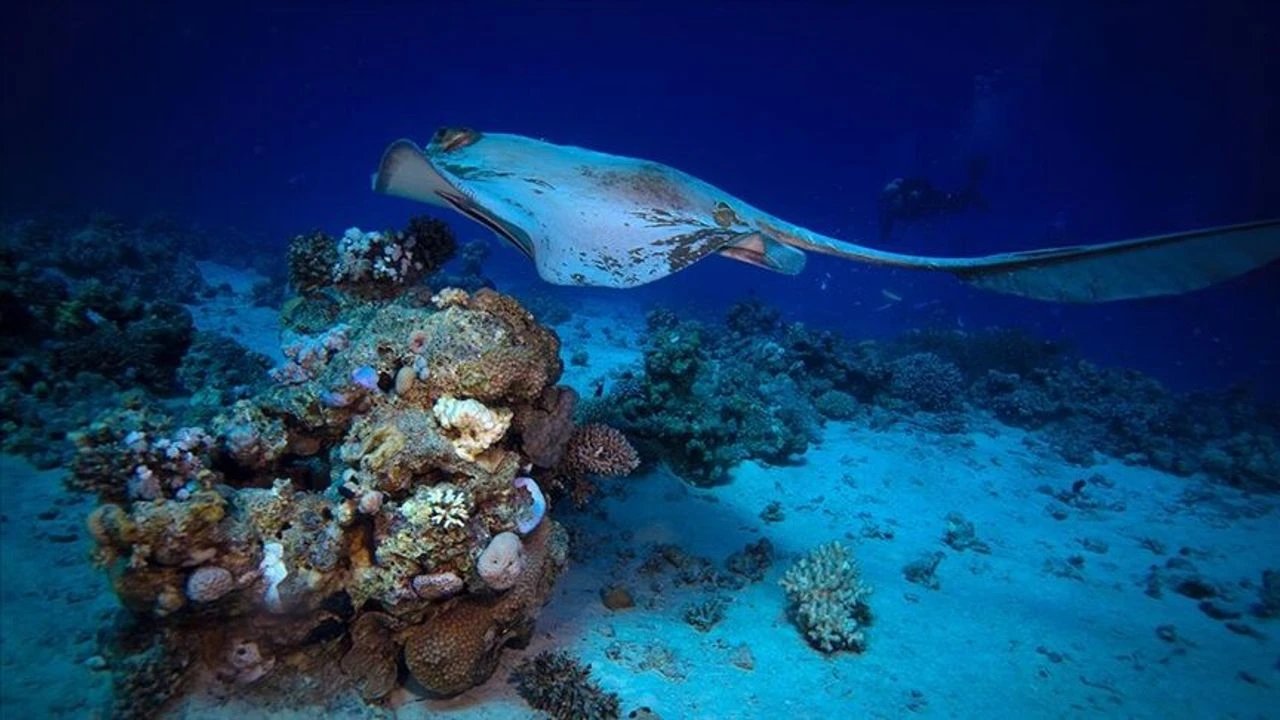
The following dive sites are located within or immediately adjacent to the Aqaba Marine Reserve. The reserve was inscribed on the UNESCO World Heritage List on July 25, 2026, during the 48th session of the World Heritage Committee in Busan, based on natural heritage criteria. The justification highlighted its heat-resistant coral mosaic, home to over 150 hard coral species, more than 500 fish species, and approximately 1,000 mollusk species.
Cedar Pride: A 74-Meter Freighter Sunk in 1985
The Cedar Pride, a 1964-built cargo ship, became unusable after a fire in Aqaba Port in 1982. By royal decree, it was cleaned and intentionally sunk in 1985 to create an artificial reef. The 74-meter hull lies on its port side; its highest points are around 7 meters deep, with the deepest sections reaching 26 meters. Soft corals enveloping the masts and schools of fish congregating in the hull's shadow offer fantastic wide-angle photo opportunities. Accessible from the shore, a short surface swim over a sandy bottom leads you to the wreck. The shallow upper deck is suitable for entry-level divers, while the cargo holds and interior passages require advanced training and a guide.
The Tank (M42 Duster): An Armored Vehicle at Six Meters
The American-made M42 Duster anti-aircraft tank, used by the Jordanian army between 1965 and 1998, was sunk by the Royal Jordanian Marine Conservation Society in 1999 to form an artificial reef. It rests on a sandy ridge close to shore, at a depth of approximately 6 meters. This shallow depth means even snorkelers can make out the tank's silhouette, and divers often use it as a safety stop. It's worth noting: this 1999 tank is separate from the underwater military vehicle display established on the same coast in 2019; the two are often confused. Midday light from above brings out the vibrant colors.
C-130 Hercules: The 2017 Plane Wreck
This transport plane, with a fuselage length of 30 meters and a wingspan of approximately 40 meters, was sunk a few hundred meters offshore on November 16, 2017, settling at a depth of about 17 meters. Fuel, oil, and hazardous materials were removed before sinking. Today, the plane is not intact: a severe storm in March 2020 caused the aluminum fuselage to break apart. Diving here now means exploring scattered pieces rather than circumnavigating a whole plane; set your expectations accordingly. The flat sandy bottom makes this site accessible for entry-level divers.
Seven Sisters: Seven Coral Pillars
Named for its seven coral pillars rising from the seabed. With depths ranging from 6 to 18 meters, both first-time divers and experienced teams can enjoy this site. Butterflyfish, parrotfish, lionfish, and occasionally sea turtles can be spotted among the pillars. Its proximity to the Tank has led to a popular program combining both sites. Keeping your gear close to your body in narrow passages prevents snagging on the reef.
Japanese Garden: A Garden of Hard and Soft Corals
Its name comes from the orderly arrangement of coral clusters, resembling a garden. This slope, with its dense concentration of hard and soft corals side-by-side, appeals to snorkelers in its shallow sections and divers in its deeper parts. The high density of reef fish makes it excellent for macro photography. A dive profile that descends from shallow to deep and then returns along the slope helps manage air consumption.
Power Station: Wall and Current
With its steep wall structure and sometimes strong currents, this site is geared towards advanced divers. Drift diving along the wall is common; soft corals and gorgonian fans define the character of the site. While there's a chance of seeing large pelagic creatures, it's not regular, so planning your dive around the wall itself is more realistic. Current direction can change throughout the day, so defer the entry decision to the dive center's morning observation.
| Site | Depth | Level | Entry |
|---|---|---|---|
| Cedar Pride | Approx. 7-26 m | Entry-level, interior advanced | Shore |
| Tank (M42 Duster) | Approx. 6 m | Snorkel and entry-level | Shore |
| C-130 Hercules | Approx. 17 m | Entry-level | Shore or boat |
| Seven Sisters | 6-18 m | All levels | Shore |
| Japanese Garden | Shallow slope to deep | All levels | Shore |
| Power Station | Wall profile | Advanced | Boat |
A Practical Itinerary: Wrecks in the Morning, Shallow Reefs in the Afternoon
A practical way to structure your diving days in Aqaba is to tackle deeper dives in the morning and shallower ones in the afternoon. The following sequence spans two full days and allows ample time before your return flight.
- Spend your arrival day without diving; complete equipment rental, medical declarations, and dive center selection.
- Start your first morning with the Cedar Pride; placing the deepest dive of the day first helps with nitrogen management.
- After your surface interval, complete the afternoon with a shallow profile along the Seven Sisters and the Tank.
- On your second morning, descend to the C-130 Hercules; allocate extra bottom time to explore the scattered pieces.
- In the afternoon, enjoy a slow reef dive at the Japanese Garden; extend this session if you're keen on photography.
- For those wishing to continue snorkeling, the South Beach coastline offers an additional session on the same day.
- Plan your final day away from the water; ensure you complete the full recommended surface interval before your return flight.
What Each Season Offers
While diving in Aqaba is a year-round activity, comfort levels vary by season.
| Period | Water Temperature (approx.) | Key Conditions | Notes |
|---|---|---|---|
| March-May | 21-24 degrees Celsius | Clear visibility, mild weather | Comfortable period for shore entries |
| June-August | 26-29 degrees Celsius | Calm sea, hot weather | Shade and hydration are crucial on land |
| September-November | 25-27 degrees Celsius | Water temperature maintained, weather softens | Favorable for longer dive profiles |
| December-February | 20-22 degrees Celsius | Cool air, calm coast | Thicker wetsuit or hood may be needed |
In summer, midday land temperatures can be challenging, so shifting dives to the morning and late afternoon is a common solution; in winter, wetsuit thickness becomes the deciding factor.
Marine Reserve Rules and Underwater Safety
Aqaba's reefs are part of a protected area, and rules are enforced.
- Damaging marine life, collecting shells, coral fragments, rocks, or organic products within the reserve requires a permit; unauthorized collection is prohibited.
- Seasonal fishing closures are implemented; fishing restrictions come into effect during breeding periods.
- The fundamental rule is to avoid touching coral, stepping on it, or holding onto the reef; use sandy areas for stabilization if necessary.
- Dangling equipment can rub against and damage the reef; secure your gauges, octopus, and torch close to your body.
- Choosing reef-safe sunscreen formulas is a common recommendation.
- Never skip the pre-dive briefing and do not exceed the depth limits of your certification.
- Divers Alert Network recommends a minimum surface interval of 12 hours after a single, no-decompression dive, and a minimum of 18 hours after multiple-day or repetitive dives; plan your flight accordingly.
Getting to Aqaba from Turkey and Moving Around the City
Visa requirements vary by nationality and are updated periodically; confirm with Visit Jordan, the official website of the Jordan Tourism Board, before your trip.
Arriving by Flight
The flight distance between Istanbul and Aqaba is approximately 1,413 kilometers, with a direct scheduled flight taking about 2 hours and 40 minutes. Direct flights can become less frequent seasonally, so check the schedule; if direct flights are unavailable, the route is typically via the capital, Amman. King Hussein International Airport is approximately 10 kilometers north of the city center.
Road Travel within Jordan
The Desert Highway connects Amman and Aqaba. Domestic bus services typically complete this route in 4 to 5 hours; schedules can change during holidays, so check the operator's current timetable. For those coming via Petra and Wadi Rum, Aqaba is a natural concluding stop on the itinerary.
Getting Around Aqaba
Distances within the city are short, and taxis are a common mode of transport. Many dive centers arrange shuttle services to pick up guests from their accommodation and take them to the southern coastal dive sites; this often makes car rental unnecessary for most diving programs. The South Beach area is approximately 10 kilometers south of the city center.
Accommodation Areas, Dining, and Budget Considerations
Your diving program will largely determine your accommodation choice.
| Area | Character | Best For |
|---|---|---|
| City Center | Market, restaurants, and transport hub | Those combining diving with sightseeing |
| Southern Coastline | Proximity to dive sites, quiet surroundings | Those doing two or more dives per day |
| Coastal Resort Area | Beach access, enclosed resort facilities | Families and those focusing on snorkeling |
In the evenings, restaurants in the city center typically offer menus featuring fresh seafood, grills, and mezzes; Jordanian oven-baked and tandoor dishes also feature prominently. On diving days, saving your heavier meal for the evening can make your daytime dives more comfortable.
Your total budget is determined by four main categories: flights, accommodation, dive packages, and equipment rental. On the diving side, prices depend on the number of dives, boat usage, and whether you're taking a course; bringing your own mask, dive computer, and boots can reduce rental costs. As package contents vary from center to center, obtain current pricing from your chosen licensed dive center.
Concluding Your Journey
In summary, Aqaba, with its accessible shore-entry wrecks and year-round warm waters, frees your diving schedule from seasonal constraints. Follow this sequence for an optimal experience: sort out your certification beforehand, tackle deeper dives in the morning, save shallow reefs for the afternoon, and ensure you complete your surface interval before your return flight. For those considering adding the opposite shore of the Red Sea to their itinerary, our Egypt travel guide clarifies regional sequencing.
Travelers seeking similar underwater and nature experiences in Turkey can explore our nature and adventure tours in Turkey category for outdoor programs. Those wishing to add ancient cities and museums to their itinerary can proceed with our cultural tours in Turkey section.
Frequently Asked Questions 6
Is a diving certification required in Aqaba?
No, it's not strictly required. Uncertified guests can enjoy guided discovery dives in shallow, supervised areas with a licensed dive center instructor. For independent diving, the entry-level certification is Open Water Diver; according to PADI, the minimum age is 10, with those under 15 receiving a Junior Open Water Diver certification.
When is the diving season in Aqaba?
The diving season in Aqaba is year-round. Water temperatures typically range from approximately 20-22 degrees Celsius in winter to 26-29 degrees Celsius in summer. Spring and autumn offer mild water and air temperatures, making shore entries very comfortable; in winter, a thicker wetsuit or hood may be necessary.
Can the Cedar Pride wreck be accessed from shore?
Yes, it can. The 74-meter ship lies on its port side, with its highest points at approximately 7 meters and deepest sections around 26 meters; it's reached by a short surface swim over a sandy bottom. The shallow upper deck is suitable for entry-level divers, while interior passages require advanced training.
How long must one wait to fly after diving?
Divers Alert Network guidelines recommend a minimum surface interval of 12 hours after a single, no-decompression dive, and a minimum of 18 hours after multiple-day or repetitive dives. For dives requiring decompression stops, the recommended waiting period is even longer.
Is it possible to see the wrecks while snorkeling?
It's possible to see some parts. The M42 Duster tank, sunk in 1999, rests on a sandy ridge close to shore at approximately 6 meters deep, making it visible from the surface. Shallow sections of reef sites like the Japanese Garden can also be explored while snorkeling. However, the Cedar Pride and C-130 Hercules are at depths requiring scuba diving.
What is Aqaba's conservation status?
The coastline is within the Aqaba Marine Reserve. The area was inscribed on the UNESCO World Heritage List on July 25, 2026, during the 48th session of the World Heritage Committee in Busan, based on natural heritage criteria. Within the reserve, damaging marine life or collecting shells, coral, or rocks without a permit is prohibited.