Perched upon the rugged slopes of the Southeastern Taurus Mountains, Adıyaman serves as the beating heart of the Commagene Kingdom, one of the most enigmatic civilizations of the ancient world. With monumental statues towering over the peaks, Roman bridges spanning deep canyons, and temples carved directly into the living rock, the region is one of the world's most prestigious open-air museums.
Planning a comprehensive antiochos tümülüsü ve adıyaman nemrut rotası allows you to dive deep into the geography of Commagene, from the royal burial mounds to the colossal heads of gods. To explore the best travel programs in the region, you can browse popular city tours in Adıyaman here or check out the Nemrut historical city tours for detailed summit excursion info.
Quick Facts: Visiting Adıyaman and Nemrut Mountain
| Feature | Visitor Summary |
|---|---|
| Regional Location | Southeastern Anatolia, Kahta district, Adıyaman province |
| Summit Elevation | 2,150 meters (Taurus Mountains range) |
| Best Time to Visit | April to November (Spring and Autumn are ideal) |
| Key Highlights | Antiochos Tümülüsü, East and West Terrace colossal statues |
| Accessibility | Paved roads from Kahta to the mountain transfer station |
| Ideal For | History buffs, nature photographers, and cultural explorers |
The Commagene Kingdom: A Bridge Between East and West
Founded in the 1st century BC, the Commagene Kingdom was a unique civilization that blended the Hellenistic Greek world with the Persian East. The rulers of the kingdom claimed descent from both Alexander the Great and the Persian kings, uniting two great cultures under a single spiritual umbrella.
This political vision is vividly reflected in the architectural style and naming of the statues on Nemrut Mountain. The Greek god Zeus and the Persian god Oromasdes, as well as Apollo and Mithras, are depicted as single entities sharing the same throne.
The Sacred Royal Tomb atop the Taurus Peaks
Commissioned by King Antiochos I, the 50-meter-high gravel tumulus was designed as the king's eternal resting place. Formed by piling hundreds of thousands of tons of crushed limestone into a pyramidal mound, it still conceals a secret burial chamber that remains one of archaeology's great mysteries.
Walking between the terraces amidst the cool mountain breezes evokes a feeling of being detached from time. The moments when the first rays of dawn hit the giant stone faces create the most mesmerizing visual spectacle of the entire journey.
Monumental Landmarks of the Commagene Valley
The East and West Terrace Statues
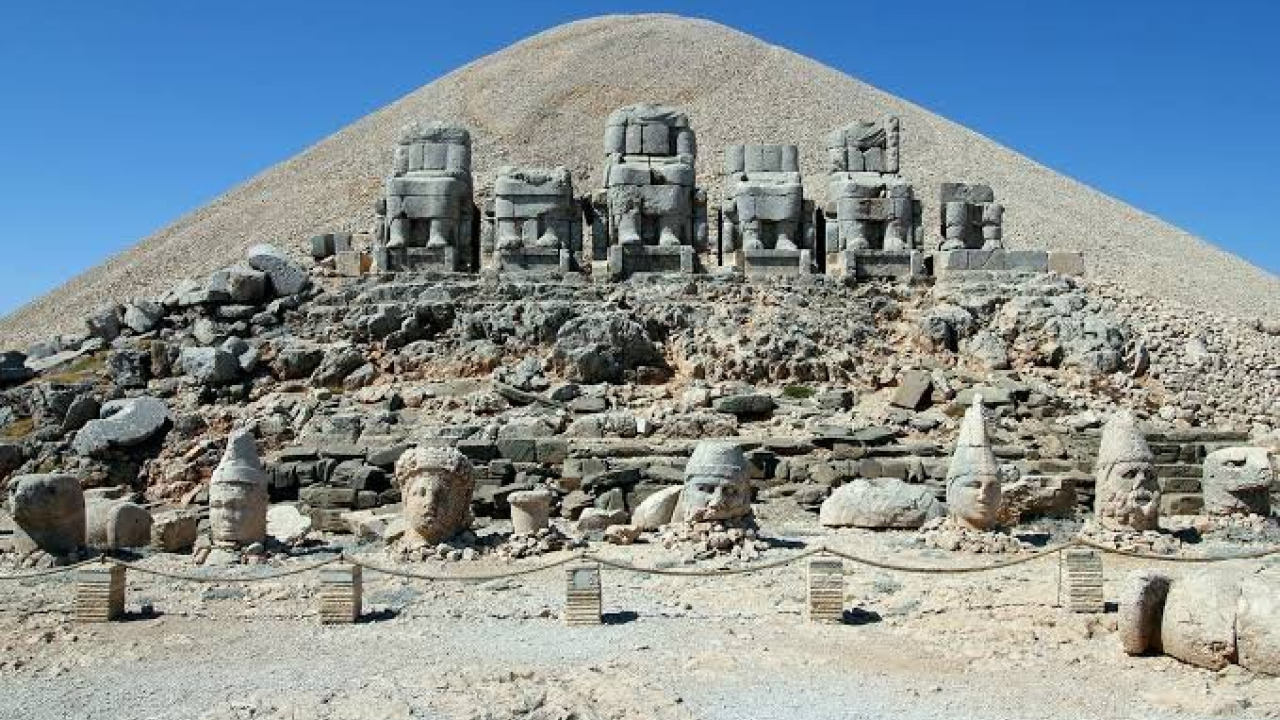
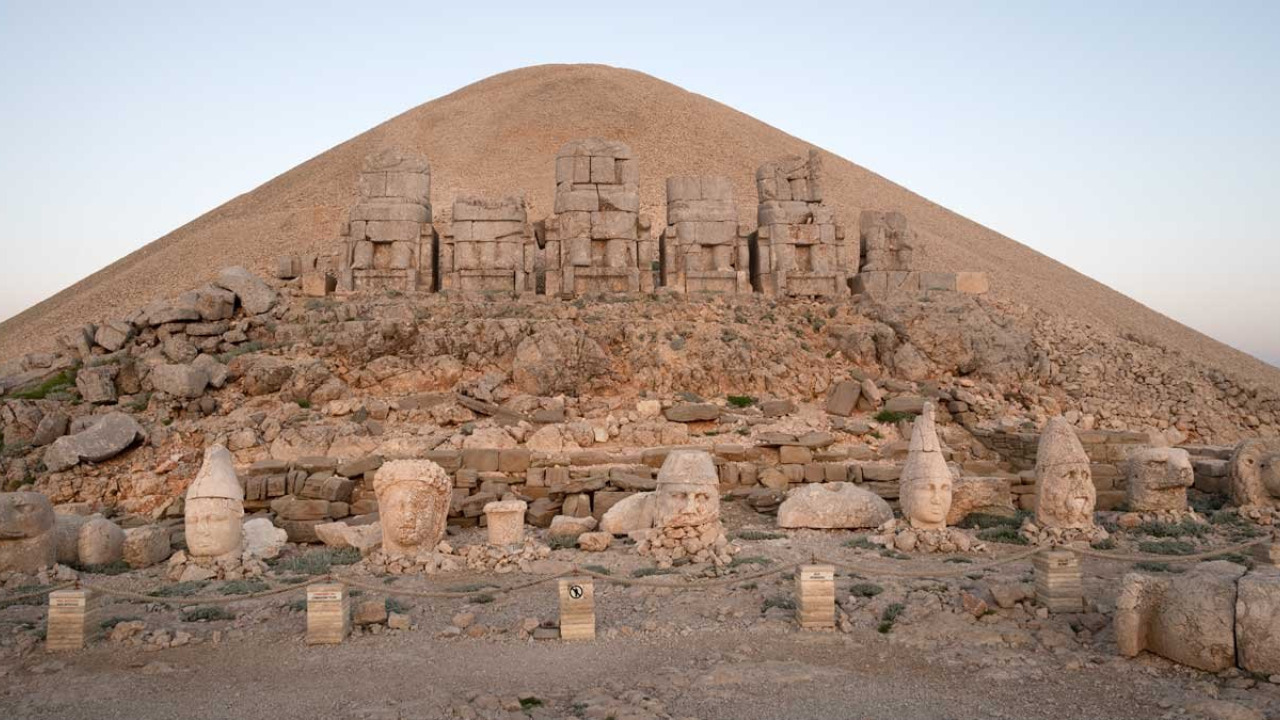
The East Terrace at the summit of Nemrut is a ceremonial area arranged with divine statues and sacrificial altars. In front of the seated bodies of the gods, the colossal heads of King Antiochos, the goddess of luck Commagene, Zeus, Apollo, and Heracles stand in a solemn row.
The West Terrace is renowned for its statues bathed in the crimson hues of sunset and the famous Lion Horoscope relief. Featuring 19 stars and three planetary motifs, this relief is a priceless document of ancient astronomical observations.
Cendere Stream and the Historic Roman Bridge
Spanning the narrow gorge of the Kahta Canyon, the Cendere Bridge was built in honor of Roman Emperor Septimius Severus and his family. It has stood for two thousand years without the use of mortar, relying instead on a sophisticated interlocking system of massive cut stones.
The Corinthian columns at either end of the bridge represent members of the imperial family. Standing over the crystal-clear waters of the canyon and gazing at the massive arch reveals the sheer genius of Roman engineering.
Yeni Kale and the Temple City of Arsemia
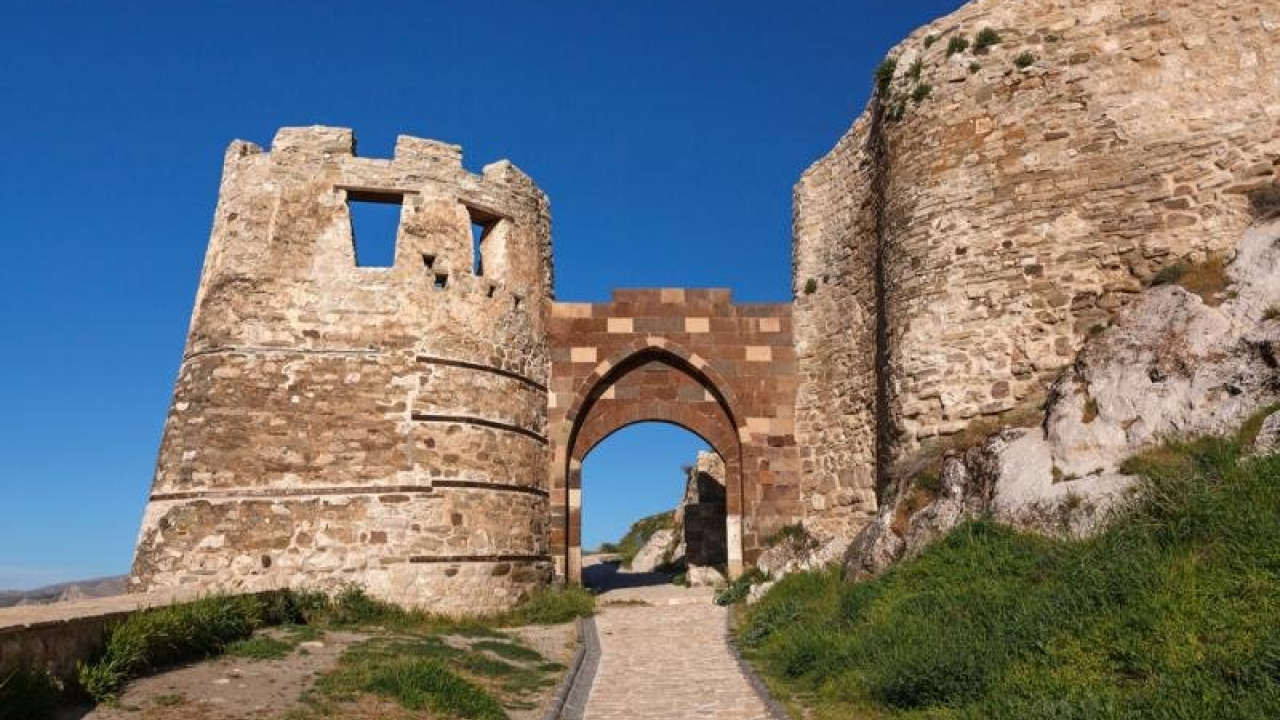
Perched on a hill near the old village of Kahta, Yeni Kale is a fortified defense structure built during the Mamluk period. Situated on steep cliffs, the castle reflects the military architecture of its time with its water cisterns, mosque, and secret escape tunnels.
Across the valley lies Arsemia, the administrative and religious center of Commagene. The relief depicting the handshake between King Antiochos and Heracles, along with a 150-meter secret tunnel carved into the rock, are the most thrilling highlights of the ancient city.
Adıyaman Commagene Route: Site Summary
A breakdown of the key historical centers along the regional route:
| Stop | Elevation / Location | Period | Visitor Experience | Avg. Duration |
|---|---|---|---|---|
| Nemrut Summit Terraces | 2,150 m / Kahta | 62 BC (Commagene) | Giant statues, tumulus, and sunset | 2.5-3 Hours |
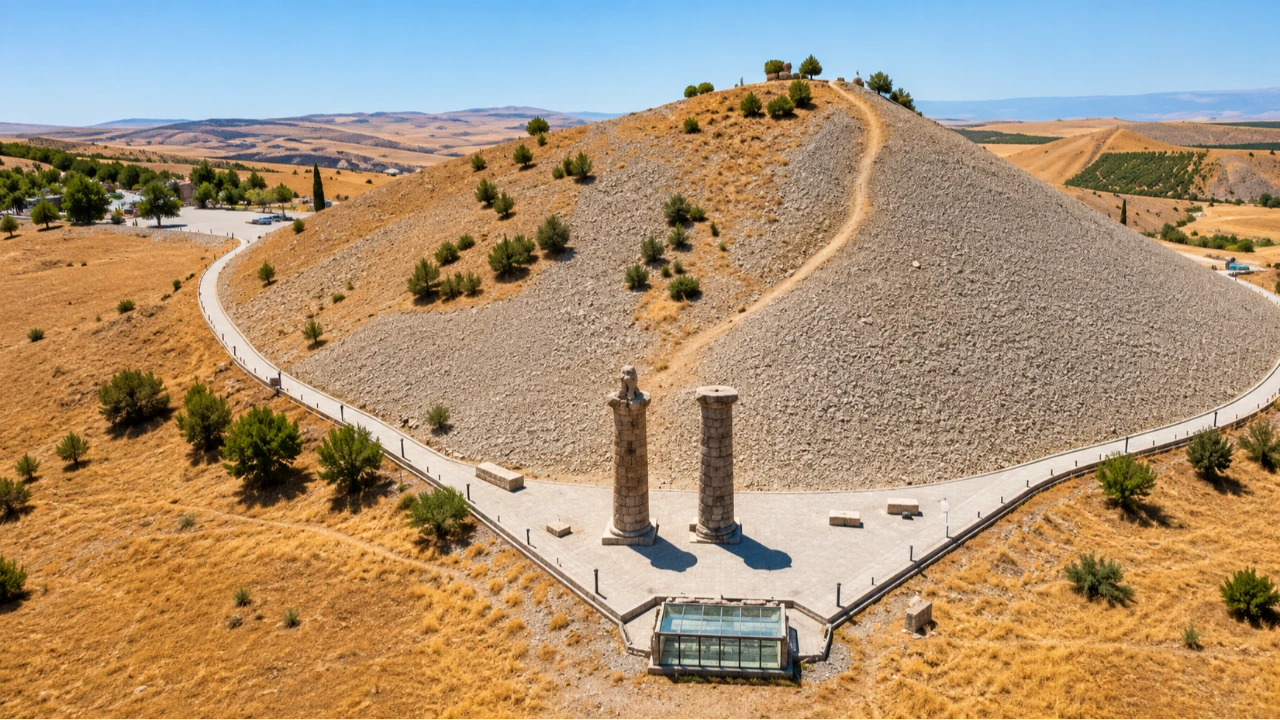
| Karakuş Tümülüsü | 750 m / Kahta | 36 BC (Commagene) | Royal columns with eagles, valley views | 45 Minutes |
| Cendere Roman Bridge | 600 m / Canyon | 200 AD (Roman) | Walking across a mortarless stone arch | 45 Minutes |
| Arsemia Site | 850 m / Slope | Hellenistic | Handshake relief, rock inscriptions, tunnel | 1.5 Hours |
| Yeni Kale (Old Kahta) | 700 m / Hill | Mamluk | Steep castle walls, canyon panoramas | 1 Hour |
| Perre Ancient City | 650 m / Adıyaman | Commagene & Roman | Rock-cut chamber tombs and mosaics | 2 Hours |
Karakuş Tümülüsü and the Royal Women
Greeting visitors at the entrance of Nemrut National Park, the Karakuş Tümülüsü is a monumental tomb built for the queens and princesses. The eagle statue atop one of the columns surrounding the mound symbolizes the dynasty's sacred connection to the heavens.
Another column features a lion, symbolizing the kingdom's earthly power. As the sun sets, the long shadows cast by these columns across the valley provide a breathtaking atmosphere for photography.
Perre Ancient City and Mosaic Rock Tombs
Located five kilometers north of Adıyaman city center, Perre Ancient City served as a resting stop for caravans and armies during the Roman era. Hundreds of rock-cut chamber tombs provide detailed insight into the burial traditions of the period.
Recent archaeological excavations have revealed floor mosaics showcasing rich viticulture scenes and geometric patterns. Perre is the ideal starting point for those beginning their Commagene itinerary in the center of Adıyaman.
Full-Day Adıyaman and Nemrut Itinerary
A comprehensive daily program designed to hit the summit for the perfect sunset:
- Departure from Adıyaman Center (09:00): The tour vehicle picks up guests from hotels and heads toward Kahta.
- Visit to Perre Ancient City (09:30): Explore the rock-cut tombs and ancient water channels.
- Karakuş Tümülüsü Stop (11:30): Photo opportunities by the eagle-topped columns and valley sightseeing.
- Cendere Bridge Walk (12:30): Cross the historic arch and relax by the canyon waters.
- Local Lunch in Kahta (13:30): A culinary break featuring oven kebabs, Adıyaman tavası, and fresh ayran.
- Arsemia Temple Area (15:00): Guided exploration of rock reliefs, the handshake stele, and inscriptions.
- Nemrut National Park Entry (16:30): Arrival at the transfer point followed by the hike up the terrace path.
- Sunset at the West Terrace (18:00): Watch the sun dip below the horizon as the statues turn crimson before heading back.
Professional Guiding and Visitor Comfort
On Nemrut Mountain tours, the historical insights shared by experienced guides transform a simple sightseeing trip into an unforgettable experience. The mythological and political significance of every relief is explained on-site.
During the high-altitude summit hike, guests are encouraged to move at their own pace. Refreshment breaks with hot tea and coffee at the base facilities ensure guests stay energized.
Local Flavors and Adıyaman Cuisine
The flavors of Adıyaman are the perfect remedy for a day of exploration. The local cuisine leaves a rich impression with its hearty meat dishes and traditional desserts. The Adıyaman tavası, slow-cooked in a clay pot with garlic and pepper, is a local favorite.
The experience is completed with fresh walnut-based Adıyaman halva and traditional caravanserai coffee, symbolizing the region's ancient hospitality. Local markets are great for picking up fresh mulberry pestil (fruit leather) and organic honey.
Essential Tips for Visiting Nemrut Mountain
To ensure a smooth and safe trip, please keep these practical tips in mind:
- Prepare for Temperature Drops: The summit is significantly cooler than the plains; always carry a windproof fleece or jacket.
- Wear Proper Footwear: The stepped path to the terraces is rocky and steep; wear non-slip hiking shoes.
- Bring a Flashlight: The descent from the summit after sunset often happens in twilight; a small flashlight is essential.
- Sun Protection: UV rays are stronger at high altitudes; use a hat, sunglasses, and sunscreen.
- Museum Pass Advantage: The Museum Pass is valid at Nemrut Mountain and other ruins; secure yours in advance.
- Pace Your Climb: Due to the altitude (over 2,000m), climb the steep steps slowly and take frequent rests.
The Kahta Stream and Valley Ecosystem
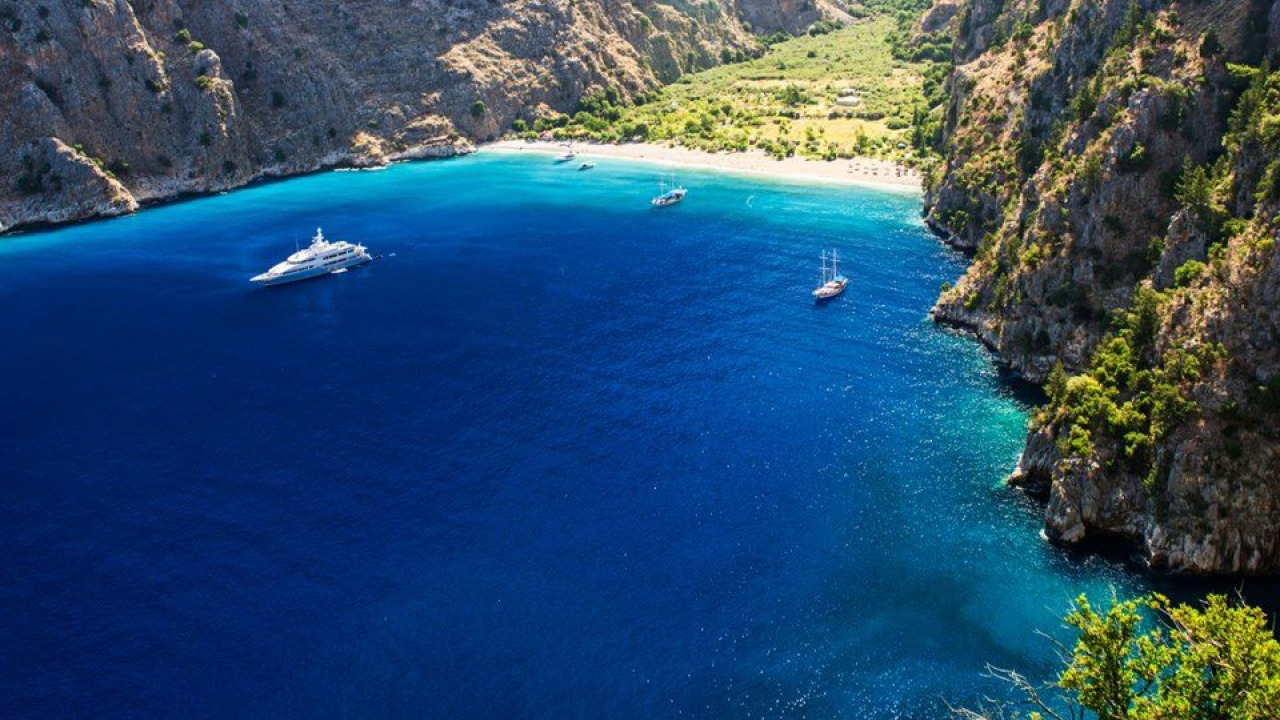
The lands of Commagene enchant not only with archaeological monuments but also with deep canyons and lush vegetation. Wild almond trees and sumac shrubs grow along the steep slopes of the Kahta Stream valley.
In spring, the rivers swell with melting snow, turning into serene canyon ponds during the dry summer months. This natural geography explains why the ancient kingdom chose these rugged mountains as their sacred site.
The Summit Opening to Anatolia's Skies
The Royal Philosophy of Immortality
Nemrut Mountain is the most dramatic expression of humanity's quest for immortality carved into stone. This temple complex, established by King Antiochos two thousand years ago, has resisted the wear of time and nature to reach us today.
The giant statues gazing at the sky symbolize an ideal of a civilization living in peace and brotherhood. Seeing these monuments in person reinforces a profound respect for the great ideals of the past.
Lasting Impressions
As the sun sets behind the mountains and the sky turns purple, a deep silence falls over the Nemrut terraces. As visitors descend the path with their flashlights, the unforgettable silhouettes of the giant god-heads remain etched in their minds.
Combined with the rich history, warm-hearted people, and delicious tables of Adıyaman, this journey leaves a lasting mark on every traveler. The lands of Commagene offer an ancient legacy that keeps the passion for discovery alive.
Frequently Asked Questions 6
Is climbing to the summit of Nemrut Mountain physically demanding?
From the parking area to the terraces where the statues are located, there is a stone-stepped path of approximately 600 meters. At a steady pace, most visitors reach the terraces comfortably in 15-20 minutes.
Are there shuttle services for elderly or disabled visitors?
The National Park administration can provide golf-cart style shuttle services to certain points for visitors with mobility challenges upon request.
What is the best time of day to visit Nemrut Mountain?
Sunrise and sunset are the most popular times, as the angle of the light illuminates the statues in the most impressive way.
How long does it take to get to Nemrut Mountain from Adıyaman city center?
The distance is approximately 85 kilometers. Due to the winding mountain roads, the drive takes about 1.5 hours.
Is Nemrut Mountain open for visits during winter?
Between December and March, the summit road is usually closed due to heavy snowfall and blizzards. The safest visiting season is from April to November.
Is the Museum Pass valid for the historical sites in the region?
Yes, the Museum Pass issued by the T.C. Ministry of Culture and Tourism is valid for entry to the Nemrut Mountain site, Arsemia, and Perre Ancient City.