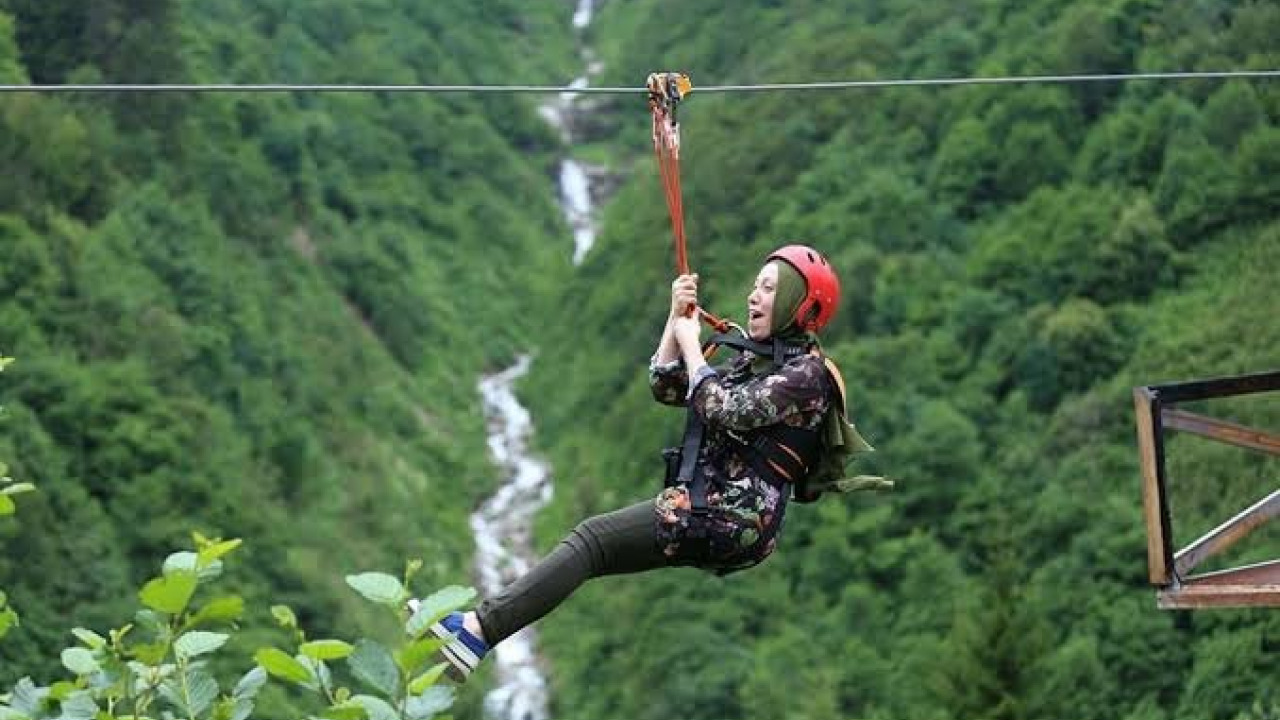
Gliding hundreds of feet above deep canyon floors, rushing turquoise rivers, and lush emerald forests offers nature enthusiasts a unique sense of freedom that defies gravity. Sliding across high-tensile steel cables using specialized pulley systems sends your adrenaline skyrocketing while providing a breathtaking bird's-eye view of the landscape. To explore the most magnificent canyon and river courses in Turkey, you can browse the latest route options on our Zip Line Turları page.
For first-time adventurers, it's natural to have questions about weight limits, cable strength, and how the braking system works at the end of the line. Modern adventure parks utilize international engineering standards designed to minimize risk and maximize safety.
Thanks to guidelines approved by the TSE and the European Committee for Standardization, participants can simply relax and enjoy the thrill of flight. Proper harness fitting and strict adherence to safety protocols are the cornerstones of a secure experience.
Zip Line Courses and Safety Equipment: Quick Facts
| Feature | Visitor & Participant Summary |
|---|---|
| Legal Regulations | TSE EN 15567 Safety Standard for Ropes Courses and Adventure Parks |
| Weight Limits | Individual flights: Minimum 30-35 kg, Maximum 110-120 kg |
| Height Requirement | Minimum 120-130 cm (based on platform and lock dimensions) |
| Mandatory Gear | Mountaineering helmet, double-leg sit harness, and steel carabiners |
| Pulley System | Tandem double-pulley equipment with at least 25 kN tensile strength |
| Braking Mechanism | Automatic magnetic eddy-current brakes and mechanical spring buffers |
| Best Visiting Times | Calm morning hours or late afternoon |
Turkey's Most Popular Canyon Courses and Regional Highlights
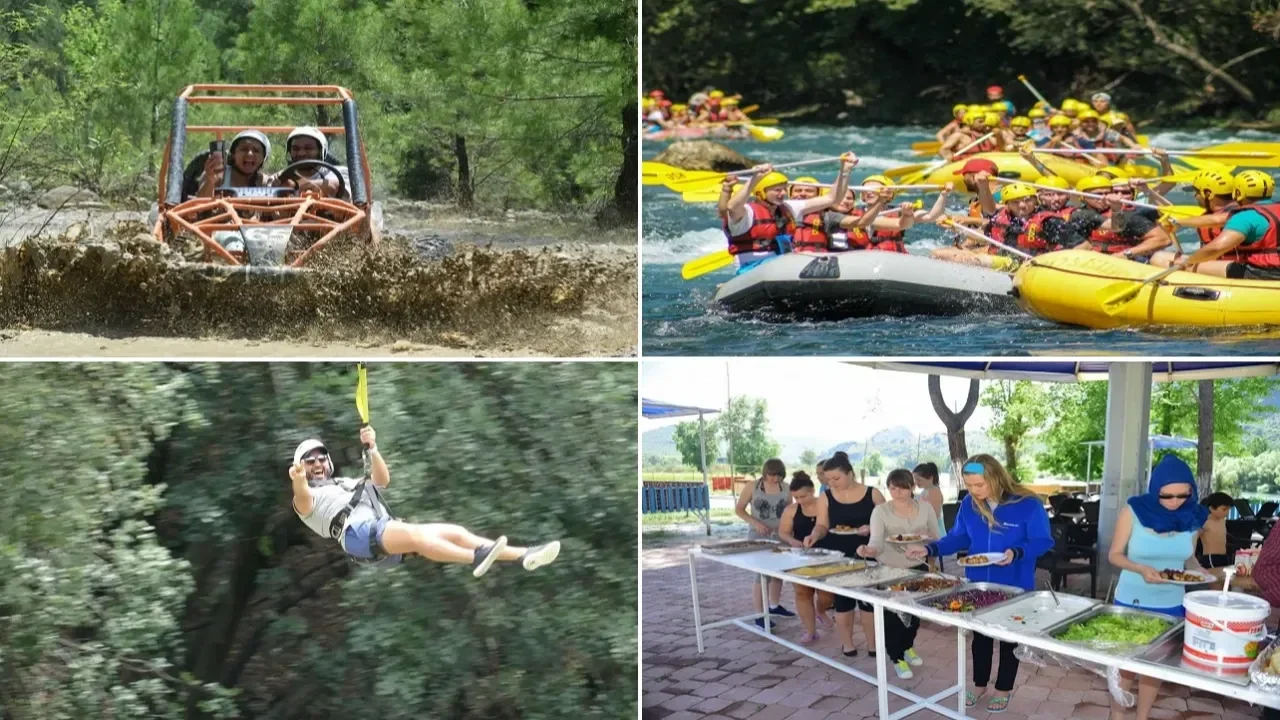
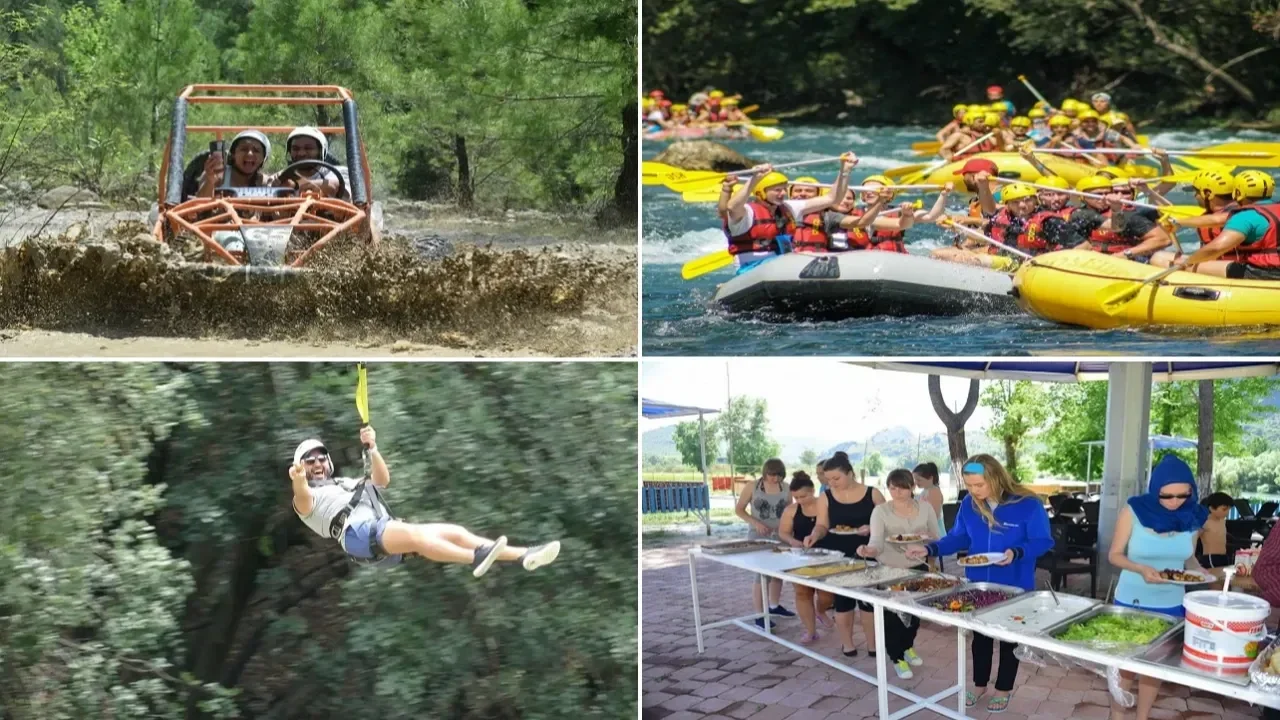
Turkey's rugged canyon valleys and mountainous topography provide the perfect backdrop for world-class zip line courses. The Side Zip Line, set over the turquoise waters of Köprülü Kanyon, are particularly famous for their adrenaline-packed combo packages that pair zip lining with rafting. Gliding hundreds of meters across the Köprüçay river allows you to feel the cool mist of the water from above.
For those looking to spend time in nature parks at the foothills of the Taurus Mountains, Zip Line in Belek offer thrilling stations that weave through high pine canopies. These courses are often integrated with hiking trails and adventure parks, making them an ideal weekend getaway for families.
Visitors wanting to cross breathtaking valleys closer to the city center can experience Zip Line in Konyaalti, where you can soar rapidly from limestone cliffs toward the valley floor. Meanwhile, guests seeking a day of adventure without leaving the comfort of their resorts often prefer the river and forest crossings found in Zip Line in Lara / Kundu.
Each regional course offers a unique altitude difference, cruising speed, and scenic perspective. Choosing a line length that matches your personal adrenaline threshold ensures the most rewarding experience.
Weight Limits and the Physics of Gravity Safety
The minimum and maximum weight limits enforced at zip line parks are not arbitrary; they are based on fundamental physics and aerodynamics. The maximum speed and kinetic energy a person reaches on a steel cable are directly related to their total mass. Lightweight participants (under 30-35 kg) may not gain enough gravitational acceleration to overcome wind resistance, potentially leaving them stranded mid-line.
While being suspended in the middle of the line is not life-threatening, it requires staff to retrieve the participant using a rescue rope. Conversely, participants exceeding 110-120 kg may reach excessive speeds, placing too much mechanical load on the braking system. This can result in a jarring stop at the landing platform.
To maintain this aerodynamic balance, every participant is weighed on precision digital scales before boarding. Depending on the result, additional weights may be added to the pulley, or the participant may be directed to a line with a shallower incline. This measurement procedure is essential for a smooth and safe landing.
For children who fall below the minimum weight limit, tandem (double) flight options are available. Children are securely locked in front of an expert guide or parent, allowing them to glide safely using the combined weight of two people.
Pulley Systems and Braking Technology Comparison
A smooth ride and a safe stop depend entirely on the quality of the pulleys and braking technology. Modern adventure park engineering has made fully automated, "hands-off" systems the industry standard.
The following table compares the primary pulley and braking mechanisms used on zip line courses:
| Equipment & System | Load Capacity (kN) | Braking Principle | Passenger Input | Safety & Comfort Level |
|---|---|---|---|---|
| Magnetic Eddy-Current | 30 kN Double Line | Non-contact deceleration via magnetic vortex | Zero input, fully automatic | Highest comfort, smooth and seamless stop |
| Mechanical Spring Buffer | 25 kN Standard | Energy absorption via compressed steel springs | Foot positioning during landing | High safety, gradual mechanical deceleration |
| Guide-Controlled Rope | 22 kN Classic | Counter-weight braking by platform staff | Follows guide's hand commands | Dependent on operator experience |
| Manual Leather Glove | 18 kN Legacy | Participant applies pressure to cable with gloves | Entirely passenger-controlled | High risk of error; phased out in modern parks |
Magnetic eddy-current braking is the most significant technological leap in modern parks. As the pulley approaches the end of the line, it enters a magnetic field that creates a frictionless braking force between conductive aluminum blades. This system does not wear down, is unaffected by rain, and automatically adjusts resistance based on the passenger's weight.
The old method of using leather gloves to grip the cable has been banned by professional operators due to the risk of friction burns or premature stops caused by panic. In today's corporate parks, participants do not need to touch anything during their descent.
The pulleys feature double-bearing stainless steel wheels that minimize friction, allowing for safe speeds between 40 and 70 km/h. To prevent cable failure, every pulley is backed up by a secondary independent safety lanyard.
Pre-Flight Harness Fitting and Equipment Standards
The most critical piece of gear in zip lining is the mountaineering-style sit harness. These harnesses consist of a wide waist belt and leg loops, distributing the body's weight across the hips and thighs rather than the spine. Adjustable nylon webbing ensures the participant cannot flip upside down or slip out of the seat.
A locking steel carabiner with a breaking strength of at least 25 kN is attached to the belay loop at the center of the harness. These carabiners feature screw-lock or auto-lock gates to ensure they don't open due to vibrations during flight. Platform instructors double-check these locks manually before every launch.
Wearing a TSE EN 12492 mountaineering helmet is a legal requirement to protect the head from potential impacts or pulley contact. The chin strap must be fully locked, and the nape adjustment screw tightened so the helmet remains stable. Additionally, long hair must be tied back and tucked inside the helmet to eliminate any risk of entanglement with the pulley.
Items that could fall, such as keychains, mobile phones, or loose change, must be left in platform lockers or placed in deep, zippered pockets. A hard object falling from a great height poses a serious injury risk to anyone on the walking paths below.
The 5-Step Protocol for a Safe Flight
To maintain physical safety and ensure a perfect approach to the landing platform, the following five-step protocol is followed:
- Weight Check & Health Screening: Participants are weighed at the entrance, and any heart conditions or severe neck injuries are confirmed.
- Gear Fitting: The sit harness and helmet are donned under instructor supervision; straps are checked for a snug, secure fit.
- Dual-Lock Connection: The pulley is placed on the main cable, and the backup lanyard carabiner is locked to provide double redundancy.
- Controlled Launch: Upon the instructor's "clear for takeoff" command, the participant gently pushes off the platform, leaning back slightly into a relaxed position.
- Automatic Braking & Landing: Legs are extended slightly forward; the participant remains still until the pulley stops and the guide unlocks the gear.
When this five-step discipline is followed, zip lining becomes one of the most enjoyable and secure outdoor activities in the world. Spreading your arms to embrace the wind during flight provides an indescribable feeling of liberation.
Wind Conditions and Meteorological Operating Limits
Monitoring weather conditions is a vital safety parameter for steel cable operations in open terrain. Sudden thermal wind vortices, common in canyon valleys, can affect cruising speeds. On stormy days when wind speeds exceed 45-50 km/h, operations are immediately suspended for safety.
Furthermore, during thunderstorms or lightning activity, courses are evacuated immediately as steel cables can attract lightning. Although all lines are protected by grounding systems, aviation safety rules prohibit passengers from being suspended in the air during such events. Authorized operators use anemometers to monitor wind movements in real-time.
On extremely hot summer days, it is normal for steel cables to expand and stretch slightly. Experienced park engineers use seasonal turnbuckles to periodically calibrate the cable tension. These technical maintenance standards ensure a consistently smooth glide throughout the year.
By respecting the power of nature and adhering to scientific safety rules, these parks provide adventure seekers with unforgettable memories. Every safely completed line strengthens your bond with the great outdoors.
Frequently Asked Questions 5
What are the weight and height limits for zip lining?
Per EN 15567 safety standards, a minimum weight of 30-35 kg and a maximum of 110-120 kg are typically required to ensure proper gravitational acceleration and braking safety. The minimum height requirement is generally 120-130 cm.
How does the zip line braking system work?
Modern parks use magnetic eddy-current brakes, mechanical spring buffers, and guide-controlled gradual braking systems. These ensure the participant slows down automatically at the end of the line without needing to intervene manually.
Can children zip line alone?
Children below the minimum weight limit can fly using tandem (double) harness equipment accompanied by an experienced instructor or parent. Children over 12 who meet the weight requirements can fly individually.
How safe are the double pulleys and steel cables used?
The lines are made of aircraft-grade galvanized steel. Each pulley is backed up by double safety carabiners with a breaking strength of at least 25-30 kN (approximately 2.5-3 tons).
Where are the longest and highest zip line courses in Turkey?
The Köprülü Kanyon valley in Antalya, Fırtına Valley in Rize, the shores of Çoruh in Artvin, and the foothills of Babadağ in Fethiye host some of the longest steel lines with stunning canyon views.