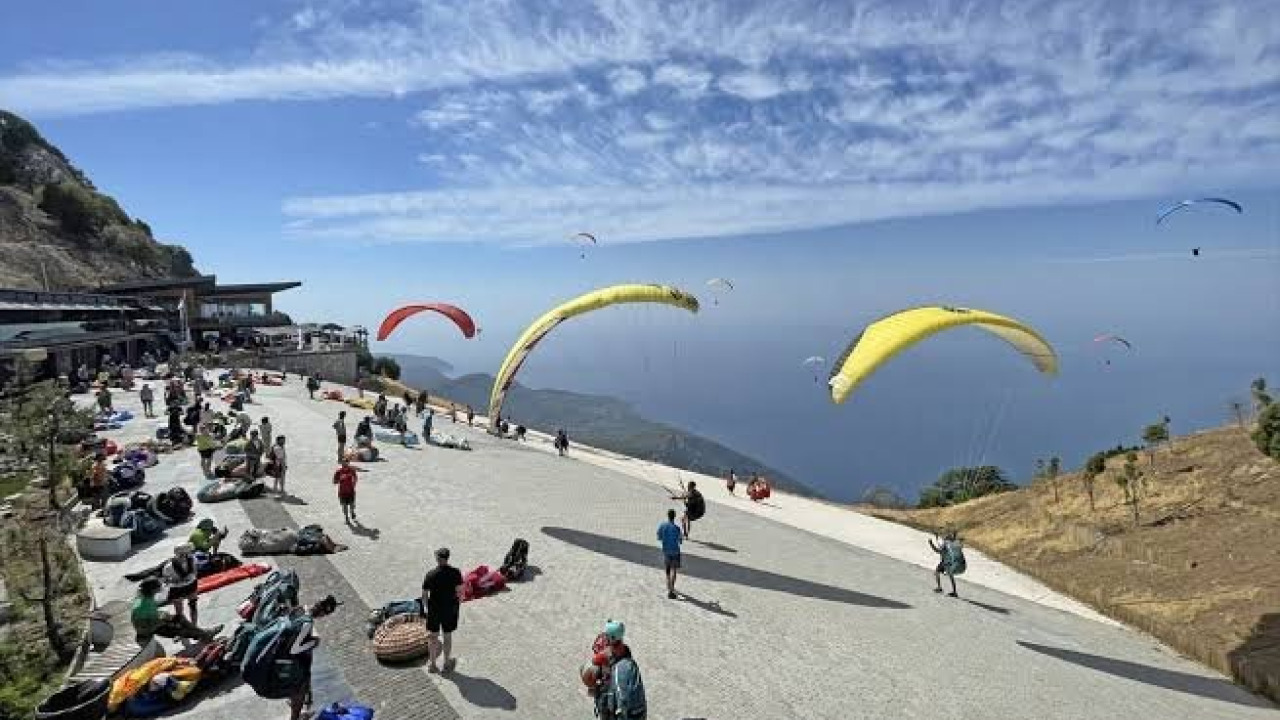
Gliding through the sky like a bird, gazing down at turquoise coastlines and lush mountain valleys from hundreds of meters above, is one of life's most exhilarating experiences. For adventure seekers looking to defy gravity and feel the wind in their hair, Yamaç Paraşütü Turları offer flight opportunities governed by the highest international safety standards. In a two-person tandem flight, you are under the complete control of an experienced pilot, meaning no prior training or aviation knowledge is required.
For first-time flyers, the most common questions usually revolve around physical requirements, weight limits, and age restrictions. To ensure absolute safety in the air, international aviation rules are applied with a "zero-error" principle during both takeoff and landing. All operations are strictly monitored by the Directorate General of Civil Aviation (SHGM) and the Turkish Aeronautical Association (THK) to guarantee a seamless and secure experience.
Quick Guide: Tandem Flight Standards & Aviation Rules
| Feature | Passenger & Visitor Summary |
|---|---|
| Legal Regulations | SHGM Ultra-Light Aircraft Regulations & THK Tandem Directives |
| Top Take-off Points | Fethiye Babadağ (1,700m - 1,965m), Kaş Asas Mountain, Alanya Yassıtepe |
| Flight Duration | Average 25 to 40 minutes, depending on thermal air currents |
| Weight Limits | Minimum 20 kg, Maximum 100 - 110 kg for passengers |
| Age Limits | Minimum 5 years (with parental consent); upper limit depends on health |
| Mandatory Gear | Helmet, reserve parachute, airbag harness (seat), and heavy-duty carabiners |
| Ideal Flight Times | Early morning for calm air; afternoon for thermal lift |
Turkey's Most Iconic Flight Peaks and Routes
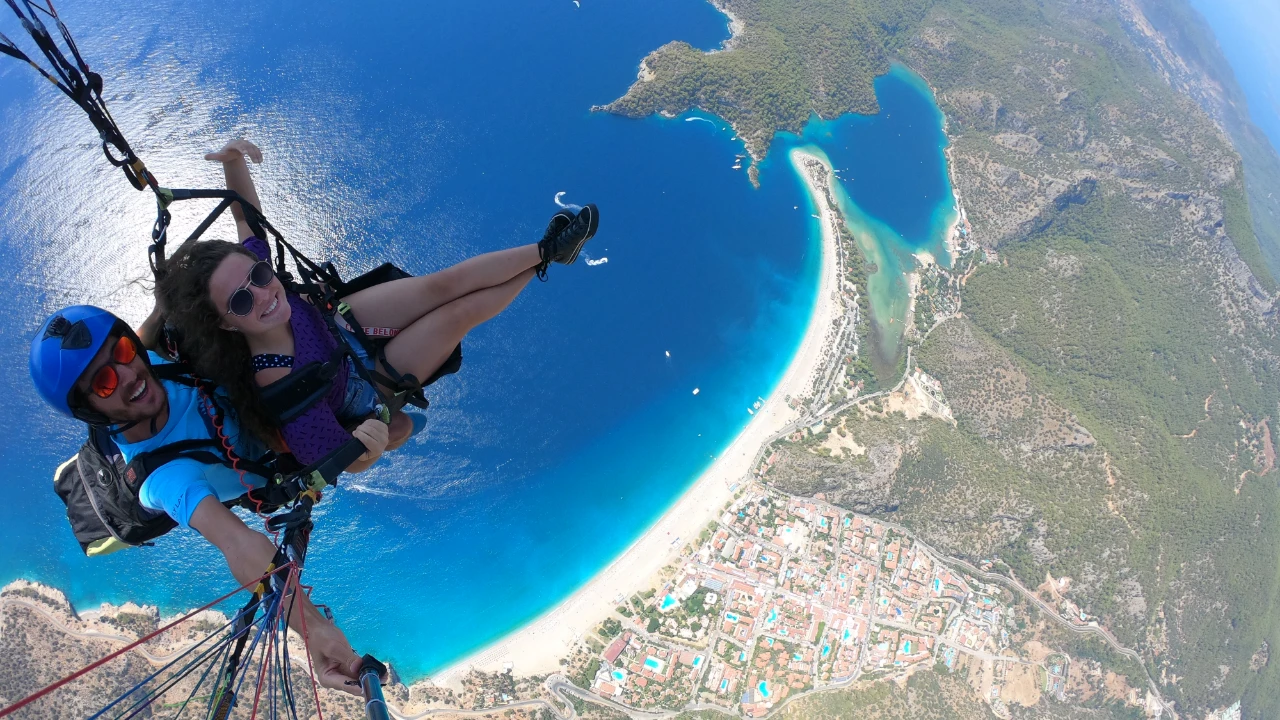
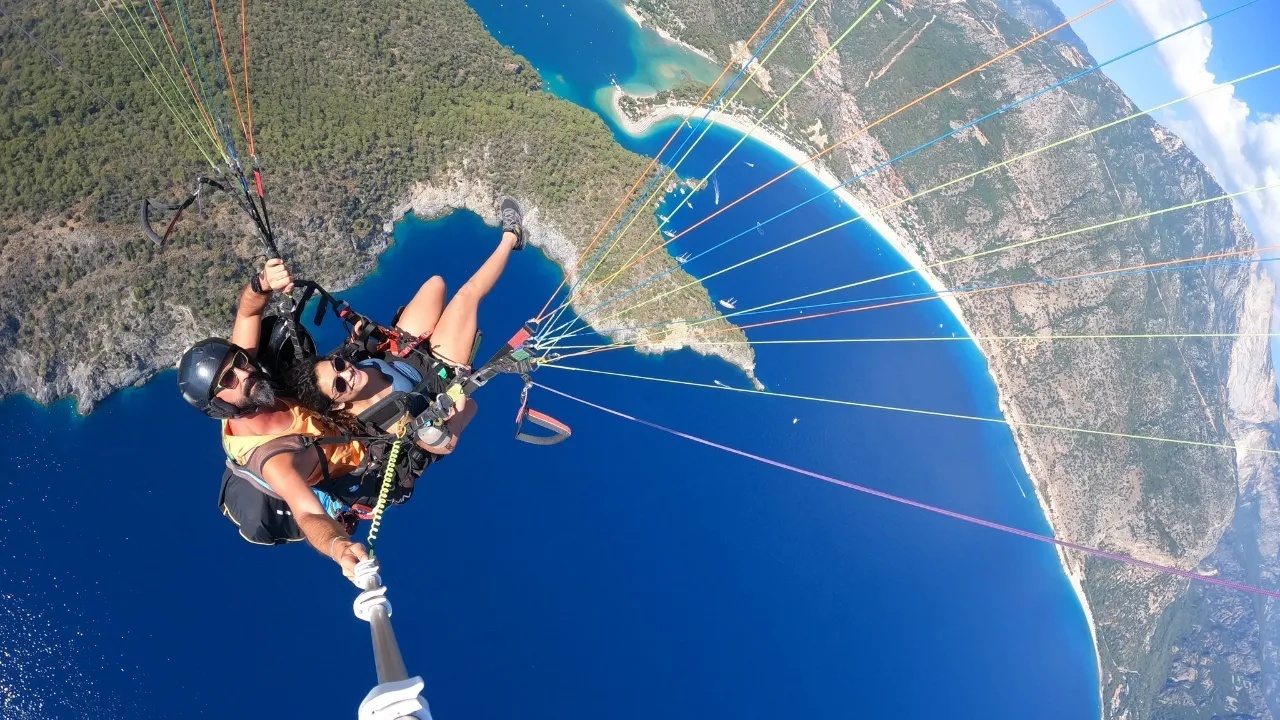
Thanks to its exceptional thermal wind quality and stunning geographical contrasts, Turkey is widely regarded as one of the world's premier paragliding destinations. For those dreaming of the breathtaking view of the Ölüdeniz Lagoon, Paragliding in Fethiye launch from the 2,000-meter peaks of Babadağ. With its modern cable car infrastructure and multiple launch pads facing different wind directions, Babadağ is a crown jewel of global aviation.
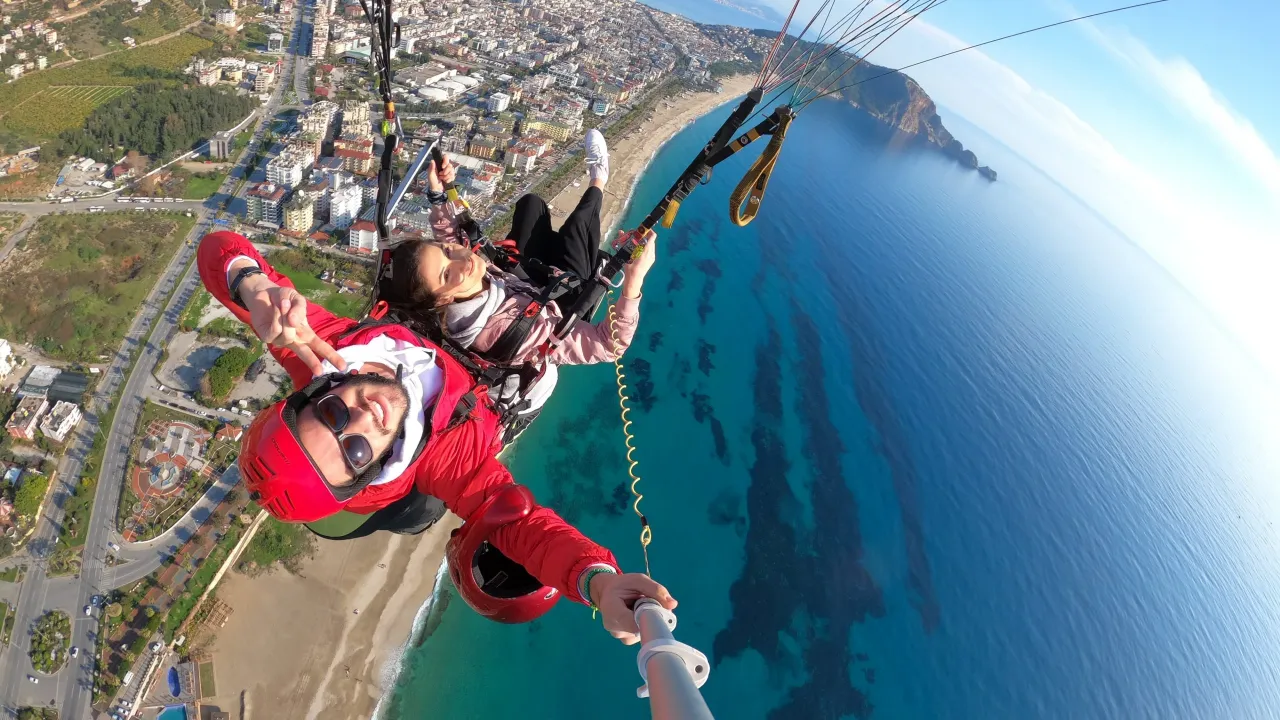
Along the Mediterranean coast, Paragliding in Alanya City Center offer the unique privilege of landing right on Cleopatra Beach, providing a fantastic aerial perspective of the city and its historic castle from the Taurus Mountains. For those exploring the rugged peaks of western Antalya, Paragliding in Antalya provide mesmerizing routes over Kaş and Adrasan. Meanwhile, Paragliding in Mugla embrace the natural bays of the Aegean coast, offering flyable thermal conditions for nearly eight months of the year.
The Science Behind Weight and Age Restrictions
Paragliding wings are engineered based on a specific surface area and a precise load-bearing capacity. For a tandem wing to fly safely, the combined weight of the pilot, passenger, and equipment must stay within the manufacturer's approved "take-off weight" range. If the total weight is too low, the wing struggles to penetrate the wind; if it exceeds the upper limit, the glide angle is compromised, and the landing speed can increase to unsafe levels.
Due to these aerodynamic requirements, the passenger weight limit is generally set between 20–25 kg (minimum) and 100–110 kg (maximum). Aerodynamically, pilots may prefer heavier passengers on windier days and lighter passengers during the calm morning hours. A precise weighing process before the flight is the first critical step in ensuring the safety of both the passenger and the pilot.
Regarding age, the primary requirements are that the child must be physically able to fit into the harness and be capable of understanding and following the pilot's "run" command. Children over five can participate in tandem flights with written parental consent. As for the upper age limit, any healthy individual, even those in their eighties, can take to the skies, provided they do not have chronic heart conditions or severe osteoporosis.
Comparison of Launch Pads and Altitudes
Different launch sites offer varying flight dynamics based on wind direction, thermal lift, and scenic perspectives. High-altitude sites allow for longer glide times, while mid-altitude coastal sites provide a more stable and serene flight driven by sea breezes.
The following table compares Turkey's most famous launch points:
| Launch Site & Region | Altitude | Wind & Thermal Character | Avg. Air Time | Ideal Experience |
|---|---|---|---|---|
| Babadağ 1,700m (Fethiye) | 1,700 Meters | Open to south winds, strong thermals | 30 - 45 Mins | First-timers, long glides, photography lovers |
| Babadağ Summit 1,965m (Fethiye) | 1,965 Meters | North & summit winds, cooler air | 35 - 50 Mins | High-altitude thrill, gliding above clouds |
| Yassıtepe 800m (Alanya) | 800 Meters | Sea breeze, steady laminar flow | 20 - 25 Mins | City & castle views, direct beach landing |
| Asas Mountain 1,000m (Kaş) | 1,000 Meters | Facing Meis Island, dynamic coastal wind | 25 - 35 Mins | Calm flight with island & harbor views |
Temperatures at high-altitude launch pads are typically 10-12 degrees Celsius cooler than at sea level. Therefore, we recommend wearing a lightweight, windproof jacket. Expert pilots select the optimal launch pad based on the day's weather to ensure the smoothest possible glide for their passengers.
The 5-Step Safety and Take-off Protocol
The key to a safe tandem paragliding experience is the harmony between the pilot and the passenger during takeoff and landing. Following the pre-flight briefing and these five golden rules ensures a flawless journey.
- Briefing & Gear Adjustment: The pilot adjusts the harness to your height, secures your helmet, and explains exactly what will happen during takeoff.
- The "Continuous Run" Rule: When the pilot says "run," do not jump or try to sit down. Keep moving forward with steady steps until the wing lifts you off the ground.
- Settling into the Harness: Once your feet leave the ground, follow the pilot's command to slide your hips back and settle comfortably into the harness.
- Cruising & Communication: You can chat with your pilot throughout the flight and pose for photos and videos at the designated angles.
- Landing Position: As you approach the landing zone, the pilot will tell you to "stand up." Straighten your posture and take a few light steps upon contact with the ground to come to a stop.
When these rules are followed, paragliding is one of the safest and most peaceful aviation activities in the world. Trying to sit or bending your legs during takeoff can delay the wing's inflation; steady, determined steps allow the wing to lift you effortlessly.
Pilot Certifications and Reserve Parachute Standards
Commercial tandem paragliding is a professional aviation career requiring rigorous training and certification. In Turkey, pilots must hold a T2 Level Commercial Tandem Pilot License approved by the THK and the FAI (World Air Sports Federation). Pilots undergo annual health checks, emergency simulation training (SIV), and flight inspections.
Every tandem equipment set includes a main wing and a reserve parachute capable of carrying the total weight of both the pilot and passenger. Reserve parachutes are periodically deployed and repacked by certified specialists. Additionally, the airbags or foam protection layers built into the harnesses provide excellent spinal protection during landing.
Meteorological conditions are monitored by official launch chiefs at the takeoff sites. If wind speeds exceed safe limits or turbulence occurs, flights are immediately halted with a red flag. Flying with a professional operation that prioritizes safety over commercial gain ensures a peaceful and secure experience.
The Magic of Thermal Winds and Flight Dynamics
The reason a paraglider can stay airborne for hours without an engine is nature's thermal energy. Warm air currents (thermals) rising from sun-heated ground and rock faces act like invisible elevators, lifting the wing upward. Experienced pilots skillfully circle these thermal columns to gain altitude.
During thermal flights, passengers can rise to the base of the clouds and view mountain peaks from a bird's-eye perspective. The sensation of gravity vanishes, replaced by a profound silence accompanied only by the whisper of the wind. For adrenaline seekers, pilots can perform spiral dives and "wingovers" to increase the speed and excitement.
For those preferring a serene journey, gliding along the horizon is one of the most peaceful forms of meditation. Minutes spent in the sky clear the mind of daily anxieties and provide an unforgettable boost of confidence. When you touch down softly on the beach, you'll likely find yourself already longing to return to the clouds.
After landing, you'll head to the gathering point with your pilot to unbuckle the harness. High-resolution photos and videos captured during the flight are transferred digitally, immortalizing your memories. This unique experience will remain one of the most cherished adventures of your life.
Frequently Asked Questions 5
What are the weight limits for paragliding passengers?
Due to the wing's carrying capacity, the passenger weight limit is generally between 20–25 kg (minimum) and 100–110 kg (maximum). Heavier passengers are often preferred during high-wind periods, while lighter passengers are ideal for calm mornings.
Is it scary? Will I experience vertigo or dizziness?
Contrary to popular belief, tandem flights do not involve free-falling and do not create the 'stomach-drop' sensation found on rollercoasters. From the moment of takeoff, the glide is smooth and steady. In rare cases where sensitive passengers feel slight dizziness during thermal turns, the pilot immediately stops the maneuvers and returns to a straight glide.
Do I need prior training to go paragliding?
No, no prior aviation training is required for tandem flights. The flight is entirely managed by a certified professional pilot sitting behind you. Your only job is to run a few steps forward during takeoff and relax while enjoying the view.
What should I wear for the tour?
To protect your ankles during takeoff and landing, non-slip lace-up sneakers are mandatory; flip-flops and sandals are strictly prohibited. Since it can be chilly at high altitudes, we recommend a lightweight windbreaker, sunglasses, and comfortable athletic trousers depending on the season.
How are photos and videos taken during the flight?
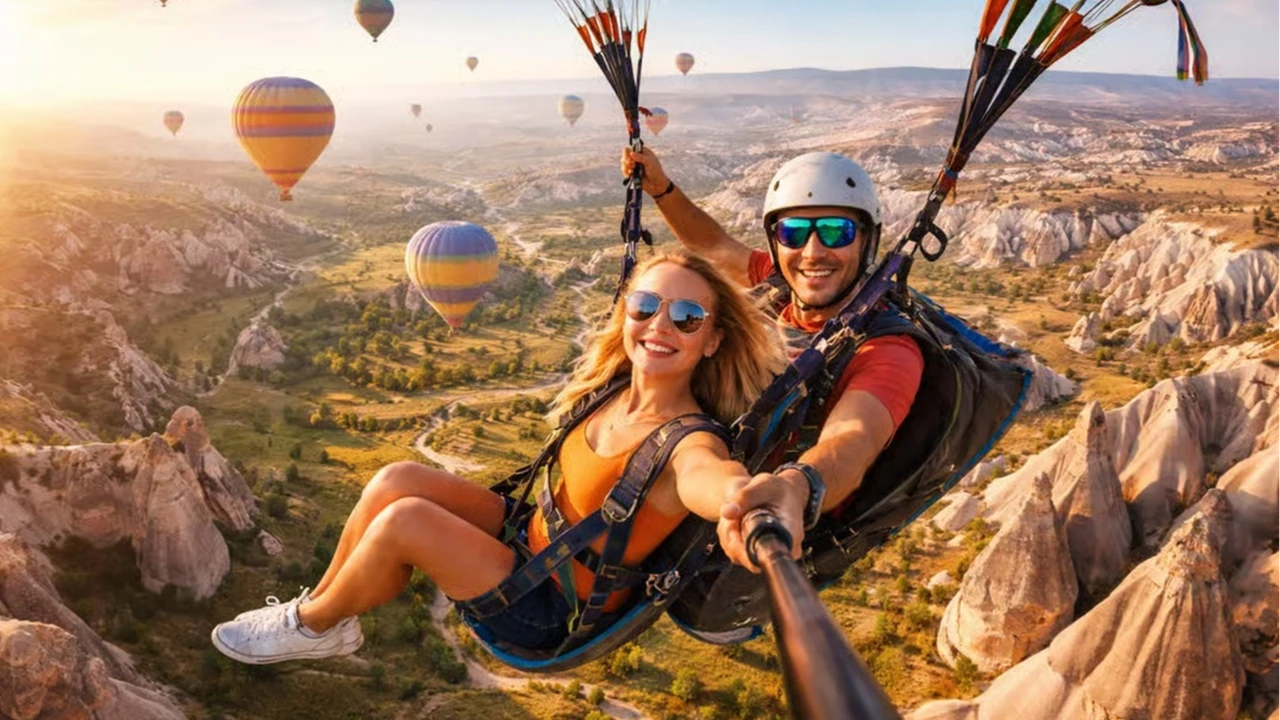
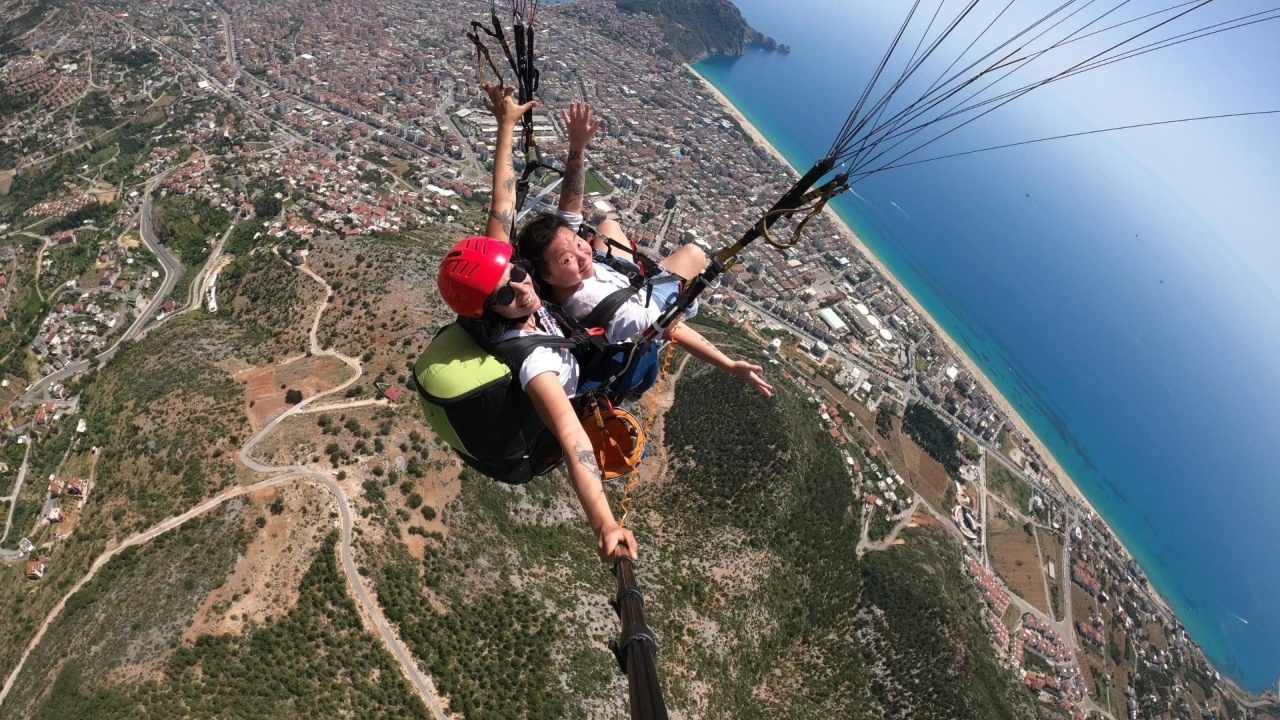
For safety reasons, passengers are not permitted to hold their phones loosely in their hands. Pilots use professional wide-angle action cameras attached to telescopic poles and safety lanyards to capture high-resolution photos and 4K video throughout the flight.