Kyzikos Ancient City is a sprawling archaeological site located within the district of Erdek, Balıkesir, on the narrow strip of land connecting the Kapıdağ Peninsula to the mainland. Also known locally as Belkıs Ruins, this area holds the remnants of one of the great ancient port cities along the Marmara coast. Today, scattered column fragments, traces of city walls, and temple foundations lie amidst olive groves and agricultural fields, largely presenting an active excavation site. This guide covers how to get there, the best times to visit, the structures you'll see at the ruins, and suggested itineraries combining Kyzikos with the surrounding Erdek area.
Choosing the Best Time to Visit Kyzikos
Kyzikos is spread across a vast, flat terrain with limited shade. Consequently, midday walks in the peak of summer can be quite challenging. Spring and autumn offer a more comfortable visit, both in terms of temperature and the landscape's appearance. In April and May, the surrounding fields are covered in lush green, making the ancient ruins stand out beautifully in photographs.
Erdek itself is a lively coastal town during the summer months. While the archaeological site isn't heavily impacted by this seasonal rush, finding accommodation can be more difficult during this period. In winter, the unpaved paths at the site can become muddy and challenging to navigate after heavy rains.
Quick Facts
| Topic | Information |
|---|---|
| Location | Balıkesir province, Erdek district; connection point of Kapıdağ Peninsula to the mainland |
| Ancient Name | Kyzikos (Cyzicus); locally known as Belkıs Ruins |
| Key Remains | Hadrian's Temple, amphitheater, city walls, necropolis area |
| Best Time to Visit | Spring and autumn |
| Access | 9th kilometer of the Erdek-Bandırma highway |
| Admission | Free; open archaeological site with no ticket office |
| Suggested Duration | Half a day for the ruins, two days with surrounding area exploration |
A Brief History of Kyzikos Ancient City
The city's foundation is attributed to Milesian seafarers who established colonies along the Marmara coast. Ancient sources suggest that the Kapıdağ Peninsula was originally an island, which gradually connected to the mainland through sand accumulation over time. This geographical transformation allowed the city to utilize two separate harbors, establishing it as a significant trade hub.
From Colony City to Roman Metropolis
A regional power during the Hellenistic period, Kyzikos rose to prominence in the Roman era as a crucial nexus for maritime trade between the Marmara and Aegean Seas. It's known to have gained a privileged status from Roman rule after successfully resisting a siege by Mithridates' armies. Its designation as one of the region's administrative centers during the Imperial period explains the monumental building programs undertaken in the city.
Kyzikos Coinage and Port Economy
Kyzikos boasted a widely accepted currency network in distant ports, thanks to its electrum coins – an alloy of gold and silver – known in ancient sources as 'kyzikene.' The city's wealth was built upon the trade of grain and olive oil, as well as the processing of marble sourced from Marmara Island. The large-scale architectural fragments visible throughout the archaeological site are direct testaments to this economic prowess.
What to See at the Archaeological Site
The site is not laid out like a conventional museum; instead, the ruins are scattered across a vast area.
Hadrian's Temple
The most celebrated structure of the city is the temple erected in honor of Emperor Hadrian during the Roman period. According to excavation data, with an approximate footprint of 116 x 62 meters, it's considered to be on the same monumental scale as the Temples of Artemis at Ephesus and Apollo at Didyma; European travelers even referred to it as the 'eighth wonder of the world.' Over centuries, the structure was devastated by earthquakes, and its stones were repurposed in surrounding settlements. The Italian traveler Ciriaco d'Ancona documented 31 columns still standing at the site in 1431, with his drawings becoming a fundamental resource for reconstructing the temple's plan. Today, the visible column drums, reaching 2.85 meters, and architectural blocks still convey its immense scale. Practical tip: Sticking to designated paths is crucial for both your safety and the preservation of the ruins.
The Roman Amphitheater
The Kyzikos amphitheater is one of only three known permanent amphitheaters in Anatolia, the others being at Bergama and Anazarbos. The Kleite Stream flows through its center; with an approximate diameter of 150 meters, it ranks among the largest examples in the ancient world, and researchers debate whether the stream might have been used to flood the arena for naval spectacles. Today, parts of the seating rows and arch foundations are still discernible. As the path to the structure winds through agricultural fields, it's advisable to inquire about current access conditions before your visit.
City Walls, Theater, and Necropolis
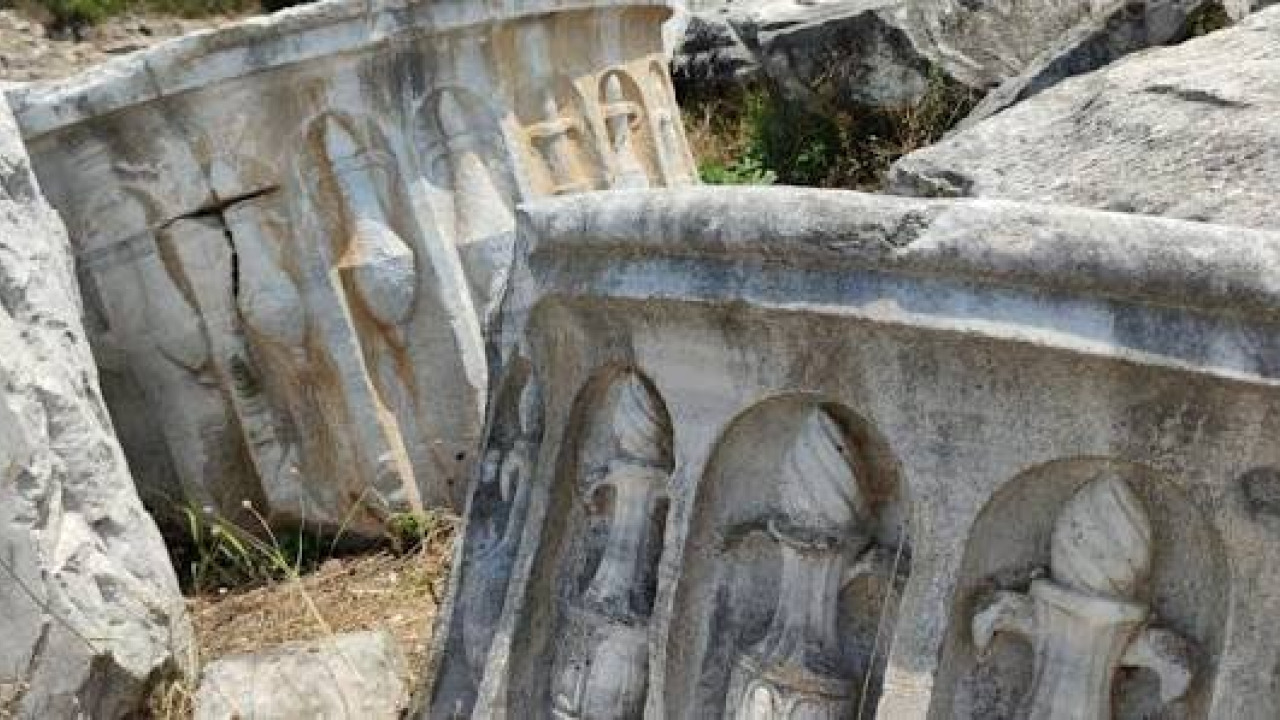
Traces of the city's defensive system, including city walls, tower foundations, and gate remnants, can be followed along an extensive stretch. Although the seating area of the theater, built into the hillside, remains buried, the outline of its cavea is still discernible on the terrain. In the necropolis area outside the city, sarcophagus fragments and tomb structures can be observed. Excavations and surface surveys are ongoing under the supervision of a university team led by Prof. Dr. Nurettin Koçhan, with permission from the Ministry of Culture and Tourism; consequently, some sections may be temporarily closed to visitors. For those planning to visit multiple ancient cities as part of a broader itinerary, consider exploring cultural tours covering ancient cities offered by Travel Tour Shop.
How to Get to Kyzikos Ancient City
The archaeological site is situated along the route between Erdek and Bandırma, with access primarily by road.
- For those coming from Istanbul, sea bus services operate to Bandırma; from the pier, you can find minibuses and taxis heading towards Erdek.
- Travelers preferring to drive can reach Bandırma via Bursa or Balıkesir, then follow the road to Erdek.
- From Izmir, train connections are available to Bandırma; from the station exit, you can transfer to Erdek minibuses (dolmuş).
- In the final leg, follow the signs for Belkıs junction and the archaeological site at the 9th kilometer of the Erdek-Bandırma highway; some of the connecting roads are unpaved.
Connections via Bandırma and Erdek
For those arriving by public transport, a practical approach is to stay in Erdek town center and take a short taxi or private transfer to the archaeological site. Since the ruins within the area are spread out, having a vehicle can make your visit much more comfortable and efficient.
Exploring Erdek and the Kapıdağ Peninsula
Rather than planning a visit to Kyzikos in isolation, incorporating it into a tour of the Kapıdağ Peninsula creates a more well-rounded itinerary. The peninsula's coastal road winds through picturesque bays, olive groves, and charming fishing villages. The beachfronts towards Ocaklar and Narlı are perfect for swimming breaks, while the forest trails in the peninsula's interior are ideal for hiking. For those looking to venture further into Balıkesir's inland areas, the Kazdağları Şahinderesi Canyon route offers a second natural stop within the same province. If you're crafting a nature-focused program, explore the nature and adventure tours available from Travel Tour Shop.
Dining and Accommodation Options
The beachfront in Erdek town center is where most fish restaurants and cafes are concentrated. In the peninsula's villages, you'll find guesthouses and smaller, family-run establishments. Olive oil-based dishes, fresh seafood, and local cheeses are frequently featured on menus. For programs centered around regional cuisine, consider exploring gastronomy and event tours from Travel Tour Shop.
Practical Tips Before You Go
- The site is extensive with uneven terrain; non-slip walking shoes will ensure a comfortable visit.
- Shade and vendors are limited, so bring water, a hat, and sunscreen.
- Do not enter barracaded sections of the excavation site, and do not climb on the ruins.
- Admission to the archaeological site is free, and there is no ticket office. Confirm access conditions before your trip, as they may vary depending on the excavation season.
- For photography, the early morning hours and late afternoon are ideal, as the side light beautifully highlights the texture of the stone.
Seasonal Visit Comparison
| Season | Advantage | Consideration |
|---|---|---|
| Spring (April-May) | Mild weather, green landscape, opportunity for long walks | Paths can become muddy after rain |
| Summer (June-August) | Long daylight hours, combine with Erdek coast | Midday heat can be tiring in unsheltered areas |
| Autumn (September-October) | Calm atmosphere, village views during harvest season | Days shorten, plan your visit for earlier in the day |
| Winter (November-March) | Empty site, foggy and dramatic photographic conditions | Unpaved roads become difficult, fewer businesses open |
Suggested Itinerary and Duration
Allocating half a day for the archaeological site is sufficient to explore the main ruins without rushing. For a two-day itinerary, the first day could cover Kyzikos and the Bandırma surroundings, while the second day could be dedicated to the Erdek coast and the charming coastal villages of the Kapıdağ Peninsula. For those considering a trip to the Marmara Islands, Erdek pier serves as a convenient starting point. Travelers extending their route along the southern Marmara coast might also add stops like Ayvalık Şeytan Sofrası and Sarımsaklı Beach to their itinerary. If you're planning your trip around ancient cities and historical centers, take a look at the historical city tours offered by Travel Tour Shop.
Frequently Asked Questions 6
Where is Kyzikos Ancient City located?
Kyzikos Ancient City is located within the district of Erdek, Balıkesir, in the region where the Kapıdağ Peninsula connects to the mainland. It lies along the route between Bandırma and Erdek and is also known locally as Belkıs Ruins.
What can be seen at Kyzikos Ancient City?
Key attractions include monumental architectural fragments of Hadrian's Temple, an amphitheater built over a stream bed, city walls, the outline of the theater's cavea, and the necropolis area.
Which civilization does Kyzikos belong to?
The city is considered an Ancient Greek settlement, believed to have been founded by Milesian colonists. It gained regional power during the Hellenistic period and expanded with monumental structures during the Roman era.
Is Kyzikos Ancient City open to visitors?
The site is an open archaeological area, but as excavation work is ongoing, some sections may be temporarily closed. It's advisable to confirm the current status before your visit.
Is there an entrance fee for Kyzikos Ancient City?
Admission to the archaeological site is free; there is no ticket office or fixed visiting hours. As excavations are ongoing, access to certain areas may be temporarily restricted.
How long does a visit to Kyzikos take?
Half a day is sufficient to see the main ruins. If you combine it with the Erdek coast and Kapıdağ Peninsula, the itinerary can extend to two days.