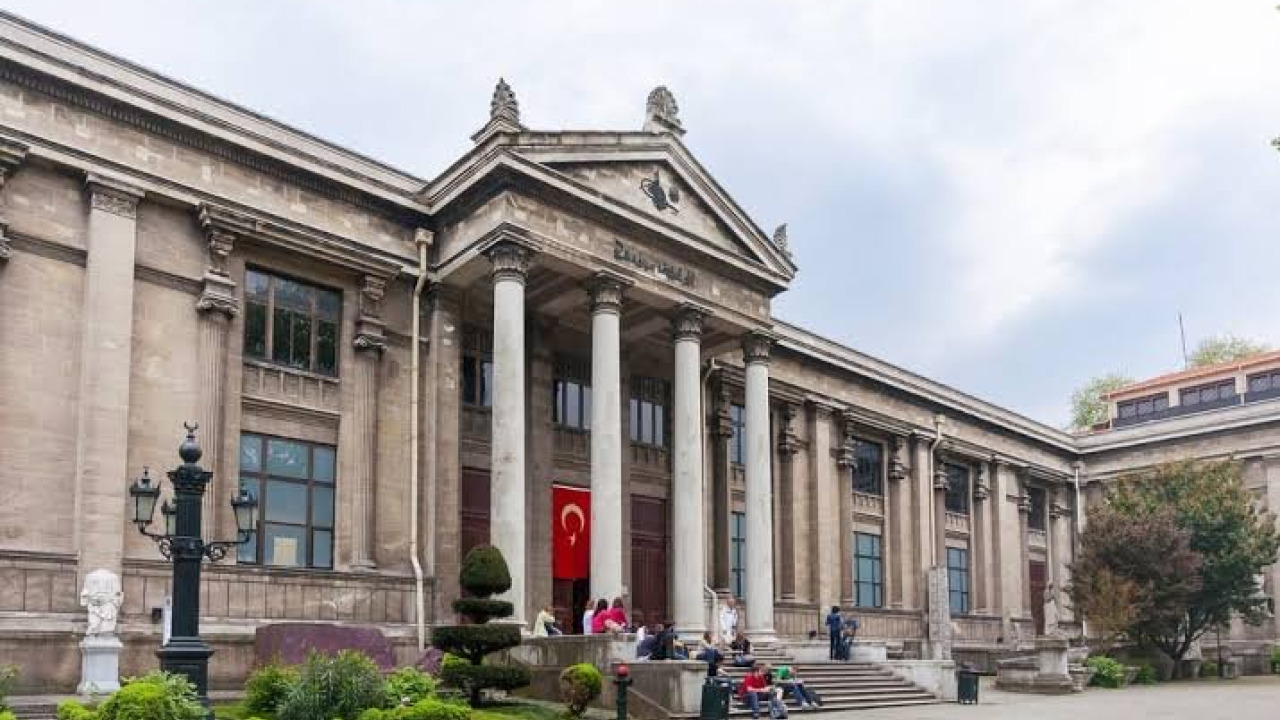

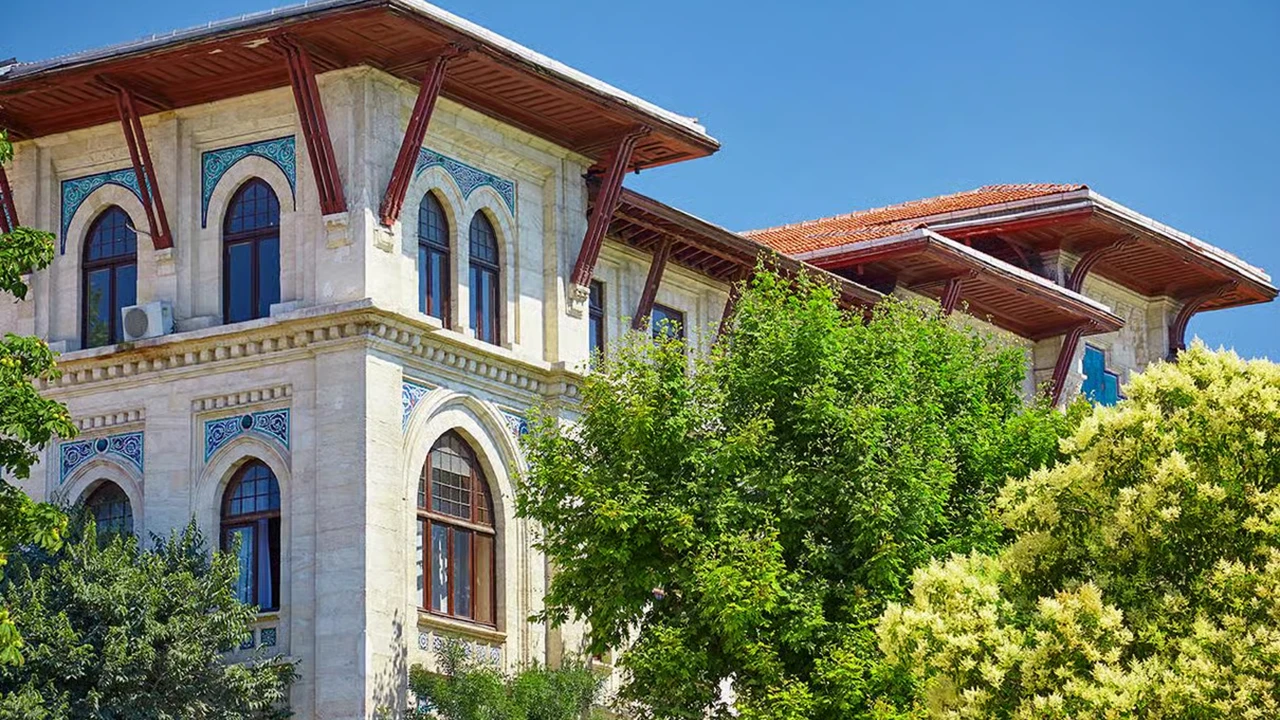
Built to house the monumental sarcophagi unearthed from the royal necropolis of Sidon, the classical building first opened its doors on June 13, 1891, forming the core of what we know today as the Istanbul Archaeology Museums. As a city that once served as the capital for the Roman, Byzantine, and Ottoman empires, Istanbul holds a colossal library of history beneath its streets. Nestled in the heart of Sultanahmet, right next to Gülhane Park, this sprawling complex acts as the reading room for that very library. Yet, the museum's true value isn't limited to the famous sarcophagi you see on display; the real treasure trove lies hidden away in storerooms and conservation labs, inaccessible to the public. With an inventory of roughly one million artifacts, only a fraction can be exhibited at any given time, meaning a vast portion of the city's archaeological memory patiently awaits its turn on shelves and in specialized pools.
In this guide, we'll delve into what these hidden collections at the Istanbul Archaeology Museums truly represent, why an artifact might spend years in storage, how the Yenikapı excavations transformed the museum, and how you can plan your visit to make the most of this fascinating insight.
Quick Facts
| Category | Information |
|---|---|
| Complex Name | Istanbul Archaeology Museums |
| Established | 1869, as “Müze-i Hümayun” (Imperial Museum) |
| Classical Building Opened | June 13, 1891 |
| Classical Building Architect | Alexander Vallaury |
| Number of Units | Three museums: Archaeology Museum, Museum of the Ancient Orient, Tiled Kiosk Museum |
| Collection Size | Approximately one million artifacts |
| Location | Alemdar Caddesi, Osman Hamdi Bey Yokuşu, Gülhane |
| Visiting Hours | 09:00 - 18:45 (may vary by season; ticket office closes earlier) |
| Evening Museum Hours | 19:00 - 22:00, summer season only |
| Open Days | Every day of the week |
| Key Artifacts | Alexander Sarcophagus, Sarcophagus of the Crying Women, Lycian Sarcophagus, Tabnit Sarcophagus, Treaty of Kadesh tablet |
How the Istanbul Archaeology Museums Were Established
The fascination with collecting ancient artifacts in the Ottoman Empire can be traced back to the era of Fatih Sultan Mehmet, but the institutional birth of museology dates to 1869. In that year, the “Müze-i Hümayun,” or Imperial Museum, was founded within the Hagia Irene Church, showcasing archaeological finds accumulated until then. After a period of closure, the institution was revived in 1872 with Ahmed Vefik Pasha's appointment of Dr. Philipp Anton Dethier as its director.
From Imperial Museum to Museum of Ancient Artifacts
Hagia Irene quickly proved insufficient. Lacking the funds for a new building, the Tiled Kiosk (Çinili Köşk), built by Fatih Sultan Mehmet in 1472, was restored and opened to visitors in 1880. The Ottoman inscription on the pediment of the classical building today bears the institution's name from that era: “Asar-ı Atika Müzesi,” meaning Museum of Ancient Artifacts. The tughra (sultan's signature) above the inscription belongs to Sultan Abdülhamid II. For those wondering what is written on the museum's door, the answer lies precisely here, etched in stone.
Osman Hamdi Bey and the Turning Point of the Sidon Excavations
The appointment of painter and archaeologist Osman Hamdi Bey as director in 1881 ushered in a new era for Turkish museology. Conducting excavations at Mount Nemrud, the necropolises of Myrina, Kyme, and the Aiolis Region, as well as the Temple of Hekate at Lagina, Osman Hamdi Bey reached the Royal Necropolis of Sidon (Sayda) between 1887 and 1888. Monumental artifacts, including the Alexander Sarcophagus, the Sarcophagus of the Crying Women, the Lycian Sarcophagus, and the Tabnit Sarcophagus, were brought to Istanbul. When a structure was needed to display these masterpieces, the classical building, designed by Alexander Vallaury, was constructed opposite the Tiled Kiosk and opened its doors on June 13, 1891. To this day, that date is commemorated as Museum Day in Turkey.
The Three Buildings Forming the Complex
Most visitors perceive the complex as a single museum; however, it actually comprises three distinct structures, each with its own unique collection focus.
| Building | Construction / Transformation | Content |
|---|---|---|
| Tiled Kiosk Museum | Built 1472, converted into a museum in 1880 | Seljuk and Ottoman tiles and ceramics from the 11th century to the early 20th century, approximately 2000 artifacts |
| Archaeology Museum (classical building) | June 13, 1891, with north wing added in 1903 and south wing in 1907 | Sarcophagi, sculptures, inscriptions, and archaeological finds from the Mediterranean world |
| Museum of the Ancient Orient | Built in 1883 as the School of Fine Arts (Sanayi-i Nefise Mektebi), transferred to museum administration in 1917 | Artifacts from Mesopotamian, Egyptian, Anatolian, and pre-Arabian civilizations |
The Annex Building, added to the southeast of the main museum building between 1969 and 1983, arose from the need for new exhibition halls. The content of the Museum of the Ancient Orient was curated by Eckhard Unger, who worked in Istanbul from 1917-1919 and 1932-1935, and authored numerous publications on the collection.
What Are "Hidden Collections" and Why Do Artifacts Stay in Storage?
In museology, the term 'hidden collection' doesn't refer to a concealed treasure, but rather to the inventory stored in archives and storerooms that are not accessible to visitors. A museum's exhibition space is finite, while its collection grows with every excavation season, every donation, and every salvage dig during construction projects. It's physically impossible to display an entire inventory of approximately one million artifacts simultaneously.
Exhibition Space Limitations and Conservation Queues
An artifact's journey from storage to exhibition hall can sometimes take years. Desalinating a metal piece unearthed from the soil, piecing together broken ceramics like a jigsaw puzzle, or carefully drying waterlogged wood each requires specialized expertise. During this time, the artifact is part of the inventory, recorded, and accessible to researchers, but not on display. In short, the storeroom isn't merely a waiting room; it's the museum's laboratory.
Currently Closed Halls (According to Official Announcements)
Beyond the storerooms, some exhibition halls may also be temporarily closed due to ongoing restoration and display arrangement work. The sections mentioned in the museum's official announcement include:
- Halls 1, 16, 17, 18, 19, and 20 on the lower floor of the Directorate buildings
- All halls on the upper floor
- The Assos Exhibition Hall on the ground floor of the Annex Building
- The "Istanbul's Surrounding Cultures: Thrace, Bithynia - Byzantium" exhibition hall on the ground floor of the Annex Building
Please note that this is not an exhaustive list; other halls undergoing display arrangements may also be closed periodically, and announcements are often undated. If you're planning to visit specifically to see a particular artifact, it's advisable to check the museum's current announcements before you go.
What's on Display at the Archaeology Museum, and What's Stored Away?
The inventory in the storerooms tells a different story than the monumental artifacts in the exhibition halls. While the sarcophagi on display showcase the power of empires, the thousands of smaller finds in storage document the daily lives of ordinary people.
What Types of Artifacts Are Exhibited, and What Remains in Storage?
Trade seals, weights, terracotta oil lamps, fragments of glass vessels, bone needles, toy figurines, and inscription fragments constitute the numerically largest group in the storerooms. From these pieces, you can decipher which goods arrived from which port in a city, what was used in a household kitchen, or what a child played with. To understand a civilization, you don't always need a golden mask; a broken clay toy or a simple seal often tells a much richer story.
Manuscripts and the Digitized Archive
The museum's collection isn't solely composed of unearthed finds. Under this same roof lies a rich manuscript collection of 3,119 works, spanning fields from religious sciences to astrology, all of which have been digitized and made accessible to researchers. The linguistic distribution of the collection is a direct reflection of Istanbul's cultural diversity.
| Language of Manuscripts | Count |
|---|---|
| Arabic | 1,325 |
| Turkish | 1,225 |
| Persian | 340 |
| Greek | 6 |
| French | 2 |
| Armenian, Hebrew, Kurdish, Rumi, Urdu, Chagatai | 1 each |
These digitized works can be examined online via yek.gov.tr. This means a portion of the museum's hidden collections is now researchable without physically traveling to Istanbul.
Layers of Istanbul: From Rome to the Ottomans
Istanbul is, quite literally, a city of layers. While you might encounter Ottoman-era coins just a meter deep, a few meters further down could reveal Byzantine cisterns or Roman-era port structures. The museum's storerooms serve as an archive of evidence, documenting the transitions between these layers. The 'deep archaeology' in our title precisely refers to this: the different layers of civilization beneath the ground and the entirety of cultural, economic, and daily life data these layers carry into the present.
| Period | City's Counterpart | Typical Museum Find |
|---|---|---|
| Neolithic | Yenikapı's lowest stratum, approximately 8,500 years ago | Grave finds, stone tools, wooden traces |
| Roman and Early Byzantine | Ports, cisterns, structures within the city walls | Amphorae, glass vessels, inscription fragments |
| Middle and Late Byzantine | Church, residential, and port layers | Coins, architectural sculpture, religious objects |
| Ottoman | Palace, bazaar, and neighborhood fabric | Tiles, ceramics, coins, archival materials |
The Byzantine Layer and Inner-City Excavations
A significant portion of Byzantine-era finds are brought to the museum through salvage excavations conducted during infrastructure and construction work within the city walls. Architectural pieces, coins, icons, and religious objects enter the inventory this way. Since the rhythm of these excavations depends on the city's construction agenda, the collection grows not through a planned program, but through the city's own dynamic development.
The Ottoman Layer and the Museum's Own History
The Ottoman period is represented in two distinct ways within the complex. First, through the tile and ceramic collection in the Tiled Kiosk; and second, through the very establishment process of the museum itself. Inspired by Seljuk architecture and also known as “Sırça Saray” (Glass Palace) and “Kasr-ı Kâşi” (Tiled Mansion) due to its tiles, the Tiled Kiosk is one of the oldest examples of Ottoman civil architecture in Istanbul. In the room to the left of the entrance, Seljuk period tiles and ceramics are displayed, while the outward-facing room showcases examples of slipware and Miletus ware.
The Yenikapı Shipwrecks: The Wettest Collection in Storage
Excavations carried out at Yenikapı as part of the Marmaray and metro projects fundamentally transformed Istanbul's archaeology. The lowest stratum of the excavation revealed a Neolithic settlement dating back approximately 8,500 years, reopening the debate about the city's founding date.
The Rediscovery of the Port of Theodosius
The excavations uncovered the remains of 37 shipwrecks dating between the 5th and 11th centuries. This group is considered one of the largest collections of medieval shipwrecks in the world. These wrecks tell stories not only of shipbuilding techniques but also of the cargo carried, the daily lives of sailors, and the routes of merchants arriving at the Istanbul port. Today, finds from this excavation constitute a significant portion of the collection held in the storerooms.
Why is Waterlogged Wood Stored in Pools?
Wood that has remained underwater in an oxygen-deprived environment for centuries resembles a sponge that has lost its cellular structure. When exposed to air and dried rapidly, it cracks, shrinks, and deteriorates irreversibly. For this reason, shipwreck fragments are kept wet in controlled water pools, then undergo chemical saturation and slow drying processes that can last for years. This is the primary reason why a large portion of the Yenikapı finds are still in storage.
The Science of Storage: Preservation, Conservation, and Documentation
The invisibility of the storerooms doesn't mean the work there is static. On the contrary, much of a museum's scientific output takes place within these closed-off areas.
Climate Control and Acid-Free Storage
Istanbul's humid climate and high groundwater levels pose a serious threat to archaeological artifacts. Metal corrosion, glass disease, and salt crystallization rapidly advance if humidity is left uncontrolled. Therefore, artifacts are separated by material type, stored in acid-free boxes, and kept in environments with stable humidity and temperature. Organic materials, metals, and ceramics do not share the same conditions on the same shelf.
From Inventory to Digital Access
Every piece entering storage is first recorded, measured, photographed, and matched with an inventory number. When 3D scanning is added alongside measurements and photographs, even small finds that are physically impossible to view can be examined in detail on screen. Digitizing records allows a researcher to complete months of physical searching in minutes. The online accessibility of the manuscript collection is a concrete example of this approach within the complex, demonstrating a practical way to open up stored knowledge to the public.
Museum Visitor's Guide: How to Get There, What to See
The museum is located in Sultanahmet, on Alemdar Caddesi, along Osman Hamdi Bey Yokuşu, right next to the entrance of Gülhane Park. Its proximity to the first courtyard of Topkapı Palace makes it easy to combine both stops on the same day. Public transport options are very convenient for visitors coming from the city center.
| Transport Option | Line / Stop | Notes |
|---|---|---|
| Tram | T1 Kabataş - Bağcılar line, Gülhane stop | Park entrance is directly opposite the stop |
| Tram (alternative) | T1 Sultanahmet stop | Approached by walking from the Hagia Sophia direction |
| Marmaray | Sirkeci station | Requires a short uphill walk from the station |
| Walking | From Eminönü and Sirkeci | Proceed along the coast through Gülhane Park |
How to Get There
- Take the T1 tram line and get off at the Gülhane stop; if coming from Sirkeci, walk towards Gülhane from the Marmaray exit.
- Enter through the main entrance of Gülhane Park on the Alemdar Caddesi side and head towards Osman Hamdi Bey Yokuşu.
- Walk up the slope towards the first courtyard of Topkapı Palace; the entrance to the museum complex will be on your left.
- Purchase your ticket at the booth and continue your route in the order of the Museum of the Ancient Orient, the Tiled Kiosk, and the classical building.
Visitor Tips
- The museum is open every day of the week; daytime visiting hours are from 09:00 to 18:45, but plan your day accordingly as closing times can vary by season and the ticket office closes earlier.
- Evening museum hours are from 19:00 to 22:00, applied only during the summer season, and do not include closed sections; these hours are not valid year-round.
- If you are visiting to see a specific artifact, check in advance whether the relevant hall is open.
- Since the complex consists of three separate buildings, your visit duration should not be planned as if for a single building; allow more than two hours for a comfortable pace.
- As you will be walking in the garden between the classical building, the Tiled Kiosk, and the Museum of the Ancient Orient, take the weather into account.
- If you prefer a guided program, routes that combine the complex with Topkapı Palace and Hagia Sophia can save you time.
If you prefer a guided program over exploring on your own, Istanbul cultural tours often combine the complex with other historical peninsula stops. For those who wish to arrange their entry and tickets in advance, Istanbul museum ticket tours can help shorten queue times. Visitors on a short trip to the city can combine multiple stops in a single day with Istanbul day cultural tours; and for those curious about the regions where the museum's sarcophagi originated, Istanbul ancient city tours offer intriguing itineraries.
Frequently Asked Questions 8
What is written on the door of the Archaeology Museum?
The Ottoman inscription on the pediment of the classical building reads “Asar-ı Atika Müzesi,” meaning Museum of Ancient Artifacts. The tughra above the inscription belongs to Sultan Abdülhamid II, marking the building's opening period on June 13, 1891.
What can be found in the Archaeology Museum?
The complex houses approximately one million artifacts. Exhibition halls feature monumental sarcophagi like the Alexander Sarcophagus, Sarcophagus of the Crying Women, Lycian Sarcophagus, and Tabnit Sarcophagus, along with artifacts of Mesopotamian and Egyptian origin, and Seljuk and Ottoman tiles and ceramics. A large portion of the inventory is preserved in the storerooms.
What are examples of the Archaeology Museum's components?
The Istanbul Archaeology Museums consist of three separate museums: the Archaeology Museum in the classical building, the Museum of the Ancient Orient built in 1883 as the School of Fine Arts, and the Tiled Kiosk Museum built in 1472. All three can be visited with the same ticket within the same garden complex.
Where do unexhibited artifacts go?
Artifacts that are not on display or are undergoing conservation are preserved in the museum's climate-controlled storerooms, categorized by material type. These artifacts are registered in the inventory and can be used for scientific research; they are simply outside the visitor's route.
Why are artifacts from the Yenikapı excavations still in storage?
The excavation was so extensive that tens of thousands of finds came to light. Particularly, the waterlogged wooden pieces from 37 shipwrecks must be kept in controlled water environments and undergo lengthy chemical saturation and slow drying processes. Exhibition cannot take place until this scientific process is complete.
Is it possible to see the museum's hidden collections?
The storerooms are closed to visitors. Academics and archaeologists conducting scientific research may examine artifacts in storage under the supervision of museum management, after obtaining the necessary permits. For visitors, digitized collections offer the most practical access.
Is the Istanbul Archaeology Museum open on Sundays?
The museum is open every day of the week, including Sundays; there is no closed day. Daytime visiting hours are from 09:00 to 18:45, but closing times can vary by season, and the ticket office closes earlier. Evening museum hours extending to 22:00 are a summer-only practice. Additionally, some exhibition halls may be temporarily closed for restoration.
How to get to the Istanbul Archaeology Museums?
The museum is located on Alemdar Caddesi, along Osman Hamdi Bey Yokuşu, next to the entrance of Gülhane Park. The Gülhane stop on the T1 tram line is the closest point; those arriving by Marmaray can reach it with a short walk from Sirkeci station.