
For someone who has seen Ephesus in different seasons, this isn't just another checkbox on a bucket list; it is a vast, living landscape that reveals itself differently depending on when you arrive. If you ask a local regular, they won't start by listing the monuments. Instead, they’ll ask: What month are you visiting? What time are you hitting the gates? And how much walking are you actually prepared for? Travelers often echo this sentiment: the experience is defined by the season, the pace, and the distance.
This guide follows that exact logic. We’ll start with who the site is best suited for, move on to when you’ll get the most value for your time, and finally, discuss where to base yourself and how many days to dedicate to the region. For a deep dive into the history of the individual structures, check out our dedicated historical guide; here, we focus on making your logistics seamless.
The Local’s Quick Summary: Budget 3–4 hours for Ephesus itself. To include the House of the Virgin Mary and Şirince Village, plan for one full day. In the summer, the marble surfaces reflect intense heat, so aim to visit either at 08:00 AM or after 04:30 PM.
Quick Facts
| Feature | Local Insight |
|---|---|
| Location | Selçuk district, İzmir; approx. 3–3.5 km from the town center |
| From İzmir Center | Approx. 80 km via the İzmir - Aydın highway (about 1 hour) |
| From the Airport | Approx. 45–50 minutes from Adnan Menderes Airport to Selçuk |
| Visiting Hours | Opens at 08:00, closes at 18:45 |
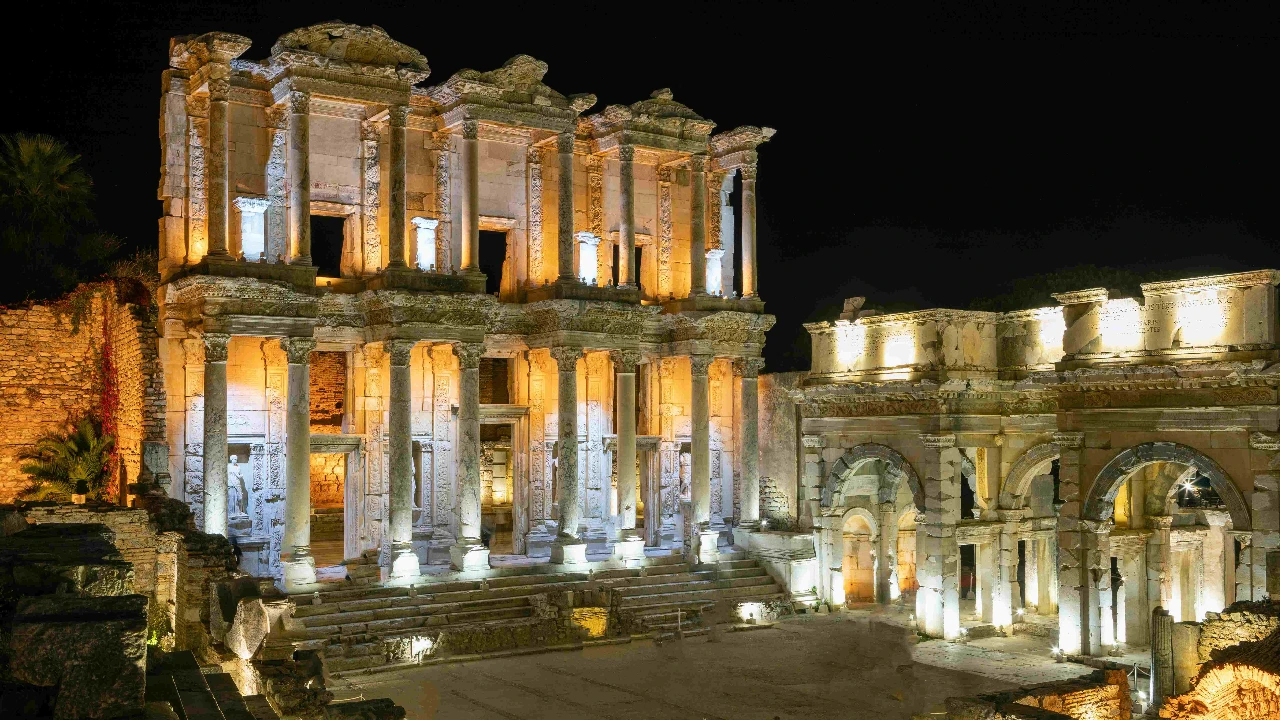
| Night Visits | Summer special: Wed–Sat, 19:00–23:00 (Ticket office closes at 22:00). 2026 schedule: June 1 – Oct 1 |
| Separate Entry | Terrace Houses require a separate ticket; Museum Pass (Müzekart) is not valid here |
| Annual Visitors | Average of 1.5 million |
| Proximity to Sea | The ancient harbor is now filled with silt; the sea is about 6 km away |
| Must-See Stops | Celsus Library, Great Theatre, Curetes Way, Temple of Hadrian, Terrace Houses |
| Site Character | Structures are spread out; the route is largely an outdoor walking path |
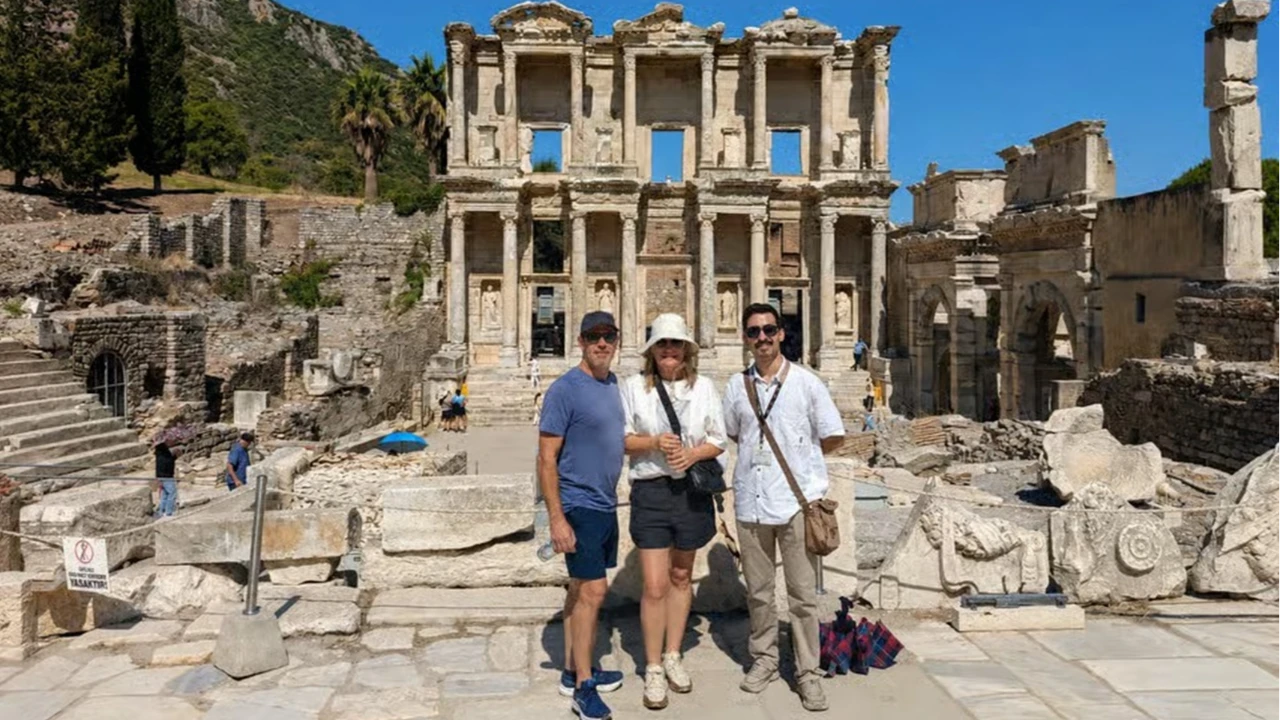
Two rows in this table dictate most of your decisions: the sheer scale of the site and the fact that the main walking route offers very little shade. This is the most common feedback in traveler reviews: the monuments are far apart, and walking during peak heat is grueling. You will often see locals advising, "If you go, go in the spring." Local expertise revolves around these two realities.
Is Ephesus the Right Stop for You?
Ephesus doesn't offer a "one size fits all" experience. Its massive scale and open-air nature require different planning depending on your traveler profile. The table below maps the two constants of the site (lack of shade/long walking distances and the summer night window) against your personal style and the season.
| Profile | Spring (March–May) | Summer (June–Sept) | Late Autumn & Winter (Oct–Feb) |
|---|---|---|---|
| Families with Kids | The most comfortable window; the full route is walkable | Skip the daytime; opt for a night visit after 19:00 | Plan a short, intense tour with an 08:00 AM entry |
| Couples (Relaxed) | Quiet mornings, perfect for photography | Night visits pair beautifully with an evening in Şirince | Crowds thin out; the pace is entirely yours |
| Budget Travelers | Easy public transport access; long daylight hours | Summer events in Şirince can be added to the same day | Lower accommodation and transport costs |
| Photographers/Hikers | Soft light; highly efficient for the full route | Cramp your walking into the earliest morning hours | The site may be nearly empty between rain showers |
| History Buffs | Plan a full day including the Terrace Houses | Use indoor museum sections to escape the midday heat | A deep two-day program including the Ephesus Museum |
| Faith Pilgrims | Integrate with House of Virgin Mary & St. John | Complete the spiritual route early in the morning | Longer stays are possible during the quiet season |
| Cruise/Day Trippers | Possible to arrive in the morning and leave by afternoon | Heat and time pressure collide; guided tours are best | Shorter daylight; move your entry time earlier |
How to read this: The row is your profile; the column is your date. If they don't align, change your plan, not your date. For example, while a midday walk might be punishing for a family in mid-August, that same family can enjoy the site comfortably with an evening itinerary.
When to Go: The Seasonal Breakdown
In Ephesus, the season determines your pace rather than which buildings you see. While many travelers recommend spring, summer warnings almost always focus on the lack of shade and the walking distances. It is also worth noting that while June to September is hot, it is also the peak season for workshops, concerts, and events in nearby Şirince.
The following table uses visitor feedback to highlight spring recommendations and summer warnings; the remaining months are derived from the site's outdoor nature and official operating hours.
| Month | Seasonal Conditions | Planning Recommendation |
|---|---|---|
| January | Winter schedule; short daylight | Catch the 08:00 opening; add the Ephesus Museum to your day |
| February | High chance of rain; leisurely walking | Focus your itinerary on indoor/covered sections on rainy days |
| March | The spring window opens | The first ideal month for the full route; include Terrace Houses |
| April | Comfortable walking; longer days | Stay in Selçuk center and set up a two-day program |
| May | Peak recommendation period | Morning at the ruins; afternoon at the House of Virgin Mary |
| June | Heat begins; distances feel longer | Enter at first light; save Şirince activities for the evening |
| July | Daytime walking becomes exhausting | Make the 19:00–23:00 night visit your primary option |
| August | Most challenging daytime conditions | Use the "Night Program + Museum + Water Break" trio |
| September | Heat persists but the pace softens | Morning at the ruins; evening in Şirince or Kuşadası |
| October | Heat fades; night window closes Oct 1 | The second best window for a full-day hike |
| November | Daytime conditions become walkable again | A productive period for photography and guided tours |
| December | Early sunset | Enter before noon; account for the 18:45 closing time |
Note: Night visits are not available every day or every month. The 19:00–23:00 window (Wednesday to Saturday) is a summer-only program. For the 2026 season, this runs from June 1 to October 1, with the ticket office closing at 22:00. If you are in Selçuk on a Tuesday evening, the site will be closed for night tours, your choice of date must account for both the month and the day of the week.
From October to May, there is no evening program; you must plan your day around the 18:45 closing time.
Where to Base Yourself: Regional Options
You don't have to stay in Ephesus to visit it. There are four logical "bases" in the region, each serving a different type of traveler.
| Base | Access to Ephesus | Best For | Local Tip |
|---|---|---|---|
| Selçuk Center | Approx. 3–3.5 km; short minibus ride | Public transport users & budget travelers | Ephesus Museum, St. John Basilica, and Ayasuluk are within walking distance |
| Şirince | Short connection via Selçuk | Couples seeking gastronomy and tranquility | Stone houses and boutique stays; great for wine and village market evenings |
| Kuşadası | Nearby coastal hub | Families combining a beach holiday with history | A major cruise hub; requires an early start to beat the crowds |
| İzmir Center | Approx. 80 km via highway (1 hour) | City-dwellers and day-trippers | Strong airport connections; easy to add a city tour upon return |
The rule is simple: if you want to explore the ruins while they are empty in the morning, choose Selçuk or Şirince. If you want to combine history with the sea, choose Kuşadası. If your priority is flight connections and city life, choose İzmir. For those visiting on a tight schedule, our city tours solve the transport logistics for you.
Recommended Themes
Everyone enters through the same gates, but everyone leaves with a different experience. Your chosen theme will dictate how many days you need.
History and Architecture
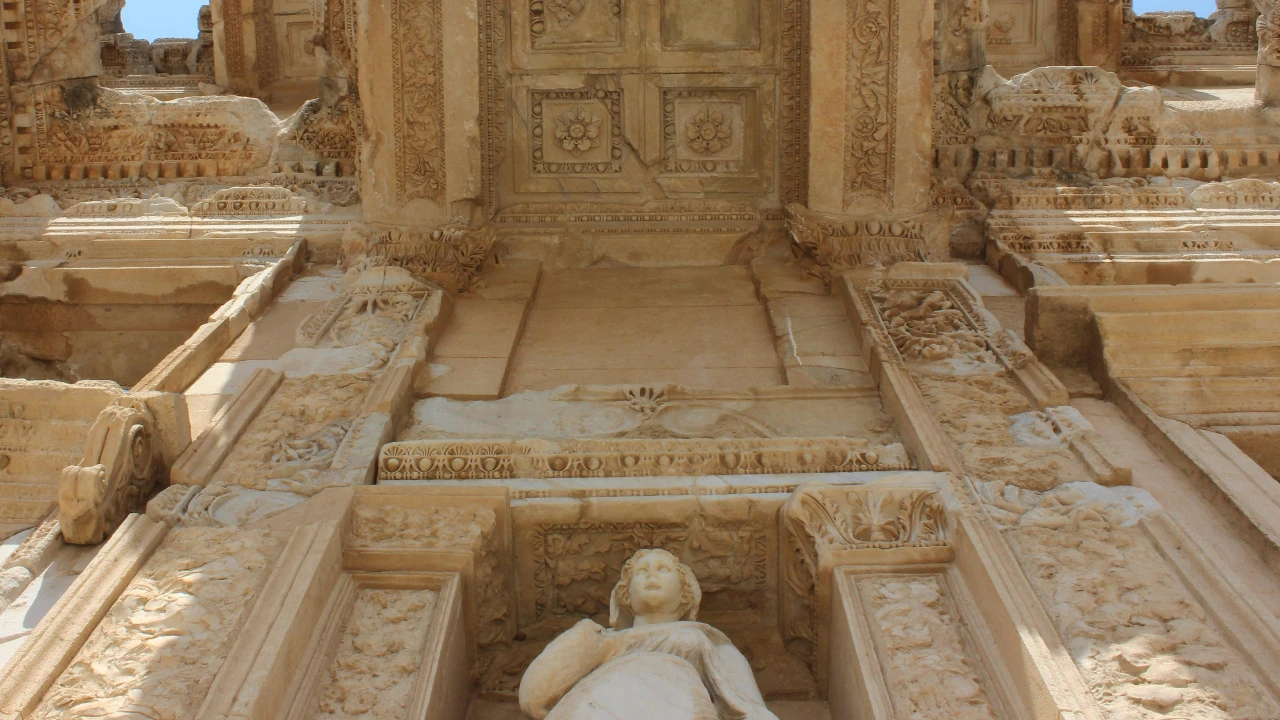
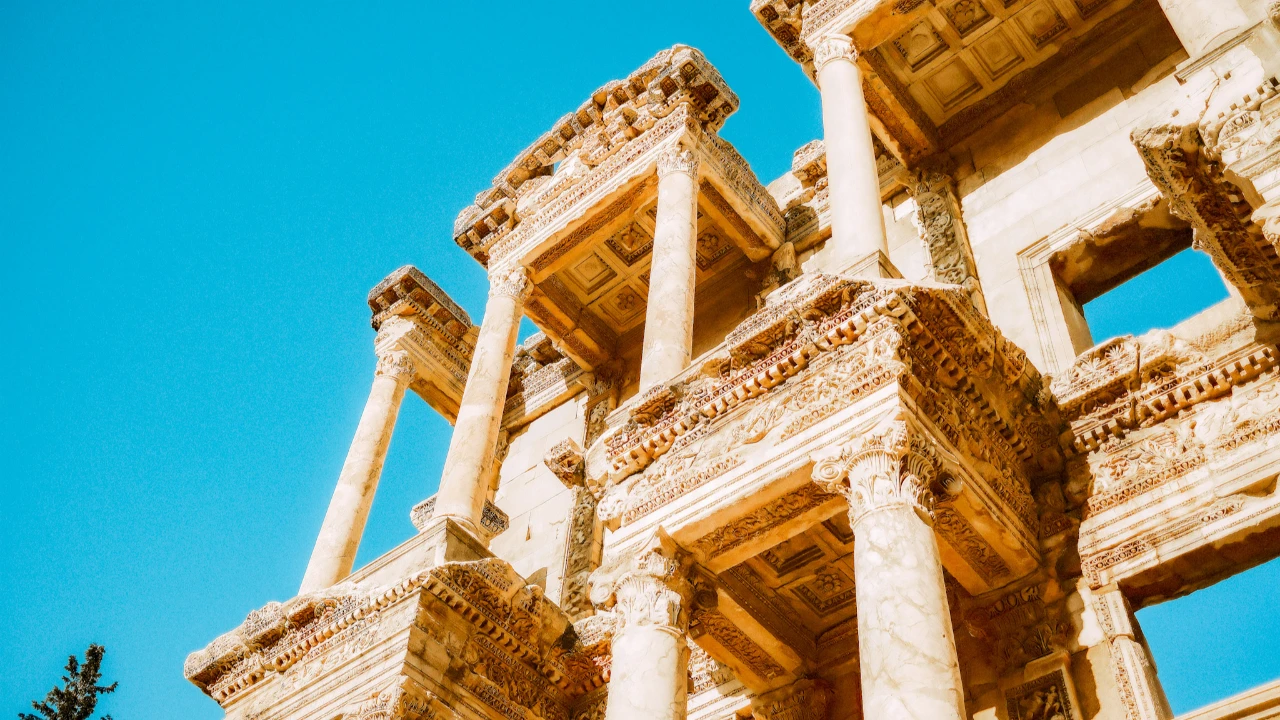
The backbone of the site is the Curetes Way and the Marble Road. The Celsus Library is the icon of this route; built by a Roman senator in honor of his father, it served as both a library and a monumental tomb. It is said to have once held 12,000 scrolls, and its facade features four statues representing Wisdom, Virtue, Intelligence, and Knowledge.
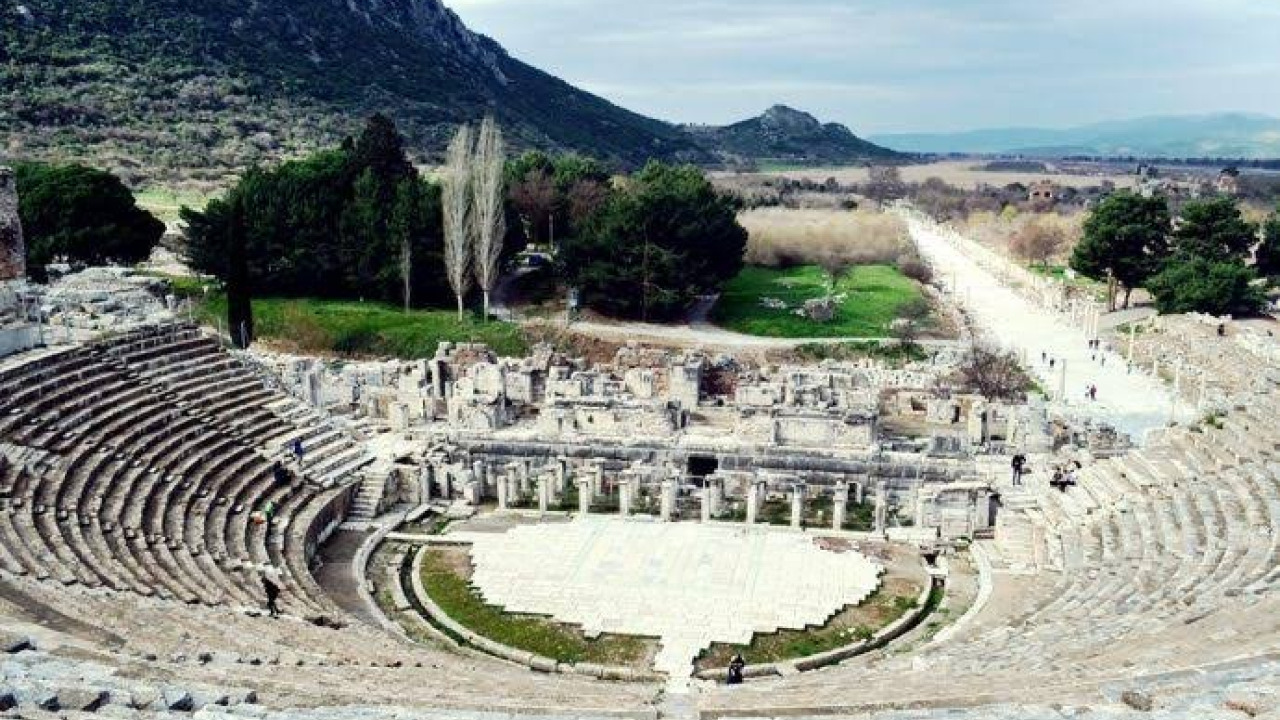
The Great Theatre, carved into the slope of Mount Panayır, is one of the largest in Anatolia, with a capacity of approximately 25,000. If you want to follow this architectural path, our culture tours offer expert-led insights.
Walking Pace and Distance Management
The most underestimated aspect of Ephesus is the distance. Travelers frequently mention the lack of vehicles within the site and the spacing between monuments. The terrain is sloped, the ground is uneven stone, and shade is scarce.
Comfortable shoes, water, and a hat are not optional, they are necessities. For those looking to manage their energy, our walking tours break the site into manageable sections.
The Faith Route
Ephesus is a major stop for Early Christian history. It is noted as a place where the Apostle Paul lived for three years and where the Apostle John spent his final days. The House of the Virgin Mary, believed to be where she lived, is a significant pilgrimage site.
The St. John Basilica sits on the hill just below the Selçuk castle. Since this route extends beyond the main archaeological site, it easily fills half a day.
Village Life and Local Flavors
Şirince completes the regional experience. The village offers boutique stone houses, wine tastings, artisan markets, and the Nesin Mathematics Village. Local dining highlights dishes like çöp şiş (small skewers) and şevketi bostan (blessed thistle). Between June and September, the village comes alive with workshops and concerts, making it the perfect evening companion for a summer visit.
Museums and Indoor Options
On hot or rainy days, you don't have to stay outdoors. The Terrace Houses are an enclosed section featuring stunning mosaics and frescoes that depict daily life; their ancient underfloor heating and sewage systems are highlights. While the massive columns of the Temple of Artemis are now in London, its statues are housed in the Ephesus Museum in Selçuk. The Ephesus Experience Museum also operates on the same schedule as the ruins.
Whichever theme you choose, the next step is deciding whether to go solo or with a guide. You can find all our programs on the Ephesus Ancient City Tours page, or choose our ancient city options for a guided walking itinerary.
Transportation: Getting to Ephesus
Ephesus is located in the Selçuk district of İzmir, about 3–3.5 km from the town center. There are four main ways to get there:
-
By Private Car: Take the İzmir - Aydın highway south and exit at the Selçuk junction. This 80 km trip from İzmir center takes about 1 hour.
-
By Train (İZBAN) and Minibus: Take the İZBAN rail system to Selçuk station. From the station, minibuses run every 15 minutes and reach the site entrance in about 10 minutes. This is the most practical option for public transport users.
-
By Bus (Otogar): Take a Selçuk-bound bus from the İzmir Bus Terminal (Otogar), which takes about 1 hour 15 minutes, then transfer to a local minibus to reach the ruins.
-
From the Airport: After landing at Adnan Menderes Airport, you can reach Selçuk in about 45–50 minutes via the highway. This is the preferred choice for those wanting to bypass city traffic.
A common misconception: Ephesus was an ancient port city, but today the sea is about 6 km away. The silting of the harbor by the Küçük Menderes River is considered one of the reasons for the city's commercial decline. Don't come expecting a "beachfront" city; plan your seaside activities in Kuşadası instead.




Frequently Asked Questions 7
What are the opening hours for Ephesus Ancient City?
The site opens at 08:00 and closes at 18:45. During the summer season (June 1 – Oct 1), night museum hours are available from Wednesday to Saturday, 19:00–23:00, with the ticket office closing at 22:00. The Ephesus Experience Museum follows a similar schedule, but there is no evening access during the winter. We recommend checking both the month and the day of the week before you visit.
Can I visit Ephesus in the evening?
Yes, during the summer season (June 1 – Oct 1), you can visit from 19:00 to 23:00, Wednesday through Saturday. The ticket office closes at 22:00. Since the daytime route offers very little shade, this is the top choice for travelers looking to avoid the summer heat. While evening visits aren't available from October to May, the illuminated monuments in summer offer a stunning visual perspective different from the daytime.
How long does an Ephesus tour take? How much time should I set aside?
Budget a full morning for the main route of the archaeological site. Because the area is vast and the monuments are spread out, a rushed visit means you'll miss most of the site. If you include the Terrace Houses, the visit will extend into the afternoon. A full day is needed if you include the museums and basilicas in Selçuk, and two days are recommended if you adding Şirince.
Is the Museum Pass (Müzekart) valid at Ephesus?
Ephesus is listed on the Ministry of Culture and Tourism's museum portal and is covered by the Museum Pass. However, the Terrace Houses are charged separately and the Museum Pass is not valid there. A separate ticket is also required for night visits; for Museum Pass holders, a 200 TL night ticket is listed on the portal. As rates change seasonally, please verify on the official portal before traveling.
How do I enter Ephesus Ancient City?
Entry is via an e-ticket purchased through the official museum portal or by using a Museum Pass. A separate ticket is required for the Terrace Houses, which can be purchased at the gate or online. Audio guide services are available on-site. For inquiries, contact details for the Ephesus Museum Directorate are available on the official portal.
Which sites are included in the Ephesus entrance ticket?
The main entrance ticket includes the Celsus Library, Great Theatre, Marble Road, Temple of Hadrian, Agora, and the Odeon. Although the Terrace Houses are located within the site, they require a separate ticket and the Museum Pass is not accepted there. The Temple of Artemis, House of the Virgin Mary, St. John Basilica, Isa Bey Mosque, and the Ephesus Museum are separate entities requiring their own tickets. Planning these three groups separately is the most efficient way to manage your time and budget.
What is Ephesus famous for, and which Wonder of the World is located here?
The Temple of Artemis, considered one of the Seven Wonders of the Ancient World, is located in Ephesus. Today, only a single reconstructed column and the foundations remain; the column capitals are in the British Museum in London, and the statues are in the Ephesus Museum in Selçuk. Ephesus is also renowned for being one of the first cities built entirely of marble, its Celsus Library, and its massive 25,000-capacity theatre. The site hosts an average of 1.5 million visitors annually, with excavations spanning nearly 125 years.