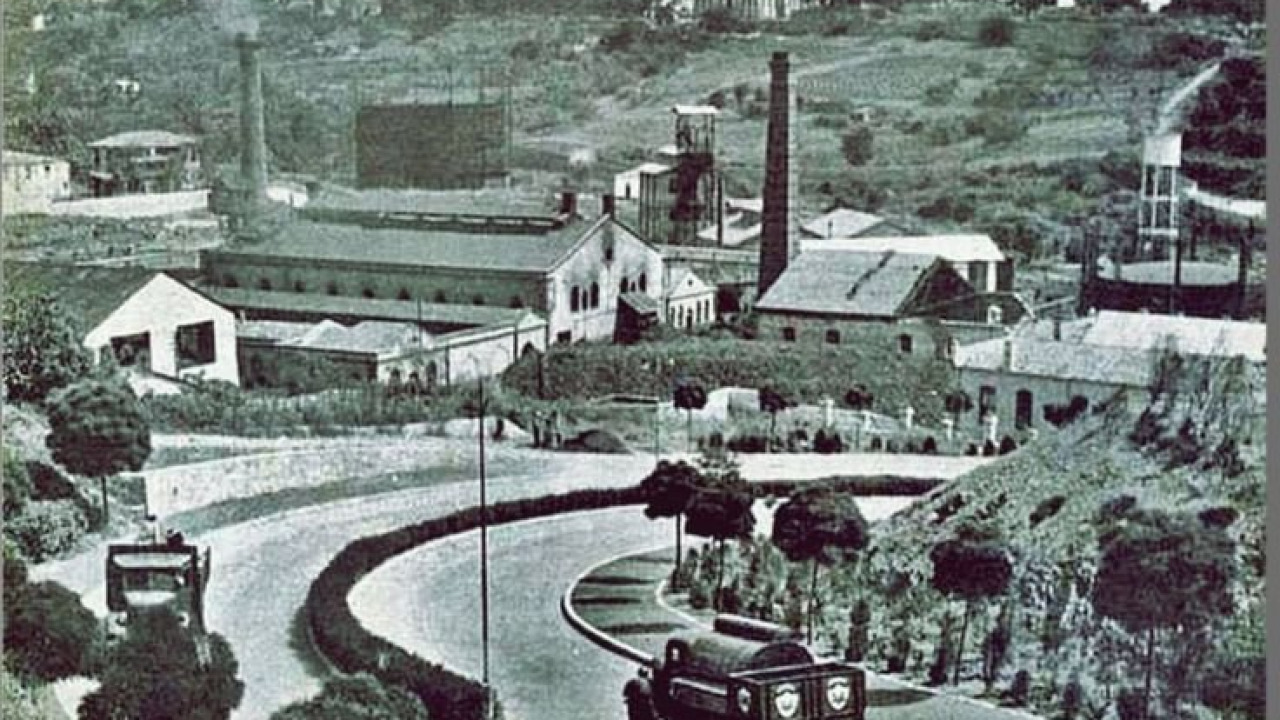
Within the Ottoman Empire, coal gas was first produced at a factory built simultaneously with Dolmabahçe Palace, nestled at the mouth of the valley behind it. Known as the Dolmabahçe Gasworks due to its proximity to the palace in Beşiktaş, this facility began operations in 1856. It quickly expanded beyond the palace's needs, becoming a vital urban infrastructure that powered Beyoğlu's streetlights. Today, this industrial heritage, which many of us pass by daily, and some are entirely unaware of, stands as a significant witness to Istanbul's history of illumination. In this comprehensive guide, we'll delve into everything from the gasworks' establishment timeline and architectural fabric to its role in the city's daily life, its current status, and visitor information.
Quick Facts
| Category | Information |
|---|---|
| Name of the Structure | Dolmabahçe Gasworks (Dolmabahçe Gasworks Building) |
| Location | Line extending from behind Dolmabahçe Palace to Maçka valley; remaining section on Kadırgalar Caddesi side |
| Construction Completed | 1855, concurrent with palace construction |
| Commencement of Operations | 1856 |
| Initial Administration | Hazine-i Hassa (Imperial Treasury) |
| Production Ceased | August 15, 1960 |
| Relocation Decision & Process | Decision made in 1955, completed in 1962 |
| Current Status | Disused; repurposing projects under discussion |
| Visitor Access | No regular public museum operation |
| Adjacent Green Space | Maçka Demokrasi Park, redeveloped in 1993 |
What is a Gasworks and How Did it Come to Istanbul?
A gasworks is an industrial facility where combustible gas is produced by distilling coal in an oxygen-free environment. The gas produced is stored on-site and then distributed via pipeline networks to streetlights, homes, and public buildings. Essentially, a gasworks was the power plant of the pre-electricity era: a central production hub that fueled both lighting and heating/cooking.
The Origin of "Gas" and "Illumination by Gas"
The word "gas" originates from the Latin "chaos" and Greek "khaos," and was first used in its modern sense by the Flemish scholar Jan Baptista van Helmont. Since gas was initially used more for illumination than heating, it was named according to this function in European languages: "town gas" in English, "gaz de ville" in French, and "Leuchtgas" in German. The Ottoman Empire adopted the innovation by translating its name, using the term "gazla tenvir" for gas-powered illumination. Production sites were called "gazhane" or "gaz fabrikası," and soon after, the word "gaz" entered the lexicon as "havagazı" (coal gas).
The Need for Illumination Post-Tanzimat Reforms
The 19th century was a period of immense transformation for the Ottoman Empire. The modernization movements, initiated with the Tanzimat reforms, weren't confined to administrative and legal spheres; they also manifested in urbanization and infrastructure services. The trend of street lighting, which began in European capitals, soon spread to Istanbul. Gas usage entered the city's daily life around the 1850s and began to proliferate with the construction of the Dolmabahçe Gasworks. Illuminating the streets at night was a transformative step, enhancing both security and extending social life into the evening hours.
Founding of Dolmabahçe Gasworks: 1855 and 1856
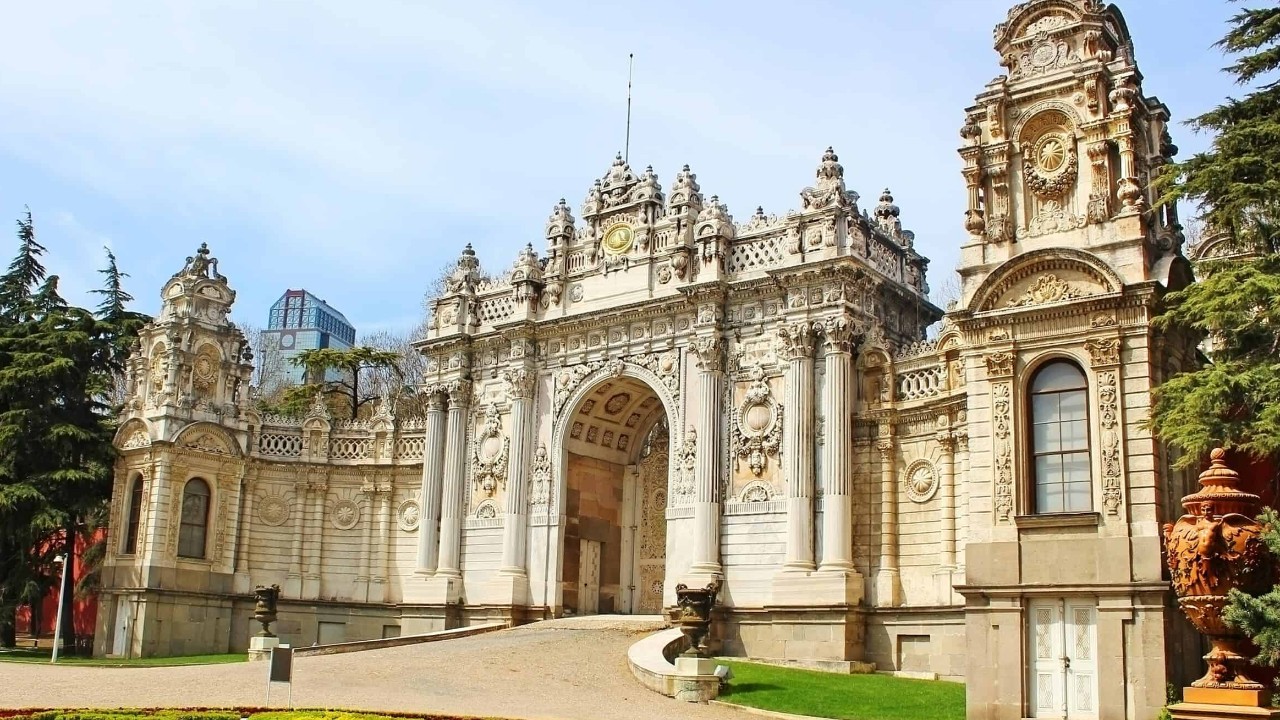
Spanning an expansive area of approximately 110,000 square meters, Dolmabahçe Palace comprised not only the main edifice but also a mosque, harem and crown prince's apartments, the Mabeyn (Imperial Secretariat), a theatre, imperial stables, the Serasker's (Commander-in-Chief's) office, kitchens, and treasury and furnishing departments. This was, in essence, a self-sufficient mini-city. A palace of this magnitude, intended for the Sultan's year-round residence, naturally required extensive lighting and heating.
A Factory in the Valley Behind the Palace
To address this need, a coal gas factory was constructed concurrently with the palace, situated at the mouth of the valley stretching towards Nişantaşı, directly behind the palace grounds and adjacent to the imperial stables. Due to its close proximity to the palace, it became known as the Dolmabahçe Gasworks. The facility's construction was completed in 1855, alongside the palace, and it was here that coal gas, essential for the palace's illumination, was first produced within the borders of the Ottoman Empire. Initial production trials yielded positive results, even generating a surplus within three years. The palace and its outbuildings officially opened with a ceremony on June 10, 1856, marking the commencement of the gasworks' operations.
Periods of Changing Administration
Initially, the gasworks was administered under the Hazine-i Hassa (Imperial Treasury). Shortly before the palace's opening, the newly established Şehremaneti (Municipality) initiated efforts for city lighting. When an imperial decree was issued for the illumination of Beyoğlu and other districts, the gasworks' administration was transferred to Tophane, and Ali Efendi was appointed director. In 1890, the facility came under the administration of the Tophane-i Amire Müşiriyeti (Imperial Tophane Command). During this transition, production had nearly halted: machinery, unrenewed since its inception, could no longer produce enough gas for the expanding distribution network. The Müşiriyet first carried out emergency repairs, then, in subsequent years, imported new machinery and equipment from abroad, expanding the land and transforming the facility into a large gas factory. This eighteen-year period concluded with the dissolution of the Müşiriyet in 1908.
| Year | Development |
|---|---|
| 1855 | Gasworks construction completed concurrently with the palace |
| 1856 | Palace officially opened on June 10, gasworks commenced operations |
| 1856 | Coal gas distribution to Beyoğlu district began |
| 1890 | Administration transferred to Tophane-i Amire Müşiriyeti |
| 1908 | Müşiriyet dissolved, ending an eighteen-year period |
| 1955 | Decision made to relocate to Poligon due to redevelopment of the stadium surroundings |
| 1960 | Gas production ceased on August 15 |
| 1962 | Relocation to Poligon completed |
The Network That Started from İstiklal Caddesi
In 1856, coal gas distribution began in the Beyoğlu district. The first street and alley lighting using coal gas in Istanbul was implemented on İstiklal Caddesi, then known as Cadde-i Kebir (Grand Avenue). The network expanded in stages:
- First, the section from Taksim to Galatasaray was illuminated.
- In the second phase, it extended from Galatasaray to Tünel Square, and then via the Yüksek Kaldırım route to Karaköy.
- Lamps were placed on poles spaced 80 paces apart along the sidewalks on one side of the avenue, and gas was transported via pipelines laid from the Dolmabahçe Gasworks.
- Following street illumination, coal gas distribution began to the residences of affluent families in Pera.
- After a while, the scope was expanded to include the area around Galata Tower.
This expansion marked the moment the gasworks transitioned from a closed facility serving the palace to a city-wide infrastructure operation. In just a year, the facility increased its capacity, began selling gas beyond the palace, and reached a broad network of subscribers.
Architectural Fabric: Brickwork, Chimneys, and Gasholders
The Dolmabahçe Gasworks is considered a prime example where industrial architecture meets aesthetics. Its intricate brickwork, towering chimneys, and expansive gasholders reflect the engineering prowess of its era. The distinctive brick texture used in the facility's architecture is a characteristic feature of industrial buildings in Istanbul during that period.
What is a Gasholder?
A gasholder is a large, cylindrical structure where manufactured coal gas is stored. Since consumption fluctuates throughout the day, the gasholder acts as a buffer: it fills during periods of low consumption at night and empties as demand for lighting increases in the evening. This gasholder is among the structures that remained standing after the relocation process at Dolmabahçe and is located today in the area adjacent to Maçka Park.
Traces of Industrial Architecture
In a design where functionality was paramount, there was a planned harmony between ventilation systems, coal bunkers, and production workshops. Positioned along the valley line between Beşiktaş and Şişli, the complex forms a threshold in the city's urban fabric. The surviving sections continue to add an industrial layer to the silhouette of this region.
Impact on the Daily Life of Beşiktaş and Pera
The commencement of the gasworks' operations brought a noticeable increase in comfort for the surrounding populace. With street lighting, nightlife became more vibrant, and shops began to stay open later. The introduction of gas into homes marked the beginning of a departure from the laborious processes of using wood and coal for cooking and heating, making daily life significantly easier.
The facility also served as a hub providing employment to the region. Workers, engineers, and technicians employed here kept the surrounding residential areas vibrant. The presence of an industrial plant also spurred the development of nearby markets, tradesmen, and social life. In this respect, the Dolmabahçe Gasworks was more than just a technical structure; it was an integral part of the district's social fabric. For those eager to hear Istanbul's layered story firsthand, Beşiktaş cultural tours offered by Travel Tour Shop combine the district's palace and industrial heritage on a single route.
End of Production and the Structure's Current Status
Towards the mid-20th century, with the widespread adoption of electricity and the introduction of natural gas, facilities producing coal gas began to lose their function. The Dolmabahçe Gasworks was no exception to this transformation.
Relocation Process: 1955 to 1962
When the area where the facility was located underwent redevelopment, along with the surroundings of İnönü Stadium, a decision was made in 1955 to relocate it to the Poligon area in Kağıthane. Production continued throughout the relocation process: gas production ceased on August 15, 1960, and the relocation procedures were completed in 1962. Like many other closed gasworks, the site was left to its fate for many years; some sections were demolished, while others were repurposed.
Remaining Sections Today
The surviving sections of the complex are situated in the area between Kadırgalar Caddesi and Maçka Demokrasi Park. On Google Maps, the structure appears within the Şişli district, with the address Harbiye, Kadırgalar Caddesi; historically, however, it is rooted in the Beşiktaş line behind Dolmabahçe Palace. This dual location explains why the structure features in narratives from both Beşiktaş and Şişli. As of summer 2026, there has been no comprehensive restoration completed on the structure; academic studies remain limited to damage assessment and developing repurposing proposals.
Visitor's Guide: Location, Transport, and Nearby Sights
The structure is located at a nexus of busy transportation networks, amidst cultural hubs like Beşiktaş, Şişli, and Beyoğlu. To its north lies Maçka Park, redeveloped in 1993, and it is surrounded by university buildings.
How to Get There?
- Take the M2 metro line and alight at Osmanbey or Taksim station; walk towards Harbiye to reach Kadırgalar Caddesi.
- Proceed along Kadırgalar Caddesi towards the entrance of Maçka Demokrasi Park; the complex is situated at the valley level on the park side of the street.
- If coming from the Bosphorus side, take the T1 tram to Kabataş, walk past the palace along Dolmabahçe Caddesi, then ascend the slope towards the valley.
- From within Maçka Demokrasi Park, you can cross the elevation difference to the Taşkışla side using the TF1 Maçka-Taşkışla cable car, and use the same line for your return.
Transport Options
| Mode of Transport | Alighting Point | Approach |
|---|---|---|
| M2 Metro (Yenikapı - Hacıosman) | Osmanbey or Taksim | Walk to Kadırgalar Caddesi via Harbiye |
| T1 Tram (Kabataş - Bağcılar) | Kabataş | Dolmabahçe Caddesi and palace route, then valley slope |
| F1 Funicular | Taksim - Kabataş | Fast connection between two levels, access to Maçka from Taksim |
| TF1 Cable Car (Maçka - Taşkışla) | Maçka Demokrasi Park | 347-meter line, approx. 3.5 minutes |
| Bus Lines | Harbiye, Maçka, Dolmabahçe stops | Short walking distance |
Nearby Sights and Visitor Information
| Sight | Visiting Days & Hours | Admission Fee (2026) |
|---|---|---|
| Dolmabahçe Palace | Every day except Monday, ticket office 09:00 - 17:00 | Local visitors 250 TL, foreign visitors 2,000 TL, discounted 150 TL, school groups 80 TL |
| Maçka Demokrasi Park | Public area open all day | Free |
| TF1 Maçka - Taşkışla Cable Car | Summer 08:00 - 20:00, Winter 08:00 - 19:00 | Public transport fare |
| Dolmabahçe Gasworks | No regular visiting hours | Exterior facades can be observed for free |
The Dolmabahçe Palace ticket includes access to the Selamlık, Harem Apartments, and the Painting Museum. The palace is closed to visitors on New Year's Day and the first days of Ramadan and Eid al-Adha. For programs that combine the palace and the valley route on the same day, Beşiktaş museum tours and Istanbul day cultural tours from Travel Tour Shop offer an excellent starting point.
Things to Note When Visiting
- As the interior spaces of the structure are not open to visitors, observation is limited to surrounding roads and the park side; please do not enter fenced or closed areas.
- There is a significant elevation difference between Kadırgalar Caddesi and Maçka Park; comfortable walking shoes will make your visit easier.
- For photography, the morning hours when light enters the valley and the period close to sunset are more effective.
- If you plan to fit the palace, park, and gasworks route into the same day, schedule your visit for a day other than Monday, as the palace is closed then.
- The area is adjacent to university campuses and event venues; pedestrian traffic may increase during weekday lunch hours.
Preserving Industrial Heritage: Repurposing Proposals
In many cities worldwide, old gasworks, factories, and port facilities are being transformed into cultural and art centers, parks, or museums. The Dolmabahçe Gasworks also holds such potential. An architectural project proposal prepared in 2022 suggested creating a new entrance from Maçka Park, in addition to the Kadırgalar Caddesi entrance, and integrating the structure as an extension of the Maçka valley.
According to the details of the same proposal, open spaces such as a square, amphitheater, and green belt within the area would allow for simultaneous events like concerts, festivals, open-air cinema, and talks. The structure designed for the pump house would transform into a stage supporting these open areas. A glass floor in the structure would enable viewing the cultural heritage of the pump house from above. For the gasholder structure, a mixed-use function comprising a digital art museum, library, and multi-purpose hall was envisioned, with an independent entrance and foyer for the ground-floor multi-purpose hall, and a museum entrance lobby and semi-open resting area planned for the first floor.
Preserving historical structures is as much about memory as it is about restoration. To truly understand a city's story, one must not sever the ties between its past and present. The Dolmabahçe Gasworks is one of the documents of Istanbul's endeavor to conquer darkness, and in this sense, it is an unsung hero of the modernization story told within Istanbul cultural tours by Travel Tour Shop. Our duty is to prevent such structures from disappearing and to keep the city's memory vibrant.
Frequently Asked Questions 7
Where exactly is the Dolmabahçe Gasworks located?
The structure was established at the mouth of the valley extending from behind Dolmabahçe Palace towards Nişantaşı. Today, the surviving sections are found in the area between Kadırgalar Caddesi and Maçka Demokrasi Park, appearing on map records within the Şişli district with the address Harbiye, Kadırgalar Caddesi. Its historical context, however, is rooted in the palace line in Beşiktaş.
What is a gasworks used for?
A gasworks is a facility where combustible gas is produced by distilling coal in an oxygen-free environment. The produced gas is stored in tanks called gasholders and distributed via a pipeline network to streetlights, homes, and public buildings. Before electricity became widespread, it was the central source for city lighting, heating, and cooking.
How much is the Dolmabahçe Palace entrance fee?
For 2026, a combined ticket covering the Selamlık, Harem Apartments, and Painting Museum is 250 TL for local visitors and 2,000 TL for foreign visitors. Discounted tickets are 150 TL, and for school student groups, 80 TL. As prices can be updated periodically, it is recommended to confirm before your visit.
Can the Dolmabahçe Gasworks be visited today?
As most of the structure has been disused for many years, it is not operated as a public, regular museum or visitor area. The parts that can be observed from the outside are visible from Kadırgalar Caddesi and Maçka Park; there is no access to the interior spaces.
When was the Dolmabahçe Gasworks established and when did it start production?
The construction of the facility was completed in 1855, concurrently with Dolmabahçe Palace. The palace was officially opened with a ceremony on June 10, 1856, and the gasworks commenced its operations during this period. Coal gas was produced here for the first time within the borders of the Ottoman Empire.
When did production at the gasworks cease?
Following the redevelopment of the area where the facility was located, along with the surroundings of İnönü Stadium, a decision was made in 1955 to relocate it to the Poligon area in Kağıthane. Production continued throughout the relocation process; gas production ceased on August 15, 1960, and the relocation procedures were completed in 1962.
How can I reach Dolmabahçe Gasworks by public transport?
You can take the M2 metro line to Osmanbey or Taksim station and walk to Kadırgalar Caddesi via Harbiye. Those coming from the Bosphorus side can take the T1 tram to Kabataş and proceed along Dolmabahçe Caddesi. The TF1 cable car line operating between Maçka Demokrasi Park and Taşkışla can also be used to overcome the elevation difference.