With its sweeping marble avenues and hillside layout, the ancient city of Ephesus is a breathtaking destination that requires a bit of strategic planning. Located in the Selçuk district of İzmir, roughly 3 kilometers from the town center, this UNESCO World Heritage site has captivated visitors for centuries. For those with limited mobility, the question isn't whether the site is "visitable," but rather: "Which gate should I use, in what order should I see the sights, and how much assistance will I need?"
The primary route between the two main entrances spans approximately 1.3 kilometers and features a significant slope. Because of this, deciding your entry point before you arrive is crucial. This guide breaks down gate selection, terrain conditions, visiting hours, and how a professional guided tour can make the experience seamless.
Why Your Choice of Gate Matters: Understanding the Entrances
Ephesus has two primary entrances: the Upper Gate, situated on the hillside, and the Lower Gate, which opens toward the valley. The standard route, entering through the Upper Gate and exiting via the Lower Gate, is about 1.3 kilometers long and is almost entirely downhill. Conversely, entering through the Lower Gate offers flatter terrain initially, but you will miss the upper sections of the city unless you backtrack.
Here is where the logistics get tricky. Independent travelers often have to return to the gate where they parked their car, turning a gentle descent into a strenuous climb. However, with a guided tour, the vehicle typically drops the group at the Upper Gate and picks them up at the Lower Gate. For visitors with limited mobility, this simple arrangement eliminates the most exhausting part of the day.
Quick Facts for Accessibility
| Category | Details |
|---|---|
| Location | Selçuk, İzmir (approx. 3 km from town center) |
| Distance from İzmir Center | Approx. 80 km (roughly 1 hour by road) |
| Entry Points | Upper Gate and Lower Gate |
| Main Route | Upper Gate to Lower Gate (~1.3 km, downhill) |
| Opening Hours | Open daily; starts at 08:00 during summer |
| Ticket Office Closing | Lower Gate: 19:00, Upper Gate: 18:00 |
| Night Visits | Wed–Sat (Summer), 19:00–23:00 (Ticket office closes at 22:00) |
| Accessibility Perks | Free entry for disabled visitors (with ID) and one companion |
| Average Duration | 2–3 hours; guided walks typically take about 2 hours |
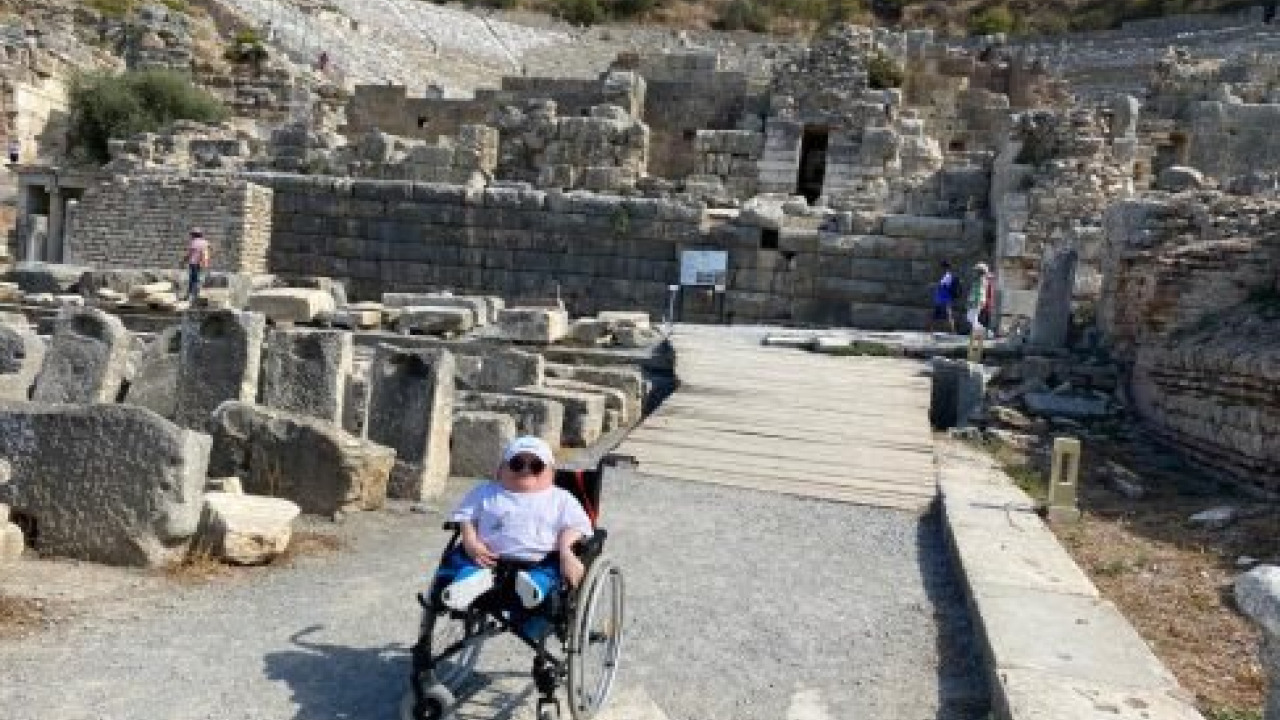
| Terrain | Ancient marble and stone paving; uneven in sections |
| Accessible Toilets | Available near both entrance gates |
Terrain and Inclines: A Stop-by-Stop Breakdown
Curetes Way and the Temple of Hadrian
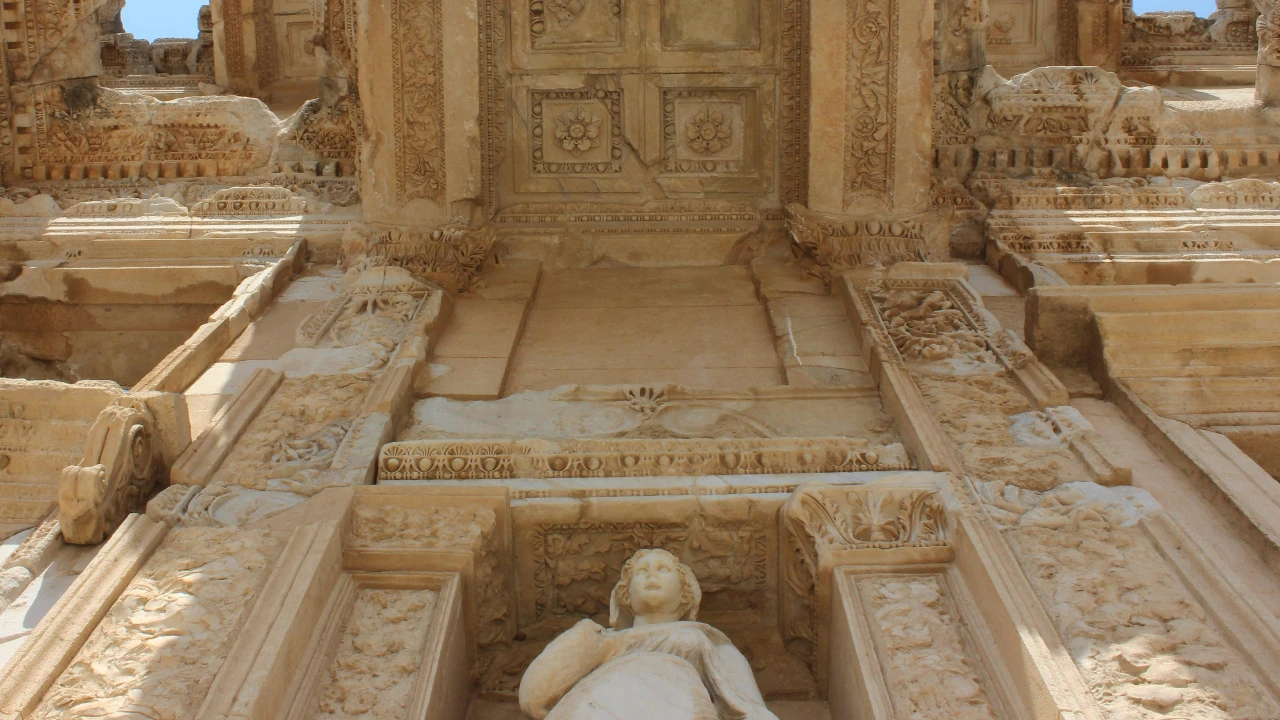
Following the Upper Gate, this section features the city's most pronounced descent. There is no paved "smooth" path here. Fortunately, the Temple of Hadrian, with its stunning Medusa relief, is located right along the path and can be admired without leaving a wheelchair. For those using manual wheelchairs, a companion is essential to control the speed of the descent.
The Celsus Library and the Agora
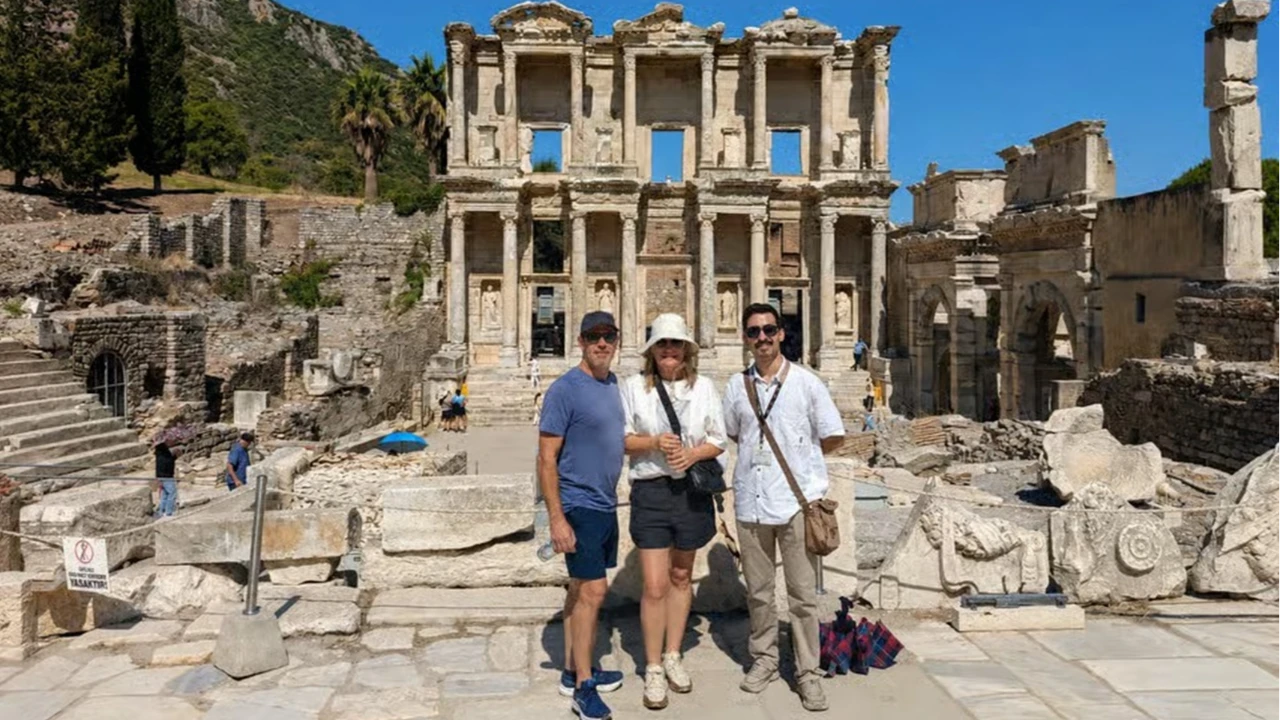
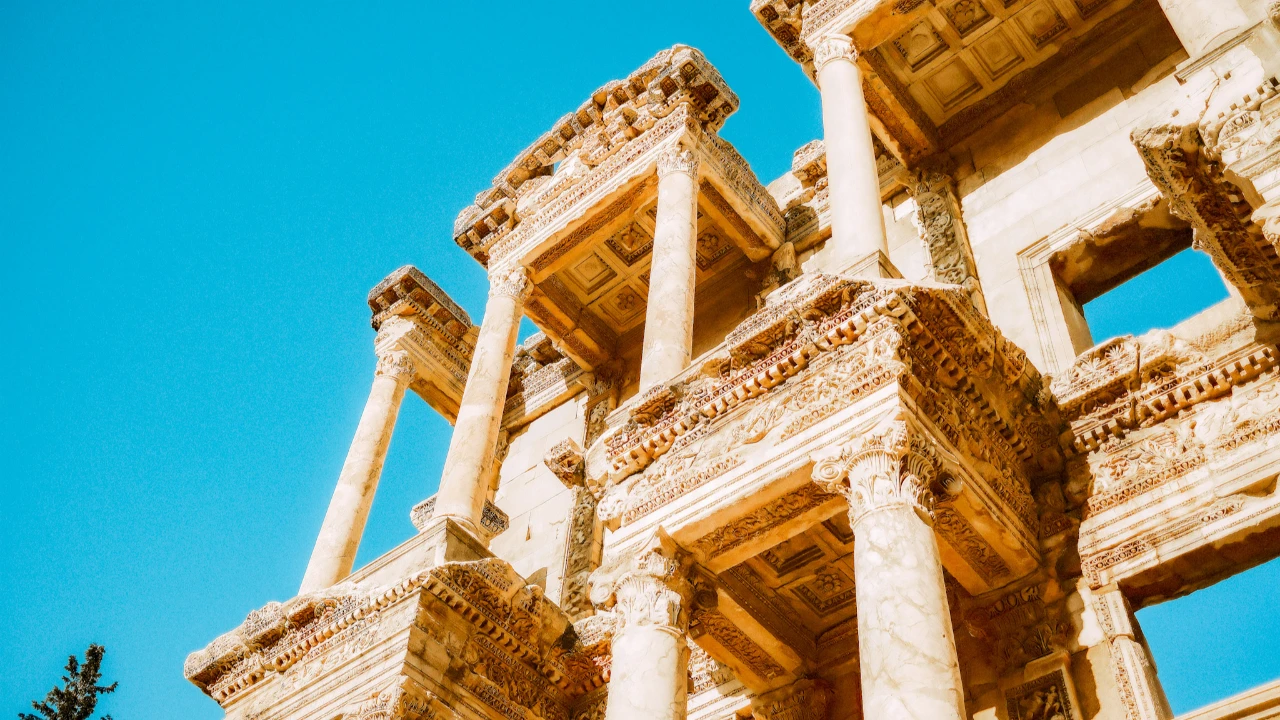
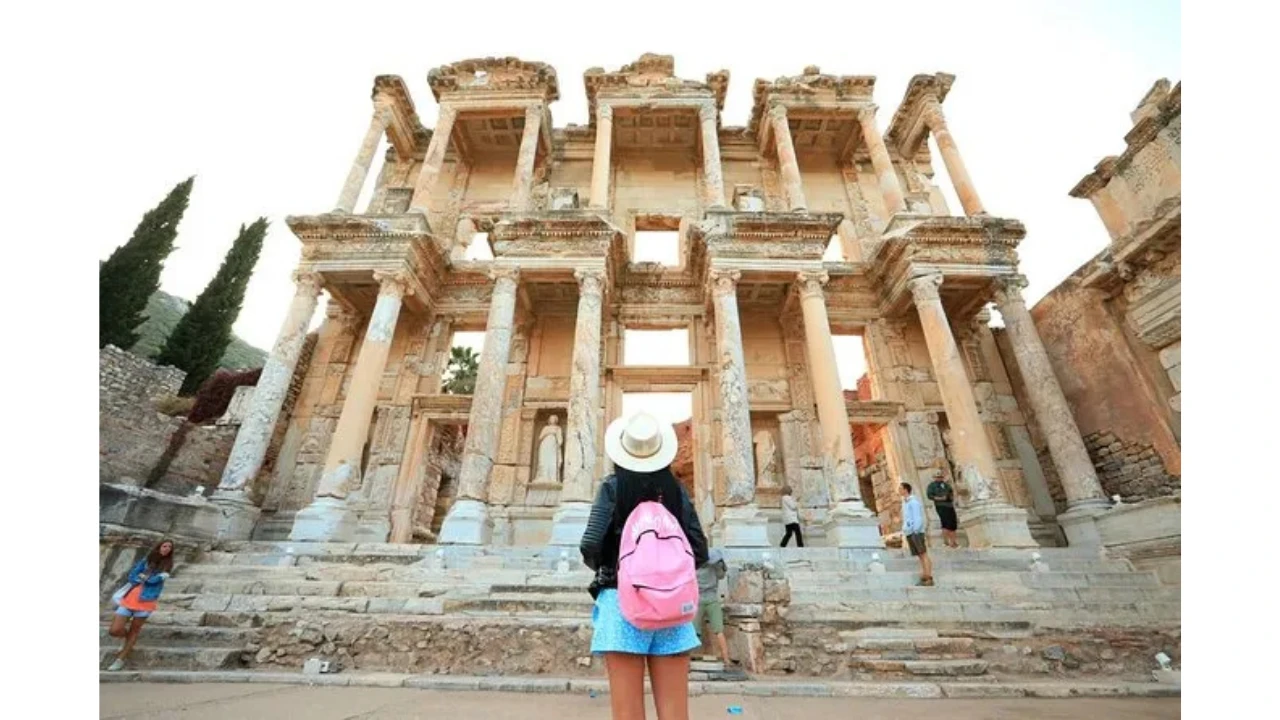
The plaza in front of the iconic Library is reached via a marble road, and ramps are available to manage the level changes. As the most photographed spot in Ephesus, the plaza is relatively spacious, making it easy to maneuver a wheelchair and take photos.
Marble Road, Arcadian Way, and the Great Theatre
The Marble Road is one of the more challenging stretches; the stones are worn, and the gaps between them can be wide. In contrast, the Arcadian Way (leading from the Odeon toward the ancient harbor) is approximately 11 meters wide and paved with marble, making it the most comfortable section of the site. While the 25,000-seat Great Theatre has stepped seating, the structure is best viewed and enjoyed from the flat area in front of the stage.
The Terrace Houses
Famous for their intricate frescoes and mosaics, the Terrace Houses are built on stepped platforms and are unfortunately not wheelchair accessible. Please note that this section requires a separate ticket; the Museum Pass is not valid here. A practical solution is to have one companion enter and share the experience/photos with the rest of the group.
Beyond the Ruins: Isa Bey Mosque and the Cave of the Seven Sleepers
In Selçuk center, the courtyard of the Isa Bey Mosque is flat and accessible by car. The Cave of the Seven Sleepers, however, is built into a hillside, making wheelchair access difficult. It is more realistic to view this site from the roadside.
Step-by-Step Itinerary: Upper Gate to Lower Gate
- Arrival: Park at the Upper Gate lot and use the accessible restrooms before heading to the ticket office. Remember that the Upper Gate closes at 18:00.
- Entry: Present your disability ID at the ticket booth; the cardholder and one companion enter free of charge.
- First Stop: Take a short break at the first flat area near the State Agora and Odeon. After this point, the continuous descent begins.
- The Descent: As you enter Curetes Way, ensure your companion is positioned behind the wheelchair. Pause at the Temple of Hadrian to take in the views.
- The Highlight: Use the ramp to enter the Celsus Library plaza. This is the midpoint of the route and the perfect spot for a photo break.
- The Finish: Proceed via the Marble Road and Arcadian Way toward the Lower Gate. Coordinate with your driver to meet you at this exit.
Upper Gate vs. Lower Gate: Which should you choose?
| Criteria | Upper Gate | Lower Gate |
|---|---|---|
| General Slope | Downhill (Easier) | Flat to slight incline |
| Route | ~1.3 km, one-way flow | Short round-trip to Celsus |
| Manual Wheelchair | 1-2 companions recommended | Comfortable with one companion |
| Electric Wheelchair | Challenging due to slope/bumps | More suitable |
| Sightseeing Scope | Entire city | Lower section only |
| Ticket Office Closes | 18:00 | 19:00 |
| Logistics | Requires pickup at different gate | Return to same parking area |
The Bottom Line: If your transport can pick you up at the Lower Gate, the Upper Gate is the way to go. If you must return to your own car, the Lower Gate is the safer, more manageable choice.
Tips for Choosing a Guided Tour
When it comes to accessibility, a guide's role goes beyond storytelling; they manage the pace and the resting points. Before booking, clarify three things: Which gate does the group enter? Which gate does the vehicle pick up from? How many breaks are planned? Since large groups can move quickly, a small group or a private tour is often much more comfortable for wheelchair users.
You can find these details in the descriptions of our programs: Explore guided tour options for Ephesus here. If you are planning a more extensive archaeological journey, check out the latest programs for popular ancient city tours in Ephesus. For those wishing to include nearby sites like the House of the Virgin Mary, browse our Ephesus cultural tours.
Pre-Visit Preparation Tips
- Beat the Heat: Visit in the early morning. Afternoon heat and crowds can make navigation much more difficult.
- Wheelchair Check: Ensure your tires are properly inflated; wider, pneumatic tires handle the marble gaps much better.
- Essentials: Bring plenty of water, a hat, and sunscreen. There is very little shade along the main route.
- Support System: Plan your companion count based on the descent; having two people help on Curetes Way makes the trip much smoother.
- Manage Expectations: If the Terrace Houses are on your list, factor in extra waiting time, as this area is stepped.
- Documentation: Keep your disability ID handy to ensure a smooth, free entry process.
- Coordinate Pickup: Call your return transport before you reach the Lower Gate to avoid waiting in the sun.
Summary
Ephesus is not "off-limits" for visitors with limited mobility; it simply requires a plan. Entering through the Upper Gate and exiting via the Lower Gate puts the slope in your favor, while the Lower Gate is the best bet for those who prefer flat ground. While the seating of the Great Theatre and the Terrace Houses remain inaccessible, the rest of the city can be enjoyed with the right support. If you're worried about the walking pace, choosing a shorter, tailored itinerary is the best way to go: Check out our walking tours in Ephesus here.
Frequently Asked Questions 5
Is Ephesus wheelchair accessible?
Yes, both gates are accessible, and there are accessible restrooms near the entrances. However, because the terrain consists of ancient marble and stone, it is difficult to navigate a wheelchair independently; at least one companion is highly recommended.
If I enter through the Upper Gate, do I have to go back the same way?
Not if your vehicle can pick you up at the Lower Gate. This allows you to see the entire city while moving downhill. If your car must stay at the Upper Gate, you would have to climb back up the 1.3 km slope, in which case starting from the Lower Gate is a smarter choice.
Which gate is better for electric wheelchairs?
The Lower Gate. The section extending from here toward the Celsus Library is relatively flat. The continuous descent and uneven marble of the Upper Gate route can be challenging for the braking and balance of electric wheelchairs.
What will I miss if I cannot visit the Terrace Houses?
You will miss the stunning frescoes and mosaics of Roman residential life. Because this area is built on stepped platforms, it is not wheelchair accessible. Entry is also charged separately and the Museum Pass is not accepted here. A companion can enter and take photos to share with you.
Are night visits suitable for visitors with limited mobility?
The cooler temperatures and smaller crowds are a huge advantage. However, lighting is not uniform across the site, and terrain changes can be harder to spot. Night visits typically run Wednesday through Saturday during the summer season, with the ticket office closing at 22:00. Please confirm availability before visiting.