To Walk or To Drive: Which is Better?
When visiting Pamukkale, you generally have two choices: hop from one landmark to another by car, or enter through the archaeological site gates and experience the squares, ancient boulevards, and white terraces as one continuous journey. The difference isn't just about how many ruins you see, but how you perceive the connection between them. While a car saves time and makes it easier to visit nearby thermal towns, walking is the only way to truly grasp the urban logic of an ancient grid city. Only on foot can you feel how the streets intersect, where the agora sits in relation to the theater, and how the terraces frame the edge of the settlement. Because the site is expansive, a random stroll isn't enough, you need a strategic sequence. The following plan is designed for travelers who want to experience everything without burning out.
Quick Facts
| Topic | Details |
|---|---|
| Location | Pamukkale district, Denizli; approx. 18-20 km north of the city center |
| Opening Hours | 08:00 to 18:45, open daily |
| Night Visits | 19:00 to 23:00 (Ticket office closes at 21:00) |
| Museum Pass | Valid for T.C. citizens (MuseumPass Turkey recommended for others) |
| Terrace Rule | No shoes allowed on the travertine terraces |
| Scope | Travertines and the ancient city are part of the same ticketed area |
| Public Transport | Minibuses from Denizli bus station to Pamukkale and Karahayıt |
| Recommended Duration | Half a day for a brisk walk; a full day including the museum and theater |
The Squares and Streets of the Ancient City
The backbone of this walking route consists of four main segments: the flat-ground street and square line, two hillside landmarks, and a shaded break.
Hierapolis Ancient City
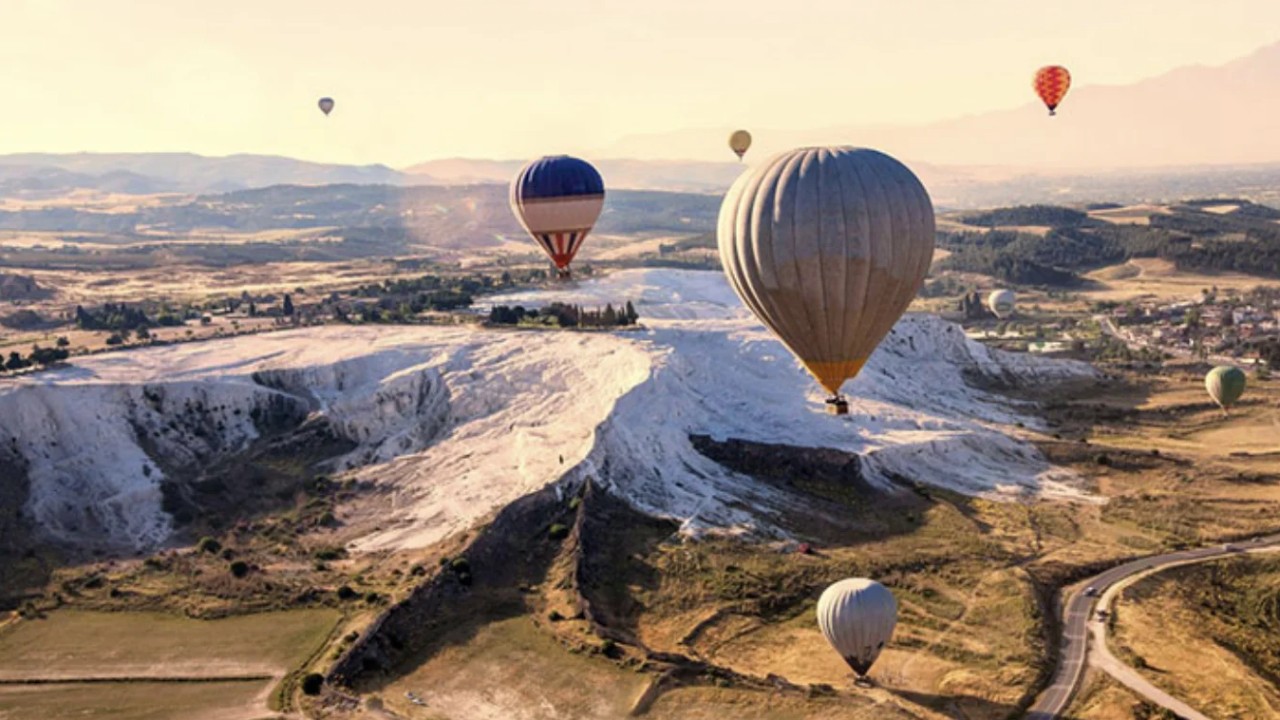
Founded in 197 BC by Eumenes II, the King of Pergamon, the city was designed on a sophisticated grid plan. The perpendicular streets and two monumental gates make it easy to navigate the layout. Along this axis, you will encounter the monumental fountain, the temple area, the agora, bath ruins, and the necropolis. Together with the travertines, this site is a proud member of the UNESCO World Heritage List.
Hierapolis Ancient Theatre
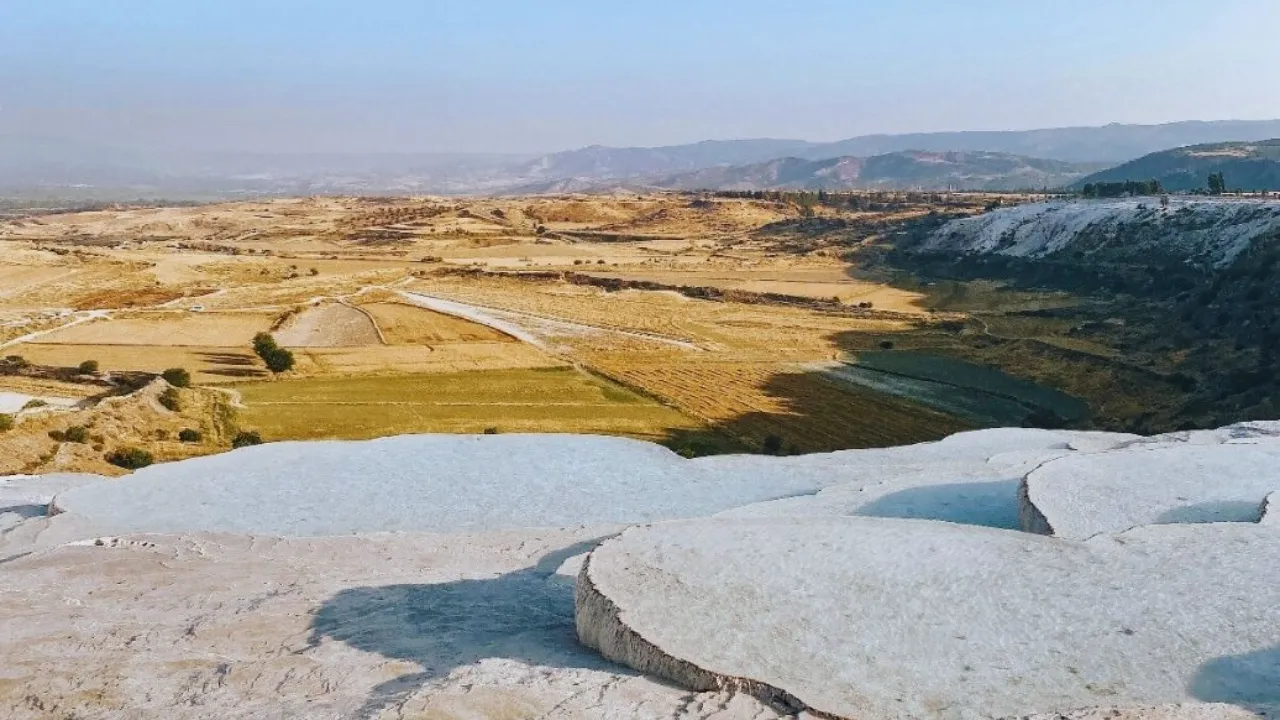
The theater is located on the hillside and represents the steepest part of the route. While climbing the seating tiers can be a workout, the panorama behind the stage building is the most rewarding view of the entire trip. We recommend visiting here early in the morning or late in the afternoon to avoid the midday heat.
Martyrion Church
Tradition holds that the Apostle Philip was martyred here to spread Christianity, leading to the construction of a commemorative monument between the 4th and 5th centuries AD. Located on the northern slope beyond the theater, this site is reached via a stepped path and remains the quietest, most reflective part of the route.
Hierapolis Archaeology Museum
The museum is housed within the Roman Baths. Construction of the baths began during the reign of Hadrian, and after extensive restoration, the site opened as a museum in 1984. It features three indoor galleries and one open-air exhibition area showcasing sarcophagi, sculptures, and finds from the ancient theater and nearby Laodikeia excavations.
The Ideal Walking Sequence: How to Navigate
Getting here from Denizli center is straightforward. Minibuses run regularly to the district and Karahayıt, and the drive takes about 30 minutes. To avoid climbing the same hill twice, follow this optimized sequence:
- Arrive in the district from Denizli via minibus or car. Choose your starting gate and decide on your exit gate in advance.
- Begin with the streets and squares. Understanding the grid plan on flat ground helps you build a mental map before you head uphill.
- Climb the slope to the theater, then head north toward the Martyrion and the necropolis area.
- On your way back down, stop at the museum. The indoor galleries provide a welcome sanctuary of shade during the hottest part of the day.
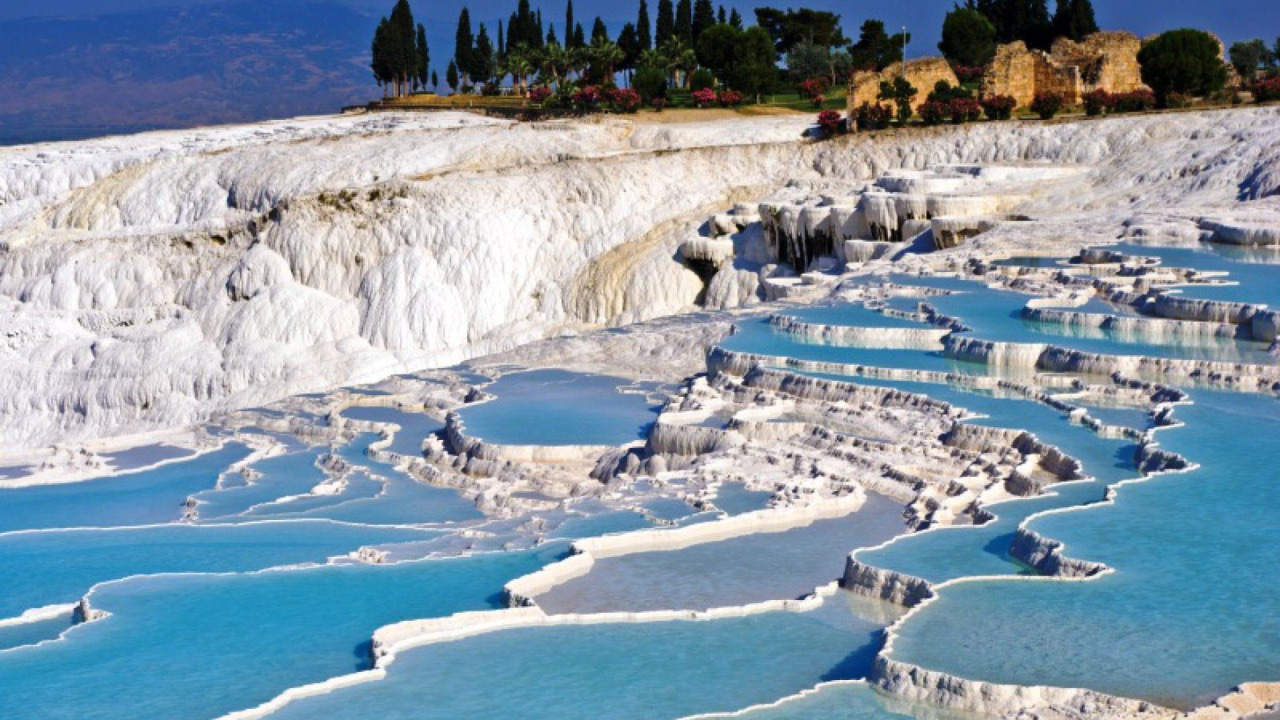
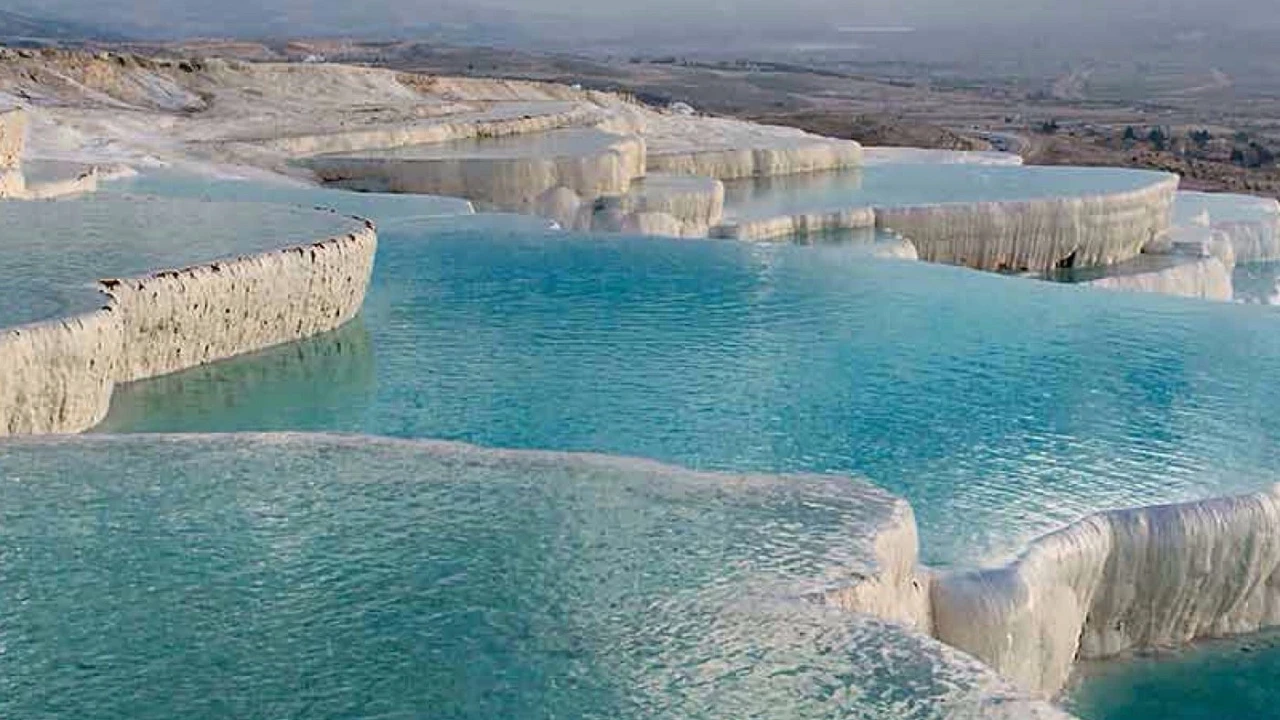
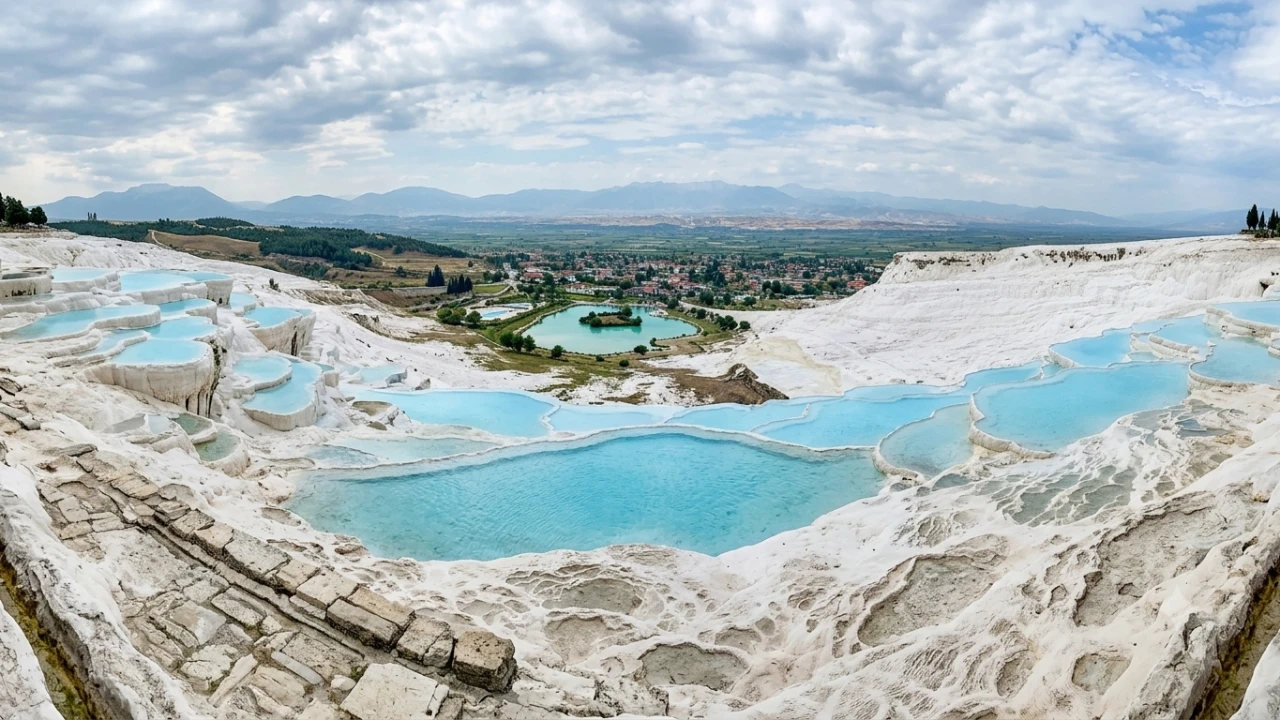
- End your day at the travertine terraces. Since you must walk barefoot here, saving this for last means you won't have to climb hills with wet feet.
Nearby Stops: Should You Add Them?
There are three notable sites outside the main walking route that require a vehicle. Checking the distances beforehand will save your day.
Laodikeia Ancient City
Located about 6 km from Denizli center and right on the way to the district, this 3rd-century BC city features two theaters and a vast temple complex. Since it's "on the way," it's the easiest addition to your itinerary.
| Stop | Location | How to Get There | Best For... |
|---|---|---|---|
| Laodikeia Ancient City | ~6 km from center, on the way to Pamukkale | By car, a quick detour | History buffs wanting a deeper dive |
| Karahayıt | ~4 km from the district center | Minibus or car | Those wanting to see the red thermal waters |
| Kaklık Cave | Honaz district, ~45 km from travertines | Car only, requires a half-day | Nature lovers curious about underground travertines |
Kaklık Cave is generally open from 09:00 to 19:00 (seasonal variations apply). Due to the distance, it's difficult to squeeze into a Pamukkale walking day; we recommend dedicating a separate half-day to it.
Why Choose a Guided Tour?
While exploring solo is possible, deciphering the purpose of every ruin from signage alone can be time-consuming. A guided program removes the guesswork, optimizing your route and climbing direction to minimize fatigue. They also handle the logistics of gate selection and timing.
If you're planning a walking-heavy day, guided city tour options in Pamukkale provide a ready-made itinerary. For those who want to focus exclusively on the pedestrian paths, guided walking tour options in Pamukkale offer a more tailored experience. For a deep dive into the excavation sites, explore ancient city tours in Pamukkale.
Budgeting Your Day
Your expenses will be limited to: site entrance fees, transport between the center and the district, lunch, and optional museum or side-trip costs. Entrance fees are updated seasonally; we recommend checking the official ticket channel for current pricing before you depart. T.C. citizens can use the Müzekart to eliminate this cost.
In terms of transport, minibuses are significantly more economical than private cars. Travelers often note that prices in the district center can be higher than in the city center; bringing your own water and light snacks can help keep your budget in check. Many visitors stay in Denizli center and start their journey from there; day trip cultural tours in Pamukkale are designed exactly for this preference.
Pro Tips for Your Walk
- Footwear: You cannot wear shoes on the terraces. Bring a mesh or cloth bag to carry your shoes comfortably.
- Safety: The ground is wet and slippery. The best way to maintain balance is to walk in the direction of the water flow.
- Sun Protection: There is very little shade on the hillside. A hat, sunglasses, and plenty of water are essential for midday walks.
- Logistics: If you use different entrance and exit gates, plan your return transportation in advance.
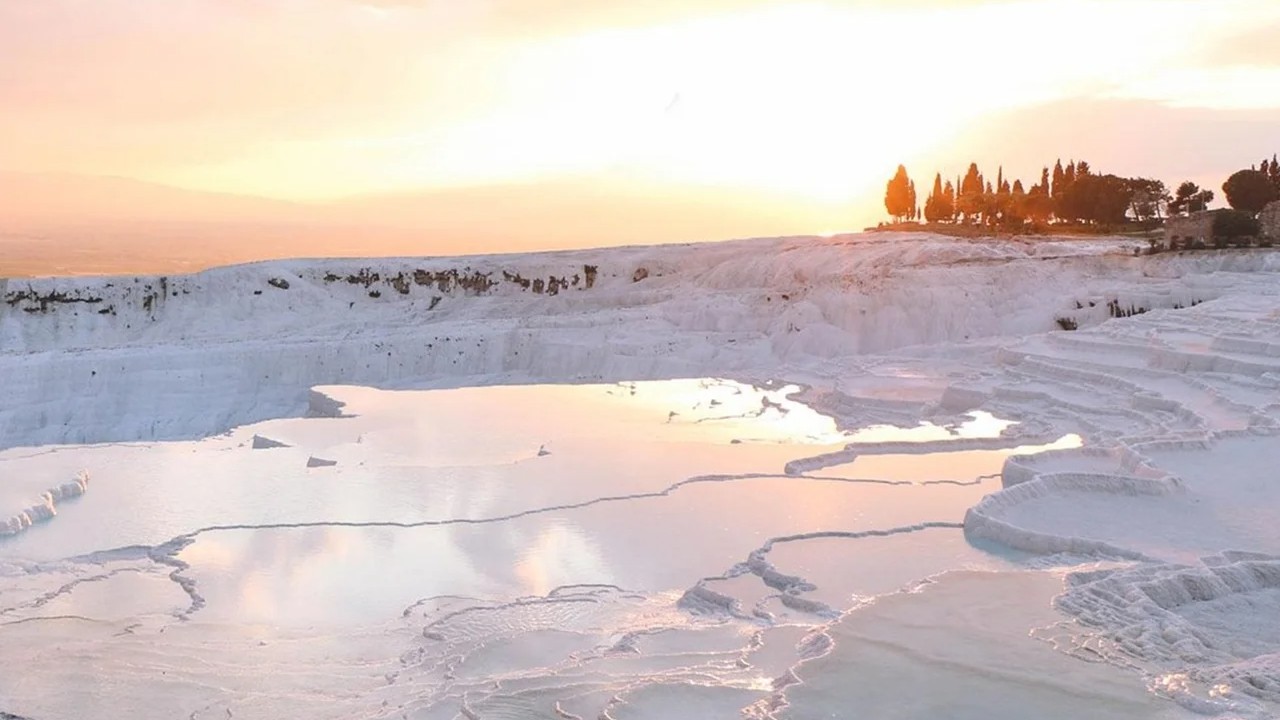
- Timing: For evening visitors, remember that the ticket office closes earlier than the site itself. Plan your arrival based on the ticket office hours.
- Conservation: Stay on the marked paths and respect the ropes and signs to ensure both your safety and the preservation of the site.
Wrapping Up the Route
To summarize your perfect day: start with the squares and streets on the flat ground, head up the slope to the theater and monument, stop at the museum on your way down, and finish with the travertine terraces. This sequence ensures you only climb once and avoids the discomfort of walking uphill with wet feet. While a half-day might seem sufficient, a full day is much more relaxing once you include the museum and nearby stops.
If you'd rather follow a professional framework than plan it yourself, the programs linked above follow this exact optimized sequence with a guide. Regardless of your choice, deciding your entry time and gate preference in advance is the key to a successful trip.
Frequently Asked Questions 6
Which gate should I start from to minimize climbing?
Starting from the hillside gate and walking downward allows you to get the climbing out of the way at the very beginning. If you start from the lower gate, you will have to hike up to reach the theater and the monument. Choose your gate based on your transport plan, as you will end up at a different point for your return.
Can I wear shoes on the travertine terraces?
No. Shoes are strictly prohibited on the terraces, and you must stay within the designated walking paths. This rule prevents the travertines from discoloring, so be sure to bring a bag to carry your footwear.
Can the squares and streets be explored in half a day?
Yes, the flat-ground route through the streets and squares can be comfortably completed in half a day. However, once you add the theater, the monument, and the museum, it becomes a full-day experience. In summer, allow extra time for breaks.
How does the route change for evening visits?
During night visits, the ticket office closes before the site does, which limits your time inside. In this case, it is more realistic to skip the steep climbs to the theater and monument and focus on the squares and the terraces.
Is the MuseumPass valid for the walking route?
Yes, the MuseumPass (and Müzekart for T.C. citizens) is valid at the site entrance. If you don't have one, you can purchase a ticket at the booth, with prices updated seasonally.
Is a minibus or a private car better for reaching the start?
Minibuses drop you in the district center, followed by a short walk to the gates. Private cars allow you to choose a parking lot closer to a specific gate. Both options work well as long as you have decided on your exit point.