
For travelers embarking on a Dalyan mud bath adventure, the first decision is where to make your stop. The mud pools at the point where the canal opens into Köyceğiz Lake are practical for a quick dip, while Sultaniye Thermal Springs on the lake's southern shore demand a more extensive visit with its thermal pools. The difference between these two options isn't just distance; it also impacts your boat route, the time you'll spend at the site, whether the entrance fee is included in your ticket, and when the crowds peak. This guide will compare both locations, explain the mud application process step-by-step, and help you plan your half-day itinerary.
The scope of this guide is deliberately focused on the mud and thermal experience: the canal route, application procedures, İztuzu, and the stops along both banks of the canal. The lake itself – including the Köyceğiz promenade, sweetgum forests, and lakeside walking trails – is the subject of a separate article, linked below.
Regarding pricing, we won't be listing specific figures in this guide. The reason is simple: tour, thermal spring, and archaeological site fees are updated at the start of each season and throughout the year, so any amount written today could be misleading in a few months. Instead, we'll tell you what is typically charged, what's usually included in a ticket, the relative cost hierarchy of different items, and the variables that determine the price. Opening hours are handled similarly: we'll explain the difference between summer and winter times and where to find the most current information.
Quick Facts
| Topic | Information |
|---|---|
| Location | Dalyan, part of Ortaca district, Muğla; the thermal area is on the southwest shore of Köyceğiz Lake |
| Mud stop locations | Mud pools where the canal meets the lake, and Sultaniye Thermal Springs |
| Thermal water temperature | Approximately 39-42°C (102-108°F) at the source |
| Prominent minerals | Calcium, sulfate, sulfur, and radon |
| Water properties | Köyceğiz District Governorship records and local press indicate high radon levels, listing Sultaniye among Turkey's thermal springs with high radioactivity (not a health claim) |
| Typical stop duration | 45-90 minutes for mud application and rinsing |
| Boat departure | Morning departures from Dalyan pier; daily departure times are posted on the cooperative's board |
| Site hours | Open until late afternoon in summer; closes earlier in winter |
| Fee status | Entrance to the thermal spring area is per person; canal stops are often included in the boat ticket; Museum Pass is not valid here |
| Notable nearby stops | Köyceğiz Lake, İztuzu Beach, Kaunos ancient city and rock tombs, Sülüngür Lake, Kargıcak Bay |
| Best time to visit | April-June and September-October; the thermal spring operates year-round |
| Transportation | Dalaman Airport is approximately 25 km (15.5 miles), 25-35 minutes away; via canal boat route or by road via Köyceğiz |
| What to bring | Dark-colored spare swimsuit, towel, flip-flops, water, hat, change of clothes |
Where is the Dalyan Mud Bath? Sultaniye and Lakeside Pools
In this region, the mud bath experience comes in two distinct forms. One is a thermal area established on the lake shore, with pools that can easily fill half a day. The other is a section of clay mud where boats on the canal route make a brief stop. The difference, in short, is this: at one, you settle in; at the other, you make a quick visit.
Sultaniye Thermal Springs: The Lakeside Thermal Area
Sultaniye is a thermal area located on the southwestern shore of Köyceğiz Lake, at the foot of Ölemez Mountain, within the Köyceğiz district boundaries. The spring's history dates back to ancient times; historical sources indicate that residents of the nearby city of Kaunos used these waters for health purposes, and during the Roman period, the area functioned as an organized healing center. Remaining structural ruins in the vicinity are tangible evidence that the region has been visited for the same purpose for centuries.
The site features an open-air thermal pool, a mud section, showers, changing cabins, and a small buffet. Since boats dock directly at the pier, arriving by water without using the road is very convenient. Shaded areas around the pool are limited, so queues can form during midday in summer. Its institutional identity is also important for planning: this is not an archaeological site managed by the Ministry, but a facility operated by the local municipality.
The thermal spring operates year-round. In summer, the area remains open until late afternoon; in winter, closing times are earlier, and the ticket office may stop selling tickets some time before closing. Those arriving by boat should plan their return time according to the departure schedule to avoid waiting at the pier. For those wishing to include the town on the lake's northern shore, the sweetgum forests, and lakeside walking trails in their itinerary, our Köyceğiz Lake and Sultaniye Thermal Springs guide provides detailed information about the lake's side.
Mud Pools at the Canal's Lake Entrance
Day trips departing from Dalyan pier often make a mud stop at the section where the canal opens into the lake, after navigating the reed labyrinth. Locally, these stops are simply referred to as "mud bath" or "ılıca" (thermal spring). This area is more compact compared to the full thermal facility: the clay mud section, rinsing showers, and a warm water pool are all located together.
The tour program determines where the stop will be made. Some boats dock directly at the thermal spring pier, while others stop at the mud area along the canal. Asking about this distinction before purchasing your ticket will help you plan your day effectively.
For those planning a short stop, this is an efficient option. 45-60 minutes is usually sufficient for most visitors to apply the mud, let it dry, rinse off, and return to the boat. If you plan to spend a longer time in a thermal pool, the main thermal spring area offers a more relaxed schedule.
Water Mineral Content and Temperature Range
The source temperature of the water is officially recorded by local authorities as approximately 39-42 degrees Celsius (102-108°F). The water is rich in calcium and sulfate, and the sulfur smell is quite distinct. What sets Sultaniye apart from other thermal areas in the region is its radon content: Köyceğiz District Governorship records and local press indicate that the thermal spring has high radon levels and is listed among Turkey's thermal sources with high radioactivity. The same sources state that the water contains up to twelve different minerals. This information describes the water's composition and does not constitute a treatment claim.
The sulfur smell becomes noticeable as soon as you enter the water; it takes a few minutes to get used to it. Planning your hot water immersion in 15-20 minute intervals, resting in the shade in between, and drinking plenty of water will ensure a comfortable experience. Since sulfurous water can tarnish silver and similar jewelry, it's a good practice to leave items like rings and necklaces in your cabin.
Which District is Dalyan Part Of?
The two banks of the canal administratively belong to two separate districts, and this distinction can cause confusion on a map. Dalyan, where you'll likely be staying, is part of Muğla's Ortaca district. However, Sultaniye, where the thermal spring is located, and Çandır village on the opposite bank of the canal, are part of the Köyceğiz district. This means you'll travel between two districts on the same day, often without ever using a road.
The practical implications are seen in payment and navigation. The thermal spring ticket office is on the Köyceğiz side, while boat tickets are sold at the Dalyan pier. There's a short road and regular minibus service between Ortaca town center and Dalyan; those traveling to the thermal springs by road will follow the lakeside route via Köyceğiz.
How to Get to Dalyan Mud Bath? Boat, Road, and Your Day's Flow
There are two main ways to reach the mud bath: by boat via the canal or by road around the lake. The boat route often forms the backbone of most day trips, as it combines the reed beds, rock tombs, and İztuzu Beach into a single day. A typical morning departure unfolds as follows:
- Head to the canal pier in Dalyan town center early in the morning; check the cooperative's board for boat departure times and the day's route.
- When buying your ticket, ask where the mud stop will be made and if the Kaunos archaeological site and İztuzu Beach stops are included in the program.
- The journey through the reed channels takes approximately 30-45 minutes; keep a hat and water handy in the open section of the boat.
- Allocate 45-90 minutes for mud application, drying, and rinsing during your mud stop; take your towel and a change of clothes with you when you disembark.
- In the afternoon, head to İztuzu Beach; observe the nesting area signs and staff warnings, and stay within the marked zones on the sand.
- On the return route, view the rock tombs from the canal; if you wish to visit the archaeological site, plan for a separate ticket and an additional 1-1.5 hours.
Canal Route by Boat
The canal tour begins with the iconic reed passage, a signature of Dalyan. Boats slow down in the narrow waterways, revealing wooden fishing weirs (dalyans) and bird colonies on both sides. The settlement's name itself comes from these wooden fish traps. The route passes beneath the rock tombs on the opposite bank of the canal; Kaunos's temple-fronted tombs carved into the rock are fully visible from the water. The boat cooperative's classic program typically fits a mud stop, İztuzu Beach, and a lunch break into the same day.
Group size directly impacts the experience. On crowded boats, waiting in line at the mud area is common; smaller groups and private charters allow you to extend your stops at your own pace. For those who want to compare canal and bay programs departing from the region in advance, you can check Muğla boat tour options. Boats coming from Ekincik Bay also reach Dalyan via the mouth of the canal, but this route requires a boat change.
The final question to ask when boarding is the return time. Since the last departure time for cooperative boats can change during the day, learning this at the pier will help you plan your time at the archaeological site or on the beach from the start.
By Road, Transfer, and Your Own Vehicle
The closest airport to Dalyan is Dalaman Airport, approximately 25 kilometers (15.5 miles) away; transfers take 25-35 minutes. Minibuses depart regularly from Ortaca town center to Dalyan. To reach the thermal spring area by road, you'll use the route that follows the lakeside from Köyceğiz; this journey takes longer than by boat but allows you to set your own schedule and stay at the site when the crowds have dispersed in the late afternoon.
A car ferry also operates between the two banks of the canal. Since the canal is narrow, the crossing itself is very short; the amount paid is determined by the vehicle class, not the number of people, with pedestrian crossings being at the lower end of the tariff. Those not using the ferry will take the longer route that circles the delta via Köyceğiz, and the difference in travel time approaches an hour and a half.
For those arriving with their own vehicle, parking is available around Dalyan town center; finding a spot is easier in the mornings during July and August.
Do You Need to Rent a Car in Dalyan?
Short answer: If you're staying in Dalyan and planning the canal tour, mud stop, and İztuzu Beach, a car is not necessary. This entire route can be done by boat and on foot; the town center, promenade, and pier are all within walking distance of each other.
A car is useful in three scenarios. First, if you want to go to Sultaniye by road via Köyceğiz and stay at the site independently of boat schedules. Second, if you want to visit spots outside the canal route, such as Kargıcak and Aşı bays. Third, if you're staying in Dalaman or Sarıgerme in the evenings and coming down to Dalyan during the day. If these aren't part of your plans, the rental cost won't be worth it; a door-to-door transfer for airport connections and minibuses for intra-town transport will suffice.
Before You Arrive: Flights, Transfers, and How Many Days
Access to the region is primarily via Dalaman Airport. In summer, the number of scheduled and charter flights to this airport significantly increases; in winter, mainly domestic flights remain, so outside of peak season, you might need to plan connections via Istanbul or Izmir. Ticket prices are determined by the season, day of the week, flight time, and how far in advance the reservation is made; travelers with flexible dates often target weeks outside the summer peak. Arranging transfers before arrival saves time, especially for night landings.
So, how many days do you need to explore Dalyan? While it's possible to fit the mud bath and canal tour into one day, a three-day itinerary works comfortably for those who want to see the region without rushing:
- Day One: Canal tour: reed passage, rock tombs, mud stop, and İztuzu Beach in the afternoon.
- Day Two: Lake side: Sultaniye Thermal Springs via Köyceğiz, lakeside walk, and the Kaunos archaeological site if you wish.
- Day Three: Flexible program: Kargıcak or Aşı Bay, the Sülüngür road, and if it's a Saturday, the Dalyan market.




How to Do a Mud Bath? Application, Care, and Health Notes
The sequence for a mud bath is simple. Those who come unprepared often apply the mud too thickly, preventing it from drying properly, and their stop is spent waiting. A quick routine, starting with warming up and ending with rinsing, also shortens the time spent at the site.
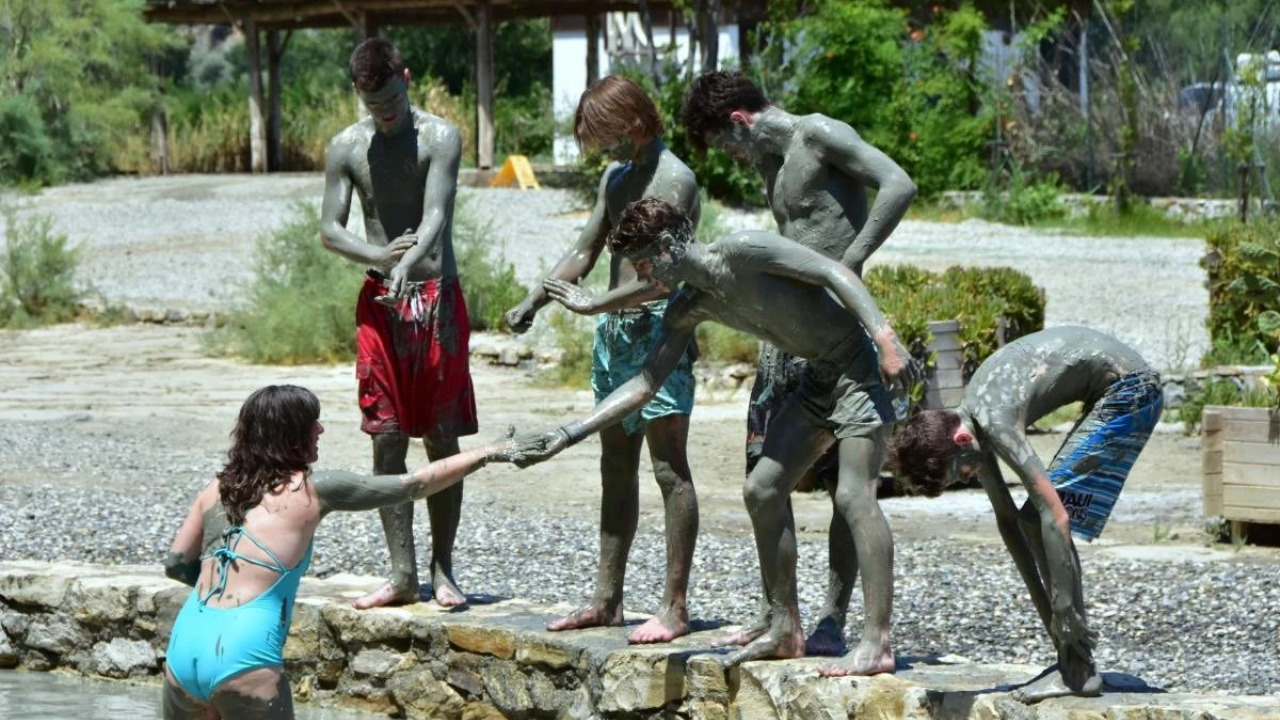
Application Sequence
- Warm up your body by waiting 10-15 minutes in the warm thermal pool; the mud adheres better when pores are open.
- Apply the mud in a thin layer; leave the eye area and any open wounds clear.
- Wait 20-30 minutes for it to dry; drying in the shade on hot days reduces the risk of dizziness.
- Thoroughly rinse off the dried mud in the shower or by the pool; check for any clay remaining in your hair roots.
- Take another short dip in the thermal pool, then rest in the shade, drinking plenty of water.
Planning one application per day is usually sufficient. For those wanting a second round on the same day, resting for at least an hour in between helps balance the fatiguing effect of the hot water.
Skin, Hair, and Swimsuit Care
Mud can stain light-colored fabrics, so it's practical to come to the area with a dark-colored and older swimsuit. Tying your hair up with a hair tie or wearing a swimming cap prevents clay from settling into the roots; since the sulfur smell can linger in hair for a while, a conditioning shampoo on return is helpful. Contact lens wearers should remove their lenses before the mud bath to reduce the risk of eye irritation.
After rinsing, the skin may feel tight for a short while. Reapplying moisturizer and sunscreen is important, especially for those heading to İztuzu Beach in the afternoon. Bagging your wet swimsuit and changing into dry clothes will prevent you from getting cold on the boat ride back.
Who Should Be Cautious
The effects of thermal water and mud vary from person to person. If any of the following apply to you, consult your doctor before taking a bath:
- Pregnancy and breastfeeding period
- Heart conditions, blood pressure irregularities, and vascular problems
- Skin problems such as open wounds, eczema, or psoriasis
- Feverish illness, infection, or recent surgery
- Prolonged hot water contact for children and the elderly
- Entering a hot pool after alcohol consumption
Health personnel may not always be present at the site. If you feel dizzy, experience palpitations, or feel weak, the first step is to exit the pool, rest in the shade, and drink water.
Is the Mud Bath Paid? Options, Duration, and Payment Structure
The mud and thermal experience in the region can be structured in multiple ways. There are four distinct setups, differing in duration and where payment is made.
| Option | Transportation | Typical duration | Payment structure | Suitable for |
|---|---|---|---|---|
| Canal-side mud pools | Boat from Dalyan pier | 45-60 minute stop | Often included in the day trip boat ticket | Those combining with a canal tour on the same day |
| Sultaniye Thermal Springs | Boat pier or by road via Köyceğiz | 1.5-3 hours | Per-person entrance fee, collected at the ticket office | Those wanting to spend more time in the thermal pool |
| Hotel and spa center program | Your accommodation or short transfer | 1-2 hour session | Session package; varies by scope and duration | Those seeking a scheduled, indoor session |
| Alternative near Fethiye | Day trip by road | Half-day | Varies by tour scope; canyon entrance may be separate | Those combining canyon and river stops |
Cost-Determining Factors and Their Relative Scale
The way to budget independently of specific figures is to rank the cost items. This ranking doesn't change from season to season; only the magnitude of the steps changes. The canal crossing is the smallest item. The thermal spring entrance fee adds on top of that. A guided full-day program will be significantly higher than the total cost of going independently (crossing plus entrance). Private and moonlight boat charters are priced per boat, making the per-person cost highest for small groups. The same logic applies to those seeking a one-day tandem or private program: as the scope expands, the cost step increases.
The variables determining the price are: season intensity, boat type and capacity, whether the departure point is Dalyan or Köyceğiz, the number of people in the group, whether lunch is included, whether thermal spring entrance is added to the ticket, and whether the Kaunos archaeological site ticket is part of the program. The difference between two programs with the same name often stems from these scope variations, not the route itself.
For current prices, the correct places are the announcement board and the program page. Boat ticket tariffs are posted on the cooperative's board at the pier, thermal spring entrance fees at the ticket office on-site, and archaeological site tickets on the Ministry's museum and archaeological sites page. Current prices for programs departing from the region are live on our Muğla boat tour page, linked above; refreshing your comparison there at the start of each season is the most reliable method.
Museum Pass, Tariff Differences, and Payment Points
The Museum Pass is only valid at museums and archaeological sites affiliated with the Ministry of Culture and Tourism. Since Sultaniye is a facility operated by the local municipality, the card is not valid here, and entrance is charged per person. If you plan to visit the Kaunos archaeological site on the same day, the card will be useful there; also, keep in mind that the Ministry applies separate tariffs for Turkish citizens and foreign visitors at archaeological sites.
Separating where payment is made from the start also simplifies things: boat tickets are paid at the pier, thermal spring entrance at the on-site ticket office, and Kaunos tickets at the archaeological site entrance, all collected separately. For those using the canal ferry, there's a fourth item, which varies by vehicle class. For those wishing to combine a river and canyon stop with mud, our Fethiye Saklıkent Canyon and mud bath guide offers a second framework for comparison.
When to Take a Dalyan Mud Bath? Choosing the Period and Time
Since the thermal spring is open year-round, the question isn't "can you go," but "which period is more comfortable." The difference between periods is seen more in the crowds and the frequency of boat schedules than in water temperature.
| Period | Weather and Water | Crowds | Note |
|---|---|---|---|
| April-May | Mild; scent of citrus blossoms | Low | Canal tours are just starting, departure times might be less frequent |
| June | Warm; sea suitable for swimming | Medium | Mud and beach easily fit into the same day |
| July-August | High temperatures | Intense | First boat in the morning or late afternoon hours are more comfortable |
| September-Early October | Mild; water still warm | Medium and decreasing | Balanced period for photography and walking |
| November-March | Cool and rainy | Very low | Thermal pool open; boat programs become less frequent, road travel becomes more prominent |
What Time of Day
The time of day you visit can sometimes be more decisive than the month. In summer, the mud dries quickly; the truly tiring part is waiting for it to dry under the midday sun. Catching the first boat in the morning or staying until late afternoon offers more comfort in terms of shade and queues. In winter, a bathrobe or thick towel is useful to avoid getting cold after exiting the hot water.
For photography, the time is important for another reason. Since the facades of the rock tombs face east, direct light hits the surface in the morning, revealing column and pediment details; in the afternoon, the rock falls into its own shadow, and those details are lost. The lake surface is also calm in the morning, becoming wavy with the breeze in the afternoon.
İztuzu Beach, Caretta Nests, and Turtle Rescue Center
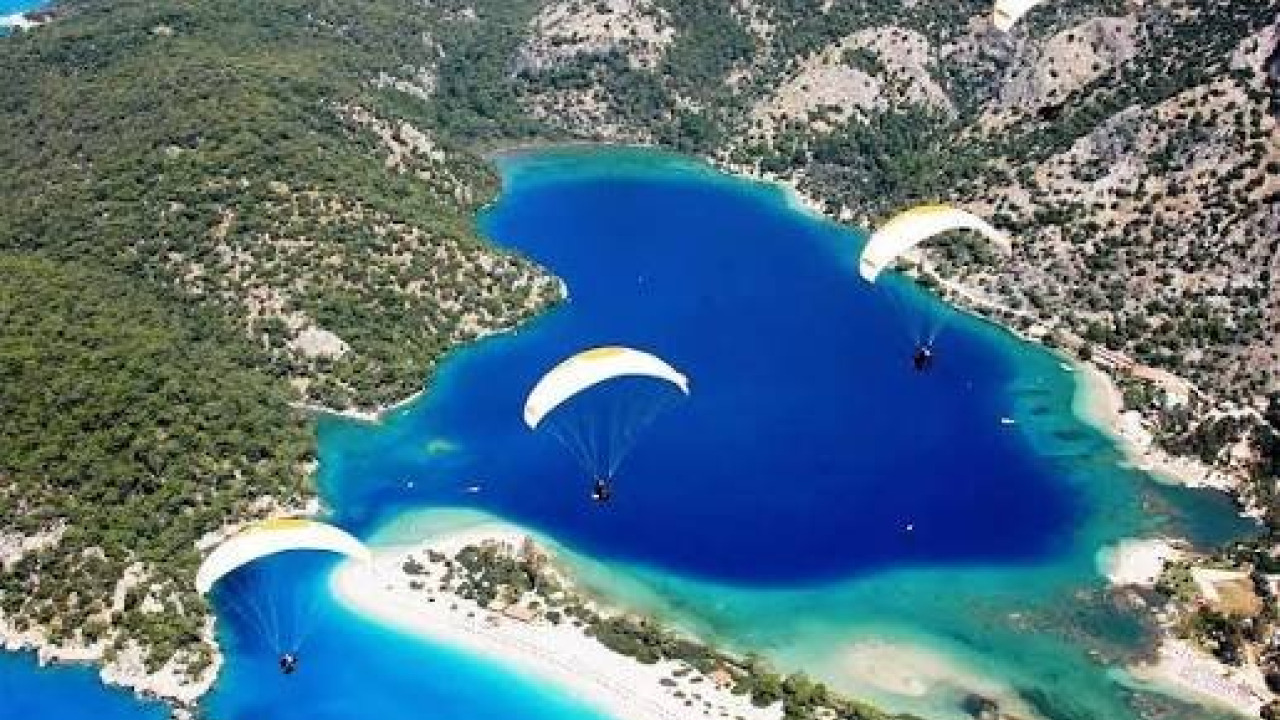
The mud stop often falls on the same day as İztuzu Beach in most programs, so planning the beach as a separate stop can make the day more relaxed. İztuzu is a approximately 4.5-kilometer (2.8-mile) sand strip where the Dalyan Canal meets the sea, separating the lake and canal system from the Mediterranean. Since the area is within the Köyceğiz-Dalyan Special Environmental Protection Area, there is no hotel development on the beach; the view before you is a protected sandy beach with a freshwater system extending behind it.
Where is İztuzu Beach, How to Get There
The beach has two entrances and two modes of transportation. The canal-side end is reached by minibuses (dolmuş boats) departing from the pier in Dalyan town center; this route, following the reed passage, takes about half an hour, and boats make return trips at specific intervals throughout the day. The road entrance is about 13 kilometers (8 miles) from Dalyan; the road, passing between pine forests and the shore of Sülüngür Lake, ends at the parking area, and a minibus line operates on this route during the season.
The choice between the two entrances is essentially a question of who determines your return time. Arriving by boat adds the canal scenery to your program; the trade-off is that your return time is tied to the boat's schedule. The road, however, allows you to set your own schedule and stay on the beach when the crowds have thinned out. There's also a third option that combines these two: going by boat and returning by road fits two different scenic experiences into the same day. The area has sunbed and umbrella rental services and limited buffet options; it's more comfortable to bring water and light snacks rather than expecting extensive food choices.
Rules to Observe in the Caretta Nesting Area
İztuzu is one of Turkey's known nesting beaches for the loggerhead sea turtle, Caretta caretta; the beach's identity is therefore shaped by its conservation rules. Nesting occurs nightly between approximately May and August; the hatching and journey of hatchlings to the sea intensify towards the end of summer and continue through September. During the conservation period, roughly from May 1st to the end of September, the beach is closed to visitors between 8:00 PM and 8:00 AM, because hatchlings find the sea by following light, and artificial light can disorient them towards land.
Daytime rules are simple: do not enter marked and caged nesting areas, do not stick umbrellas near cages or place sunbeds there, do not drive stakes into the sand, do not dig holes, and do not move sunbeds beyond the line indicated by staff. Lighting fires, pitching tents, and driving vehicles onto the sand are also prohibited. Bringing back any plastic waste from the sand is also part of the conservation rules, as it can hinder hatchlings from reaching the sea. Those wishing to combine the canal, lake, and beach in the same program can choose a trip suitable for their pace from the nature adventure tours departing from the region.
Turtle Rescue Center
At the road entrance to the beach, there is a research, rescue, and rehabilitation center where injured sea turtles are treated; locally, it's often called the "turtle hospital," but its institutional name is DEKAMER. The center primarily cares for Caretta carettas injured by boat propellers and fishing gear, and rehabilitated individuals are released back into the sea. In the publicly accessible section, it's possible to see the treatment pools and learn about the center's work. Since its operating hours and visiting conditions change periodically, it's best to confirm with the center's own announcements. For those arriving at the beach by boat, walking here takes a long time, so the center fits more comfortably into programs using the road entrance.
What to See in Dalyan? Stops Around the Mud Bath
The mud bath itself can easily fill half a day, but nearby stops on the same water system can extend this half-day into two days. The following are the most frequently sought-after spots around Dalyan, and each requires a different mode of transportation: some are along the canal route, while others require road access.
Köyceğiz Lake: The Freshwater Body Feeding the Delta
Köyceğiz Lake, with a surface area of approximately 52 square kilometers (20 sq miles), is one of Turkey's important tectonic coastal barrier lakes, and the entire delta originates from the transition between this lake and the sea. The district center of the same name is on the lake's northern shore, while Sultaniye Thermal Springs are on its southwestern shore; meaning you are already on the lake when you go to the thermal springs. When passing from the canal to the lake, the scenery shifts from a reed labyrinth to a vast expanse of water, and this transition is the most distinct scene change of the canal tour.
The lakeside town is a slow city network settlement; walking along the promenade, visiting tea gardens, and exploring the market become the main activities of the day. The surrounding sweetgum forests are a unique natural asset of the region. For those who wish to swim, designated beach areas on the lake are used; as freshwater is calmer than the sea and there are no waves, it's preferred by families with children. Practical tip: the lake is calm in the morning, but waves pick up with the breeze in the afternoon, so photography and paddle sports are best in the morning. In terms of timing, winter and spring are the most productive periods for the lake, as bird species diversity increases during these months.
Kaunos Ancient City: The Carian Port on the Opposite Bank of the Canal
Kaunos is a Carian port city built on a rocky outcrop on the opposite bank of the Dalyan River, within the borders of Çandır village, part of the Köyceğiz district. The site features a harbor agora, remains of a colonnaded gallery, a monumental fountain structure, a Roman bath and palaestra, a Byzantine basilica, terrace temples, and a theater built into the hillside. The theater, with a capacity of approximately five thousand people, is a structure that illustrates the city's scale; the acropolis is on a rocky hill about 152 meters (500 feet) high. The fact that a port city now lies kilometers inland from the sea demonstrates the extent of the alluvium carried by the river.
Access begins with crossing the canal: you cross to the other side by cooperative boats or rowboats departing from Dalyan pier, then walk for about 15-20 minutes along a path through olive groves. Since the path is dirt and stony, closed-toe shoes are easier than sandals. The time budget is divided into two: the lower and middle sections take about 1.5 hours, and the acropolis climb takes 1 to 1.5 hours round trip. The Ministry's archaeological site record states an opening time of 08:30 and a ticket office closing time of 17:30, with hours extended during the summer season. In terms of timing, April, May, and October are the most comfortable months; as the area is unshaded, climbing in the summer midday heat can be tiring.
Rock Tombs: Temple Facades Carved into the Rock
The tombs, which have become a symbol of Dalyan, are carved into the steep cliff on the opposite bank of the canal, with their facades facing the water, i.e., east. Dating between the 4th and 2nd centuries BC, these facades mimic a columned temple front; the pediment, architrave, and two columns are carved directly from the rock. Although popularly known as the King's Tombs, there is no evidence that these structures belonged to kings; they are monumental burial chambers belonging to the city's prominent figures. One of the structures on the cliff is unfinished, and the stage at which the stone carving process was abandoned is clearly visible on the facade.
You don't need to enter the archaeological site to see them: the facades can be viewed from the canal and from the promenade on the Dalyan side. This means viewing the tomb facades and visiting the archaeological site are two separate stops, and this distinction changes both your time plan and payment items. Since entry to the tomb chambers is closed, you need to observe the details from a distance; a small pair of binoculars or your phone's optical zoom makes a significant difference here. In terms of timing, morning light reveals the facade details, while late afternoon provides a dark silhouette of the rock face.
Sülüngür Lake and Radar Hill: The View from the İztuzu Road
Sülüngür Lake is a delta lake whose shore is followed by the asphalt road from Dalyan to İztuzu. It's a view unseen by those who go to the beach by canal tour, but seen by those who choose the road; the road proceeds between the pine forest and the lake shore, thus arriving at the same destination with two different scenes. Radar Hill, on the same road, is also known as a viewpoint that captures the İztuzu sand strip, Sülüngür Lake, and the delta in the same frame.
The practical result is a route suggestion: going to the beach by boat and returning by road both adds this lake view to your program and eliminates being tied to the boat's return time. In terms of timing, the lake's light softens in the early morning and near sunset; midday light flattens the water surface. This stop doesn't require separate time; it's part of the journey itself.
Kargıcak Bay and Aşı Bay: Two Beaches Outside the Canal Route
Kargıcak Bay is a cove reached by a turn-off from the İztuzu road and has road access. It cannot be reached by canal boat, so it's not included in day trip boat programs and requires a separate excursion. This is its value: when İztuzu gets crowded on summer afternoons, this offers a quieter swimming stop.
Aşı Bay is a small cove located between Dalyan and Sarıgerme, reachable by a short drive. It also isn't part of canal tour programs; its crowds remain limited, and it's a preferred stop around sunset. The common aspect of both coves is that they are meaningful for visitors with a car or those who can use minibus connections; both are suitable for the afternoon and late afternoon, as morning hours are typically reserved for the canal tour. Since the number of businesses along the road is limited, it's more comfortable to bring water and food in advance.
Dalaman River: A Second Water System Different from the Canal
The two names most frequently confused when planning a trip to the region are Dalyan River and Dalaman River, and this confusion can lead to purchasing the wrong program. The water system where the mud bath is located is the Dalyan River, which connects Köyceğiz Lake to the sea. The Dalaman River, however, is a separate waterway; it flows east of Dalyan, through the plain of the neighboring Dalaman district, and is the water used for rafting programs in the region.
The two waters produce two distinct experiences: a calm canal route through the reeds on the Dalyan River, and a river program on the Dalaman River that requires paddling and changes character depending on the water level. Their departure points are also different, so they don't easily fit into the same day. In terms of timing, the river's level rises in spring with snowmelt, then drops as summer progresses and the course becomes calmer; those seeking action target the spring months, while families planning a program aim for mid-summer. Checking which river name is written on your reservation is a practical way to match expectations with the program.
Pisilis Ancient City: A Second Ancient Name on the Lists
Alongside Kaunos, a second ancient settlement name, Pisilis, appears on travel lists around Dalyan. The first thing to know is that this is not a section of Kaunos or an alternative to it. It is not an organized archaeological site on the scale of Kaunos; do not expect a ticket office, marked paths, or information boards. It is also not located on the canal route, so it is not seen during the same trip as an archaeological site visit and requires a separate excursion.
The practical implication is this: making room for this name in a half-day or one-day program means giving up the acropolis at Kaunos or İztuzu. However, for travelers staying in the region for three days or more who wish to see every ancient settlement, it can be an additional stop. In terms of timing, cooler months are suitable; since there is no organized visitor infrastructure, you will need to carry your own shade and water. Before setting off, checking with local tourism information whether the area is open to visitors will prevent a wasted journey.
What to Eat and Where to Stay in Dalyan?
After your mud stop, the rest of your day will largely be spent along the canal. Dalyan's dining and accommodation scene is concentrated along the promenade by the canal and the streets of the town center.
What to Eat
Canal and lagoon fishing form the backbone of the local cuisine. At the pier restaurants along the promenade, sea bream and sea bass are standard; the grey mullet from the canal and lagoon is considered the region's own fish, and local caviar made from mullet roe also originates here. The delta's distinctive product is the blue crab: it thrives in the waters where fresh and saltwater meet and is frequently found in establishments along the river. For breakfast, local cheeses and citrus jams stand out; for dinner, olive oil-based herb dishes are prominent; since the Ortaca area is a citrus production region, freshly squeezed orange juice is found at almost every table.
Artisan eateries in the town center offer a more budget-friendly option for those seeking home-cooked meals. The bill is determined by the type of fish, whether it's sold by portion or weight, the number of mezes, the season, and whether the table has a view; menus are posted at the entrance, so checking before sitting down avoids surprises. If you plan to buy tangerine jam, sweetgum oil extracted from the sweetgum tree resin, or local olive oil when leaving the region, schedule your visit for market day: Dalyan's own local market is on Saturday, and the larger market in Ortaca town center is on Friday. Although market days have been consistent for years, they can shift during holiday weeks, so it's worth asking a local business. Those wishing to plan programs like local producer visits and cooking workshops can explore gastronomy organization tour options.
Where to Stay
Accommodation in Dalyan falls into four main categories, and the difference between them is more about walking distance than just the view.
The first category is the promenade: boutique hotels along the canal, on the Maraş Caddesi line. The rock tombs view is a privilege of this strip; walking to the pier takes five to ten minutes, reducing the risk of missing the morning boat. This is also where tariffs are highest during the season. The second category is the back streets of the town center: guesthouses, apart-hotels, and family-run establishments. There's no canal view; however, markets, dinner options, and the pier are all within walking distance.
The third category is along the İztuzu road. This section, primarily offering villa and holiday home rentals, is preferred by families who want to avoid crowds and noise, and by those planning longer stays; options for detached houses with pools are concentrated here. In return, you'll need a car or minibus to get to the center, so those planning dinner in town need to sort out their transportation in advance. Çandır village on the opposite bank of the canal is also a quiet alternative with guesthouses and bungalows, and it's within walking distance of the archaeological site.
The fourth category is the other end of the lake. The Köyceğiz promenade offers a quieter evening and lake views compared to Dalyan, and the road connection to Sultaniye is shorter from this side; bungalow-style accommodations are mostly found on the village roads around the lake. Families who want to stay close to the airport can consider the Dalaman and Sarıgerme areas, in which case a day trip to Dalyan would need to be planned.
Tour, Spa, and Massage Options in the Region
The mud and thermal experience in the region isn't limited to one category; canal tours, spa programs, and massage sessions complement each other. The distinction between the three is clear: a canal tour is outdoors and scheduled, a spa program is indoors and by appointment, and a massage is a short stop added at the end of the day.
Canal and Lake Boat Tours
Cooperative boats offer a fixed-schedule and economical solution; the route is standard, and stops are program-dependent. Private charters, however, allow you to set your departure time, stop durations, and the order of stops. If you're aiming for a mud stop away from the crowds, arranging the first departure of the day with a private boat is effective. Adding Kaunos and İztuzu stops to the canal tour extends the day to 6-8 hours. The third question to ask when booking is about cancellation and refund conditions; since trips can be canceled due to adverse weather, it's important to know this beforehand.
Thermal and Spa Programs
For those seeking a scheduled session in an indoor facility instead of an open-air mud application, in-house thermal programs are suitable. These programs typically offer a combination of sauna, steam room, and thermal pool use; duration and content vary by facility. Those wishing to create a wellness plan combined with accommodation can explore wellness spa health tours in Muğla programs. Since the list is compiled from across Muğla, it's necessary to check the facility's distance from Dalyan before making a selection.
Massage and Relaxation Break
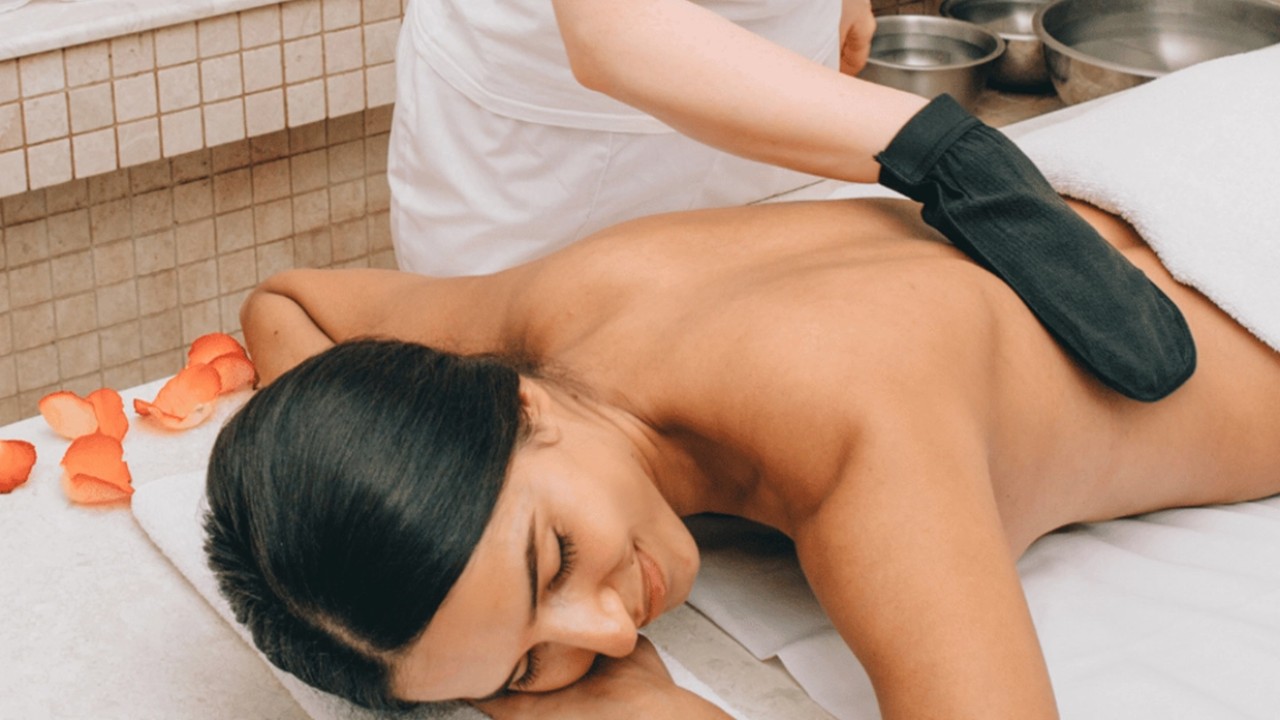
For those looking to relieve muscle fatigue after a canal tour, a massage session fits well at the end of the day. Scheduling the appointment at least an hour after your boat's return time allows for showering and resting. Opting for a light and short program rather than an intense pressure session immediately after exiting hot water provides a more comfortable evening.
Practical Tips Before and After Your Mud Bath
Most mishaps at the site arise from minor preparation oversights. The following points are details not covered in the sections above, but which make things easier on-site:
- Carry cash; card transactions may not be possible at all points for buffet and entrance payments.
- Carry your camera or phone in a waterproof case; mud easily gets into lenses and charging ports.
- For a closer look at the rock tomb facades, a small pair of binoculars or a phone with optical zoom is useful; the facades are several levels above the walking path.
- If you're visiting the archaeological site on the same day, bring closed-toe shoes; there's a dirt and stony path from the pier to the ticket office.
- The Kaunos ticket is often paid separately in most boat programs; ask about this during booking and add it to your day's budget.
- If you're heading to Kargıcak and Aşı bays, get water and food beforehand; the number of businesses along the road is limited.
- Waiting times at the rinsing section lengthen as the day progresses, shortening your stop time; starting your mud application when you see a queue for the cabins saves time.
- For families with children, keep hot water exposure brief and retreat to the shade in between.
Quick Summary: How to Plan Your Half-Day
If you're fitting the canal tour into the same day, the canal-side mud pools will suffice for your mud stop; if you want to sit in a thermal pool and take several dips in the sulfurous water, head to the main thermal spring area. The first trip in the morning shortens waiting times, while late afternoon hours are suitable for those looking to avoid the heat.
When budgeting, considering boat tickets, thermal spring entrance, archaeological site tickets, and lunch as separate items reduces surprises; the relative scale of these costs is provided in the ranking above. If you have time for a second day, the Köyceğiz side, Kaunos with its rock tombs, and the coves along the Sülüngür road naturally expand the program. In mid-summer, the first boat of the morning, and in winter, the road route via Köyceğiz, will ensure a smooth day.
Frequently Asked Questions 7
Is the Dalyan mud bath paid, and is the Museum Pass valid?
Entrance to the thermal spring area is charged per person and collected at the ticket office; the canal-side mud stop is often included in the day trip boat ticket. The Museum Pass is not valid here, and the reason is institutional: Sultaniye is not an archaeological site under the Ministry but a facility operated by the local municipality. The card is valid at museums and archaeological sites affiliated with the Ministry of Culture and Tourism, so it will be useful if you visit Kaunos on the same day.
How much is a Dalyan boat tour?
There is no fixed tariff, and we don't list prices in this guide because tariffs are updated at the start of each season, and any figure written quickly becomes misleading. The first question to ask when buying a ticket is whether the cost is per person or per boat: for cooperative boats, the tariff is announced per person and posted on the pier's board, while for private charters, the cost is calculated for the entire boat. The second question is what's included, meaning lunch, thermal spring entrance, and the Kaunos ticket. The third question is about cancellation and refund conditions; this point is important as trips can be canceled due to adverse weather. Current prices are live on our Muğla boat tour page.
What is Dalyan famous for?
Dalyan is renowned for three main attractions: the Kaunos rock tombs on the opposite bank of the canal, İztuzu Beach, a nesting ground for Caretta caretta sea turtles, and the mud baths associated with the thermal area by the lake. On the culinary side, the local caviar made from the lagoon's mullet roe is considered a signature product of the region. In ancient times, the city was famous for its dried figs; Kaunos figs were a well-known product in the Roman market and were even the subject of a pun recounted by Cicero.
What is in Dalyan town center?
The town center consists of a promenade along the canal and the market streets behind it, all within walking distance. Two distinct areas are prominent: Maraş Caddesi along the canal features scenic fish restaurants overlooking the rock tombs, while Gülpınar Caddesi and the market area are dominated by local eateries, gözleme (Turkish flatbread), and pide (Turkish pizza). The market also includes grocery stores, souvenir shops, and the boat cooperative's ticket board. The Dalyan local market, held on Saturdays, opens early in the morning and packs up by midday.
Are Dalyan and Ortaca the same place?
No, they are not the same place. Dalyan is administratively part of Muğla's Ortaca district; there is a short road and regular minibus service between the district center and Dalyan by the canal. However, the thermal spring area and Çandır village on the opposite bank of the canal fall within the neighboring Köyceğiz district. This has a practical implication for navigation: the Kaunos ticket office and parking are on the Çandır side, and if you set your destination as Dalyan, your navigation app might direct you along the longer route that circles the delta.
Can you swim in the Dalyan strait?
The canal is a waterway open to boat traffic, and currents can be strong in places; for swimming, İztuzu Beach and the marked pools at the thermal sites are preferred over the canal bed. For those who wish to swim in freshwater, the designated beach areas along Köyceğiz Lake are suitable; the lake is calm and has no waves, making it a preferred choice for families with children. Adhering to the boat captain's warnings will ensure your safety.
When can you see Caretta caretta at İztuzu Beach?
Nesting occurs nightly between approximately May and August, and the journey of hatchlings to the sea intensifies from late summer through September. Eggs in the nest hatch after an incubation period of about two months, depending on sand temperature, which also influences the sex of the hatchlings. Since the animals are active at night, the chance of seeing adult turtles during the day is low; what can be seen during the day are the marked cages and conservation efforts. Those wishing to see injured individuals up close can visit the publicly accessible section of the rescue center at the road entrance to the beach.