With its fairytale silhouette of fairy chimneys and millennia-old volcanic valleys, Cappadocia is a breathtaking landscape where cultural richness blends seamlessly with spiritual rituals. The historic stone structures, dating back to the Seljuk era, serve as the perfect stage for the Sema ceremony, the most profound expression of Mevlevi philosophy. To witness this ancient tradition in an authentic setting during your travels, you can browse our Nevşehir Whirling Dervish Tours to reserve your spot.
The 13th-century Saruhan Caravanserai, rising near Avanos, perfectly complements the spirit of the Sema ritual with its exquisite stonework and high-domed halls. As darkness falls, the golden stone walls of the caravanserai are illuminated by warm lights, and the haunting melodies of the ney (reed flute) echo through the stone arches. This spiritual encounter offers spectators much more than a standard tourist attraction; it provides a moment of deep inner peace.
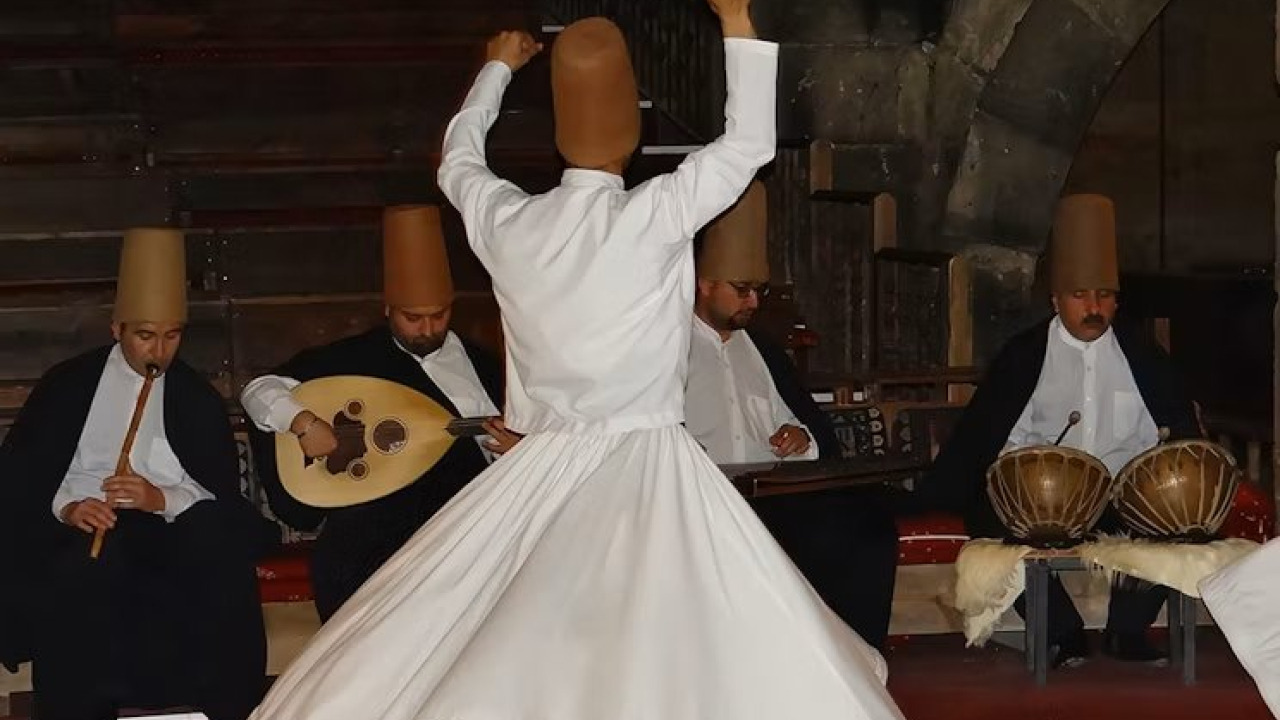
Recognized on the UNESCO Intangible Cultural Heritage list, the Sema ceremony is performed by dervishes and a musical ensemble (mutrıp) in strict adherence to tradition. While sipping traditional sherbet in the stone courtyards, visitors can feel the deep climate of tolerance that has defined Anatolia for centuries. This enduring tradition opens the spiritual heart of Anatolia to the world.
From the moment you step through the magnificent portal of the caravanserai, the vaulted courtyards isolate you from the chaos of the modern world. The natural acoustics of the Seljuk architecture deliver the dervishes' rhythmic breathing and the ney melodies to the audience in their purest form.
Quick Facts About the Cappadocia Sema Ceremony
| Feature | Visitor Summary |
|---|---|
| Historic Venue | Saruhan (Sarıhan) Seljuk Caravanserai, near Avanos |
| Architectural Era | 13th Century, Reign of II. İzzettin Keykavus (1249) |
| UNESCO Status | 2008 Intangible Cultural Heritage of Humanity |
| Ceremony Duration | Approximately 45 to 60 minutes of continuous ritual |
| Featured Instruments | Live performance with ney, kudüm, rebap, and halile |
| Recommended Age | 8 years and older (Visitors able to maintain silence) |
Saruhan Caravanserai and the Symbols of Mevlevi Philosophy
The Sema ceremony is not merely an aesthetic spinning movement; it is a philosophical form of worship carrying deep Sufi meanings. Every stage of the ceremony performed in the vaulted halls of the Saruhan Caravanserai symbolizes the stages of a human's spiritual maturation.
These thick stone walls, which once hosted Silk Road merchants, have transformed into a sanctuary where spiritual wisdom resonates today. The natural coolness of the space and its domed structure allow visitors to feel the very rhythm of the universe alongside the dervishes.
The Deep Meaning of Dervish Attire
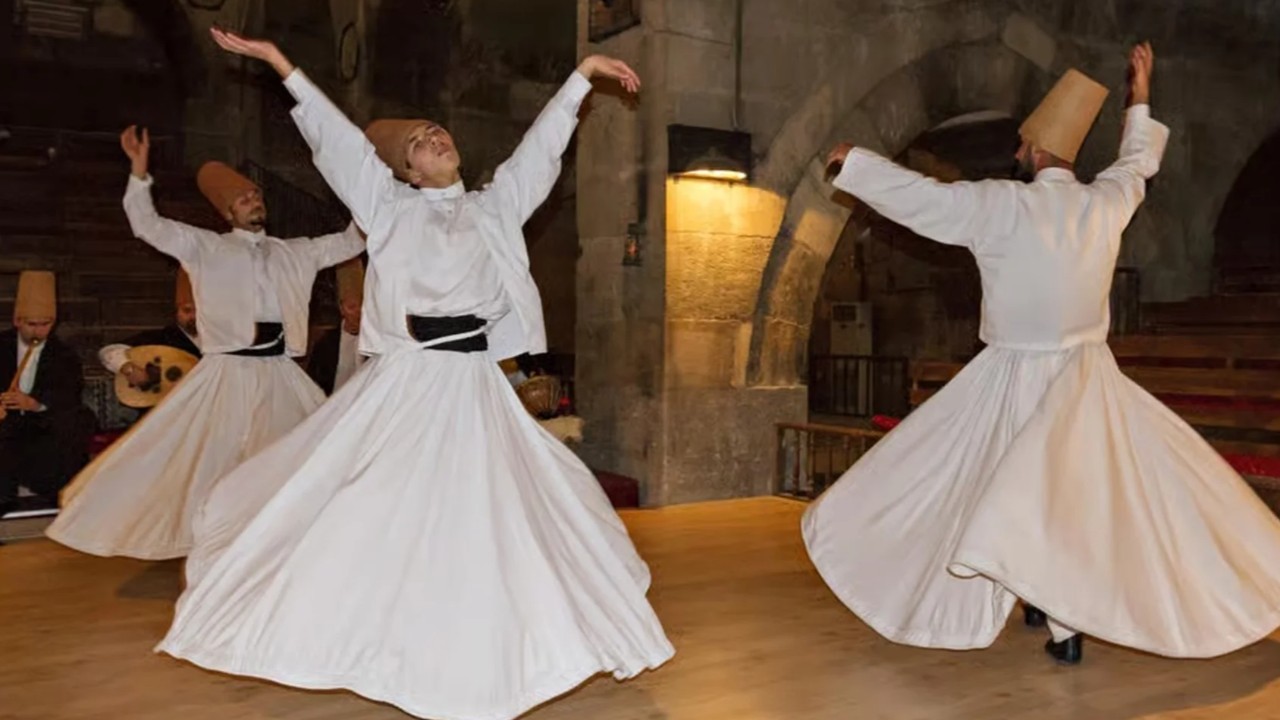
Every garment worn by the whirling dervishes points to a spiritual truth. The tall sikke (hat) made of camel hair represents the tombstone of the ego, symbolizing the shedding of worldly pride.
The black cloak (hırka) worn by the dervishes represents the grave, while the pure white skirt (tennure) they emerge in symbolizes the purification of the soul and the shroud of rebirth. As they spread their arms, the right hand is turned toward the sky to receive grace from the Divine, while the left hand is turned toward the earth to distribute that grace to humanity.
The Four Salams and the Devr-i Veledî
The ceremony begins with the Devr-i Veledî stage, where dervishes enter the hall and greet the Sheikh. This circular movement represents the creation of the universe and the meeting of the soul with the body.
The subsequent "Four Salams" symbolize the human understanding of existence, the realization of divine power, and the attainment of conscious servitude. The deep tones of the ney soothe the soul, leading it into a state of profound contemplation. The transitions between musical modes (makam) and the strikes of the kudüm drum mimic the rhythmic heartbeat of the cosmos.
During each stage of the salams, the dervishes continue to whirl in a state of ecstasy (vecd), slightly tilting their heads to focus on their hearts. This visual harmony evokes a sense of deep tranquility in the audience.
Etiquette and Rules of Conduct During the Sema Ritual
Mevlevi Sema ceremonies are not tourist entertainment or stage shows; they are sacred rituals that must be treated with spiritual solemnity in accordance with Ministry of Culture and Tourism guidelines. Therefore, all guests are expected to follow specific rules of conduct within the ceremony hall.
- Once the ceremony doors are closed, no entry or exit is permitted, and absolute silence must be maintained throughout the ritual.
- To avoid disrupting the dervishes' concentration and the mystical lighting of the hall, flash photography is strictly prohibited.
- Mobile phones must be switched to silent mode, and care should be taken that screen brightness does not disturb the surroundings.
- Standing up or walking through the corridors while the ceremony is in progress is forbidden due to the sanctity of the space.
- Since Sema is not a theatrical performance, there is no applause at the end; guests should stand silently in respect as the dervishes depart.
These five rules of etiquette ensure the preservation of the spiritual atmosphere, allowing participants to experience the ceremony in peace. After the ceremony, the sherbet served in the caravanserai courtyard is a sweet reflection of the dervish tradition.
Comparing Cultural Activities in Cappadocia
Cappadocia evenings offer various activity alternatives to suit different moods. Use the comparison table below to decide which evening activity best fits your travel style.
| Activity Type | Venue Structure | Atmosphere & Dynamic | Target Audience |
|---|---|---|---|
| Sema Ceremony (Whirling Dervish) | Historic Saruhan Caravanserai | Serene, spiritual, silent, and contemplative | Culture and spirituality seekers |
| Turkish Night Program | Underground cave restaurants | Lively, musical, dining, and entertaining | Entertainment and folk dance lovers |
| Light & Projection Show | Zelve Open Air Museum valley | Visual, historical storytelling, outdoors | History and technology enthusiasts |
| Sunset Valley Concert | Kızılçukur and Lovers' Valley | Natural scenery, acoustic music | Photographers and romantic couples |
| Cave Restaurant Dinner | Ürgüp and Uçhisar boutique venues | Gastronomy-focused, calm local music | Gourmet food explorers |
As shown in the table, the Sema ceremony is Cappadocia's most tranquil and soul-soothing activity. For those looking to escape noisy environments and touch the roots of Anatolian wisdom, this gathering at the caravanserai is an essential stop.
You can combine your trip by attending a Sema ceremony on one night and tasting local testi kebab (pottery kebab) in a cave restaurant on another. Each experience offers a chance to discover a different facet of Cappadocia's culture.
Practical Preparations Before Visiting the Caravanserai
Due to its thick stone walls, the Saruhan Caravanserai remains quite cool in the evenings, even during the summer months. Therefore, even in summer heat, we recommend bringing a light cardigan, jacket, or shawl for your comfort.
The seating in the ceremony hall is arranged on tiered wooden or stone benches (sedir). You may be asked to wear shoe covers provided at the entrance to help preserve the historic stone floors.
Transportation to the caravanserai from local accommodation hubs is usually organized via tour shuttles. Hotels based in Göreme, Ürgüp, Uçhisar, or Avanos often offer round-trip transfer services, making nighttime travel very convenient.
Arriving at the site half an hour before the ceremony begins allows you to photograph the Seljuk portal and the vaulted courtyard in the daylight. The stone arches of the caravanserai take on beautiful golden tones during sunset.
The Universal Message of Rumi's Philosophy
The teachings of Mevlana Jalaluddin Rumi, which blossomed in Anatolia during the 13th century, unite all of humanity through love, tolerance, and humility. The whirling of the dervishes reflects the continuous movement of all beings in the universe, from atoms to galaxies.
Every breath of the ney heard under the dome of Saruhan symbolizes the human longing for its origins. The holes pierced into the reed represent the "perfect human" who has been refined through pain and patience. The ancient verses of the Masnavi spread through the stone walls like silent wisdom.
This ceremony, which often moves foreign travelers to tears even without understanding the words, speaks to a shared human conscience that transcends borders and languages. Crowning your Cappadocia trip with such meaningful depth adds profound spiritual value to your journey.
After the ceremony, you can maintain this sense of peace by sipping the clove and cinnamon-infused sherbet in the caravanserai courtyard. The spiritual stillness experienced here will leave a lasting impression on your holiday.
Cultural Routes to Complete Your Cappadocia Journey
After filling your evening with the peace of the Sema ceremony, you can dedicate the next day to exploring Cappadocia's deep history by daylight. For your daytime itinerary, you can explore our culture tours covering Cappadocia's ancient valleys and fairy chimneys.
Additionally, to see the rock settlements and underground cities firsthand, you can add open-air museum and ancient city tours in the region to your list. In Avanos, you can enjoy an artistic experience by shaping clay in traditional pottery workshops along the Kızılırmak River.
- Families with young children are advised to consider whether their little ones can remain quiet during the ceremony.
- You can find miniature dervish figurines and various ney instruments in the souvenir section of the caravanserai courtyard.
- Since the acoustics of the stone structure are very sensitive, please keep keychains and metal objects secure in your pockets.
- To complete your mystical journey, consider adding the Hacı Bektaş-Veli shrine to your travel plan.
The sound of the ney floating through the skies of Cappadocia and the harmonious whirl of the white tennure will always remain a special, serene corner of your travel memories. Experiencing these historical and spiritual values with respect offers an unforgettable richness to your visit.
Frequently Asked Questions 5
Where is the whirling dervish ceremony held in Cappadocia?
In the Cappadocia region, Sema ceremonies are held at the historic Saruhan (Sarıhan) Seljuk Caravanserai located near the Avanos district. This authentic 13th-century stone structure is the perfect venue to reflect the mystical spirit of the ritual.
Can I take photos during the Sema ceremony?
To avoid disrupting the spiritual concentration of the dervishes, flash photography and video recording are not permitted during the ritual. You are free to photograph the architectural details of the caravanserai before or after the ceremony.
Is applause allowed during the ceremony?
No, the Sema is not a stage show or a dance performance; it is a spiritual act of worship and a remembrance ritual. Therefore, there is no applause at the end; respect is shown through silent standing as the dervishes depart.
Can children attend the whirling dervish show?
Since absolute silence must be maintained throughout the ceremony, it is recommended that only children aged 8-10 and above, who can remain quiet for approximately one hour, attend. Infants who may cry or move frequently may not be admitted to the hall.
Is there a dress code for the Caravanserai?
While there is no strict dress code, it is best to wear simple and respectful clothing appropriate for a spiritual ceremony. Additionally, due to the coolness of the historic stone building, we recommend bringing a cardigan or jacket.