
For any traveler venturing into the majestic landscapes of Wadi Rum, the first and most critical decision isn't which landmarks to visit, but where to spend the night. Within the protected area of the desert, you won't find conventional hotels; instead, all accommodations are hosted in camps operated by local Bedouin families.
The difference between these camps goes far beyond "a bit more luxury." The experience shifts dramatically, in terms of comfort, cost, and the overall rhythm of the night, depending on whether you choose a simple goat-hair tent with shared facilities or an air-conditioned transparent "bubble" dome. For international tourists, the key isn't just the name of the camp, but its location, amenities, transport logistics, and exactly what is included in the price. This guide breaks down Wadi Rum Bedouin camp accommodations across these four essential pillars.
Quick Facts
| Feature | Details |
|---|---|
| Location | Southern Jordan; approx. 60-70 km from Aqaba, 100-105 km from Petra |
| Protection Status | Declared a protected area in 1998; added to UNESCO World Heritage List in 2011 as "Wadi Rum Protected Area" |
| Area Size | Approximately 74,000 hectares |
| Entry Fee | 5 JOD per person (Included for Jordan Pass holders) |
| Accommodation Style | Camps only (No hotels); ranges from shared-bath tents to private luxury domes |
| Getting to Camp | 4x4 transfer from Wadi Rum Village (usually 10-20 minutes) |
| Private Vehicles | Forbidden inside the protected area; only licensed Bedouin operators are permitted |
| Typical Stay | 1 night; 2 nights are recommended for a more relaxed itinerary |
| Power & Internet | Limited (solar or generator); power may cut out at night |
How Does Camping in the Valley of the Moon Work?
Wadi Rum, often called the "Valley of the Moon," doesn't operate like an open park where you can simply wander in. Visitors must first pass through a registration point, proceed to the village, and then be picked up by their respective camp. Because accommodation is typically bundled with a jeep tour, the question of "which camp should I stay at?" is effectively the same as "who will be my guide for the desert tour tomorrow?"
Entry Registration and the 5 JOD Fee
Your journey begins at the visitor center, where you register and pay a 5 JOD entry fee. If you have a Jordan Pass, this fee is waived. However, remember that the pass only covers entry, it does not include camp accommodation, jeep tours, camel rides, or meals. Whether the entry fee is bundled into your camp package varies by operator, so this is a detail you should clarify during booking.
Wadi Rum Village and Camp Offices
About 8 km past the visitor center lies Wadi Rum Village. The village offers markets for snacks and drinks, though alcohol is not sold here (you'll need to stock up in Aqaba). Most camps use the village as their primary meeting point. Offices like the Bedouin Nights Camp Office serve as greeting hubs and vehicle exchange points: you leave your private car in the village and complete the journey to your camp in the operator's 4x4.
Bedouin Camp Types and Comfort Levels
Camps in Wadi Rum generally fall into five categories. Your choice will directly impact your sleep quality, your bathroom routine, and your budget.
| Camp Type | Key Features | Best For... |
|---|---|---|
| Traditional Goat-Hair Tent | Bed and heavy blankets; no running water or heating in-tent, shared bathrooms | Budget travelers seeking an authentic, raw Bedouin experience |
| Mid-Range Private Bath | En-suite shower and toilet, hot water, often air-conditioned | Couples and families who want desert vibes without sacrificing comfort |
| Bubble & Dome Tents | Transparent ceilings or panoramic windows, AC, private bath | Stargazers who want to see the Milky Way from their bed |
| Cave/Rock Shelter | Bedding set up under natural rock overhangs, wind-protected | Those looking for a unique, unconventional night |
| Bivouac/Open-Air Sleep | Minimal gear, sleeping on the ground | Experienced campers (not always recommended due to scorpion risks) |
Traditional Goat-Hair Tents
The classic setup consists of 8-10 small tents clustered around a central community tent. These black-and-white striped tents are built on wooden platforms and usually contain nothing but a bed. Since there is no heating, the number of blankets provided becomes crucial on chilly nights. These are often family-run operations that can accommodate larger groups of 30-35 people.
Private Bath Camps: The "Desert Dreams" Experience
In the mid-range segment, en-suite bathrooms and hot water become the standard. For example, Wadi Rum Desert Dreams offers rooms with large panoramic windows that bring the desert view right to your bedside. Their rooms can accommodate 1 to 5 people, a vital detail for families, as most bubble tents are strictly for two people and cannot accommodate extra beds.
Bubble and Dome Tents
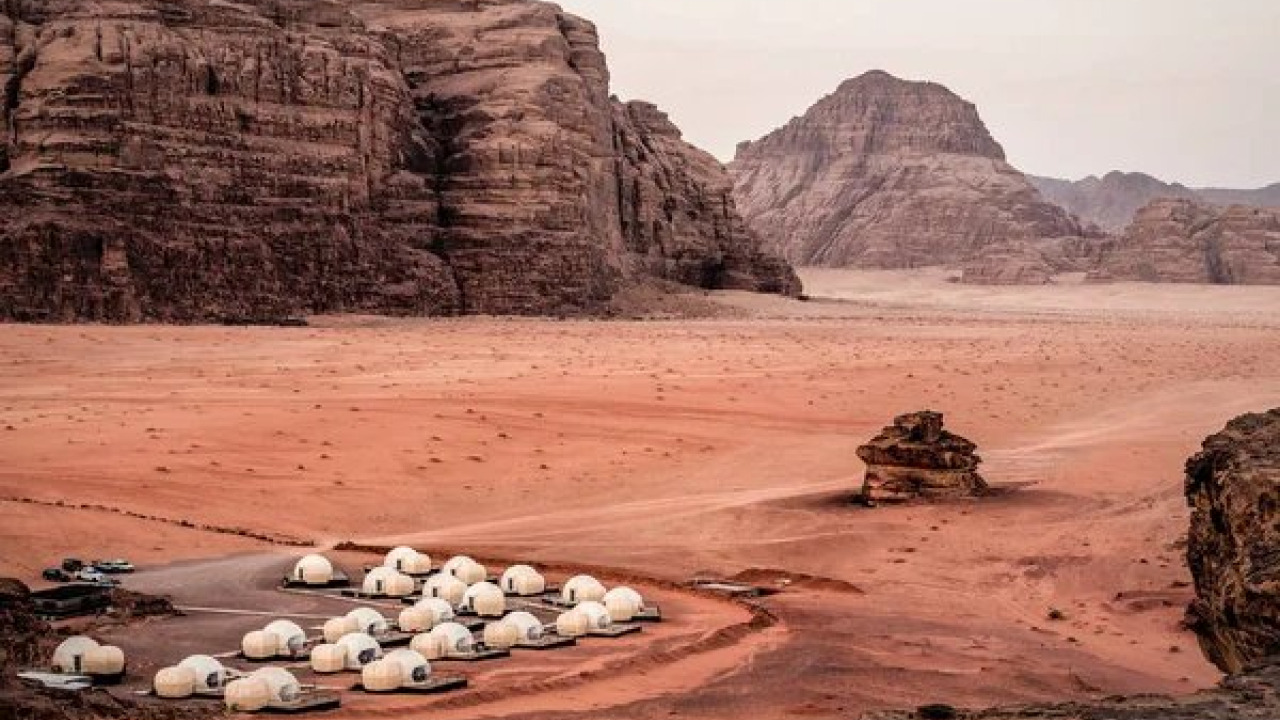
Transparent domes are designed for those who want to experience the zero-light-pollution sky of the desert from a climate-controlled environment. The comfort level here is close to a hotel: hot water, AC, and regular housekeeping. Two practical tips: when opening the inner door of a bubble tent, ensure the outer door is closed to prevent air currents from affecting the structure; also, be prepared for a significantly higher price point than traditional tents.
Wadi Rum Cave Camping and Rock Shelters
Located near Um Sabatah, Wadi Rum Cave Camping offers a unique alternative. Instead of a tent, you sleep in a natural rock alcove that blocks the sun, rain, and wind, usually enclosed by a low, traditionally built wall. It's a fantastic option for those who find tents too restrictive.
How Location Affects Your Experience
Even if two camps offer the same amenities, their location in the desert can change your entire trip. Camps near the village offer shorter transfers, while those deeper in the wilderness offer true silence and clearer skies.
Around Al Ramal Red Sand Dune
The Al Ramal Red Sand Dune is one of the most photographed spots in the region due to its deep crimson color and soft texture. Camps located near these dunes don't require long transfers to catch the sunset, and these dunes are naturally the first or last stop on most jeep tours.
For Jabal Umm ad Dami Hikers
Jabal Umm ad Dami, the highest peak in Jordan, is located at the southern edge of the protected area near the Saudi Arabian border. If you plan to hike the summit, staying at a camp in the southern sector will save you hours of driving from the village in the morning.
Early Departures for Balloons Over Rum
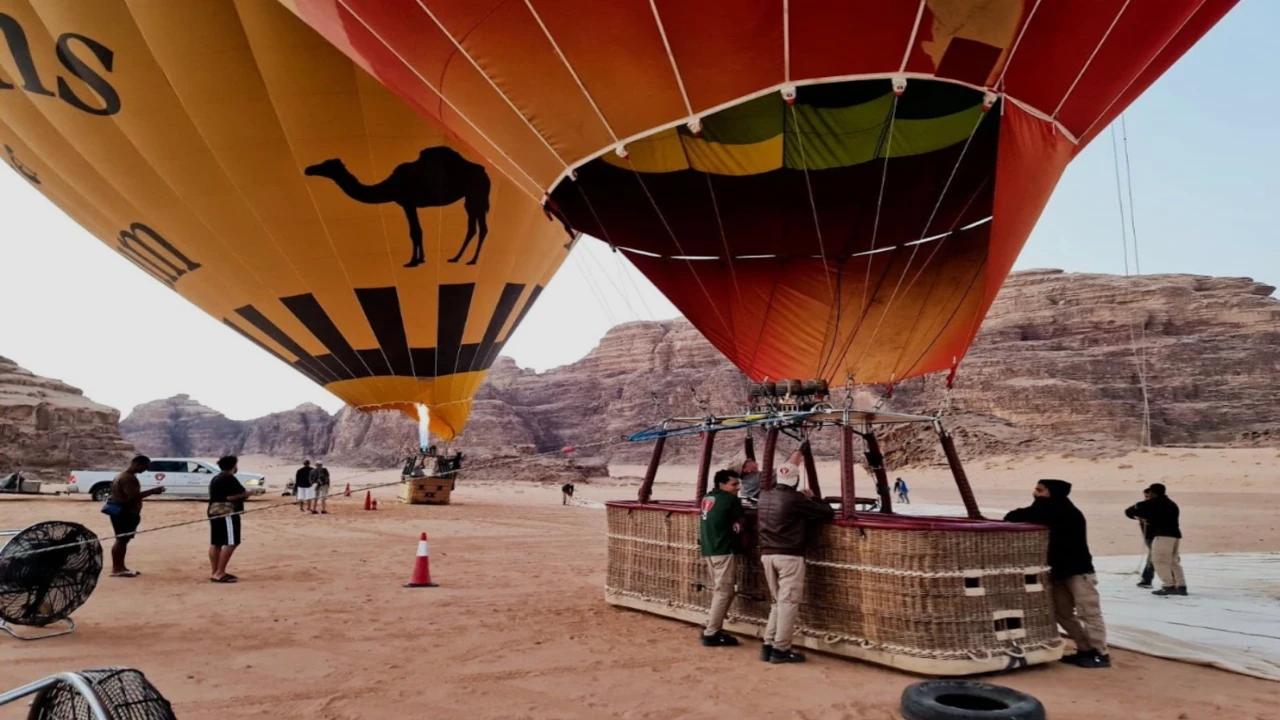
Hot air balloon tours typically launch from the Disi area, offering a 600-meter-high view of the red plains. If you are booking with operators like Balloons Over Rum, you should either choose a camp near Disi or arrange a very early transfer, as flights launch at dawn.
How to Get There
Reaching your camp is a step-by-step process:
- Enter the Desert: Drive in from either Aqaba (approx. 1 hour) or Petra (approx. 105 km).
- Register: Stop at the Wadi Rum Visitor Center, register, and pay the 5 JOD entry fee (or show your Jordan Pass).
- Head to the Village: Drive another 8 km to Wadi Rum Village. This is the primary meeting point for most camps and jeep tours (which usually start around 10:00 AM).
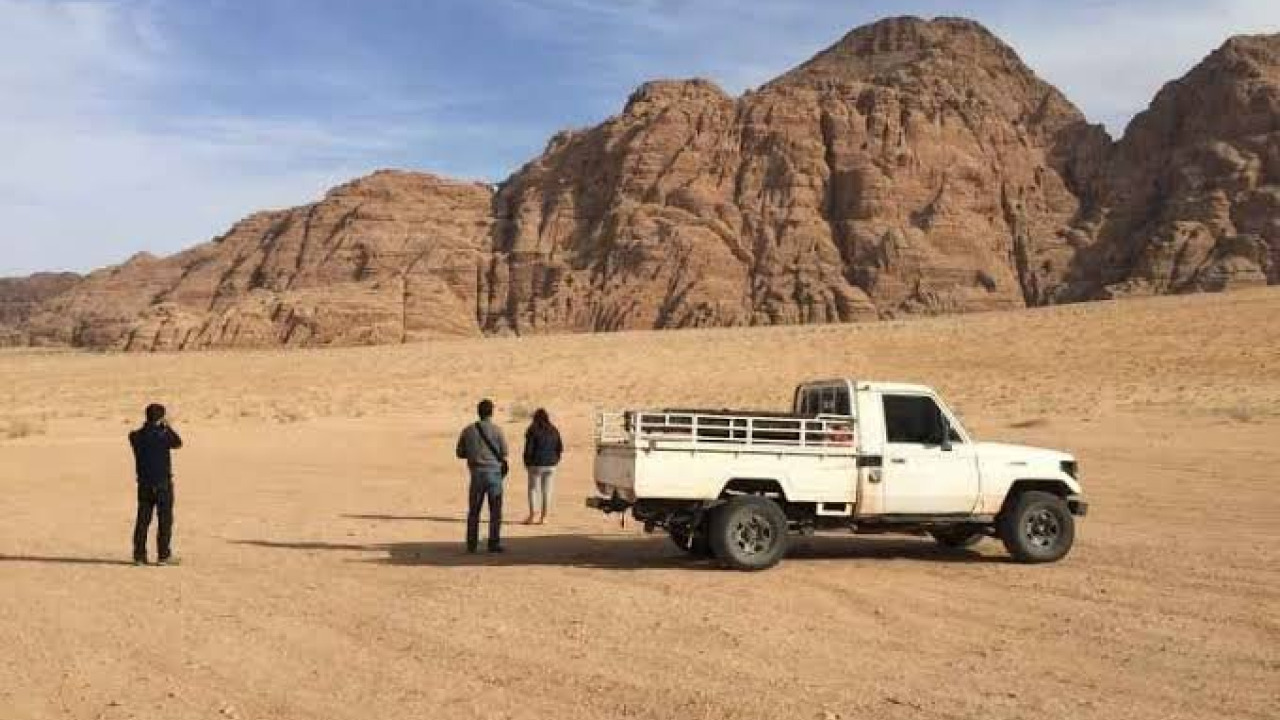
- Switch Vehicles: Leave your car in the village. Private cars are not allowed deeper into the protected area; you will complete the trip in the camp's 4x4.
- Check-in: The transfer to the camp usually takes 10-20 minutes and is often free of charge.
A Night in the Desert: From Dusk till Dawn
Evening Hours
Check-in times are similar to hotels (e.g., 2:30 PM check-in, 10:30 AM check-out). Dinner is typically a Jordanian buffet with freshly baked bread. Some camps offer Zarb, a traditional Bedouin barbecue cooked in an underground oven. The night usually concludes with tea, coffee, and music around a campfire. For those who love this kind of local culinary immersion, our gastronomy organization tours offer similar curated experiences.
The Night: Stars and Sleep
With no city lights for miles, the Milky Way is often visible to the naked eye on clear nights. Camps keep lighting low to preserve this view, so bringing a flashlight or headlamp is highly recommended. Since power is provided by solar panels or generators, electricity can be intermittent, and Wi-Fi is often non-existent. While sleeping under the stars sounds romantic, camps warn against it due to the risk of scorpions.
Morning and Departure
After breakfast, most guests head out on a jeep safari. Half-day tours last about 4 hours, while full-day tours continue until sunset. We recommend asking your guide how long they stay after the sun dips below the horizon, as the transition from sunset to total darkness is the most visually stunning part of the trip. If you're looking to combine this with other wilderness adventures, check out our nature adventure tours.
When to Visit?
The temperature swing between day and night in the desert determines whether you need a heater or just a few extra blankets.
| Season | Daytime | Nighttime | Camp Tip |
|---|---|---|---|
| March-May | 20-35 °C | Cool | Ideal for long jeep tours and hiking |
| June-August | 35°C+ (can hit 40°C+) | Warm | Midday is brutal; AC camps are a must |
| Sept-Nov | 15-35 °C | 5-15 °C | The most comfortable window of the year |
| Dec-Feb | 8-20 °C | 4°C or below (can hit 0°C) | Confirm heating and blanket availability |
Budget, Booking, and Selection Criteria
Prices are quoted in Jordanian Dinars (JOD) and vary by package. As of Summer 2026, a basic tent stay starts around 20 JOD per night, dinner is roughly 10 JOD per person, and a half-day jeep tour ranges from 30-60 JOD per person. Private bath camps and bubble domes are in a significantly higher price bracket. Note that the more people in your group, the lower the per-person cost for the jeep.
Questions to Ask Before Booking
- Is the bathroom shared or en-suite? When is hot water available?
- Does the price include dinner, breakfast, transfer from the village, and the entry fee?
- Is there heating or AC? How many blankets are provided for winter nights?
- Where exactly is the camp located? How many minutes from the village?
- How long is the jeep tour, and how long do we stay after sunset?
- What is the camp's capacity? Is it a large 30-person operation or a quiet family-run spot?
While negotiating on-site can offer flexibility, booking in advance is highly recommended during peak season to guarantee your spot. For those planning Wadi Rum alongside Petra and Jerash, our historical city tours and culture tours can help you build the perfect itinerary.
Frequently Asked Questions 6
Should I stay for one night or two?
Most travelers stay for one night and complete a jeep safari the next day. Staying for two nights allows you to visit more remote landmarks and dedicate a full day to hiking. After three nights, the experience tends to become repetitive.
Do Bedouin camps have private bathrooms?
It depends on the camp type. Traditional goat-hair tents usually have shared bathrooms and no running water inside the tent. Mid-range and bubble camps provide en-suite showers and toilets with hot water.
Are the jeep safari and dinner included in the camp price?
Most camps sell a bundle including accommodation, dinner, breakfast, and a jeep tour, but the specifics vary. The 5 JOD entry fee is often not included, so be sure to verify this.
Is there electricity and internet in the camps?
Electricity is provided via solar panels or generators and may be cut off at night. Internet is unavailable in many camps, while some offer limited connectivity. A power bank and a flashlight are essential.
Can I drive my own car to the camp?
You can drive your own vehicle to Wadi Rum Village. However, you cannot enter the protected area beyond the village in a private car; you must transfer to a licensed 4x4 Bedouin vehicle to reach your camp.
Will I be cold in a desert camp during winter?
From December to February, nighttime temperatures can drop to 4°C or even below freezing. Traditional tents provide heavy blankets, but for a more comfortable winter stay, we recommend booking a camp with heating or AC.