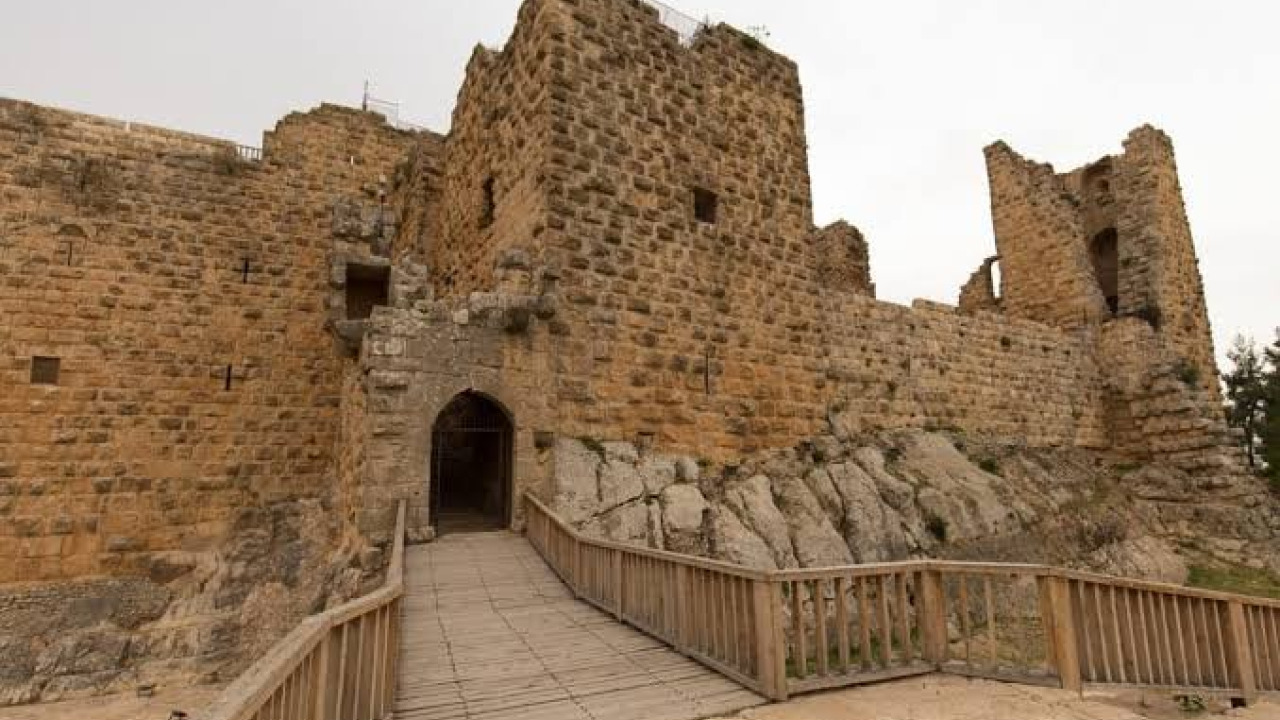

Perched atop a hill where lush pine forests meet ancient olive groves in northern Jordan, Ajloun Castle stands as one of the most striking examples of Islamic military architecture in the region. Known in Arabic as Qal'at ar-Rabad, the "Castle of the Hill", this fortress was commissioned in 1184 by Izz al-Din Usama bin Munqidh, a trusted commander under the legendary Saladin. Strategically positioned on the slopes of Jebel Awf, the castle provided a commanding view of the routes descending into the Jordan Valley. For travelers visiting from Turkey, Ajloun is an easy addition to a Jerash itinerary, located within a convenient distance from Amman. This guide explores why the castle was built on this specific peak, its pivotal role during the Crusades, its various stages of expansion, and essential practical tips regarding tickets, timing, and transport for your visit.
Quick Facts
| Feature | Details |
|---|---|
| Arabic Name | Qal'at ar-Rabad (Castle of the Hill) |
| Year Built | 1184 |
| Commissioned By | Izz al-Din Usama bin Munqidh (Commander under Saladin) |
| Location | Ajloun, Northern Jordan; approx. 70-75 km NW of Amman |
| Distance to Jerash | Approx. 19 km (as the crow flies); ~25 km by road (40 mins) |
| Visiting Hours | Generally opens at 08:00; closes around 16:00 (Winter) / 18:30 (Summer). (Opens at 09:00 during Ramadan) |
| Entrance Fee | Approx. 3 JOD for foreign visitors (as of 2026) |
| Jordan Pass | Included |
| Recommended Visit Time | 1 to 1.5 hours |
Why Was the Castle Built on This Hill?
Ajloun Castle was never intended to be a palace or a residence; it was born from pure military necessity. From its vantage point on Jebel Awf, the entire Jordan Valley is visible, and the castle itself can be spotted from miles away. This visibility was a defensive asset: any approaching enemy force in the valley could be spotted and reported long before they reached the gates.
Iron Mines and Trade Routes
The presence of local iron deposits played a significant role in the decision to fortify this area. Beyond mineral wealth, the castle served as a strategic checkpoint to monitor and control the vital trade arteries connecting Jordan and Syria. From the 12th to the 15th century, it functioned as a critical watchtower protecting these commercial lifelines.
Dominating the Three Paths to the Valley
The fortress commanded three primary routes leading down to the Jordan Valley. Controlling these three paths meant controlling the region. This strategic layout still benefits today's visitors; standing on the terraces, the geography of Northern Jordan unfolds like a living map.
Saladin's Fortress? Meet the Commander Who Built It
While often attributed directly to Saladin, the castle was actually built in 1184 by his commander, Izz al-Din Usama bin Munqidh. This is a key distinction: Saladin designed the overarching defensive strategy for the region, but it was his general who executed the construction. The castle was a vital link in a defensive chain designed to shield Northern Jordan from Crusader incursions. For those interested in medieval military architecture, Ajloun is a perfect starting point to understand the logistics of the monumental structures often featured in historical city tours.
What Role Did Ajloun Castle Play in the Crusades?
The Threat from the South: Kerak and Shobak
By the time Ajloun was constructed, the Crusaders had already established a strong presence in Southern Jordan. From their massive strongholds in Kerak and Shobak, they exerted pressure toward the north. Ajloun Castle was strategically placed to halt this northward expansion. Despite years of attempts to seize the fortress, Crusader forces were never able to capture it.
The Battle of Hattin and Its Impact
The Battle of Hattin in 1187, fought between the Ayyubid army under Saladin and the forces of the Crusader Kingdom of Jerusalem, fundamentally shifted the balance of power in the region. For Ajloun, the impact was immediate: by 1188-1189, the Crusaders were pushed out of the east bank of the Jordan River. This effectively ended the direct Crusader threat that had necessitated the castle's construction. However, Ajloun remained vital, transitioning from a frontline defensive fort to a center for road and trade regulation.
Eras That Shaped the Fortress
| Year | Event | Architectural Impact |
|---|---|---|
| 1184 | Izz al-Din Usama commissions the castle | Four towers, thick walls, arrow slits, and a surrounding moat |
| 1188-1189 | Crusaders expelled from East Jordan | Shift from active defense to trade and road monitoring |
| 1214-1215 | Aybek bin Abdullah (Mamluk officer) expands the fort | New tower in the SE corner and a bridge with dove reliefs |
| 13th Century | Saladin Yusuf bin Ayyub (Ruler of Aleppo/Damascus) repairs | Renovation of the NE tower |
| 1260 | Mongol invasion causes severe damage | Partial collapse of several sections |
| Post-1260 | Mamluk Sultan Baybars rebuilds the castle | Much of the structure visited by tourists today |
Traveler's Note: The 13th-century entry in the table is a common point of confusion. The repairs were carried out by Saladin Yusuf bin Ayyub, an Ayyubid ruler from a later generation, not the original Saladin who recaptured Jerusalem.
What to See at the Castle
- Panoramic Terraces: Breathtaking views of the Jordan Valley and, on clear days, the distant western hills.
- Arrow Slits: Narrow openings carved through the massive walls for archers.
- The Great Moat: A formidable defensive trench averaging 16 meters wide and reaching 15 meters deep in some areas.
- The Dove Bridge: A beautifully carved bridge leading to the SE tower, featuring intricate dove reliefs.
- Stone Corridors & Courtyards: Atmospheric walkways and open-air spaces that echo with medieval history.
Towers, Slits, and Moats
The original design featured four towers and walls embedded with arrow slits. The sheer scale of the moat, 16 meters wide and 15 meters deep, proves that Ajloun was not just a lookout post, but a fortification designed to withstand prolonged sieges.
The Dove-Carved Bridge
Added during the expansion in the early 13th century, the bridge used for entry is famous for its dove reliefs. This is typically the first "Instagram spot" for visitors entering the castle.
How to Get to Ajloun Castle
- From Amman: Head north toward Jerash; the distance is approximately 70-75 kilometers.
- From Jerash: After visiting the ruins, turn west and follow the signs for Ajloun. This 25 km stretch takes about 40 minutes, and you'll notice the landscape shift from arid hills to lush pine and olive forests.
- The Final Ascent: Follow the road climbing Jebel Awf toward the castle; the fortress will be visible long before you arrive.
- Entry: Purchase your ticket at the gate or scan your Jordan Pass, then cross the moat bridge to enter.
| Transport Option | How it Works | Best For... |
|---|---|---|
| Rental Car | Drive from Amman via Jerash through the mountain roads | Those wanting to combine Jerash and Ajloun in one day |
| Private Transfer/Tour | Hotel pickup and drop-off at the castle gates | Travelers who prefer a stress-free experience without navigating |
| Minibus + Taxi | Take a minibus to Ajloun center, then a short taxi ride up to the castle | Budget-conscious travelers with a flexible schedule |
To maximize your time, we recommend our cultural tours, which seamlessly combine Jerash and Ajloun in a single, efficient itinerary.
Exploring the Surroundings
Ajloun Forest Reserve
To the north of the castle lies a 13-square-kilometer protected area filled with oak, pistachio, and terebinth trees, providing a habitat for species like the roe deer. Popular hiking trails include the Roe Deer route, the path to the traditional soap factory in Orjan village, and the Laden route, famous for its seasonal wildflowers. The soap factory trail climbs to an altitude of 1,100 meters. In spring, the area bursts into bloom and becomes a favorite for local picnickers, a perfect addition for those booking nature and adventure tours.
Ajloun Cable Car & Ishtafina Station
Launched in the summer of 2023, the cable car connects the main station near the castle to the second station at Ishtafina. The line is approximately 2.5 km each way, with a round trip taking about 20 minutes. Operating hours vary by season, and the system typically closes one day a month for maintenance.
Frequently Asked Questions 5
Did Saladin build Ajloun Castle himself?
No. The castle was built in 1184 by Izz al-Din Usama bin Munqidh, one of Saladin's commanders. While Saladin developed the overall defensive strategy for the region, the actual construction was the work of his general.
Was the castle ever captured by the Crusaders?
No. While Crusader forces spent years attempting to seize the castle and its surrounding settlements, they were unsuccessful. The most significant damage to the castle actually came from the Mongol invasion of 1260, after which Mamluk Sultan Baybars rebuilt the structure.
How much time should I spend visiting the castle?
One to 1.5 hours is usually enough to explore the towers, courtyards, and terraces at a leisurely pace. If you plan to take the cable car, allow an additional 30-40 minutes for the ride and waiting times.
Can I buy the cable car ticket at the castle entrance?
No. The castle and the cable car are operated separately. The castle ticket or Jordan Pass does not cover the cable car. Tickets for the cable car must be purchased at its own station.
What is the latest I can leave Amman to arrive before closing?
In winter, the castle closes around 16:00, so it is safest to leave Amman before noon. In summer, closing is extended to 18:30, making an early afternoon departure viable. In either case, aim to arrive at least one hour before closing.