Exploring the religious sites in Demre involves a spiritual journey through the St. Nicholas Basilica (the Monument Museum of Santa Claus), the Alakilise church dedicated to Archangel Gabriel on the Alakadağ slopes, the Karabel (Asarcık) Eastern Roman Monastery, and the early Christian church and synagogue ruins at the Andriake port. For travelers wishing to witness Byzantine religious architecture, synthronon seating, intricate wall frescoes, and opus sectile floor mosaics firsthand, Demre religious sites tours offer professional guided faith and culture programs.
Once a major episcopal center known as Myra, Demre served as a vital port for Eastern Mediterranean sailors and pilgrims. Today, it boasts a rich liturgical architectural heritage spanning from the Early Christian era to the Middle Byzantine period. This pilgrimage route, stretching from the domed basilicas in the town center to the remote monastic settlements in the Alakadağ and Muskar (Belören) mountains, requires more than a standard sightseeing approach; it demands an understanding of iconography and respect for sacred spaces. This guide covers the architectural features, fresco scenes, rural church routes, and essential visiting etiquette for Demre's holy sites.
Here is a quick summary of the faith heritage stops and preparation tips for your visit to Demre, Antalya:
- St. Nicholas Basilica (Demre Center): The heart of the route, featuring the synthronon (clergy seating) in the apse, a marble sarcophagus niche with fish-scale patterns, and wall frescoes depicting the Council of Nicaea.
- Alakilise & Karabel Monastery: Nestled among the pine and cedar forests of Alakadağ, these sites showcase rural Byzantine stonework and clover-shaped baptisteries.
- Andriake Port: Reflecting the region's multicultural past, this area features five early port basilicas and an ancient synagogue adorned with Menorah (seven-branched candelabrum) reliefs.
- Guided Experiences: Our Demre Religious Sites Tour includes expert-led interpretations of iconographic symbols and seamless transportation between stops.
Demre Religious Sites & Faith Heritage: Quick Facts
The religious tour stops in Demre, Antalya, are organized into three geographic zones: the episcopal basilica in the town center, the communal worship sites at the port, and the monastic complexes in the mountain villages. Knowing the architectural layouts and dress codes beforehand will significantly enhance your experience.
The following table summarizes the location, architecture, and visiting rules for Demre's religious landmarks:
| Feature | Site & Visit Information |
|---|---|
| Primary Faith Stops | St. Nicholas Basilica, Alakilise (Archangel Gabriel Church), Karabel Monastery, Andriake Synagogue and Basilicas |
| Architectural & Liturgical Elements | Synthronon, bema, pastophorion rooms, opus sectile mosaics, Deesis frescoes, and stone sarcophagi |
| Geographic Location | Turkey, Antalya, Demre town center, Çayağzı port area, and Alakadağ (Muskar/Belören) slopes |
| Available Programs | 2 active products via the Demre Religious Sites Tour and guided faith-culture routes |
| Etiquette & Dress Code | Modest clothing covering shoulders and knees, silence under domes, no flash photography near frescoes |
| Best Time to Visit | Early morning at opening or late afternoon to avoid crowds inside the Basilica |
Because the floors of Demre's religious structures consist of historic marble slabs and colorful stone inlays (opus sectile), it is mandatory to stay behind protective barriers and wear soft-soled shoes. For those wishing to explore these sites alongside Roman ruins and rock tombs, check out our combined programs on the Demre ancient city tours page.
St. Nicholas Basilica: Architecture and Iconography
Built in honor of St. Nicholas, the Bishop of Myra, and renovated into a domed basilica during the Middle Byzantine period, the structure sits below the current street level of Demre due to alluvial deposits. Visitors enter via stairs from the courtyard into an interior that reflects the unique liturgical elements of Early Christianity.
Narthex, Domed Nave, and the Synthronon
After passing through the inner and outer narthex corridors, you reach the central nave (naos) covered by a dome. Inside the semi-circular apse at the eastern end, the concentric stone steps (synthronon) where bishops and clergy once sat, along with the central episcopal throne and the vaulted gallery below, remain remarkably well-preserved. The nave floor is decorated using the opus sectile technique, combining red, white, and black marble pieces into geometric stars and circles.
The South Aisle and the Fish-Scale Marble Sarcophagus
In the arched niche between the columns of the southern aisle (side nave), there lies a Roman-era marble sarcophagus decorated with fish-scale reliefs and acanthus leaves. Considered by local tradition to be the original resting place of St. Nicholas, this tomb niche is a primary destination for both art historians and Orthodox and Catholic pilgrims.
Wall Frescoes: The Council of Nicaea and Miracles
The 11th and 12th-century Byzantine wall paintings (frescoes) located in the vaults, arches, and northeastern side rooms (pastophorion) offer a rich theological narrative. The painted surfaces depict the Communion of Christ, Deesis compositions, rows of bishops attending the Council of Nicaea, and the miracle of St. Nicholas calming a storm at sea.
To hear the stories behind these symbolic frescoes and carvings from an art historian, explore our guided tour options in Demre.
Alakilise, Karabel Monastery, and the Andriake Heritage
Demre's religious legacy extends far beyond the town center, reaching into the steep valleys of Alakadağ and the ancient maritime hubs of Andriake. These outlying sites offer profound examples of rural monastic life and stonemasonry.
Alakilise (Archangel Gabriel Basilica) and the Bell Tower
Located in a high mountain valley above Belören (Muskar) village, Alakilise is a 6th-century Early Byzantine basilica dedicated to Archangel Gabriel (Hagios Gabriel). Built with finely carved limestone blocks, the structure features standing narthex arches, an apse wall, and a high stone bell tower dating back to 812 AD, complete with a Greek inscription.
Karabel (Asarcık) Monastery and the Andriake Port Synagogue
Rising through the pine forests on the Demre-Kaş mountain road, the Karabel (Asarcık) Eastern Roman settlement is a well-preserved rural monastic complex featuring a triconchos (clover-shaped) church, a baptistery, cisterns, and a bishop's residence. Meanwhile, at the ancient port of Andriake (Çayağzı), you can find five port basilicas used by sailors, alongside an ancient synagogue featuring marble slabs with Menorah, shofar, and lulav carvings.
Comparison of Demre’s Religious Monuments
The religious monuments in and around Demre are diverse, offering complementary experiences through different architectural eras, altitudes, and artistic styles. Depending on your transport options, you can combine central town sites with rural mountain excursions.
| Monument | Location & Access | Architectural Plan | Key Artistic Feature | Visitor Profile |
|---|---|---|---|---|
| St. Nicholas Basilica | Demre center; flat pedestrian access | Domed basilica, three-aisle plan | Synthronon, opus sectile mosaics, frescoes, sarcophagi | All culture & faith travelers |
| Alakilise (Gabriel Church) | Alakadağ / Belören valley; mountain road | Three-aisle Early Byzantine basilica | 812 AD stone bell tower and narthex arches | Architecture buffs & hikers |
| Karabel Monastery | Demre-Kaş ridge; forest trails | Triconchos (clover) plan | Carved stone dome drum, baptistery, and cisterns | Archaeologists & Byzantine scholars |
| Andriake Port Basilicas | Çayağzı ancient port; flat walking paths | Early Christian columned basilica | Marble ambon fragments, baptismal font, mosaics | Maritime history enthusiasts |
| Andriake Ancient Synagogue | Andriake granarium area; easy access | Courtyard and apse communal hall | Marble slabs with Menorah, shofar, and etrog reliefs | Religious history & culture travelers |
Demre Religious Sites Tours and Cultural Routes
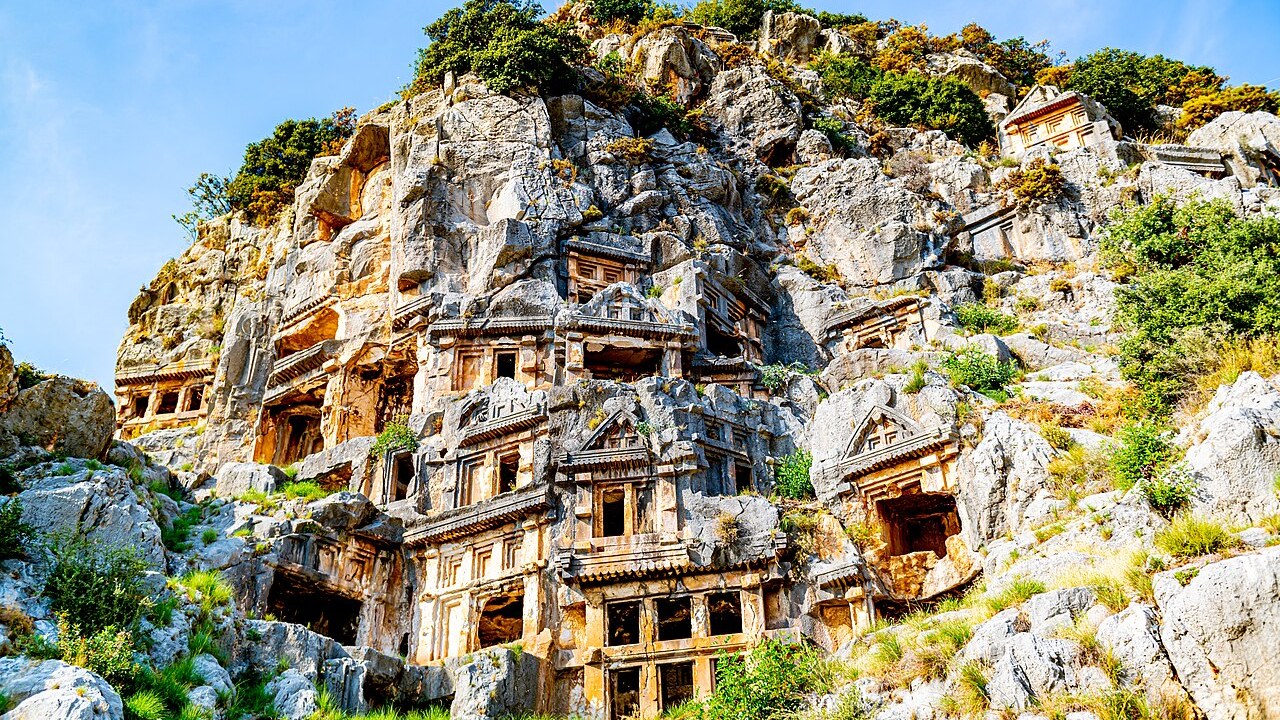
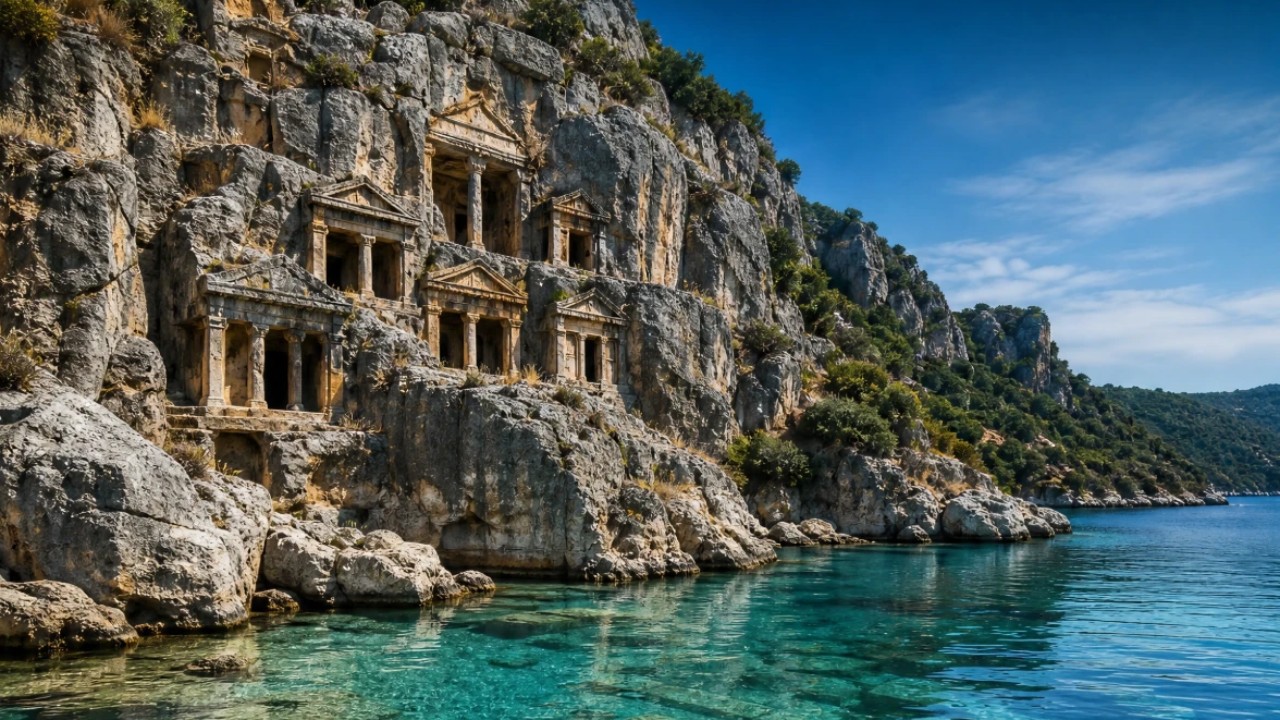
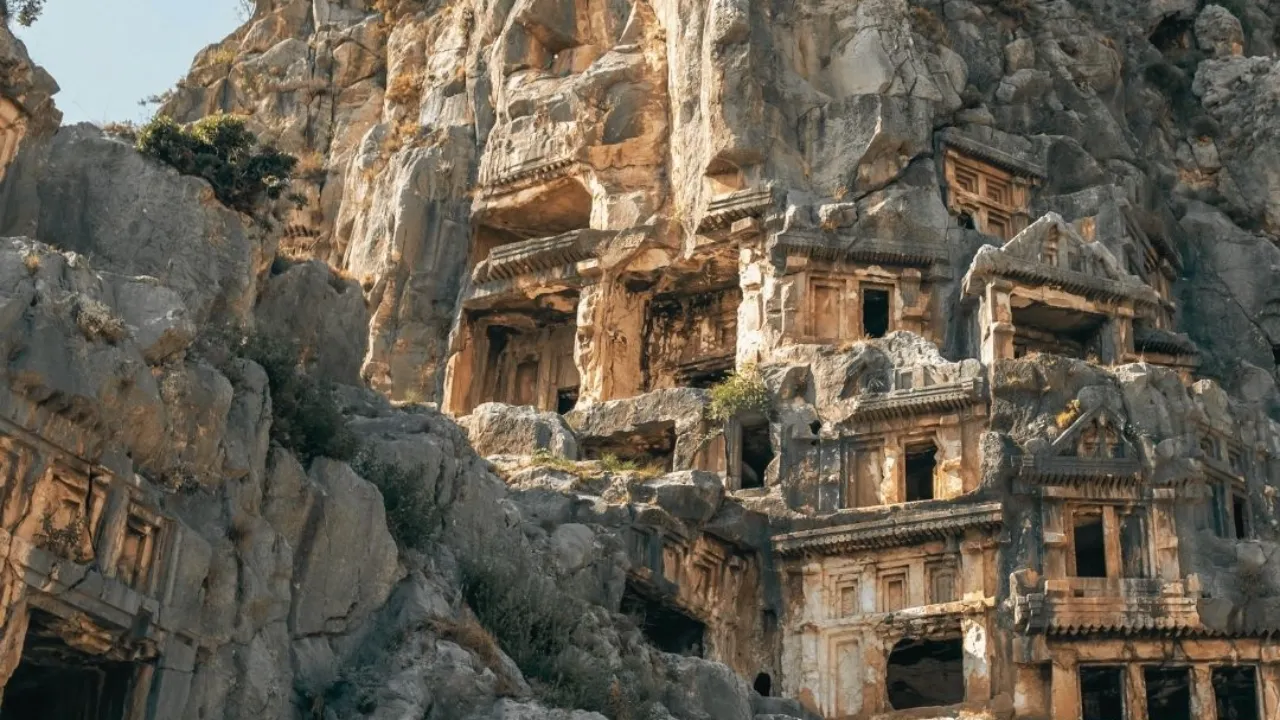
Our faith and culture programs on the western coast of Antalya offer a full-day itinerary, combining the St. Nicholas Basilica with the Myra rock tombs and the Andriake port structures. Our Demre Religious Sites Tour provides professional transportation and expert guidance to make your journey seamless.
During the traditional St. Nicholas commemoration events in early December, or throughout the spring and autumn cultural seasons, guided groups explore the iconographic layers of the basilica in chronological order. To combine central faith routes with surrounding cultural landmarks, consider the programs listed in our day trips in Demre section.
Visiting Etiquette and Field Tips for Sacred Sites
When visiting the holy structures and monument museums in Demre, specific rules apply to protect the delicate frescoes and respect the spiritual atmosphere of active worship. For rural churches, standard hiking precautions are also necessary.
Follow this five-step protocol for a respectful visit to Demre's religious sites:
- Timing: Visit the St. Nicholas Basilica during early morning opening hours rather than the midday rush to enjoy the frescoed galleries in a peaceful setting.
- Dress Code: Choose simple, breathable cotton clothing that covers your shoulders and knees when entering religious centers or monument museums.
- Photography: To prevent light-induced damage to the 11th-century tempera frescoes in the vaults, ensure your camera flash is completely turned off.
- Preservation: Do not cross the protective cordons in front of the opus sectile floors or sarcophagus niches; avoid touching stone surfaces or column capitals.
- Acoustics: Use an audio guide or headphones during guided tours to maintain the silence required for prayer and the natural acoustics of the interior.
Recommended items for your travel bag:
- Footwear: Soft-soled walking shoes with good grip to prevent slipping on the Basilica courtyard or the stone floors of Andriake and Myra.
- Hydration & Sun Protection: A water bottle and sun hat, especially if hiking to high-altitude sites like Alakilise or Karabel.
- Museum Pass: A Müzekart for faster entry to the St. Nicholas Monument Museum and Andriake gates.
- Optics: A small pair of binoculars to clearly view high-vaulted frescoes and bell tower inscriptions from below.
Nature lovers wishing to reach mountain monuments like Alakilise and Karabel via trails can explore our hiking options in Demre page.
Summary: Planning Your Demre Religious Heritage Trip
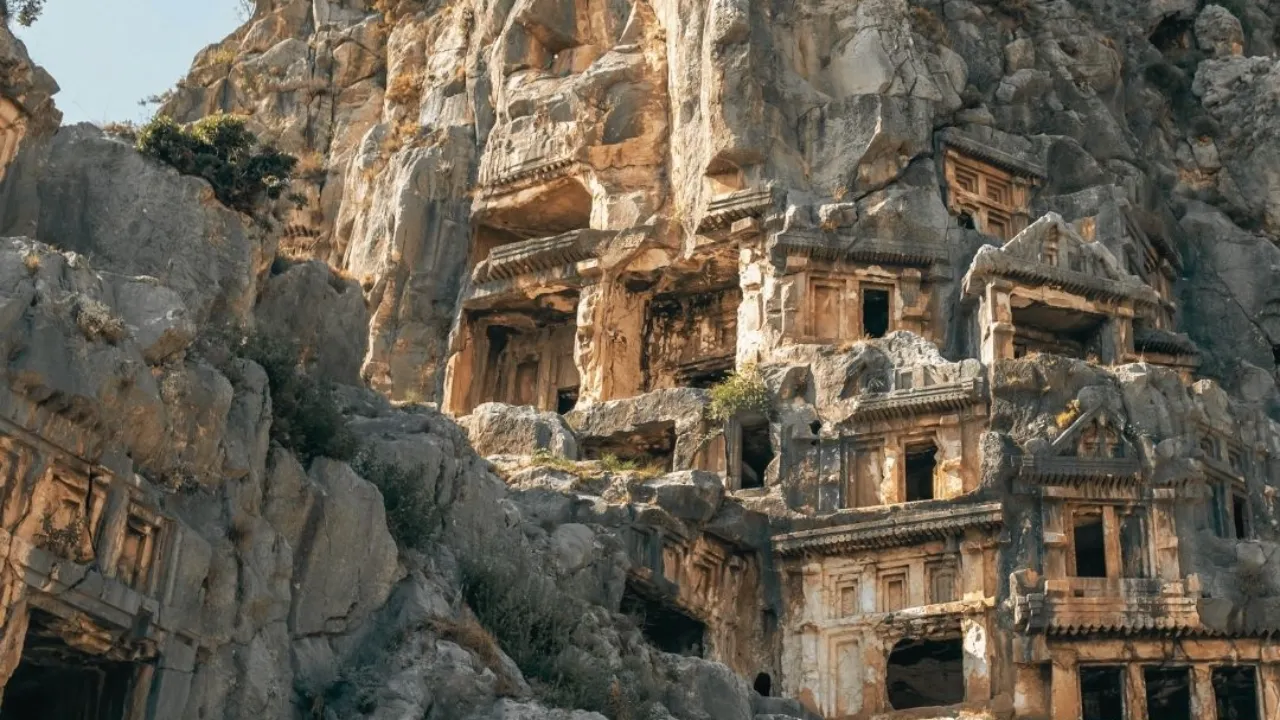
A well-planned cultural program in Demre offers a multi-layered history of faith, from the frescoed galleries of St. Nicholas Basilica to the mountain heights of Alakilise and the ancient synagogue of Andriake. To integrate these sites into a broader adventure, check our walking tours around Demre to build your perfect itinerary.
Frequently Asked Questions 4
Where is the St. Nicholas Monument Museum and how do I visit?
The St. Nicholas Monument Museum is located in the center of Demre, right next to Cumhuriyet Square. Visitors can enter the museum to explore the domed basilica, marble-columned galleries, wall frescoes, and sarcophagus niches via marked walking paths.
Where can I use a Museum Pass on the Demre religious route?
The Ministry of Culture and Tourism Museum Pass is valid at the St. Nicholas Monument Museum in Demre center, the Myra Ancient City (famous for its rock tombs), and the Andriake Lycian Civilizations Museum in the Çayağzı area. Alakilise and Karabel Monastery are located on open-air mountain routes.
How do I get to the Alakilise and Karabel monastery ruins?
The ruins of Alakilise (Archangel Gabriel Church) and Karabel (Sion Monastery) are located in the Alakadağ and Belören rural areas north of Demre. These Early Byzantine stone structures can be reached by private vehicle via mountain roads or through guided nature and culture walks following the Lycian Way markers.
Where is the Andriake Ancient Synagogue located and what can I see there?
The Andriake Ancient Synagogue is located near the ancient granarium and the port agora in the Çayağzı harbor area of Demre. The stone structure revealed during excavations features marble slabs with Hebrew inscriptions and reliefs of the Menorah, shofar, and lulav, reflecting the multicultural maritime community of the ancient Eastern Mediterranean.