
Carved directly into vibrant red sandstone cliffs thousands of years ago by the Nabataeans, Petra stands as one of the most breathtaking feats of architecture and engineering in human history. As the sun moves across the sky, the massive rock formations shift through shades of rose, crimson, and gold, transforming the city into an unparalleled open-air museum.
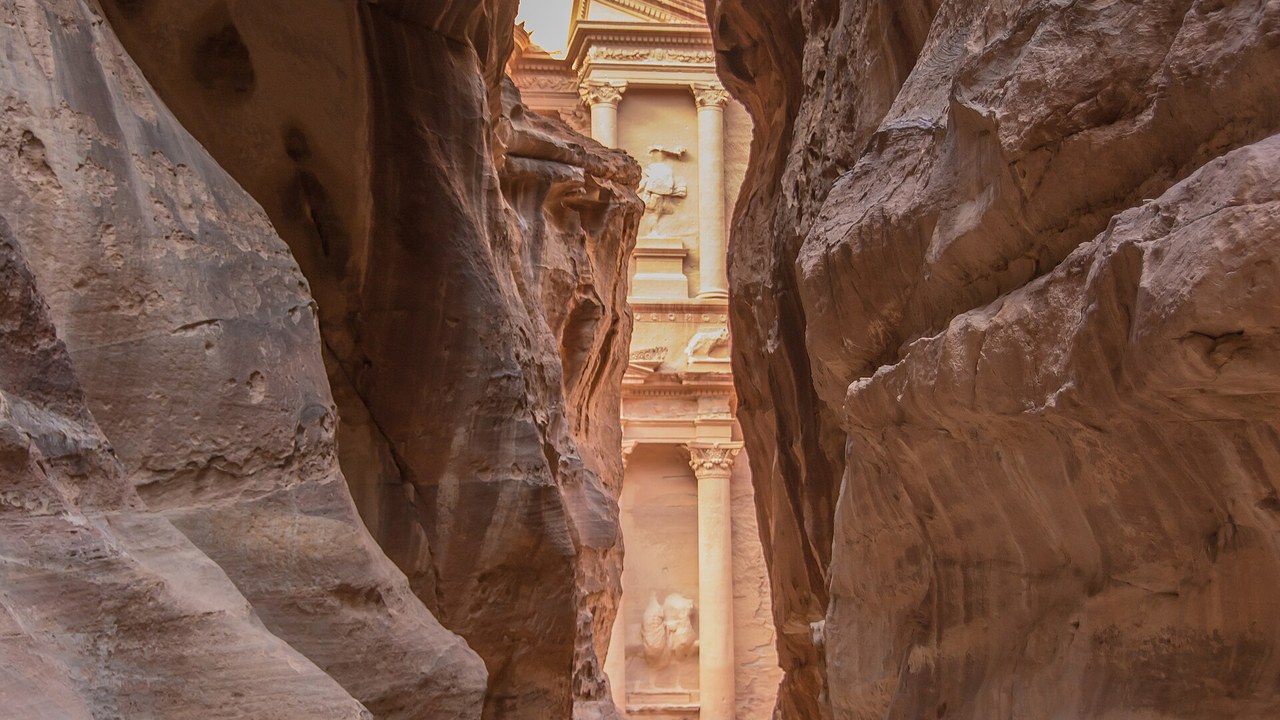
The moment the facade of El-Hazne suddenly emerges at the end of a narrow canyon corridor is a visual experience that stays with every traveler for a lifetime. Yet, Petra is far more than a single temple facade; it is a sprawling ancient metropolis of winding valleys, sacrificial altars, and monuments hidden atop jagged mountain peaks.
Following a detailed petra travel guide ensures you manage the desert heat effectively, tackle the steep climbs efficiently, and navigate the site without getting bogged down in ticket lines. For professional guided experiences, explore our Petra tours and hiking routes, or start your Jordanian adventure by visiting our Amman travel guide.
Quick Decision Summary:
-
Best For: Archaeology buffs, hikers, history enthusiasts, and adventure seekers. Basic physical fitness is essential, as you can expect to walk between 15 to 20 kilometers a day.
-
Best Time to Visit: Spring (March - May) and Autumn (October - November). Summer temperatures often exceed 40°C, making hiking grueling, while winter can bring sudden desert rains and flash flood risks.
-
Ideal Duration: At least 1 full day; however, 2 full days are recommended to fully explore the valleys, the Ad-Deir Monastery, and the Royal Tombs.
-
Where to Stay: The town of Wadi Musa (hotels within walking distance of the Petra Visitor Center provide a huge advantage for early morning entry).
Petra Ancient City: Quick Facts
Strategic parameters to help you organize your journey to Petra:
| Feature | Visitor Summary |
|---|---|
| UNESCO Status | World Heritage site since 1985 and one of the New Seven Wonders of the World |
| Location | Southern Jordan, Wadi Musa valley at the foot of the Shara Mountains |
| Visitor Center Hours | Opens at 06:00 AM; early entry is critical to beat the crowds |
| Tickets & Jordan Pass | 1-Day ticket is 50 JOD; entry is free for Jordan Pass holders |
| Must-See Routes | Siq Canyon, El-Hazne, Street of Facades, Royal Tombs, Ad-Deir Monastery |
| Terrain & Trail | Rocky canyon paths, sandy ground, and stone stairways with 800+ steps to the peaks |
| Booking Tours | Organize your visit via Petra tours and local guiding |
The Siq Canyon and the Entrance Trail
The main gateway to Petra, the Siq (As-Siq), is a dramatic geological rift formed by tectonic forces, with towering cliffs reaching heights of 80 meters. Winding for 1.2 kilometers, this natural corridor served as a fortress, protecting the ancient city from external threats.
Bab Al Siq and the Djinn Blocks
Before entering the narrow canyon, the open valley features the cubic Djinn Blocks and the Obelisk Tomb. These are the first impressive stops, offering a glimpse into the Nabataeans' unique funerary traditions.
A 1.2km Journey Through Time
As you walk through the Siq, you'll encounter ancient water channels carved into the rock, Nabataean sculptures, and reliefs left by caravan traders of antiquity. In the narrowest sections, the canyon walls close in, leaving only a thin sliver of blue sky above.
Walking through the cool morning air before the camel and horse-drawn carriage traffic begins is the best way to experience the serene sounds of nature and history.
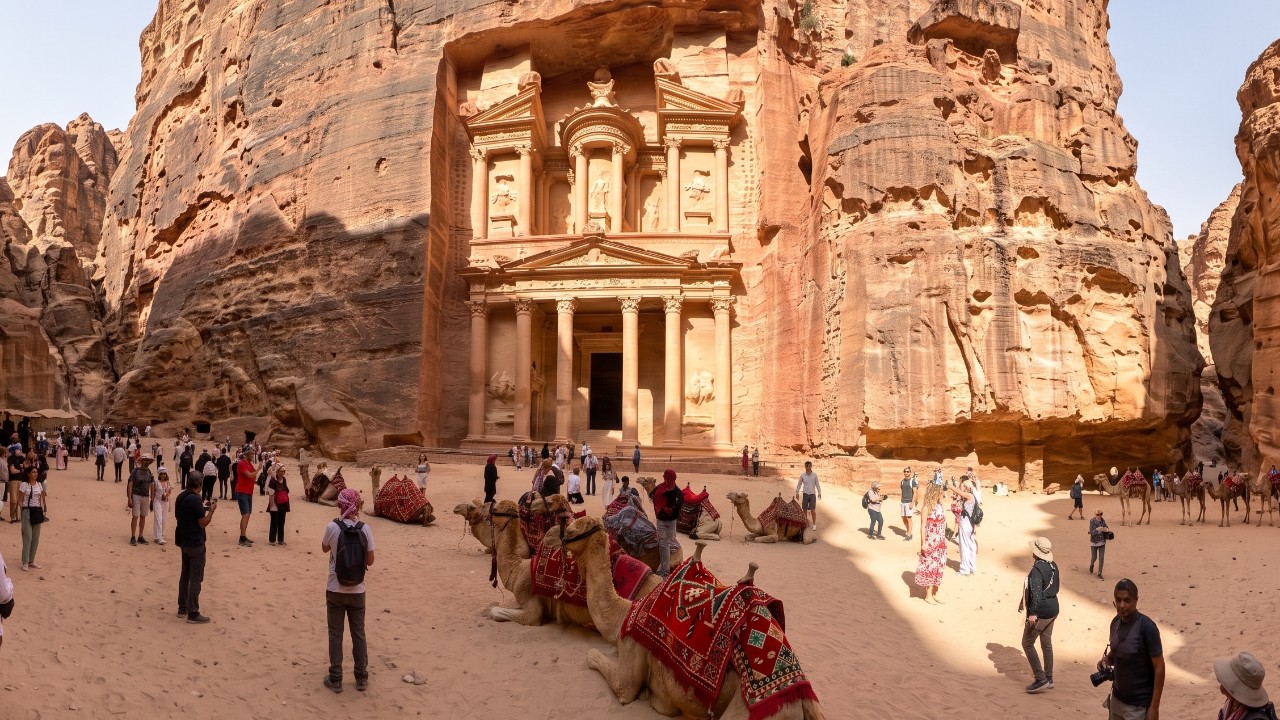
El-Hazne (The Treasury) and the Morning Glow
As you reach the final bend of the Siq, the sun-drenched, columned facade of El-Hazne reveals itself through a narrow crack in the rocks. This is widely considered one of the most awe-inspiring archaeological encounters on Earth.
Hellenistic Architecture and Detail
Built in the 1st century as a mausoleum for Nabataean King Aretas IV, this massive structure showcases ancient engineering genius through its perfect symmetry carved into the sandstone. The upper reliefs and mythological figures reflect the strong Hellenistic influence of the era.
Viewpoints and Bedouin Tea
The first light of day hits the facade directly, turning the stone from a deep pink to a brilliant gold. Sitting in a Bedouin tent in the plaza with a glass of tea while admiring the Treasury is an unforgettable experience. For the daring, local guides can lead you up the cliffs for a breathtaking bird's-eye view of the monument.
Comparing Petra Visit Strategies
Depending on your time and energy levels, here are the best ways to experience the city:
| Visit Model | Route Covered | Walking Distance | Difficulty | Recommended For |
|---|---|---|---|---|
| 1-Day Classic Tour | Siq, El-Hazne, Theater, Colonnaded Street | Approx. 10 - 12 km | Moderate (Flat/slight incline) | Time-constrained travelers, general tourists |
| 2-Day Comprehensive | Classic route + Ad-Deir Monastery + Royal Tombs | 16 - 18 km per day | High (800+ steps climb) | Hikers, history buffs |
| Petra by Night | Candlelit walk from the Siq to El-Hazne (1,500 candles) | Approx. 4 km (Round trip) | Low / Relaxing | Couples, night photographers |
| High Place of Sacrifice | Ancient mountain trail to the sacrificial altar | Approx. 6 km mountain trail | Challenging rocky path | Fit adventurers |
Ad-Deir (The Monastery) and the 800-Step Ascent
Even larger than El-Hazne, the Ad-Deir Monastery is a magnificent place of worship reached by climbing 800 stone steps toward the mountain summit. The facade, 50 meters wide and 45 meters high, overwhelms visitors with its sheer scale.
The Climb Up the Mountain Path
Along the ascent, you can browse handmade stone necklaces and ancient coins sold by local Bedouin women at their roadside stalls. If you take your time and rest in the shade, the climb is accessible to anyone with a basic level of fitness.
Views of the Arava Valley
The reward for the climb is found at the summit tea tents, where you can gaze across the endless cliffs of the Arava Valley, which forms the border between Jordan and Israel. The sound of the wind whistling through the rocks combined with the desert panorama is truly breathtaking.
The Royal Tombs and Urn Tomb Monuments
Located in the eastern cliffs, the Urn Tomb, Silk Tomb, and Corinthian Tomb are monumental burial sites where layers of red, purple, and yellow sandstone swirl like a natural painting. The Urn Tomb, converted into a church during the Byzantine era, is particularly striking with its wide arched courtyard.
The Urn Tomb and Byzantine Legacy
When the afternoon sun hits these cliffs, the minerals in the stone shimmer, providing photographers with rich light refractions. The ceiling patterns inside the tomb chambers resemble natural marble veins.
The Silk Tomb and Colorful Strata
Continuing up the path above the Royal Tombs leads to overlooks that gaze down upon El-Hazne. Photographing the Treasury plaza from this height allows you to truly grasp the immense scale of the city.
The High Place of Sacrifice and the Mountain Trail
Reached via steep stairs on the western slope of the canyon, the High Place of Sacrifice (Al-Madbah) was a sacred summit where Nabataeans performed religious ceremonies and offered sacrifices to their gods. The flattened rocky platform still features channels carved to drain sacrificial blood.
From the peak, you get a 360-degree panoramic view of all Petra's monuments, the Roman Theater, and the surrounding Shara Mountains. Climbing to the summit early in the morning is ideal to avoid heatstroke.
For the descent, we recommend taking the Wadi Farasa trail; this allows you to discover hidden gems like the Lion Fountain, the Soldier's Tomb, and the Garden Temple, which are far less crowded.
A Perfect 1-Day Petra Itinerary: Step-by-Step
To maximize your day, we recommend this chronological plan:
-
Early Entry & Siq Walk (06:30 - 07:30): Pass through the visitor center and walk the Siq in peace before the crowds arrive.
-
Morning Light at El-Hazne (07:30 - 08:30): Be among the first to reach the Treasury plaza for the best photos and a quiet moment with the architecture.
-
Street of Facades & Roman Theater (08:45 - 10:15): Head toward the city center, passing the ancient marketplace and the rock-cut theater.
-
The Great Temple & Colonnaded Street (10:30 - 12:00): Explore the remnants of Nabataean civic architecture and the marble columns of the main street.
-
Midday Rest & Tea Break (12:00 - 13:00): Recharge with fresh mint tea in the shade of the Basin Restaurant area.
-
The Ascent to Ad-Deir Monastery (13:00 - 16:30): Climb the stone stairs to reach the Monastery and enjoy the sunset views over the valley.
-
Return & Exit (16:30 - 18:30): Walk back through the cooling evening air of the Siq to return to your hotel.
Essential Tips for Visiting Petra
To ensure a smooth and comfortable experience in the field, keep these notes in mind:
-
The 06:00 AM Rule: Tour buses typically arrive around 09:00 AM. To experience the Siq in tranquility, be at the gate when it opens.
-
Sturdy Hiking Shoes: The terrain consists of sand, jagged rocks, and steep steps. Wear durable trekking shoes with good ankle support.
-
Electrolytes and Plenty of Water: Market options inside the canyon are limited. Carry at least 2 liters of water and high-energy snacks.
-
Handling Animal Vendors: You will encounter many locals offering camel or donkey rides. A polite but firm "no, thank you" is the best way to handle these offers.
-
Sun Protection: Shade is scarce during midday. Bring a wide-brimmed hat, sunglasses, and high-SPF sunscreen.
Frequently Asked Questions 5
How many hours are needed to visit Petra?
To see the main highlights and El-Hazne, you need at least 5-6 hours. A full tour including the Ad-Deir Monastery typically takes 8-10 hours.
Is entry to Petra free with the Jordan Pass?
Yes, the official Jordan Pass purchased before arriving in Jordan fully covers the entry fee to Petra and allows you to skip the ticket lines.
What is Petra by Night and is it worth it?
Petra by Night is a mystical evening event where the Siq and the Treasury are illuminated by 1,500 candles. It is highly recommended for those who want to see the city in a different, more atmospheric light.
Are there transportation options inside Petra?
For those with mobility issues, a limited number of official golf carts operate from the entrance to El-Hazne. For the rest of the valley, walking is the primary mode of transport.
How do I get to Petra from Amman?
Air-conditioned JETT buses depart early in the morning from the Amman Abdali terminal, reaching the Petra Visitor Center in approximately 3.5 hours.