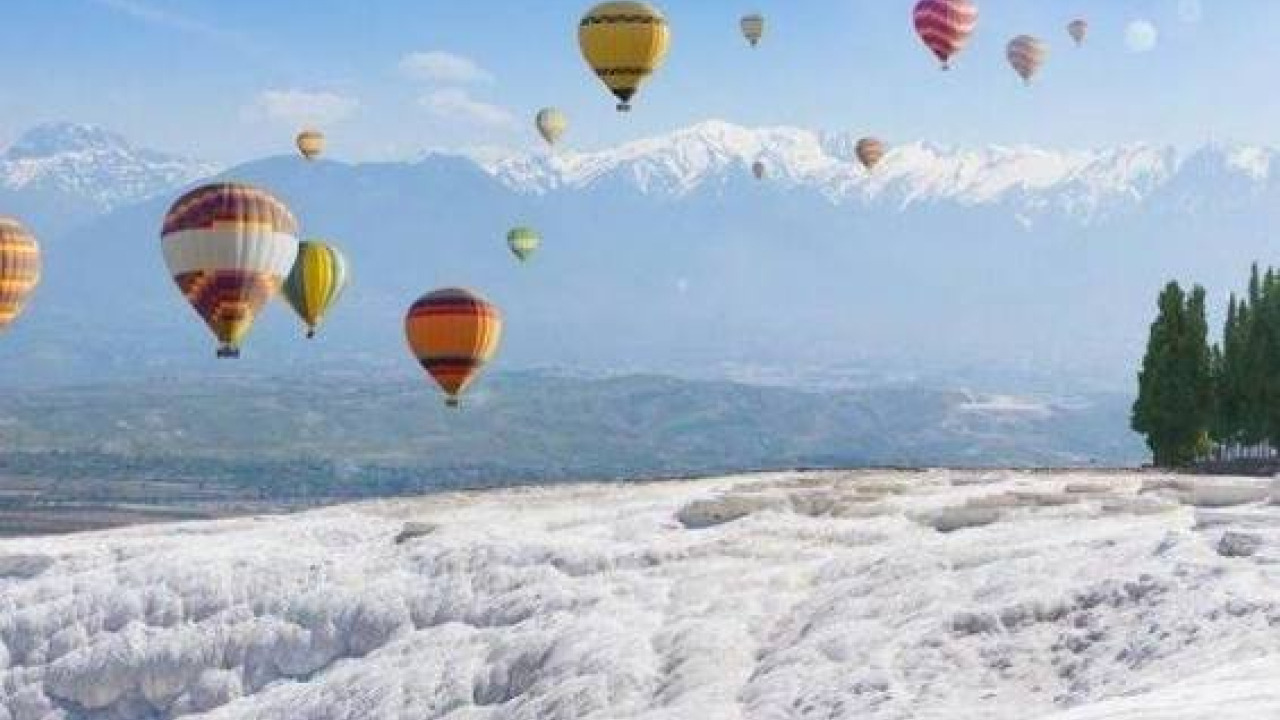

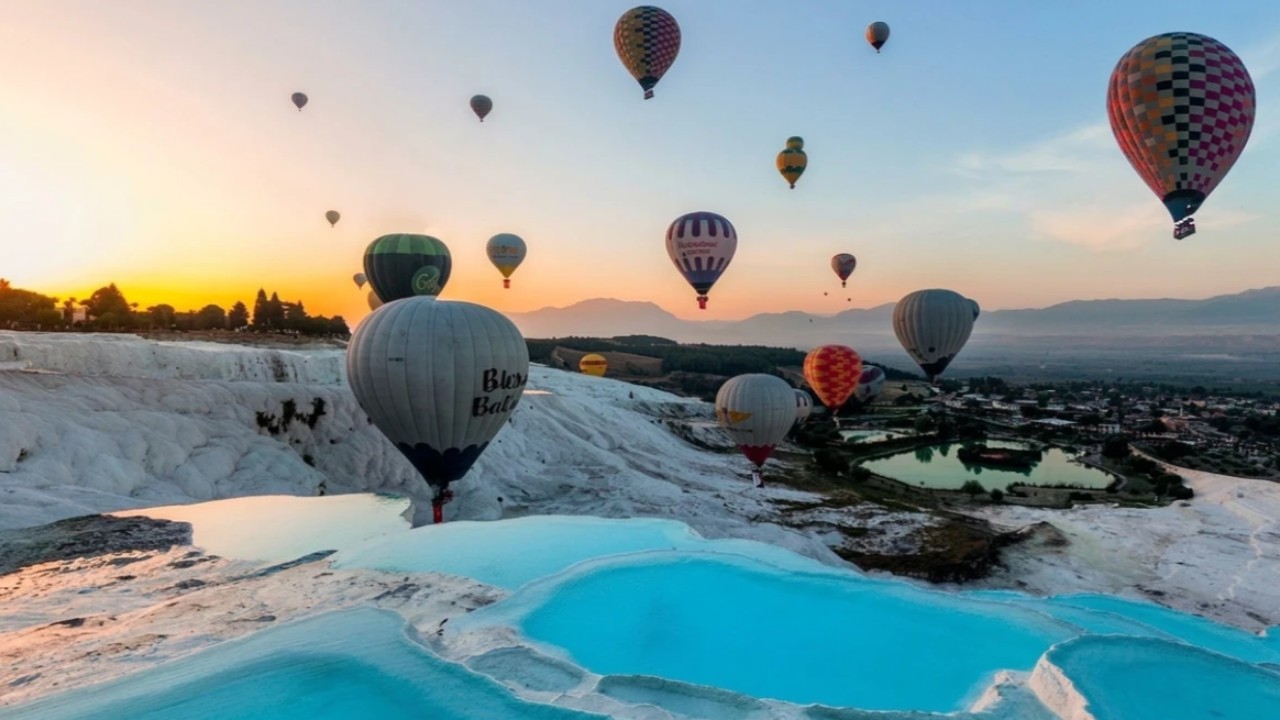
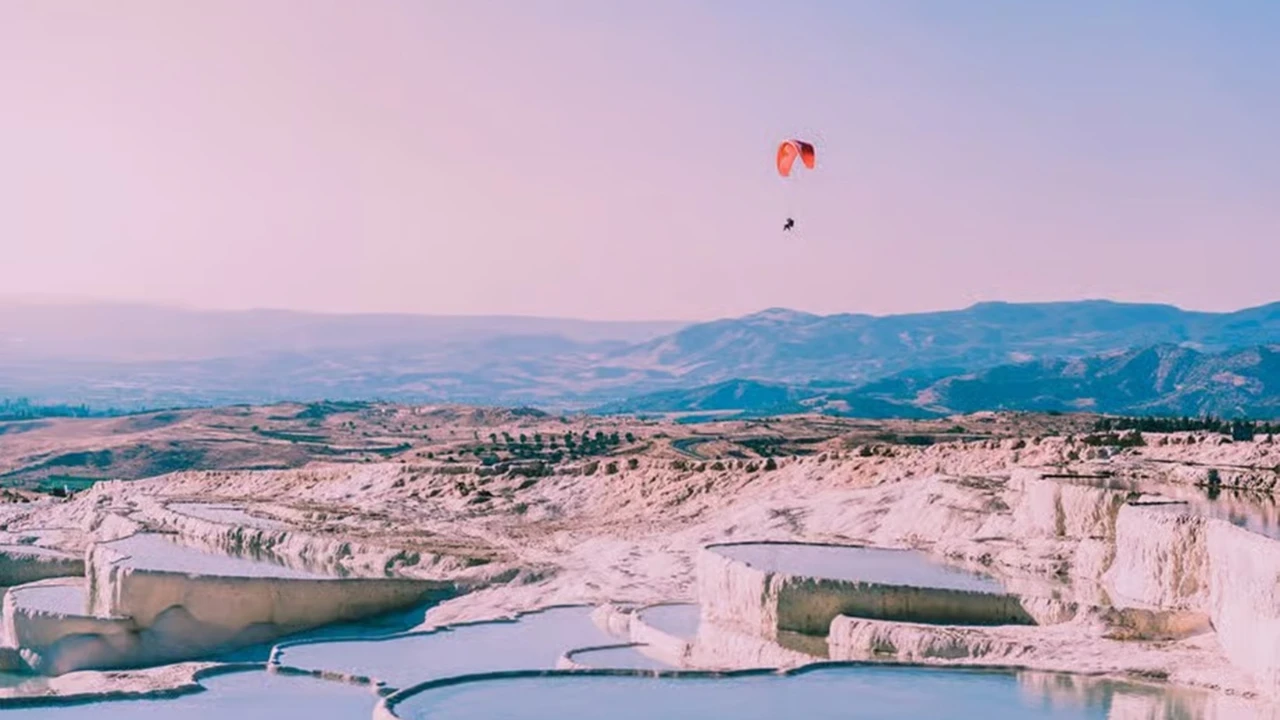
Rising into the sky at the first light of dawn over the millennia-old calcium travertines of Pamukkale is one of the most breathtaking natural experiences Turkey has to offer. As the sun slowly crests the horizon, watching the white terraces shift through shades of soft pink and shimmering gold from above is a visual feast. This aerial perspective allows you to explore ancient ruins and geological wonders from a bird's-eye view, bridging the gap between the ancient world and the present.
Gliding through the air in a massive hot air balloon offers a unique blend of serenity and excitement. Launching from the Çürüksu Plain, the balloons are guided by the gentle morning breeze, drifting over the ancient city of Hierapolis and the iconic white thermal pools. In this comprehensive guide, we cover everything from pre-flight preparations to a safe landing, including the best seasons to visit and practical insider tips.
Quick Facts: Pamukkale Hot Air Balloon Flights
Hot air balloon tours in Pamukkale are meticulously planned operations that begin in the very early hours of the morning. From the gathering at the launch site to wind monitoring and safety briefings, every detail is handled with precision. The following summary table provides a quick overview of the technical and operational aspects of the flight.
| Feature | Visitor Quick Summary |
|---|---|
| Location & Launch Site | Denizli, Pamukkale Kocaçukur area and Çürüksu Plain launch site |
| Altitude & Duration | 500 to 1,000 meters altitude; average flight time of 45 to 60 minutes |
| Best Time to Fly | April to November for the clearest skies; winter is popular for snow-capped travertines |
| Basket Capacity | Standard baskets for 12, 16, 20, and 28 people, or private flights for 2 to 4 people |
| Weather Monitoring | Subject to daily slot and wind approval from the Directorate General of Civil Aviation (SHGM) |
| Ideal For | Photography enthusiasts, couples, families, and nature lovers |
Safety standards are maintained at the highest level throughout every stage of the journey. Under the guidance of professional pilots, the balloons make precise altitude adjustments based on thermal air currents to get as close as possible to the most photogenic spots, allowing passengers to admire the stepped structure of the travertines up close.
Flight Highlights and the Aerial Route
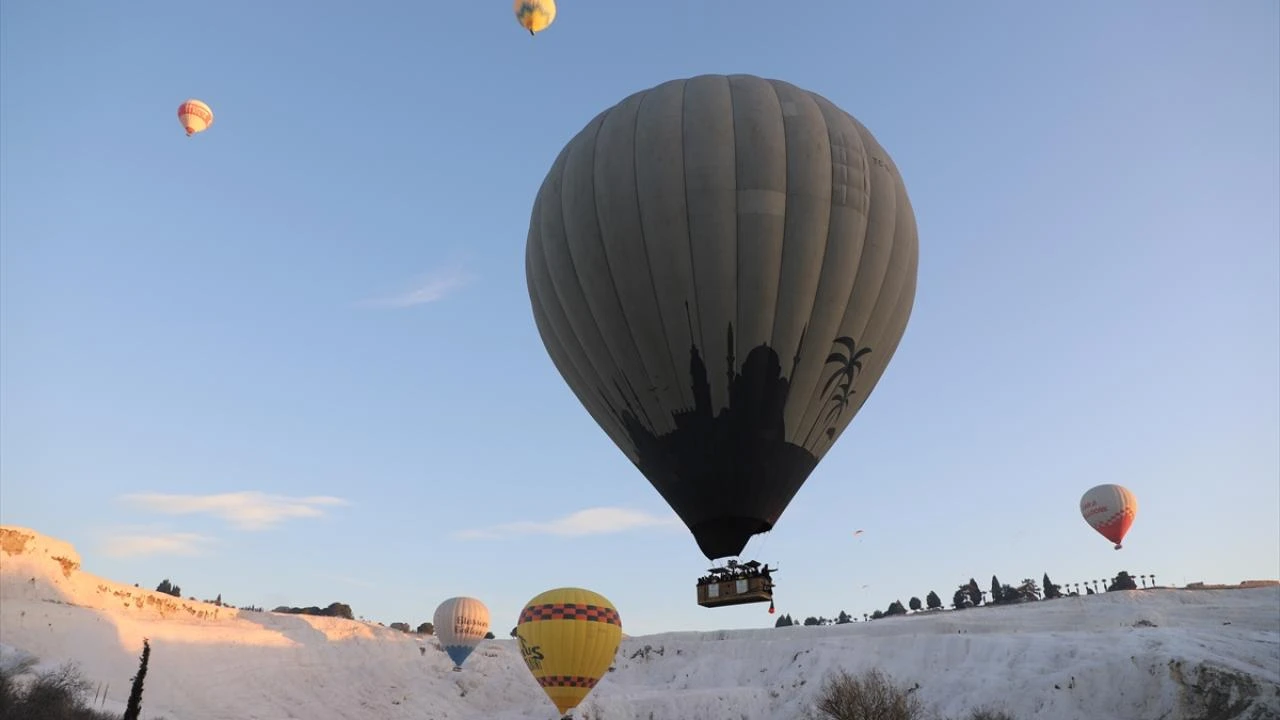
The morning of your flight begins with a transfer to the launch site approximately one hour before sunrise. The atmosphere is electric as you watch the crews inflate the massive balloon envelopes using powerful fans and roaring burners. While waiting for takeoff, guests can enjoy hot coffee and tea while soaking in the pre-flight excitement.
Once the balloons stand tall and the pilots give the signal, you board the basket and gently lift off. The silent ascent, combined with the whisper of the wind over the quiet plain, opens the door to an unforgettable celestial journey.
Early Morning Takeoff and the Inflation Process
Dawn is chosen for takeoff because it offers the most stable atmospheric conditions of the day. At this hour, thermal turbulence is minimal, ensuring a smooth and steady ride. Ground crews meticulously unfurl the fabric envelopes and direct the air channels to bring the balloons to life.
The visual spectacle of the burners firing to lift the balloon provides stunning photo opportunities even before you leave the ground. The moment the basket breaks contact with the earth, the ascent is so seamless that you barely feel the movement.
Drifting Over the Ancient City of Hierapolis and the Necropolis
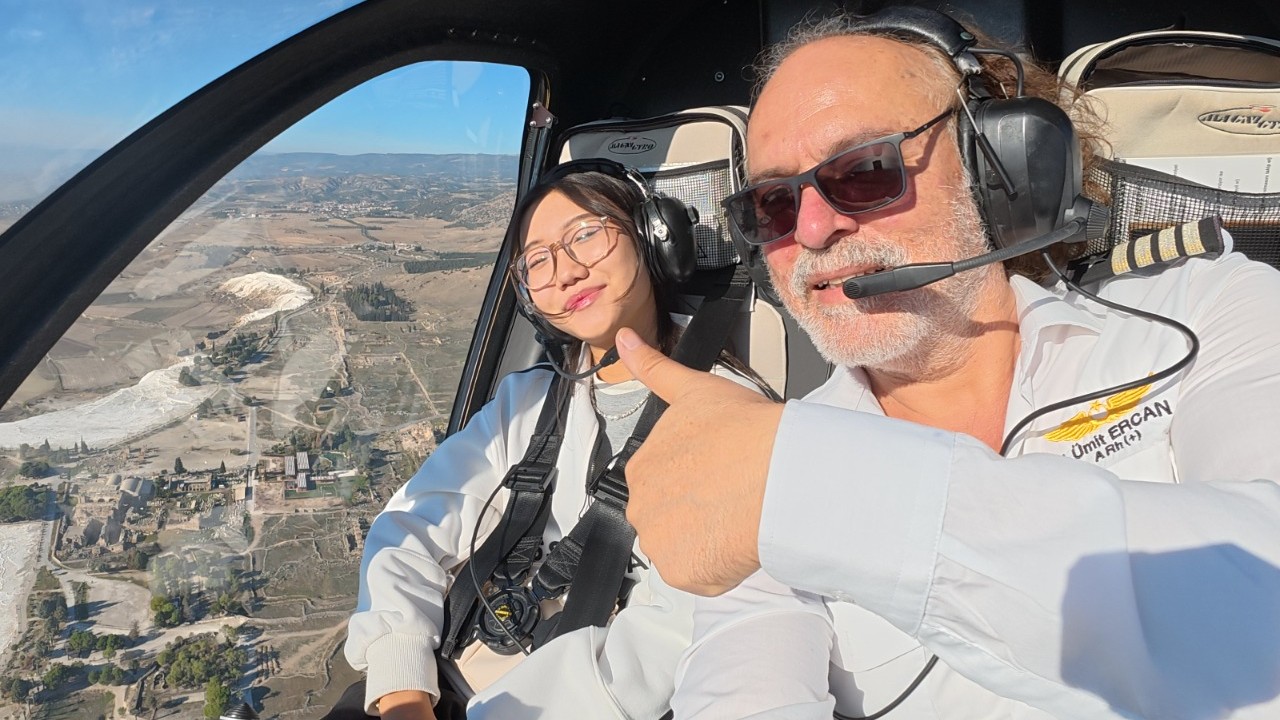
The most historic moment of the flight occurs as the balloon drifts over the ruins of the ancient city of Hierapolis. From the air, the thousands-of-years-old ancient theater, the columns of the agora, the Temple of Apollo, and the sprawling necropolis are clearly visible. A historical site that would take hours to traverse on foot can be grasped in a single, sweeping panoramic view from the sky.
The colonnaded streets stretching from the north gate to the southern necropolis cast deep, dramatic shadows under the low morning sun. Pilots often slowly rotate the balloon on its axis to ensure passengers get a clear view of the circular architecture and acoustics of the ancient theater.
The White Travertine Terraces and Çürüksu Valley
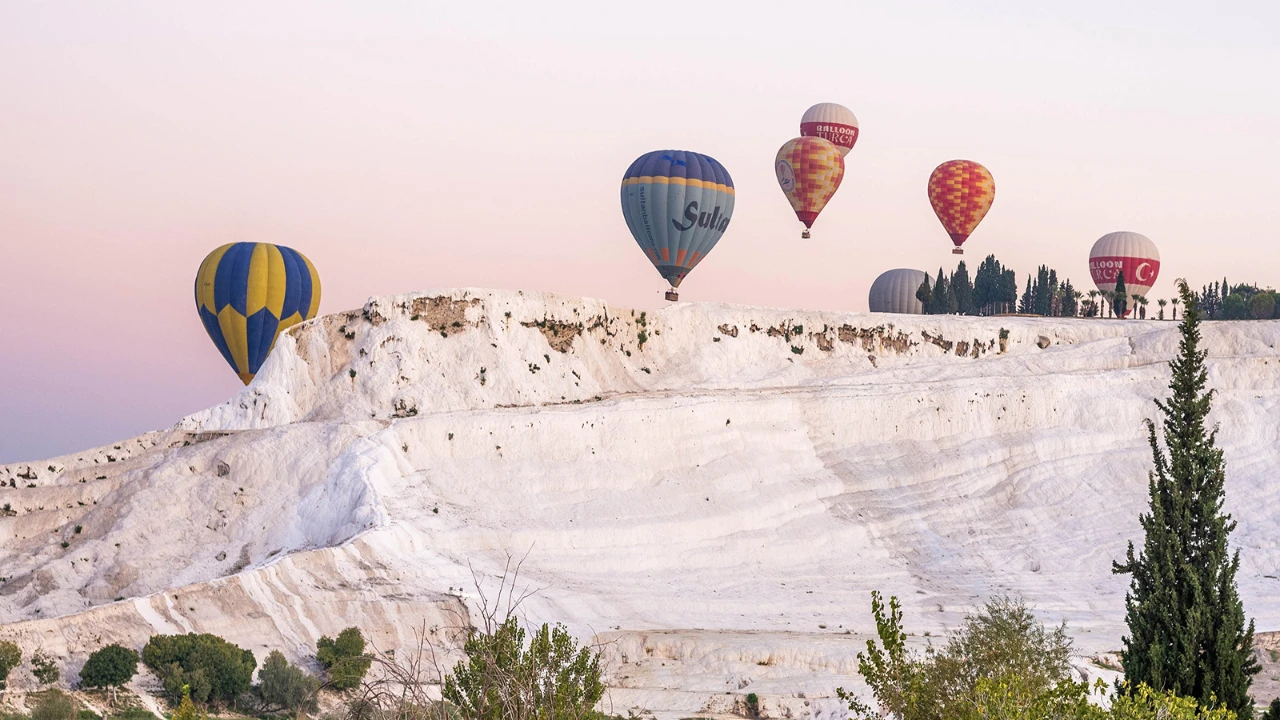
The crown jewel of the route is the passage over the UNESCO World Heritage white travertines. These natural pools, filled by calcium carbonate-rich thermal waters, sparkle like crystals in the morning light. The turquoise reflections on the water create a stunning contrast against the deep blue of the sky.
The vast agricultural lands of the Çürüksu Valley and the distant silhouette of Honaz Mountain frame this snowy-white landscape. As the basket descends toward the travertine pools, the sheer scale of this limestone legacy, built by nature over millennia, becomes profoundly apparent.
Pamukkale vs. Cappadocia: Which Balloon Experience is Right for You?
While Cappadocia is often the first name that comes to mind for ballooning in Turkey, Pamukkale offers a distinct experience with its own set of advantages. Flights in Pamukkale generally enjoy more stable weather conditions throughout the year, resulting in lower cancellation rates. Furthermore, the combination of stark white travertines and ancient ruins provides a unique visual diversity.
The following comparison table helps you objectively analyze the characteristics of balloon flights in these two iconic regions.
| Comparison Criteria | Pamukkale Experience | Cappadocia Experience |
|---|---|---|
| Primary Visual Focus | White calcium travertines, thermal pools, and ancient ruins | Fairy chimneys, tuff valleys, and cave dwellings |
| Historical Texture | Hierapolis Necropolis, Ancient Theater, and agora ruins | Göreme Open Air Museum, monasteries, and rock churches |
| Weather Stability | Generally milder wind conditions; lower cancellation rates | More frequent wind-related cancellations in winter and spring |
| Sky Density | A more spacious sky with 30 to 40 balloons | High air traffic with 100 to 150 balloons |
| Activity Pairings | Paragliding and swimming in the ancient pool | Valley trekking, ATV tours, and horse safaris |
Both locations possess a unique soul. However, for those seeking a more serene, spacious, and tranquil atmosphere while gliding over white terraces and ancient water channels, Pamukkale is an irresistible choice.
Practical Tips for Your Balloon Adventure
To ensure your time in the basket is seamless and enjoyable, a little preparation goes a long way. Factors such as the early morning temperature drop, movement within the basket, and photography logistics directly impact the quality of your experience. Choosing the right gear can significantly enhance your comfort.
Follow these steps for a perfect flight day:
- Dress in Layers: The launch site is chilly in the early morning, but once you are in the air, the heat from the burner warms the basket. Cardigans and windbreakers that are easy to put on or take off are ideal.
- Wear Flat, Non-Slip Shoes: During landing, the basket may touch down on soil or grass; avoid heels or slippery soles.
- Use Neck Straps for Gear: To prevent your phone or camera from slipping over the edge of the basket, secure them with a neck or wrist strap.
- Listen to the Safety Briefing: Practice the landing position, bending your knees and gripping the handles, as instructed by the pilot on the ground.
Essential Packing List for the Basket
Since space inside the basket is limited, we recommend bringing only the most essential personal items. Heavy bags should be left in the transfer vehicles before takeoff.
Here are the most practical items to carry in a small shoulder bag:
- UV-protected sunglasses to shield your eyes from the rising sun.
- A light beanie or hat to protect against the cool morning breeze.
- A fully charged spare battery or power bank for high-resolution landscape shots.
- A small bottle of water and lip balm to prevent dryness caused by the burner's heat.
Seasonal Weather and Cancellation Protocols
Hot air balloons are aircraft that move entirely based on wind speed and direction. Consequently, the Directorate General of Civil Aviation grants daily flight permits based on data from local meteorological stations. If safety is compromised, flights are immediately postponed or rescheduled for the following day.
Spring and autumn are the ideal times for thermal balance in Pamukkale. In the summer, because the sun rises earlier, takeoff times are moved to around 05:00 AM to ensure the flight is completed before the scorching midday heat begins.
Basket Safety and Landing Procedures
Balloon baskets are crafted from lightweight yet incredibly durable wicker. This structure is designed to flex and absorb the impact during landing. Passengers must remain balanced within their designated sections of the basket and must not lean over the edge.
As the landing approach begins, the pilot will give a specific "landing position" command. Upon this signal, grip the internal handles firmly with both hands, turn your back to the direction of flight, and bend your knees slightly. This allows your leg muscles to safely absorb the contact with the ground.
Guidelines for Children and Families
Due to international aviation and basket safety regulations, certain age and health criteria apply to hot air balloon flights. Generally, children under 5 or 6 years old are not recommended for flights, as they must be tall enough to see over the basket edge and reach the safety handles.
Pregnant passengers are not permitted to fly due to the potential for abrupt jolts during landing. Individuals with severe spinal, neck, or joint conditions are advised to inform the staff before the flight.
Exploring Pamukkale After Your Flight
Following the landing, a celebratory ceremony is held, and passengers are presented with flight certificates as a memento. With the program typically wrapping up around 08:00 AM, you have the entire day to explore the region's rich landmarks. The natural and historical sites within the Pamukkale archaeological park make for a perfect continuation of your journey.
To explore on foot the sites you admired from the sky, add these stops to your list:
- Cleopatra's Ancient Pool: Swim in healing waters at 36°C among fallen Roman columns.
- Hierapolis Ancient Theater: One of the most imposing stage reliefs of the Roman era, beautifully restored for visitors.
- Kocaçukur Pond Park: Located right beside the travertines, this pond offers a peaceful walking path with stunning reflections.
- Karahayıt Red Water Springs: Just 5km from Pamukkale, this thermal area is famous for its iron-rich red travertines.
- Kaklık Cave: Known as the "underground Pamukkale," this cave features impressive stalactites and stepped calcium pools.
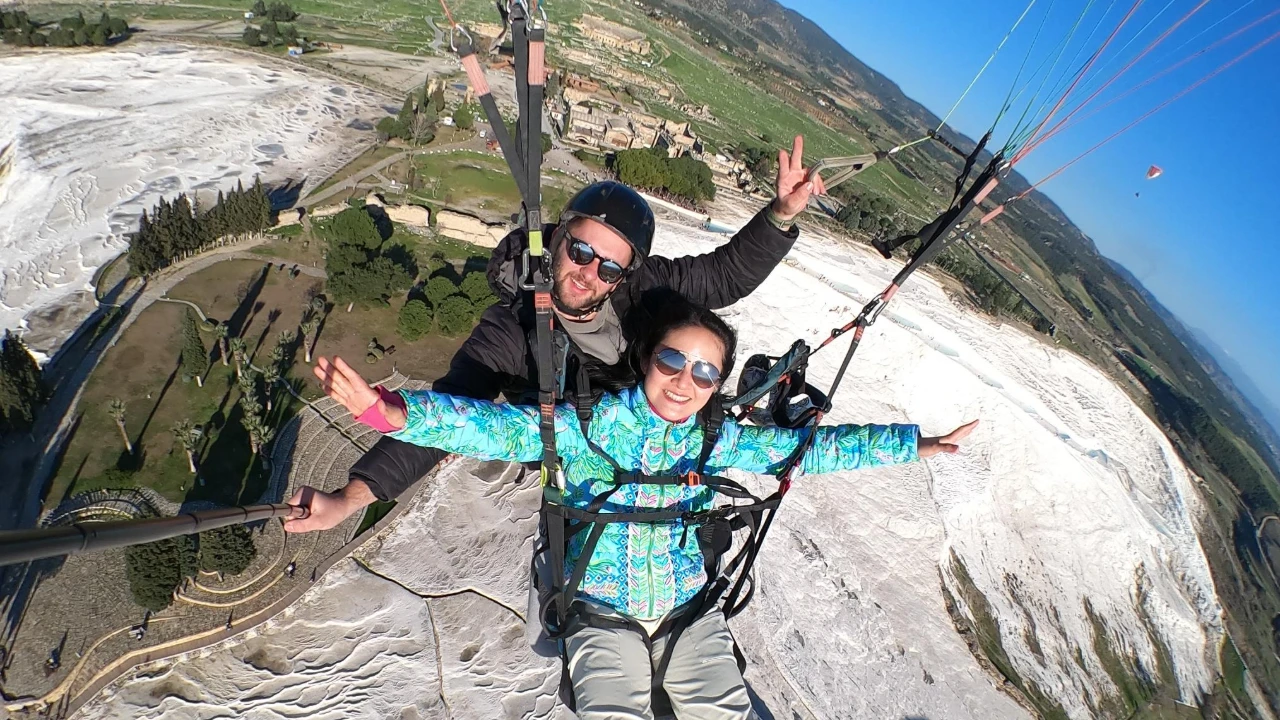
For those looking to diversify their activities, you can plan your sky experience with Denizli hot air balloon tours or opt for paragliding flights in the region gliding from Dinamit Hill. For a deeper dive into the history of the area, our Denizli historical city routes and ancient cities guide provides a comprehensive roadmap. To see all available options in the city, visit the Denizli travel and tour guide page.
Frequently Asked Questions 5
What time do the balloon flights in Pamukkale take place?
Flights occur at sunrise when wind conditions are most stable. Depending on the season, passengers are picked up from their hotels between 04:30 and 06:00 AM.
How long does the average balloon flight last?
The actual flight time from takeoff to landing is typically between 45 and 60 minutes, depending on the air currents.
Will I be cold during the flight? How should I dress?
It can be chilly on the ground in the early morning; however, the burner used to heat the balloon radiates warmth into the basket. Layered, comfortable clothing is sufficient.
Do the balloons get close to the travertines in Pamukkale?
Yes, depending on the wind direction, pilots often fly quite close to the travertine terraces and the ancient theater to provide excellent photo opportunities.
What happens if the flight is postponed due to bad weather?
If a flight is canceled by Civil Aviation due to wind or fog, your tour will be moved to the next available flight slot or rescheduled according to your itinerary.