Perched atop a majestic peak 2,150 meters high in the Taurus Mountains, Mount Nemrut is home to the monumental funerary monuments of the ancient Commagene Kingdom, a civilization that masterfully blended the cultures of the East and West. Built in the 1st century BC by King Antiochos to honor the gods and his ancestors, these colossal limestone sculptures are among the most breathtaking treasures on the UNESCO World Heritage List.
As the sun rises and sets, the Euphrates River basin is bathed in deep crimson, creating a surreal backdrop for the carved heads of eagles, lions, Zeus, and Apollo. The cultural journey from the district of Kahta to the summit is further enriched by stops at the Cendere Bridge, a masterpiece of Roman engineering, and the ancient capital of Arsemia.
In this comprehensive adiyaman nemrut dagi ve kommagene rotasi rehberi, we explore the ascent to the summit, the mythological significance of the terrace statues, the Karakuş Tumulus, and essential travel tips for your visit.
Quick Facts: Visiting the Summit of Mount Nemrut
To ensure a comfortable journey, it is essential to understand the timing, mountain climate, and hiking trails before joining a tour. The following summary provides the key details for the Mount Nemrut and Commagene route.
| Feature | Visitor Summary |
|---|---|
| Location & Region | Kahta, Adıyaman; Mount Nemrut National Park & Commagene Valleys |
| Key Highlights | East & West Terraces, Cendere Bridge, Arsemia, Karakuş Tumulus |
| Best Time to Visit | May – October (The summit road is closed in winter due to snow) |
| Recommended Duration | Half or full day (6-8 hour tours focused on sunrise or sunset) |
| Access & Terrain | Vehicle transfer followed by a 600-meter steep stone staircase hike |
| Ideal For | History and mythology buffs, nature photographers, adventure seekers, and couples |
Shuttles typically depart from hotels in Adıyaman city center or Kahta around 02:30 AM for sunrise or 02:00 PM for sunset, arriving at the national park entrance. From the parking area, visitors hike up the stone path to reach the terraces.
For travelers wishing to explore other historical routes in the region, you can plan your trip by browsing our Adıyaman turları list.
Night Transfer and the Dawn Ascent
On sunrise tours, the journey begins under a blanket of stars, winding up the mountain roads in the quiet of the night.
After a warming break with hot tea at the national park cafeteria, visitors embark on a 20-25 minute guided climb up the stone steps using flashlights.
First Light on the East Terrace
As the first rays of dawn paint the horizon in hues of red and gold, the features of the giant god heads begin to emerge from the shadows.
The moment the sun rises over the distant mountain ranges creates a spellbinding atmosphere, usually observed in a profound, shared silence by all visitors.
The Architecture of the Crushed Stone Tumulus
The 50-meter-high pyramid of crushed limestone, piled atop the burial chamber of King Antiochos I, was specifically designed to prevent grave robbing.
The unstable, sliding nature of the stones has successfully deterred looters for thousands of years, keeping the royal chamber intact.
A Sense of Timelessness and Silence
At this ancient sanctuary above the clouds, the only sound is the whisper of the wind. Spending a few moments before these stone giants offers travelers a deep sense of inner peace and a feeling of stepping beyond time.
The Monumental Statues of the East and West Terraces
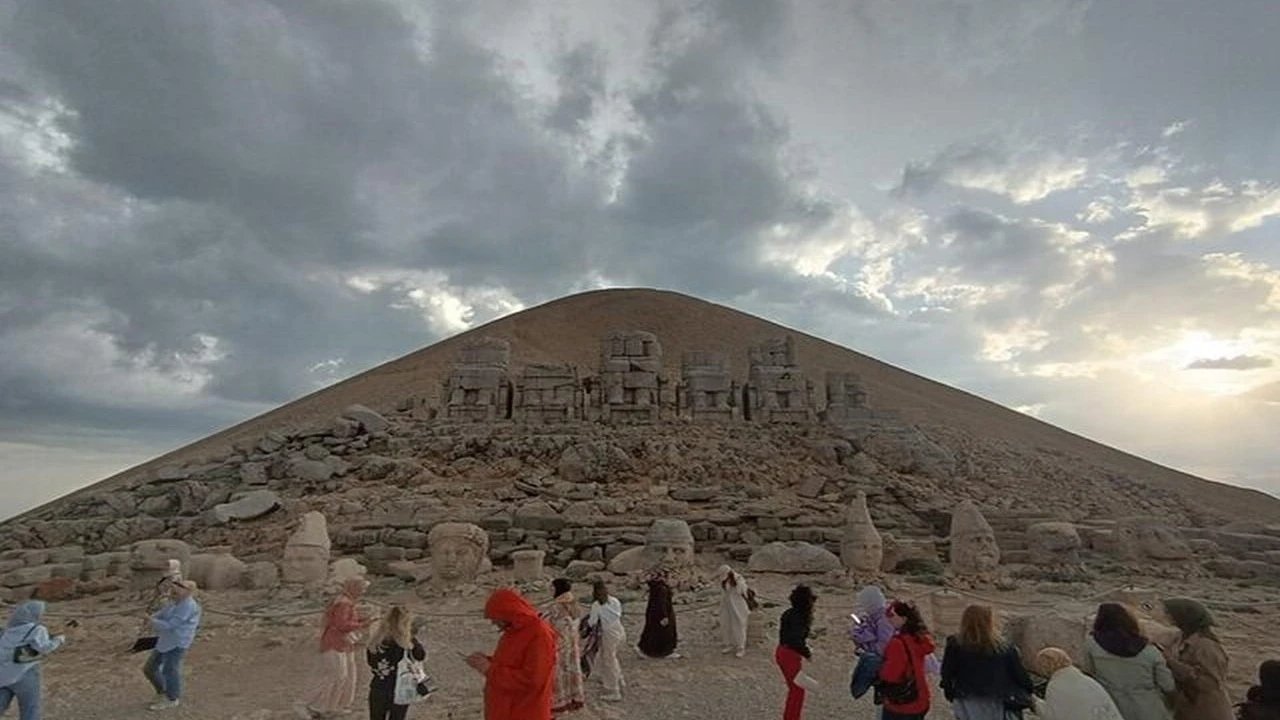
The East and West terraces, carved on either side of the tumulus at the summit of Mount Nemrut, showcase the pantheon of the Commagene religion.
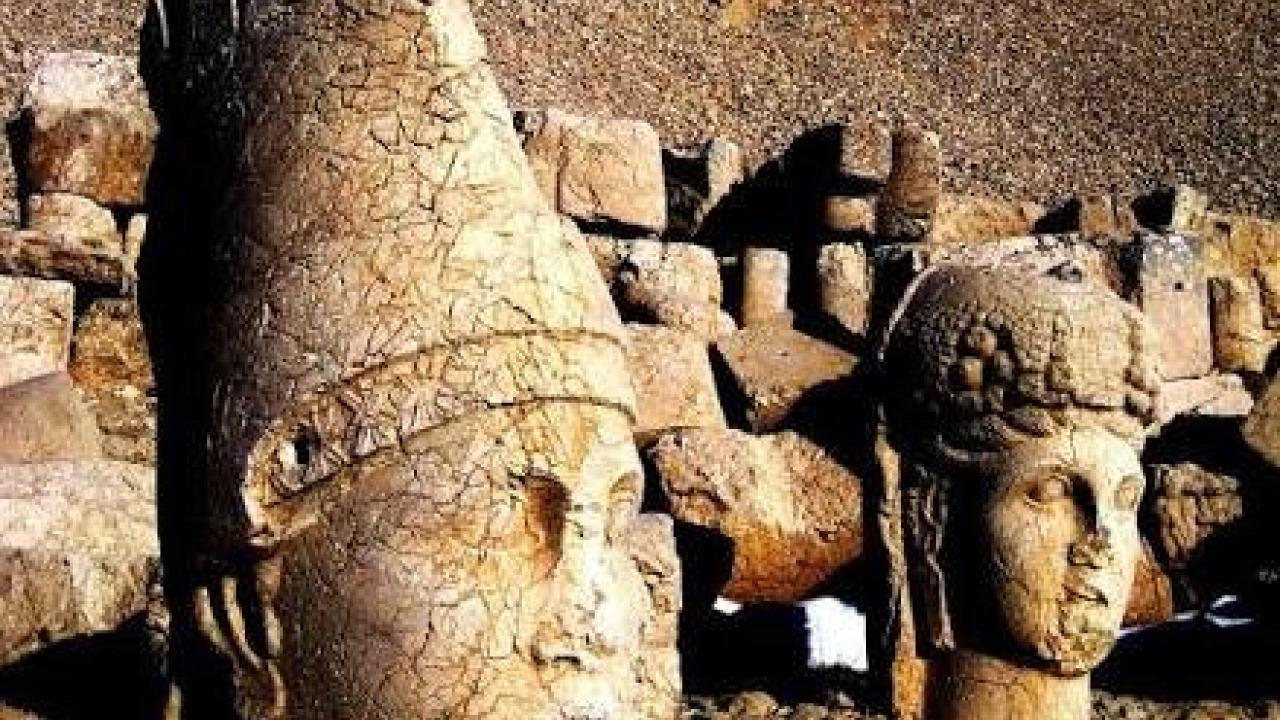
The figures consist of 8-10 meter tall seated bodies and 2-meter tall colossal heads that have fallen to the ground over centuries of earthquakes, representing a unique fusion of Greek and Persian art.
The statues include King Antiochos I himself, Fortuna (the goddess of abundance of Commagene), and Zeus-Oromasdes (the god of the sky).
Comparison of the Nemrut Terraces and Monuments
You can find the architectural and mythological differences between the two main terraces in the table below.
| Terrace | Sun Position & Function | Key Statues and Reliefs |
|---|---|---|
| East Terrace | Sunrise viewing and religious altar | Lion, Eagle, Antiochos, Commagene, Zeus, Apollo, Heracles |
| West Terrace | Sunset viewing and astrology | Statue heads, Lion Horoscope relief, royal handshake steles |
| North Terrace | Passageway and ceremonial route | Unfinished steles and wall bases connecting the two terraces |
On both terraces, the lion symbolizes the power of the earth, while the eagle represents the protection of the heavens.
To explore these ancient monuments with expert guides, you can find tour details on our Adiyaman One-Day Cultural Tour page.
The Lion Horoscope and Ancient Astronomy
The relief of the lion on the West Terrace, featuring a precise arrangement of stars and planets, is known as the oldest horoscope in history.
Astronomers state that this star map clearly documents the date of King Antiochos' accession to the throne in 62 BC.
A Synthesis of Greek and Persian Culture
Antiochos sought to unite his prestigious lineage, descending from Alexander the Great (Macedonian) on his mother's side and Darius I (Persian) on his father's side.
This synthesis is evident in the statues, which blend Persian attire with Greek facial features.
The Ceremonial Inscriptions (Nomos)
The Greek inscriptions carved into the stone bases behind the statues contain the king's religious laws and his will for the temple to be protected for eternity.
These inscriptions are rich literary documents that provide insight into the theological thinking of the ancient world.
The Peace Vision of the Commagene Kingdom
In an era where the Eastern and Western worlds were often in conflict, King Antiochos brought the gods of two great civilizations together in one temple. This philosophical approach carries a universal message of brotherhood, suggesting that people of different faiths and cultures can coexist in peace.
The inscriptions at the summit of Mount Nemrut leave an eternal legacy of wisdom, urging future generations to uphold the virtues of justice, generosity, and respect.
Commagene Heritage Around Kahta: Arsemia and Cendere
Descending from the summit toward the Kahta Plain, the tour continues with historical stops including the kingdom's summer administrative center and defensive fortresses.
The Arsemia archaeological site is notable for the remains of the royal palace perched on a steep hill and the massive stele depicting King Antiochos shaking hands with Heracles.
Nearby, the Roman bridge spanning the Cendere River remains standing strong, showcasing mortarless cut-stone architecture.
Arsemia and the Heracles Relief
The rock relief at Arsemia depicts King Antiochos and the mythological hero Heracles shaking hands as equals.
Below the relief, a deep cave tunnel leads to a mysterious ceremonial passage with 158 steps carved directly into the rock.
Cendere Bridge and Roman Engineering
Built in the 2nd century AD by the 16th Legion in honor of Roman Emperor Septimius Severus, this bridge is one of the oldest surviving arched stone bridges in the world.
The columns at either end of the bridge are monumental obelisks representing the emperor, his wife, and his sons.
Karakuş Tumulus and the Royal Women
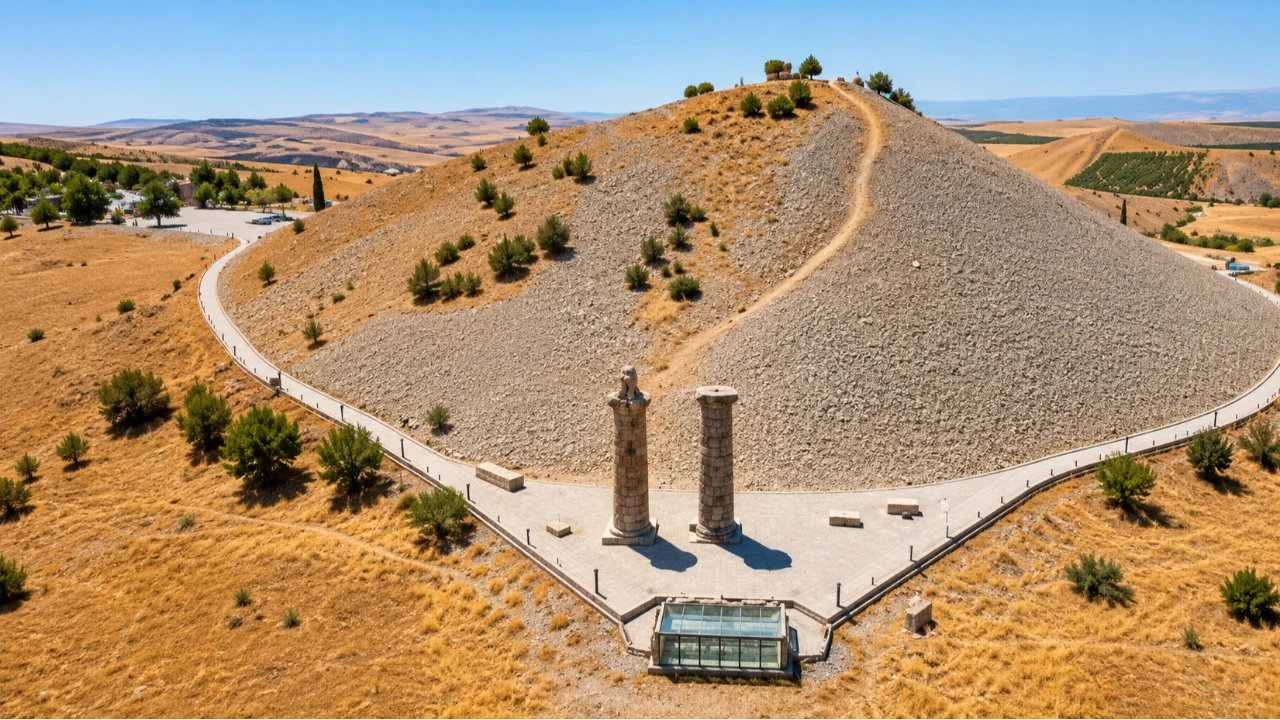
The Karakuş Tumulus, a monumental tomb for the women of the Commagene royal family, takes its name from the eagle statue atop the surrounding columns.
Rising from the Çayboyu plain, this tumulus highlights the respected status of the dynasty's women.
Adıyaman Gastronomy: A Taste of the Region
After the mountain climb, a lunch break in Kahta or Adıyaman city center offers a chance to taste the region's rich culinary delights.
Adıyaman is considered the homeland of çiğ köfte (raw meatballs), which are served freshly kneaded with fresh greens.
The Adıyaman tavası (baked tray), Besni tavası, and dövme dondurma (traditional pounded ice cream) add a delicious flavor to the journey.
- Adıyaman Tavası: A delicious main course made by baking lamb, pearl onions, garlic, and eggplant in a clay pot.
- Besni Kebab and Pides: Open-faced pides topped with minced meat and local spices, baked fresh.
- Meyir Soup: A refreshing local soup made from cracked wheat, chickpeas, and yogurt.
- Adıyaman Çiğ Köfte: A famous delicacy flavored with pomegranate molasses, walnuts, and isot (Urfa pepper).
- Cheese Halva: A sweet finish to the tour, consisting of unsalted cheese semolina halva served between warm lavaş bread.
Relaxing at Local Restaurants
After the chill of the mountain, sitting under a grapevine trellis in the valley and sipping strong tea is the perfect way to unwind.
Fresh walnut pastries from village bakeries make for an excellent snack for the road.
Photography at Mount Nemrut: Light and Angles
Mount Nemrut is one of the few places on Earth where light and shadow create a truly dramatic effect on stone sculptures.
The golden glow of the stones on the East Terrace at dawn and the crimson reflections on the West Terrace in the evening are moments that captivate professional photographers.
Wide-angle and telephoto lenses are ideal for capturing the intricate facial expressions of the statues.
Silhouette Shots on the East Terrace
In the first minutes of sunrise, the backlight creates imposing silhouettes of the eagles and god heads.
The layers of mountains stretching toward the horizon add an infinite sense of depth to the photographs.
Crimson Evening Light on the West Terrace
As the sun sets, the red tones hitting the Euphrates Basin sharpen the facial lines and beard details of the giant marble heads.
Portraits taken at this hour often become the most prized images in a travel album.
Practical Clothing and Safety Tips for the Summit
Because the summit of Mount Nemrut reaches 2,150 meters, temperatures are typically 15-20 degrees Celsius lower than in the city center.
- Heavy, Windproof Jacket: Even in mid-summer, freezing mountain winds blow at the summit. A beanie, fleece, and windbreaker are highly recommended.
- Sturdy Hiking Boots: Choose footwear with ankle support for climbing the steep stone steps and walking on loose gravel paths.
- Headlamp or Flashlight: Headlamps are incredibly useful for the night climb, keeping your hands free.
- Thermos with Hot Drinks: Carrying hot tea or coffee while waiting for dawn helps maintain your body temperature.
- Lip Balm and Moisturizer: The dry, harsh mountain wind can dry out your skin and lips; protective cream is advised.
- Do Not Climb the Statues: For security and preservation reasons, climbing on the historical statues or stepping on the stone tumulus is strictly prohibited by law.
Frequently Asked Questions 4
Is sunrise or sunset better at Mount Nemrut?
Both have their own magic; sunrise on the East Terrace offers a spiritual awakening, while sunset on the West Terrace promises warmer, softer light tones.
Can you drive all the way to the summit?
Vehicles can reach the cafeteria parking lot 600 meters below the summit; the remaining steep, stepped distance must be covered on foot.
Which months is Mount Nemrut open for visitors?
The road is generally open from May, after the snow melts, until the first week of October or November. It is closed during winter due to heavy snowfall.
Are there hotels or accommodation facilities at the summit?
There are no hotels at the summit. The nearest accommodations are guesthouses at the foot of the mountain or hotels in the centers of Kahta and Adıyaman.