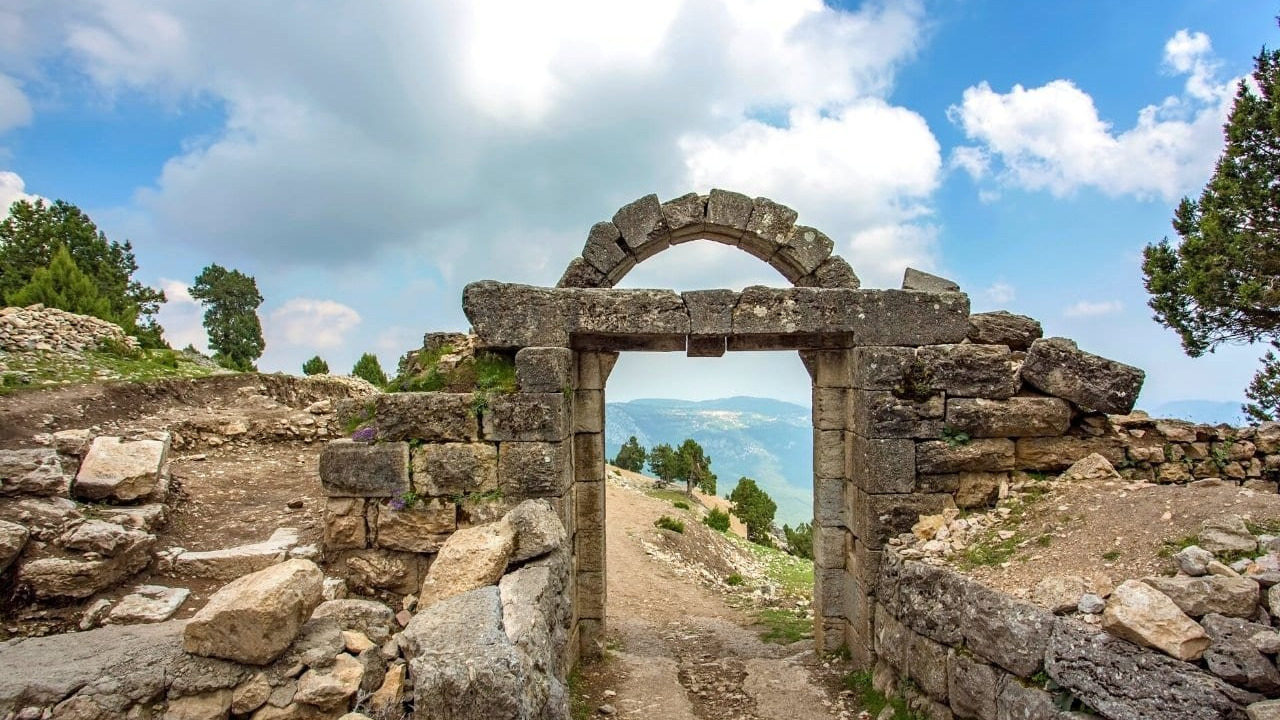

Kelenderis Ancient City, nestled on the coast of Aydıncık district in Mersin, is a historic port settlement. Established along the rugged coastline once known as Rough Cilicia in antiquity, the city's name has endured for centuries, passed down to the modern-day district. What truly sets this archaeological site apart from others in the region is its direct connection to the sea: the harbor basin, bathhouse, mosaic floor, necropolis, and hilltop castle are all clustered within a few hundred meters. This guide delves into the city's past, its surviving structures, how to get there, seasonal considerations, practical visitor information, and nearby attractions.
Where is Kelenderis Ancient City and What Can You See?
The ancient site is located on the coastal strip of Aydıncık town center, just south of the D400 coastal road. Its beachfront position means you can easily combine a historical exploration with a relaxing beach break in the same half-day. Excavations ongoing since 1987 indicate that the first settlement dates back to the late 8th century BCE, and the city's name appears on its own minted coins from the mid-5th century BCE. Today, visitors can explore the remnants of the ancient harbor, the bathhouse structure, floor mosaics, rock-cut tomb chambers, and the hilltop castle ruins.
Quick Facts
| Topic | Information |
|---|---|
| Location | Coastal area of Aydıncık town center, Mersin |
| Period | Layers spanning from antiquity to Byzantine and medieval times |
| Highlights | Ancient harbor, harbor bath, Kelenderis mosaic, necropolis, castle |
| Visit Duration | 1.5-2 hours for the ruins; half-day including the coast |
| Best Time to Visit | Spring and autumn months |
| Transportation | D400 coastal road; buses and minibuses on the Silifke-Anamur route |
| Admission | Open-air site, free; Kelenderis Museum 09:00-17:00, closed Mondays |
What to See at the Ancient Site
Since the ruins are concentrated in a compact area, the exploration naturally progresses from the sea towards the hilltop. Below are the prominent sections of the site.
Ancient Harbor and Coastal Structures
The city's very existence revolved around its harbor. Serving as a crucial stop on the maritime route between the Eastern Mediterranean and Cyprus, the bay was shaped by quays and breakwater arrangements. Along the shoreline, submerged wall lines can still be traced. Silver staters minted by the city in the 5th-4th centuries BCE depict a rider dismounting a horse and a kneeling goat, artifacts that underscore the harbor's significance in Mediterranean trade. Practical tip: The stones in the harbor area can be slippery when wet. Underwater wall lines are clearer when the sea is calm and the light is direct.
Harbor Bath and Kelenderis Mosaic
The most talked-about section of the coastal structures is the floor mosaic, dating to the early 6th century CE and measuring approximately 15 by 3 meters. The mosaic vividly depicts the harbor, two ships, a walled peninsula, and structures lining the coast, making it a rare example of an ancient city portraying its own appearance. The large bathhouse at the harbor entrance is one of the main ancient structures still standing; the wall masonry and pipe lines of its hot and cold sections can be observed. Practical tip: The mosaic area is protected; please stay on the marked path. For photography, cloudy conditions are better to avoid glare.
Necropolis and Rock-Cut Tombs
The necropolis, located to the east of the city, features a collection of rock-cut chamber tombs, sarcophagus troughs, dromos tombs, and monumental tombs from various periods. The most well-known structure in this area is the monumental tomb referred to as "Dört Ayak" (Four Legs); some chambers still preserve door sockets and relief traces at their entrances. Practical tip: The path in the necropolis section is stony and uneven; closed-toe walking shoes will be most comfortable. Shade is hard to find here during midday.
Hilltop Castle and City Walls
Perched on the hill overlooking the ancient site are the ruins of a castle used throughout the medieval period. Its strategic position, watching over the harbor and coastal road, explains the city's defensive logic; different masonry techniques from various eras can be seen side-by-side in the walls. The path leading up is short but steep. Practical tip: Planning your ascent to the castle in the late afternoon or near sunset will protect you from the heat and offer stunning views of the coastline from above.
How to Get to Aydıncık and the Ancient Site
- Location: Aydıncık is situated on the D400 coastal road between Silifke and Anamur. The ancient site is in the coastal part of the town center, within walking distance of the bazaar.
- By Road from the East: Those coming from Mersin and Silifke will pass through Taşucu and Yeşilovacık. The coastal drive from Silifke to Aydıncık is approximately 85 kilometers.
- By Road from the West: Travelers from Alanya and Gazipaşa will use the same coastal road via Anamur; the distance from Anamur to Aydıncık is approximately 52 kilometers.
- By Air: The nearest airport is Gazipaşa-Alanya Airport, about 135 kilometers from Aydıncık. Airports in the Adana and Antalya directions require a much longer road connection.
- Public Transport: Buses and minibuses operating between Silifke and Anamur stop in Aydıncık; the ancient site is a short walk from the drop-off point.
Visit Period and Seasonal Comparison
As the site is open and largely unshaded, your comfort during the visit directly depends on the season. The table below compares the periods with their advantages and considerations.
| Period | Advantage | Notes |
|---|---|---|
| Spring (April-May) | Mild weather, green hillsides | Ideal for climbing to the castle and exploring the necropolis |
| Summer (June-August) | Warm sea, long days | Scorching midday sun; plan your visit for morning or late afternoon |
| Autumn (September-October) | Sea still warm, fewer crowds | Shorter daylight hours; visit the castle earlier |
| Winter (November-March) | Quiet site, clear air | Paths might be muddy after rain |
Coastal Day Plan and Tour Options
Kelenderis's beachfront location makes it easy to combine a cultural excursion with a coastal program. A common itinerary involves spending the morning at the ruins and dedicating the afternoon to the coves along the Aydıncık coast; the district's shoreline offers shallow, clear sections perfect for snorkeling. For those interested in a program centered around ancient cities, explore our cultural tours options. For coastal walks and nature-focused alternatives, check out our nature and adventure tours.

Accommodation, Dining, and Nearby Stops
Accommodation in Aydıncık
The town center primarily offers small-scale hotels, apartment rentals, and guesthouses. Those seeking a wider range of facilities might consider the Silifke and Taşucu areas to the east, or around Anamur to the west. During summer months and public holidays, coastal capacity can be limited, so booking in advance is advisable.
Coastal Delights & Local Cuisine
Mersin cuisine is renowned for specialties like tantuni, cezerye, and kerebiç. Along the coast, however, daily fresh fish and citrus-heavy dishes take center stage. Small eateries around Aydıncık tailor their menus to the season. If you want to make local gastronomy a highlight of your trip, choose from our culinary tours.
Nearby Attractions
Approximately 7.5 kilometers southeast of Aydıncık center, Gilindire (Aynalıgöl) Cave, famous for its underground lake, can easily be visited on the same day. Just 3 kilometers from the center, the Roman-era Susanlık Castle features chapel and watchtower ruins. To the west, near Anamur, you'll find Anemurium Ancient City and Kayacı Valley. To the east, the area around Silifke and Kız Kalesi (Maiden's Castle) in the sea offer further exploration. Nagidos, near Bozyazı, is another ancient port settlement along the same coastline.
Practical Tips Before You Go
- The site is unshaded; bring a hat, sun protection, and plenty of water.
- The paths and necropolis section are stony; opt for closed-toe walking shoes.
- Do not touch the mosaics or wall ruins; stay on marked paths.
- Visiting the ancient site is free; museum hours and Museum Card conditions can change seasonally, so confirm before your trip.
- If you plan to swim, keep a towel and swimsuit in your car; the coast is within walking distance of the ruins.
How Many Days Should You Plan?
For those wishing to see just the ancient site, half a day is sufficient. Adding Gilindire Cave and the Aydıncık coast extends the plan to a full day. For a two-day itinerary, consider Kelenderis and the cave on the first day, then explore attractions to the west (Anamur) or east (Silifke) on the second. For a broader program centered around castles and ancient sites, choose from our historic city tours. For another coastal ancient city, check out our Olympos Ancient City guide.
Frequently Asked Questions 6
What does Kelenderis mean?
Kelenderis is the name of the ancient city on the Aydıncık coast, with its origins linked to pre-Greek Anatolian languages. Over centuries, the name evolved into forms like Kilindra and Gilindire, before the district was officially named Aydıncık in 1965.
What is the legend of Kanlıdivane?
Kanlıdivane (Kanytelis) in Erdemli gets its name, according to local folklore, from an ancient practice of throwing criminals into its giant sinkhole. Other theories suggest the name comes from the word Kanytelis itself or the reddish color of the sinkhole's rocks.
What is Mersin Aydıncık famous for?
Aydıncık is known for the Kelenderis ancient site, the Gilindire (Aynalıgöl) Cave with its underground lake, serene coves, and clear coastline. As the district is located on the D400 coastal road, it's a popular stop on coastal routes.
Which ancient cities are in Mersin?
Prominent ancient sites in Mersin include Kelenderis in Aydıncık, Anemurium near Anamur, Nagidos in Bozyazı, Elaiussa Sebaste and Kanytelis (Kanlıdivane) around Erdemli, Diokaisareia (Uzuncaburç) near Silifke, and Soli Pompeiopolis in Mezitli.
What is the Kelenderis mosaic?
It is a late antique floor mosaic discovered in a structure near the harbor. Because it depicts structures lining the coastline and a city wall, it is considered a rare example of an ancient city portraying its own appearance.
How long does a visit to Kelenderis Ancient City take?
Walking through the ancient site typically takes most visitors one and a half to two hours. Adding the climb to the hilltop castle and a coastal break extends the visit to half a day.