
Nestled in the transition zone between the Black Sea and Central Anatolia, Çorum is a province that holds the secrets of ancient empires deep within its soil. The Hattuşa Ancient City, located in the Boğazkale district, served as the majestic capital of the Hittite Empire for approximately 450 years and was inscribed on the UNESCO World Heritage List in 1986. With its sprawling fortification walls, monumental gates, mysterious underground tunnels, and the nearby Yazılıkaya Open-Air Sanctuary, Hattuşa is a premier destination for archaeology enthusiasts and history buffs. In this guide, we explore everything you need to know about the Çorum Hattuşa (Boğazkale) Hittite capital—from its iconic gates and cuneiform tablets to practical travel tips and local flavors.
At Travel Tour Shop, we maintain a rigorous selection process, vetting our partners so thoroughly that we only list the top 17% of local guides and agencies—those who stand out for their authentic expertise and exceptional guest reviews. This guide is part of that commitment to quality, bringing together everything a first-time visitor needs to know, from must-see landmarks to essential travel advice.
Quick Facts
| Topic | Information |
|---|---|
| Location | Boğazkale district, Çorum (Transition zone of Central Anatolia & Black Sea) |
| Highlights | Capital of the Hittite Empire, UNESCO World Heritage Site |
| Key Sites | Lion Gate, King's Gate, Yerkapı tunnel, Great Temple, Yazılıkaya |
| Duration | Half-day; Full-day if including Boğazköy Museum and Alacahöyük |
| Admission | Entrance fees apply; Museum Pass (Müze Kart) is accepted |
| Getting There | Approx. 82 km from Çorum center; approx. 200 km from Ankara |
| Best Time to Visit | Spring (April–June) and Autumn (September–October) |
Where is Hattuşa? The Historic Location of Boğazkale
Hattuşa is located within the Boğazkale district, approximately 82 kilometers southwest of the Çorum city center. Because the district's modern name is Boğazköy, the ancient city is frequently referred to in literature as both Hattuşa and Boğazköy. Situated about 200 kilometers from Ankara, it is an ideal destination for an archaeology-focused day trip from the capital.
The history of this region spans much more than a single civilization. Archaeological evidence suggests settlement began as early as the Chalcolithic age; following the Hattians in the Early Bronze Age and Assyrian trading colonies, the area reached its zenith as the Hittite capital. When you walk these grounds, you are stepping through thousands of years of overlapping history. The rugged, rocky terrain that surrounds the site once provided a formidable natural defense and now offers visitors breathtaking panoramic views.
Capital of the "Thousand Gods": The History of Hattuşa
Between the 17th and 13th centuries BCE, the Hittites were one of the most powerful political forces in the Bronze Age world. They were famously known as the "People of a Thousand Gods" due to their religious tolerance—a practice of incorporating the deities of conquered lands into their own pantheon. Hattuşa was a sprawling metropolis, built with sophisticated military architecture nestled among steep cliffs to protect against enemy incursions.
The thousands of cuneiform tablets discovered in the city's archives provide a detailed window into Hittite administration, law, and diplomacy. Among these treasures is the text of the Treaty of Kadesh, recognized as one of the world's first known written peace treaties. Due to their immense historical value, the Boğazköy tablets are also protected under the UNESCO Memory of the World Register. The fact that such advanced writing and statecraft existed in this era makes Hattuşa truly extraordinary. For those looking to experience this deep heritage, we recommend exploring similar routes through our Türkiye cultural tours.
Must-See Sites in the Hattuşa Ancient City
As you explore Hattuşa, you will follow the path of the massive stone walls and encounter stunning examples of Hittite stonework, most notably the monumental gates. Because the archaeological site is vast and uneven, following a logical route is key to a comfortable visit. Here are the essential stops.
Lion Gate
Located in the southwest of the city, the Lion Gate has become the iconic symbol of Hattuşa. It features two large lion sculptures flanking the entrance, believed to have been placed there to protect the city from evil spirits and enemies. The wide open space in front of the gate is a perfect spot for photography; try to visit in the early morning when the light is soft to capture the finest details.
King's Gate
The King's Gate is famous for its relief of a Hittite war god holding an axe. Please note that the relief you see today is a replica; the original masterpiece is preserved at the Museum of Anatolian Civilizations in Ankara. Most visitors pause here to admire the intricate craftsmanship. While at the gate, you can also observe how the fortification walls rise toward the higher elevations of the city.
Yerkapı and the Potern (Underground Tunnel)
One of the most impressive feats of ancient engineering is the Yerkapı Potern. This stone-lined underground tunnel, stretching approximately 71 meters, served as a secret military passage for defense. Walking through the tunnel is a highlight of any visit, offering a visceral connection to the past. Since the area above Yerkapı is one of the highest points in the city, it also offers expansive views. As the tunnel floor can be uneven, we recommend wearing sturdy walking shoes.
The Great Temple and the Green Stone
Located in the lower part of the city, the Great Temple was one of the primary religious structures of the Hittites, dedicated to the Storm God and the Sun Goddess. The remains of the temple's storage and archive sections suggest it also functioned as an administrative hub. Among the ruins lies the mysterious "Green Stone," a smooth, uniquely colored object of uncertain origin. Some scholars suggest it may have been a gift from Egypt or Babylon. A local tradition involves visitors touching the stone for good luck—while not an archaeological fact, it is a charming part of the local visitor experience. To combine these historical sites into a seamless journey, check out our Çorum tours.
Yazılıkaya Open-Air Sanctuary: The Meeting Place of the Gods
Located about 2 kilometers from the center of Hattuşa, Yazılıkaya is the primary open-air religious sanctuary of the Hittites. Carved into natural rock fissures, the sanctuary consists of two main chambers, known as Room A and Room B. With its rock-cut reliefs, Yazılıkaya acts as a visual catalog of Hittite religion and is an indispensable part of any Hattuşa itinerary.
Reliefs in Rooms A and B
In Room A, more than sixty reliefs of gods and goddesses are arranged in a celestial procession along the rock face. The central scene depicts the meeting of the Storm God Tešup and the Sun Goddess Hepat; the movement of the two divine groups tells the story of Hittite cosmology in stone. Room B is more intimate, featuring a procession of twelve gods and depictions related to the kings of the era. When examining the reliefs, look closely at the details of their headgear and garments to better understand the scenes.
Visiting Yazılıkaya: Tips and Access
Yazılıkaya is a natural extension of the Hattuşa site and is easily accessible by vehicle. Because the reliefs are outdoors and carved into rock, the low sun of the morning or late afternoon brings out the depth and detail of the carvings most effectively. As the area lacks shade, bringing a hat and water is essential for comfort during the summer months. We recommend saving Yazılıkaya for the end of your Hattuşa tour to wrap up your journey chronologically.
Boğazköy Museum and Alacahöyük
After exploring the ruins, the Boğazköy Museum in Boğazkale provides the necessary context to the stones you have just seen. The museum houses cuneiform tablets, pottery, seals, and sculptural fragments unearthed during the Hattuşa excavations. Seeing these artifacts in person makes it much easier to visualize the daily and administrative life of the ancient city. As the museum is under the Ministry of Culture and Tourism, the Museum Pass (Müze Kart) is valid here.
Alacahöyük
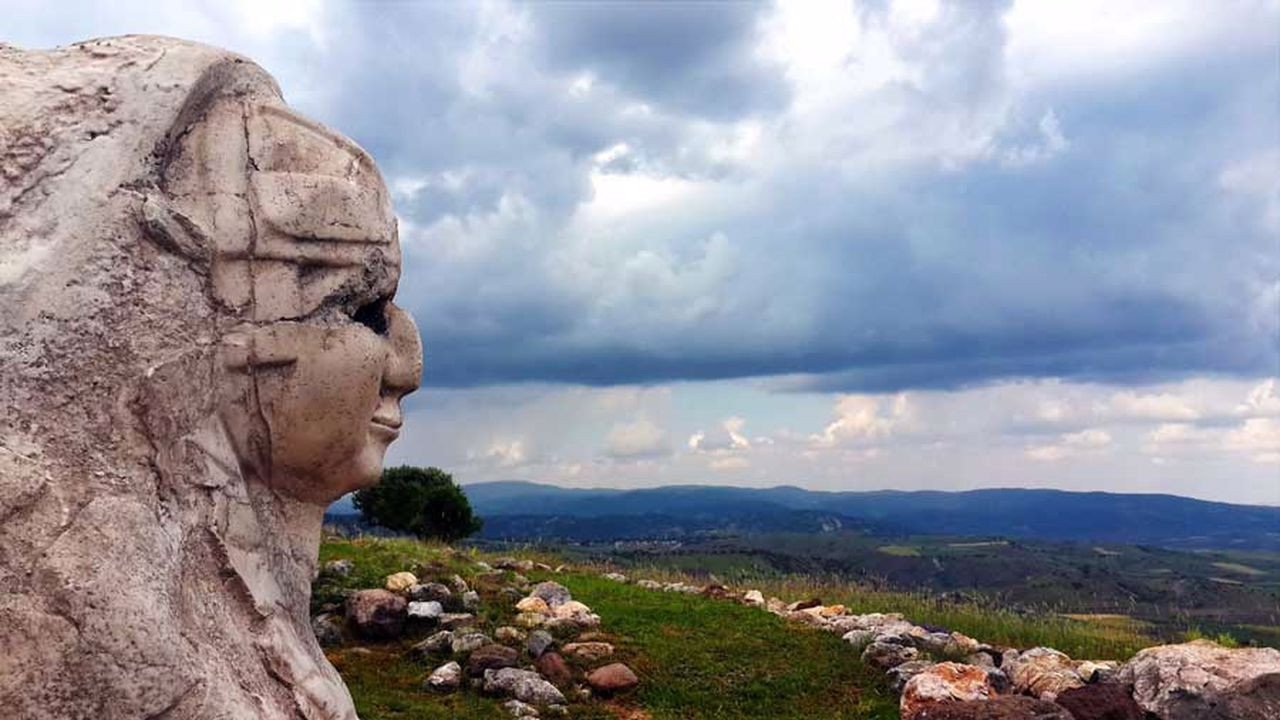
Alacahöyük, located in the Alaca district of Çorum, is another significant archaeological site dating back to the Hattian and Hittite periods. It is renowned for its monumental Sphinx Gate and the sun discs found in royal tombs—motifs that have become iconic symbols of Anatolian archaeology. Since it is within driving distance of Hattuşa, it is a perfect addition for those looking to expand their Hittite exploration. You can find multi-stop archaeology programs in our cultural tours category.
Getting to Çorum and Hattuşa
Hattuşa is approximately 82 km from Çorum city center and about 200 km (a 2.5-hour drive) from Ankara. If you are driving, follow the Samsun-Ankara highway and look for signs for Boğazkale via Sungurlu. Road signage is generally excellent, making the drive straightforward.
For those using public transport, minibuses run from the Çorum bus station to the Boğazkale district; we recommend confirming the schedule in advance to ensure a smooth return trip. Because the archaeological site is spread across a large, hilly area (roughly 2.5 km in diameter), walking the entire site can be tiring. Therefore, visitors are permitted to drive along the designated tour route and stop at various parking points to view the structures. This makes visiting much more comfortable, especially in hot weather or for larger groups.
Best Seasons and Travel Tips for Hattuşa
The best times to visit Hattuşa are during the spring and autumn, when the weather is mild. The months from April to June and September to October are ideal for walking long distances in open terrain and studying the reliefs comfortably. In the summer, the midday heat can be intense, so it is wise to plan your visit for early morning or late afternoon. Winters in Central Anatolia can be cold and occasionally snowy; if visiting during this time, be sure to check weather and road conditions beforehand.
A few practical tips: wear comfortable, sturdy shoes for the rocky and sloping terrain, and bring a hat and water to stay hydrated. Since food options on-site may be limited, bringing a small snack is a good idea. To truly grasp the meaning of the tablets and reliefs, consider hiring a professional guide to significantly enhance your experience.
What to Eat in Çorum? Local Delicacies
No trip to Çorum is complete without sampling the local cuisine. The most famous specialty is Çorum leblebi—chickpeas that are double-roasted over a wood fire. In the local bazaars, you can find various varieties, including salted, clove-infused, and chocolate-covered versions, making them a perfect souvenir.
For a main course, try İskilip Dolması, a traditional dish made with many layers of thinly rolled dough, often served at special celebrations. Çorum mantısı (Turkish dumplings) is another local favorite. After your archaeological adventure, visiting a local restaurant in the city center is the perfect way to complete your Çorum itinerary.
Accommodation in Boğazkale and Çorum
You have two main options for accommodation. In the Boğazkale district center, you will find small hotels and pensions within walking distance or a short drive from the ruins. This is ideal for travelers who want to start their tour early in the morning to beat the crowds.
The second option is Çorum city center, which offers a wider variety of accommodation. Staying in the center is a great choice if you prefer to visit Hattuşa on a day trip and enjoy the dining and amenities of a larger city in the evenings. Travelers combining their trip with Ankara or Cappadocia can also find flexible lodging options along their route. Regardless of your choice, we recommend booking in advance during the peak tourist season.
Suggested Hattuşa Itinerary
For those with limited time, Hattuşa and Yazılıkaya can be comfortably explored in half a day. A suggested route would be: start in the Lower City, visit the Great Temple, and see the Green Stone, then drive up to the upper fortification line. Stop at the Lion Gate and walk through the Yerkapı Potern, then head to the King's Gate. Complete your journey with the Yazılıkaya reliefs, located about 2 km from the center.
If you have more time, you can turn this into a full-day trip by adding the Boğazköy Museum and Alacahöyük. For those on an Ankara or Black Sea route, Hattuşa serves as a powerful archaeological interlude between major stops. If you prefer a pre-planned, hassle-free experience, compare our tour options below to find the one that suits you best.

Frequently Asked Questions 6
Where is Hattuşa (Boğazkale) located and which province is it in?
Hattuşa is located in the Boğazkale district of Çorum province, approximately 82 kilometers southwest of Çorum city center. Because the district was formerly known as Boğazköy, the site is often referred to as both Hattuşa and Boğazköy. It is about 200 kilometers from Ankara.
Is there an entrance fee for Hattuşa and Yazılıkaya, and is the Museum Pass valid?
Yes, there are entrance fees for both the Hattuşa archaeological site and the Yazılıkaya Open-Air Sanctuary. As these sites are managed by the Ministry of Culture and Tourism, the Museum Pass (Müze Kart) is accepted, allowing you to visit the ancient city, tunnels, and relief areas without additional fees.
Is Hattuşa best explored on foot, or can you drive through the site?
Since the site covers a large, hilly area of about 2.5 km in diameter, walking the entire area can be exhausting. Therefore, visitors are allowed to drive along designated routes and stop at specific parking points to view the monuments. Some sections, such as the tunnels, must be explored on foot.
How can I get from Çorum center to Hattuşa (Boğazkale)?
You can reach Hattuşa by private car by following the Samsun-Ankara highway and following the signs for Boğazkale via Sungurlu. For public transport, minibuses run from the Çorum bus station to Boğazkale; it is helpful to confirm the departure times in advance.
What should I eat in Çorum, and what are the famous local products?
Çorum is famous for its double-roasted Çorum leblebi (chickpeas), which you can find in many varieties at the local bazaars. For traditional meals, İskilip Dolması and Çorum mantısı are highly recommended local specialties.
Are Hattuşa and Alacahöyük in the same area, and can they be visited together?
Yes. Alacahöyük is a separate archaeological site located in the Alaca district of Çorum and is within visiting distance of Hattuşa. It is famous for its Sphinx Gate and sun disc finds, making it an excellent addition to a Hittite-themed itinerary.