
The Gallipoli Historical Area and Martyrs' Memorial is a vast landscape of remembrance stretching across the Gallipoli Peninsula, preserving the profound legacy of the 1915 Gallipoli Campaign. Today protected as an open-air museum, this site encompasses a moving collection of monuments, cemeteries, trenches, and forts—from the iconic Martyrs' Memorial to the heights of Conkbayırı, the 57th Regiment Cemetery, and Anzac Cove. Visitors do more than just view military monuments; they walk upon the very ground where history unfolded, experiencing the geography of the era firsthand. In this guide, we provide a step-by-step breakdown of the must-see stops, transportation options, visiting conditions, and recommended itineraries.
At Travel Tour Shop, we maintain a rigorous quality standard: we vet our tour and guide providers extensively, excluding approximately 83% of applicants to ensure we only list those who meet our strict criteria for authentic local experiences and exceptional guest reviews. The following information is part of this quality filter, compiled to help first-time visitors navigate everything from key landmarks to practical travel tips.
Quick Facts
| Topic | Information |
|---|---|
| Location | Çanakkale, Gallipoli Peninsula (primarily Eceabat district) |
| Status | Open-air museum / Historical Area (approx. 33,444 hectares) |
| Highlights | Martyrs' Memorial, 57th Regiment Cemetery, Conkbayırı, Anzac Cove |
| Entrance Fee | Open-air cemeteries and monuments are free; some museums and visitor centers require a fee |
| Visiting Hours | Open-air areas are generally accessible all day; indoor museums have specific hours |
| Best Time to Visit | Spring (April) and Autumn (September–October) |
| Transportation | Gestaş ferry from Çanakkale center to Eceabat/Kilitbahir; by road |
| Important Dates | March 18 (Naval Victory), April 25 (Commemoration ceremonies) |
What is the Gallipoli Historical Area?
The Gallipoli Peninsula, situated on the northwestern coast of the Çanakkale Strait, served as the stage for the epic land and sea battles of the 1915 Gallipoli Campaign. These lands were first designated as the Gallipoli Peninsula Historical National Park in 1970, and later achieved its current protected status through the establishment of the Çanakkale Gallipoli Historical Area Presidency in 2014. According to official records, the area spans approximately 33,444 hectares, with the majority located within the Eceabat district.
The defining feature of the area is its organization as an open-air museum. Cemeteries, monuments, trenches, and forts are interconnected by a network of roads, allowing visitors to follow a historical route. Because the region is so expansive, planning your trip in advance is essential; the distances between major stops are too great to cover on foot. For those wishing to see the region through a structured program, we recommend exploring the guided options available in our Gallipoli cultural tours.
The Martyrs' Memorial: An Icon of Gallipoli
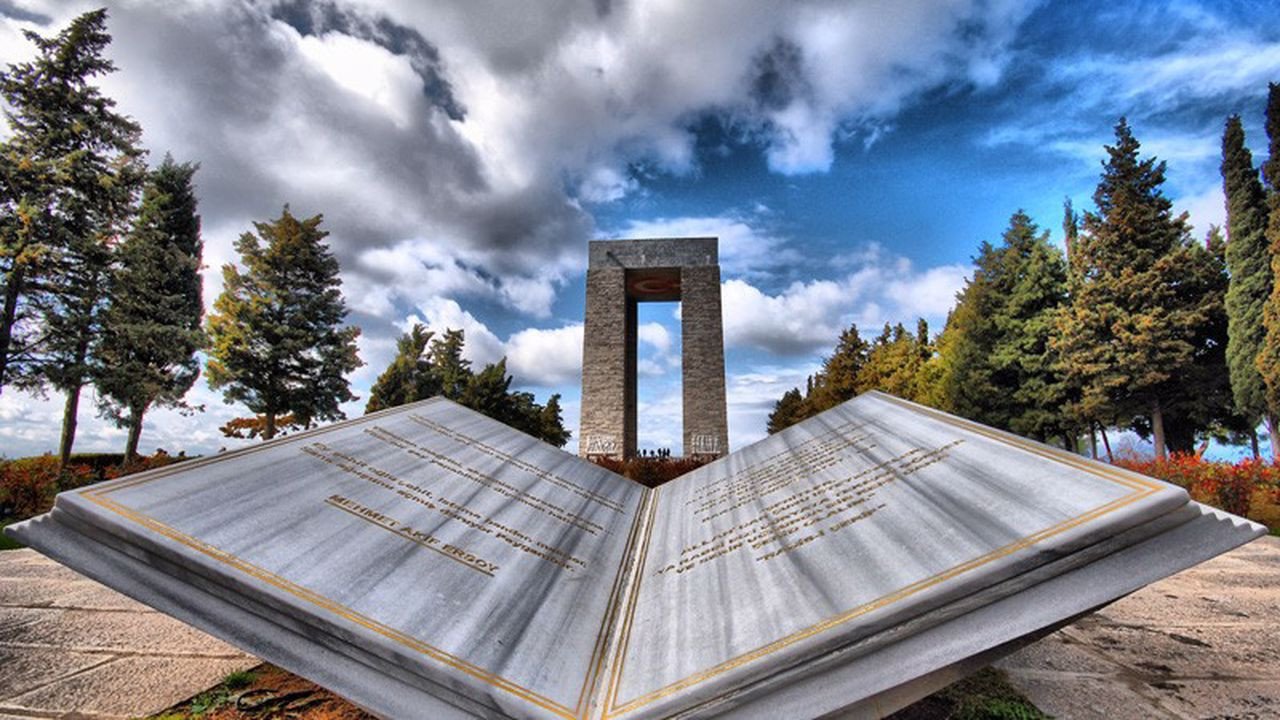
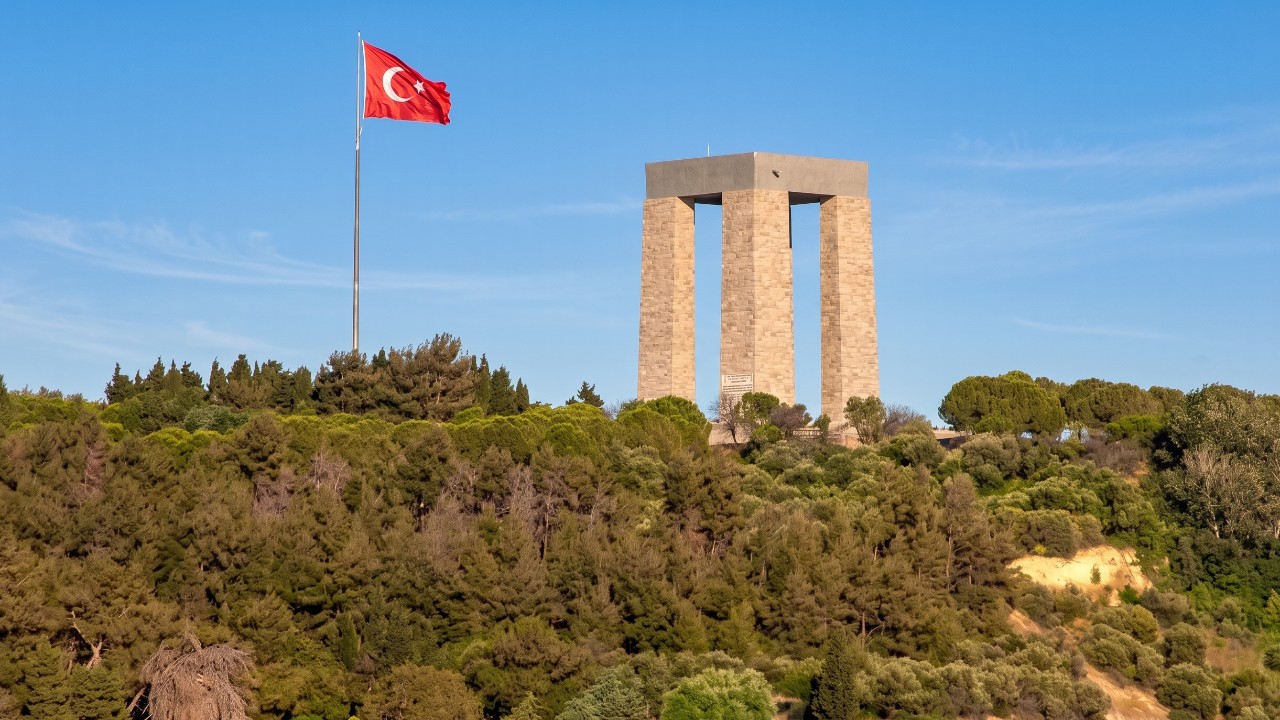
Rising above Hisarlık Tepe behind Morto Bay at the southern tip of the peninsula, the Çanakkale Martyrs' Memorial is the most recognizable symbol of the area. Built to honor the soldiers who fell during the Gallipoli Campaign, the monument stands in a commanding position overlooking the sea and is visible even to ships passing through the strait.
Architecture and Symbolism
The memorial is striking for its monumental design, featuring four massive pillars. This four-pillared structure is widely interpreted as a symbol of unity and strength. Standing approximately 41.7 meters tall, the upper section features a mosaic arrangement reflecting the Turkish flag. The exterior reliefs depict various stages of the Gallipoli Campaign. Within the symbolic cemetery surrounding the memorial, the names of soldiers from all corners of the country are inscribed, making this one of the most emotional stops on any visit.
Visiting the Memorial
As the memorial area is an open-air site, it is suitable for visiting throughout the day, and there is no entrance fee for the outdoor sections. Scheduling your visit for the late afternoon can be particularly rewarding, offering cooler temperatures and beautiful light reflecting off the sea. Since the area is vast and exposed, we recommend bringing a hat, water, and comfortable walking shoes. Stopping at the nearby visitor center before exploring can help you grasp the chronology of the war, making your visit much more meaningful.
Conkbayırı and the 57th Regiment: The Heart of the Land Battles
The hilly central part of the peninsula was the site of the most critical moments of the land campaign. From a military history perspective, this area contains the locations where decisions were made that altered the course of the war, making it one of the most visited sections by history enthusiasts.
57th Infantry Regiment Cemetery
On the morning of April 25, 1915, as the land battles commenced, the 57th Regiment was tasked with holding the line against advancing troops, suffering heavy casualties in the process. The cemetery dedicated to the soldiers of this regiment is famously associated with the command: "I do not order you to attack, I order you to die." Today, this well-maintained site serves as a silent place of remembrance with symbolic headstones and a dedicated monument. Reading the information boards around the cemetery is highly recommended to better understand the battle formations of that day.
Conkbayırı and the Atatürk Victory Monument
Conkbayırı is one of the most strategic high points on the peninsula; controlling this height was decisive for the outcome of the battle. The Conkbayırı Atatürk Victory Monument commemorates the role of Mustafa Kemal in this sector. According to popular accounts, a piece of shrapnel struck the watch on his chest, preventing a fatal injury. Visitors can walk between preserved Turkish and Anzac trenches, view the nearby New Zealand Monument, and take in a panoramic view of the peninsula from the summit. Early morning, when the mist clears, offers the best visibility for the view.
Anzac Cove and International Remembrance
Anzac Cove is a small bay on the western coast of the peninsula where Australian and New Zealand troops landed on the morning of April 25, 1915. Consequently, the cove has become a global site of remembrance. Every year on April 25, visitors from Australia and New Zealand gather here for the traditional "Dawn Service" to honor their ancestors. The cove and its surrounding cemeteries hold unique significance as they commemorate different sides of the conflict within the same geography. For those visiting outside of the official commemoration dates, the cove offers a peaceful, contemplative atmosphere with stunning sea views.
Traces of Naval Battles: Forts and Kilitbahir
The Gallipoli Campaign was fought not only on land but also in the waters of the strait. The naval battle on March 18, 1915, resulted in the repelling of the fleet attempting to force the strait, an event celebrated today as the Naval Victory. The traces of this battle can be seen in the forts overlooking the water.
Rumeli Mecidiye Fort and the Seyit Onbaşı Monument
Located on the European side of the strait, the Rumeli Mecidiye Fort is one of the most famous sites of the naval battles. The fort is inextricably linked to the story of Seyit Onbaşı (Corporal Seyit), who is said to have carried a massive artillery shell on his back to a cannon. The site features monuments and artillery displays that tell his story. Visiting the fort provides a holistic understanding of the naval front alongside the land-based cemeteries; therefore, we suggest grouping the naval and land sites into a single itinerary.
Kilitbahir Castle and Namazgah Fort
Located in Kilitbahir, Kilitbahir Castle is a historic structure built during the Ottoman era to protect the strait, forming part of a defense system alongside the castle on the opposite shore. The nearby Namazgah Fort houses the batteries used during the naval battles. These two points showcase the military architecture along the coast and are often the first stops for visitors arriving by ferry. For those wishing to see the cultural side of the region in its entirety, you can explore our Çanakkale cultural tours.
Transportation to the Gallipoli Historical Area
The Historical Area is located on the Gallipoli Peninsula side of the strait, opposite the Çanakkale city center. The most common way to cross from the center to the peninsula is via the Gestaş car ferries. You can take a ferry from the main pier to the Eceabat or Kilitbahir docks, from where the entry points to the historical area are easily accessible. Ferry services run at regular intervals throughout the day, and vehicle transport is available.
For those arriving by road, the 1915 Çanakkale Bridge, opened in 2022, has made access to the peninsula much easier from the direction of Istanbul and Balıkesir. Visitors coming from İzmir or the Aegean region can reach the Eceabat area directly by car. Because the area is so large, the most efficient way to get around is by private vehicle, bicycle, or by joining a guided tour departing from Çanakkale center; walking is not practical due to the distances between stops. If you want to coordinate your transport and sightseeing, check out our Çanakkale tours.
Best Season and Commemoration Days
The best time to visit the Gallipoli Historical Area is during the spring and autumn months when the weather is mild. The period from April to June and September to October is ideal for walking through the open-air sites and exploring the trenches on the hills. In the summer, the region can be quite hot and sunny; during this time, planning your visit for early morning or late afternoon will ensure more comfort. In winter, wind and rain can make outdoor visits challenging.
The area has two significant dates. March 18 is marked by ceremonies celebrating the Çanakkale Naval Victory and the Martyrs. April 25 marks the beginning of the land battles and the Anzac commemoration ceremonies. The area becomes very crowded on these dates; while these days are meaningful for those wishing to participate in the ceremonies, those planning a quiet visit may prefer to avoid these peak dates.
Dining in Eceabat and Surrounding Areas
Eceabat, located at the gateway to the historical area, and the Çanakkale city center on the opposite shore, offer practical dining options for breaks. Seafood is a highlight at establishments along the coast; fresh fish and local mezes are staples of the regional cuisine. Ezine cheese and other local products are also popular choices for breakfast and snacks.
Since a day of sightseeing can be long, it is helpful to remember that dining options within the peninsula itself are sparse. Carrying water and light snacks will save you time between stops. Planning your main meal in Eceabat or Çanakkale center is a practical choice for both variety and ferry connections.
Accommodation Options
Those wishing to explore the region in a single day often stay in Çanakkale center and take the ferry to the peninsula during the day. The center is convenient due to its variety of hotels and pensions and its transport links. For those who prefer to spend their time on the peninsula, accommodation in and around Eceabat offers the advantage of being close to the historical area, allowing for an early start to your tour.
It is wise to choose your accommodation based on the duration of your trip. A day trip is sufficient for those only wishing to see the cemeteries, but staying overnight in the region allows for a more relaxed pace if you intend to visit both the land and sea battle sites.
Suggested Itineraries
The official management of the historical area suggests both one-day and two-day itineraries. These routes combine the scattered stops into a logical order to make your trip more efficient.
One-Day Route
For those with limited time, a one-day program can be structured to start with the forts on the coast and move toward the land battle sites. After visiting the Namazgah Fort, Rumeli Mecidiye Fort, and the Seyit Onbaşı Monument, heading up to the 57th Regiment Cemetery and Conkbayırı, and finishing the day at the Martyrs' Memorial, provides a balanced flow. This program is intensive but comprehensive.
Two-Day Route
For a more relaxed pace, a two-day program is recommended. The first day can be dedicated to the forts, batteries, and naval battle sites along the coast, while the second day is reserved for the land battle sites such as Conkbayırı, the 57th Regiment, Anzac Cove, and the Martyrs' Memorial. This arrangement allows more time at each stop and the opportunity to digest the historical information at the monuments. Visiting with an authorized guide is a significant advantage for learning the historical details on-site.
Frequently Asked Questions 6
Is visiting the Gallipoli Historical Area free?
The open-air cemeteries, monuments, Conkbayırı, and trenches within the Gallipoli Peninsula Historical Area are open to the public and free of charge. Only certain indoor museums, visitor centers, and simulation centers within the area may require a separate entrance fee. It is helpful to check current rates before your visit.
What are the opening hours for the Çanakkale cemeteries?
The cemeteries and monuments in the open-air sections are generally accessible throughout the day. However, indoor museums and visitor centers operate according to their own specific working hours. Therefore, if you plan to visit indoor sites, we recommend scheduling your trip during daylight hours.
How do I get to the Gallipoli cemeteries from Çanakkale center?
You can cross from the Çanakkale city center to the Eceabat or Kilitbahir docks using the Gestaş car ferries. Once you disembark, the starting points of the historical area are very close and clearly marked with directional signs. Ferries run at regular intervals throughout the day.
How long does it take to tour the Gallipoli Historical Area?
Because the area spans approximately 33,444 hectares, it cannot be explored on foot. The main stops can be seen in one day by private vehicle, bicycle, or guided tour. For those who wish to visit both the land and sea battle sites at a relaxed pace, a two-day program is a more comfortable option.
What is the significance of Anzac Cove and where is it located?
Anzac Cove is a small bay located on the western coast of the peninsula. It is significant as the landing site for Australian and New Zealand troops on the morning of April 25, 1915. Every year on April 25, visitors from these countries hold traditional Dawn Service ceremonies to honor their ancestors.
When is the best time to visit the Gallipoli Historical Area?
The spring (April) and autumn (September–October) months are the most suitable for visiting when the weather is mild. The area is very crowded during the March 18 and April 25 commemoration days; those wishing to attend the ceremonies should choose these dates, while those planning a quiet visit may prefer to avoid them.