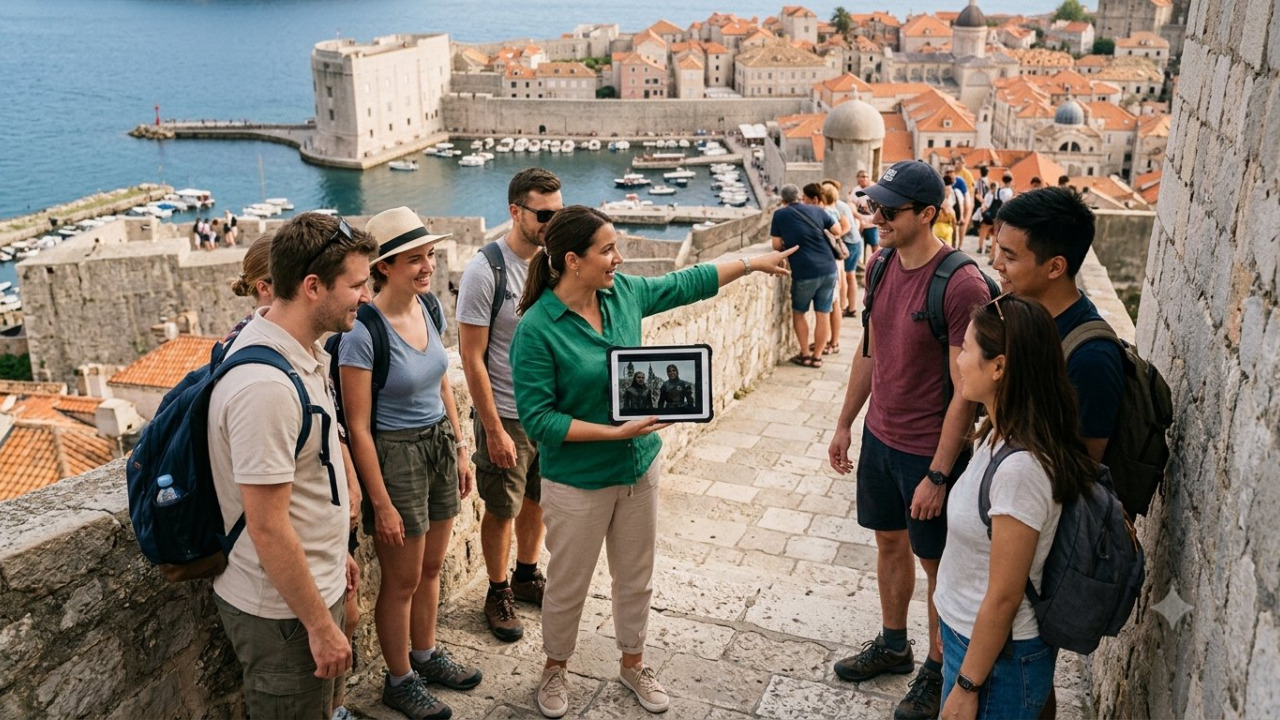

The motivations behind our travels have evolved significantly over the centuries. While journeys were once driven by trade, exploration, or faith, today’s travel decisions are often sparked by a single scene in a movie or a binge-worthy TV series. Cinema and television have become powerful visual marketing tools, reshaping geographies in the minds of viewers, creating cultural icons, and moving entire populations to pack their bags. This phenomenon—where fans visit the locations where a production was filmed or where a story takes place—is known in the industry as film tourism (or screen tourism).
In this article, we aren't just providing a list of filming locations. Instead, we are exploring how cinema transforms destination marketing, local economies, and tourist demographics. We will look at proven examples, such as the impact of The Lord of the Rings on New Zealand, Game of Thrones on Dubrovnik, and the massive influence of Turkish dramas on Istanbul and Kapadokya. As the team at Travel Tour Shop works directly on the ground, we have a unique perspective on how the tourism economy operates behind the scenes.
What is Film Tourism and Why Does It Work?
Film tourism occurs when individuals decide to visit a destination inspired by content in feature films, TV series, documentaries, or digital streaming platforms. A viewer watches a production and feels a deep desire to experience those real-life locations. This impulse is driven by several powerful psychological mechanisms.
The Emotional Bond: Making Places Meaningful
Viewers form deep emotional connections with characters, their journeys, and their struggles. Once this bond is established, a location ceases to be just a set of geographic coordinates; it becomes a physical manifestation of those emotions. When a visitor arrives, they feel as though they are stepping back into the story itself.
Visual Familiarity and the Sense of Security
Traveling to unknown places can be daunting. However, people feel a sense of comfort when visiting a city whose streets and architecture they have seen repeatedly on screen. Cinema makes destinations feel familiar and desirable to a global audience. This sense of "knowing" the place is a decisive factor that eases the decision to travel.
The Quest for Escapism and Immersive Experiences
Cinema transports viewers away from the routines of daily life into extraordinary worlds. Those seeking to experience the atmosphere they saw on screen are looking to add a layer of "storytelling aesthetics" to their own travels. This trend is particularly prominent among younger, experience-oriented travelers.
The Role of Cinema in Destination Marketing
Traditional tourism promotion—such as brochures, trade fairs, and advertisements—often meets resistance because it feels like a direct sales pitch. People are inherently aware when they are being marketed to. In contrast, a film or series is a masterclass in subtle, implicit marketing. The viewer doesn't feel like they are watching an ad; they are simply captivated by a story and naturally discover the beauty of the destination.
Breaking the Seasonality Barrier
Sea and sun tourism is heavily dependent on the summer season. Film tourism, however, has no fixed season. Fans of a popular series are just as eager to see filming locations in the winter or autumn. This helps distribute tourism more evenly throughout the year, creating a more stable local economic cycle.
Diversifying the Tourist Profile
Thanks to its vast and diverse audience, cinema brings a wider variety of travelers to a destination. A historical drama might attract architecture and culture enthusiasts, while an action movie draws young, active adventurers, and a romantic production brings in couples. This diversity ensures a region's income is not dependent on a single market segment.
Rebranding and Image Reconstruction
Some cities or countries may struggle with negative global perceptions due to past events. A well-crafted story can reposition a destination, presenting it as a more attractive, safe, and aesthetic place. In this sense, cinema is one of the most potent image-building tools available.
Global Examples of Film Tourism
There are many undeniable examples of how cinema can turn a location into a mass-movement destination. The following three cases illustrate the sheer scale of film tourism.
New Zealand and The Lord of the Rings
The most iconic example of film tourism is New Zealand. Peter Jackson’s adaptation of J.R.R. Tolkien’s work used New Zealand’s breathtaking landscapes to represent Middle-earth, fundamentally transforming the country's tourism image. The Hobbiton movie set near Matamata was preserved after filming and opened to the public, becoming a major outdoor attraction. The country has long used the "100% Pure New Zealand" theme in its branding, perfectly aligning its natural beauty with the imagery created by the films.
Game of Thrones and Dubrovnik
One of the most popular productions in television history, Game of Thrones, generated massive interest in its filming locations. The city of Dubrovnik, Croatia, which served as King's Landing, saw an influx of fans drawn to its historic walls. The crowds became so intense that city authorities implemented the "Respect the City" plan, limiting the number of visitors in the Old Town to approximately 4,000 at a time to protect its historical integrity. Similarly, the Dark Hedges in Northern Ireland transformed from a quiet rural road into a world-famous photography hotspot after appearing in the series.
Scotland and Braveheart
Mel Gibson’s 1995 epic Braveheart, which tells the story of Scottish hero William Wallace, left a significant mark on Scottish tourism. Before the film, the Wallace Monument near Stirling was visited by roughly 80,000 people annually. Following the film's release, that number surged to over 184,000 within a few years, reaching a record high in 1998. This demonstrates how a single production can more than double the visitor count of a historical site.
The Impact of Turkish Cinema and Dramas on Turkish Tourism
With its deep history, geographic diversity, and advanced production infrastructure, Turkey is a fertile ground for both domestic and international film industries. This potential translates directly into tourism as Turkish series gain global popularity.
The Export Power of Turkish Series
Turkey is recognized as one of the world's leading exporters of television series, second only to the United States. Reaching approximately 150 countries—including the Middle East, the Balkans, South America, and Central Asia—Turkish dramas reach hundreds of millions of viewers. This widespread reach creates an organic and sustainable promotional channel for Turkish tourism. Viewers curious about the locations they see on screen often seek out specialized drama tours in Istanbul and its surroundings; those looking to turn this interest into a cultural journey can explore our cultural tours category.
Asmalı Konak and Kapadokya
One of the first major examples of film tourism's power in Turkey was the series Asmalı Konak. During its broadcast, interest in the Ürgüp, Göreme, and Avanos regions spiked significantly, leading to the opening of souvenir shops and new businesses around the mansion where it was filmed. The mansion, which now operates as a hotel, continues to welcome fans of the show. Despite the years passed, Kapadokya remains a destination that has successfully maintained this momentum.
Turkey in International Productions
Turkey has also hosted large-scale international productions. Three films in the James Bond series (From Russia with Love, The World Is Not Enough, and Skyfall) featured the historic sites of Istanbul. Russell Crowe’s 2014 film The Water Diviner was also shot in Istanbul, becoming the first major film to shoot inside the Sultanahmet Camii; the production also utilized areas like Kayaköy near Fethiye. These productions have significantly bolstered Istanbul's visibility in the global travel market. For those looking to turn Turkey's filming locations into a travel itinerary, our article on Turkey's top travel routes is a great resource.
The Economic Value Chain of Film Tourism
The contribution of cinema to tourism isn't limited to hotel occupancy. Film tourism creates a multi-layered economic value chain that can be categorized into direct, indirect, and multiplier effects.
| Impact Type | Sectoral Reflection |
|---|---|
| Direct Impact (Production Phase) | Spending by film crews on accommodation, transport, dining, and local labor |
| Indirect Impact (Post-Release) | Spending by visitors on hotels, restaurants, souvenirs, and transfers |
| Multiplier Effect | The spread of local income into sectors like agriculture, trade, and construction, boosting regional prosperity |
Contribution to Regional Development
Rural areas that lack major investments or employment opportunities can be placed on the tourism map through a single film or series project. Local residents find opportunities to earn income through guiding, boutique hospitality, handicrafts, and local production. This acts as a balancing factor that slows migration to large cities and distributes tourism revenue more broadly.
Invisible Export and Foreign Currency Inflow |
Tourism is often referred to as an "invisible export." A foreign visitor who comes to Turkey after watching a production brings in foreign currency through spending on accommodation, food, souvenirs, and activities. The "product" isn't shipped abroad; instead, the guest comes to the source to purchase the experience firsthand. This model provides a stable and reliable income source for regional economies.
Sustainable Film Tourism and Potential Risks
While the benefits of film tourism are undeniable, unplanned growth can place immense pressure on destinations. Addressing these challenges honestly is the first step toward protecting a region's future.
Overcrowding and Carrying Capacity
A sudden surge of visitors to a single location can strain local infrastructure and damage historical sites. Dubrovnik's visitor limits and the temporary closure of Thailand's Maya Bay due to overtourism are concrete examples of this risk.
Gentrification and the Impact on Local Residents
As a region becomes popular, rents and real estate prices can skyrocket. This can increase the cost of living for original residents, sometimes forcing them to relocate. A sustainable approach requires managing tourism revenue in a way that respects and supports the quality of life for local communities.
The Challenge of Temporary Popularity
When a series or film loses its cultural relevance, the investments made to cater to that specific interest may become obsolete. Therefore, destination management must develop long-term strategies to convert the initial "fandom" interest into permanent cultural and nature-based tourism.
Future Trends: Digital Platforms and New Technologies
As technology evolves, the relationship between cinema and tourism is taking on new dimensions. The rise of digital streaming platforms has made film tourism faster and more dynamic.
The Instant Impact of Streaming Platforms
While it used to take months for a production to spread globally through traditional cinema, a series released on a digital platform is watched in many countries simultaneously. For example, interest in the filming locations in Paris spiked significantly following the release of Emily in Paris on Netflix. This speed requires travel businesses to adopt more flexible, digitally-focused strategies. We explore how reservation processes are adapting to this transformation in our article on digitalization and online booking in Turkish tourism.
Virtual and Augmented Reality
In the future, film tourism may not be limited to physical visits. With augmented reality (AR) glasses, visitors standing at a filming location could see exactly how a specific scene was shot. This technological integration has the potential to increase the allure and added value of destinations. To turn film locations into your next adventure, you can compare all our tour options on a single page.
Frequently Asked Questions 6
What is film tourism?
Film tourism is a travel phenomenon where people visit locations that were featured in a film, TV series, or documentary. The emotional and visual connection viewers form with the destination triggers their decision to travel.
Why isn't film tourism seasonal?
Unlike sea and sun tourism, film tourism doesn't have a specific peak season. Fans of a production are often eager to see filming locations year-round, which helps spread tourism activity across all twelve months and provides a more balanced boost to the local economy.
How did The Lord of the Rings affect New Zealand tourism?
The films introduced New Zealand's natural landscapes as "Middle-earth." The Hobbiton set near Matamata was preserved and opened to the public, becoming a massive attraction. The country utilized this natural imagery in its tourism branding for many years.
Which destinations were affected by Game of Thrones?
Dubrovnik, used as King's Landing, faced intense visitor interest, leading the city to limit the number of people entering the Old Town. The Dark Hedges in Northern Ireland also transformed into a highly visited landmark following its appearance in the series.
How do Turkish series contribute to Turkish tourism?
Turkey is one of the world's top exporters of TV series, reaching approximately 150 countries. Viewers curious about the settings in these shows often book tours to Istanbul, Kapadokya, and the Aegean region. The impact of the series Asmalı Konak on Kapadokya is a well-known example.
What are the risks of film tourism?
The primary risks include overcrowding, exceeding a destination's carrying capacity, rising rents affecting local residents, and the potential for popularity to be short-lived. Sustainable management aims to turn this interest into lasting cultural and nature tourism.