
As one of the world's most meticulously preserved classical cities, Ephesus transports visitors back to the golden age of the Roman Empire with its millennia-old marble-columned streets, monumental fountains, and the breathtaking Celsus Library. Stretching from its Ionian roots to its peak as a Roman provincial capital, this ancient hub remains one of the richest cultural and commercial crossroads of the Eastern Mediterranean.
A well-planned Curetes Way and Ephesus walking tour ensures you can navigate this sprawling archaeological site without exhaustion, allowing you to uncover hidden mosaics and architectural marvels. You can explore our professional guided Ephesus walking tour options or browse our popular cultural routes in İzmir for more historical adventures in the region.
Quick Facts: Ephesus Walking Tour
| Feature | Practical Visitor Summary |
|---|---|
| Location & District | Selçuk, İzmir (Ephesus Archaeological Site) |
| Key Landmarks | Celsus Library, Curetes Way, Terrace Houses |
| Best Time to Visit | March–May and September–November (Mild weather) |
| Average Duration | 3 to 4.5 hours of brisk walking |
| Entry Requirements | Museum Pass is valid (Terrace Houses require a separate ticket) |
| Terrain Type | Slippery white marble stones and sloped dirt paths |
Curetes Way and the Monumental Fountains
Starting from the Upper Gate and descending gently toward the Celsus Library, Curetes Way is lined with stunning architectural masterpieces, including the Trajan Fountain and the Temple of Hadrian. The marble blocks underfoot still bear the grooves of ancient chariot wheels.
Celsus Library and the Grand Theatre
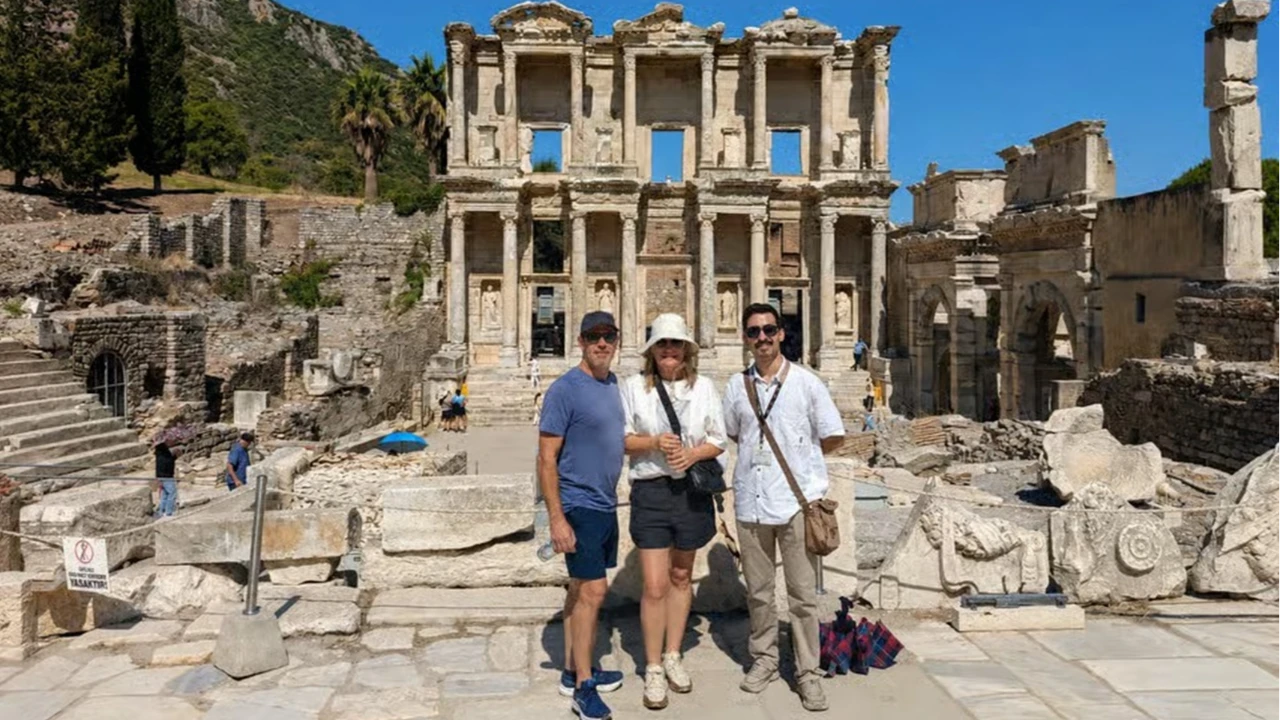
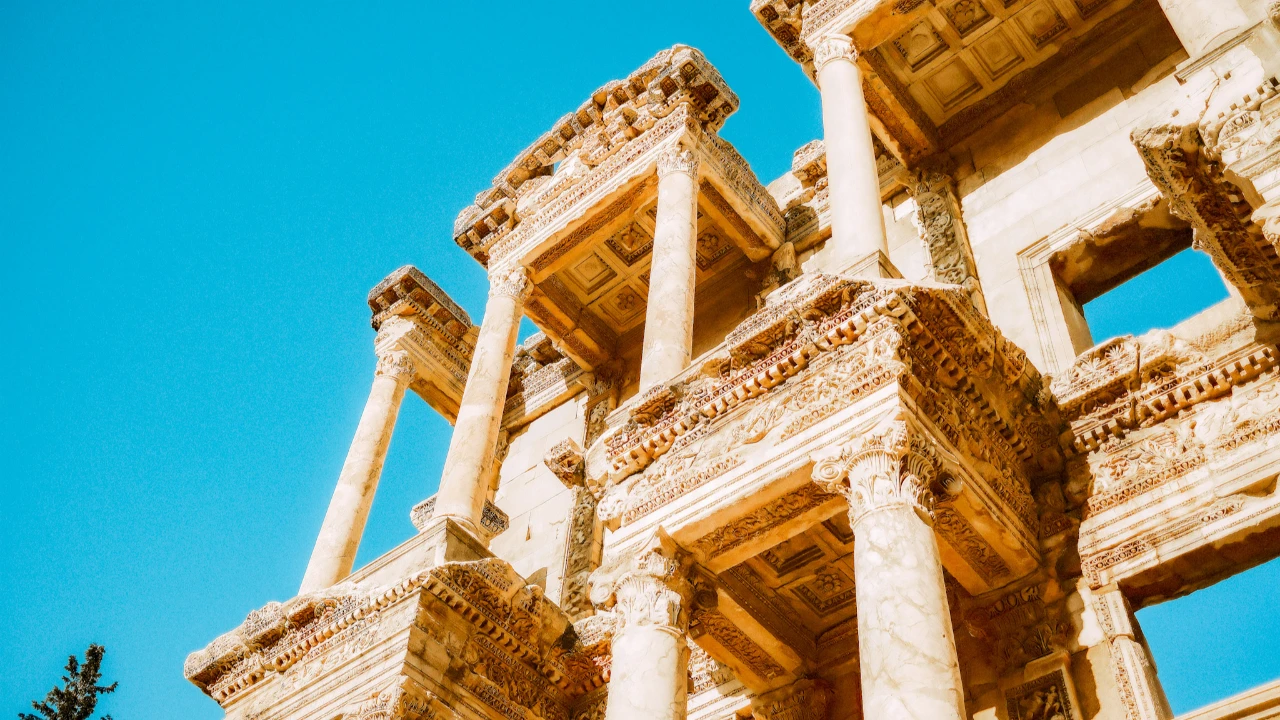
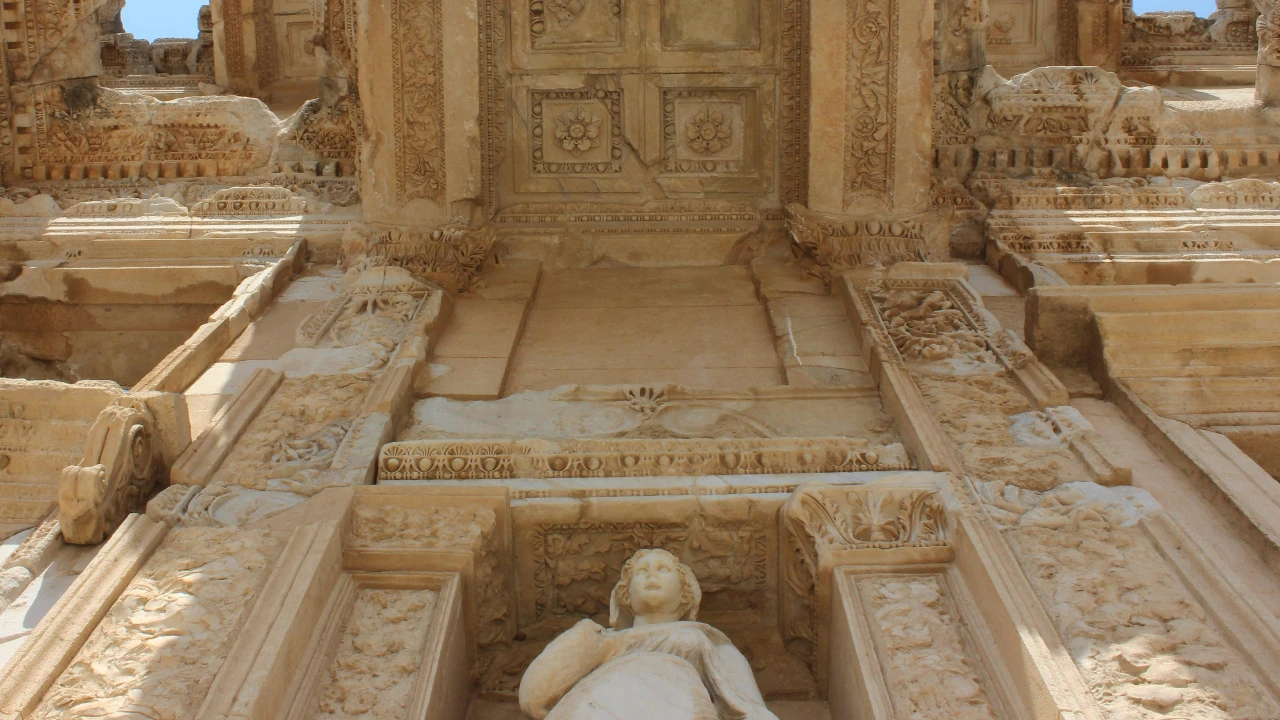
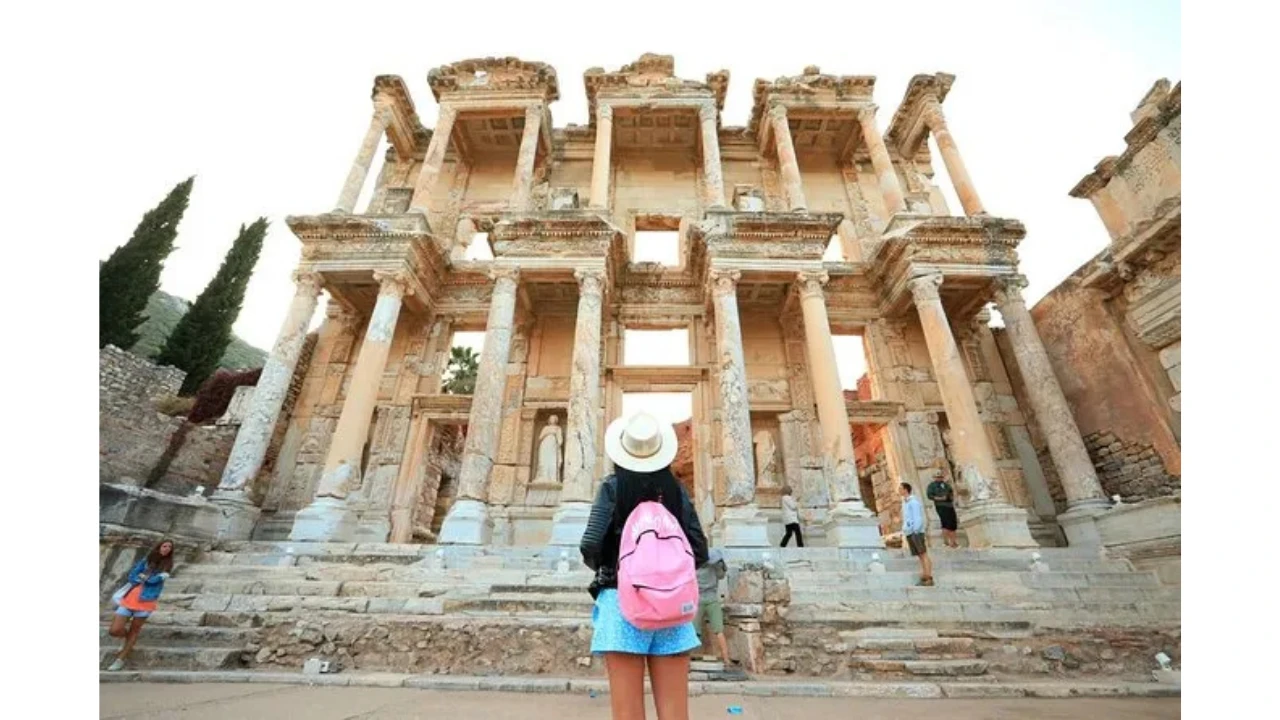
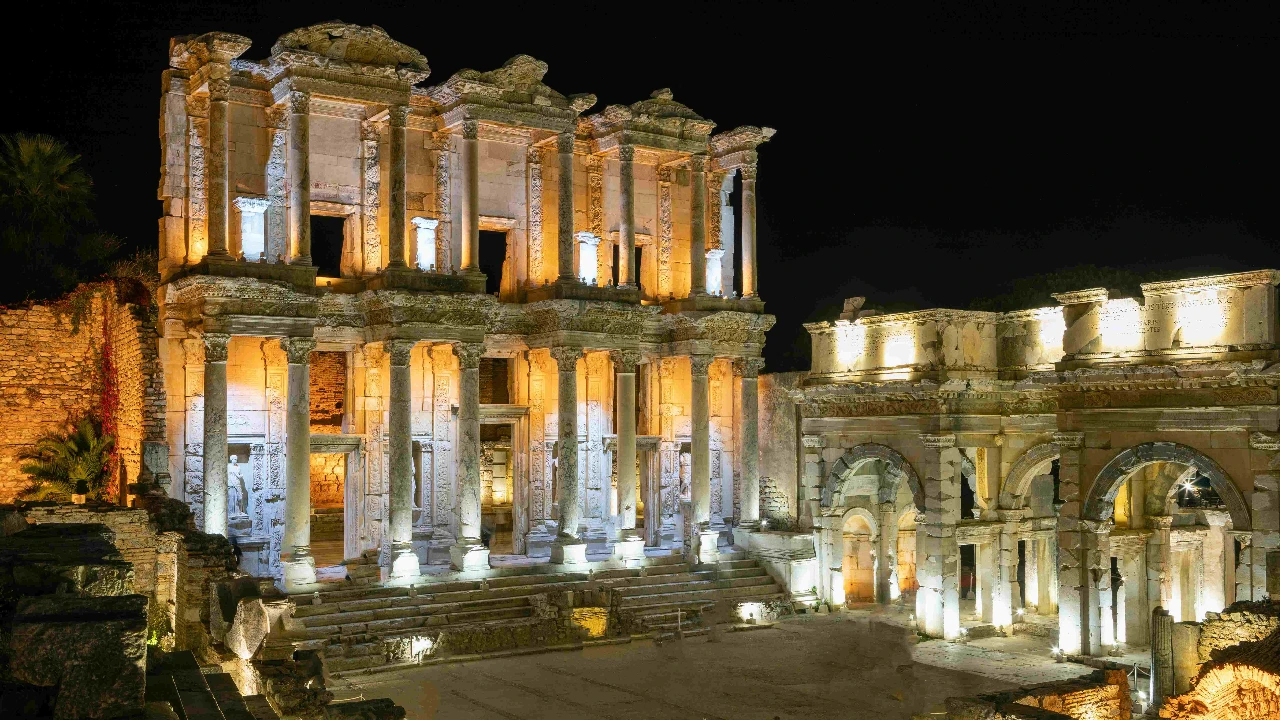
Built in the 2nd century AD, the two-story Celsus Library stands as the iconic symbol of the city. Following the library, you will encounter the Great Theatre, a massive venue capable of seating 25,000 people, which remains one of antiquity's most imposing performance spaces.

Comparing the Entrance Gates of Ephesus
Choosing your starting point directly impacts your walking effort and time management:
| Starting Point | Walking Gradient | Parking & Transfers | Crowd Levels | Recommended For |
|---|---|---|---|---|
| Upper Gate (Magnesia Gate) | Downhill descent | Requires taxi/shuttle | Quiet in AM, busy at noon | Families & first-timers |
| Lower Gate (Harbour Gate) | Uphill climb | Large main parking lot | Busy in the mornings | Fit & active travelers |
| Theatre Square | Flat terrain | Guided tour meeting point | High during group transitions | Guided tour guests |
| Terrace Houses Entrance | Stepped steel bridge | Internal site transit | Controlled queue system | Art & mosaic enthusiasts |
| Twin Churches Path | Flat dirt path | Quiet outer route | Very secluded | History & religion buffs |
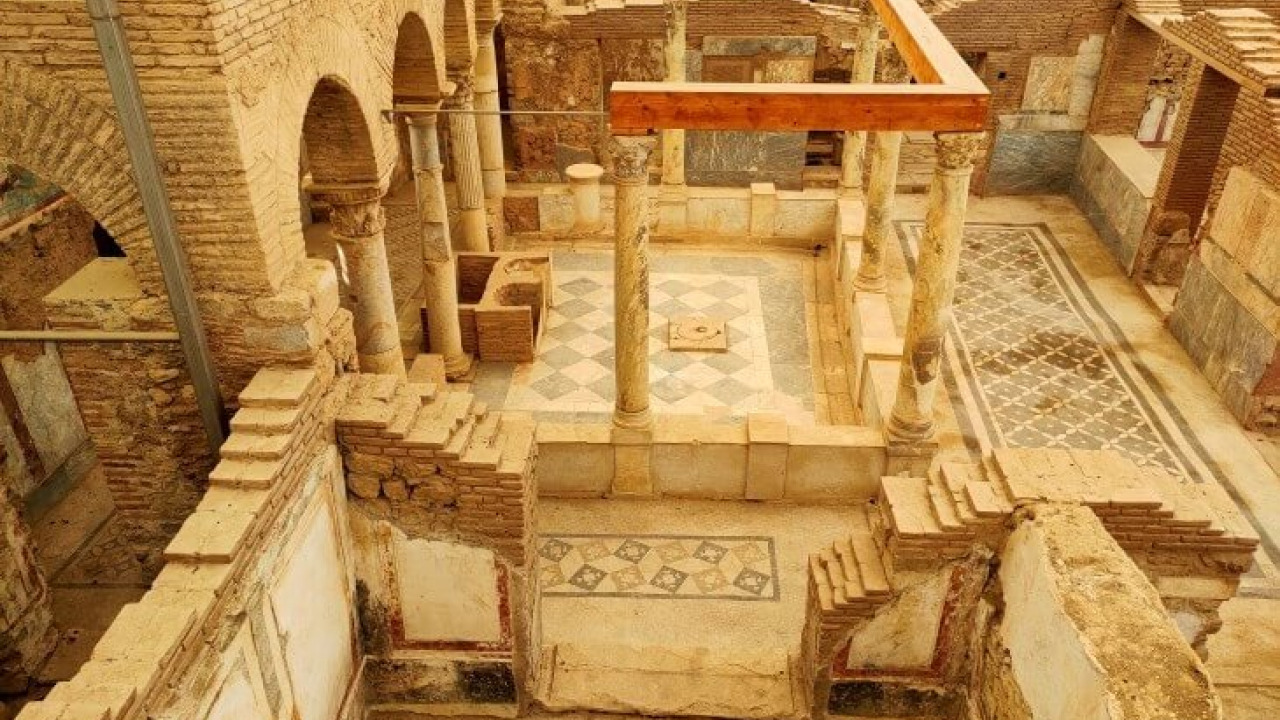
The Terrace Houses: A Glimpse of Roman Luxury
The Terrace Houses, where Ephesus's elite once resided, showcase the daily comforts of the Roman aristocracy through exquisite floor mosaics, vibrant wall frescoes, and ancient underfloor heating systems.
The Marble Road and Agora Connection
The wide Marble Road, stretching from the library to the theatre, leads directly to the Commercial Agora, the city's economic heart. The columns lining the path provide a spectacular backdrop for photography.
Step-by-Step Ephesus Walking Itinerary (Professional Guide Style)
A plan to explore the city from end to end before the midday heat sets in:
- Upper Gate Entry (08:30): Enter through the Magnesia Gate in the morning cool to examine the Odeon and the remains of the City Hall.
- Domitian Square & Pollio Fountain (09:15): Listen to your guide's stories amidst victory monuments and carved columns.
- Descending Curetes Way (10:00): Take a photo break in front of the Temple of Hadrian to admire the intricate marble reliefs.
- Terrace Houses Visit (10:45): Explore the Roman frescoes within the climate-controlled, roofed protection area.
- Celsus Library (11:45): Capture wide-angle shots of the monumental facade, home to replicas of the four virtues.
- Great Theatre & Harbour Street (12:30): Climb to the top tiers of the theatre to view the direction of the ancient harbour before concluding your tour.
Field Tips for Your Ephesus Walking Tour
Essential advice for navigating ancient marble safely:
- Non-Slip Athletic Shoes: The worn marble surfaces are extremely slippery; avoid leather-soled shoes or flat sandals.
- Sun Protection & Hats: Shade is limited within the archaeological site; bring a wide-brimmed hat and sunscreen.
- Hydration is Key: There are no kiosks along the walking route; carry at least 1.5 liters of water.
- Early Morning Preference: In summer, temperatures can hit 40°C by noon; aim for the opening hours.
- Digital Museum Pass: Have your Museum Pass app ready to avoid long ticket queues at the gates.
Best Seasons and Timing for Your Visit
Considering the Aegean climate, the most comfortable months for an Ephesus trip are April, May, October, and November. During these periods, temperatures typically hover around a pleasant 20-25°C.
For those traveling in the summer, we highly recommend visiting between 08:00 and 11:00 to avoid the intense midday sun when the rays are most direct.
St. John Basilica and Ayasuluk Castle
Just two kilometers north of the Ephesus site, rising above the Selçuk town center, is Ayasuluk Hill. It is home to the Basilica built over the tomb of Saint John the Apostle. Visiting this hill is the perfect way to complete your Ephesus journey.
Frequently Asked Questions 5
Is the Museum Pass valid for the Ephesus entrance?
Yes, the Museum Pass issued by the Ministry of Culture and Tourism is valid for the main entrance of the Ephesus Ancient City.
Is there a separate entrance fee for the Terrace Houses?
Yes, because the Terrace Houses are located under a specialized protective structure and managed as a separate site, they require an additional ticket.
Can I use a stroller or wheelchair on the walking route?
Due to the marble steps and sloping terrain on Curetes Way, wheelchair access can be difficult in certain spots; the Lower Gate route is flatter and more accessible.
How long does an Ephesus tour typically take?
A standard tour takes between 2.5 to 3 hours; if you include the Terrace Houses and a detailed museum visit, the duration extends to about 4.5 hours.
How do I get to Ephesus from Selçuk center?
You can reach the ancient city gates in about 5 minutes using the local minibuses (dolmuş) that depart from the Selçuk bus station every 10 minutes.