
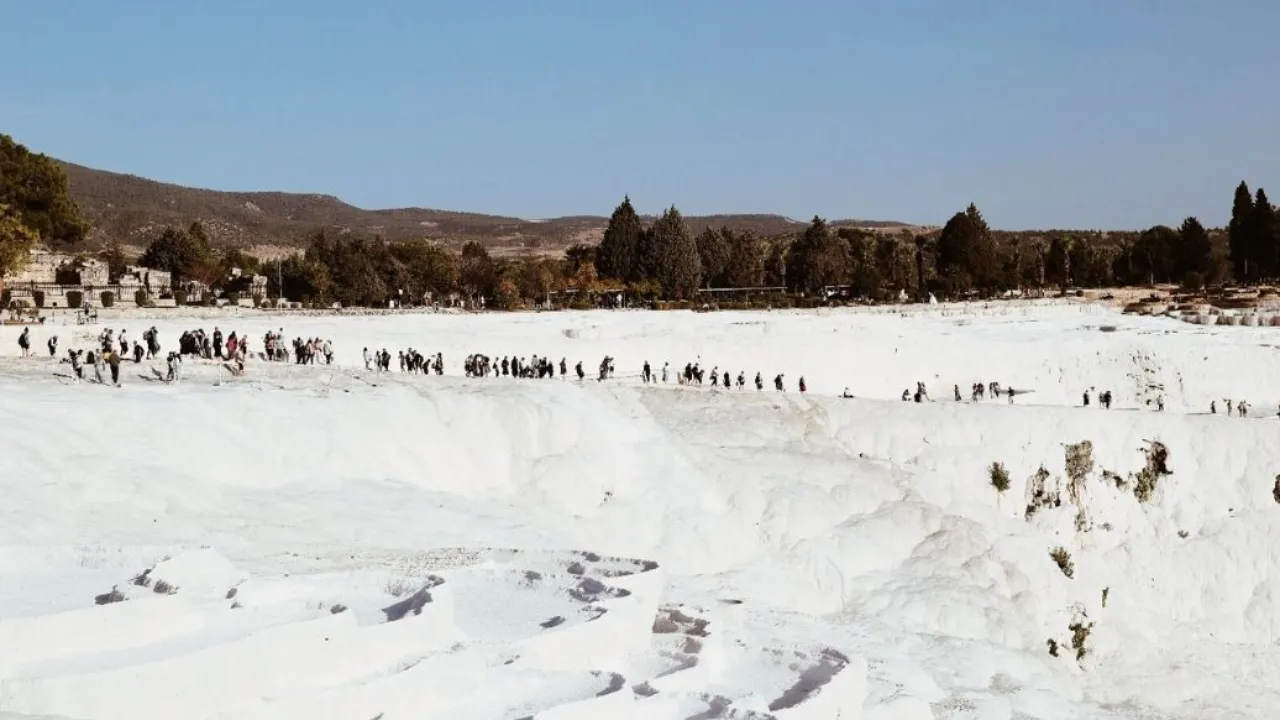
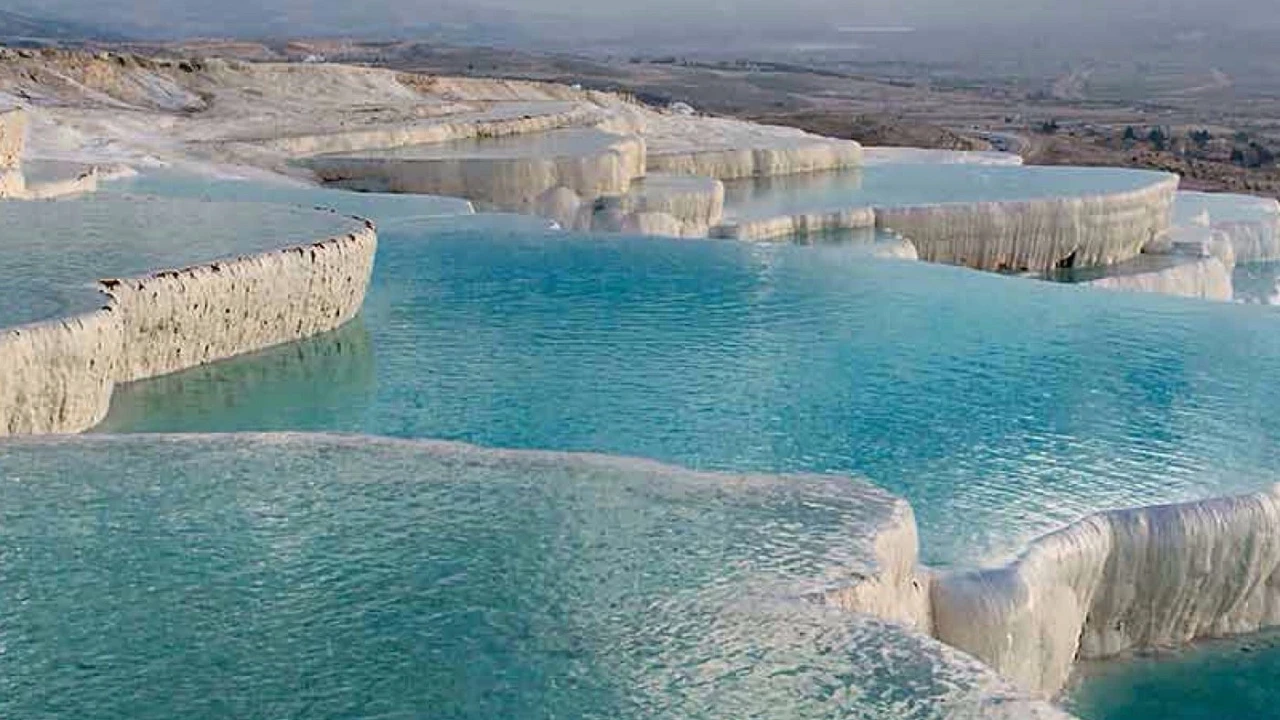
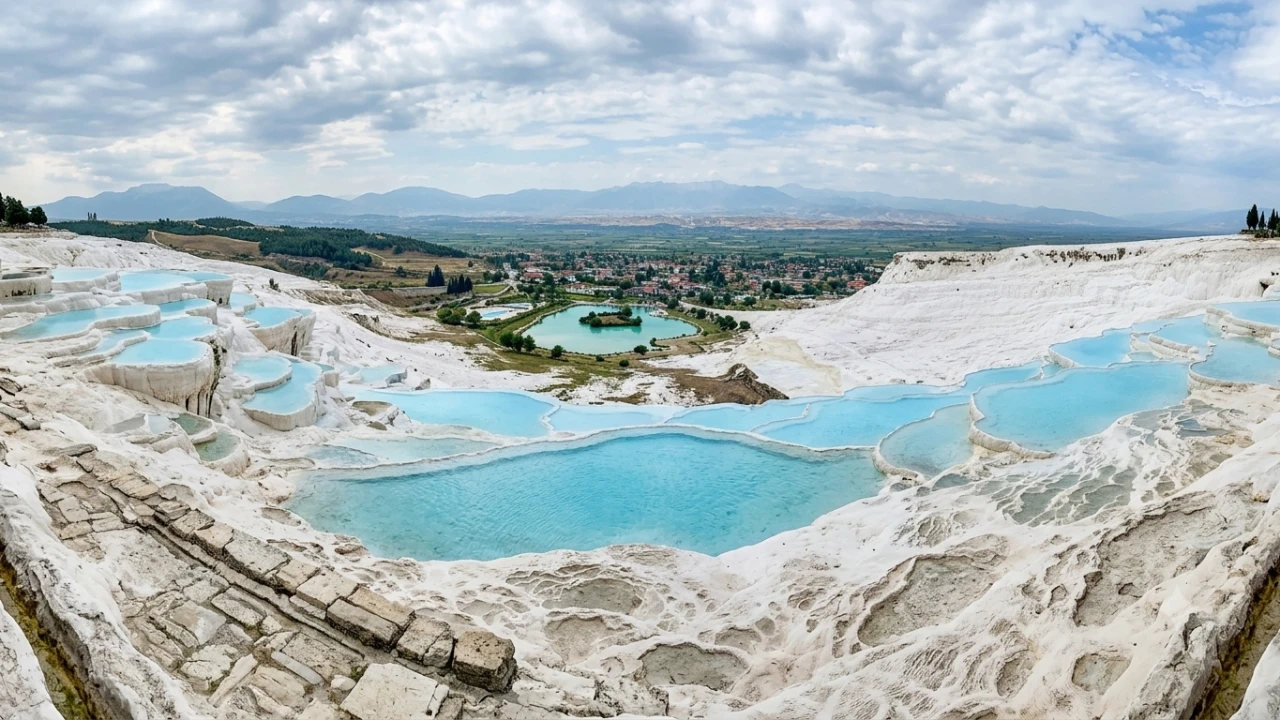
Nestled in the fertile valley where the Aegean and Mediterranean regions converge, Denizli offers far more than just its world-famous white travertines. It is home to a deep-rooted civilization spanning millennia. Once a crossroads for the Phrygian, Carian, and Lydian regions, this area serves as an open-air museum for history enthusiasts, boasting monuments from the Roman, Byzantine, Seljuk, and Ottoman eras.
The ancient settlements in this region showcase both advanced urban planning and the healing power of thermal waters, which once established the area as a premier wellness center. From Laodikeia, one of the seven churches mentioned in the Bible, to the breathtaking necropolis of Hierapolis, the historical corridor offers a rich and rewarding exploration route.
Planning a detailed hierapolis and laodikeia travel route allows you to beat the crowds at the ancient theaters and immerse yourself in the region's traditional weaving heritage. For professional cultural excursions, visit our Denizli historical city tours page, or consult our Pamukkale travel guide for thermal holiday alternatives.
Quick Local Summary:
-
Best For: Archaeology buffs, faith-based tourism enthusiasts, ancient architecture photographers, and cultural travelers.
-
Ideal Timing: Spring (April–June) and Autumn (September–November). During summer, stone pavements and travertines can reach 38-40°C, making the shoulder seasons much more comfortable for walking.
-
Recommended Stay: 2 full days (Day 1: Pamukkale travertines, Hierapolis, and the Antique Pool; Day 2: Laodikeia, the historic Kaleiçi Bazaar, and Kaklık Cave).
-
Where to Stay: Pamukkale Village / Karahayıt (thermal hotels within walking distance of the ancient city) or Denizli City Center (modern business hotels and easy access to local markets).
Quick Facts for Your Denizli Historical Trip
Essential practical information for exploring the historical sites of Denizli:
| Feature | Practical Visitor Summary |
|---|---|
| Geographic Location | Aegean Region, Çürüksu (Lycos) Valley; 225 km from İzmir, 220 km from Antalya |
| Airport Access | Denizli Çardak Airport (DNZ) - 65 km from the city center (HAVAŞ shuttle and transfers available) |
| Museum Pass | The Museum Pass is valid at Hierapolis and Laodikeia archaeological sites for Turkish citizens |
| Terrain & Path Type | Wide ancient marble streets, dirt paths, and amphitheater steps |
| Highlights | Hierapolis Ancient City, Laodikeia, Tripolis, Historic Kaleiçi Bazaar, Kaklık Cave |
| Thermal Heritage | Cleopatra's Antique Pool (swimming in thermal waters among sunken columns) |
| Related Tour Page | Guided bookings via Denizli day culture tours |
Hierapolis Ancient City: The Holy City and Massive Necropolis
Founded during the Hellenistic period by King Eumenes II of Pergamon and named after the Amazon Queen Hiera, Hierapolis was known as the "Holy City." In the ancient world, it became a vital healing center thanks to the therapeutic properties of its thermal springs.
The Roman Theater (Capacity: 12,000)
Built in the 1st century AD and renovated during the reign of Emperor Septimius Severus, this ancient theater is one of the best-preserved Roman structures in Anatolia, featuring a highly detailed relief-carved stage building and mythological sculptures. The view from the stage overlooking the endless valley is truly mesmerizing.
Anatolia's Largest Necropolis
Starting from the northern gate, the 2-kilometer-long necropolis is one of the richest burial sites in the ancient world, containing over 1,200 tumuli, sarcophagi, and house-type tombs. Inscriptions from nobles who traveled from distant cities seeking healing provide fascinating insights into the medical beliefs of the era.
The Plutonium (Gate to Hell) and St. Philip's Martyrium
The Plutonium, believed in antiquity to be a gateway to the underworld due to the toxic carbon dioxide gases emerging from the ground, has been brought to light through archaeological excavations. The octagonal Martyrium, where St. Philip, one of the twelve apostles, was martyred, is another essential stop for those interested in religious history.
Frontinus Street and the North Gate
The 14-meter-wide Frontinus Street is the main artery of Hierapolis, featuring advanced drainage covers set into its limestone-block pavement. The monumental three-arched gate at the entrance of the street once welcomed the caravans entering the city.
The ruins of shops and public baths lining the street serve as evidence of just how vibrant social life was during the Roman era.
Comparative Analysis of Denizli's Major Ancient Cities
A breakdown of the historical characteristics and visiting tips for the region's archaeological sites:
| Ancient City / Stop | Historical Period | Key Archaeological Feature | Visit Duration | Museum Pass Status |
|---|---|---|---|---|
| Hierapolis | Hellenistic, Roman, Early Christian | 1,200-tomb necropolis, ancient theater, Plutonium | 3 - 4 Hours | Valid (Excl. Pool) |
| Laodikeia | Hellenistic, Roman, Byzantine | The 7th Biblical church, Syrian Street, stadium | 2 - 2.5 Hours | Valid |
| Tripolis | Hellenistic, Roman | Mosaic-decorated houses, agora, and theater ruins | 1.5 Hours | Valid |
| Historic Kaleiçi | Seljuk and Ottoman | Ahilik guild culture, copper smiths, and historic inns | 1.5 - 2 Hours | Free / Bazaar |
| Kaklık Cave | Geological Karstic Formation | Travertines known as the "Underground Pamukkale" | 45 Minutes | Small Entry Fee |
Laodikeia Ancient City: One of the Seven Churches of the Bible
Located in the heart of the Çürüksu Valley, Laodikeia was founded by the Hellenistic King Antiochus II in honor of his wife, Queen Laodike. During the Roman period, it became the wealthiest commercial and banking metropolis in Asia Minor, famous for its high-quality purple wool textiles.
Syrian Street and Marble Columns
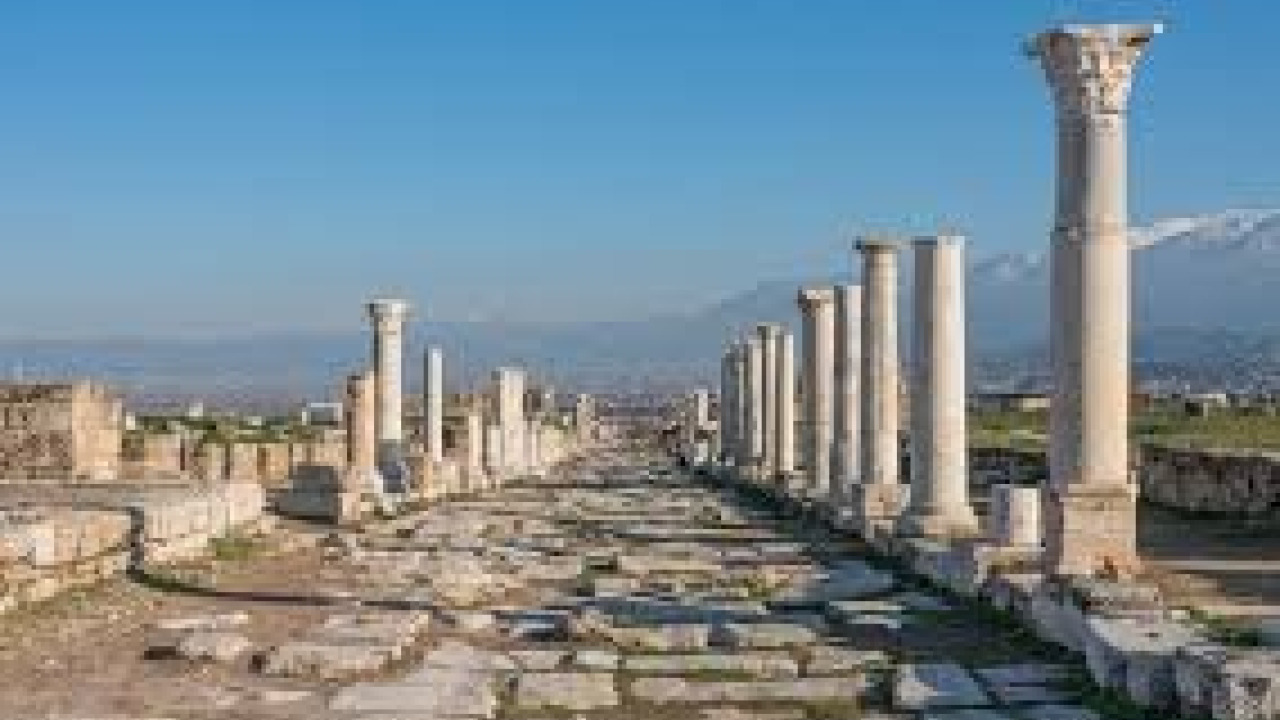
Spanning 900 meters on an east-west axis, Syrian Street showcases the elegance of Roman urban planning with its marble-paved ground, advanced sewage system, and towering Corinthian columns lining both sides.
A Center of Early Christianity: Laodikeia Church
Built following Emperor Constantine I's legalization of Christianity in the early 4th century AD, the Laodikeia Church is one of the seven churches mentioned in the Book of Revelation. The original floor mosaics and marble baptistery remain well-preserved.
Dual Theaters and the Ancient Stadium
Laodikeia is one of the rare cities in Anatolia to possess two ancient theaters. It also hosted ancient athletic competitions in its 20,000-capacity stadium. Ongoing restoration work continues to bring the city's monumental architecture back to life.
Gate A and the Central Agora
Gate A, the city's monumental entrance, welcomes visitors with its double-arched structure and rich cornice decorations. Located just behind the gate, the Central Agora was the heartbeat of Roman commerce, surrounded by massive marble-columned porticos.
The mosaic floors and water distribution towers uncovered in the Agora document the advanced level of ancient engineering.
Historic Kaleiçi Bazaar and Traditional Denizli Gastronomy
Transitioning from the stone blocks of ancient cities to modern urban life, the eight-century-old Historic Kaleiçi Bazaar in Denizli city center preserves the Seljuk Ahilik (guild) culture. Since the 13th century, the rhythmic sound of hammers from blacksmiths, coppersmiths, and weavers has echoed through these historic streets.
Babadağlılar Han and Hand-Woven Textiles
Denizli's thousand-year weaving tradition is on full display here. You can source high-quality cotton peshtemals, towels, and linen fabrics directly from producers in the Babadağlılar Bazaar.
The Century-Old Denizli Fırın Kebab Experience
A true local gastronomic ritual, the Denizli Fırın Kebab consists of lamb slow-cooked for hours in stone ovens over oak wood embers. It is traditionally served on fresh pide bread, often enjoyed without the need for cutlery.
Severoğlu Mansion and Denizli City Museum
Located near the Kaleiçi Bazaar, the restored Severoğlu Mansion, featuring traditional Turkish residential architecture, and the Denizli City Museum showcase the city's heroic role during the Turkish War of Independence and its ethnographic richness.
With its carved wooden ceilings and courtyard architecture, the mansion offers a nostalgic retreat in the heart of the modern city.
A Step-by-Step 1-Day Historical Itinerary in Denizli
To make the most of your time while exploring the city's ancient heritage, we recommend this route:
-
Start with Hierapolis and the Necropolis (09:00 - 11:30): Enter through the North Gate in the cool morning air to explore the sarcophagi and the ancient theater.
-
Antique Pool and Travertines Break (11:30 - 13:00): Swim among the sunken columns in the Antique Pool and walk along the white travertine terraces.
-
Lunch in the Karahayıt Red Water Region (13:15 - 14:15): Visit the unique red thermal springs and enjoy a break at a local restaurant.
-
Laodikeia Ancient City and Church Exploration (14:30 - 16:30): Walk down Syrian Street and examine the intricate floor mosaics of the Biblical church.
-
Historic Kaleiçi Bazaar and Coppersmiths (17:00 - 18:30): Head to the city center to explore the Seljuk-era weaving and copper workshops.
-
Denizli Kebab Dinner in a Stone Oven (19:00 - 20:30): Complete your day by tasting traditional kebab accompanied by fresh pide at a historic local eatery.
Practical Local Tips for Your Denizli History Trip
To ensure a comfortable journey through the ancient city paths, keep these tips in mind:
-
Prepare Your Museum Pass: To avoid long queues at the entrances of Hierapolis and Laodikeia, have your digital Museum Pass ready in advance.
-
Sun Protection is Essential: Shade is limited within the archaeological sites; always carry a sun hat, sunglasses, and sunscreen.
-
Wear Non-Slip Walking Shoes: The marble streets and stone paths are extensive. Since you will likely walk 10,000–12,000 steps a day, opt for sturdy sneakers with good grip.
-
Opt for Early Mornings: Hierapolis, in particular, gets crowded with tour buses by midday. Arriving at the gate by 08:30 ensures a much more peaceful visit.
-
Bring a Towel for the Antique Pool: If you plan to swim in Cleopatra's Antique Pool, bring your own swimsuit and towel; on-site rentals can be expensive.
Frequently Asked Questions 5
Is it possible to visit Hierapolis and Laodikeia on the same day?
Yes, the two ancient cities are only about a 15-minute drive apart. You can comfortably visit Hierapolis in the morning and Laodikeia in the afternoon.
Is the Museum Pass valid at Denizli's ancient cities?
Yes, the Ministry of Culture and Tourism Museum Pass is valid for Turkish citizens at both the Hierapolis and Laodikeia archaeological sites.
How do I get to the archaeological sites from Denizli Çardak Airport?
You can take the HAVAŞ shuttle from the airport to reach the city center or the Pamukkale direction, from where you can use local minibuses or a private taxi.
Why is Laodikeia important from a religious perspective?
Laodikeia is a significant center for faith-based tourism because it was home to one of the seven Christian communities mentioned in the Book of Revelation in the Bible.
Can Pamukkale and Hierapolis be visited during the winter months?
Yes, the archaeological sites are open 365 days a year. In winter, swimming in the 36°C thermal waters amidst the rising steam offers a unique and enjoyable experience.