Anavarza Ancient City is a multi-layered archaeological site nestled at the foot of a long limestone ridge rising sharply from the Çukurova plain, located near Dilekkaya village in Adana's Kozan district. Once a key administrative center of Cilicia during the Roman period, the settlement continued to be used through Byzantine, Arab, and Armenian eras. The triumphal arch, colonnaded street, and theater ruins sprawling across the plain, along with the castle atop the ridge, are close enough to explore in a single visit. This guide covers what to see, how to get there, the best times to visit, and how to combine your trip with other attractions around Kozan.
Where is Anavarza Ancient City and Why is it Important?
Anavarza Ancient City is located approximately 70 kilometers northeast of Adana city center, at the junction of the mountains and the plain irrigated by the Ceyhan River (ancient Pyramos). The city's significance stems from its strategic location: a steep rock mass rising in the middle of the plain offered defensive and surveillance advantages, while the flatland below allowed for the establishment of a sprawling city. The archaeological site, covering approximately 100 hectares, was inscribed on the UNESCO World Heritage Tentative List in 2014.
Quick Facts
| Topic | Information |
|---|---|
| Location | Dilekkaya village, Kozan district, Adana province (approx. 28 km from Kozan center) |
| Key Structures | Triumphal arch, colonnaded street, theater, stadium, rock-cut castle |
| Rock Mass | Limestone mass rising approx. 200 meters from the plain |
| Periods | Hellenistic, Roman, Byzantine, Arab, Armenian, Ottoman |
| Status | UNESCO World Heritage Tentative List (2014) |
| Visiting Regime | Archaeological site under Ministry of Culture; Museum Pass valid |
| Recommended Visit Period | Spring and autumn months |
| Suggested Duration | Plain ruins 1.5-2 hours, half a day including the castle |
What to See in Anavarza?
The Triple-Arched Triumphal Arch
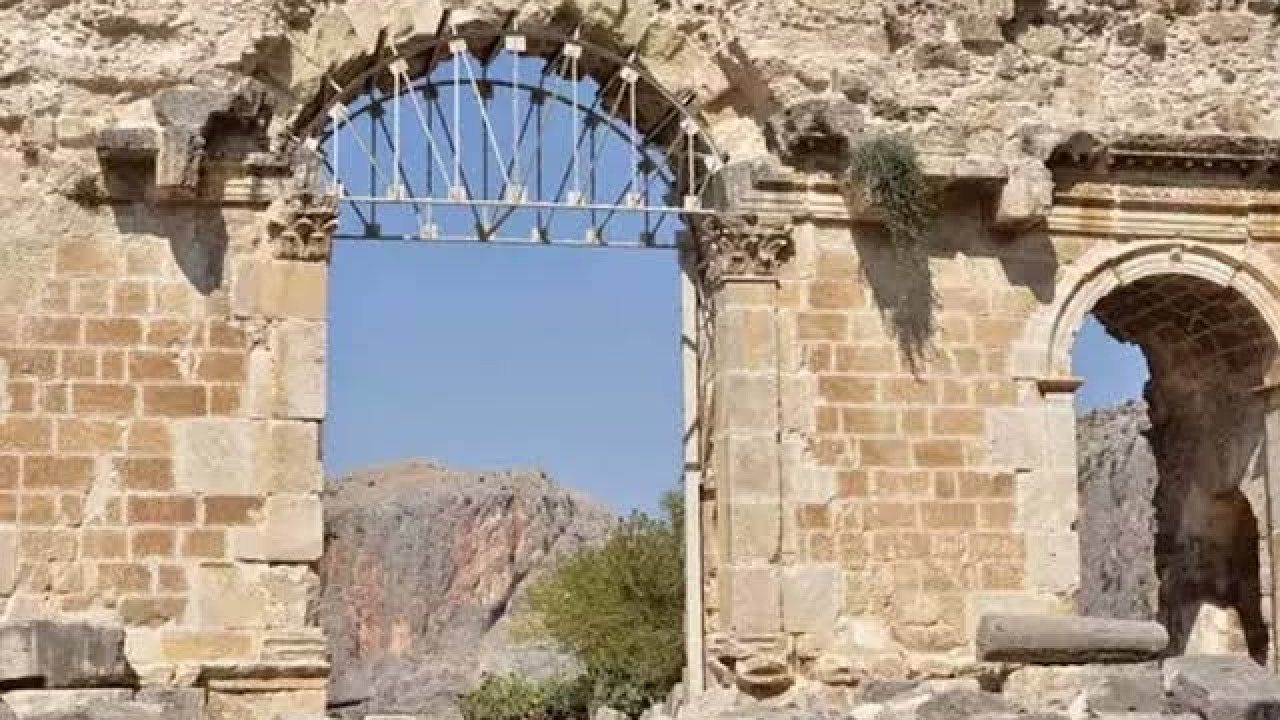
The most prominent standing structure on the plain is the monumental triple-arched gate, marking the city's entrance. Rising on eight piers and supported by six columns, the arch was built at the beginning of the main street axis during the Roman period; it stands out among Anatolian monumental gates for its size and design. Centuries of earthquakes have weathered the structure, so its facade stands only partially today. Practical tip: Walking under the arches to see the stonework up close is a great first stop.
The Colonnaded Street and City Layout
Starting from the triumphal arch, the north-south colonnaded street forms the city's backbone, and here lies what truly sets Anavarza apart: this approximately 34-meter-wide thoroughfare is renowned as the ancient world's first known divided highway, thanks to its central median design. According to excavation reports, the street stretched for 2,700 meters, lined by approximately 2,500 columns spaced 2.15 meters apart on either side. Today, paving stones, column bases, and fallen shafts can be traced along its length. Field note: The street offers little shade, so start your walk from the arch.
Theater, Stadium, and Aqueducts
Outside the city walls, at the foot of the rock mass, lies the theater; further into the plain are the stadium and amphitheater areas. Parts of these structures remain buried, while others are visible with their seating rows and wall constructions. Nearby, you'll find rock-cut tombs and a necropolis, while to the north, remnants of the aqueduct lines that supplied water to the city stretch out. Practical tip: Visible sections of the aqueducts can be seen from the village road.
The Rocky Ridge and Anavarza Castle
The castle, sprawling along the ridge, is a multi-layered structure with remnants of towers, cisterns, and chapels added during different periods. The ascent to the top is via a stony and steep path; the climb takes about half an hour for an average hiker. From the summit, you can enjoy panoramic views of the Çukurova plain and the winding course of the Ceyhan River. Timing tip: Plan your climb for early morning or late afternoon.
Church Ruins and Mosaics
The city contains basilica and church ruins from various periods; traces of Armenian-era structures can be found both at the foot of the ridge and on its summit. Among the floor mosaics unearthed during excavations, the most famous is a 3rd-century AD mosaic depicting the sea goddess Thetis and Eros, found at the bottom of a pool. Practical tip: Some of the findings are exhibited at the Adana Museum, so consider combining your visit with a trip to the museum.
Anavarza's History: From Roman Rule to Armenian Kingdom
Anavarza's known history stretches back to the Hellenistic period. The city was refounded in 19 BC after Emperor Augustus's visit to the region and was known as Caesarea ad Anazarbum. By the 3rd century, it had become a rival to Tarsus, the provincial capital, and was recorded as the metropolis of Cilicia Secunda under Diocletian's provincial reorganization. Following earthquakes in the 6th century, it was restored during the reign of Justinian and also referred to as Justinianopolis. Under Arab rule, the city was known as Ayn Zarba, fortified by Harun al-Rashid in 796, and later returned to Byzantine control in 962. In the 12th century, it became the capital of the Armenian Principality of Cilicia, before the administrative center was moved to Sis (modern-day Kozan) in 1173.
How to Get to Anavarza?
- For those arriving by private car, head from Adana city center towards Kozan, then follow the Dilekkaya signs to reach the archaeological site; the journey takes approximately one hour, depending on traffic.
- Public transport users can take regular minibuses from Adana bus terminal to Kozan; as services from Kozan to the village are infrequent, you'll likely need to complete the final leg by taxi.
- Visitors arriving by plane should travel from Adana Airport to the city center and follow the same route; for those with luggage or late arrivals, convenient Adana hotel transfer tours can ease the burden of transfers.
- Visitors planning to climb to the castle can leave their vehicles in the flat area at the archaeological site's entrance.
Itinerary, Dining, and Accommodation
Suggested One-Day Itinerary
- Enter the archaeological site early in the morning to explore the triumphal arch, colonnaded street, and theater area.
- Towards midday, ascend the castle path to take in the panoramic plain views.
- In the afternoon, head to Kozan center and explore Kozan Castle; on your way back, Yılankale (Snake Castle) near Ceyhan can be added to your itinerary.
Culinary Stops in Çukurova
Dining options around the archaeological site are limited; plan your meal break in Kozan center or Adana. Adana kebabı and şalgam (turnip juice), analı kızlı çorbası (a local soup), and sıkma (a type of flatbread wrap) are well-known regional flavors; during the season, look for Kozan oranges at roadside stalls.
Accommodation Areas
Accommodation options around Anavarza are scarce: you'll find small-scale hotels in Kozan center, and a wider range in Adana city center. If you plan to extend your trip to two days, staying in Adana and making a day trip is practical.
Adana Tours and Transfer Options
As reaching Anavarza by public transport can be challenging, most visitors opt for a private car or an organized tour. Those wishing to explore Çukurova's ancient cities together can browse cultural tours programs. For city-focused planning, Adana tours are a great starting point; transfer service tours in Adana can solve your inter-city connection needs.


Tips Before You Go
- If you plan to climb to the castle, wear non-slip shoes, bring a hat, and carry enough water; the path offers little shade.
- The plain's ruins are spread over a large area; expect considerable walking distances and plan your schedule accordingly.
- The archaeological site has different visiting hours for the summer season (April 1 - October 1) and winter; confirm current hours before your visit.
- The Museum Pass (Müzekart) is valid for entry; having your card ready will save you time at the ticket counter.
- Climbing on the ruins and taking stones from the site are prohibited; please respect the ropes and signs marking excavation boundaries.
- After rainy days, the dirt paths and castle trail can become slippery, so keep your plans flexible.
Seasonal Visit Comparison
| Period | Advantage | Note |
|---|---|---|
| Spring (March-May) | Mild weather, lush plain scenery | Ideal period for castle climb |
| Summer (June-August) | Long daylight hours, clear skies | Çukurova heat is intense, plan early morning visits |
| Autumn (September-November) | Temperatures drop, softer light | Comfortable for photography and long walks |
| Winter (December-February) | Quiet visit, fewer crowds | Rain makes paths slippery |
How Much Time Should You Allocate for Anavarza?
Exploring the ruins on the plain takes about 1.5-2 hours, while adding the castle climb requires half a day. It's possible to visit from Adana city center and return the same day; if you add Kozan Castle or Yılankale, it will fill a full day. For those looking to expand their itinerary, historical city tours offer a great starting point; for a similar experience, check out our Olympos Ancient City guide.
Frequently Asked Questions 5
Where is Anavarza Ancient City located?
It is located in Dilekkaya village, Kozan district of Adana province, in the eastern part of the Çukurova plain. It is approximately 28 kilometers from Kozan district center and about 70 kilometers from Adana city center; access is typically via the highway towards Kozan.
What is the legend of Anavarza?
According to a local legend, the king of Anavarza had a famously beautiful daughter, and he announced that he would give her hand to whoever brought water to the thirsty city first. The prince of Misis won the race, but the princess, having fallen in love with the prince of Sis, threw herself from the cliffs. The narrative intertwines the city's aqueducts with its steep rock mass in this single story.
Who lived in Anavarza Castle?
The castle was used during the Roman and Byzantine periods, served as a border fortress during the Abbasid era, and came under the control of the Armenian Principality of Cilicia in the twelfth century. In subsequent centuries, it remained under the rule of local beyliks and the Ottoman administration.
What does Anavarza mean, what is its origin?
The current name is the Turkish pronunciation of the city's ancient name, Anazarbos. Sources suggest that the name was first given to the 200-meter rock mass overshadowing the city, and its origin might be traced to the Old Persian word "Na-barza," meaning "invincible." During the Roman period, the city was recorded as Caesarea ad Anazarbum.
How long does a visit to Anavarza take?
1.5-2 hours is sufficient for exploring the triumphal arch, colonnaded street, and theater area on the plain. Those planning to climb the castle path should allocate half a day, and during warmer months, visiting in the morning ensures a more comfortable experience.