For those seeking an escape from Istanbul's bustling crowds, a breath of fresh air where the Black Sea's waves meet the Istanbul Bosphorus, Anadolu Feneri offers a hidden gem at the city's northern tip. Located at one of the furthest points of the Beykoz district, this white tower has guided ships entering the Bosphorus for centuries. With its unique geographical position and charming village atmosphere, it's just waiting to be explored. In this guide, you'll find everything you need to know about Anadolu Feneri's history, technical specifications, transportation options, nearby attractions, and practical tips for your visit.
Quick Facts
| Topic | Information |
|---|---|
| Location | Istanbul, Beykoz, Anadolufeneri village, Yon (Hrom) Burnu |
| Type of structure | Operational lighthouse and fishing village |
| Tower construction year | 1856 |
| Entrance fee | Village and surroundings free; tower interior closed to visitors |
| Public transport | IETT Bus Line 15D (Kavacık direction) |
| Distance from Üsküdar | Approx. 33 km via Yeni Riva Yolu |
| Recommended visit duration | Half a day |
| Nearby attractions | Poyrazköy, Anadolu Kavağı, Yoros Kalesi |
| Best time to visit | Spring and autumn months |
| Sea access | Village shore not suitable; nearby coves are preferred |
Where is Anadolu Feneri and Which Sea Does It Overlook?
Anadolu Feneri stands proudly on the Asian side of Istanbul, at the northernmost point where the Istanbul Bosphorus merges with the Black Sea, specifically on Yon (Hrom) Burnu. This means the lighthouse is neither entirely within the Bosphorus nor in the open Black Sea; it's strategically positioned at the transition line where the two waters meet. On the opposite shore, in Rumelifeneri village, stands its twin structure, Rumeli Feneri, with approximately 2 nautical miles separating the two lighthouses. Ships entering the Bosphorus from the Black Sea use these two lights as a reference to navigate their course.
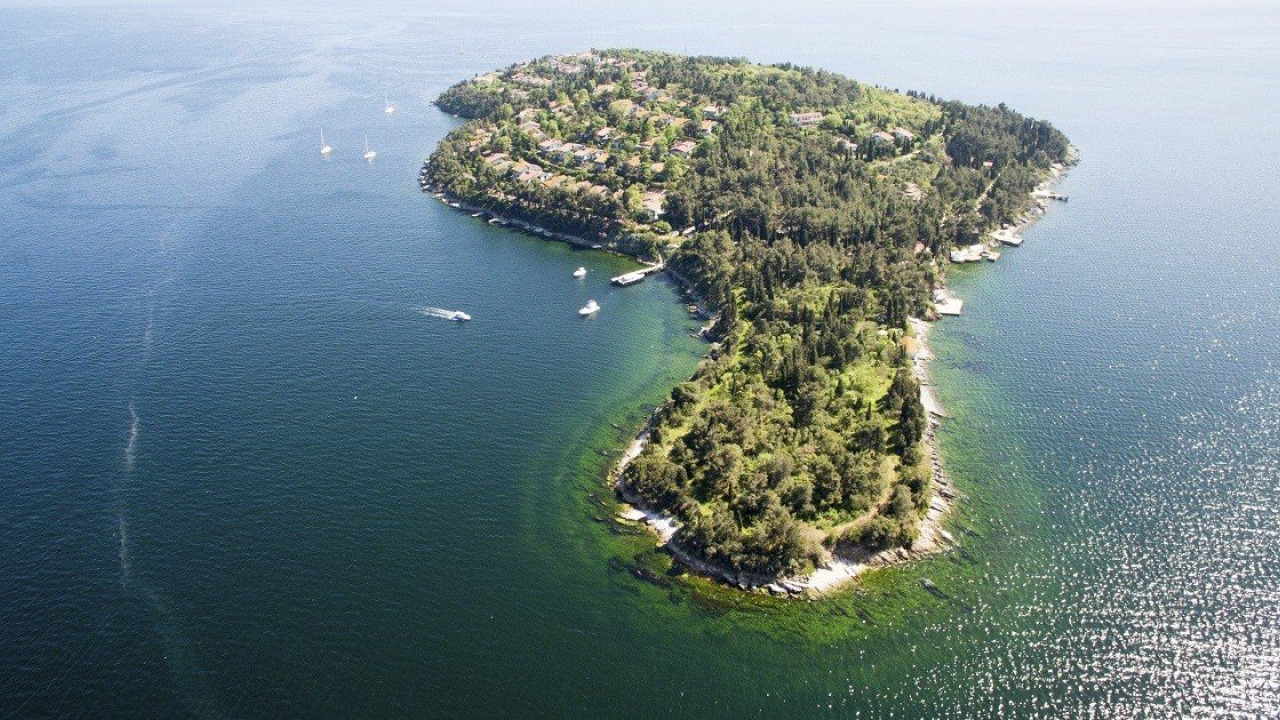
The village of Anadolufeneri, named after the lighthouse, is built on a small peninsula nestled between Çakaltepe and Kabakoz coves. By road, it's approximately 33 kilometers from Üsküdar via Yeni Riva Yolu. After passing Beykoz center, you'll drive about four kilometers to the Poyrazköy turn-off, and then reach the village where the lighthouse is located.
The Village's Military Past and Present Character
Anadolufeneri village remained within military zone boundaries for many years and was closed to outside visitors. Civilian access was granted in the 2000s, finally opening the village to travelers. This late opening helped preserve much of the village's architectural structure and coastline. The village is surrounded by beech, oak, strawberry tree, and chestnut trees. The local economy thrives on fishing, dairy farming, and vegetable cultivation. This unique setting allows for a rustic day trip, just an hour's drive from the heart of Istanbul. If you wish to extend your half-day plans, you can explore Istanbul day trip cultural tours offered by Travel Tour Shop.
History and Architecture of Anadolu Feneri
Early Mentions of the Lighthouse
Traces of a signal fire or lighthouse at the northern entrance of the Bosphorus date back to ancient times. Historical sources indicate that the lighthouse was first mentioned in 1755 by the French engineer Baron de Tott, who visited Istanbul. In 1790, the English doctor Olivier also referred to the same structure. On Italian maps, the lighthouse appears in drawings from 1666 and 1793. During the Ottoman period, it is believed that the initial structure was built of wood. Some records state that the lighthouse was established at its current location in 1834, with the tower portion added later.
The Crimean War and the 1856 Tower
The story of the white stone tower you see today dates back to the Crimean War. To ensure clear visibility for French and British ships entering the Bosphorus and the Black Sea, it was decided to construct two lighthouses facing each other. On May 15, 1856, the tower section, along with the lighthouse on the opposite shore, was completed and put into operation by Marius Michel (Mişel Paşa), of French origin. The operation of the lighthouse was granted to Bernard Camille Pollas, who brought Empress Eugénie of France to Istanbul, and Captain Marius Michel, with the condition that 28% of the operating revenue would go to the state. By 1933, the hundred-year operating concession granted to the French was canceled with a payment of 500,000 lira, and the lighthouse was fully transferred to Turkey.
The tower is built of white stone and masonry, in a circular form that tapers upwards. It is one of the few lighthouses that has preserved its original form; over the years, functional parts like the bulb and the motor that rotates the crystal have been replaced, but the stone body remains untouched. For those looking to create a route incorporating other historical structures along the Bosphorus, Travel Tour Shop offers Istanbul historical city tours options.
The Lighthouse's Light and Technical Specifications
| Feature | Value |
|---|---|
| Tower height | 20 meters |
| Height from sea level | 75 meters |
| Light characteristic | Fl W 20s (2 seconds light, 18 seconds dark) |
| Visibility range | 20 nautical miles |
| Light source | 1000 watt electric lamp |
| Optical system | Focal length 500 mm, 4 catadioptric panels |
| Construction material | White stone, masonry |
| System modernization | 2006 |
The lighthouse's light shines continuously; the rotating motion is provided by optical panels placed on a circular platform inside the tower. As these panels rotate, an observer from outside perceives a flashing light. Previously, a clockwork-like winding mechanism was used to rotate the panels; with the 2006 modernization, a geared electric motor and a photocell system were implemented. The light source has evolved throughout history from wick-fueled kerosene lamps to LPG-powered mantle lamps, and then to today's electric lamp. In case of power outages, the system is supported by butane gas.
What to Do at Anadolu Feneri?
A visit here isn't just limited to taking photos of the lighthouse. You can easily fit the following into a half-day itinerary:
- Admire the tower from the outside and watch the Bosphorus open up to the Black Sea from a high vantage point.
- Sit at the tea gardens in the village square and observe the ship traffic.
- Take a short stroll along the shore, past the boathouses and fishing boats.
- Hike through the village's forest trails amidst beech and chestnut trees.
- Explore Hamid-i Evvel Camii and the village's charming stone-paved streets.
- Visit nearby attractions like Poyrazköy, Anadolu Kavağı, and Yoros Kalesi.
- Capture panoramic photos from the hilltop as the sun sets.
On clear days, looking south, the silhouette of the Yavuz Sultan Selim Köprüsü also becomes part of the stunning view.
Attractions Around Anadolu Feneri
Yoros Kalesi
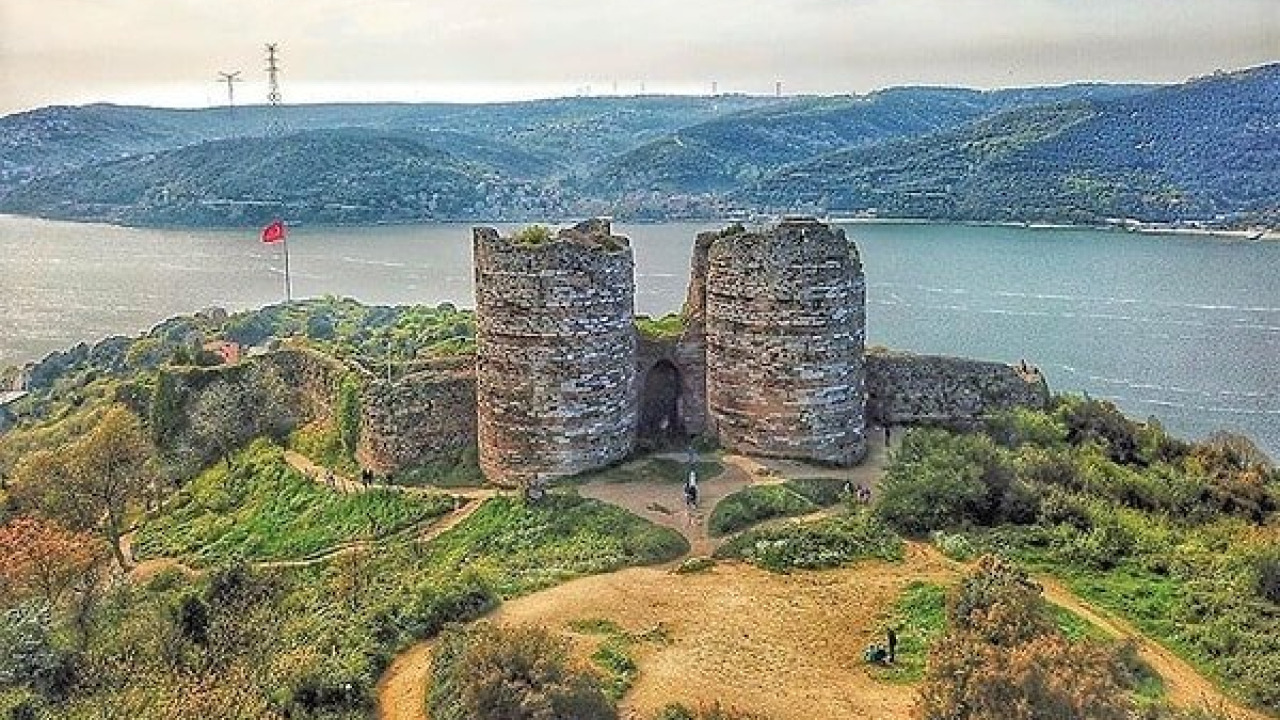
Perched on the hills of Anadolu Kavağı, Yoros Kalesi is a defensive structure built during the Byzantine era to control the entrance to the Bosphorus. Being an open-air site, it can be explored freely during daylight hours. From the castle's hilltop, you can enjoy a panoramic view of the point where two continents meet. As parts of the structure are awaiting maintenance, it's advisable to walk carefully near the walls and on loose ground.
Anadolufeneri Village and Hamid-i Evvel Camii
The village, nestled right at the foot of the lighthouse, is a small settlement built on a hillside. In the village square, you can enjoy your tea, chat with locals, and walk along the shore to see the boathouse. The Hamid-i Evvel Camii in the village was built in 1880 by Abdülhamit II, and its minaret, when viewed from the sea, forms part of the village's silhouette alongside the lighthouse.
Poyrazköy
Poyrazköy, which you'll pass before reaching the lighthouse village, is renowned for its fish restaurants. Since it has a small beach area on its shore, visitors looking to swim often prefer this spot. Along the road, you'll also find picnic areas on both sides.
Forest Walking Trails
The area around Anadolu Feneri is one of Istanbul's remaining green havens. Forest paths stretching along the Bosphorus line offer excellent conditions for hiking, especially in spring and autumn. Since the routes are not marked, having an offline map on your phone will be helpful. If you prefer to explore the region with a guided program, you can check out Bosphorus-inclusive options among Travel Tour Shop's Istanbul cultural tours.
How to Get to Anadolu Feneri?
The area is accessible by both public transport and private car. The road, after Beykoz, turns into a winding forest route, so planning your trip during daylight hours will ensure a more comfortable journey.
| Transport method | Route | Note |
|---|---|---|
| IETT Bus Line 15D | Kavacık, Dereseki, Halayıkdere, Anadolufeneri | Bus line reaching the village; services are infrequent |
| Private car | Üsküdar, Yeni Riva Yolu, Beykoz, Poyrazköy turn-off | Approx. 33 km; last section is a winding forest road |
| From Beykoz center | Via coastal and forest road | Approx. 20-30 minutes depending on traffic |
Getting There by Public Transport
- Reach the Kavacık transfer point from Üsküdar, Kadıköy, or Beykoz.
- From Kavacık, take the 15D bus line; it goes to Anadolufeneri via Dereseki and Halayıkdere.
- Get off at the last stop and walk to the village square; the lighthouse tower is on the hill above the square.
- For your return, note the last bus schedule when you board, as services on rural lines can be infrequent.
Getting There by Private Car
If you're driving your own car, navigation apps will direct you straight to the village square. Follow the Beykoz signs, and after the Poyrazköy turn-off, the road narrows and the elevation increases. Parking spaces around the square fill up quickly on weekends, so it's advantageous to set off early. When parking, be mindful not to block village passages or the paths of agricultural vehicles.
Can You Swim at Anadolu Feneri?
The cape where the lighthouse is located and the village's coastline are not suitable for swimming. The shore is rocky, there are boathouses along the village beach, and there are no facilities suitable for swimming in this section. The currents and wave action of the Black Sea at this point also increase the risk. Visitors wishing to swim generally prefer small beach areas in nearby locations like Poyrazköy. If you plan a day focused on scenery and walking rather than swimming, you'll get much more out of the region.
What to Eat and Drink at Anadolu Feneri?
The local economy relies on fishing, dairy farming, and vegetable cultivation, and the menus reflect this local production.
- Spread breakfast: Garden restaurants offer breakfasts featuring village cheese, fresh dairy products, farm eggs, and locally grown vegetables.
- Seafood: Depending on the season, Black Sea fish like anchovies (hamsi), horse mackerel (istavrit), and whiting (mezgit) are on the menus. Fish patties are a common alternative for those who don't prefer whole fish.
- Tea time: Enjoy tea at the small tea gardens on the hill, offering a bird's-eye view of the Bosphorus entrance; sunset hours are particularly lively here.
There are no large chain establishments in the village, so menu variety is limited. If you're visiting with a large group, calling the establishment in advance can reduce waiting times.
Visit Tips and Photography Notes
Anadolu Feneri is an excellent spot for wide-angle lenses to capture the tower and the Black Sea in the same frame. During the "golden hour" of sunrise and sunset, the white body of the tower takes on a warm hue. The village's stone streets and fishing life provide a natural set for street photography. Consider the following points before your visit:
- The area is protected; please take your trash with you.
- There are military zones and private property boundaries in the vicinity; please obey warning signs.
- The tower is an active navigational aid; its interior is not regularly open to visitors.
- Weather conditions can change quickly, so bring a light windbreaker.
- Walking trails are stony and inclined; opt for non-slip shoes.
- Some small businesses in the village may not accept cards, so carry some cash.
- Shopping from local producers directly contributes to the regional economy.
For those who want to listen to the story of the lighthouse and its surrounding structures at their own pace, Travel Tour Shop's Istanbul audio guide tours allow you to follow the narration on your phone as you explore the route.
Frequently Asked Questions 8
Which sea is Anadolu Feneri located on?
Anadolu Feneri is situated at the northern tip where the Istanbul Bosphorus meets the Black Sea, on Yon (Hrom) Burnu. Geographically, it is on the transition line between the Bosphorus and the Black Sea, approximately 2 nautical miles from Rumeli Feneri on the opposite shore.
What days is Anadolu Feneri open?
The village where the lighthouse is located, its coastline, and the surrounding walking trails are freely accessible every day of the week. The tower itself is an active navigational aid, so its interior is not regularly open to visitors; the structure is viewed and photographed from the outside.
What can you do at Anadolu Feneri?
The most common activities include viewing the tower from the outside, enjoying tea in the village square, walking along the coast and forest trails, visiting Hamid-i Evvel Camii, taking sunset photos, and exploring nearby attractions like Poyrazköy and Anadolu Kavağı.
Can you swim at Anadolu Feneri?
The village's coastline is rocky and lacks facilities suitable for swimming. Therefore, swimming is not recommended around the lighthouse. Visitors wishing to swim can use small beach areas in nearby locations like Poyrazköy.
Is there an entrance fee for Anadolu Feneri?
Entry to the village, the coastline, and the public areas around the lighthouse is free. Specific fees may apply for the castle, cafes, or private establishments.
How do you get to Anadolu Feneri by public transport?
The IETT bus line reaching the village is 15D; its route extends to Anadolufeneri via Kavacık, Dereseki, and Halayıkdere. From Üsküdar, Kadıköy, or Beykoz, you first need to reach the Kavacık transfer point. By road from Beykoz center, access takes approximately 20-30 minutes, depending on traffic.
How high is Anadolu Feneri?
The tower itself is 20 meters high. The lighthouse is positioned on a hill 75 meters above sea level, allowing its light to be seen from a wide area; its visibility range is 20 nautical miles.
How much time should be allocated for a visit to Anadolu Feneri?
Half a day is usually sufficient to visit the lighthouse, the village, scenic viewpoints, and nearby attractions like Yoros Kalesi. If you add walking trails and a meal break to your itinerary, the trip can easily extend to a full day.