
For travelers dreaming of gliding through the clouds and soaking in the turquoise vistas of Turkey, the biggest dilemma is often choosing the right type of flight. Parasailing tours, where you soar behind a high-speed boat, offer a convenient and secure way to enjoy a bird's-eye view of the coast. On the other hand, Paragliding tours, launching from towering mountain summits, provide the raw thrill of true free flight. In this comprehensive guide, we compare these two iconic aerial experiences across operational, technical, and safety dimensions.
Your choice ultimately depends on your appetite for adrenaline, how much time you want to spend in the air, and your budget. Parasailing uses a mechanical winch system attached to a boat, offering a "zero-effort" ascent where the machinery does all the work. Paragliding is a dynamic dance with the wind, where you glide through the sky guided by a professional pilot. By analyzing your expectations, you can easily pick the adventure that best fits your vacation vibe.
Parasailing vs. Paragliding: Comparison Matrix
The following table summarizes the key differences in launch mechanics, flight duration, and safety gear. These figures are based on the operational standards of commercial flight tours along the Turkish coast.
| Comparison Criteria | Parasailing (Boat Winch & Mechanical Lift) | Paragliding (Tandem Wing & Free Glide) |
|---|---|---|
| Launch & Landing | Launched from a speedboat's hydraulic platform; lands back on the boat | Launches by running from a mountain peak; lands on a sandy beach |
| Flight Mechanics | Controlled by the boat's towing power and a steel/rope winch | Unpowered aerodynamic wing utilizing air thermals for free flight |
| Average Flight Time | Typically 10 to 15 minutes of actual air time | 25 to 40 minutes, depending on weather and thermals |
| Maximum Altitude | Approximately 150 to 300 meters above sea level | Can reach 1,000 to 2,000 meters depending on the mountain |
| Capacity | Available for solo, tandem (2), or triple flights | One-on-one flight with a licensed tandem pilot |
| Physical Effort | Zero effort required; you simply sit and enjoy | Requires a few brisk steps/running during takeoff and landing |
| Adrenaline Level | Low to Medium; a calm, controlled scenic cruise | High; wind currents, spiral turns, and a true sense of freedom |
As the data shows, these two activities offer entirely different characteristics. Parasailing is perfect for those who want a relaxing view of the shoreline without any stress, while Paragliding is a genuine aviation sport experience.
Launch Mechanics and Control: Mechanical Security or Free Wing?
The most striking difference lies in where you start and how much freedom you have in the air. This mechanical distinction shapes your entire perception of control.
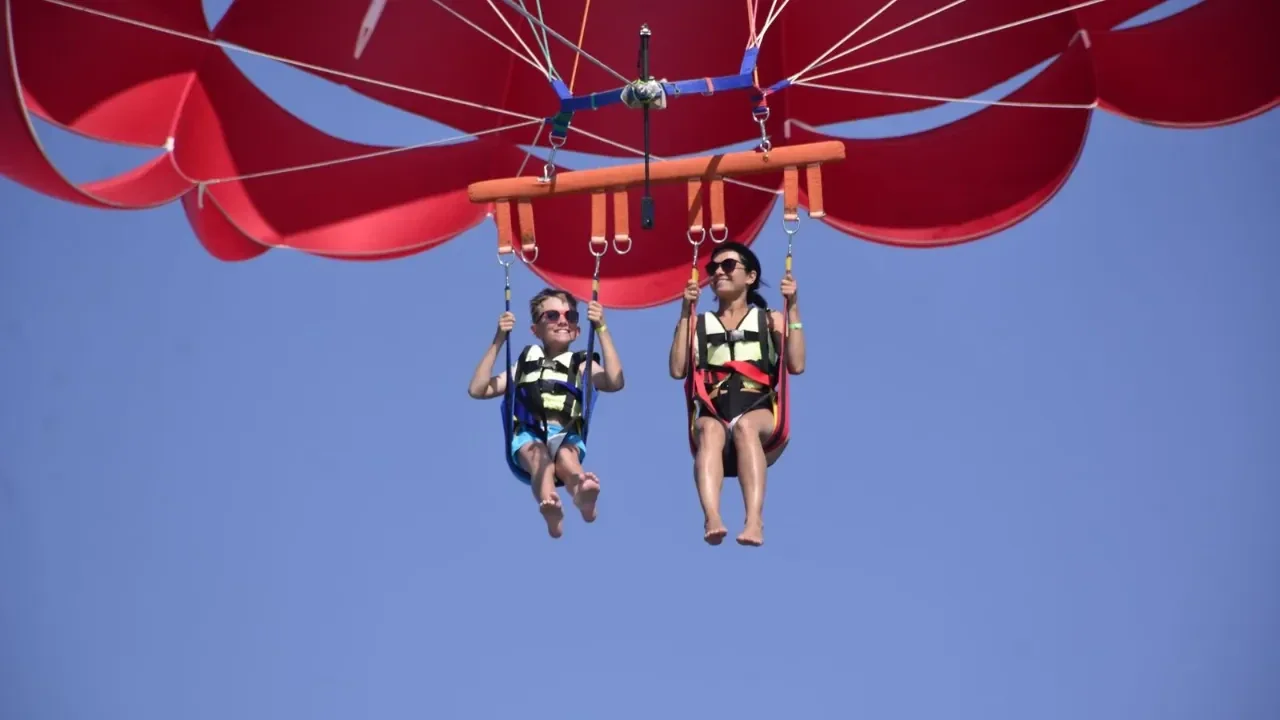
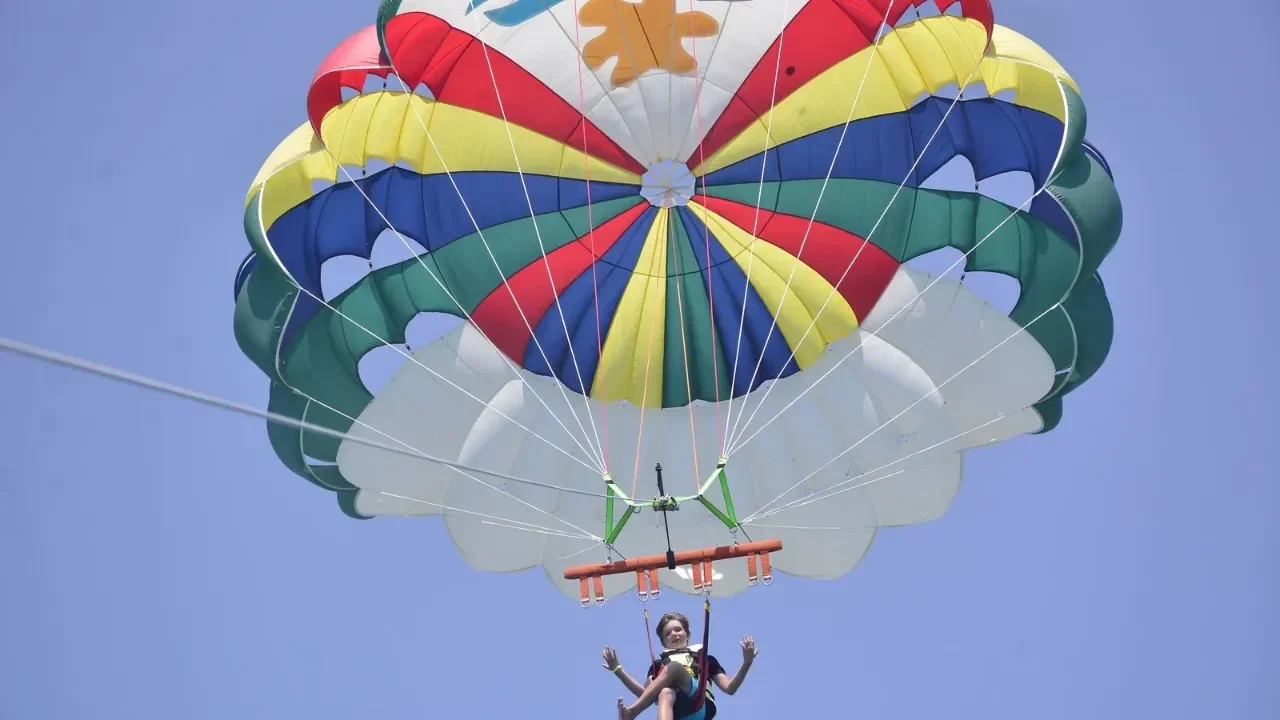
In Parasailing, you gear up with a professional life jacket and a harness before boarding the speedboat. Once the boat reaches open waters, the massive parachute is deployed on the rear platform. After you are clipped in, the hydraulic winch slowly releases the line. As the boat accelerates, the parachute fills with air, and you are gently lifted into the sky without having to take a single step.
Paragliding is a different beast entirely. The adventure begins on a launch pad atop a high mountain. You and your tandem pilot are secured together with heavy-duty steel carabiners. Once the pilot catches the wind and lifts the wing, you'll be asked to run toward the edge of the slope. The moment your feet leave the ground, the flight begins, with the route determined by the pilot's steering lines and the natural air thermals.
If you prefer the mechanical security of being attached to a boat while sitting comfortably, parasailing is your best bet. If you want to meet the wind at a mountain peak and soar like a bird, paragliding is unparalleled.
Flight Duration, Altitude, and Panoramic Views
The time you spend in the sky and the height you reach define the visual satisfaction of your trip. These two activities operate on very different scales.
Parasailing tours typically reach heights of 150 to 300 meters, depending on the winch cable length. From this vantage point, you can clearly see the beachfront hotels, sunbathers on the sand, and the winding coastal coves. The flight is usually limited to 10 or 15 minutes. Upon landing, the winch brings you smoothly back to the boat platform, and for those who want a little extra thrill, the captain can dip your feet in the cool water for a few seconds.
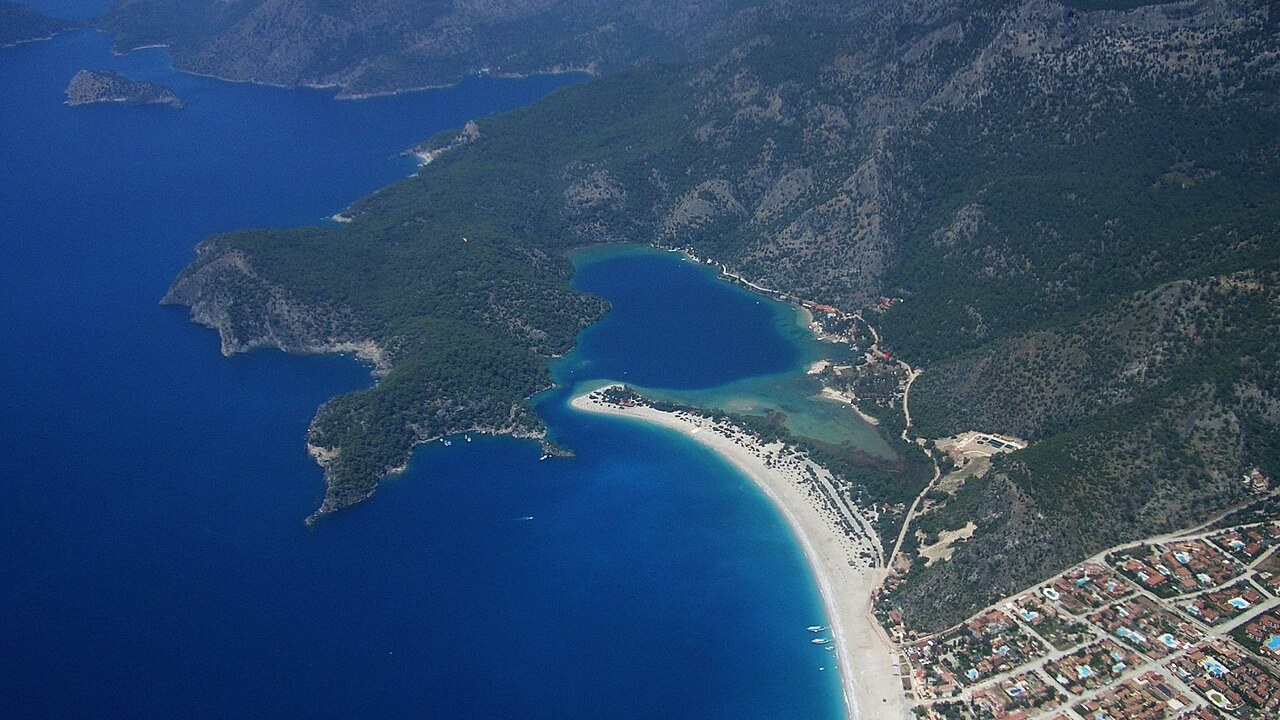
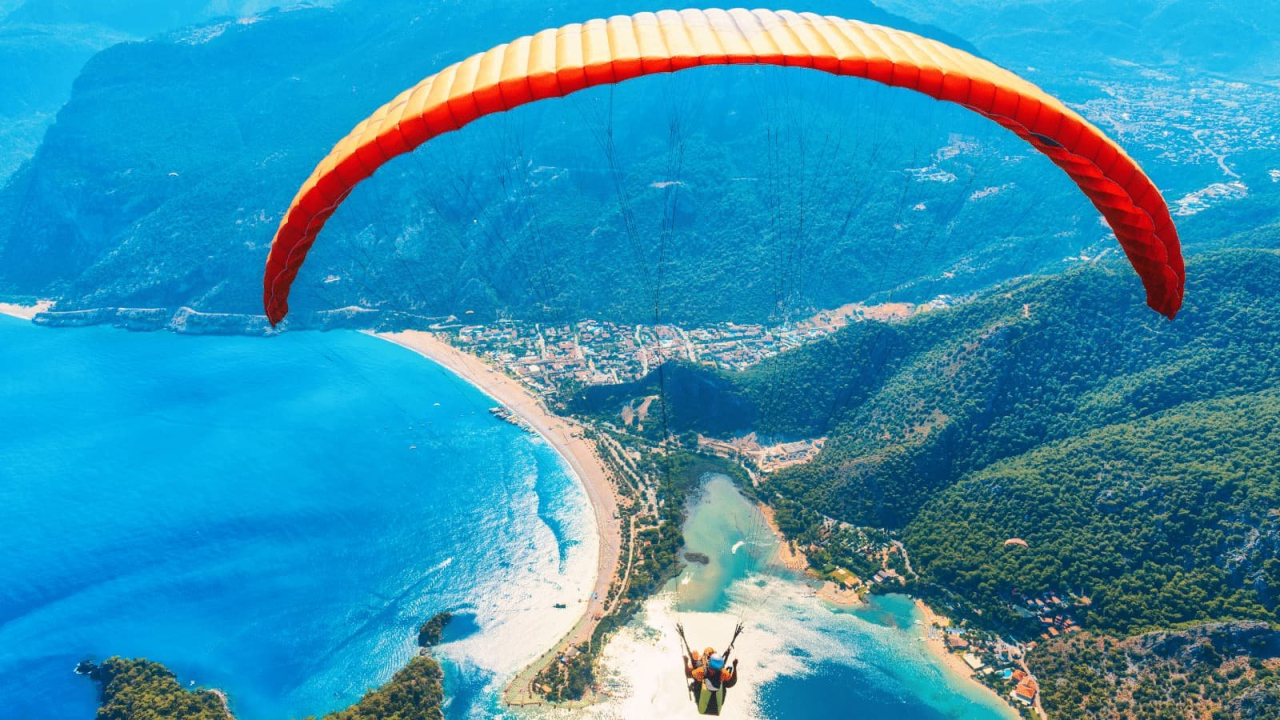
Paragliding, however, is a long-haul journey into the clouds. For instance, launches from Babadağ in Fethiye or Asas Mountain in Kaş start from nearly 2,000 meters. From this height, the entire gulf, scattered islands, and mountain ranges unfold beneath you like a living map. Experienced pilots utilizing thermal currents can keep you airborne for over half an hour.
If you want a quick, high-impact view of the coast before heading back to your sunbed, parasailing is ideal. If you want to linger in the sky and watch the world from thousands of meters up, paragliding offers unmatched fulfillment.
Safety Protocols, Equipment, and Weather Sensitivity
When it comes to the sky, safety is the non-negotiable priority. Both activities are governed by strict operational rules to minimize risk.
In Parasailing, the most critical components are the hydraulic winch and the high-tensile strength cable. These cables undergo rigorous wear-and-tear tests and are replaced periodically. All participants wear professional life jackets to ensure buoyancy, regardless of their swimming ability. Flights are strictly cancelled if wind speeds exceed 25 km/h or if the sea is too choppy.
Paragliding relies on the expertise of tandem pilots who hold internationally recognized commercial licenses. In addition to the main wing, a reserve parachute is always ready in the harness to be deployed manually or automatically in the event of extreme turbulence or equipment failure. While paragliding is more flexible with wind, flights are immediately postponed in cases of heavy fog or dangerous headwinds at the launch site.
Both systems are incredibly safe when operated by professional companies. Parasailing provides a mechanical "safety bubble," while paragliding ensures security through pilot mastery and redundant safety gear.
Age Limits, Family Fun, and Group Flights
Sharing the sky with loved ones can double the joy of the experience.
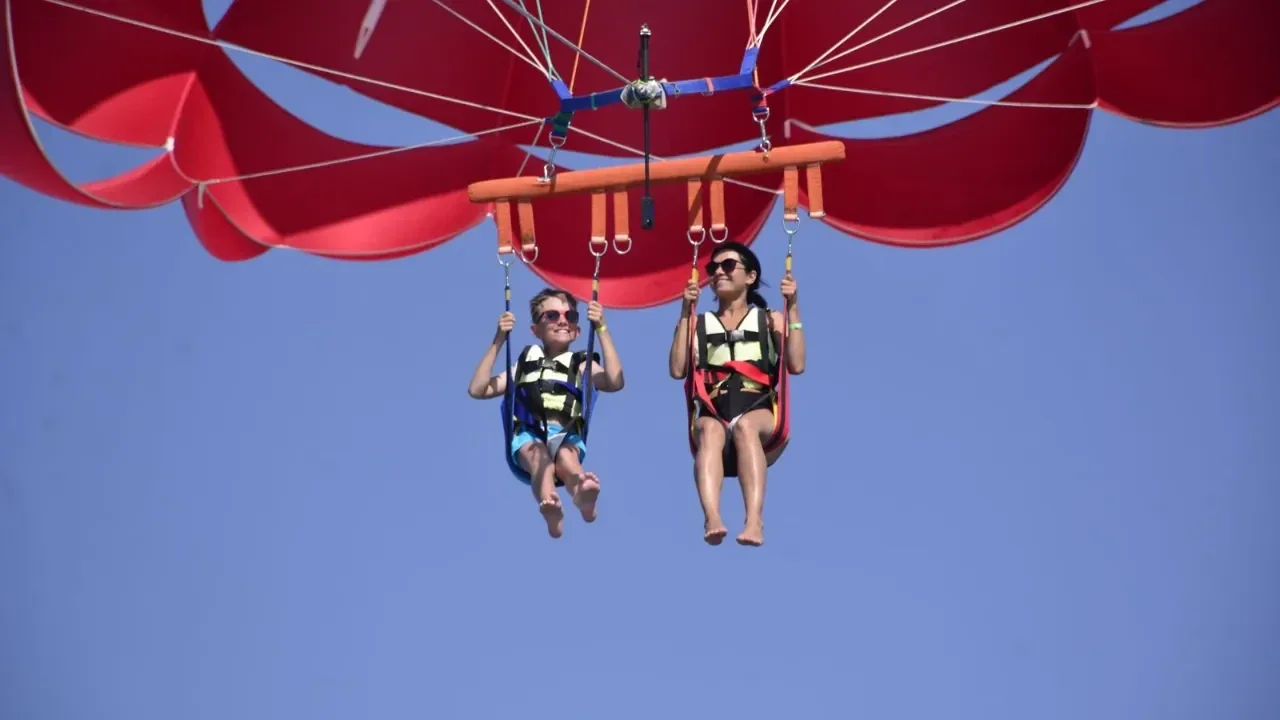
Parasailing offers incredible flexibility here. Thanks to special tandem or triple bars, you can soar side-by-side with your partner or children, chatting as you glide. Generally, children over five or six can fly safely under parental supervision. Since no physical exertion is required, it is also a great option for older family members.
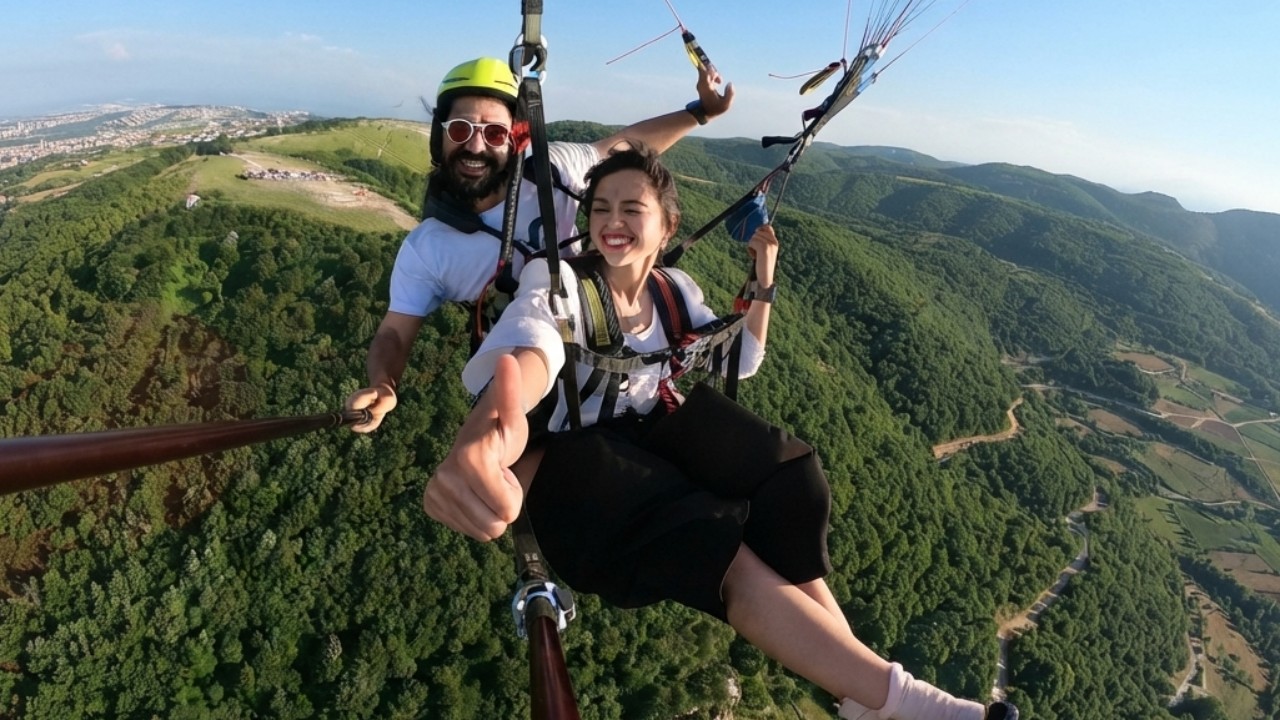
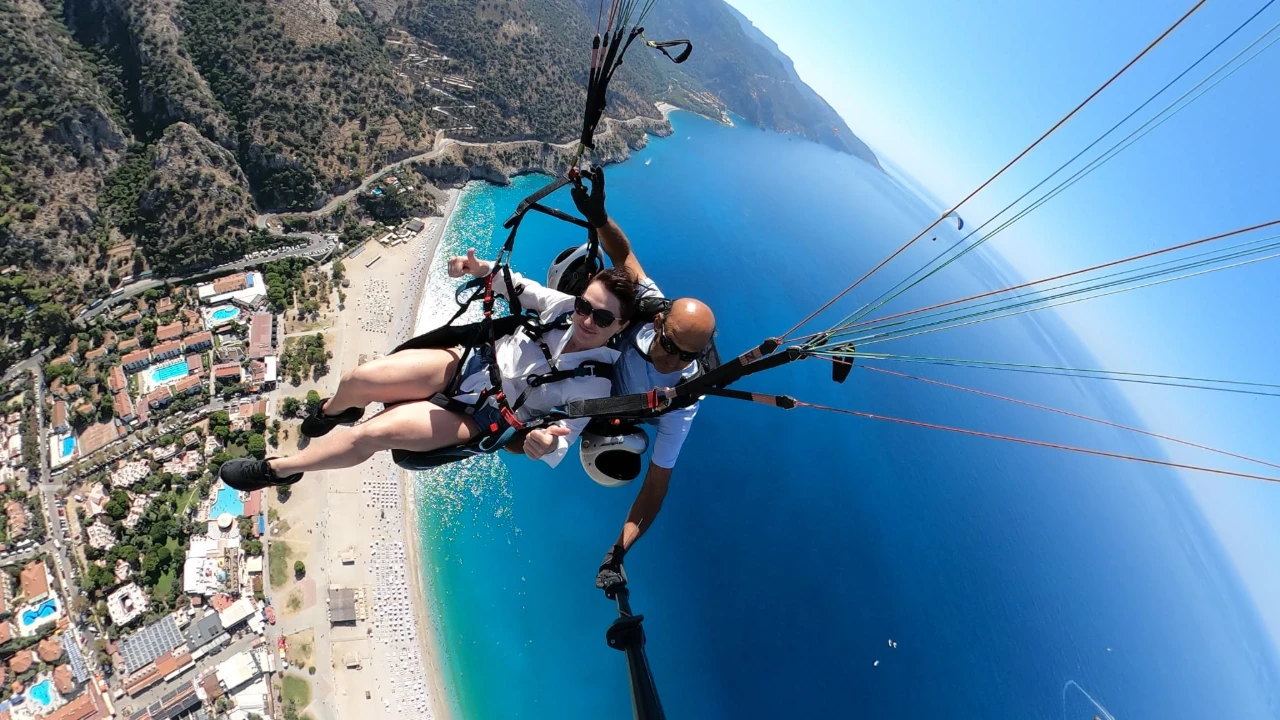
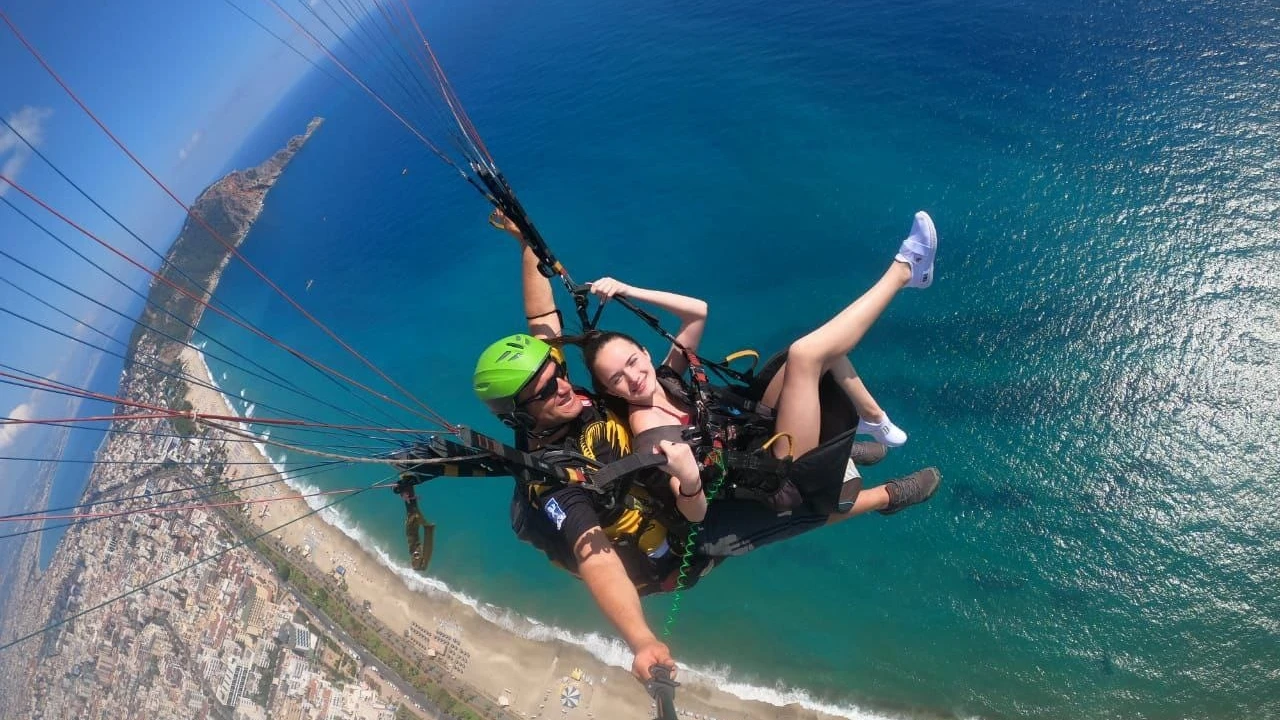
In tandem paragliding, the aerodynamic balance of the wing requires a one-passenger-one-pilot ratio. This means you cannot fly in the same harness as your partner or friend. However, groups can launch with different pilots at the same time and fly in close proximity to one another. Because it requires a few brisk steps during takeoff, it may not be as practical for those with significant mobility issues.
If you want to hold hands with your child or spouse in the sky, parasailing is the perfect solution. If you want a personal milestone and a solo rush of wind, go for paragliding.
Budget, Equipment, and Cost Comparison
The pricing for these activities reflects the investment in equipment and the duration of the session.
Parasailing is typically priced per person or as a package for doubles and triples. The cost usually includes the speedboat trip, life jacket, the flight itself, and comprehensive marine insurance. Professional photos and videos taken by the boat crew are often available as an optional add-on. Because the flight time is shorter, it is one of the most accessible aerial activities budget-wise.
Paragliding involves higher operational costs, including the 4x4 transfer to the mountain peak, national park entry fees, and the full-time service of a licensed tandem pilot. Because the flight can last up to 40 minutes and requires more specialized labor, the price point is higher than parasailing. Pilots usually capture wide-angle action footage, which is offered as a memory package.
The following table summarizes the operational costs and services you can expect.
| Service & Equipment | Parasailing (Boat Flight) | Paragliding (Mountain Flight) |
|---|---|---|
| Avg. Air Time | 10 to 15 minutes of cruising | 25 to 40 minutes (thermal dependent) |
| Group Options | Side-by-side tandem/triple flights | One passenger per licensed pilot |
| Included Logistics | Speedboat tour and marine insurance | Mountain transfer, park fees, and insurance |
| Photo & Video | Taken by boat crew (extra charge) | Taken by pilot via action cam (extra charge) |
In terms of value, parasailing is a practical, budget-friendly way to add a splash of adventure to your beach day. Paragliding is a premium experience that trades a higher price for significantly more air time and a true adrenaline rush.
Which One Should You Choose?
Both activities offer an unforgettable way to embrace the blue horizons of Turkey. Your choice depends on your personal thrill threshold and travel goals.
Choose Parasailing if: You are slightly nervous about heights, want to fly side-by-side with your kids or spouse, or are looking for a low-effort, high-reward scenic experience. It's perfect for those who want a 15-minute "sky break" without interrupting their beach relaxation.
Choose Paragliding if: You are an adventure seeker who wants to feel the wind on your face and see the world from 2,000 meters. If you want to dance with thermals and glide gracefully down to the shoreline, this is the passion you're looking for.
Final Verdict: The 5-Step Selection Protocol
Still can't decide? Follow these five steps to make your choice:
- Who are you flying with? Side-by-side with family $\rightarrow$ Parasailing. Individual adventure $\rightarrow$ Paragliding.
- What is your adrenaline level? Calm and scenic $\rightarrow$ Parasailing. Heart-pounding maneuvers $\rightarrow$ Paragliding.
- How much time do you have? A quick 15-minute thrill $\rightarrow$ Parasailing. A half-day mountain excursion $\rightarrow$ Paragliding.
- What view do you want? The coastline from 200m $\rightarrow$ Parasailing. The entire gulf from 2,000m $\rightarrow$ Paragliding.
- What is your physical comfort? Just want to sit and rise $\rightarrow$ Parasailing. Able to run a few steps $\rightarrow$ Paragliding.
Frequently Asked Questions 5
Which is safer: Parasailing or Paragliding?
Both are extremely safe when operated by professional companies. Parasailing is more predictable as you remain mechanically attached to a boat. Paragliding ensures safety through the pilot's professional certification and the presence of a backup reserve parachute.
Is there a risk of falling into the water during Parasailing?
No. You are lifted directly from the boat platform by a hydraulic winch and returned to it in the same way. The only time you touch the water is if you specifically ask the captain to lower you for a dip at the end of the flight.
What is the main difference between Paragliding and Parasailing?
Parasailing is a leisure activity where you are towed by a boat via a cable. Paragliding is an unpowered aviation sport where you glide from a mountain using an aerodynamic wing. Parasailing reaches about 200m, while Paragliding can soar up to 2,000m.
How long does a Parasailing tour last in the air?
The actual time spent suspended in the air is usually between 10 and 15 minutes. However, the entire experience, including the boat ride to open water and other guests' turns, takes about an hour.
How many people can fly at once in Parasailing?
Depending on the total weight and wind conditions, you can fly solo, in a pair, or as a trio. Parents can often take both their children up at the same time.