
For travelers dreaming of a bird's-eye view of Turkey's breathtaking landscapes, the biggest dilemma is often choosing the right way to take flight. On one hand, tandem paragliding tours gliding from mountain peaks offer the raw thrill of free flight, launching from thousands of feet above the ground. On the other, hot air balloon tours drifting over valleys at sunrise provide a serene, fairytale-like odyssey through the clouds. In this comprehensive guide, we break down every operational detail to help you decide.
Your choice depends on three main factors: your appetite for adrenaline, your comfort with heights, and your budget. Paragliding allows you to dance with the wind, utilizing thermal currents for dynamic maneuvers. A hot air balloon, conversely, offers the sensation of floating weightlessly in a spacious basket alongside fellow travelers. By understanding your travel style, you can plan a sky-high adventure that you'll remember for a lifetime.
Paragliding vs. Hot Air Balloon: Comparison Matrix
The following table summarizes the flight dynamics, adrenaline levels, and logistical requirements of these two activities, based on commercial flight standards across Turkey.
| Comparison Criteria | Paragliding (Tandem Wing, Dynamic Wind & Free Flight) | Hot Air Balloon (Large Basket, Gas Envelope & Panoramic Ascent) |
|---|---|---|
| Flight Mechanics | Unpowered fabric wing gliding via gravity and wind thermals | Hot air envelope heated by propane burners for vertical lift |
| Adrenaline Level | High; involves a takeoff run, sharp turns, and the feel of the wind | Low to Medium; smooth, calm, and steady ascent |
| Average Flight Time | 25 to 40 minutes, depending on weather conditions | 50 to 70 minutes of continuous flight in standard tours |
| Capacity & Privacy | Private 1-on-1 flight with a licensed tandem pilot | Group flights with 16 to 28 passengers per basket |
| Ideal Timing & Climate | From morning to sunset, whenever wind conditions allow | Strictly at dawn, when winds are near zero |
| Altitude & Perspective | 1,000 to 2,000 meters over coastlines or mountain slopes | 500 to 1,200 meters over fairy chimneys and deep canyons |
| Physical Requirement | A short, brisk run during takeoff and landing is required | Standing still in the basket is sufficient (plus climbing in) |
As the data shows, these two activities cater to completely different emotions. Paragliding is a dynamic sport where you feel the wind rushing past your face, while a hot air balloon is a mesmerizing visual journey defined by absolute tranquility.
Adrenaline Rush vs. Fairytale Calm: Which Vibe are You After?
The most striking difference between the two is the amount of adrenaline your body will produce. This fundamentally changes the atmosphere of every minute spent in the air.
In paragliding, the excitement begins at the mountain's edge. Once you and your tandem pilot are harnessed in and safety checks are complete, a few brisk steps forward send you soaring into the void. For those seeking a real rush, pilots can perform spiral dives and acrobatic turns upon request, pushing the adrenaline to its peak.
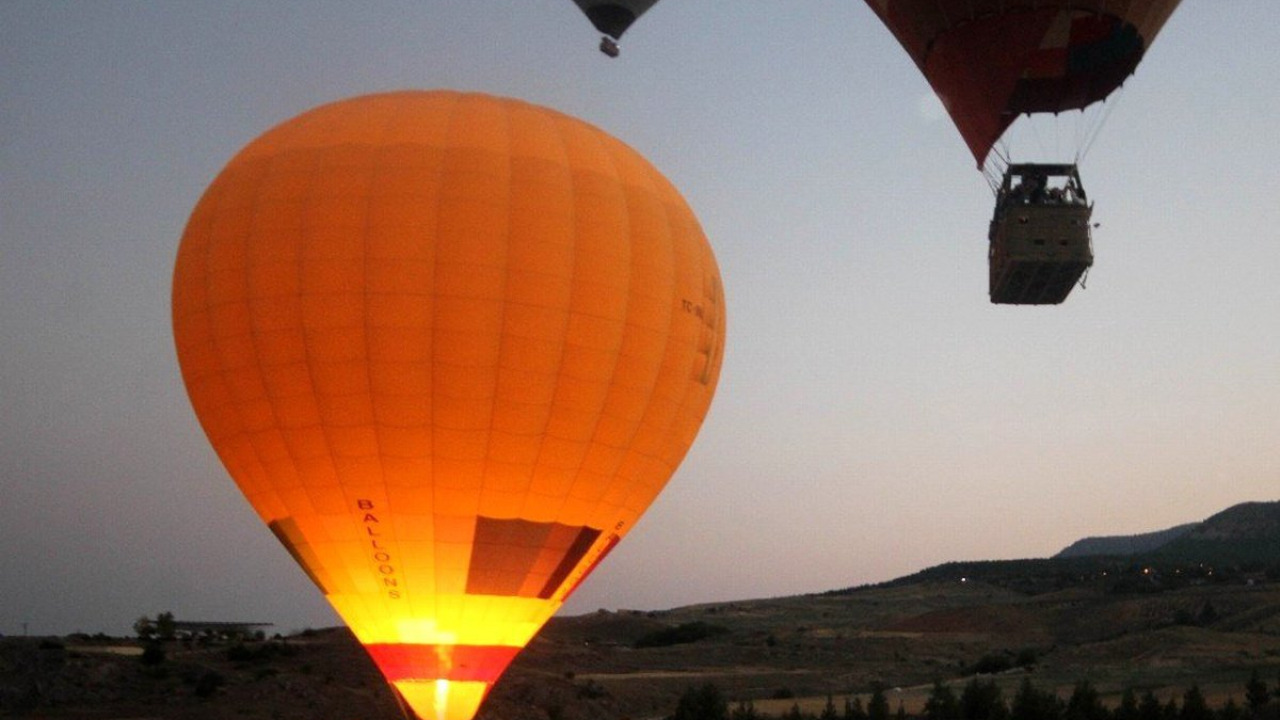
Hot air ballooning is the polar opposite, it is all about peace and serenity. Once passengers are settled in the basket, the massive envelope is inflated with propane flames. The ascent is so gentle that many passengers only realize they've left the ground when the buildings below begin to shrink. Aside from the periodic roar of the burner, the experience is characterized by a profound, floating silence.
If you want your heart to race and experience the purest thrill of flight, paragliding is the only way to go. If you prefer to soak in the scenery with the calmness of sipping a morning coffee, a balloon tour is your dream come true.
Altitude, Geography, and Visual Perspectives
The landscape and altitude of the flight completely change the visual narrative. Each method specializes in different terrains.
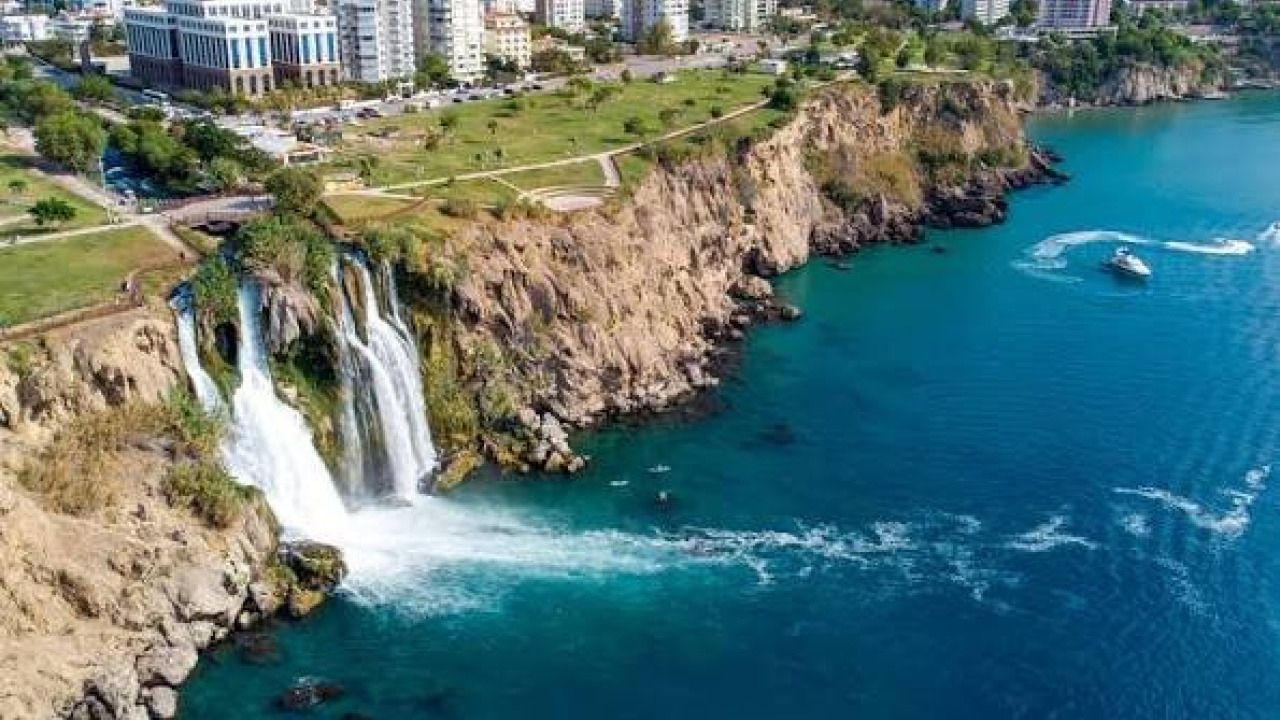
Paragliding is typically performed on high mountains near the coast or over steep valleys. For instance, launching from Babadağ in Fethiye at an altitude of nearly 2,000 meters allows you to embrace the world-famous Ölüdeniz lagoon and its turquoise waters from above. Similarly, in Kaş and Alanya, the rugged mountain ranges meet the deep blue of the Mediterranean in a single frame. Landings usually take place directly on the beach or the promenade.
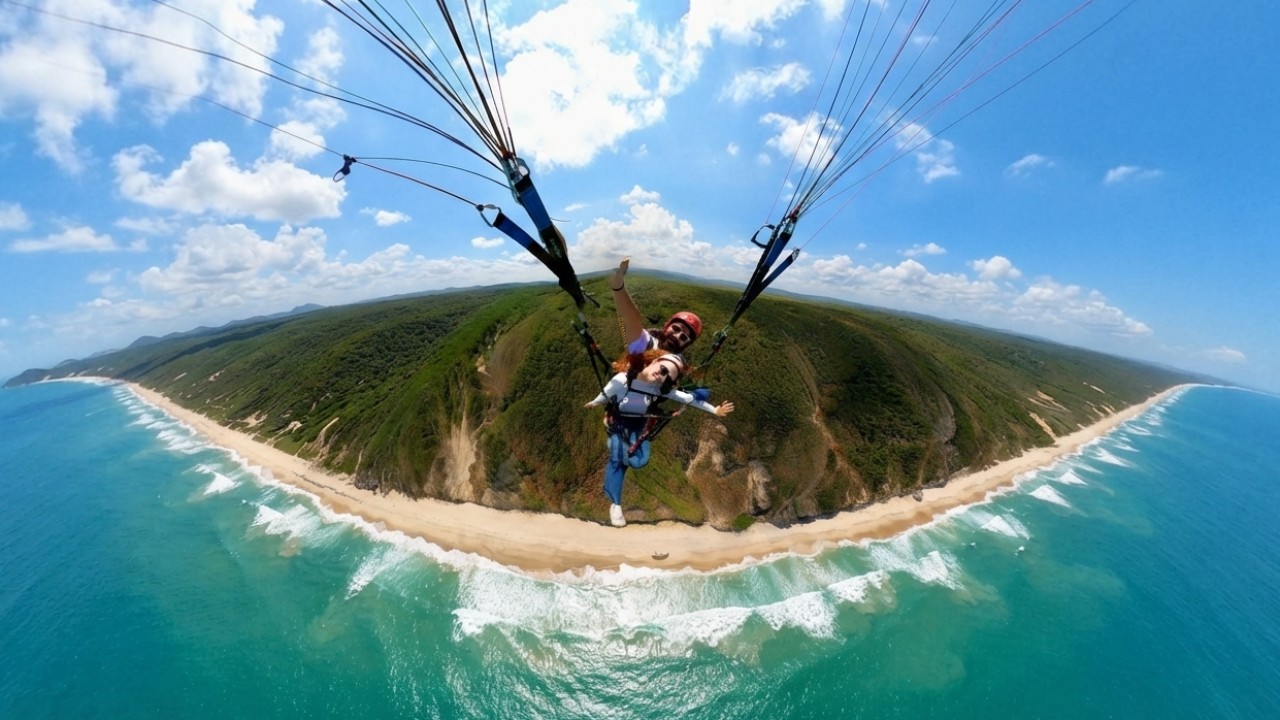
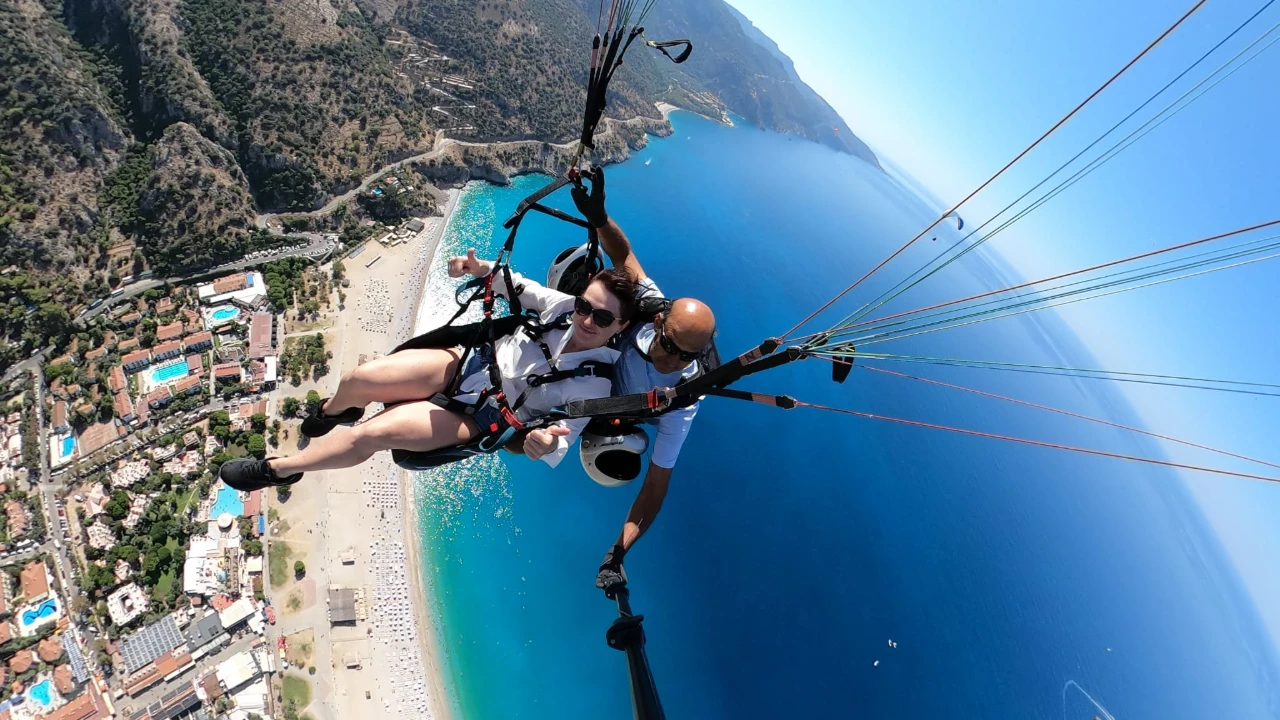
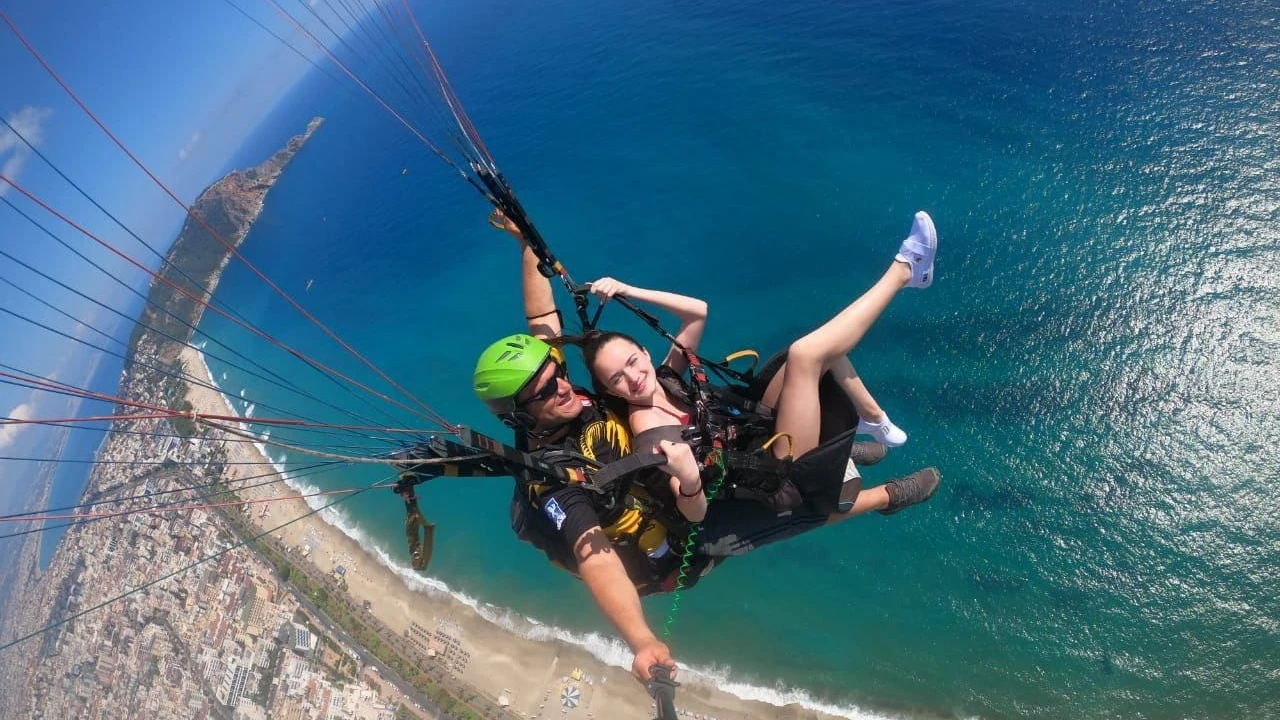
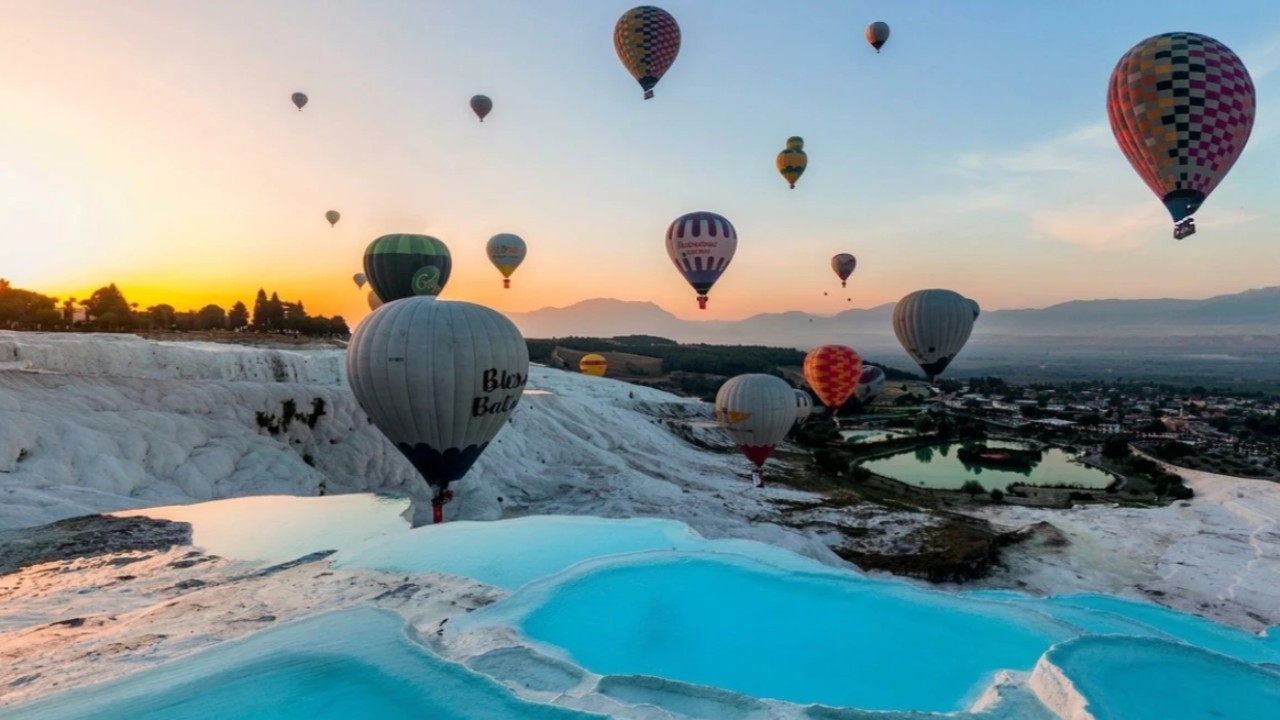
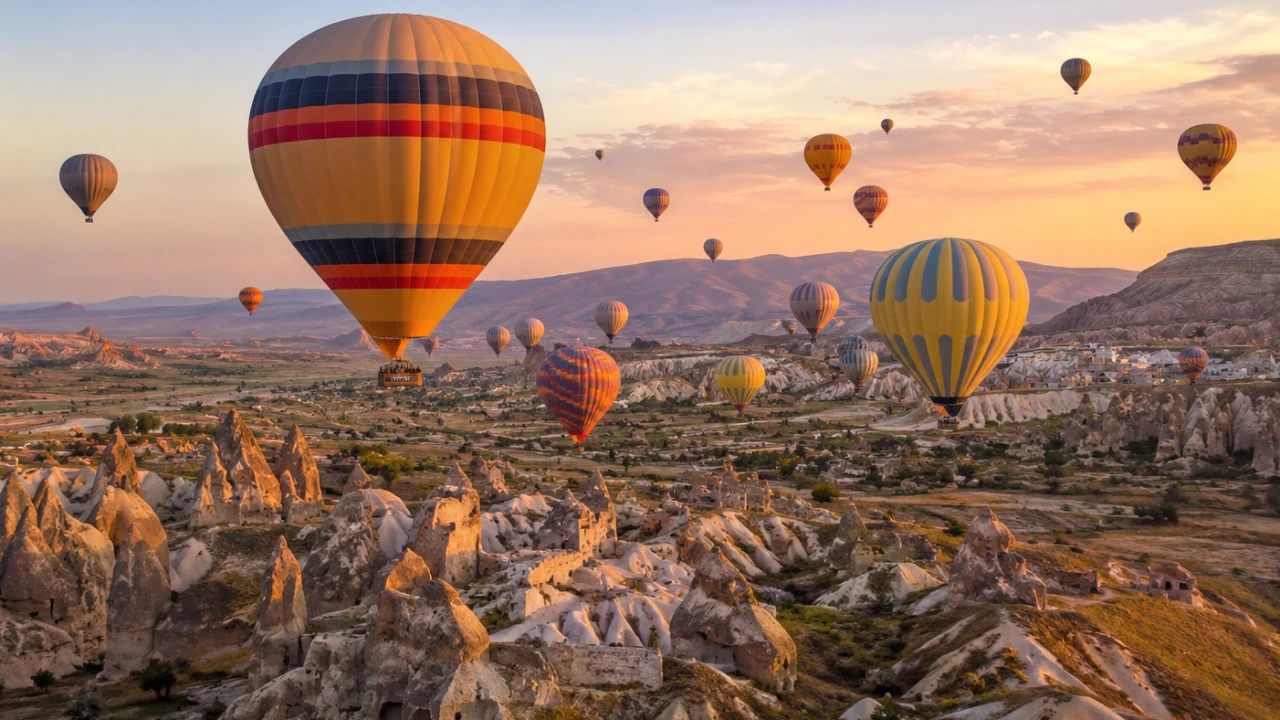
Hot air balloons shine in flat basins characterized by fairy chimneys, winding valleys, and ancient rock formations. Cappadocia and Pamukkale are the most prestigious centers for these flights globally. Balloons sometimes dip low into deep canyons, gliding right past cave churches, and other times climb to a thousand meters to reveal a magical silhouette of 150 balloons rising simultaneously at dawn.
If you want a sweeping coastal panorama where turquoise seas meet green valleys, paragliding is unrivaled. If you want to capture the harmony of colorful balloons rising above volcanic fairy chimneys, a balloon flight is peerless.
Safety Standards, Weather Sensitivity, and Cancellations
Safety is the absolute priority for all aerial activities. Flight operations are managed under strict meteorological rules overseen by the Directorate General of Civil Aviation.
In paragliding, tandem pilots possess thousands of hours of experience and international licenses. Every flight is equipped with a main wing and an automatically deployable reserve parachute for emergencies. While paragliding is flexible regarding wind direction, flights are halted during severe storms, extreme turbulence, or heavy fog. Since flights can be scheduled throughout the day, a delayed session can often be rescheduled for a few hours later when the wind settles.
Hot air balloons are far more sensitive to weather. If wind speeds exceed 15 km/h, the Civil Aviation authority flags the day as "red," and all flights are canceled. Because balloons have no steering wheel and rely entirely on wind currents, they are at the mercy of the elements. This sensitivity means that booking a balloon flight for a single day during winter or transitional seasons carries a higher risk of cancellation.
From a safety standpoint, both are incredibly secure in professional hands. However, the risk of weather-related cancellation is slightly higher for hot air balloons than for paragliding.
Physical Requirements, Age Limits, and Comfort
Your physical fitness and comfort expectations play a decisive role in the decision-making process.
Paragliding requires the passenger to take a few brisk steps forward with the pilot during takeoff. For this reason, guests with significant leg injuries or mobility issues may find the takeoff challenging. Generally, children over five can fly with parental consent. Throughout the flight, you are secured in a comfortable harness, similar to sitting in a chair, with weight limits applied for safety.
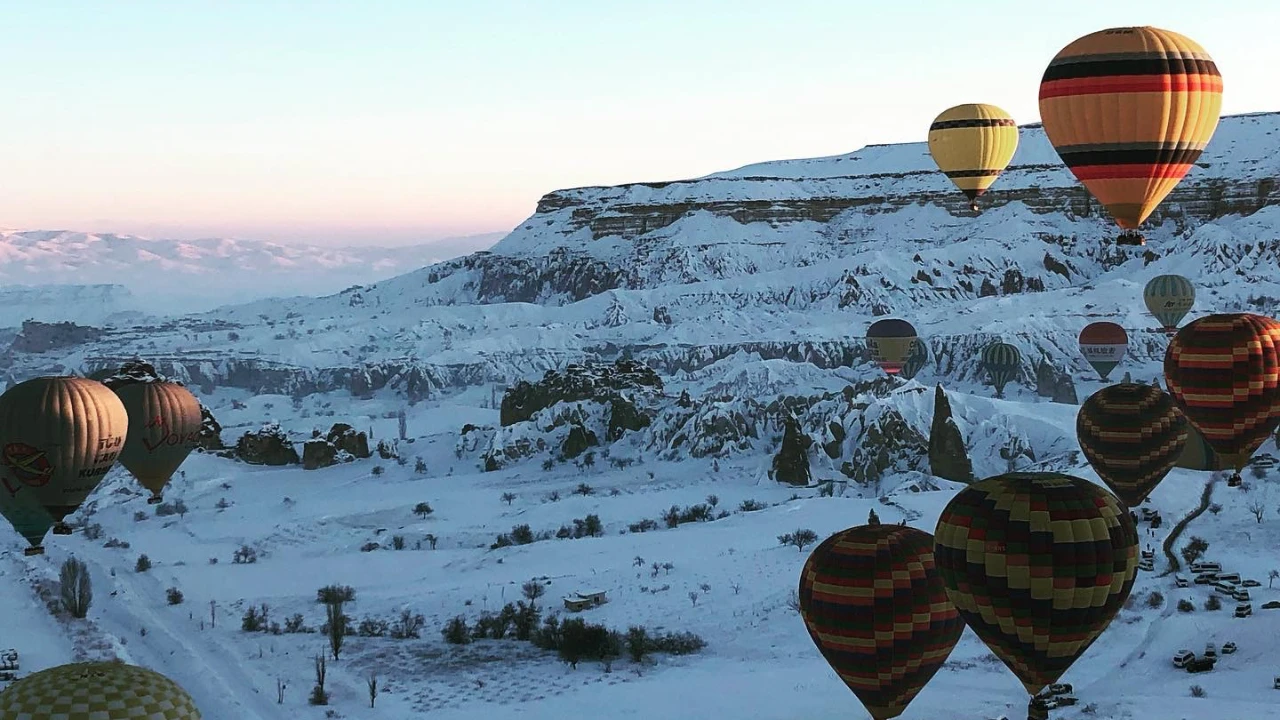
Hot air ballooning requires no running, though you must be able to climb into the basket. Since there are no seats, passengers must stand for the duration of the flight. For safety reasons, children under six are not permitted in the basket. Additionally, pregnant guests are strictly prohibited from flying due to the potential for jarring landings.
If you prefer to be seated and have your own personal space while in the air, paragliding is the better option. If you don't mind standing in a group to welcome the sunrise, a balloon tour offers a flawless viewing experience.
Budget, Duration, and Cost Comparison
The cost of these adventures is determined by the advanced technology of the aircraft and the size of the ground crews. There is a noticeable difference in pricing between the two.
Paragliding is priced per person (pilot and passenger duo). The price typically includes the 4x4 transfer to the mountain peak, national park entry fees, and comprehensive flight insurance. Professional photos and videos taken by the pilot's action camera are usually offered as an extra package after landing. Overall, paragliding is a very accessible and balanced option for sky activities.
Hot air balloon tours sit at the premium end of the tourism market due to massive operational costs and fuel consumption. Pricing is per seat in the basket. Packages usually include hotel transfers, light pre-flight snacks, and a traditional champagne toast upon landing. Depending on the season and demand, balloon tickets can fluctuate and reach quite high prices.
The following table summarizes the primary cost and equipment factors for both activities.
| Service & Equipment | Paragliding (Personal Tandem Flight) | Hot Air Balloon (Group Basket Flight) |
|---|---|---|
| Basic Pricing | Fixed per person; includes insurance and transfer | Per seat price; varies by season |
| Average Flight Time | 25 to 40 minutes (depending on thermals) | 50 to 70 minutes (depending on currents) |
| Included Amenities | Generally no food or drink service | Pre-flight breakfast snacks and champagne celebration |
| Photo & Video Services | Captured by pilot's action cam (extra fee) | Passengers use phones; ground crew sells videos |
In terms of value for money, paragliding offers a high "thrill-per-dollar" ratio. A hot air balloon is a prestigious, once-in-a-lifetime experience that requires a larger budget.
Which One Should You Choose?
Both experiences offer visual richness that leaves a lasting impression. Your travel expectations and thrill threshold will guide your choice.
Choose Paragliding if: You love individual freedom, want to feel the wind on your skin, and are an adrenaline seeker. If your goal is to watch turquoise seas from above, enjoy dynamic maneuvers, and make a soft landing on a sandy beach, you will find your passion here.
Choose a Hot Air Balloon if: You are a couple looking for romantic moments, a photographer aiming for panoramic sunrise shots, or someone seeking a peaceful escape. If you want to drift over fairy chimneys, watch a sky filled with colorful balloons, and celebrate with a glass of champagne, this is your perfect match.
Final Verdict: The 5-Step Selection Protocol
Still can't decide? Follow these five evaluation steps:
- Assess your adrenaline tolerance: Dynamic air sport $\rightarrow$ Paragliding; Peaceful sightseeing $\rightarrow$ Balloon.
- Define your dream view: Turquoise coastlines $\rightarrow$ Paragliding; Deep canyons and valleys $\rightarrow$ Balloon.
- Check your schedule flexibility: Limited time $\rightarrow$ Paragliding (more flexible timing); Staying several days $\rightarrow$ Balloon (to account for weather).
- Set your budget: Balanced, high-energy adventure $\rightarrow$ Paragliding; Premium, fairytale celebration $\rightarrow$ Balloon.
- Consider physical needs: Able to run a few steps and prefer sitting $\rightarrow$ Paragliding; Prefer standing and observing $\rightarrow$ Balloon.
Frequently Asked Questions 5
Which is more exciting: paragliding or a hot air balloon?
Paragliding is undisputedly more adrenaline-fueled due to its unpowered wing structure, wind dynamics, and the acrobatic turns performed by the pilot. A hot air balloon offers a mesmerizing, slow, and smooth ascent, focusing on visual serenity rather than a rush.
Can people with a fear of heights fly in a hot air balloon?
Surprisingly, many passengers with a fear of heights report feeling comfortable in a balloon. Because the balloon doesn't have a direct physical "edge" (like a cliff) and rises smoothly, the typical dizzy sensation is often absent. However, those with severe panic disorders may still feel anxious in a large basket.
What are the age and weight limits for paragliding and balloon tours?
In paragliding, children over five can generally fly, and the upper weight limit is typically around 100–110 kg. For hot air balloons, children under six are not permitted due to the height of the basket walls. While there isn't a strict weight limit for balloons, extremely heavy passengers may be required to purchase two tickets.
What should I wear and when should I go?
For paragliding, wear a lightweight windbreaker, sunglasses, and lace-up sneakers for the takeoff run. Since balloon tours happen at dawn, wear layered, warm clothing to protect against the morning chill and comfortable, flat shoes.
Are tours canceled in windy or foggy weather?
Yes. For safety, both activities are immediately canceled if meteorological limits are exceeded. Hot air balloons are far more sensitive; they cannot fly if winds exceed 15 km/h. Paragliding is more flexible and can often be rescheduled for a different time of the same day depending on wind direction.