
Nestled in the heart of a fertile alluvial plain on the western coast of Antalya, Demre serves as a gateway to two monumental cultural legacies. The breathtaking Lycian rock-cut tombs, carved into steep limestone cliffs with the precision of wooden architecture, and the historic Church of St. Nicholas, the man known globally as Santa Claus, are the region's crown jewels. To explore the depths of Lycian history during your Mediterranean adventure, browse our Demre Cultural Tours to visit these two iconic landmarks comfortably in a single day.
The city of Myra maintained its prestige for centuries as one of the six major metropolitan hubs of the Lycian League. Located just two kilometers south of the city center, the St. Nicholas Monument Museum is regarded as one of the most sacred pilgrimage sites of early Christianity. In this comprehensive guide, we have curated everything you need to know, from the intricate historical reliefs and the acoustics of the Roman theater to the ancient port of Andriake.
Essential Field Information for Myra and St. Nicholas
Before you begin exploring the archaeological sites, please review the following summary table for logistics, visiting hours, and terrain conditions.
| Field Parameter | Operational Details & Site Info |
|---|---|
| Geographic Location | 140 km from Antalya city center; 45 km from Kaş. |
| Transportation Options | Accessible via private vehicle on the D400 coastal highway or local intercity buses. |
| Distance Between Sites | Approximately 2 km between the Myra ruins and St. Nicholas Church in the town center. |
| Museum Pass Validity | The Museum Pass (MüzeKart) is valid at both monuments under the Ministry of Culture and Tourism. |
| Terrain & Walking Conditions | Ancient stone blocks, theater steps, and marble courtyards; non-slip footwear is highly recommended. |
| Ideal Visiting Time | Early morning or late afternoon is recommended to avoid the intense heat of the plains during summer. |
The Lycian Rock-Cut Tombs of the Myra Cliffs
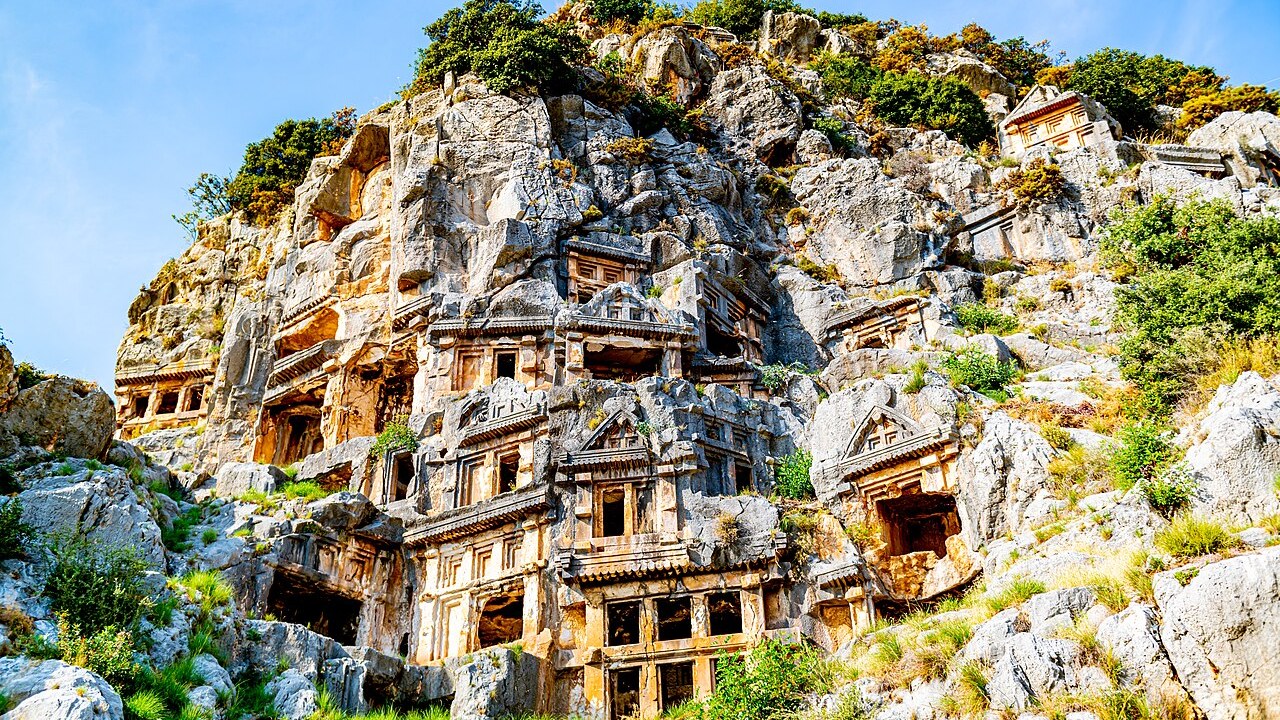
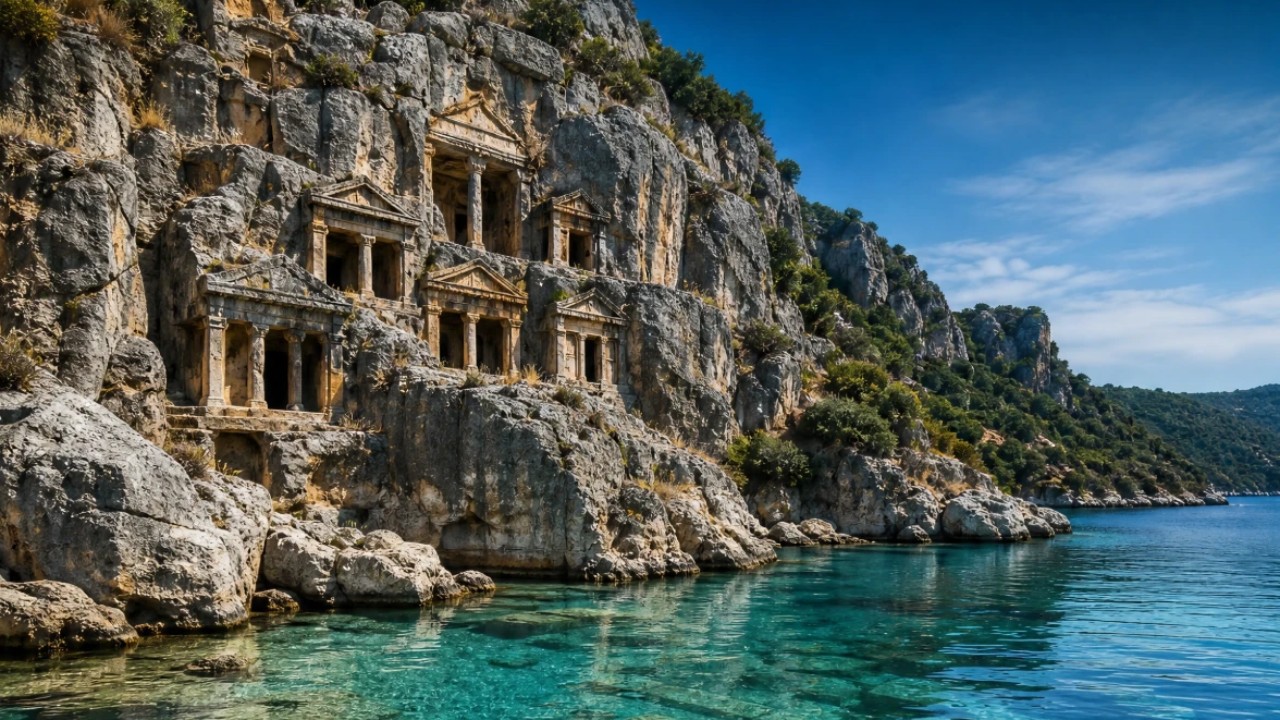
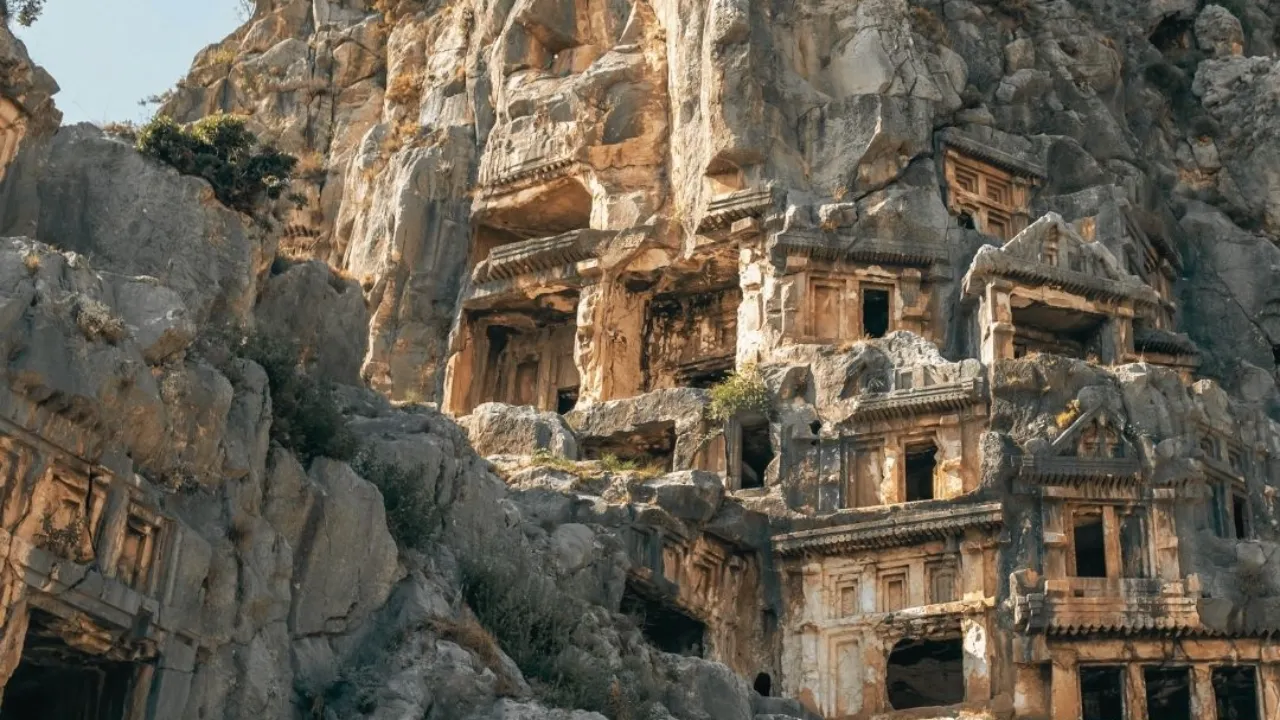
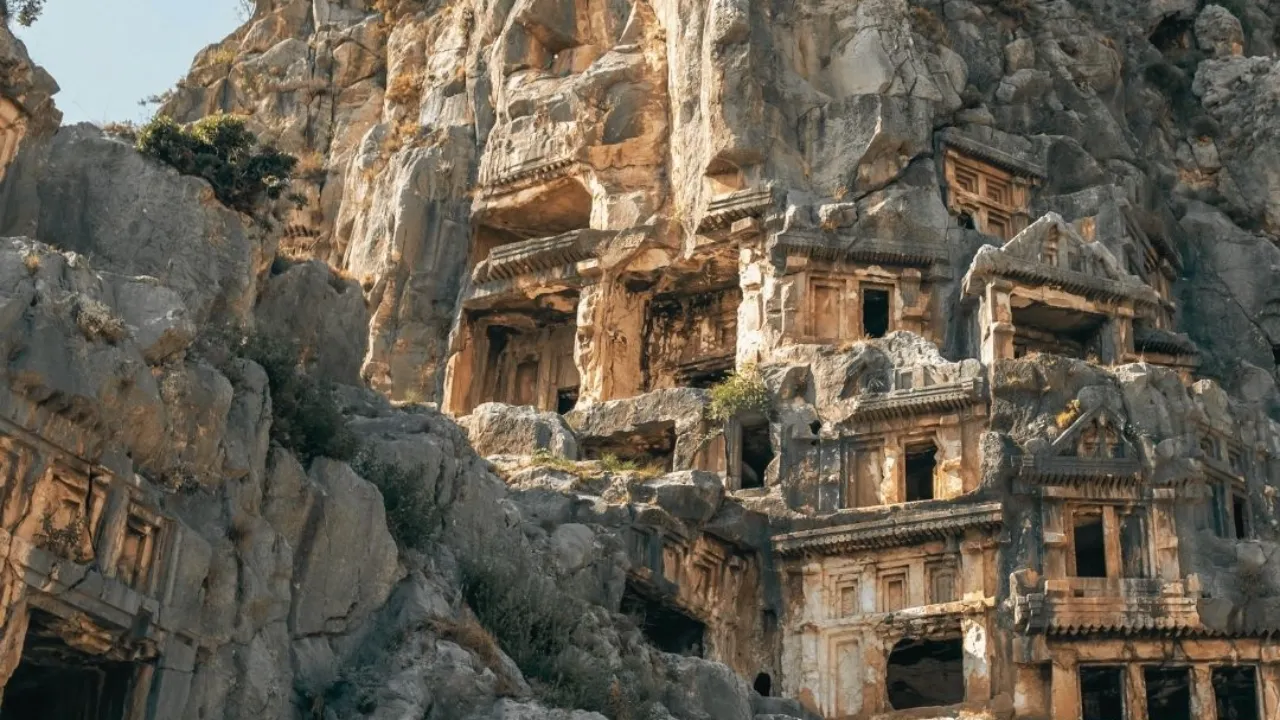
As you approach Myra Ancient City, a stunning silhouette of monumental rock tombs carved into the steep mountain slopes comes into view. The Lycian belief in burying their dead at high elevations was rooted in the idea that souls would find it easier to ascend to the heavens via winged creatures. The facades of these tombs are masterfully crafted, mimicking traditional Lycian wooden house architecture with detailed beams, lintels, and carved columns.
The cliffside is divided into two main sections: the eastern section and the river necropolis, housing dozens of relief-decorated tomb chambers. The carvings depict family members of the deceased, battle scenes, and funeral ceremonies with exquisite stonework. Due to the steep nature of the cliffs, protective barriers have been installed along the walking paths to ensure visitor safety. We ask that visitors admire these magnificent works from behind the barriers without attempting to climb the rock surfaces.
Myra Roman Theater and Acoustic Architecture
Stretching at the foot of the rock tombs, the massive Roman theater is one of the best-preserved ancient stage structures in the Lycian region. Featuring twenty-nine rows of seating, the theater was built to accommodate approximately 11,000 spectators. Rebuilt with the support of wealthy Myran benefactors following a major earthquake in the second century, the structure stands as a brilliant testament to Roman engineering.
The mythological mask reliefs displayed on the theater's stage building reflect the expressions used in ancient tragedy and comedy. The ability to hear even a whisper from the orchestra floor at the highest tiers is thanks to the specialized sound-reflection techniques developed by ancient architects. Because the steps are quite steep, we recommend taking careful steps and using the handrails when ascending the theater.
St. Nicholas Church and the Historic Sarcophagus
Located in the center of Demre, the St. Nicholas Monument Museum is the eternal resting place of St. Nicholas, who served as the Bishop of Myra in the fourth century and became legendary for his charity. The basilica, built following the death of the bishop, known as the protector of sailors, the poor, and children, has grown over the centuries through various additions. The Byzantine frescoes on the church walls, depicting biblical scenes, still retain their vibrant colors today.
The marble sarcophagus decorated with fish-scale motifs, located in the southern nave of the church, is believed to be the tomb of St. Nicholas. To preserve its historical integrity, the sarcophagus is enclosed in a special glass protective case. Pilgrims and history enthusiasts from around the world visit the monument in respectful silence. The geometric opus sectile marble mosaics on the church floor bring the aesthetic elegance of Late Antiquity to the present day.
Andriake Ancient Port and the Lycian Civilizations Museum
To fully grasp the scale of your Myra visit, we recommend including Andriake, the city's ancient gateway to the Mediterranean, in your itinerary. Located in the Çayağzı area, five kilometers from Demre center, Andriake was the most important grain shipment hub for the Roman Empire in the eastern Mediterranean. The massive Granarium (grain warehouse), built during the reigns of Emperors Trajan and Hadrian, has been restored and converted into the Lycian Civilizations Museum.
The museum, consisting of eight large halls, exhibits votive stelae from Lycian League cities, coins, port customs inscriptions, and underwater finds. The ruins of the agora, cisterns, and shipways lining the port street reveal the dynamic nature of ancient maritime trade. If you wish to explore different cultural routes during your Demre visit, you can find diverse itineraries on our Demre cultural tour alternatives page.
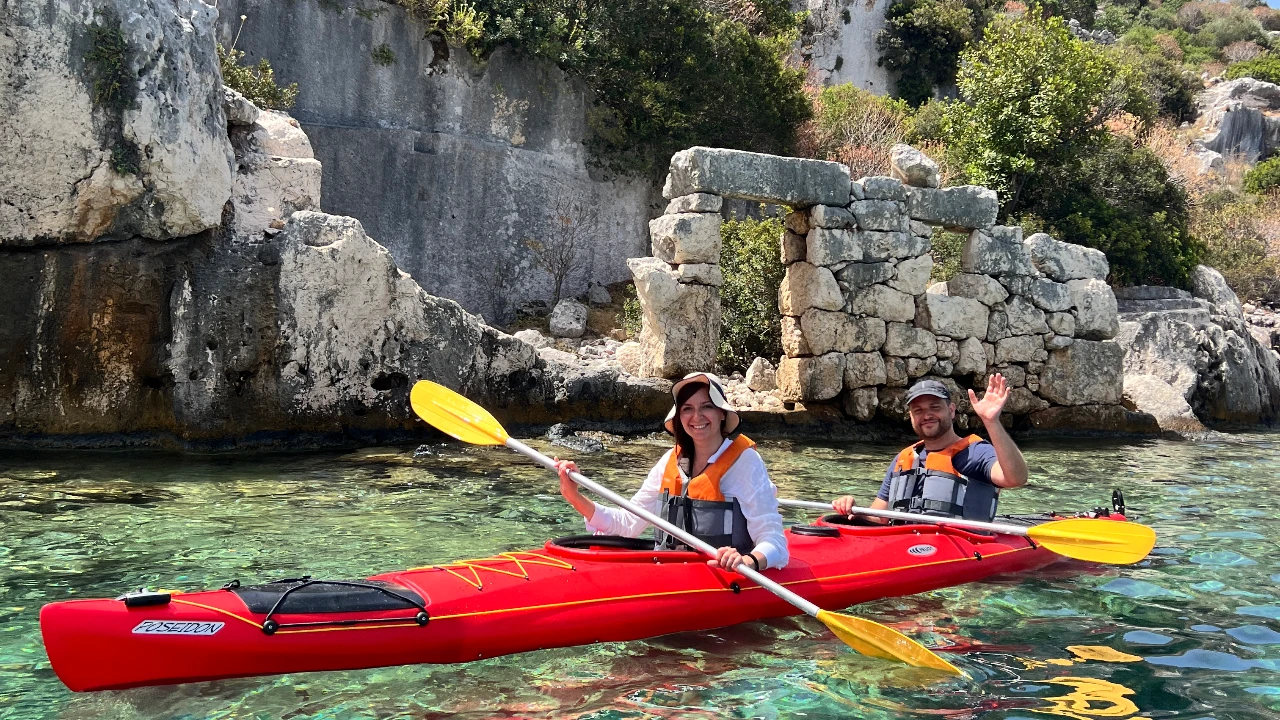
Our "Demre, Myra, Kekova Tour from Alanya (Entrance Fees Included)" offers guests a seamless experience, combining the wonders of Myra and St. Nicholas Church with a boat tour of the sunken city of Kekova. We have compared the options for independent travelers versus those choosing a licensed agency tour in the table below.
Comparison of Demre Cultural Tour Formats
Review the advantages of exploring the Myra and St. Nicholas sites via public transport versus joining an organized agency cultural tour.
| Criteria & Service Aspect | Individual Minibus & Public Transport | Licensed Agency Cultural Tour |
|---|---|---|
| Transfer & Transport | Requires waiting at stops in the town center and using taxis. | Meet-and-greet at your hotel with air-conditioned vehicles and direct transfers. |
| Entry & Ticket Management | Long queues at museum gates during peak season. | Group ticketing and pre-organized entry to prevent time loss. |
| Guiding & Storytelling | Limited to superficial information on signage. | Professional licensed guides sharing mythology and church history. |
| Combined Route Flow | Kekova boat tours and Andriake connections must be organized separately. | Myra, St. Nicholas Church, and Kekova sunken city are visited as a combined route. |
| Dining & Rest | Requires searching for available seats in local restaurants. | High-quality local lunch included as part of the program. |
Swimming Breaks at Çayağzı and Sülüklü Beach
For visitors looking to complement their cultural journey with relaxation, the Demre coastline offers the calm, cool waters of the Mediterranean. Located right next to Andriake Port, Çayağzı Beach is a therapeutic shoreline where cold sulfurous springs meet the sea. The beach is wide and shallow, making it an ideal spot for families with children.
Sülüklü Beach, located near the town center, is a popular choice for swimming due to its fine sand and calm, wave-free waters. In the evenings, travelers enjoy tasting fresh sea bass and local blue crab at seaside restaurants. Watching the Mediterranean horizon from the sand at sunset provides a peaceful conclusion to an intense day of exploring ancient stones.
Fresh citrus fruits and pomegranate juices grown in the fertile Demre plains are served freshly squeezed at local roadside stalls. Sipping fresh juice after your historical discoveries is a great way to stay hydrated in the Mediterranean heat.
5-Step Safety and Comfort Protocol for Demre Archaeological Sites
To ensure a smooth, productive, and respectful visit to the ancient city and the historic church, please follow these steps:
- Non-Slip Footwear for Ancient Terrain: Since the steps of the Myra theater and the church marble floors are worn, please wear walking shoes with rubber soles.
- Rock Tomb Safety Line: To avoid the risk of falling stones from the cliffs, never step outside the safety tapes or protective barriers.
- Museum Silence Rule: As the St. Nicholas Monument Museum is an active place of faith and worship, please avoid speaking loudly inside.
- Sun Protection & Hydration: Since the Myra ancient theater is an open-air site, wear a hat and carry drinking water in a flask.
- Combined Ticket & Museum Pass Advantage: Have your Museum Pass ready before entry, as it is valid for Myra, St. Nicholas, and Andriake.
Frequently Asked Questions 5
How long does it take to get from Demre center to Myra Ancient City?
It takes approximately five to ten minutes from the Demre town center to Myra Ancient City by private vehicle or local shuttle.
Is the Museum Pass valid at St. Nicholas Church?
Yes, St. Nicholas Church is a monument museum under the Ministry of Culture and Tourism, and the Museum Pass is valid for Turkish citizens.
Can you enter inside the Myra Ancient City rock tombs?
Because the rock tombs are located on steep mountain slopes and are subject to historical preservation measures, visitors are not permitted to enter the tomb chambers.
How long does a visit to Myra and St. Nicholas Church take?
A detailed visit to both historical sites, including exploring the theater and the church frescoes, takes an average of two and a half to three hours.
Are the Demre archaeological sites suitable for families with strollers?
St. Nicholas Church has flat wooden paths; however, because the Myra theater and rock tombs consist of uneven stone terrain, a baby carrier is recommended instead of a stroller.