


Jordan is an accessible gem, often just a short flight away with direct connections to both Amman and Aqaba. However, when it comes to budgeting, Jordan operates differently than many of its neighbors. The primary reason is simple: the bulk of your spending won't go toward luxury hotels or fine dining, but toward site entry fees. In fact, a single day's ticket to Petra can easily exceed the total cost of a typical day of sightseeing.
Because of this, the answer to "Is Jordan expensive?" depends entirely on your itinerary. Two travelers staying in the same hotel could have wildly different daily spends based on which monuments they visit. This guide breaks down the Jordan travel budget item by item: entry fees, Jordan Pass tiers, intercity transport, accommodation ranges, and the small, often-overlooked costs. Entry fees and transport are listed in Jordanian Dinars (JOD) as these are the local currency for on-the-ground payments; accommodation and car rentals are kept in Euros, reflecting common traveler data. Please apply the current exchange rate when totaling these costs.
Quick Facts
| Category | Summary |
|---|---|
| Currency | Jordanian Dinar (JOD); 1 USD $\approx$ 0.71 JOD |
| Visa | Visa-free for many nationalities (check your local embassy); typically 90 days stay |
| Daily Spend Range | Approximately 32 to 64 JOD per person |
| Biggest Expense | Petra entry; 50 JOD for a one-day ticket (overnight visitors) |
| Jordan Pass | Three tiers (70, 75, and 80 JOD) covering 40+ sites |
| Flights | Direct flights available to Amman and Aqaba |
| Best Season | Spring and Autumn; summer heat can make sightseeing grueling |
| Recommended Duration | 4 days for a highlight tour; 7 days for a comprehensive experience |
How Much Does a Day in Jordan Cost?
Based on aggregated traveler data, the average daily spend per person in Jordan ranges between 32 and 64 JOD. This range covers accommodation, food, and local transport, but excludes site entry fees. For context, some travelers report a six-night trip (excluding flights) costing roughly 917 euros per person, which aligns with these daily averages.
The critical takeaway is that not all days in Jordan are created equal. A day spent exploring the markets and museums of Amman is vastly cheaper than a day spent in Petra, not because of the hotel, but because of the ticket price.
Standard Sightseeing Day vs. Monument Day
The following table provides estimated ranges based on verified costs. These are calculated by taking the daily baseline (32-64 JOD) and adding the specific entry fees for that day.
| Day Type | Approx. Daily Cost per Person | Primary Cost Driver |
|---|---|---|
| City Day in Amman | 35-55 JOD | Hotel, meals, short-distance transport |
| Petra Day | 85-115 JOD | 50 JOD entry fee added to the daily baseline |
| Wadi Rum Camping Day | 55-85 JOD | Jeep tour and desert camp accommodation |
| Dead Sea Day | 55-90 JOD | Beach club or hotel day-pass fee |
| King's Highway Castle Day | 40-60 JOD | Low entry fees, but higher transport costs |
These ranges represent a baseline scenario. If you opt for a luxury day-pass at a Dead Sea resort, you will easily exceed the upper limit. Conversely, Wadi Rum camp packages often include dinner and breakfast, keeping the cost within the range. The conclusion is clear: the number of "high-cost days" in your itinerary impacts your budget more than the star rating of your hotel.
How Trip Duration Affects Your Budget
For those on a tight schedule, a 4-day itinerary is often sufficient; however, a 7-day trip is recommended for those wanting to traverse the country from north to south. Budgeting for these two scenarios isn't linear. In a short trip, entry fees make up a much larger percentage of the total spend because high-cost stops like Petra and Wadi Rum are compressed into a few days. In a longer trip, the daily average drops, though the total expenditure increases.
If you prefer a curated experience over DIY planning, the packages on the Jordan culture tours page provide an excellent benchmark for seeing which entry fees are typically included in a professional tour.
The Budget Backbone: Site Entry Fees
Entry fees are often the most surprising part of a Jordan budget. While small castles charge nominal fees, Petra is in a league of its own. Failing to account for this gap can lead to significant budget overruns mid-trip.
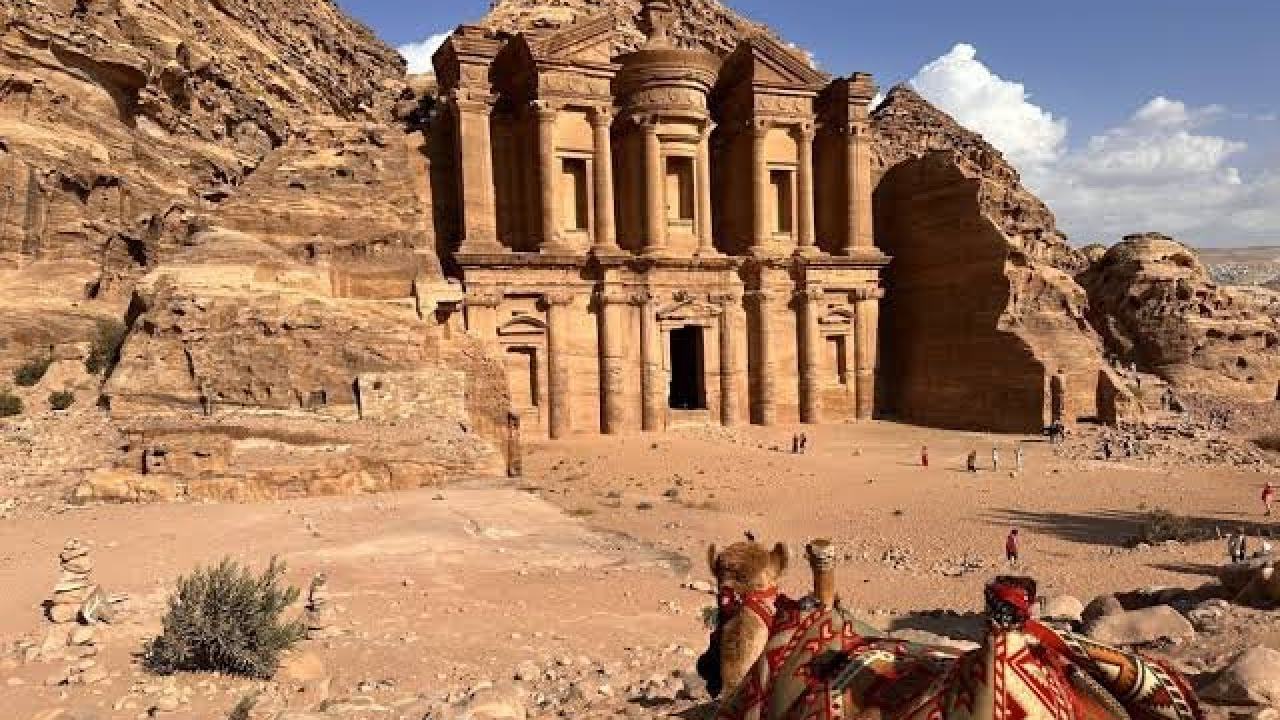
Petra: The Budget Game-Changer
Petra's pricing depends on whether you stay overnight in the country. For visitors staying in Jordan, a one-day ticket is 50 JOD, two days is 55 JOD, and three days is 60 JOD. Multi-day tickets must be used on consecutive days. For "day-trippers" who enter and leave Jordan on the same day, the price jumps to 90 JOD. Children under 12 enter for free.
This distinction is key to your planning. Staying one night in Wadi Musa reduces the ticket price by 40 JOD, which more than covers the cost of a hotel room. Attempting a day trip from another country might seem like a way to save on accommodation, but it is actually more expensive overall.
The tiered pricing (1, 2, or 3 days) also answers the question "How long does it take to see Petra?" The site is so vast that the official policy encourages multi-day visits. Budget-wise, adding a second day costs only 5 JOD, though you must account for an extra night's stay and meals.
"Petra by Night" is a separate ticketed event. It costs 30 JOD per person, runs Sunday through Thursday (20:30 to 22:30), and requires you to hold a valid daytime entry ticket. Children under 10 attend for free.
Ajloun and Karak Castles: Low-Cost Stops
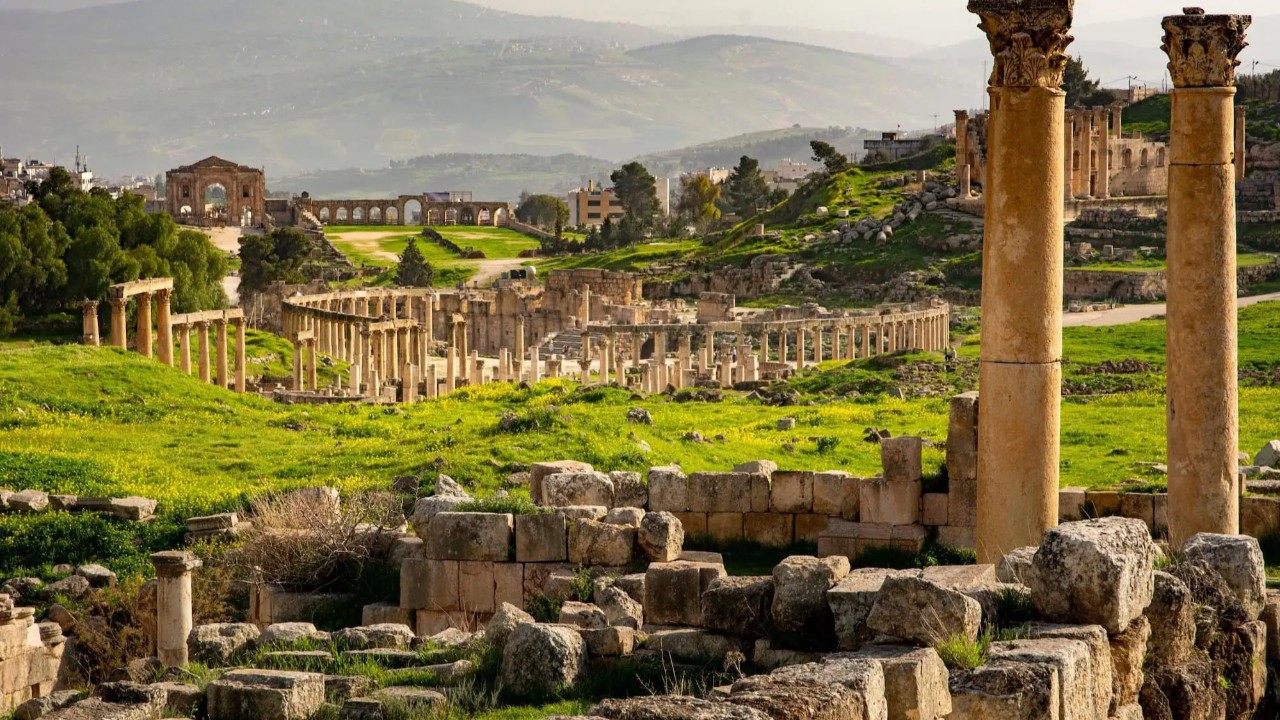
Entry to Ajloun Castle in the north is 3 JOD, and Karak Castle on the King's Highway is 2 JOD. The ancient city of Jerash costs 12 JOD. Compared to Petra, these are negligible expenses.
However, the real cost here is transport. These sites are far apart and public transport is sparse. To visit multiple castles in one day, you'll need a rental car or a private transfer. You might spend 40-60 JOD on transport just to visit sites with 5 JOD tickets. Jordan historical city tours offer a streamlined alternative to managing these logistics individually.
| Site | Entry Fee | Jordan Pass Status |
|---|---|---|
| Petra, 1 Day (Overnight Visitor) | 50 JOD | Included |
| Petra, 2 Consecutive Days | 55 JOD | Included |
| Petra, 3 Consecutive Days | 60 JOD | Included |
| Petra, Same-Day Entry (No Stay) | 90 JOD | Not Included |
| Petra by Night | 30 JOD | Separate Ticket |
| Wadi Rum Protected Area | 5 JOD | Included |
| Jerash Ancient City | 12 JOD | Included |
| Ajloun Castle | 3 JOD | Included |
| Karak Castle | 2 JOD | Included |
Making Sense of the Jordan Pass
The Jordan Pass is a digital gateway to over 40 sites, granting one-time entry to each. There is a common misconception regarding its validity: it does not last forever. According to official rules, it must be activated within 3 months of purchase and expires shortly after the first use. It is safer to buy the pass closer to your travel date. Children under 12 enter covered sites for free with a parent.
Comparing the Three Tiers
The tiers are based solely on how many days you spend in Petra:
- Jordan Wanderer (70 JOD): Includes 1-day Petra entry.
- Jordan Explorer (75 JOD): Includes 2-consecutive-day Petra entry.
- Jordan Expert (80 JOD): Includes 3-consecutive-day Petra entry. All other site inclusions are identical across the three tiers.
To waive the visa fee, the pass must be purchased before arrival and the visitor must stay at least two nights (three days). For those from countries where visas are already free, this specific benefit doesn't apply, and the decision rests entirely on the entry fee savings.
Does the Pass Pay for Itself?
The easiest way to calculate this is to sum your planned tickets. A route including Petra (1 day), Wadi Rum, Jerash, and Ajloun Castle totals 50 + 5 + 12 + 3 = 70 JOD. This exactly matches the price of the Jordan Wanderer. Once you add Karak Castle or sites in Amman, the pass becomes a bargain.
If Petra is not on your itinerary or you are staying less than two days, the pass is likely not worth it; paying as you go will be cheaper. For short trips, checking if entry fees are included in a Jordan day trip culture tour can simplify your math.
Transport: Buses, Taxis, and Car Rentals
Intercity public transport in Jordan is limited. The Jett bus company operates the main routes but has a restricted schedule. For flexibility, many travelers opt for rental cars.
From the Airport to the City
Fixed-rate taxis from Queen Alia Airport to Amman center cost approximately 22.5 JOD. You should receive a receipt based on the official price list. This rate is per vehicle, for up to four passengers. A more budget-friendly option is the airport express bus at roughly 3.3 JOD per person, running every 30 minutes during the day and hourly at night. Note that the bus drops you at main squares, requiring a short taxi ride to reach your final destination.
The cost difference depends on your group size. For a solo traveler, the taxi is seven times more expensive than the bus. For a group of four, the taxi is nearly the same price per person and far more convenient.
Bus vs. Rental Car
Jett buses from Amman to Petra or Aqaba cost approximately 11 JOD each way. These fill up quickly during peak season, so booking in advance is essential.
For rental cars, typical data shows a five-day rental costs around 120 euros, with fuel for 1,000 km costing roughly 100 euros, a total of about 210 euros. For two people, this is more expensive than the bus. For three or four people, renting a car significantly lowers the per-person cost.
| Transport Option | Approx. Cost | Best For... |
|---|---|---|
| Fixed-Rate Airport Taxi | 22.5 JOD (per car, up to 4 pax) | Groups, heavy luggage, or late arrivals |
| Airport Express Bus | 3.3 JOD | Budget-conscious, flexible solo travelers |
| Jett Bus (Amman - Petra) | 11 JOD | Those following a fixed route who don't drive |
| Jett Bus (Amman - Aqaba) | 11 JOD | Travelers heading straight south |
| Short City Taxi | Variable (haggling common) | Point-to-point trips within Amman |
If you prefer not to navigate city transfers on your own, a Jordan city transfer tour provides a fixed-price alternative for easier budgeting.
Budgeting for Accommodation and Dining
Accommodation in Jordan is often more affordable than expected. Traveler reports suggest a five-night stay averages around 234 euros, or roughly 45-50 euros per night. Given the high cost of entry fees, this is quite reasonable.
Dining costs vary wildly. Local eateries serving hummus, falafel, and shawarma are very affordable. However, restaurants in tourist hubs often charge double or triple for the same meals. Travelers who avoid "tourist traps," stay in mid-range hotels, and know how to haggle often find Jordan comparable in price to an average European city.
The best budgeting strategy: treat accommodation and food as a fixed daily baseline and treat site entries as separate, scheduled expenses. Mixing the two is the most common mistake that leads to budget slips.
Wadi Rum and the Dead Sea: Experience Costs
In Jordan, some stops aren't just about a ticket; the experience itself is a separate budget item.
Wadi Rum: Cheap Entry, Paid Experiences
Entry to the Wadi Rum Protected Area is only 5 JOD. While cheap, exploring the desert alone is practically impossible. From the visitor center, you will need a jeep tour or a guided program.
Shared group jeep tours start at around 45 JOD per person. Private tours are significantly more expensive and can reach triple digits in luxury camp brochures. Overnight packages (jeep tour + one night in a desert camp) typically range from 45 to 75 JOD per person, with prices dropping as the group size increases. If you bring your own vehicle, standard cars pay nothing extra, but 4x4 vehicles are charged a 25 JOD vehicle fee.
The Dead Sea: The Price of the Float
The Dead Sea is one of the world's most unique natural wonders, but you cannot simply walk up to the shore and swim for free. Access is almost exclusively through paid facilities.
Public beaches and beach clubs charge roughly 20-25 JOD for adults, which includes freshwater showers and changing rooms. Hotel day-passes range from 25 to 65 JOD depending on the luxury level. The Dead Sea is not a "free" nature stop; it is a planned expense. To see how this fits into a larger itinerary, check the day-by-day distribution in Jordan city tours.
How to Build a 5-Day Jordan Budget
Follow these steps in order to calculate your total cost without surprises:
- Fix your nights and locations. Since the Petra ticket varies from 50 to 90 JOD based on whether you stay overnight in Jordan, this is your first domino.
- List your must-visit sites. Sum the fees for Petra, Wadi Rum, Jerash, Ajloun, and Karak.
- Compare the total to Jordan Pass tiers. Choose the 70, 75, or 80 JOD option that matches your Petra duration.
- Choose your transport. Jett buses are usually cheaper for 1-2 people; rental cars are better for 3+.
- Set a daily baseline for food and sleep. Use 45-50 euros per night plus a daily meal allowance, multiplied by your total days.
- Add "Experience" costs. Allocate separate funds for jeep tours, desert camping, Dead Sea entry, and the hidden fees listed below.
Hidden Costs That Inflate Your Budget
It's rarely the big tickets that break a budget, but the small, unplanned expenses:
- Airport SIM Cards. Some travelers report paying around 18 euros for a SIM with 4GB of data at the airport; city shops often have better deals.
- Land Border Exit Tax. If leaving Jordan via a land border, there is a 10 JOD exit tax per person. This is included in flight tickets for airport departures.
- Petra by Night. A separate 30 JOD fee, independent of the daytime ticket.
- Wadi Rum Vehicle Fee. A 25 JOD fee for 4x4 vehicles entering the desert (not applicable to standard cars).
- Dead Sea Facility Fees. 20-25 JOD for beach access or 25-65 JOD for hotel day-passes.
- Non-Overnight Petra Entry. If you don't stay in the country, the ticket jumps to 90 JOD, nearly the cost of two nights in a hotel.
By accounting for these six categories, your actual spending will align with your plan. In short, a Jordan budget consists of three layers: a fixed daily baseline, scheduled entry fees, and experience-based costs. If you are planning a trip centered on ancient ruins, the Jordan ancient city tours page is a great resource to see which entries are bundled into professional packages.
Frequently Asked Questions 7
Is Jordan an expensive country?
Jordan is not considered a budget destination, but the perceived cost comes from site entry fees rather than food or hotels. While accommodation is reasonable (around 45-50 euros per night), a single Petra ticket (50 JOD) can cost more than a full day of other expenses.
What is the recommended daily budget per person in Jordan?
For accommodation, food, and local transport, budget between 32 and 64 JOD per person per day. However, this does not include entry fees. You should add 50 JOD for a Petra day and approximately 45 JOD for a Wadi Rum jeep tour day.
Why does the Petra ticket price vary between visitors?
The price depends on whether you stay overnight in Jordan. Visitors staying in the country pay 50 JOD for one day, while same-day visitors pay 90 JOD. Staying one night in Wadi Musa eliminates this 40 JOD difference, effectively paying for your hotel.
For which itineraries does the Jordan Pass pay off?
The break-even point is roughly four major sites: Petra (1 day), Wadi Rum, Jerash, and Ajloun Castle. Adding any more sites makes the pass a bargain. If you aren't visiting Petra, paying individually is usually cheaper.
Are there any extra fees when leaving Jordan?
Yes, if you leave via a land border, there is a 10 JOD exit tax per person. This is already included in the ticket price for those departing via the airport.
What is the most budget-friendly way to get from the airport to the city?
The airport express bus is the cheapest option at approximately 3.3 JOD per person. Fixed-rate taxis cost about 22.5 JOD per vehicle and are more convenient for groups or late arrivals.
Which season is best for reducing costs?
Spring and Autumn are best. While ticket prices don't change, the pleasant weather allows you to see more sites per day, potentially reducing the total number of days (and hotel costs) needed for your trip.