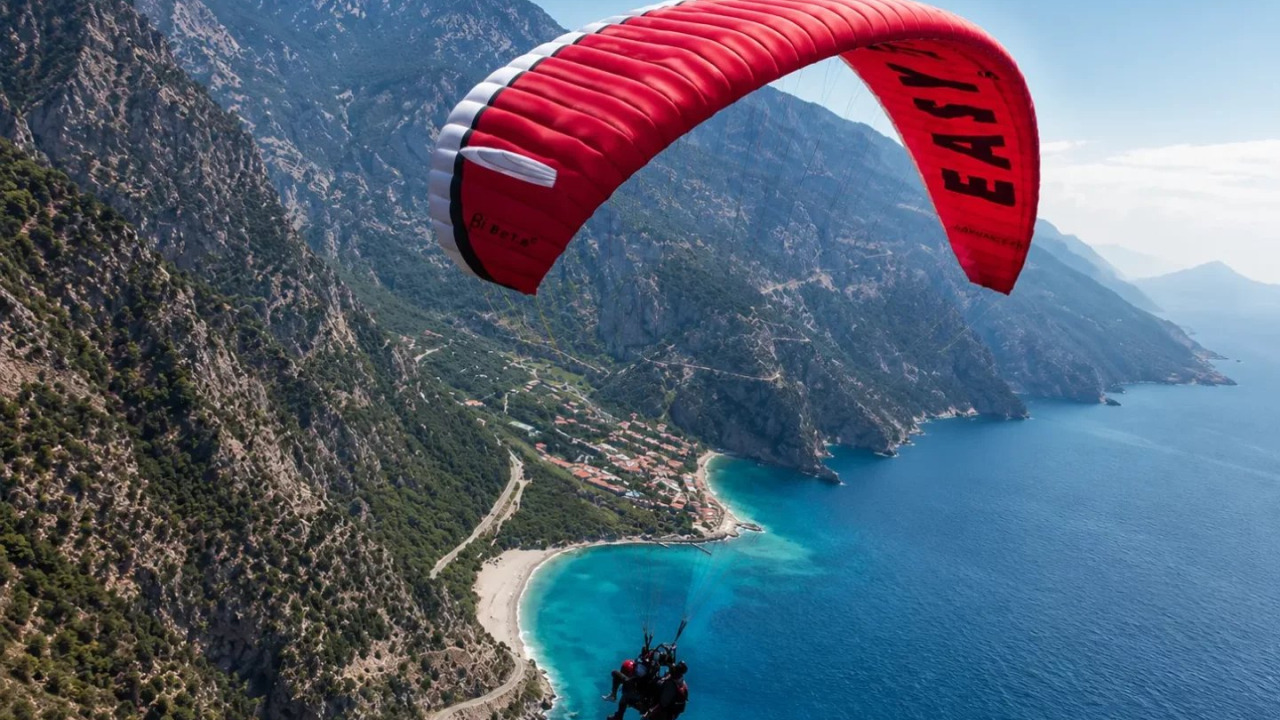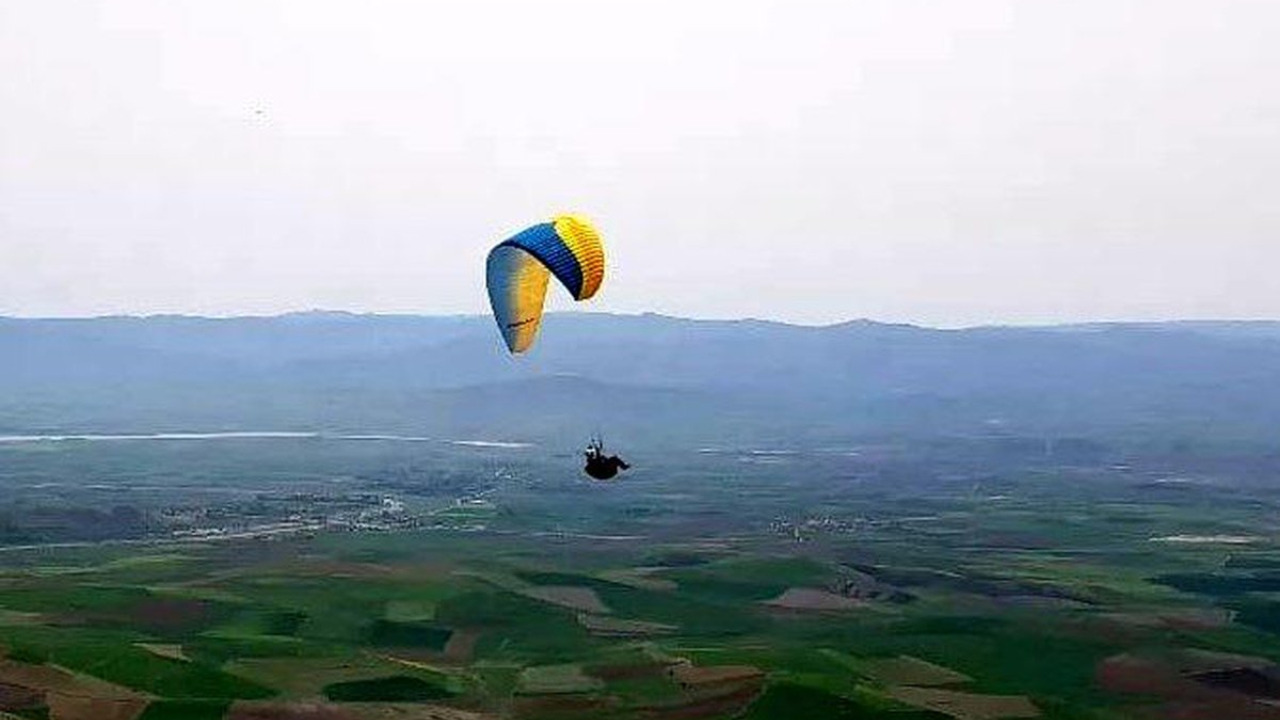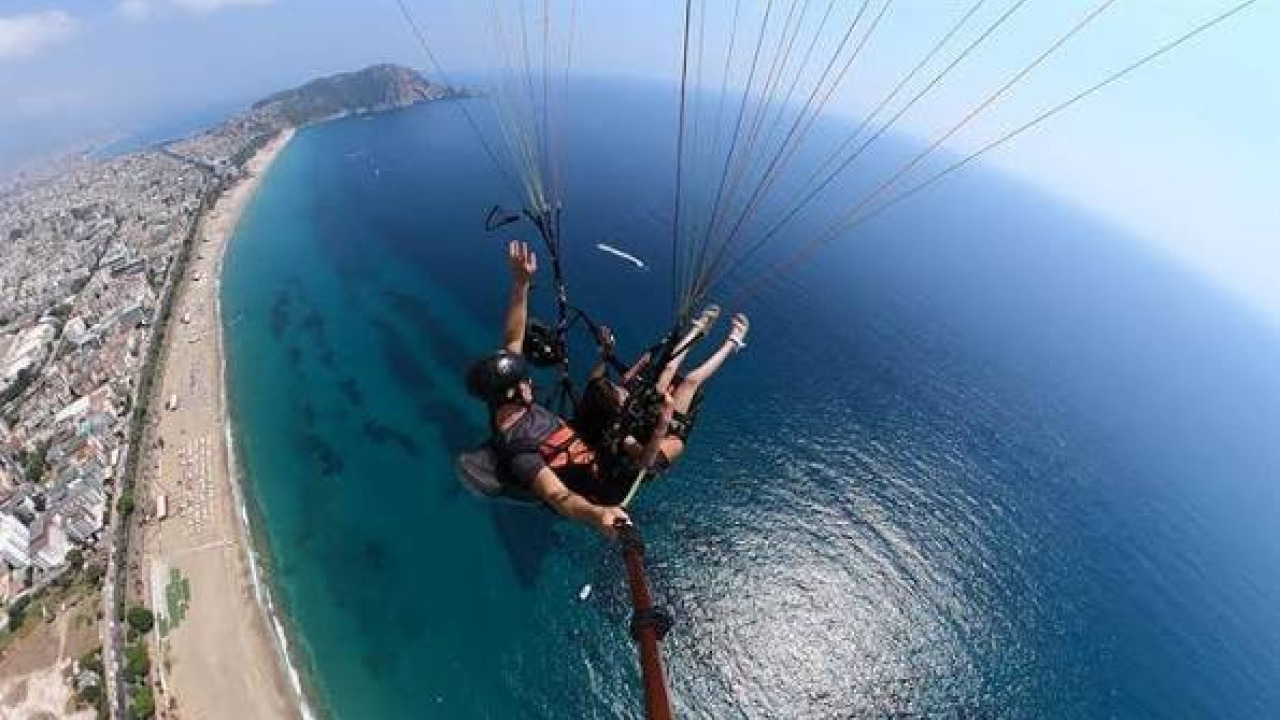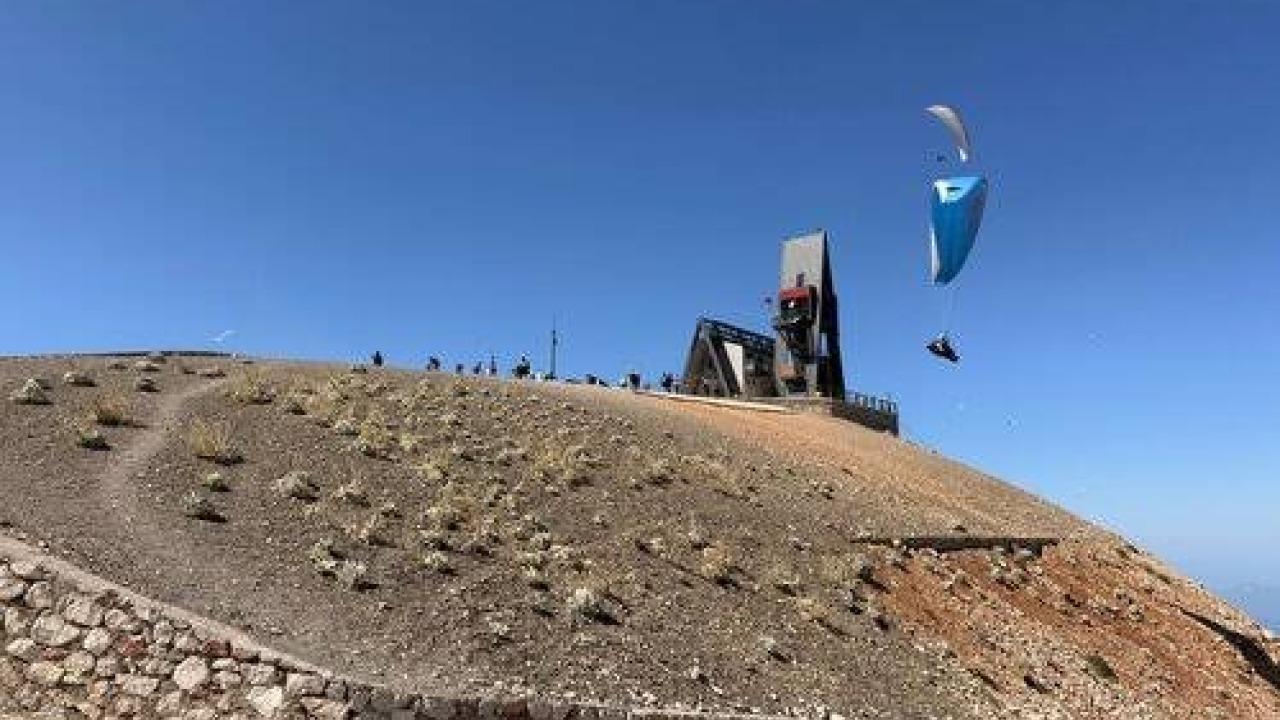

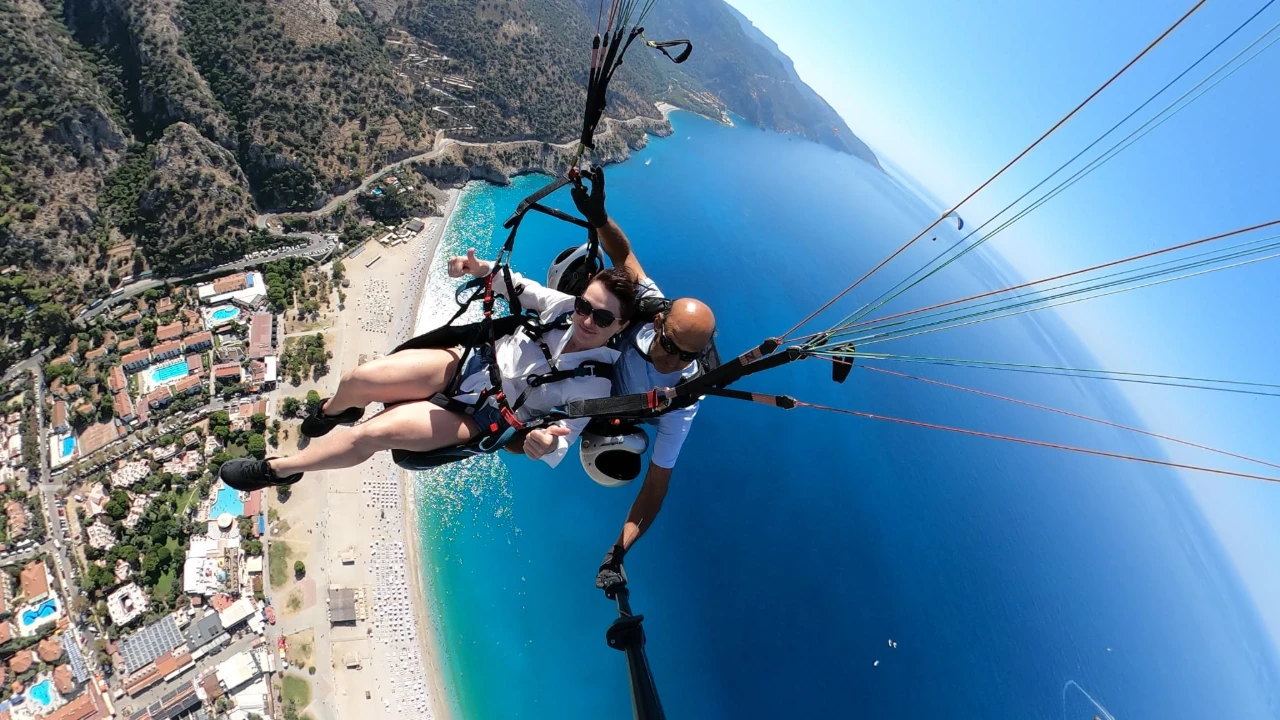
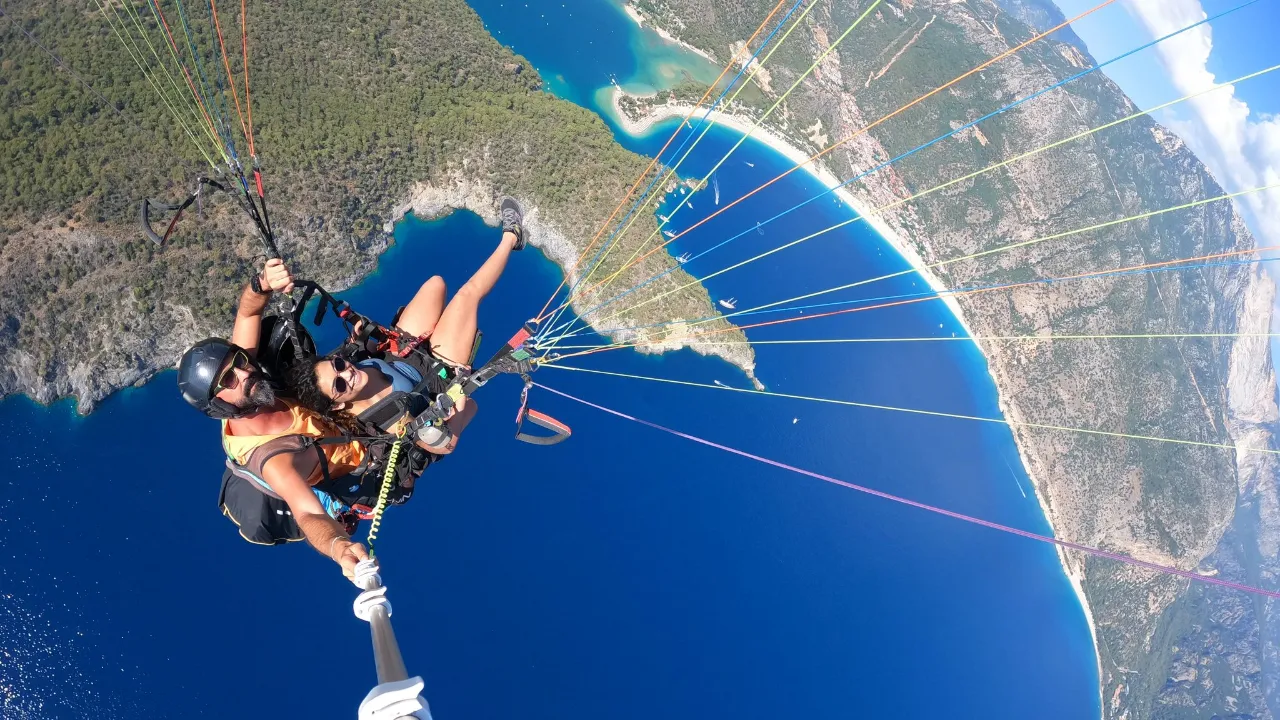
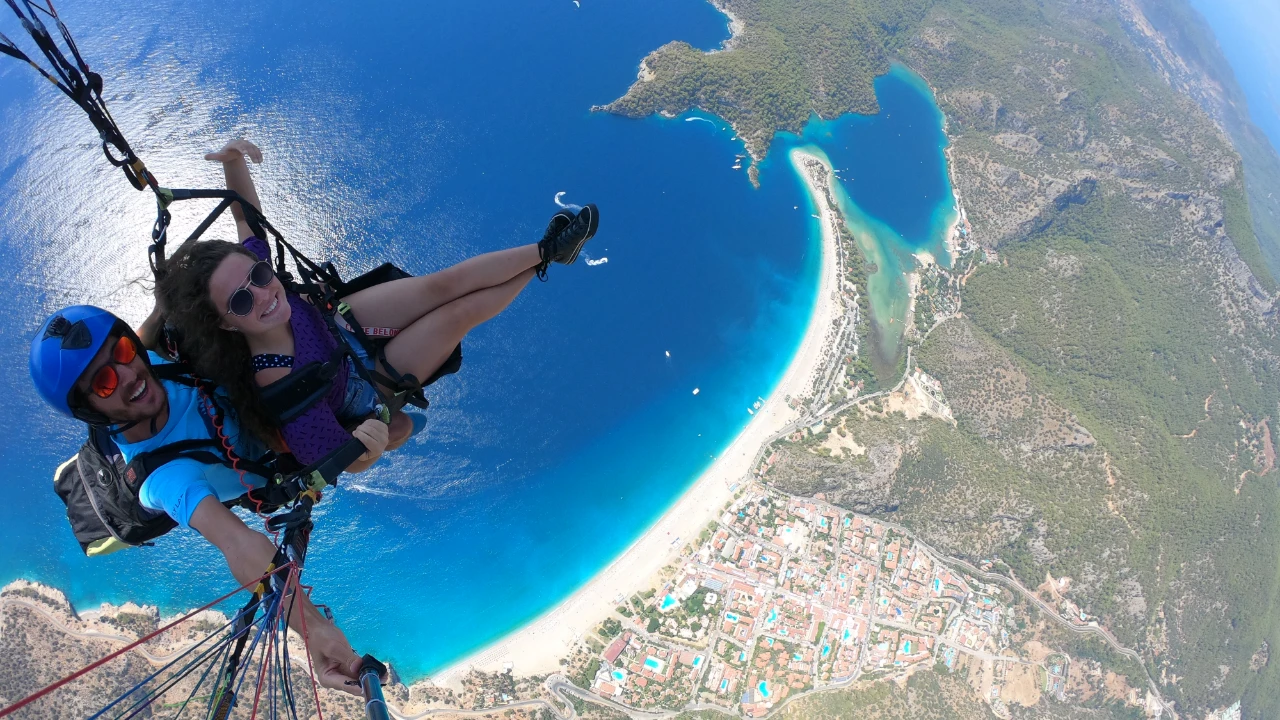
Towering over the breathtaking vistas of Fethiye Ölüdeniz, Babadağ is one of Turkey's most iconic paragliding hubs, with its summit reaching 1,969 meters. For almost every passenger heading to the takeoff point, the same questions arise: Does the air get "thin" at this height? Is it harder to breathe? Does it impact the quality or safety of the flight?
This guide moves beyond hearsay and dives into the measurable science of aviation. We will break down the critical difference between the percentage of oxygen in the air and "partial oxygen pressure," compare the takeoff points at 1200, 1700, 1800, and 1900 meters, and explain how these variables influence a pilot's reaction time, a passenger's comfort, and the glider's launch behavior.
Quick Facts
| Feature | Details |
|---|---|
| Location | Muğla, Fethiye, Ölüdeniz |
| Summit Elevation | 1,969 meters |
| Active Takeoff Points | 1200m, 1700m, 1800m, and 1900m; 1969m for north winds |
| Oxygen Percentage | Approx. 21% by volume (constant from sea level to summit) |
| Variable with Altitude | Air pressure and resulting partial oxygen pressure |
| Oxygen Availability at 1900m | Approx. 79% of sea level |
| Altitude Sickness Threshold | Generally accepted at 2,500 meters |
| Access to Summit | Cable car (1200m and 1700m stations) and chairlifts |
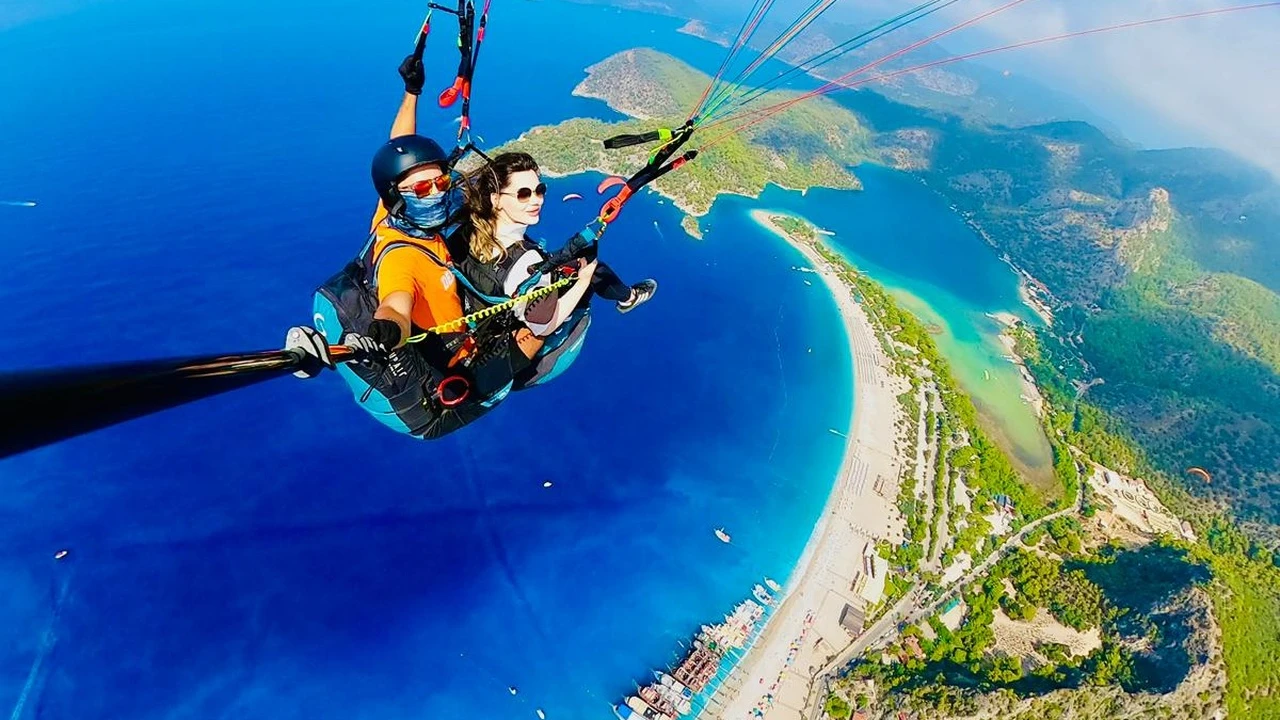
| Average Flight Duration | 15-25 minutes; up to 30 minutes from the summit |
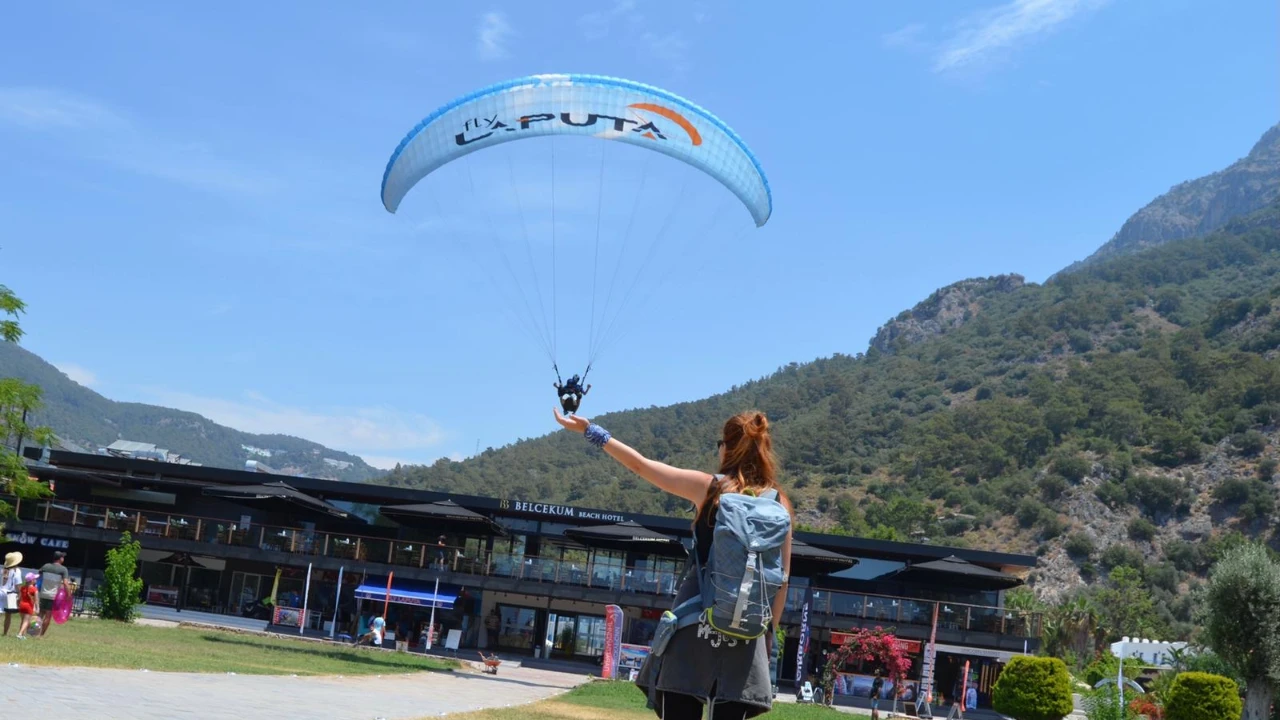
| Landing Area | Ölüdeniz Belcekız Beach (sea level) |
Does Oxygen Actually Decrease as You Climb Babadağ?
This is one of the most common misconceptions in aviation. The answer depends entirely on what exactly you are measuring.
The Percentage Stays Constant, the Pressure Drops
The composition of the atmosphere remains nearly identical for dozens of kilometers above the earth. At sea level, the air consists of approximately 21% oxygen molecules, and this ratio does not change at the summit of Babadağ. What actually decreases as you ascend is the air itself. Because there is less air pressing down from above, the atmospheric pressure drops, the air becomes less dense, and there are fewer molecules in any given volume of air. When air pressure decreases, the number of oxygen molecules per breath also decreases; essentially, less oxygen reaches your lungs with every inhale.
Why Partial Oxygen Pressure is the Key Metric
The body's ability to transfer oxygen from the lungs into the bloodstream depends on pressure, not percentage. This is known as "partial oxygen pressure," which is roughly one-fifth of the total atmospheric pressure. While this value is around 212 hectopascals (hPa) at sea level, it drops to about 169 hPa at 1,900 meters. This represents a decline of roughly 20%. For a healthy individual, this change is barely noticeable at rest but manifests as a slightly faster breathing rate when walking uphill.
What if Oxygen Percentages Actually Increased?
While this seems like a theoretical question, it is relevant to flight safety. A significant increase in the volumetric percentage of oxygen would increase flammability, heighten fire risks, and potentially damage lung tissue during prolonged exposure. Nature maintains a delicate balance through the cycle of photosynthesis and organic carbon sequestration. Therefore, in flight planning, the percentage is treated as a constant; planning focuses instead on the trio of pressure, temperature, and humidity.
Pressure and Oxygen Comparison by Takeoff Point
Depending on wind direction and the season, different takeoff points are used on Babadağ. The following values are approximations based on the Standard Atmosphere model and may fluctuate slightly based on daily weather conditions.
| Takeoff Point | Approx. Air Pressure | Partial Oxygen Pressure | Availability vs. Sea Level | Impact on Flight |
|---|---|---|---|---|
| Ölüdeniz Landing (0 m) | 1013 hPa | 212 hPa | Reference Value | Normal breathing, rapid recovery after landing |
| 1200m Point | 877 hPa | 184 hPa | Approx. 87% | Almost imperceptible; preferred in winter |
| 1700m Point | 826 hPa | 173 hPa | Approx. 81% | Breathing quickens during brisk walks on the slope |
| 1800m Point | 815 hPa | 171 hPa | Approx. 80% | The takeoff run may require an extra step or two |
| 1900m Point | 805 hPa | 169 hPa | Approx. 79% | Slower preparation pace is recommended |
| 1969m Summit Point | 798 hPa | 167 hPa | Approx. 79% | Used for north winds; extends glide time |
A close look at the table reveals that the difference in oxygen availability between the 1200m point and the summit is only about eight percentage points. This is not a gap that makes flying impossible, but it is a measurable difference that requires pilots and passengers to adjust their rhythm during the preparation phase.
Three Ways Oxygen Affects Flight Quality
The drop in partial pressure influences the flight experience through three distinct channels. Understanding these helps distinguish between physical symptoms and technical performance.
Pilot Decision Speed and Attention Span
Before takeoff, a paragliding pilot must evaluate wind direction, speed, cloud base, and slope conditions. This requires focus and short-term memory. In an environment where oxygen availability has dropped by about 20%, a pilot carrying heavy equipment uphill may experience a slight increase in reaction time if they overexert themselves. This is why experienced pilots never rush on the slope; they take a moment to breathe after laying out the wing and execute their pre-flight checklist at a calm, steady pace.
Passenger Breathing Rhythm and Comfort
Some tandem passengers report slight dizziness or an increased heart rate at the summit. This is rarely due to a lack of oxygen and is more often the result of shallow, rapid breathing triggered by excitement. Given that altitude sickness is generally accepted to begin above 2,500 meters, Babadağ (at 1,969m) remains well below this threshold. Furthermore, ascending to 1,700m via cable car over 30 minutes provides a gradual window for the body to adapt, making the transition much more comfortable than a direct drive.
Air Density, Wing Performance, and the Takeoff Run
The most concrete impact on flight quality is technical. In thinner air, a wing must fly at a higher true airspeed to produce the same amount of lift. Consequently, the takeoff run may be slightly longer, the landing speed slightly higher, and the wing's response during maneuvers may have a slightly wider radius. This effect becomes more pronounced on hot summer afternoons when rising temperatures thin the air even further. Tandem wings (typically 35-42 square meters) are certified with these conditions in mind; an EN-certified wing operates safely across all Babadağ takeoff points.
How to Reach the Babadağ Takeoff Points
The ascent itself is the first step in your body's adaptation to pressure changes. The process typically follows this sequence:
- Head to the meeting point in Ölüdeniz and complete registration with your flight company. The specific takeoff point is decided here based on the day's wind direction.
- Take the cable car from the lower station to the 1200m station, and then to the 1700m station. This 25-30 minute journey allows your body to experience the pressure change gradually.
- If the higher points are required, take the chairlift from 1700m to the 1800m or 1969m takeoff areas.
- Upon arriving at the slope, rest for a few minutes without walking, take deep and steady breaths, and then proceed to the pilot briefing.
- Once harnessed in, wait for the takeoff command and take three to four brisk steps in sync with the pilot's count.
| Transport Option | Route | Approx. Duration | Notes |
|---|---|---|---|
| Cable Car | Ölüdeniz Base $\rightarrow$ 1200m $\rightarrow$ 1700m | 25-30 mins | Most comfortable option due to gradual ascent |
| Chairlift | 1700m $\rightarrow$ 1800m/1969m | A few mins | Used only for the highest takeoff points |
| Company Transfer | Ölüdeniz $\rightarrow$ Mountain Road $\rightarrow$ 1700-1900m | 35-45 mins | Winding roads; those prone to motion sickness should sit in front |
| Hiking Trail | Lower slopes $\rightarrow$ Summit via forest paths | 4+ hours | Not recommended on flight day as it exhausts your stamina |
Pre-Flight Oxygen and Conditioning Tips
To make the most of your experience and mitigate the effects of pressure changes, manage your few hours before the flight wisely:
- Prioritize Sleep: Get plenty of rest the night before; a tired body adapts more slowly to lower pressure.
- Stay Hydrated: Dry mountain air accelerates fluid loss, and dehydration can trigger altitude headaches.
- Eat Light: Avoid heavy, greasy meals a few hours before takeoff; opt for a light snack instead.
- Avoid Depressants: Steer clear of alcohol and sedatives, as both can suppress your natural breathing rhythm.
- Dress Appropriately: Wear sturdy sneakers that grip the ankle, a windbreaker, and comfortable athletic wear; it is always cooler at high altitudes.
- Medical Disclosure: If you have chronic respiratory or heart conditions, inform your pilot and the company before the flight.
The safety check sequence on the slope is as follows:
- The wing is laid out, lines are cleared, and the pilot checks for any tangles.
- The passenger is harnessed in, and carabiner locks are double-verified.
- Helmets are secured, radio communication is tested, and the reserve parachute position is shown.
- Wind direction and speed are read one last time, and the airspace in front of the slope is monitored.
- Once all five checks are green, the takeoff command is given.
This discipline eliminates the vast majority of potential issues before the flight even begins. Furthermore, civil aviation regulations mandate that pilots undergo regular health checks and that equipment receives periodic maintenance.
Altitude Sickness Risk: Where Does Babadağ Stand?
Comparison with Mount Everest
To put things in perspective, let's look at the scale. At the summit of Everest, the volumetric oxygen percentage is still approximately 21%. However, because the pressure is only one-third of that at sea level, the available oxygen is also reduced to one-third. The region above 8,000 meters is known as the "Death Zone" because the air is too thin to sustain human life. In contrast, Babadağ's 1,969 meters retains more than three-quarters of sea-level pressure. This massive difference explains why Babadağ flights require no supplemental oxygen.
When Does Oxygen Become Dangerous?
In industrial safety standards for confined spaces, a volumetric oxygen level below 19.5% is considered oxygen-deficient. When levels drop to around 16%, symptoms of hypoxia, such as shortness of breath, nausea, and lethargy, begin to appear. At 15%, a person may lose cognitive and physical performance without even realizing it. Since the volumetric ratio on Babadağ remains around 21%, these thresholds are never reached. Any slight exertion felt at the summit is not hypoxia, but rather the increased effort of breathing in lower pressure. Knowing this distinction prevents unnecessary anxiety on the slope.
Seasonal and Daily Effects on Air Density
While altitude is constant, air density is not. Temperature and humidity can create different flight "feels" on the same slope within a single day. Warm air expands and thins; cool air contracts and densifies. Therefore, a takeoff from 1900m on a scorching August afternoon is not the same as one on a crisp October morning.
| Season | Typical Summit Weather | Air Density Trend | Impact on Flight Quality |
|---|---|---|---|
| Winter (Dec-Feb) | Cold, snow, strong winds | High | 1200m point is preferred; upper points may close |
| Spring (Mar-May) | Mild and variable | Medium to High | Thermals strengthen; mornings are generally calm |
| Summer (Jun-Aug) | Hot and dry | Low | Takeoff runs are longer at noon; mornings/evenings preferred |
| Autumn (Sep-Nov) | Mild and clear | Medium to High | Ideal period for long, smooth glides |
The cycle of sea breezes and land breezes along the Ölüdeniz coast, combined with these density factors, determines the choice of takeoff point. The sea breeze blowing toward the land rises along the slope, providing lift to the wing, while thermal columns created by the sun heating the earth allow the pilot to gain altitude through circular maneuvers. For first-time visitors, asking your flight company which point is being used and why is the best way to align your expectations with reality.
When planning your Babadağ adventure, you can check takeoff times and slope details on our Fethiye Paragliding Tours page, or explore other regional itineraries in our Fethiye Tours list. For those wanting to compare flight sites across Turkey, our Paragliding Tours collection makes comparison easy.



Frequently Asked Questions 8
Does the oxygen percentage in the air increase as you go higher?
No, it does not. The volumetric oxygen percentage remains approximately 21% at both sea level and the Babadağ summit. What decreases is the air pressure; because the pressure is lower, there are fewer oxygen molecules in the same volume of air, and the partial oxygen pressure reaching the lungs decreases.
At what level does the oxygen percentage become dangerous?
According to industrial safety standards, a volumetric oxygen level below 19.5% is considered deficient. Around 16%, symptoms of hypoxia like shortness of breath and nausea can occur. Since the ratio at Babadağ's summit stays around 21%, these thresholds are not encountered; it is the pressure that drops, not the percentage.
Does the lack of oxygen at Babadağ summit bother passengers?
For a healthy passenger, the 1900-meter range does not cause significant distress. The risk of altitude sickness generally begins above 2,500 meters, and Babadağ is well below this. Any perceived effect is usually due to brisk walking on the slope or shallow breathing caused by excitement.
What is the oxygen level on Mount Everest?
On the summit of Everest, the volumetric oxygen percentage is still about 21%. However, because the pressure is only one-third of that at sea level, the amount of available oxygen is also reduced to one-third. The area above 8,000 meters is called the "Death Zone" because the body cannot obtain enough oxygen to survive.
How much does oxygen availability change between the 1200m point and the summit?
At the 1200m point, oxygen availability is approximately 87% compared to sea level, while at the 1969m summit, it is approximately 79%. This eight-point difference does not make flying impossible, but it is a measurable difference that suggests a slower pace during preparation and a few minutes of rest upon arrival.
To what level does partial oxygen pressure drop at the Babadağ summit?
Partial oxygen pressure, which is around 212 hPa at sea level, drops to approximately 169 hPa at the 1900m point. This roughly 20% decrease is not noticeable in a healthy person at rest but can be felt as increased breathing frequency when walking uphill.
Does thin air extend the takeoff run on Babadağ?
It does, to a small extent. In thinner air, the wing must fly at a higher true airspeed to produce the same lift; therefore, the takeoff run may be a few steps longer, and the landing speed may increase slightly. This is more noticeable on hot summer afternoons, which is why mornings and late afternoons are often preferred.
How should I prepare for the high altitude of a Babadağ flight?
Ensure you get enough sleep the night before, drink plenty of water throughout the day, and choose light meals over heavy, greasy foods. Avoid alcohol and sedatives as they suppress breathing rhythms. Those with chronic respiratory or heart conditions should inform their pilot and the company before the flight.